This site uses cookies as defined in our Cookie Policy, by continuing to use this site you agree to their use.
Continue

| Arrive | Depart | ||||||
| 8th08 | JanJan | 202727 | Siem Reap, Cambodia, embark on the RV Indochine II | 14:00 | |||
| Program depending on your time of arrival in Siem Reap.Boat trip on Tonl Lake to discover the floating villages and the traditional life of its inhabitants.Then, visit of the Angkor Night Market.Night at the hotel. | |||||||
| 9th09 | JanJan | 202727 | Siem Reap, Cambodia | ||||
| Full-day included excursion: the Ta Prohm temple, Angkor Thom, the Terrace of the Elephants and the Terrace of the Leper King.Well end the day with Phare, the Cambodian circus.Night at the hotel. | |||||||
| 9th09 | JanJan | 202727 | Angkor, Cambodia | ||||
| 10th10 | JanJan | 202727 | Angkor, Cambodia | ||||
| Included excursion: the Angkor Wat temple. Lunch will be served at the hotel.Journey to Koh Chen (approximately 5 to 6 hours by coach), with a stop in traditional villages. Our crew will welcome you and help you get comfortably settled into your cabins. ORTransfer to your ship. Our crew will welcome you and help you get comfortably settled into your cabins. Afternoon cruise through Tonle Lake.Well have dinner and formally meet our crew. Our ship will remain anchored overnight. | |||||||
| 10th10 | JanJan | 202727 | Tonlé Sap, Cambodia | ||||
| 11th11 | JanJan | 202727 | Tonlé Sap, Cambodia | ||||
| Discover of the small village of Koh Chen, where craftspeople specialize in silver and copper work. Lunch on board then we will set out to visit the beautiful Vihara at the Wat Kampong Tralach Leu pagoda. To access the pagoda, we need to cross the village of Kampong Tralach, moving along a small road that runs perpendicular to the river in the middle of magnificent rice fields. Our ship will remain anchored overnight. | |||||||
| 11th11 | JanJan | 202727 | Kampong Tralach, Cambodia | ||||
| 12th12 | JanJan | 202727 | Kampong Tralach, Cambodia | ||||
| Kampong Chhnang is one of the largest fishing ports on the Tonle Sap. Fish farming is abundant here. The region is also known for its traditional pottery combining ancient knowledge with modern techniquesChhnang itself means "pot." We'll also enjoy a tasting of regional products before returning on board. Lunch andcruising to Phnom Penh. Once we arrive, enjoy a brief tour of the area by "tuk-tuk," the easiest way to get around the city. Well return to the ship and enjoy a performance of classical Khmer dancing and music. Our ship will remain overnight in Phnom Penh. | |||||||
| 12th12 | JanJan | 202727 | Phnom Penh, Cambodia | ||||
Phnom Penh, Cambodia’s busy capital, sits at the junction of the Mekong and Tonlé Sap rivers. It was a hub for both the Khmer Empire and French colonialists. On its walkable riverfront, lined with parks, restaurants and bars, are the ornate Royal Palace, Silver Pagoda and the National Museum, displaying artifacts from around the country. At the city’s heart is the massive, art deco Central Market. | |||||||
| 13th13 | JanJan | 202727 | Phnom Penh, Cambodia | ||||
Phnom Penh, Cambodia’s busy capital, sits at the junction of the Mekong and Tonlé Sap rivers. It was a hub for both the Khmer Empire and French colonialists. On its walkable riverfront, lined with parks, restaurants and bars, are the ornate Royal Palace, Silver Pagoda and the National Museum, displaying artifacts from around the country. At the city’s heart is the massive, art deco Central Market. Full-day included excursion:- The Royal Palace and the Silver Pagoda- The National Museum- The Tuol Svay Prey School, a former detention, torture, and execution center run by the Khmer Rouge during the civil warWell cruise to Vietnam.Well spend the night on board. | |||||||
| 14th14 | JanJan | 202727 | Phnom Penh, Cambodia | ||||
Phnom Penh, Cambodia’s busy capital, sits at the junction of the Mekong and Tonlé Sap rivers. It was a hub for both the Khmer Empire and French colonialists. On its walkable riverfront, lined with parks, restaurants and bars, are the ornate Royal Palace, Silver Pagoda and the National Museum, displaying artifacts from around the country. At the city’s heart is the massive, art deco Central Market. Included excursion: visit of the Tay An Pagoda and the Ba Chua Xu Temple.Well begin to cruise toward Sa Dec.Well spend the night on board. | |||||||
| 14th14 | JanJan | 202727 | Sa Déc, Vietnam | ||||
| 15th15 | JanJan | 202727 | Sa Déc, Vietnam | ||||
| Included excursion: visit of the former house of Huynh Thuy Le.Enjoy some free time in Sa Dec.Well cruise to Vinh Long.Included excursion: discovery of a brick and pottery factory, puffed riced, rice-paper wrappers, and rice alcohol.*Well spend the night on board. | |||||||
| 15th15 | JanJan | 202727 | Cái Bè, Vietnam | ||||
| 16th16 | JanJan | 202727 | Cái Bè, Vietnam | ||||
| Included excursions: - Visit of a bee farm and tasting - Ride in small sampans along the canal lined We'll set out to cross the very narrow canal, heading for Ho Chi Minh City. We'll spend the night on board. | |||||||
| 16th16 | JanJan | 202727 | Ho Chi Minh City, Vietnam | ||||
Romantically referred to by the French as the Pearl of the Orient, Ho Chi Minh City today is a super-charged city of sensory overload. Motorbikes zoom day and night along the wide boulevards, through the narrow back alleys and past vendors pushing handcarts hawking goods of all descriptions. Still called Saigon by most residents, this is Vietnam's largest city and the engine driving the country's current economic resurgence, but despite its frenetic pace, it's a friendlier place than Hanoi and locals will tell you the food—simple, tasty, and incorporating many fresh herbs—is infinitely better than in the capital.This is a city full of surprises. The madness of the city's traffic—witness the oddball things that are transported on the back of motorcycles—is countered by tranquil pagodas, peaceful parks, quirky coffee shops, and whole neighborhoods hidden down tiny alleyways, although some of these quiet spots can be difficult to track down. Life in Ho Chi Minh City is lived in public: on the back of motorcycles, on the sidewalks, and in the parks. Even when its residents are at home, they're still on display. With many living rooms opening onto the street, grandmothers napping, babies being rocked, and food being prepared, are all in full view of passersby.Icons of the past endure in the midst of the city’s headlong rush into capitalism. The Hotel Continental, immortalized in Graham Greene's The Quiet American, continues to stand on the corner of old Indochina's most famous thoroughfare, the rue Catinat, known to American G.I.s during the Vietnam War as Tu Do (Freedom) Street and renamed Dong Khoi (Uprising) Street by the Communists. The city still has its ornate opera house and its old French city hall, the Hôtel de Ville. The broad colonial boulevards leading to the Saigon River and the gracious stucco villas are other remnants of the French colonial presence. Grisly reminders of the more recent past can be seen at the city's war-related museums. Residents, however, prefer to look forward rather than back and are often perplexed by tourists' fascination with a war that ended 40 years ago.The Chinese influence on the country is still very much in evidence in the Cholon district, the city's Chinatown, but the modern office towers and international hotels that mark the skyline symbolize Vietnam's fixation on the future. | |||||||
| 17th17 | JanJan | 202727 | Ho Chi Minh City, Vietnam | ||||
Romantically referred to by the French as the Pearl of the Orient, Ho Chi Minh City today is a super-charged city of sensory overload. Motorbikes zoom day and night along the wide boulevards, through the narrow back alleys and past vendors pushing handcarts hawking goods of all descriptions. Still called Saigon by most residents, this is Vietnam's largest city and the engine driving the country's current economic resurgence, but despite its frenetic pace, it's a friendlier place than Hanoi and locals will tell you the food—simple, tasty, and incorporating many fresh herbs—is infinitely better than in the capital.This is a city full of surprises. The madness of the city's traffic—witness the oddball things that are transported on the back of motorcycles—is countered by tranquil pagodas, peaceful parks, quirky coffee shops, and whole neighborhoods hidden down tiny alleyways, although some of these quiet spots can be difficult to track down. Life in Ho Chi Minh City is lived in public: on the back of motorcycles, on the sidewalks, and in the parks. Even when its residents are at home, they're still on display. With many living rooms opening onto the street, grandmothers napping, babies being rocked, and food being prepared, are all in full view of passersby.Icons of the past endure in the midst of the city’s headlong rush into capitalism. The Hotel Continental, immortalized in Graham Greene's The Quiet American, continues to stand on the corner of old Indochina's most famous thoroughfare, the rue Catinat, known to American G.I.s during the Vietnam War as Tu Do (Freedom) Street and renamed Dong Khoi (Uprising) Street by the Communists. The city still has its ornate opera house and its old French city hall, the Hôtel de Ville. The broad colonial boulevards leading to the Saigon River and the gracious stucco villas are other remnants of the French colonial presence. Grisly reminders of the more recent past can be seen at the city's war-related museums. Residents, however, prefer to look forward rather than back and are often perplexed by tourists' fascination with a war that ended 40 years ago.The Chinese influence on the country is still very much in evidence in the Cholon district, the city's Chinatown, but the modern office towers and international hotels that mark the skyline symbolize Vietnam's fixation on the future. Included excursion: tour of the city, its hectic market and the Thien Hau temple.Lunch will be served on board.Included excursions:- The Museum of Vietnamese History- Discovery of the Cu Chi tunnels (coach journey of approximately 2 hours and 15 minutes each way)Well spend the night on board. | |||||||
| 18th18 | JanJan | 202727 | Ho Chi Minh City, Vietnam | ||||
Romantically referred to by the French as the Pearl of the Orient, Ho Chi Minh City today is a super-charged city of sensory overload. Motorbikes zoom day and night along the wide boulevards, through the narrow back alleys and past vendors pushing handcarts hawking goods of all descriptions. Still called Saigon by most residents, this is Vietnam's largest city and the engine driving the country's current economic resurgence, but despite its frenetic pace, it's a friendlier place than Hanoi and locals will tell you the food—simple, tasty, and incorporating many fresh herbs—is infinitely better than in the capital.This is a city full of surprises. The madness of the city's traffic—witness the oddball things that are transported on the back of motorcycles—is countered by tranquil pagodas, peaceful parks, quirky coffee shops, and whole neighborhoods hidden down tiny alleyways, although some of these quiet spots can be difficult to track down. Life in Ho Chi Minh City is lived in public: on the back of motorcycles, on the sidewalks, and in the parks. Even when its residents are at home, they're still on display. With many living rooms opening onto the street, grandmothers napping, babies being rocked, and food being prepared, are all in full view of passersby.Icons of the past endure in the midst of the city’s headlong rush into capitalism. The Hotel Continental, immortalized in Graham Greene's The Quiet American, continues to stand on the corner of old Indochina's most famous thoroughfare, the rue Catinat, known to American G.I.s during the Vietnam War as Tu Do (Freedom) Street and renamed Dong Khoi (Uprising) Street by the Communists. The city still has its ornate opera house and its old French city hall, the Hôtel de Ville. The broad colonial boulevards leading to the Saigon River and the gracious stucco villas are other remnants of the French colonial presence. Grisly reminders of the more recent past can be seen at the city's war-related museums. Residents, however, prefer to look forward rather than back and are often perplexed by tourists' fascination with a war that ended 40 years ago.The Chinese influence on the country is still very much in evidence in the Cholon district, the city's Chinatown, but the modern office towers and international hotels that mark the skyline symbolize Vietnam's fixation on the future. Inlcuded excursion: Cholon.Well enjoy lunch in town.Flight to Hu.Night at the hotel. | |||||||
| 18th18 | JanJan | 202727 | Hue, Vietnam | ||||
| 19th19 | JanJan | 202727 | Hue, Vietnam | ||||
| Full-day included excursion: the tombs of Khai Dinh and Tu Duc, the Tu Hieu Pagoda, the Imperial City and the Dong Ba Market. Night at the hotel. | |||||||
| 20th20 | JanJan | 202727 | Hue, Vietnam | ||||
| Full-day included excursion: the Pagoda of the Celestial Lady, the village of Kim Long and the Museum of Cham Sculpture. Night at the hotel. | |||||||
| 20th20 | JanJan | 202727 | Hoi An, Vietnam | ||||
| 21st21 | JanJan | 202727 | Hoi An, Vietnam | ||||
| Full-day included excursion: My Son, Hoi An for lunch and a visit of the city and the Fujian Assembly Hall. Night at the hotel. | |||||||
| 22nd22 | JanJan | 202727 | Hoi An, Vietnam | ||||
| Flight to Hanoi. Traditional water puppetry show. Night at the hotel. | |||||||
| 22nd22 | JanJan | 202727 | Hanoi, Vietnam | ||||
| 23rd23 | JanJan | 202727 | Hanoi, Vietnam | ||||
| Leaving for Halong Bay (approx. 3.5 hours travel time).We'll be welcomed aboard and enjoy a cocktail.We'll cruise in Halong Bay.We'll spend the night on board. | |||||||
| 23rd23 | JanJan | 202727 | Ha Long Bay, Vietnam | ||||
A visit to the north is not complete without a trip to Halong Bay, where placid waters give way to more than 3,000 limestone karsts and wind-sculpted limestone formations that jut from foggy lagoons. Dotting the bay are tiny islands bordered by white sandy coves and hidden caves, adding to the majestic landscape of this UNESCO World Heritage Site. Adding to this naturalist’s dream is the biodiversity of islets, grottos, and Cat Ba Island National Park. The bay, however, shows tourism’s impact: the clearing of mangrove forests to make way for jetties and piers, marine life threatened by game fishing, and garbage from passenger boats and fishing villages washed up on the shores.Beyond its geological uniqueness are activities like hiking, kayaking, rock climbing, or exploring one of the many floating villages where fishermen bring in their daily catch. The downside to all this allure is the large number of unlicensed boats it draws to the bay each day.Boat trips out onto the bay are the main tourism stock in trade farther north, but a more multifaceted side of the area can be experienced at Cat Ba Island. The largest island in Halong Bay, Cat Ba is very much its own entity. Its national park offers incredible biodiversity, with more than a thousand species of plants having been recorded here. Animal life is slightly thinner on the ground, but alert visitors may spy inhabitants such as the endangered golden-headed langur, wild boar, deer, civets, and several species of squirrel. Trekking through the wilderness is a highlight with a number of fascinating trails to follow.Cat Ba Island has also become a firm favorite with the adventure sports set. Indeed, along with Railay Beach in Thailand, it is recognized as one of the top spots in the region for rock climbing. Other outdoor pursuits include sailing and kayaking around the karsts. Although Halong Bay has arguably been tainted by over-exposure, Bai Tu Long Bay farther east toward China, retains all the majesty of Vietnam’s premier bucket-list natural attraction but sees a fraction of the traffic of its immediate neighbor to the west. Here, visitors will find islands of substantial size with deserted beaches and untamed jungle. Halong Bay's 3,000 islands of dolomite and limestone cover a 1,500-square-km (580-square-mile) area, extending across the Gulf of Tonkin nearly to the Chinese border. According to legend, this breathtaking land- and seascape was formed by a giant dragon that came barreling out of the mountains toward the ocean—hence the name (Halong translates into "descent of the dragon"). Geologists are more likely to attribute the formations to sedimentary limestone that formed here between 300 and 500 million years ago, in the Paleozoic Era. Over millions of years water receded and exposed the limestone to wind, rain, and tidal erosion.Today the limestone formations are exposed to hordes of tourists—but don't let that discourage you. Hundreds of fishing trawlers and tour boats share space on these crystal waters, yet there seems to be room for everyone. Most people use the main population center, Halong City, as a base from which to venture into the bay. Although it's now officially one municipality, Halong City was, until 1996, two separate towns: Bai Chay is now Halong City West, where Halong Road winds its way around the coast and past the lifeless central beach; Hon Gai is the grimier Halong City East, where a coal transportation depot dominates the center of town and covers nearby roads and buildings with a sooty film. Locals still refer to the towns by their old names, but they are now inexorably lassoed together by a bridge. Boat trips through Halong Bay are the main attraction. Little of the majesty of this region can be found in the city, so head out onto the water and start exploring. Countless 10- and 30-foot fishing boats have been converted into Halong Bay's formidable tourist-boat fleet. Hotels or travel agencies in Halong City or Hanoi can arrange boat trips for you (often they are part of organized tours from Hanoi). It is still possible to go down to the wharf and bargain yourself onto a boat for the day, but you are likely to be charged (sometimes significantly) more than you would pay for a prebooked tour, so this is not advised. Self-sufficient travelers have fallen victim to the old bait-and-switch: they've arranged a next-day boat tour with local fishermen, only to be told in no uncertain terms the following morning that they could not board their chosen boat, but they could take a different one for quite a bit more money. You may have no choice in the end. Usually travel agencies, however, have their tried-and-true favorites. | |||||||
| 24th24 | JanJan | 202727 | Ha Long Bay, Vietnam, disembark the RV Indochine II | ||||
A visit to the north is not complete without a trip to Halong Bay, where placid waters give way to more than 3,000 limestone karsts and wind-sculpted limestone formations that jut from foggy lagoons. Dotting the bay are tiny islands bordered by white sandy coves and hidden caves, adding to the majestic landscape of this UNESCO World Heritage Site. Adding to this naturalist’s dream is the biodiversity of islets, grottos, and Cat Ba Island National Park. The bay, however, shows tourism’s impact: the clearing of mangrove forests to make way for jetties and piers, marine life threatened by game fishing, and garbage from passenger boats and fishing villages washed up on the shores.Beyond its geological uniqueness are activities like hiking, kayaking, rock climbing, or exploring one of the many floating villages where fishermen bring in their daily catch. The downside to all this allure is the large number of unlicensed boats it draws to the bay each day.Boat trips out onto the bay are the main tourism stock in trade farther north, but a more multifaceted side of the area can be experienced at Cat Ba Island. The largest island in Halong Bay, Cat Ba is very much its own entity. Its national park offers incredible biodiversity, with more than a thousand species of plants having been recorded here. Animal life is slightly thinner on the ground, but alert visitors may spy inhabitants such as the endangered golden-headed langur, wild boar, deer, civets, and several species of squirrel. Trekking through the wilderness is a highlight with a number of fascinating trails to follow.Cat Ba Island has also become a firm favorite with the adventure sports set. Indeed, along with Railay Beach in Thailand, it is recognized as one of the top spots in the region for rock climbing. Other outdoor pursuits include sailing and kayaking around the karsts. Although Halong Bay has arguably been tainted by over-exposure, Bai Tu Long Bay farther east toward China, retains all the majesty of Vietnam’s premier bucket-list natural attraction but sees a fraction of the traffic of its immediate neighbor to the west. Here, visitors will find islands of substantial size with deserted beaches and untamed jungle. Halong Bay's 3,000 islands of dolomite and limestone cover a 1,500-square-km (580-square-mile) area, extending across the Gulf of Tonkin nearly to the Chinese border. According to legend, this breathtaking land- and seascape was formed by a giant dragon that came barreling out of the mountains toward the ocean—hence the name (Halong translates into "descent of the dragon"). Geologists are more likely to attribute the formations to sedimentary limestone that formed here between 300 and 500 million years ago, in the Paleozoic Era. Over millions of years water receded and exposed the limestone to wind, rain, and tidal erosion.Today the limestone formations are exposed to hordes of tourists—but don't let that discourage you. Hundreds of fishing trawlers and tour boats share space on these crystal waters, yet there seems to be room for everyone. Most people use the main population center, Halong City, as a base from which to venture into the bay. Although it's now officially one municipality, Halong City was, until 1996, two separate towns: Bai Chay is now Halong City West, where Halong Road winds its way around the coast and past the lifeless central beach; Hon Gai is the grimier Halong City East, where a coal transportation depot dominates the center of town and covers nearby roads and buildings with a sooty film. Locals still refer to the towns by their old names, but they are now inexorably lassoed together by a bridge. Boat trips through Halong Bay are the main attraction. Little of the majesty of this region can be found in the city, so head out onto the water and start exploring. Countless 10- and 30-foot fishing boats have been converted into Halong Bay's formidable tourist-boat fleet. Hotels or travel agencies in Halong City or Hanoi can arrange boat trips for you (often they are part of organized tours from Hanoi). It is still possible to go down to the wharf and bargain yourself onto a boat for the day, but you are likely to be charged (sometimes significantly) more than you would pay for a prebooked tour, so this is not advised. Self-sufficient travelers have fallen victim to the old bait-and-switch: they've arranged a next-day boat tour with local fishermen, only to be told in no uncertain terms the following morning that they could not board their chosen boat, but they could take a different one for quite a bit more money. You may have no choice in the end. Usually travel agencies, however, have their tried-and-true favorites. Tai Chi class on deck. Included excursion: visit of one of the largest caves of the bay. We'll cruise in Halong Bay. Disembarking and trip back to Hanoi. Transfer to the airport. End of our services around 6.00 p.m. at the airport. Please do not book any flights before 8.00 p.m. | |||||||
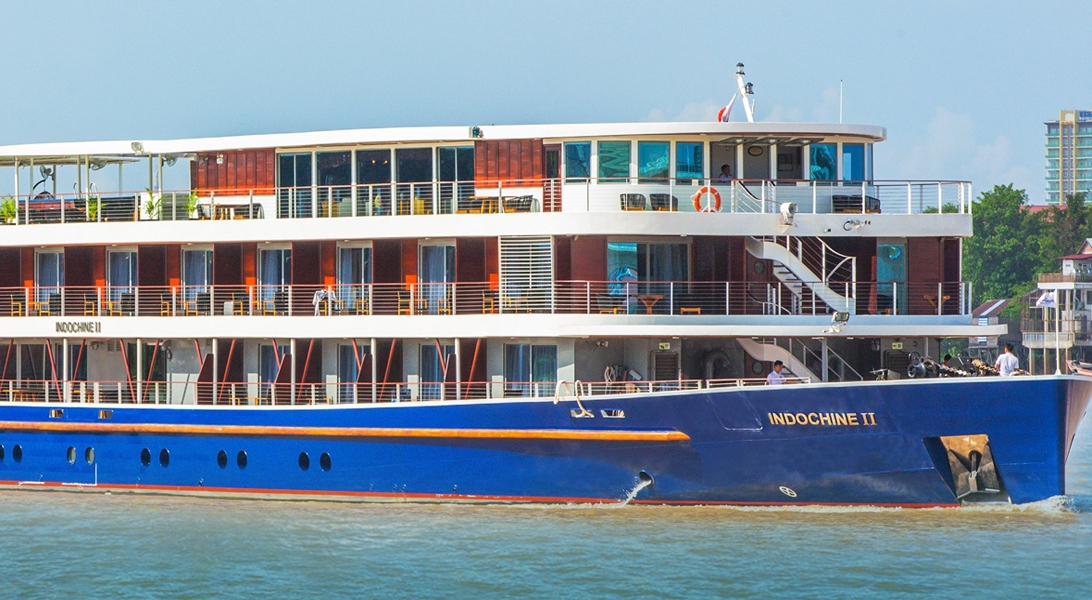
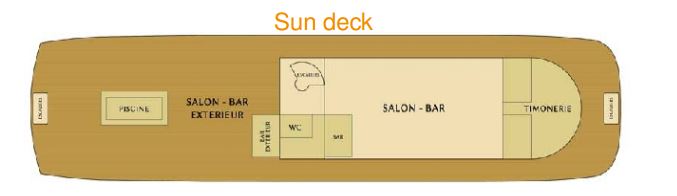

The images shown are for illustration purposes only and may not be an exact representation of what you find on the ship.
The images shown are for illustration purposes only and may not be an exact representation of what you find on the ship.
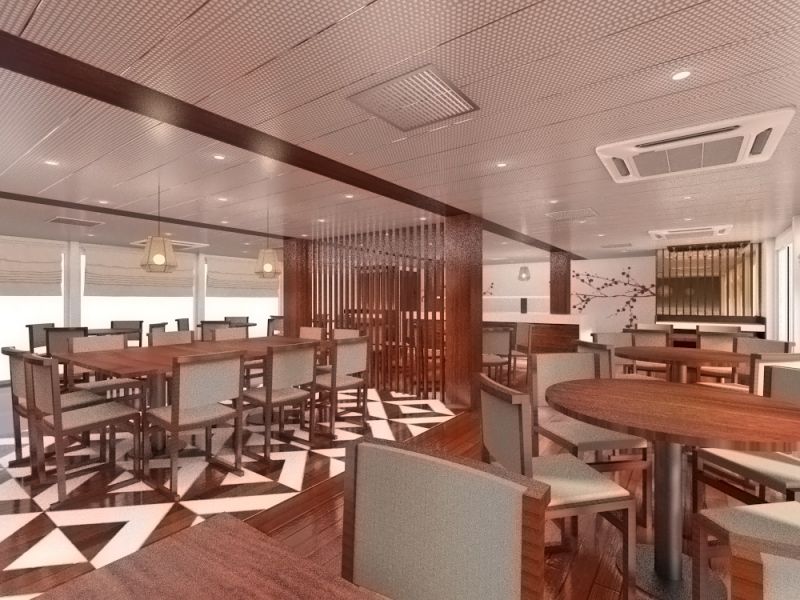
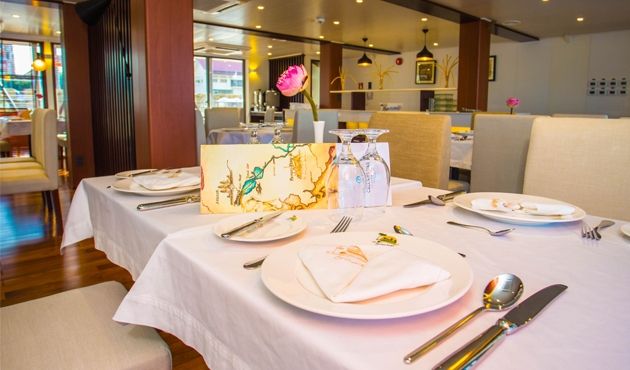
The restaurant is located on the main deck, offering a delicate cuisine in a warm and friendly atmosphere where large picture windows allow guests to fully enjoy the view.
The images shown are for illustration purposes only and may not be an exact representation of what you find on the ship.
The images shown are for illustration purposes only and may not be an exact representation of what you find on the ship.
The images shown are for illustration purposes only and may not be an exact representation of what you find on the ship.


Our Fusion packages are all ABTA & ATOL protected ensuring that your booking is safe with us
| 8 nights cruising on the Mekong | |||
| All meals included | |||
| Drinks included with meals & at the bar | |||
| Gala dinner & evening welcome cocktail | |||
| Free Wi-Fi in lounge & bar | |||
| Headsets included for excursions | |||
| Travel Assistance & Repatriation Insurance | |||
| Port Taxes and Fees | |||
 | ABTA and ATOL Protection* | ||
Date 8th Jan 2027 |
Nts 8 |
Please Call for Availability |
Date 8th Jan 2027 |
Nts 8 |
Please Call for Availability |
| Oceanview | |
| (All prices are £GBP per person) | |
| Sun 4th Oct 202604 Oct 26 | Please call for availability |
| Tue 20th Oct 202620 Oct 26 | 6,066 |
| Thu 5th Nov 202605 Nov 26 | 6,305 |
| Sat 21st Nov 202621 Nov 26 | 6,305 |
| Mon 7th Dec 202607 Dec 26 | 5,830 |
| Wed 23rd Dec 202623 Dec 26 | 6,652 |
| Tue 9th Feb 202709 Feb 27 | 6,305 |
| Thu 25th Feb 202725 Feb 27 | 6,305 |
| Sat 13th Mar 202713 Mar 27 | 6,305 |
| Mon 29th Mar 202729 Mar 27 | 6,305 |
| Wed 14th Apr 202714 Apr 27 | 5,802 |
| Thu 19th Aug 202719 Aug 27 | 6,002 |
| Sat 4th Sep 202704 Sep 27 | 6,245 |
| Mon 20th Sep 202720 Sep 27 | 6,245 |
| Wed 6th Oct 202706 Oct 27 | 6,445 |
| Fri 22nd Oct 202722 Oct 27 | 6,245 |
| Tue 23rd Nov 202723 Nov 27 | 6,524 |
| Thu 9th Dec 202709 Dec 27 | 6,667 |
| Mon 10th Jan 202810 Jan 28 | 6,524 |
| Wed 26th Jan 202826 Jan 28 | 6,524 |
| Fri 11th Feb 202811 Feb 28 | 6,524 |
| Sun 27th Feb 202827 Feb 28 | 6,524 |
| Tue 14th Mar 202814 Mar 28 | 6,524 |
| Thu 30th Mar 202830 Mar 28 | 6,524 |
| Sat 15th Apr 202815 Apr 28 | 6,002 |
Fusion Holidays when selling travel arrangements is a trading name of Co-op Travel Services Limited, registration 08903986. Fusion Cruises is an Accredited Body Member of Co-op Travel Services Limited ATOL 12904.
Book with Confidence. We are a Member of ABTA which means you have the benefit of ABTA’s assistance and Code of Conduct.
Some of the flights and flight-inclusive holidays on this website are financially protected by the ATOL scheme but ATOL protection does not apply to all holiday and travel services offered on this website. This website will provide you with information on the protection that applies in the case of each holiday and travel service offered before you make your booking. If you do not receive an ATOL Certificate then the booking will not be ATOL protected. If you do receive an ATOL Certificate but all parts of your trip are not listed on it, those parts will not be ATOL protected. Please see our booking conditions for information, or for more information about financial protection and the ATOL Certificate go to: www.caa.co.uk