| | | | | Arrive | Depart |
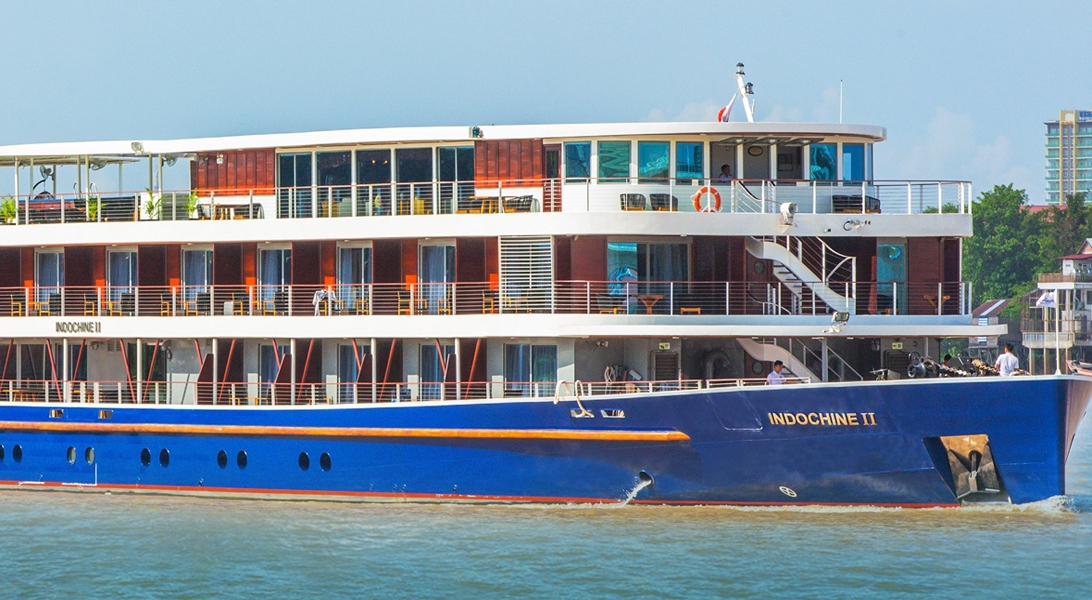
| 24th24 | DecDec | 202727 | Siem Reap, Cambodia, embark on the RV Indochine II | 14:00 | |
| Your program will begin according to your time of arrival. If your flight arrives between 6:00 a.m. and 11:00 a.m., your program will be: Lunch will be served at the hotel.Visit to Senteurs dAngkor: the ancient art of weaving showcased in this workshop where candles and soaps are made, followed by a visit to the B.R.B. handicraft center. Dinner at the hotel to celebrate Christmas Eve. Overnight in a 5* NL hotel. |
| 25th25 | DecDec | 202727 | Siem Reap, Cambodia | | |
| Visit to Ta Prohm Temple. Today, nature has taken over and the result is breathtaking: trees rise out of the temple structures and thick roots cover them. Exploration of Angkor Thom. Stroll among the enigmatic faces of the Bayon Temple, then discover the Terrace of the Elephants and the Terrace of the Leper King. Lunch in town. Boat trip on Tonl Lake to discover the floating villages and the traditional way of life of its inhabitants. Then, visit the Angkor Night Market. Dinner in town. Overnight at your hotel. |
| 25th25 | DecDec | 202727 | Angkor, Cambodia | | |
| 26th26 | DecDec | 202727 | Angkor, Cambodia | | |
| Visit to Banteay Srei Temple. An architectural marvel of Cambodia, Banteay Srei lies slightly off the main tourist routes. Lunch in town. Free time to enjoy the hotels comfortable facilities, including its superb swimming pool surrounded by lush gardens, ideal for relaxing after exploring the temples. Dinner in town and a performance by the Phare Circus: acrobatics and juggling. Overnight at your hotel. |
| 27th27 | DecDec | 202727 | Siem Reap, Cambodia | | |
| Well visit the Angkor Wat temple. Lunch will be served at the hotel.Journey to Koh Chen (approximately 5 to 6 hours by coach), with a stop in traditional villages along the way.Our crew will welcome you and help you get comfortably settled into your cabins. ORTransfer to your ship. Our crew will welcome you and help you get comfortably settled into your cabins. Afternoon cruise through Tonle Lake.Well have dinner and formally meet our crew. Our ship will remain anchored overnight. |
| 27th27 | DecDec | 202727 | Tonlé Sap, Cambodia | | |
| 28th28 | DecDec | 202727 | Koh Chen, Cambodia | | |
| Excursion included: discovery of Koh Chen.Lunch on board.Excursion included: visit to Wat Kampong Tralach Leu pagoda.Our ship will remain anchored overnight. |
| 28th28 | DecDec | 202727 | Kampong Tralach, Cambodia | | |
| 29th29 | DecDec | 202727 | Kampong Tralach, Cambodia | | |
| Excursion included: Kampong Chhnang and tasting of local products.Lunch on board.Sailing to Phnom Penh.Excursion included: tuk-tuk ride in Phnom Penh.Apsara dance show on board.Night on board. |
| 29th29 | DecDec | 202727 | Phnom Penh, Cambodia | | |
Phnom Penh, Cambodia’s busy capital, sits at the junction of the Mekong and Tonlé Sap rivers. It was a hub for both the Khmer Empire and French colonialists. On its walkable riverfront, lined with parks, restaurants and bars, are the ornate Royal Palace, Silver Pagoda and the National Museum, displaying artifacts from around the country. At the city’s heart is the massive, art deco Central Market. |
| 30th30 | DecDec | 202727 | Phnom Penh, Cambodia | | |
Phnom Penh, Cambodia’s busy capital, sits at the junction of the Mekong and Tonlé Sap rivers. It was a hub for both the Khmer Empire and French colonialists. On its walkable riverfront, lined with parks, restaurants and bars, are the ornate Royal Palace, Silver Pagoda and the National Museum, displaying artifacts from around the country. At the city’s heart is the massive, art deco Central Market. Full-day included excursion:- The Royal Palace and the Silver Pagoda- The National Museum- The Tuol Svay Prey School, a former detention, torture, and execution center run by the Khmer Rouge during the civil warWell cruise to Vietnam.Our ship will be anchored overnight. |
| 31st31 | DecDec | 202727 | Phnom Penh, Cambodia | | |
Phnom Penh, Cambodia’s busy capital, sits at the junction of the Mekong and Tonlé Sap rivers. It was a hub for both the Khmer Empire and French colonialists. On its walkable riverfront, lined with parks, restaurants and bars, are the ornate Royal Palace, Silver Pagoda and the National Museum, displaying artifacts from around the country. At the city’s heart is the massive, art deco Central Market. Included excursion: visit of the Tay An Pagoda and the Ba Chua Xu Temple.Well begin to cruise toward Sa Dec.Gala dinner served on board to celebrate the New Year.Well spend the night on board. |
| 31st31 | DecDec | 202727 | Sa Déc, Vietnam | | |
| 1st01 | JanJan | 202828 | Sa Déc, Vietnam | | |
| Included excursion: visit of the former house of Huynh Thuy Leand discovery of the famous Sa Dec Market.Well cruise to Vinh Long.Included excursion: discovery of a brick and pottery factory, a fruit-tree nursery, puffed riced, rice-paper wrappers, and rice alcohol.Well spend the night on board. |
| 1st01 | JanJan | 202828 | Cái Bè, Vietnam | | |
| 2nd02 | JanJan | 202828 | Cái Bè, Vietnam | | |
| Included excursions:- Visit of a bee farm and tasting- Ride in small sampans along the canal linedWell set out to cross the very narrow canal, heading for Ho Chi Minh City.Well spend the night on board. |
| 2nd02 | JanJan | 202828 | Ho Chi Minh City, Vietnam | | |
Romantically referred to by the French as the Pearl of the Orient, Ho Chi Minh City today is a super-charged city of sensory overload. Motorbikes zoom day and night along the wide boulevards, through the narrow back alleys and past vendors pushing handcarts hawking goods of all descriptions. Still called Saigon by most residents, this is Vietnam's largest city and the engine driving the country's current economic resurgence, but despite its frenetic pace, it's a friendlier place than Hanoi and locals will tell you the food—simple, tasty, and incorporating many fresh herbs—is infinitely better than in the capital.This is a city full of surprises. The madness of the city's traffic—witness the oddball things that are transported on the back of motorcycles—is countered by tranquil pagodas, peaceful parks, quirky coffee shops, and whole neighborhoods hidden down tiny alleyways, although some of these quiet spots can be difficult to track down. Life in Ho Chi Minh City is lived in public: on the back of motorcycles, on the sidewalks, and in the parks. Even when its residents are at home, they're still on display. With many living rooms opening onto the street, grandmothers napping, babies being rocked, and food being prepared, are all in full view of passersby.Icons of the past endure in the midst of the city’s headlong rush into capitalism. The Hotel Continental, immortalized in Graham Greene's The Quiet American, continues to stand on the corner of old Indochina's most famous thoroughfare, the rue Catinat, known to American G.I.s during the Vietnam War as Tu Do (Freedom) Street and renamed Dong Khoi (Uprising) Street by the Communists. The city still has its ornate opera house and its old French city hall, the Hôtel de Ville. The broad colonial boulevards leading to the Saigon River and the gracious stucco villas are other remnants of the French colonial presence. Grisly reminders of the more recent past can be seen at the city's war-related museums. Residents, however, prefer to look forward rather than back and are often perplexed by tourists' fascination with a war that ended 40 years ago.The Chinese influence on the country is still very much in evidence in the Cholon district, the city's Chinatown, but the modern office towers and international hotels that mark the skyline symbolize Vietnam's fixation on the future. |
| 3rd03 | JanJan | 202828 | Ho Chi Minh City, Vietnam | | |
Romantically referred to by the French as the Pearl of the Orient, Ho Chi Minh City today is a super-charged city of sensory overload. Motorbikes zoom day and night along the wide boulevards, through the narrow back alleys and past vendors pushing handcarts hawking goods of all descriptions. Still called Saigon by most residents, this is Vietnam's largest city and the engine driving the country's current economic resurgence, but despite its frenetic pace, it's a friendlier place than Hanoi and locals will tell you the food—simple, tasty, and incorporating many fresh herbs—is infinitely better than in the capital.This is a city full of surprises. The madness of the city's traffic—witness the oddball things that are transported on the back of motorcycles—is countered by tranquil pagodas, peaceful parks, quirky coffee shops, and whole neighborhoods hidden down tiny alleyways, although some of these quiet spots can be difficult to track down. Life in Ho Chi Minh City is lived in public: on the back of motorcycles, on the sidewalks, and in the parks. Even when its residents are at home, they're still on display. With many living rooms opening onto the street, grandmothers napping, babies being rocked, and food being prepared, are all in full view of passersby.Icons of the past endure in the midst of the city’s headlong rush into capitalism. The Hotel Continental, immortalized in Graham Greene's The Quiet American, continues to stand on the corner of old Indochina's most famous thoroughfare, the rue Catinat, known to American G.I.s during the Vietnam War as Tu Do (Freedom) Street and renamed Dong Khoi (Uprising) Street by the Communists. The city still has its ornate opera house and its old French city hall, the Hôtel de Ville. The broad colonial boulevards leading to the Saigon River and the gracious stucco villas are other remnants of the French colonial presence. Grisly reminders of the more recent past can be seen at the city's war-related museums. Residents, however, prefer to look forward rather than back and are often perplexed by tourists' fascination with a war that ended 40 years ago.The Chinese influence on the country is still very much in evidence in the Cholon district, the city's Chinatown, but the modern office towers and international hotels that mark the skyline symbolize Vietnam's fixation on the future. Departure to visit the Cu Chi Tunnels and discover the survival techniques used by the Viet Cong during the war (coach journey of approximately 2 hours 15 minutes each way) OR visit the Reunification Palace, the former presidential palace that became a symbol of the end of the Vietnam War, followed by free time on Nguyen Hue Esplanade(1). Lunch on board. Visit of Ho Chi Minh City, built by the French in 1859. City tour: Notre Dame Cathedral, the Central Post Office, ... Visit of the National History Museum. After our excursion, we'll return on board our ship. Tonight well have our farewell cocktail and dinner. We'll remain in port overnight. |
| 4th04 | JanJan | 202828 | Ho Chi Minh City, Vietnam, disembark the RV Indochine II | | |
Romantically referred to by the French as the Pearl of the Orient, Ho Chi Minh City today is a super-charged city of sensory overload. Motorbikes zoom day and night along the wide boulevards, through the narrow back alleys and past vendors pushing handcarts hawking goods of all descriptions. Still called Saigon by most residents, this is Vietnam's largest city and the engine driving the country's current economic resurgence, but despite its frenetic pace, it's a friendlier place than Hanoi and locals will tell you the food—simple, tasty, and incorporating many fresh herbs—is infinitely better than in the capital.This is a city full of surprises. The madness of the city's traffic—witness the oddball things that are transported on the back of motorcycles—is countered by tranquil pagodas, peaceful parks, quirky coffee shops, and whole neighborhoods hidden down tiny alleyways, although some of these quiet spots can be difficult to track down. Life in Ho Chi Minh City is lived in public: on the back of motorcycles, on the sidewalks, and in the parks. Even when its residents are at home, they're still on display. With many living rooms opening onto the street, grandmothers napping, babies being rocked, and food being prepared, are all in full view of passersby.Icons of the past endure in the midst of the city’s headlong rush into capitalism. The Hotel Continental, immortalized in Graham Greene's The Quiet American, continues to stand on the corner of old Indochina's most famous thoroughfare, the rue Catinat, known to American G.I.s during the Vietnam War as Tu Do (Freedom) Street and renamed Dong Khoi (Uprising) Street by the Communists. The city still has its ornate opera house and its old French city hall, the Hôtel de Ville. The broad colonial boulevards leading to the Saigon River and the gracious stucco villas are other remnants of the French colonial presence. Grisly reminders of the more recent past can be seen at the city's war-related museums. Residents, however, prefer to look forward rather than back and are often perplexed by tourists' fascination with a war that ended 40 years ago.The Chinese influence on the country is still very much in evidence in the Cholon district, the city's Chinatown, but the modern office towers and international hotels that mark the skyline symbolize Vietnam's fixation on the future. After you disembark from the ship, well head to Cholon, the Chinese-influenced section of the city. Well enjoy lunch and well bid you farewell at approximately 2:00 p.m. Please do not book your flight before 5:00 p.m. |