This site uses cookies as defined in our Cookie Policy, by continuing to use this site you agree to their use.
Continue

| Arrive | Depart | ||||||
| 10th10 | SepSep | 202727 | Beijing, China | ||||
| Arrive in Beijing - Touchdown in the vast sprawl of Beijing mid-afternoon, local time (flight dependent). Transfer and check in to your hotel, our base for the next three nights, and take a moment to exhale. A little over a century ago, Beijing was a walled imperial capital with gates that were sealed shut at dusk. Today, it's a city where dynastic echoes meet digital ambition. In this pulsating megacity, tradition and technology collide in the most captivating ways - centuries-old hutongs weave between shimmering towers of glass and steel, and time-honoured recipes are reimagined for a new generation of gourmands. With the rest of the afternoon at leisure, you have the choice to relax in our hotel and take advantage of its facilities or step out into the city's electric rhythm. Wander through the downtown streets or sip jasmine tea in a quiet courtyard. Later, meet your fellow travel companions and enjoy your first taste of China this evening with a welcome dinner at a local restaurant. | |||||||
| 11th11 | SepSep | 202727 | Beijing, China | ||||
| Beijing - Today we step back into Beijing's past with a guided tour of the city's most iconic landmarks. We begin in Tiananmen Square. This monumental space is one of the largest public squares on Earth, and its significance is impossible to overstate. It was here, in 1949, that Mao Zedong declared the birth of the People’s Republic of China - and here, too, that the world watched the protests of 1989. Encircling the square are some of the capital's most emblematic structures, including the Great Hall of the People, the National Museum of China, the Mao Zedong Memorial Hall, and the Tiananmen Tower. But it’s the Forbidden City that truly commands attention. A sea of golden rooftops and vermilion walls stretches across 250 acres, forming the largest imperial palace complex in the world. Once the private home of emperors, this architectural marvel has opened its gates to the world, offering a glimpse into five centuries of dynastic power and opulence. After an included lunch, we'll head to the Summer Palace, a serene contrast to the grandeur of the Forbidden City. The former Qing dynasty's lakeside retreat is a UNESCO-listed wonder - a masterclass in imperial garden design. Three-quarters of the gardens are covered by the waters of Kunming Lake and the rest is punctuated with hills and palaces ripe for exploring. Climb to the heights of Longevity Hill for sweeping views of the palace grounds, or stroll the Long Corridor, the world's longest-painted promenade, adorned with over 14,000 intricate artworks. Don’t miss the Tower of Buddhist Incense, the whimsical Qingyan Stone Boat, or the elegant Seventeen-Arch Bridge, which arcs gracefully across the lake like a brushstroke on silk. | |||||||
| 12th12 | SepSep | 202727 | Beijing, China | ||||
| Beijing - We venture beyond the city's edge this morning to tick off a true icon of world travel: the Great Wall of China. As we leave the heavily urbanised sprawl of Beijing, the landscape softens into a pastoral patchwork of orchards and farmland before catching our first glimpse of the Wall - serpentine and silent, stretching across the ridgelines like the spine of a sleeping dragon. We’ll explore the Mutianyu section, a beautifully preserved stretch known for its dense concentration of watchtowers and sweeping mountain views. Contrary to its name, you might be surprised to see the Great Wall is not, in fact, a single wall but a series of towers, barracks, and fortresses woven together to form one massive integrated defensive system (it's not hard to see why it took over 2,000 years to build). After lunch at a local restaurant, we'll turn our attention to a different kind of grandeur: the Temple of Heaven. Set within a tranquil park of ancient pines, this architectural masterpiece was once the spiritual heart of imperial China. Its circular, three-tiered, conically roofed structure is set in gardens and surrounded by historic pine woods and is designed to symbolise the relationship between earth and heaven. The temple’s triple-gabled roof, a vision in blue and gold, rises without a single nail—an enduring testament to the ingenuity of Ming dynasty craftsmanship. Here, emperors performed solemn rites to ensure harmony between heaven and earth. As you wander its echoing courtyards and gaze skyward, you’ll feel the quiet reverence that still lingers in the air. This evening, we'll gather for a culinary rite of passage: Peking duck served in a local restaurant. Though its roots trace back to 13th-century Hangzhou, it was in the imperial kitchens of Beijing that the dish was perfected. Today, the duck is roasted to crisp-skinned perfection, suspended in fierce heat until the fat renders and the skin crackles, then the meat is wrapped in delicate pancakes with slivers of cucumber and sweet bean sauce. | |||||||
| 13th13 | SepSep | 202727 | Chongqing, China | ||||
| Chongqing - Leaving the imperial majesty of Beijing behind this morning, we fly to the city of Chongqing in Southwestern China. Perched at the confluence of the Yangtze and Jialing Rivers, Chongqing is a vertical marvel. Entire neighbourhoods cling to cliffsides, metro trains emerge from mountain tunnels only to glide through the hearts of residential high-rises, highways soar twenty storeys above the ground, and dramatic glass skyscrapers sit by precarious stilted houses and centuries-old eateries. The city defies gravity and convention in equal measure. It's constantly evolving, constantly in motion. There's nowhere else like it. Upon arrival, we'll head to Ciqikou Old Town to get a glimpse of what Old Chongqing used to look like. Once known as Baiyachang, this riverside enclave dates back to the Song Dynasty (998–1003) and rose to prominence during the Qing era for its exquisite porcelain - 'ciqi' in Chinese, from which the town takes its name. Though much of Ciqikou has been restored and reimagined as a tourist destination with predominantly commercial outlets, look closely and you'll see it still hums with the rhythm of daily life. Wander its cobbled lanes and you’ll find incense curling from centuries-old temples and artisans shaping clay in tiny workshops. Later this afternoon, we make our way to Chaotianmen Port, where the Century Legend awaits. For the next ten nights, we will journey along the Yangtze. Settle into your spacious deluxe cabin, and as the city begins to glow in the soft light of evening, join the captain for a welcome party. | |||||||
| 14th14 | SepSep | 202727 | Fengdu, China | ||||
| Fengdu - Join your local guide for an excursion to Fengdu Ghost City – not only a place of worship for the gods, demons and serpents of folklore, but also a treasure house of folk culture and art integrating Confucianism, Taoism and Buddhism. With an initial ascent by cable car, then steps, this complex of temples, shrines and monasteries located on the Ming Mountain is dedicated to the afterlife and offers a unique attraction dating back over 2,000 years. This afternoon, after lunch on board, enjoy a lecture about the Three Gorges, relax with a refreshing drink from the bar or perhaps take a dip in the pool. After a short sail, we disembark this evening to see the ‘War Fire of the Three Kingdoms Show’, a large-scale outdoor performance set against the natural backdrop of the surrounding mountains. A stunning spectacle showcasing the culture and history of the Three Kingdoms over 1,800 years ago involving songs, dances, aerobatics and dramatic storytelling amid amazing sound and light effects. It’s certainly a show not to be missed! | |||||||
| 15th15 | SepSep | 202727 | Fengdu, China | ||||
| Fengjie - Today, choose your adventure - whether you are drawn to the mysteries of ancient dynasties or the majestic call of panoramic peaks, today offers you a choice of two unforgettable excursions. Sitting atop Baidi Hill, in Fengjie, is a miniature citadel of temples, gates, and legends. It was built during the Western Han Dynasty and earned its poetic name thanks to the mysterious white mist that was once believed to shroud it. History pulses through its stone paths: In 222 A.D., the first king of the Shu Kingdom Lie Bei retreated here after losing a battle to the Wu Kingdom, he entrusted his country to Zhuge Liang his faithful prime minister and a brilliant strategist, whose statue has a prominent place in the city. Wander through the Mingliang Palace, where commemorative sculptures and ancient calligraphy whisper stories of loyalty and loss. From the Kui Gate, gaze out over the mouth of the Qutang Gorge, where the Yangtze narrows dramatically between towering cliffs - a view that has inspired poets for centuries and is famously known as the image on the 10 Yuan banknote. However, be warned: with 365 steps up to the White Emperor City – one step for every day of the year – reaching the city is not for the faint hearted! Alternatively, transfer by bus to the magnificent ‘Peak of the Three Gorges’. A 4A National Scenic Spot soaring 1388m, the views over the Yangtze River and the Three Gorges are well worth a visit! Set sail later this afternoon gliding past the majestic Qutang and Wu Gorges, where sheer cliffs rise like sentinels on either side of the river and the five-step ship locks of the dam. After some wonderful scenery, delight your tastebuds on board in the ship's restaurant. | |||||||
| 16th16 | SepSep | 202727 | Yichang, China | ||||
| Yichang - This morning, we turn our gaze to one of the most ambitious engineering feats of the modern age: the Three Gorges Dam. Towering 185 metres high and stretching over 2,300 metres across the Yangtze River, this colossal structure took 17 years to complete and now holds back more than 39 billion cubic metres of water. According to NASA, it's one of the few man-made structures on Earth you can see from space with the naked eye. More than an architectural marvel, it protects over 15 million people from flooding and supplies electricity to around 200 million people - its significance to communities along the Yangtze River cannot be overstated. Today, enjoy panoramic views of the Three Gorges Dam at the River Closure Memorial Park. Then delve deeper at the Three Gorges Project Museum, where we'll learn more about the dam's impact, construction process, and cultural heritage. From ancient paintings, calligraphy and other artefacts from various periods in history, most of which were discovered during the dam’s construction. This afternoon, settle in for a scenic sail through Xiling Gorge. Once notorious for its whirlpools and rapids, this stretch of the Yangtze is now a tranquil corridor of natural beauty. Karst caves, bubbling springs, and dramatic cliff faces line the route, offering a painterly backdrop to your journey. Onboard, hear more about the Three Gorges and Ship Lock system with an on-board lecture. Tonight, enjoy a crew cabaret show or perhaps try a more traditional pastime in the Mahjong rooms (charges may apply). Mahjong is a traditional Chinese game of strategy and chance played with beautifully etched tiles - it can be noisy, but lots of fun. | |||||||
| 17th17 | SepSep | 202727 | Jingzhou, China | ||||
| Jingzhou - Today, we arrive in Jingzhou, a city where the past lingers in every stone and shadow. Once the seat of eleven emperors and a former capital of China, Jingzhou was the beating heart of the Chu Kingdom, a cradle of early Chinese civilisation. Its legacy endures - etched into ancient walls and preserved in artefacts. The entire city is surrounded by a moat and divided into three distinct quarters - Water City, Brick City and Earth City. We begin our tour in Brick City with a visit to the Jingzhou Museum. This treasure trove holds more than 130,000 artefacts, including silks, pottery, lacquer, bronze and jade. Its most astonishing exhibit is a 2,000-year-old ancient corpse - one of the best-preserved of a male cadaver in the Western Han Dynasty - it still bears traces of skin and hair, a haunting testament to ancient burial rites. Later we trace the city's ancient wall defences. Originally built from tamped mud during the Eastern Han dynasty, over the centuries it has been restored and rebuilt in stone. The walls around the south gate are the oldest dating back to the Song dynasty, while other sections reflect the architectural styles of the Ming and Qing dynasties. Alternatively, venture north of Jingzhou to the fascinating Xióngjiā National Archaeological Park, where the tomb of the Xióngjiā Zhǒng reveals a world of ancient ritual and royal splendour. The site features a vast collection of jade artefacts, skeletal remains of horses, and intricately preserved chariots. | |||||||
| 18th18 | SepSep | 202727 | Wuhan, China | ||||
| Wuhan - Set at the confluence of the Yangtze River and its longest tributary, the Han River, Wuhan is shaped as much by water as by land. First settled during the Three Kingdoms era, Wuhan remained enclosed by a city wall until the end of the 19th century - before merging with neighbouring cities to create central China's industrial commercial powerhouse, the largest city in central China. In the company of a local guide, we'll ascend Snake Hill to explore the Yellow Crane Tower, a traditional Chinese tower and one of the city's highlights. Immortalised by 8th-century poet Cui Hao, the tower has become a symbol of the city’s soul - its legendary crane has long since flown, but its spirit still lingers. Initially constructed in 223 AD, it has been rebuilt many times. The five-storey, yellow-tiled tower you'll see today was built in the 1980s - an homage to the Qing tower that was destroyed by fire in 1884. From its balconies, the views stretch across the Yangtze. Continuing to the Hubei Provincial Museum, located on the shores of Wuhan's East Lake. The beautifully curated collection of over 2 million artefacts offers an extensive look at the area's history. From ancient bronze bells and ceremonial jade to delicate calligraphy and porcelain, the collection is a testament to Hubei’s role as a cradle of Chinese civilisation. Back on the Century Legend later, the evening is yours to enjoy. You could experience a treatment at the spa, browse the onboard boutiques or relax with a drink at the bar. | |||||||
| 19th19 | SepSep | 202727 | Jiujiang, China | ||||
| Jiujiang - Today you can enjoy an in-depth tour of Jingdezhen Porcelain Town or join our full-day excursion to the famous Mount Lushan. Jingdezhen has been playing an important part in Chinese porcelain production for millennia. Archaeological excavations have shown evidence of Jingdezhen firing porcelain in the Eastern Jin Dynasty (265–420 AD) and its reputation has only grown. Characterised by its beautiful shape, rich decoration, unique style and sought-after white porcelain, Jingdezhen porcelain is the most famous in China described as ‘white like jade, bright as a mirror, thin as paper and sounds like a chime’! Our guided tour of Jingdezhen Porcelain Town showcases many examples from dynasties of craftsmen in this area. We'll see an ancient kiln porcelain factory where artisans still shape, glaze, and fire their wares using time-honoured techniques and learn the history of ceramics, including how Jingdezhen porcelain achieved its special features. Alternatively, join our full-day tour of Mount Lushan, located on the banks of Poyang Lake - the largest freshwater lake in China. Mount Lushan is one of China's most famous mountains, gaining its UNESCO World Heritage status in 1996. Here, we'll ascend by cable car above the lush forests as valleys appear and disappear amid shrouds of mist to enjoy scenic views of the lake and mountains. | |||||||
| 20th20 | SepSep | 202727 | Chizhou Pt, China | ||||
| Chizhou - Step off the tourist trail today and into the tranquil embrace of Chizhou. Nestled on the verdant folds of southern Anhui province, this region is known as a "natural oxygen bar" due to its ecological environment - its air contains 35 times more negative oxygen ions than the national average. It's no wonder the mist-veiled peaks have inspired poets for centuries, including renowned Chinese poets Li Bai and Du Mu. Today you have the choice between a full-day excursion to Mount Jiuhua or a shorter excursion to Jindizang Temple. Boasting 99 peaks and 18 scenic spots, the landscape surrounding Mount Jiuhua is awash with spiritual grandeur and natural drama. Soaring peaks and perilously overhanging cliffs are punctuated by gurgling streams, crystalline springs, and ancient bamboo forests. Together with Mount Wutai, Mount Putuo and Mount Emei, Mount Jiuhua is one of four sacred mountains in China and is dedicated to Ksitigarbha - a bodhisattva and protector of beings in hell. Buddhism first took root here in the year 401 and has been popular since the Tang dynasty. On our guided tour, we'll see some of the 99 temples that are entombed within the forests, decorated with thousands of ancient Buddha statues. A highlight of the day will be the Zenshan Hall, the spiritual heart of the mountain and the base of Buddhist culture. For those who would prefer a shorter excursion but no less meaningful journey, instead, opt for a visit to the Jindizang Temple tucked away in the peaks of Mount Jiuhua. With its sweeping eaves and imperial-style architecture, the temple spans seven halls with a giant Buddha statue adorning each hall. But it is the legend of Monk Wuxia that draws pilgrims. Said to have meditated in a cave for over 100 years, surviving on wild herbs, his 1,300-year-old mummified body remains miraculously intact - a symbol of spiritual attainment. | |||||||
| 21st21 | SepSep | 202727 | Nanjing, China | ||||
| Nanjing - Once the seat of emperors and revolutionaries, Nanjing is the capital of Jiangsu Province. From the ancient capitals of the Wu, Yue, and Chu Kingdoms to the political heart of modern China under Dr. Sun Yat Sen - who declared it the capital of the Nationalist Republic in 1912 - the city holds much of China's history. Today, we'll learn more about the twin peaks of Mount Niushou - so named for its ox-horn silhouette rising above the forested landscape - during a guided tour of the newly developed Mount Niushou Cultural Park. At the heart of the site lies a double-domed structure. The inner dome - which is shaped like a durian fruit or the Buddha’s chignon - is cradled by an outer dome resembling a kasaya, the traditional monastic robe. Together, they house one of Buddhism’s most sacred relics: the sarira of Buddha Shakyamuni, discovered in 2008 at the site of the ancient Porcelain Tower and now enshrined here. These pearl-like remains, believed to be formed from the cremated ashes of enlightened masters, draw pilgrims from across the world. The palace is surrounded by a pagoda and temple complex that offers sweeping views and quiet corners for reflection. Please note the above port of call and excursion may take place on Day 14 instead depending on the ship‘s final docking arrangements. | |||||||
| 22nd22 | SepSep | 202727 | Cruising | ||||
| 23rd23 | SepSep | 202727 | Shanghai, China | ||||
Shanghai is a city of two faces. It is home to some of the world’s tallest skyscrapers, miles of luxury goods shops, and scores of trendy bars and restaurants. But look just beyond the main streets and you’ll find narrow alleyways packed with traditional lane houses, where laundry billows from bamboo poles, and local communities are alive and well.Shanghai has always been China’s most Westernized city. In its heyday, Shanghai had the best nightlife, the greatest architecture, and the strongest business in Asia. Nearly a century later, after extreme tumult and political upheaval, it’s back on top.Shanghai’s charm lies not in a list of must-see sites, but in quiet, tree-lined streets, the Bund’s majestic colonial buildings, sweet boutiques, and a dizzying array of places to eat and drink, from literal hole-in-the-walls to celebrity chef restaurants.Today, Shanghai has nearly 24 million people, the skyscrapers keep getting taller, the metro keeps getting longer, and the historical buildings continue to evade the wrecking ball. For how much longer is anyone’s guess. Shanghai - Say farewell to the crew aboard Century Legend and step ashore into the magnificent city of Shanghai. We'll begin in the Old Quarter, with a visit to the enchanting Yuyuan Gardens. Originally built in the Ming Dynasty, this classical Chinese garden is more of a miniature city with temples, boathouses, and even a traditional theatre - all blended with shaded alcoves, koi-filled ponds and pavilions. With time to explore as you wish, the superstitious among you may choose to walk to the Jiu Qu Bridge (the Nine-Turn Bridge). The Chinese people believe that the number nine symbolises auspiciousness and walking across the Jiu Qu Bridge is said to bring people good luck. If you're not superstitious, the views are still enticing and the bridge leads to the Mid-Lake Pavilion Teahouse, the oldest in Shanghai—a perfect spot to sip fragrant oolong and watch the world drift by. After an included lunch, we continue to the Jade Buddha Temple, one of Shanghai’s most revered Buddhist monasteries. Originally built in 1882, the temple was destroyed and later rebuilt in 1928 around two extraordinary jade statues imported from Burma. One is a massive statue of a seated Buddha covered with jewels, and the other is a reclining Buddha that represents the Buddha’s final moments. The estimated weight of the statues exceeds 900 kg. This evening, you may wish to explore Nanjing Road, Shanghai’s legendary shopping boulevard. Lined with luxury boutiques and local speciality shops, it’s a vibrant blend of East and West, old and new - perfect for those last-minute souvenirs. It’s also worth detouring into the side streets, where you may stumble upon authentic market stalls of fresh produce frequented by the locals and teahouses serving dumplings and hot cups of oolong. | |||||||
| 24th24 | SepSep | 202727 | Shanghai, China, disembark the Century Legend | ||||
Shanghai is a city of two faces. It is home to some of the world’s tallest skyscrapers, miles of luxury goods shops, and scores of trendy bars and restaurants. But look just beyond the main streets and you’ll find narrow alleyways packed with traditional lane houses, where laundry billows from bamboo poles, and local communities are alive and well.Shanghai has always been China’s most Westernized city. In its heyday, Shanghai had the best nightlife, the greatest architecture, and the strongest business in Asia. Nearly a century later, after extreme tumult and political upheaval, it’s back on top.Shanghai’s charm lies not in a list of must-see sites, but in quiet, tree-lined streets, the Bund’s majestic colonial buildings, sweet boutiques, and a dizzying array of places to eat and drink, from literal hole-in-the-walls to celebrity chef restaurants.Today, Shanghai has nearly 24 million people, the skyscrapers keep getting taller, the metro keeps getting longer, and the historical buildings continue to evade the wrecking ball. For how much longer is anyone’s guess. Return home - Please note: Depending on flight times, you will return back to the UK on the same day. We may occasionally use overnight flights, in which case you will arrive back in the UK on the following day. | |||||||
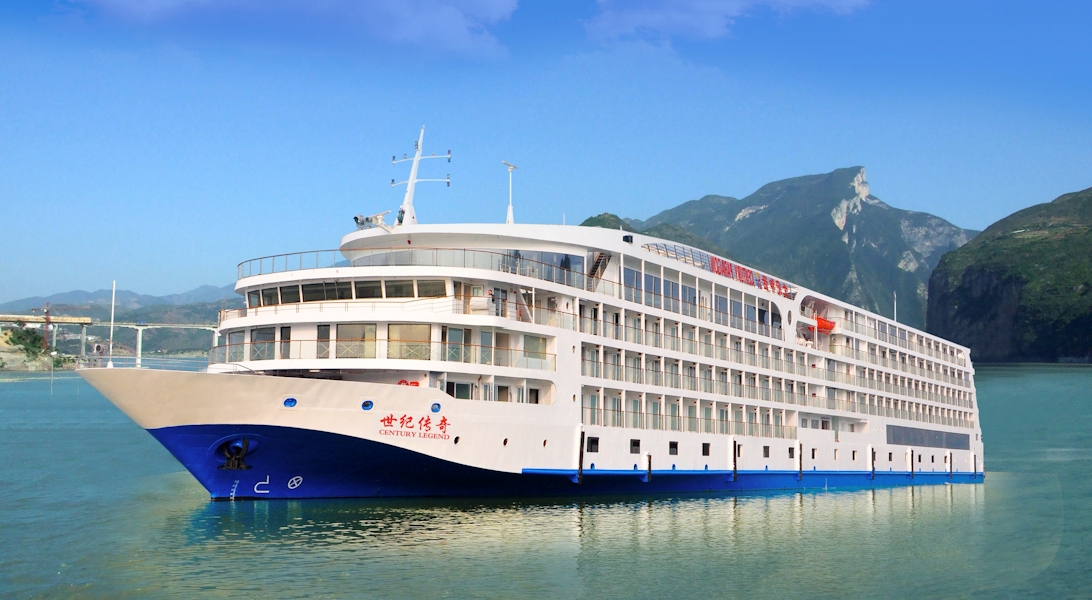


The images shown are for illustration purposes only and may not be an exact representation of what you find on the ship.
The images shown are for illustration purposes only and may not be an exact representation of what you find on the ship.

The images shown are for illustration purposes only and may not be an exact representation of what you find on the ship.

The sun deck features a spacious open-air deck at the bow of the ship, complete with sun loungers - it's the perfect place to watch the scenery change along the riverbanks. Inside, you'll find a quiet spot to read in the library, or, for a more active activity, you can work up a sweat in the onboard gym.
As evening sets in, our VIP restaurant - provides a more exclusive setting for dinner, buffet style (included at no extra charge for suite guests).
The images shown are for illustration purposes only and may not be an exact representation of what you find on the ship.
The images shown are for illustration purposes only and may not be an exact representation of what you find on the ship.


Our Fusion packages are all ABTA & ATOL protected ensuring that your booking is safe with us
| Return flights including luggage allowance | |||
| Overseas Transfers | |||
| 15 nights cruising on the Yangtze | |||
| Port Taxes and Fees | |||
 | ABTA and ATOL Protection* | ||
Date 10th Sep 2027 |
Nts 15 |
Please Call for Availability |
Date 10th Sep 2027 |
Nts 15 |
Please Call for Availability |
| (All prices are £GBP per person) |
| Fri 23rd Apr 202723 Apr 27 | Please call for availability |
| Sat 24th Apr 202724 Apr 27 | from 6,349 |
| Thu 13th May 202713 May 27 | Please call for availability |
| Sat 15th May 202715 May 27 | from 6,509 |
| Thu 3rd Jun 202703 Jun 27 | Please call for availability |
| Sat 5th Jun 202705 Jun 27 | from 5,489 |
| Sat 11th Sep 202711 Sep 27 | from 6,509 |
| Thu 21st Oct 202721 Oct 27 | Please call for availability |
| Sat 23rd Oct 202723 Oct 27 | from 6,199 |
| Thu 11th Nov 202711 Nov 27 | Please call for availability |
| Sat 13th Nov 202713 Nov 27 | from 6,299 |
| Sat 22nd Apr 202822 Apr 28 | from 5,999 |
| Sat 13th May 202813 May 28 | from 6,199 |
| Sat 3rd Jun 202803 Jun 28 | from 6,099 |
| Sat 16th Sep 202816 Sep 28 | Please call for availability |
| Sat 28th Oct 202828 Oct 28 | Please call for availability |
| Sat 18th Nov 202818 Nov 28 | Please call for availability |
Fusion Holidays when selling travel arrangements is a trading name of Co-op Travel Services Limited, registration 08903986. Fusion Cruises is an Accredited Body Member of Co-op Travel Services Limited ATOL 12904.
Book with Confidence. We are a Member of ABTA which means you have the benefit of ABTA’s assistance and Code of Conduct.
Some of the flights and flight-inclusive holidays on this website are financially protected by the ATOL scheme but ATOL protection does not apply to all holiday and travel services offered on this website. This website will provide you with information on the protection that applies in the case of each holiday and travel service offered before you make your booking. If you do not receive an ATOL Certificate then the booking will not be ATOL protected. If you do receive an ATOL Certificate but all parts of your trip are not listed on it, those parts will not be ATOL protected. Please see our booking conditions for information, or for more information about financial protection and the ATOL Certificate go to: www.caa.co.uk