| | | | | Arrive | Depart |
| 4th04 | JulJul | 202727 | Edinburgh, Scotland, embark on the Douglas Mawson | | |
Edinburgh is to London as poetry is to prose, as Charlotte Brontë once wrote. One of the world's stateliest cities and proudest capitals, it's built—like Rome—on seven hills, making it a striking backdrop for the ancient pageant of history. In a skyline of sheer drama, Edinburgh Castle watches over the capital city, frowning down on Princes Street’s glamour and glitz. But despite its rich past, the city’s famous festivals, excellent museums and galleries, as well as the modern Scottish Parliament, are reminders that Edinburgh has its feet firmly in the 21st century.Nearly everywhere in Edinburgh (the burgh is always pronounced burra in Scotland) there are spectacular buildings, whose Doric, Ionic, and Corinthian pillars add touches of neoclassical grandeur to the largely Presbyterian backdrop. Large gardens are a strong feature of central Edinburgh, where the city council is one of the most stridently conservationist in Europe. Arthur's Seat, a mountain of bright green and yellow furze, rears up behind the spires of the Old Town. This child-size mountain jutting 822 feet above its surroundings has steep slopes and little crags, like a miniature Highlands set down in the middle of the busy city. Appropriately, these theatrical elements match Edinburgh's character—after all, the city has been a stage that has seen its fair share of romance, violence, tragedy, and triumph.Modern Edinburgh has become a cultural capital, staging the Edinburgh International Festival and the Fringe Festival in every possible venue each August. The stunning Museum of Scotland complements the city’s wealth of galleries and artsy hangouts. Add Edinburgh’s growing reputation for food and nightlife and you have one of the world’s most beguiling cities.Today the city is the second most important financial center in the United Kingdom, and the fifth most important in Europe. The city regularly is ranked near the top in quality-of-life surveys. Accordingly, New Town apartments on fashionable streets sell for considerable sums. In some senses the city is showy and materialistic, but Edinburgh still supports learned societies, some of which have their roots in the Scottish Enlightenment. The Royal Society of Edinburgh, for example, established in 1783 "for the advancement of learning and useful knowledge," remains an important forum for interdisciplinary activities.Even as Edinburgh moves through the 21st century, its tall guardian castle remains the focal point of the city and its venerable history. Take time to explore the streets—peopled by the spirits of Mary, Queen of Scots; Sir Walter Scott; and Robert Louis Stevenson—and pay your respects to the world's best-loved terrier, Greyfriars Bobby. In the evenings you can enjoy candlelit restaurants or a folk ceilidh (pronounced kay-lee, a traditional Scottish dance with music), though you should remember that you haven't earned your porridge until you've climbed Arthur's Seat. Should you wander around a corner, say, on George Street, you might see not an endless cityscape, but blue sea and a patchwork of fields. This is the county of Fife, beyond the inlet of the North Sea called the Firth of Forth—a reminder, like the mountains to the northwest that can be glimpsed from Edinburgh's highest points, that the rest of Scotland lies within easy reach. Having made your way to Edinburgh, you will be met by a representative of Aurora Expeditions and transferred to our group hotel. Upon arrival at your included hotel, please visit the Aurora Expeditions hospitality desk to collect your luggage cabin tags and to speak with our ground operations team, who may have information to share with you about pre-embarkation or to provide you with information about where to dine, withdraw cash or purchase last minute items from a local pharmacy or supermarket. The remainder of your time is at leisure. All meals today are at your own expense. Accommodation: Courtyard Marriott Edinburgh |
| 5th05 | JulJul | 202727 | Troon, Scotland | | |
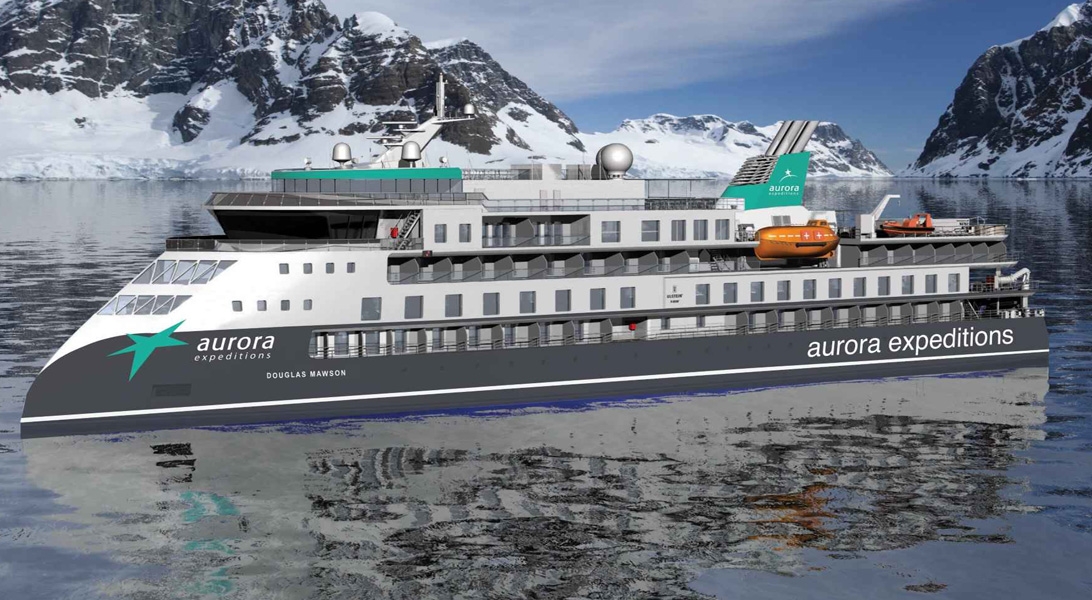
| Troon is a town and sea port in South Ayrshire, situated on the west coast of Ayrshire in Scotland, about eight miles north of Ayr and three miles northwest of Glasgow Prestwick Airport. Troon has a port with ferry and freight services, and a yacht marina After breakfast, check-out and bring your luggage to the foyer. Please place any items required today in your hand luggage as your main bag will be transferred to the ship. Edinburgh awaits us this morning as our local guide welcomes us with stories of Scotland's capital city. Stretching just over one mile, five cobblestoned streets make up the walking precinct of the Royal Mile. Starting at The Palace of Holyroodhouse, the official residence of the British monarch in Scotland, we’ll step back in time to hear tales of princes, poets, and politicians as we stroll past some of Edinburgh’s most iconic buildings including the Church of Canongate and Scotland's own parliament house. Perched atop an extinct volcano, Edinburgh Castle dominates the capital city’s skyline just as it has dominated Scotland’s long and colourful history. This instantly recognisable fortress is a powerful national symbol, and part of Edinburgh’s World Heritage Site. Note: entry to the castle is not guaranteed (tickets not available until closer to departure). You’ll have time to explore the castle precinct and Royal Mile which are scattered with friendly pubs and charismatic restaurants (lunch own expense). Our two-hour transfer takes us to the west coast port of Troon where our expedition team will welcome you aboard the Douglas Mawson in the late afternoon. Once onboard, settle into your cabin before our important briefings. We will set sail along Scotland's northwest coast in the evening and meet your expedition team and crew. |
| 6th06 | JulJul | 202727 | At Sea | | |
| 7th07 | JulJul | 202727 | At Sea | | |
| 8th08 | JulJul | 202727 | Outer Hebrides, Scotland | | |
From the Inner Hebrides we make our way to the Outer Hebrides – also known as the Western Isles – that stretch for 209 kilometres (128 miles) and look out on their western side to the Atlantic Ocean. Our first stop is at the Isle of Lewis, the largest and northern-most island in the Outer Hebrides. We plan to make a stop at Callanais, where archaeology buffs will be keen to see the fascinating group of Standing Stones, dating from around 3,000 BCE. Weather permitting, we plan to land at the isolated archipelago (and World Heritage site) of St Kilda, where derelict crofts bear testament to the fortitude of islanders who once tended the unique Soay sheep and harvested seabirds for food—and to pay their rent in the form of wool, meat and feathers. The isles hold Europe’s most important seabird colony and is home to Britain’s highest sea stacks. Orkney’s archipelago of 70 windswept islands, 10 kilometres / 6 miles north of the Scottish mainland, a rich tapestry of archaeology, history and wildlife awaits. We follow the passage of time—from 5,000-year-old World Heritage Neolithic sites, past relics from Vikings and reminders of World War II occupation—to present day crofting communities. Imposing sea cliffs teem with seabirds and cliff top paths beckon the keen hikers among us. Our kayakers use paddle-power to explore sections of Orkney’s fascinating coastline. At the Knap of Howar on Papa Westray lies the earliest known house in Northern Europe, occupied by Neolithic farmers over 5,000 years ago. Here we are welcomed by the friendly locals. Enjoy the lively Scottish dance and folk ensemble, "Poor Man's Corner," hailing from Papa Westray, set to grace the local pub with their spirited tunes. Mingle and enjoy a few drinks, while listening to the captivating melodies and infectious rhythms. |
| 9th09 | JulJul | 202727 | Outer Hebrides, Scotland | | |
| 10th10 | JulJul | 202727 | Orkney Islands, Scotland | | |
| 11th11 | JulJul | 202727 | Shetland Islands, Scotland | | |
Britain’s most northerly islands lie almost 160 kilometres (99 miles) north of the Scottish mainland, at a similar latitude to the southern tip of Greenland, or Bergen in Norway. Kept relatively warm by the Gulf Stream, Shetland’s 100 islands experience almost 24 hours of daylight in summer. They abound with nature reserves and archaeological sites and offer a taste of traditional island life. We plan to explore some of the following sites: Midway between Orkney and Shetland, Fair Isle houses a major European ornithological research station and is also famous for knitwear and historic shipwrecks. About five kilometres by three kilometres / three miles by two miles in area, it is surrounded by impressive cliffs. The 70 or so islanders mainly live in traditional crofts on the more fertile low-lying southern part of the island. A bird watchers’ paradise, Fair Isle lies on the intersection of major flight paths from Scandinavia, Iceland and Faroe. In summer, the cliffs teem with breeding fulmars, kittiwakes, guillemots, gannets, shags and puffins. The Isle is an excellent place to view seabirds, especially puffins at close range. Fair Isle also has over 250 species of flowering plants, including wetland flowers, rare orchids, alpine species and common wildflowers. We’ll be welcomed by the hospitable villagers and may take a hike or visit the museum. Grey and common seals inhabit these waters around Fair Isle, while sharp eyes may spot harbour porpoises, white-beaked dolphins, Atlantic white-sided dolphins, killer whales (orcas) and minke whales. From Lerwick, explore Jarlshof, one of Shetland's best preserved and most complex archaeological sites. It was exposed by storms in the late 19th century. The Old House of Sumburgh, built here in the 17th century, was named 'Jarlshof' by Sir Walter Scott in his novel 'The Pirate'. The record of human occupation dates from around 3,200 BCE. Jarlshof’s main Bronze Age site is the house of a bronzesmith working around 800 BC. Clay moulds into which molten bronze was poured revealed that he was casting axe heads and short swords. It seems that Shetland suited early Norse settlers, for they quickly settled here and left their mark on Shetland's history for ages to come. With its mile-long seabird cliffs, the Island of Noss is a National Nature Reserve. In breeding season, the sound of around 150,000 birds and chicks fills the air. Millions of years of wind and ice have honeycombed thousands of nesting ledges in sandstone cliffs almost 200-metres / 656-feet high. Resident seals and visiting otters feed in dense kelp around the shores. Mousa Broch, on the small uninhabited island of Mousa, is the best preserved of Scotland’s 570 brochs (fortified Iron Age towers). Storm petrels nest among its stones, which can be seen when visiting the broch at night. In daylight, a large colony of common and grey seals basks on its shores, and you may spot otter (Dratsi, in Shetland dialect). |
| 12th12 | JulJul | 202727 | Shetland Islands, Scotland | | |
| 13th13 | JulJul | 202727 | Shetland Islands, Scotland | | |
| 14th14 | JulJul | 202727 | Kirkwall, Orkney Islands, Scotland | | |
In bustling Kirkwall, the main town on Orkney, there's plenty to see in the narrow, winding streets extending from the harbor. The cathedral and some museums are highlights. Discover the rich history in Kirkwall, capital of the Orkney Islands. Initial impressions are misleading, as the harbour area looks modern, but the narrow winding streets and lanes of the old town, which have remained relatively unchanged over the centuries are appealing. Everything west of Kirkwall is known as West Mainland, an area of rich farmland, rolling hills and moorland, with dramatic cliffs along the Atlantic coastline. Some of the main archaeological attractions we may see include the standing Stones of Stenness, the Ring of Brodgar, and the chambered tombs of Maes Howes that to this day still have unresolved mysteries. Personalise your expedition with our included ‘Your Choice’ experiences that best suits your interests and level of fitness. Option 1 - Orkney Treasures - Skara Brae (Duration: 4 hours / Level of difficulty: Moderately paced) Embark on a journey through the serene countryside, venturing into the World Heritage heartland of the Orkney’s, celebrated for its abundance of prehistoric archaeology. Traverse past the awe-inspiring Standing Stones of Stenness and make a pause at the Ring of Brodgar—an immense ceremonial stone circle with roots reaching back nearly 5000 years. Continue your exploration to the ancient village of Skara Brae, a settlement that has withstood the test of time for 5000 years. Delve into its rich history, thoughtfully interpreted at the visitor centre, and witness the remarkable dwellings unveiled from beneath the sand dunes by storms a mere 150 years ago. A short 200-meter stroll leads to Skaill House, a distinguished manor and Orkney's finest. Constructed in 1620 by Bishop George Graham on the grounds of a farmstead believed to date back to the Norse period, Skaill House boasts a 400-year legacy. All 12 of its Lairds throughout history are interconnected, each contributing to the house's storied history and impressive collection. Immerse yourself in the captivating tales and artifacts within the walls of this historic manor, a testament to the enduring heritage of Orkney. Option 2 - The Heart of Neolithic Orkney (Duration: 3.45 hours / Level of difficulty: Moderately paced) Pass through the gentle rolling landscape and into the Neolithic Heartland of Orkney; an area designated as a World Heritage Site due to its wealth of prehistoric archaeology. Stop at the Ring of Brodgar; a huge ceremonial circle of stones dating back almost 5000 years. Next take a short coach journey to marvel at the smaller, yet taller and more ancient Standing Stones of Stenness, currently the oldest known stone circle in Europe. Ponder upon its creation and hear of folk tales and traditions inspired by its mysterious and elusive magnificence. Wander along to Barnhouse, an ancient Neolithic village and part of Orkney’s UNESCO World Heritage Site. Walk among the houses and learn about everyday lives of the Neolithic people who built these structures. Pause to appreciate the serene bird hide nestled along Harray Loch, offering a tranquil interlude in nature. Conclude your day with a visit to St Magnus Cathedral, a testament to the Vikings' architectural prowess during their 500-year reign over the islands. This unique tour promises a fresh perspective, unveiling the lesser-explored facets of Orkney's Neolithic legacy and inviting you to connect with its mysterious and enduring history. |
| 15th15 | JulJul | 202727 | Aberdeen, Scotland, disembark the Douglas Mawson | | |
With close to 220,000 inhabitants, Aberdeen is Scotland's third most populous city. Locally quarried grey granite was used during the mid-18th to mid-20th centuries for many of Aberdeen's buildings, and hence the nicknames it has earned as the Granite City, or the Grey City. Aberdeen granite was also used to build the terraces of the Houses of Parliament and Waterloo Bridge in London. Since the discovery of North Sea oil in the 1970s, Aberdeen has also been called the Oil Capital of Europe or the Energy Capital of Europe. It is no wonder that because of the oil fields in the North Sea, Aberdeen's seaport is very important. The Heliport with its flights to the oil fields is one of the busiest commercial heliports in the world. On arrival in Aberdeen, disembark in the early morning and bid a fond farewell to fellow travellers before a transfer to the airport to continue your journey. Note: At the conclusion of the voyage, we recommend booking flights departing after 12.00 pm on the day of disembarkation in case there are delays. |