This site uses cookies as defined in our Cookie Policy, by continuing to use this site you agree to their use.
Continue

Welcome to Aurora Expeditions’ The Crown and The Clans
Few rivalries are as passionate and enduring as that between the Scottish and the English. From the formidable reigns of Cnut the Great, Edward the Confessor and William the Conqueror, to the illustrious dynasties of the Tudors, Plantagenets and Windsors, the British monarchy has sculpted the landscape of today’s United Kingdom. Iconic figures such as William Wallace, Robert the Bruce and Mary, Queen of Scots, led their people in the pursuit of independence, yet despite the storied struggles for sovereignty, 21st-century Scotl... and remains under the rule of an English monarch.
Our exploration ventures deep into the heart of this historical rivalry, tracing its echoes through castles, battlefields, prisons, and palaces. From the tumultuous days of foreign invasions to the zenith of the British Empire and the media-fuelled drama of modern monarchs, we uncover the clandestine affairs, extravagant lifestyles, and captivating unions that have shaped the course of history. Set against the backdrop of Scotland’s resilient clans, whose unwavering cry for freedom has inspired generations, our journey promises a quintessentially British odyssey. Join us as we embark on a captivating trail through the annals of time, following the enigmatic path of the Crown and the Clans.
| Arrive | Depart | ||||||
| 6th06 | JunJun | 202727 | London (Greenwich), England, embark on the Douglas Mawson | ||||
About 8 miles downstream—which means seaward, to the east—from central London, Greenwich is a small borough that looms large across the world. Once the seat of British naval power, it is not only home to the Old Royal Observatory, which measures time for our entire planet, but also the Greenwich Meridian, which divides the world into two—you can stand astride it with one foot in either hemisphere. Bear in mind that the journey to Greenwich is an event in itself. In a rush, you can take the driverless DLR train—but many opt for arriving by boat along the Thames. This way, you glide past famous sights on the London skyline (there’s a guaranteed spine chill on passing the Tower) and ever-changing docklands, and there’s usually a chirpy Cock-er-ney navigator enlivening the journey with his fun commentary. A visit to Greenwich feels like a trip to a rather elegant seaside town—albeit one with more than its fair share of historic sites. The grandiose Old Royal Naval Hospital, designed by Christopher Wren, was originally a home for veteran sailors. Today it’s a popular visitor attraction, with a more glamorous second life as one of the most widely used movie locations in Britain. Greenwich was originally home to one of England's finest Tudor palaces, and the birthplace of Henry VIII, Elizabeth I, and Mary I. Inigo Jones built what is considered the first "classical" building in England in 1616—the Queen's House, which now houses a collection of fine art. Britain was the world’s preeminent naval power for over 500 years, and the excellent National Maritime Museum> details that history in an engaging way. Its prize exhibits include the coat worn by Admiral Lord Nelson (1758–1805) in his final battle—bullet hole and all. The 19th-century tea clipper Cutty Sark was nearly destroyed by fire in 2007, but reopened in 2012 after a painstaking restoration. Now it’s more pristine than ever, complete with an impressive new visitor center. Greenwich Park, London's oldest royal park, is still home to fallow red deer, just as it has been since they were first introduced here for hunting by Henry VIII. The Ranger's House now houses a private art collection, next door to a beautifully manicured rose garden. Above it all is the Royal Observatory, where you can be in two hemispheres at once by standing along the Greenwich Meridian Line, before seeing a high-tech planetarium show. Toward north Greenwich, the hopelessly ambitious Millennium Dome has been successfully reborn as the O2 and now hosts major concerts and stand-up comedy gigs. More adventurous visitors can also go Up the O2 on a climbing expedition across the massive domed surface. Meanwhile, those who prefer excursions of a gentler kind may prefer to journey a couple of miles south of the borough, farther out into London’s southern suburbs, to the shamefully underappreciated Eltham Palace. Once a favorite of Henry VIII, parts of the mansion were transformed into an art deco masterpiece during the 1930s. Welcome to London. Upon your arrival, make your way to the Arrivals Hall to meet a representative from Aurora Expeditions, followed by a transfer to our group hotel. At the hotel, visit our hospitality desk in the lobby to meet our team, who will provide you with useful information regarding pre-embarkation procedures and about your time in the UK. You will also receive Aurora Expeditions cabin tags for your luggage. Please clearly label the tags with your name and your cabin number on the ship. This evening offers time to relax in preparation for our ‘day out in London’ tomorrow. Our group hotel has a popular restaurant and is close to plenty of corner pubs and cosy restaurants should you wish to try some local cuisine. Accommodation: Copthorne Tara Hotel London Kensington (or similar) | |||||||
| 7th07 | JunJun | 202727 | London Tower Bridge, England | ||||
London is an ancient city whose history greets you at every turn. If the city contained only its famous landmarks—the Tower of London or Big Ben—it would still rank as one of the world's top cities. But London is so much more. The foundations of London's character and tradition endure. The British bobby is alive and well. The tall, red, double-decker buses (in an updated model) still lumber from stop to stop. Then there's that greatest living link with the past—the Royal Family with all its attendant pageantry. To ice the cake, swinging-again London is today one of the coolest cities on the planet. The city's art, style, and fashion make headlines around the world, and London's chefs have become superstars. With its six royal palaces, numerous shops endorsed by royal charters, and a wealth of museums, galleries, and vaults housing treasures from the Crown Jewels to King Charles III himself, London indisputably embodies the essence of ‘the crown’. From the iconic coronation chair at Westminster Abbey to the stately Royal Mews, and the expansive parklands of St James’s Park, to countless pubs bearing royal names, every corner of London resonates with regal history, ensuring any ‘crown aficionado’ a right royal day out. With an abundance of royal sites to explore, the choice is yours today, when you activate your hop-on-hop-off bus pass to uncover the city’s regal history. Whether you prefer the open-top or traditional inside seating, this popular mode of transport offers a fully guided tour with stops at all the significant sites. From Buckingham Palace to the Tower of London, Westminster Abbey, and St Paul’s Cathedral, you will have the opportunity to visit numerous iconic locations that showcase the city’s rich royal heritage. This evening, join your fellow travellers and host at a right royal Welcome Reception. Accommodation: Copthorne Tara Hotel London Kensington Meals: Breakfast, Welcome Reception (drinks and canapés) | |||||||
| 8th08 | JunJun | 202727 | Portsmouth, England | ||||
Portsmouth is one of the most densely populated cities in Southern England, and is unusual as most of its built-up area occupies Portsea Island, linked to the mainland by road and rail bridges. Although there is a Roman fort at nearby Portchester, occupied later by the Saxons and Normans, there was no settlement on the site of Portsmouth at the time of the 1086 Domesday Book. The town developed in medieval times and received its first charter in 1194 from King Richard I; soon afterwards it became a major naval base. It has the world’s oldest dry dock, and is home to several famous ships, including HMS Victory, HMS Warrior and the Mary Rose, raised from the Solent in 1982. Portsmouth remains an important naval base and is home to a large proportion of the British service fleet. The waterfront area is now dominated by the Spinnaker Tower, 560 feet high, the United Kingdom’s tallest building outside London. Other things to see in the city include the house where Charles Dickens was born, and the City Museum, which contains a permanent exhibition devoted to another famous writer, Sir Arthur Conan Doyle, who lived in the town. Enjoy a leisurely breakfast before we begin our transfer to the naval city of Portsmouth. Our journey takes us on a regal route with a visit to the town of Royal Windsor, where we visit King Charles III’s weekend retreat; Windsor Castle. Windsor Castle stands as an iconic symbol of British royalty, recognised as the oldest and largest inhabited castle in the world. Initially constructed by William the Conqueror in the 11th century, it has been a royal residence for nearly a millennium. Its majestic architecture, profound historical significance, and role as a functioning royal palace make it a dream for royal aficionados. Throughout history, it has witnessed pivotal events, including rebellions and reprisals, births and burials, weddings and divorces, while during World War II, Windsor Castle provided crucial refuge for the royal family, safeguarding them from the London bombings. In 1992, a devastating fire almost destroying several galleries complete with artwork, prompting Queen Elizabeth II to famously describe the year as her “annus horribilis”. Today, Windsor Castle remains an active royal residence. It continues to host state visits, ceremonial occasions and commemorations, perpetuating its legacy as an integral part of British heritage. A self-guided tour explores the State Apartments, St George’s Chapel, and the extensive grounds, all of which showcase the castle’s rich history and grandeur. For those looking to limit walking distances, Windsor itself offers plenty to enjoy at an easy, unhurried pace. This historic town is rich in heritage, with riverside restaurants, charming lanes, and a car-free high street lined with some of Britain’s most iconic shops. We continue our journey to Portsmouth, where your vessel Douglas Mawson awaits. In the late afternoon, embark your vessel and settle into your cabins before mandatory safety briefings. This evening, meet your crew at an onboard Welcome reception to celebrate the start of journey to remember. | |||||||
| 9th09 | JunJun | 202727 | Guernsey, Guernsey | ||||
A mere 30 miles off the Normandy coast, the self-governing British Crown Dependency the Bailiwick of Guernsey, is one of the eight permanently inhabited strongholds of the Channel Islands. Despite being closer to France, Guernsey holds to its distinctive British character. When William the Conqueror, Duke of Normandy, became King of England in 1066, the Channel Islands, including Guernsey, became possessions of the English Crown. They have remained British Crown Dependencies ever since. Our morning ‘Your Choice’ experiences return to the ship for lunch, affording you an afternoon to wander the streets of St. Peters Port, with the ship berthed at the town’s centrally located port. Perhaps browse the shops, cake shops and quaint pubs, tour Castle Cornet or visit Victori Hugo’s 19th century home before we set sail in the early evening. Personalise your exploration with our included ‘Your Choice’ experiences. Option 1 – Morning experience: Scenic Guernsey and the sculptures of Sausmarez Manor Guernsey’s compact size makes it easy to take in many of its scenic highlights in one relaxed outing. Our morning involves a rich blend of history, charm, and natural beauty, with a scenic tour of the south of the island and a visit to Sausmarez Manor — a striking example of Colonial American architecture with roots in the 13th century. Our panoramic drive reveals Guernsey’s diverse landscapes—from timeless villages to dramatic coastal scenery. You’ll take in views of rocky shorelines, the crescent bays, and the “cup and saucer” Fort Grey, with a stop at Pleinmont Point offering vistas across to the French coast. You’ll also have time to explore the home the Seigneurs de Sausmarez; Sausmarez, Manor. The family’s dynasty included privateers, colonial governors, explorers, and artists, all of whom have left their mark on the house and its remarkable contents. The surrounding sculpture gardens feature over 150 contemporary works displayed along winding woodland paths making this visit a gardener's delight. Option 2 – Morning experience: Guernsey at War Guernsey and the other Channel Islands were the only British territories occupied by Axis forces during World War II. The occupation began on 30 June 1940 and lasted until 9 May 1945. The Germans transformed Guernsey into a heavily fortified stronghold with bunkers, gun emplacements, and tunnels. Life under Nazi rule was harsh. Rations were limited, and by late 1944, food, fuel, and medical supplies were critically low. Communication with the outside world was nearly impossible. Over 1,000 of the 24,000 islanders who remained were deported to German prisons and labour camps; only about 700 survived to return home. Our guided tour of Guernsey’s World War II sites offers a poignant insight into the island’s wartime experience. Visit the German Occupation Museum, where artefacts donated by locals offer a personal glimpse into daily life under occupation. At the German Naval Signals headquarters, discover how this former hotel became a key communications centre. Explore the La Valette Underground Military Museum, housed in original wartime tunnels built with forced labour. Intended as a U-Boat fuel store, they reveal both the scale of Nazi fortifications, and the suffering endured. | |||||||
| 10th10 | JunJun | 202727 | Plymouth, England | ||||
Best known as the port from which Sir Francis Drake and the port which the Pilgrim Fathers set sail from, Plymouth is awash with history. Walk down its cobbled streets, step back in time and discover the historical landmarks and sites. Today, we step ashore in a port steeped in maritime history and royal connections: Plymouth. This city’s rich legacy begins with the Mayflower, which set sail from Plymouth in 1620, carrying the first Pilgrims to America. Landing at Plymouth Bay, Massachusetts, this voyage marked a pivotal moment in Europe’s expansion to the ‘New World’, with over 30 million people today tracing their ancestry to its 102 passengers and crew from England and Leiden, Holland. Plymouth’s maritime heritage extends to Sir Francis Drake, a celebrated naval commander and explorer. Famous for circumnavigating the globe and defeating the Spanish Armada in 1588, Drake was knighted by Queen Elizabeth I aboard his ship, the Golden Hind, in Plymouth harbour. Over the centuries, Plymouth’s naval significance has deepened royal ties, with the late Duke of Edinburgh serving as Commodore-in-Chief for Plymouth. This enduring connection underscores Plymouth’s pivotal role in British naval history and its global influence. Our locally guided tour begins at Plymouth Hoe, where sweeping views across Plymouth Sound set the scene for centuries of maritime adventure. This broad waterfront promenade has witnessed some of the defining moments in England's history and it was here, according to legend, that Sir Francis Drake was finishing a game of bowls when news arrived of the approaching Spanish Armada. Unruffled, he is said to have remarked that there was still time to finish the game before defeating the Spaniards, a victory that helped establish England as a dominant seafaring power. As we stroll along the Hoe, passing the iconic lighthouse and gazing out towards the open sea, it is easy to understand why generations of sailors, explorers, and adventurers set their sights on distant horizons from these shores. Our walk then leads us into the heart of Plymouth's historic waterfront and to the Mayflower Steps, from where the Pilgrim Fathers are traditionally believed to have embarked aboard the Mayflower in 1620. Nearby, the Mayflower Museum brings to life this extraordinary voyage and the enduring links it created between Plymouth and America. The story continues in the atmospheric Barbican, a maze of cobbled lanes, historic quays, galleries, shops, and inviting cafés. Here you will have free time to explore at your own pace before returning to the ship, leaving with a deeper appreciation of a city whose shores have launched voyages that changed the world. Having followed the trail of seafarers, explorers and naval officers, we return to the Douglas Mawson to sail the Devonshire and Cornish coasts in the early afternoon. | |||||||
| 11th11 | JunJun | 202727 | Falmouth, England | ||||
The bustle of this resort town's fishing harbor, yachting center, and commercial port only adds to its charm. In the 18th century Falmouth was the main mail-boat port for North America, and in Flushing, a village across the inlet, you can see the slate-covered houses built by prosperous mail-boat captains. A ferry service now links the two towns. On Custom House Quay, off Arwenack Street, is the King's Pipe, an oven in which seized contraband was burned. Sailing west, we arrive early morning at the quintessential British county of Cornwall. The seafaring folk of Cornwall have traditionally lived around the crags and coves of the county’s coastline in small villages that hug bays and cling to clifftops. Falmouth, with its rich maritime heritage, was established in the 17th century and played a crucial role in naval history, serving as a base for packet ships that carried mail across the British Empire. The town’s natural harbour facilitated its development as a significant maritime centre. Modern-day Falmouth is a vibrant community known for its maritime activities, including shipbuilding and fishing. Enjoy one of our ‘Your Choice’ experiences before exploring Falmouth at your own pace this afternoon with our small ship berthed right in town. Perhaps visit Henry VIIIs Pendennis Castle, shop for some souvenirs or try a Cornish scrumpy – that's cider to you and me, or a Cornish pastie, that's a pie to you and me, in one of the towns cosy pubs. Personalise your exploration with our included ‘Your Choice’ experiences. Option 1 – Morning experience: Scenic Cornwall Discover the picturesque heart of Cornwall and its sweeping coastal views on this panoramic tour. From Falmouth Pier, journey along the serene Fal Estuary through Penryn, once famed for shipbuilding, to Truro, Cornwall’s only city, crowned by a striking cathedral with copper-clad spires tinted by verdigris, a nod to the region’s mining past. Heading west, we pass through the former tin-mining strongholds of Redruth and Camborne, with views of granite cottages, tree-lined lanes, and historic chapels that evoke the world of Poldark, while our route ends in Marazion, overlooking the magical tidal island of St. Michael’s Mount, linked to tales of giants and medieval monks. We’ll enjoy time here to take in the panorama across Mount’s Bay to Penzance, before returning to Falmouth for lunch onboard. Option 2 – Morning experience: The Surprising Story of Trebah Gardens Stretch your legs this morning with up to 6.5 km (4 miles) of walking paths’ offering a plethora of tropical delights at Cornwall’s famed Trebah Gardens. It's surprising to find a garden filled with exotic plants in the heart of Cornwall, but Trebah Garden is just that, an unexpected oasis of subtropical plants. Nestled in a sheltered valley near the Helford River, Trebah thrives with towering tree ferns, giant gunnera, bamboo, and vibrant rhododendrons, creating a landscape more reminiscent of Southeast Asia than southern England. But Trebah's story goes beyond its botanical wonders. During World War II, its quiet cove, became a departure point for over 7,500 American troops from the 29th Infantry Division. In June 1944, they left from this peaceful shoreline to take part in the D-Day landings at Omaha Beach. The rustle of bamboo and the scent of magnolia, plants more at home in distant lands, echo the memory of thousands of young soldiers who once gathered here, far from their own shores, preparing to fight a war on the other side of the world. | |||||||
| 12th12 | JunJun | 202727 | At Sea | ||||
| 13th13 | JunJun | 202727 | Holyhead, Wales | ||||
Once a northern defense post against Irish raiders, Holyhead later became best known as a ferry port for Ireland. The dockside bustle is not matched by the town, however, which maintains just a small population. Nonetheless, thousands of years of settlement have given Holyhead rich historical ruins to explore, with more in the surrounding hiking friendly landscape. Located on the Isle of Anglesey in Wales, Holyhead is a port town steeped in maritime heritage. Today, it serves as a gateway to the stunning hinterland of Snowdonia, renowned for its rustic castles and quaint Welsh villages scattered along the rugged coastline and amid the interior’s rugged national parks. Our visit to this popular region of Wales affords us the opportunity to experience one of the United Kingdom's top 10 UNESCO World Heritage listed ‘royal sites’, or a panoramic drive through Snowdonia National Park. Both considered to be national treasures. This afternoon we are in for a real treat: an onboard performance from a Welsh choir. Welsh male mining choirs are a powerful symbol of Wales’ cultural heritage. Originating in the coal-mining communities, these choirs embody the resilience and camaraderie of the miners. Their harmonies, rich and resonant, reflect the soul of the Welsh landscape and its history. Singing traditional hymns and contemporary pieces, these choirs preserve a unique musical tradition. Attending a performance is a moving experience, showcasing the strength and spirit of Welsh communities through song. Personalise your exploration with our included ‘Your Choice’ experiences. Option 1 – Morning experience: The Prince of Wales and Caernarfon Castle Caernarfon Castle’s towering silhouette dominates the bay in Gwynedd, Wales, symbolising a triumph for medieval architecture and royal prestige. Built by King Edward I in the late 13th century to assert English dominance over Welsh princes, it was a strategic response to ongoing regional instability. Edward and his military architect, Master James of St George, oversaw the construction of not just the castle but also the town walls and a quay, a unified effort spanning 47 years and costing £25,000 – an immense sum for its time. Today, its imposing walls and polygonal towers stand as a testament to its formidable past. Beyond its military role, Caernarfon Castle is deeply intertwined with the British royal family. Here, in 1969, the then Prince Charles was invested as the Prince of Wales, continuing a tradition dating back to 1301. This ceremony, steeped in centuries-old ritual and symbolism, underscores the castle’s enduring link to Welsh history and its role in British monarchy pageantry. As a UNESCO World Heritage Site, Caernarfon Castle invites visitors to explore its battlements, courtyards, and the iconic Eagle Tower, offering a firsthand glimpse into its architectural grandeur and royal connections. A must do for any visitor to Wales. Option 2 – Morning experience: A Scenic Journey in Snowdonia National Park Get ready to say ‘waw am olygfa’—Welsh for ‘what a view‘, as we journey through the iconic landscapes of Snowdonia, Wales’ largest national park. Known in Welsh as Eryri, meaning “place of eagles,” this dramatic region blends soaring mountains, glassy lakes, and timeless stone villages into a scene that feels both ancient and alive. From the moment Snowdon, rising to 1,085 metres (3,560 feet), appears on the horizon, the scenery stirs something primal. Glacial valleys carve through wild terrain, while folklore whispers of giants who once roamed these heights. Llanberis, nestled by a deep lake, offers views of the mountain’s sheer slopes, often shrouded in cloud and legend. Further on, the winding Llanberis Pass delivers unforgettable panoramas, its rugged cliffs and crags a magnet for walkers and photographers alike. Our drive is interspersed by scenic stops while the charm continues with time to explore Betws-y-Coed, a wooded village of slate cottages, waterfalls, and the River Llugwy. Add a glimpse of Caernarfon Castle, and you’ve experienced Snowdonia in all its elemental glory. | |||||||
| 14th14 | JunJun | 202727 | Douglas, Isle of Man | ||||
The Isle of Man, situated in the Irish Sea off the west coast of England, is a mountainous, cliff-fringed island and one of Britain’s most beautiful spots. Measuring just 30 miles by 13 miles, the Isle of Man remains semi-autonomous. With its own postage stamps, laws, currency, and the Court of Tynwald (the world’s oldest democratic parliament), the Isle of Man is rich with history and lore.Inhabited from Neolithic times, the island became a refuge for Irish missionaries after the 5th Century. Norsemen took the island during the 9th Century and sold it to Scotland in 1266. However, since the 14th Century, it has been held by England. Manx, the indigenous Celtic language, is still spoken by a small minority. The Isle of Man has no income tax, which has encouraged many Britains to regard the island as a refuge. Otherwise, it is populated by Gaelic farmers, fishermen, and the famous tailless manx cats. The varied landscape features austere moorlands and wooded glens, interspersed by fine castles, narrow-gauge railways, and scores of standing stones with Celtic crosses. The hilly terrain rises to a height of 2,036 feet at Mount Snaefell, which dominates the center of the island. We sail into Douglas harbour to explore the unique island of the Isle of Man. Although only 570 square kilometres in size, and with a population of 85,000, the Isle of Man’s eclectic history makes it a fascinating destination. In the heart of the Irish Sea this tax-free haven of tis an island steeped in ancient mythology. Its name, ‘Man’, is believed to be derived from ‘Manannán mac Lir’, a figure from Celtic mythology who was the god of the sea and the island’s legendary first ruler. In the 21st century, the island’s captivating blend of rugged coastline, medieval castles, and rolling hills is a self-governing British Crown dependency, offering an insight into island life under British rule. With its own parliament, Tynwald, claimed to be the oldest continuous parliamentary body in the world, the Isle of Man has a rich history, having been passed from the Celts to the Romans, to the Vikings, and finally to the British ‘Lords of Mann’. Self-governing since 1866, when it was granted limited home rule due to its unique cultural identity and historical ties. Our ‘Your Choice’ experiences provide a closer connection to the people, landscapes, and traditions of the Isle of Man, with time afterwards to enjoy the distinctive character of Douglas at your leisure. Personalise your exploration with our included ‘Your Choice’ experiences. Option 1 – Morning experience: Isle of Man Steam Railway and Historic Castletown Our morning features a journey into the island’s past as we travel from Douglas to historic Castletown aboard the Isle of Man Steam Railway. Our rail journey ends in the charming enclave of Castletown, where you may choose to join your local guide for a visit to Castle Rushen, or explore the town independently. Developed by successive rulers between the 13th and 16th centuries, Castle Rushen’s towering limestone walls once dominated the southern landscape, symbolising the power of the island’s Kings and Lords. The castle’s long and eventful history reflects the Isle of Man’s strategic importance during the medieval period as a key possession on Britain’s western seaboard. Prefer a more leisurely morning? Simply stroll the streets of this classic Manx township—browse souvenir shops, enjoy a traditional morning tea, or wander along the waterfront at your own pace. Option 2 – Morning experience: Walking the Victorian eras Marine Drive – Douglas to Port Soderick Step back into the golden age of travel as we set out on an approximately 8 km (5 mile) walk along one of the Isle of Man's most scenic stretches of coastline. Leaving Douglas behind, we make our way to Douglas Head, where lighthouse, sea, and sky combine to create a landscape that has captivated visitors for generations. Our route follows historic Marine Drive, a remarkable cliffside roadway created in the 1890s when the Isle of Man was one of Britain's most fashionable holiday destinations. Carved into the coastline, this ambitious Victorian engineering project was designed to reveal hidden coves, dramatic cliffs, and some of the island's most spectacular coastal scenery. As we trace this beautiful shoreline, keep an eye open for seabirds wheeling overhead and, with a little luck, grey seals resting on the rocks below. The walk concludes at Port Soderick, once a popular Victorian seaside retreat where holidaymakers came to enjoy its beach, wooded glen, and fresh sea air. From its historic railway station, we board the Isle of Man Steam Railway for the short journey back to Douglas, bringing our exploration of the island's Victorian heritage to a fitting close. | |||||||
| 15th15 | JunJun | 202727 | Belfast, Northern Ireland | ||||
Before English and Scottish settlers arrived in the 1600s, Belfast was a tiny village called Béal Feirste ("sandbank ford") belonging to Ulster's ancient O'Neill clan. With the advent of the Plantation period (when settlers arrived in the 1600s), Sir Arthur Chichester, from Devon in southwestern England, received the city from the English Crown, and his son was made Earl of Donegall. Huguenots fleeing persecution from France settled near here, bringing their valuable linen-work skills. In the 18th century, Belfast underwent a phenomenal expansion—its population doubled every 10 years, despite an ever-present sectarian divide. Although the Anglican gentry despised the Presbyterian artisans—who, in turn, distrusted the native Catholics—Belfast's growth continued at a dizzying speed. The city was a great Victorian success story, an industrial boomtown whose prosperity was built on trade, especially linen and shipbuilding. Famously (or infamously), the Titanic was built here, giving Belfast, for a time, the nickname "Titanic Town." Having laid the foundation stone of the city's university in 1845, Queen Victoria returned to Belfast in 1849 (she is recalled in the names of buildings, streets, bars, monuments, and other places around the city), and in the same year, the university opened under the name Queen's College. Nearly 40 years later, in 1888, Victoria granted Belfast its city charter. Today its population is nearly 300,000, tourist numbers have increased, and this dramatically transformed city is enjoying an unparalleled renaissance.This is all a welcome change from the period when news about Belfast meant reports about "the Troubles." Since the 1994 ceasefire, Northern Ireland's capital city has benefited from major hotel investment, gentrified quaysides (or strands), a sophisticated new performing arts center, and major initiatives to boost tourism. Although the 1996 bombing of offices at Canary Wharf in London disrupted the 1994 peace agreement, the ceasefire was officially reestablished on July 20, 1997, and this embattled city began its quest for a newfound identity.Since 2008, the city has restored all its major public buildings such as museums, churches, theaters, City Hall, Ulster Hall—and even the glorious Crown Bar—spending millions of pounds on its built heritage. A gaol that at the height of the Troubles held some of the most notorious murderers involved in paramilitary violence is now a major visitor attraction.Belfast's city center is made up of three roughly contiguous areas that are easy to navigate on foot. From the south end to the north, it's about an hour's leisurely walk. It is fair to say Belfast has endured its share of turbulent times. Famines, disease, invasions and recessions have painted a picture of a resilient city, but it was the more recent period known as ‘The Troubles’ that defined its image of division. Barbed wire, armed soldiers, and constant bomb searches kept tourists away. Today, however, Belfast has transformed, thanks to open political dialogue and foreign investment. The city feels lighter, as if a heavy burden has been lifted from its shoulders. We spend the morning at Belfast’s iconic docklands, discovering the story behind the city’s most famous creation, RMS Titanic, at the award-winning Titanic Experience. It was here at the city’s famous Harland & Wolff dockyards where over 10,000 workers laboured to build the world’s most glamorous ships in the world's biggest ship building yard. The Titanic Experience, located on the site where the ship was built, not only brings this story to life, but it also explores the pride, pressure, and struggle tied to the legacy of one of the world's more enduring tragedies and its effect on Belfast. Having heard stories of Belfast’s industrial revolution, we continue with an introductory driving tour that showcases Belfast’s distinctive quarters before arriving in the city centre. Thanks to our small ship size, we enjoy a convenient berth close to the heart of the city, giving you the freedom to explore independently this afternoon. Use our complimentary shuttle service to visit Belfast’s attractions at your leisure or return to the ship for lunch. | |||||||
| 16th16 | JunJun | 202727 | Londonderry, Northern Ireland | ||||
Nestled behind lofty city walls, Londonderry is a destination of culture, which boasts an increasingly envied reputation. This Northern Irish city is still riding on the momentum of a fantastic 2013, when it was named as UK City of Culture, and singled out as one of Lonely Planet's top 5 destinations to visit. The wonderfully preserved city walls are perhaps Londonderry's most treasured charm, and they encircle 1,450 years of history, and are over 400 years old. The walls came to the fore of the city's history during the Siege of Derry, back in 1688 - when King James's forces attacked, causing mass starvation and suffering over 105 days of stalemate. It takes approximately an hour to wander the entire circuit of the walls, and see their seven gates, and you’ll absorb a feast of information along the way. View the mighty cannons that boomed during the siege, or stop into one of the plentiful cafes, should you need a little refreshment before continuing your journey. St. Columb’s Cathedral, which dates back to 1633, towers over the walled city, and is one of the city's most significant historic sites. Its dreamy spire contains a set of bells that have peeled out melodies here since 1638, making them Ireland's oldest. Our overnight sailing allows us to delve deeper into the story of Northern Ireland, at the fascinating city of Londonderry. Simply known as Derry to the Nationalist (Catholic) population but still referred to as Londonderry by the Unionist (Protestant) population, this ‘border’ town has seen it all. The sectarian ‘Troubles’ of this predominantly Nationalist city may have blemished its reputation, but in recent years these tensions have eased, and although some suburbs retain their sense of division, strolling the streets is safe and the general population are happy to share stories of their stormy past and ambitious future. Today it acts as our gateway to one of Northern Ireland's ‘must see’ experiences; The Giant's Causeway. Personalise your exploration with our included ‘Your Choice’ experiences. A 1.5-hour drive north finds us on the northern shores of Northern Ireland where we follow the coast to the Giant’s Causeway. This region is blessed with impressive natural scenery: vast valleys, glittering lakes and cliffs hoisted up from the Atlantic. Listed as a UNESCO World Heritage Site, the Giant’s Causeway consists of some 40,000 interlocking basalt columns lifted from the ocean by volcanic activity over 60 million years ago. Of course, according to legend, giants strode across columns over the sea from Scotland, creating what looks like a giant pathway of stepping-stones that start on land and disappear into the ocean. Option 1 – Full day experience: Giant’s Causeway and Londonderry ~Derry Our 1.5-hour drive brings us to the Giant’s Causeway Visitor Centre, from where you may choose to walk the 1 km (0.6 mile) route to the world-famous basalt columns or take the optional shuttle service to and from the Causeway site. Following lunch at a local restaurant, we return to Londonderry~Derry, where in recent years, artists and local communities have transformed many of its walls into striking murals that reflect the city’s history, identity, and aspirations for the future. As we pass these powerful artworks, our guide provides an insight into Derry’s complex past, exploring the civil rights movement, the Troubles, and the events that have shaped the city and left a lasting imprint on its communities, before rejoining the ship. Option 2: Full day experience: Giant’s Causeway and the Causeway Coast to Portballintrae A 1.5-hour drive north brings us to the Giant’s Causeway, where we’ll spend time exploring its over 40,000 basalt columns before setting out on our walk toward the coastal village of Portballintrae. Our moderately-paced walk follows an unpaved trail along the Causeway Coast eastwards for approximately 5 km (3.2 miles), tracing a spectacular stretch of shoreline between the Giant's Causeway and the harbour village of Portballintrae. The path traverses the clifftops above the Atlantic, offering views back across the famous basalt columns and the rugged Causeway headlands. As the route continues, the dramatic coastal scenery gradually softens, descending towards quieter coves and sandy beaches before reaching the lower ground around the Bush River. Arriving in Portballintrae, we find a peaceful coastal village centred on its small harbour and broad sandy bay. Long connected to the sea through fishing and maritime trade, it offers a gentler perspective on the Causeway Coast, providing a fitting conclusion to a walk that combines some of Northern Ireland's most celebrated coastal scenery with the charm of one of its most picturesque seaside communities. Following lunch, we return by coach to Londonderry~Derry and our awaiting ship. | |||||||
| 17th17 | JunJun | 202727 | Troon, Scotland | ||||
| Troon is a town and sea port in South Ayrshire, situated on the west coast of Ayrshire in Scotland, about eight miles north of Ayr and three miles northwest of Glasgow Prestwick Airport. Troon has a port with ferry and freight services, and a yacht marina Arrive in the coastal town of Troon, where you bid farewell to your crew, disembark the vessel, and board your coach for the drive to Stirling, where Scotland invite us to explore its own monarchy, with an en-route stop at the royal Scottish city of Stirling. Perched atop Castle Hill, Stirling Castle stands as a symbol of Scotland’s rich history and royal heritage. This grand fortress, once a favoured residence of Scottish kings and queens, played a pivotal role in the Wars of Scottish Independence. It was the childhood home of Mary, Queen of Scots, and witnessed her coronation. The castle was central to the reigns of the Stewart monarchs, particularly King James VI of Scotland, who became King James I of England, uniting the two thrones for the first time. This union eventually led to the Jacobite uprisings and the demise of the clan way of life. Among other sites within the castle, we explore the magnificent Great Hall, Royal Palace, and Chapel Royal, all beautifully restored to reflect its regal past, while discovering the people and events that have shaped both the castles and Scotland’s history. Continuing from Stirling we reach Edinburgh mid-afternoon where we have three nights to explore Scotlands capital and experience and annual event like no other in Scotland. We gather our own clan tonight for dinner at our hotel. Accommodation: Courtyard by Marriott Edinburgh (or similar) Meals: Breakfast, dinner | |||||||
| 17th17 | JunJun | 202727 | Troon, Scotland | ||||
| Troon is a town and sea port in South Ayrshire, situated on the west coast of Ayrshire in Scotland, about eight miles north of Ayr and three miles northwest of Glasgow Prestwick Airport. Troon has a port with ferry and freight services, and a yacht marina | |||||||
| 18th18 | JunJun | 202727 | Edinburgh, Scotland | ||||
Edinburgh is to London as poetry is to prose, as Charlotte Brontë once wrote. One of the world's stateliest cities and proudest capitals, it's built—like Rome—on seven hills, making it a striking backdrop for the ancient pageant of history. In a skyline of sheer drama, Edinburgh Castle watches over the capital city, frowning down on Princes Street’s glamour and glitz. But despite its rich past, the city’s famous festivals, excellent museums and galleries, as well as the modern Scottish Parliament, are reminders that Edinburgh has its feet firmly in the 21st century.Nearly everywhere in Edinburgh (the burgh is always pronounced burra in Scotland) there are spectacular buildings, whose Doric, Ionic, and Corinthian pillars add touches of neoclassical grandeur to the largely Presbyterian backdrop. Large gardens are a strong feature of central Edinburgh, where the city council is one of the most stridently conservationist in Europe. Arthur's Seat, a mountain of bright green and yellow furze, rears up behind the spires of the Old Town. This child-size mountain jutting 822 feet above its surroundings has steep slopes and little crags, like a miniature Highlands set down in the middle of the busy city. Appropriately, these theatrical elements match Edinburgh's character—after all, the city has been a stage that has seen its fair share of romance, violence, tragedy, and triumph.Modern Edinburgh has become a cultural capital, staging the Edinburgh International Festival and the Fringe Festival in every possible venue each August. The stunning Museum of Scotland complements the city’s wealth of galleries and artsy hangouts. Add Edinburgh’s growing reputation for food and nightlife and you have one of the world’s most beguiling cities.Today the city is the second most important financial center in the United Kingdom, and the fifth most important in Europe. The city regularly is ranked near the top in quality-of-life surveys. Accordingly, New Town apartments on fashionable streets sell for considerable sums. In some senses the city is showy and materialistic, but Edinburgh still supports learned societies, some of which have their roots in the Scottish Enlightenment. The Royal Society of Edinburgh, for example, established in 1783 "for the advancement of learning and useful knowledge," remains an important forum for interdisciplinary activities.Even as Edinburgh moves through the 21st century, its tall guardian castle remains the focal point of the city and its venerable history. Take time to explore the streets—peopled by the spirits of Mary, Queen of Scots; Sir Walter Scott; and Robert Louis Stevenson—and pay your respects to the world's best-loved terrier, Greyfriars Bobby. In the evenings you can enjoy candlelit restaurants or a folk ceilidh (pronounced kay-lee, a traditional Scottish dance with music), though you should remember that you haven't earned your porridge until you've climbed Arthur's Seat. Should you wander around a corner, say, on George Street, you might see not an endless cityscape, but blue sea and a patchwork of fields. This is the county of Fife, beyond the inlet of the North Sea called the Firth of Forth—a reminder, like the mountains to the northwest that can be glimpsed from Edinburgh's highest points, that the rest of Scotland lies within easy reach. Edinburgh, Scotland’s capital, is more than just a city of castles and royal connections; it is a place where the stories of saints and heroes who saved Scotland echo through its ancient streets. Perched dramatically on volcanic hills and dominated by the iconic Edinburgh Castle, the city has been a strategic stronghold for centuries. Renowned for its connections to Scottish heroes like Robert the Bruce, Mary Queen of Scots, who took up residence at Holyrood Palace as a widow at 18 years of age; and St Giles, the patron saint of Edinburgh; the city holds secrets including hidden underground tunnels beneath the Royal Mile, and tales of ghostly apparitions that haunt the ancient closes and wynds. Beyond its imposing fortifications, Edinburgh was a centre of political intrigue, and a gathering place where clan leaders negotiated, celebrated, and sometimes clashed, leading to dangerous liaisons and hidden nooks and crannies scattered throughout the city. Today, visitors are encouraged to explore Edinburgh’s royal residences, museums, and galleries to uncover these stories and witness firsthand the secrets that have shaped its unique identity. Edinburgh stands as a living testament to Scotland’s resilience and spirit, where the legacies of saints and national heroes merge with the city’s enduring royal heritage in a puzzle of history and legend. Our experiences this morning showcase the city’s classic sites, allowing you an afternoon to enjoy the city independently, before we gather tonight to celebrate our stay in Scotland. Personalise your exploration with our included ‘Your Choice’ experiences. Option 1 – Morning experience: The Royal Mile and Edinburgh Castle Scotland’s most famous mile awaits us this morning, promising a fascinating journey as our guide shares quirky tales and local gems. Immerse yourself in the rich Scottish history woven into the medieval labyrinth of cobblestone alleyways and tenements. Along the Royal Mile, discover the captivating St. Giles’ Cathedral, the historical Parliament Square, and the storied John Knox House. This UNESCO World Heritage Site is brimming with secrets and unforgettable stories, offering an experience you won’t want to miss. At the pinnacle of the Royal Mile, follow in the footsteps of kings, queens, soldiers and prisoners as you explore the historical Edinburgh Castle. This former royal residence is brimming with fascinating stories from its past. Perched high on a volcanic rock, the castle had a strategic advantage over invaders and has witnessed many sieges, often switching hands between Britain and Scotland. An iconic UNESCO World Heritage Site, Edinburgh Castle holds many historical treasures, including the Honours of Scotland – the oldest Crown jewels in Britain. Created during the reigns of James IV and James V, these jewels were first used together for the coronation of Mary, Queen of Scots, in 1543. During World War II, the Crown of Scotland was cleverly hidden in a medieval latrine closet in David’s Tower! Our audio tour of the castle is stacked with fascinating facts about this stoic fortress, making it both factual and enjoyable. Note: Access to Edinburgh Castle is subject to allocated entry times, the schedule for this excursion will be confirmed closer to departure Option 2 – Morning experience: The Underground World of Edinburgh and Edinburgh Castle Uncover a hidden side of Edinburgh on our exclusive tour of the city’s underground world. Beneath the cobbled streets of the Old Town lies a maze of 18th-century vaults and passages, originally built for storage and trade. Over time, these spaces took on darker roles—housing taverns and, for a time, sheltering some of the city’s poorest residents. As you navigate these shadowy chambers, your guide will share the stories of those who lived and worked here, revealing how these underground spaces reflected Edinburgh’s social struggles and growth. Learn why the vaults were built and how they evolved over the centuries. Back above ground, your visit continues at the top of the Royal Mile with a tour of Edinburgh Castle. This former royal residence, perched atop volcanic rock, has seen centuries of conflict, switching hands between Scotland and England. Today, it houses priceless artefacts, including the Honours of Scotland—the oldest Crown jewels in Britain. Once hidden in a medieval latrine during WWII, these treasures are just one part of the castle’s rich story, explored in our engaging audio tour. Note: Access to Edinburgh Castle is subject to allocated entry times, the schedule for this excursion will be confirmed closer to departure. Accommodation: Courtyard by Marriott Edinburgh (or similar) Meals: Breakfast, Farewell Reception (drinks and canapés) | |||||||
| 19th19 | JunJun | 202727 | Edinburgh, Scotland | ||||
Edinburgh is to London as poetry is to prose, as Charlotte Brontë once wrote. One of the world's stateliest cities and proudest capitals, it's built—like Rome—on seven hills, making it a striking backdrop for the ancient pageant of history. In a skyline of sheer drama, Edinburgh Castle watches over the capital city, frowning down on Princes Street’s glamour and glitz. But despite its rich past, the city’s famous festivals, excellent museums and galleries, as well as the modern Scottish Parliament, are reminders that Edinburgh has its feet firmly in the 21st century.Nearly everywhere in Edinburgh (the burgh is always pronounced burra in Scotland) there are spectacular buildings, whose Doric, Ionic, and Corinthian pillars add touches of neoclassical grandeur to the largely Presbyterian backdrop. Large gardens are a strong feature of central Edinburgh, where the city council is one of the most stridently conservationist in Europe. Arthur's Seat, a mountain of bright green and yellow furze, rears up behind the spires of the Old Town. This child-size mountain jutting 822 feet above its surroundings has steep slopes and little crags, like a miniature Highlands set down in the middle of the busy city. Appropriately, these theatrical elements match Edinburgh's character—after all, the city has been a stage that has seen its fair share of romance, violence, tragedy, and triumph.Modern Edinburgh has become a cultural capital, staging the Edinburgh International Festival and the Fringe Festival in every possible venue each August. The stunning Museum of Scotland complements the city’s wealth of galleries and artsy hangouts. Add Edinburgh’s growing reputation for food and nightlife and you have one of the world’s most beguiling cities.Today the city is the second most important financial center in the United Kingdom, and the fifth most important in Europe. The city regularly is ranked near the top in quality-of-life surveys. Accordingly, New Town apartments on fashionable streets sell for considerable sums. In some senses the city is showy and materialistic, but Edinburgh still supports learned societies, some of which have their roots in the Scottish Enlightenment. The Royal Society of Edinburgh, for example, established in 1783 "for the advancement of learning and useful knowledge," remains an important forum for interdisciplinary activities.Even as Edinburgh moves through the 21st century, its tall guardian castle remains the focal point of the city and its venerable history. Take time to explore the streets—peopled by the spirits of Mary, Queen of Scots; Sir Walter Scott; and Robert Louis Stevenson—and pay your respects to the world's best-loved terrier, Greyfriars Bobby. In the evenings you can enjoy candlelit restaurants or a folk ceilidh (pronounced kay-lee, a traditional Scottish dance with music), though you should remember that you haven't earned your porridge until you've climbed Arthur's Seat. Should you wander around a corner, say, on George Street, you might see not an endless cityscape, but blue sea and a patchwork of fields. This is the county of Fife, beyond the inlet of the North Sea called the Firth of Forth—a reminder, like the mountains to the northwest that can be glimpsed from Edinburgh's highest points, that the rest of Scotland lies within easy reach. Today's outing comes but once a year and is a true Scottish treat. You cannot get much more Scottish than Edinburgh’s Royal Highland Show, the country's greatest celebration of farming, food, livestock, and rural life. Drawn from every corner of Scotland, competitors gather to showcase their skills and traditions, while some of the nation's finest athletes compete in displays of traditional Scottish sport, demonstrating strength, skill, and endurance in disciplines that form part of the country's rich cultural heritage. Alongside the sporting contests, prize animals are presented before expert judges in the hope of claiming the coveted title of Best in Show, with breeders proudly displaying the finest cattle, sheep, horses, and livestock in the land. Armed with your ticket to the best show in town, you are free to immerse yourself in the atmosphere of this much-loved annual event. Wander among exhibition rings, meet farmers and craftspeople, sample local produce, and enjoy a day filled with colour, competition, and unmistakable Scottish character. For one day each year, Scotland truly puts on its finest show. Accommodation: Courtyard by Marriott Edinburgh (or similar) Meals: Breakfast | |||||||
| 19th19 | JunJun | 202727 | Edinburgh, Scotland | ||||
Edinburgh is to London as poetry is to prose, as Charlotte Brontë once wrote. One of the world's stateliest cities and proudest capitals, it's built—like Rome—on seven hills, making it a striking backdrop for the ancient pageant of history. In a skyline of sheer drama, Edinburgh Castle watches over the capital city, frowning down on Princes Street’s glamour and glitz. But despite its rich past, the city’s famous festivals, excellent museums and galleries, as well as the modern Scottish Parliament, are reminders that Edinburgh has its feet firmly in the 21st century.Nearly everywhere in Edinburgh (the burgh is always pronounced burra in Scotland) there are spectacular buildings, whose Doric, Ionic, and Corinthian pillars add touches of neoclassical grandeur to the largely Presbyterian backdrop. Large gardens are a strong feature of central Edinburgh, where the city council is one of the most stridently conservationist in Europe. Arthur's Seat, a mountain of bright green and yellow furze, rears up behind the spires of the Old Town. This child-size mountain jutting 822 feet above its surroundings has steep slopes and little crags, like a miniature Highlands set down in the middle of the busy city. Appropriately, these theatrical elements match Edinburgh's character—after all, the city has been a stage that has seen its fair share of romance, violence, tragedy, and triumph.Modern Edinburgh has become a cultural capital, staging the Edinburgh International Festival and the Fringe Festival in every possible venue each August. The stunning Museum of Scotland complements the city’s wealth of galleries and artsy hangouts. Add Edinburgh’s growing reputation for food and nightlife and you have one of the world’s most beguiling cities.Today the city is the second most important financial center in the United Kingdom, and the fifth most important in Europe. The city regularly is ranked near the top in quality-of-life surveys. Accordingly, New Town apartments on fashionable streets sell for considerable sums. In some senses the city is showy and materialistic, but Edinburgh still supports learned societies, some of which have their roots in the Scottish Enlightenment. The Royal Society of Edinburgh, for example, established in 1783 "for the advancement of learning and useful knowledge," remains an important forum for interdisciplinary activities.Even as Edinburgh moves through the 21st century, its tall guardian castle remains the focal point of the city and its venerable history. Take time to explore the streets—peopled by the spirits of Mary, Queen of Scots; Sir Walter Scott; and Robert Louis Stevenson—and pay your respects to the world's best-loved terrier, Greyfriars Bobby. In the evenings you can enjoy candlelit restaurants or a folk ceilidh (pronounced kay-lee, a traditional Scottish dance with music), though you should remember that you haven't earned your porridge until you've climbed Arthur's Seat. Should you wander around a corner, say, on George Street, you might see not an endless cityscape, but blue sea and a patchwork of fields. This is the county of Fife, beyond the inlet of the North Sea called the Firth of Forth—a reminder, like the mountains to the northwest that can be glimpsed from Edinburgh's highest points, that the rest of Scotland lies within easy reach. | |||||||
| 20th20 | JunJun | 202727 | Edinburgh, Scotland, disembark the Douglas Mawson | ||||
Edinburgh is to London as poetry is to prose, as Charlotte Brontë once wrote. One of the world's stateliest cities and proudest capitals, it's built—like Rome—on seven hills, making it a striking backdrop for the ancient pageant of history. In a skyline of sheer drama, Edinburgh Castle watches over the capital city, frowning down on Princes Street’s glamour and glitz. But despite its rich past, the city’s famous festivals, excellent museums and galleries, as well as the modern Scottish Parliament, are reminders that Edinburgh has its feet firmly in the 21st century.Nearly everywhere in Edinburgh (the burgh is always pronounced burra in Scotland) there are spectacular buildings, whose Doric, Ionic, and Corinthian pillars add touches of neoclassical grandeur to the largely Presbyterian backdrop. Large gardens are a strong feature of central Edinburgh, where the city council is one of the most stridently conservationist in Europe. Arthur's Seat, a mountain of bright green and yellow furze, rears up behind the spires of the Old Town. This child-size mountain jutting 822 feet above its surroundings has steep slopes and little crags, like a miniature Highlands set down in the middle of the busy city. Appropriately, these theatrical elements match Edinburgh's character—after all, the city has been a stage that has seen its fair share of romance, violence, tragedy, and triumph.Modern Edinburgh has become a cultural capital, staging the Edinburgh International Festival and the Fringe Festival in every possible venue each August. The stunning Museum of Scotland complements the city’s wealth of galleries and artsy hangouts. Add Edinburgh’s growing reputation for food and nightlife and you have one of the world’s most beguiling cities.Today the city is the second most important financial center in the United Kingdom, and the fifth most important in Europe. The city regularly is ranked near the top in quality-of-life surveys. Accordingly, New Town apartments on fashionable streets sell for considerable sums. In some senses the city is showy and materialistic, but Edinburgh still supports learned societies, some of which have their roots in the Scottish Enlightenment. The Royal Society of Edinburgh, for example, established in 1783 "for the advancement of learning and useful knowledge," remains an important forum for interdisciplinary activities.Even as Edinburgh moves through the 21st century, its tall guardian castle remains the focal point of the city and its venerable history. Take time to explore the streets—peopled by the spirits of Mary, Queen of Scots; Sir Walter Scott; and Robert Louis Stevenson—and pay your respects to the world's best-loved terrier, Greyfriars Bobby. In the evenings you can enjoy candlelit restaurants or a folk ceilidh (pronounced kay-lee, a traditional Scottish dance with music), though you should remember that you haven't earned your porridge until you've climbed Arthur's Seat. Should you wander around a corner, say, on George Street, you might see not an endless cityscape, but blue sea and a patchwork of fields. This is the county of Fife, beyond the inlet of the North Sea called the Firth of Forth—a reminder, like the mountains to the northwest that can be glimpsed from Edinburgh's highest points, that the rest of Scotland lies within easy reach. After breakfast, we take our leave. An airport transfer shared with your fellow explorers is included for your onward flight. Meals: Breakfast | |||||||
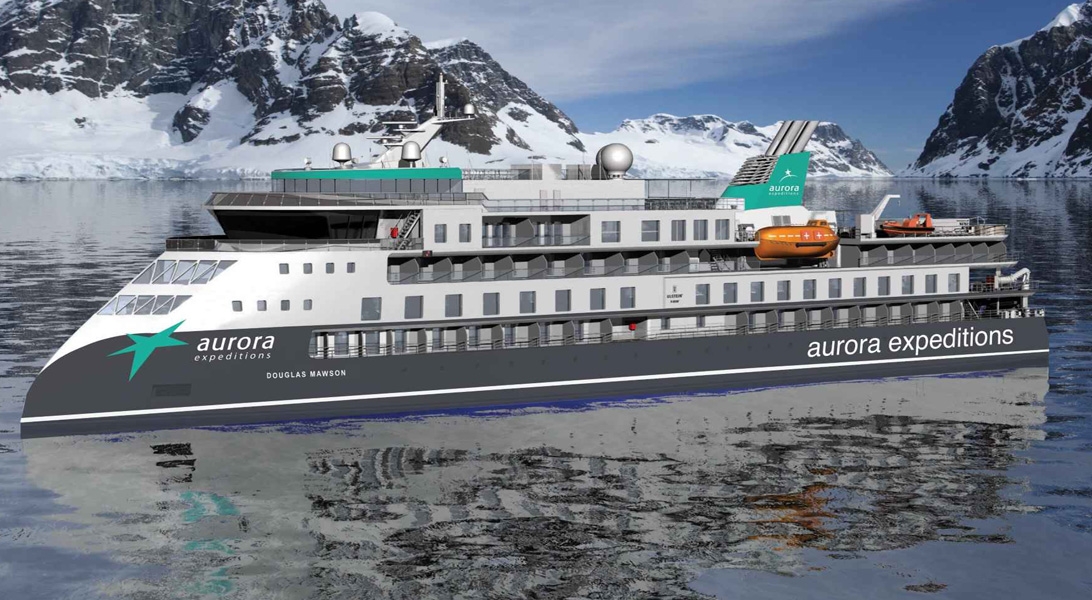
The images shown are for illustration purposes only and may not be an exact representation of what you find on the ship.
The images shown are for illustration purposes only and may not be an exact representation of what you find on the ship.
The images shown are for illustration purposes only and may not be an exact representation of what you find on the ship.
The images shown are for illustration purposes only and may not be an exact representation of what you find on the ship.
The images shown are for illustration purposes only and may not be an exact representation of what you find on the ship.


Our Fusion packages are all ABTA & ATOL protected ensuring that your booking is safe with us
| 14 nights aboard the Douglas Mawson | |||
| Fully-serviced accommodation in your chosen stateroom | |||
| An informative and entertaining lecture program by our team of experts | |||
| Complimentary 3-in-1 polar jacket and the use of gumboots | |||
| Entry fees to historic or tourist sites | |||
| Daily shore excursions, guided walks, Zodiac cruises and some activities | |||
| Daily breakfast, lunch and dinner including house wines, beers and soft drinks and afternoon tea and snacks | |||
| Complimentary use of fitness centre | |||
| Comprehensive pre-departure information kit and destination resource guide | |||
| Captain’s Welcome and Farewell Cocktail Reception including four-course dinner, house cocktails, house beer and wine, non-alcoholic beverages | |||
| Complimentary access to onboard medical doctor or clinic, if required | |||
| An experienced team of destination specialists and activity leaders | |||
| Pre-dinner cocktail hour including cold canapes and bar snacks | |||
| Photographic voyage log (post-voyage) | |||
| Port Taxes and Fees | |||
 | ABTA and ATOL Protection* | ||
Date 6th Jun 2027 |
Nts 14 |
Oceanview £6,648pp |
Balcony £7,598pp |
Suite £10,648pp |
Date 6th Jun 2027 |
Nts 14 |
Oceanview £6,648pp |
Balcony £7,598pp |
Suite £10,648pp |
| Oceanview staterooms from | £6,648pp | ||
| AS2D | Aurora Stateroom Twin Share | £6,648pp | |
| SASD | Aurora Stateroom Superior | £7,048pp | |
| Balcony staterooms from | £7,598pp | ||
| BSAD | Balcony Stateroom Category A | £8,198pp | |
| BSBD | Balcony Stateroom Category B | £7,598pp | |
| BSCD | Balcony Stateroom Category C |  | |
| SBSD | Balcony Stateroom Superior | £8,948pp | |
| Suite staterooms from | £10,648pp | ||
| JSD | Junior Suite | £10,648pp | |
| CSD | Captain Suite | | |
Fusion Holidays when selling travel arrangements is a trading name of Co-op Travel Services Limited, registration 08903986. Fusion Cruises is an Accredited Body Member of Co-op Travel Services Limited ATOL 12904.
Book with Confidence. We are a Member of ABTA which means you have the benefit of ABTA’s assistance and Code of Conduct.
Some of the flights and flight-inclusive holidays on this website are financially protected by the ATOL scheme but ATOL protection does not apply to all holiday and travel services offered on this website. This website will provide you with information on the protection that applies in the case of each holiday and travel service offered before you make your booking. If you do not receive an ATOL Certificate then the booking will not be ATOL protected. If you do receive an ATOL Certificate but all parts of your trip are not listed on it, those parts will not be ATOL protected. Please see our booking conditions for information, or for more information about financial protection and the ATOL Certificate go to: www.caa.co.uk