| | | | | Arrive | Depart |
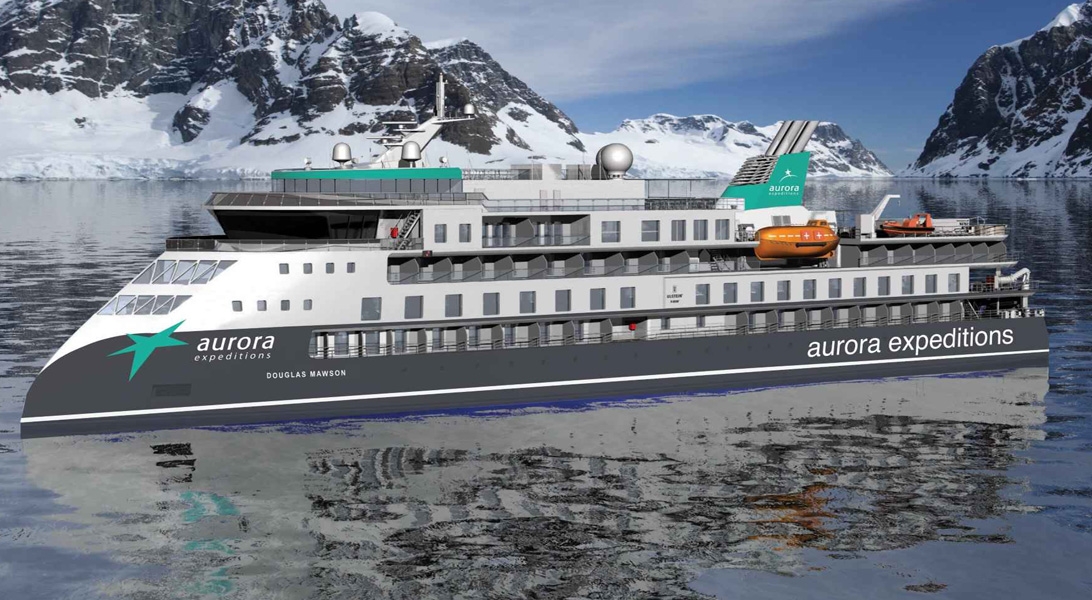
| 23rd23 | SepSep | 202828 | Reykjavík, Iceland, embark on the Douglas Mawson | | |
Sprawling Reykjavík, the nation's nerve center and government seat, is home to half the island's population. On a bay overlooked by proud Mt. Esja (pronounced eh-shyuh), with its ever-changing hues, Reykjavík presents a colorful sight, its concrete houses painted in light colors and topped by vibrant red, blue, and green roofs. In contrast to the almost treeless countryside, Reykjavík has many tall, native birches, rowans, and willows, as well as imported aspen, pines, and spruces.Reykjavík's name comes from the Icelandic words for smoke, reykur, and bay, vík. In AD 874, Norseman Ingólfur Arnarson saw Iceland rising out of the misty sea and came ashore at a bay eerily shrouded with plumes of steam from nearby hot springs. Today most of the houses in Reykjavík are heated by near-boiling water from the hot springs. Natural heating avoids air pollution; there's no smoke around. You may notice, however, that the hot water brings a slight sulfur smell to the bathroom.Prices are easily on a par with other major European cities. A practical option is to purchase a Reykjavík City Card at the Tourist Information Center or at the Reykjavík Youth Hostel. This card permits unlimited bus usage and admission to any of the city's seven pools, the Family Park and Zoo, and city museums. The cards are valid for one (ISK 3,300), two (ISK 4,400), or three days (ISK 4,900), and they pay for themselves after three or four uses a day. Even lacking the City Card, paying admission (ISK 500, or ISK 250 for seniors and people with disabilities) to one of the city art museums (Hafnarhús, Kjarvalsstaðir, or Ásmundarsafn) gets you free same-day admission to the other two. Explore Reykjavik at your leisure before returning to our Embarkation Suite at the designated time for the group transfer to Douglas Mawson. Boarding will commence in the late afternoon. Important information: · Complimentary airport arrival transfers are provided as group transfers for passengers arriving at Keflavik International Airport prior to 11:00am on Day 1 only. · Passengers who arrive after the airport transfer cut-off will need to make their own way to the Embarkation Suite before 2:00 pm to complete mandatory check-in. · For passengers already in Reykjavik, we ask you to visit our centrally located Embarkation Suite with all luggage, which will be open for mandatory check-in between 9:00 am and 2:00 pm. · Passengers have access to our centrally located Embarkation Suite, including luggage storage, Aurora Expeditions staff for voyage and city information and cabin check-in, WIFI, tea, coffee and light refreshments. · Embarkation Suite location: advised 6 months prior to departure. · As your luggage will be transported to the ship at 2.30pm and ahead of you, please ensure you place any items you require during the day in your day bag, including passports, cash/cards and medicines. In the late afternoon join a group transfer to board the Douglas Mawson. After boarding, there’s time to settle into your cabin before our important safety briefings before we ‘throw the lines’ to begin our Iceland adventure. This evening, join your fellow travellers for an onboard Welcome Dinner, where your expedition team will introduce you to the expedition ahead and raise a toast to the adventures to come. As darkness settles after departure, venture onto the outer decks for your first opportunity to scan Iceland’s skies for the aurora. Away from Reykjavík’s city lights, conditions may become increasingly favourable if the sky is clear and solar activity is present. |
| 24th24 | SepSep | 202828 | Dynjandi Waterfalls, Iceland | | |
Iceland is well-known for its spectacular waterfalls. The iconic Dynjandi waterfall, located in the Westfjords region, is regarded as one of Iceland’s most impressive and majestic waterfalls. At the top, the cascading water is roughly 100 feet wide and tumbles down about 330 feet into the fjord. Its name Dynjandi means, “the thundering one” and its vast size, enormous sound, and sheer force is overwhelming. It has also been nicknamed, ‘The Bridal Veil’ because of the way the water sprays and spreads over the rocks. Today we enter the Westfjords, one of Iceland’s most remote and sparsely populated regions. Ancient glaciers have carved a dramatic world of deep fjords, broad valleys and sheer-sided table mountains that fall towards the North Atlantic. Waterfalls thread down the mountainsides, small farms sit beneath immense cliffs and the winding coastline reveals new perspectives at every turn. As we navigate these sheltered waterways, the Expedition Team will interpret the geology, wildlife and human stories of a landscape that feels wonderfully removed from modern life. Conditions permitting, we travel ashore by Zodiac to visit Dynjandi, the jewel of the Westfjords. This magnificent waterfall tumbles approximately 100 metres (328 feet) down a broad, tiered mountainside, widening like a bridal veil as it descends. A walking trail follows a succession of smaller cascades towards the main falls, offering ever-changing views across Arnarfjörður and the surrounding peaks. Whether you choose to walk towards the base or admire the panorama from below, the scale, sound and setting of Dynjandi make it one of Iceland’s most memorable natural landmarks. Later, we continue north through the Westfjords. Relax on deck as mountains and isolated valleys slip past, and keep watch for seabirds, seals and whales in the nutrient-rich waters. The long summer light lends an added beauty to this quiet afternoon of scenic expedition cruising. After nightfall, the remote Westfjords offer dark skies with very little artificial light. If conditions align, step outside to watch for the first green arcs appearing above the surrounding mountains and fjords. |
| 25th25 | SepSep | 202828 | Vigur Island, Iceland | | |
Vigur Island is a little more than a mile (1.6 km) in length and about 450 yards (412 m) wide. This green oasis punctuates the waters of the Ísafjarðardjúp fjord east of the town of Isafjordur. The island is home to a single farming family and has some meticulously preserved historical landmarks including Iceland’s only windmill, built in 1840 and used until 1917 for grinding imported wheat from Denmark; and a 200-year-old rowing boat, which is still in use to ferry sheep to the mainland. Summer is the best time to see large numbers of Atlantic Puffins, Arctic Terns and Black Guillemots. One of the export articles from this small island was eider down and one can see where the eider ducks nest and how the down is collected and cleaned. This morning, travel ashore by Zodiac to Vigur, a small island jewel in the Ísafjarðardjúp fjord. Home to only a handful of residents but vast numbers of seabirds, Vigur offers an intimate glimpse of traditional island life. Follow gentle paths through rolling green landscapes where puffins, Arctic terns, eider ducks and black guillemots nest in season. Learn about the island’s long tradition of sustainable eiderdown farming, discover its historic buildings and visit the tiny post office. With its lively bird colonies, sweeping fjord views and warm Icelandic character, Vigur is a place of rare charm. Back onboard, spend the afternoon exploring the deep fjords and sheltered bays of Ísafjarðardjúp. Towering, flat-topped mountains rise directly from cold, nutrient-rich waters, creating a spectacular setting for scenic cruising and wildlife watching. Keep your camera and binoculars close as we search for humpback and minke whales, dolphins and seabirds. Sightings can never be guaranteed, but these productive waters offer exciting possibilities. Your Expedition Team will help scan the fjord and share insights into its geology, ecology and centuries of human history. This evening, Ísafjarðardjúp’s sheltered waterways and isolated mountain landscapes may provide a dramatic setting for aurora viewing. The Expedition Team will monitor conditions and alert guests if a display develops. |
| 25th25 | SepSep | 202828 | Isafjørdur, Iceland | | |
Two colossal terraces of sheer rock stand either side of this extraordinarily located town - which rides a jutting spit onto an immensity of black fjord water. Surprisingly, considering the remoteness of its location and its compact size, Isafjordur is a modern and lively place to visit, offering a great choice of cafes and delicious restaurants – which are well stocked to impress visitors. The town is a perfectly located base for adventures amongst Iceland's fantastic wilderness - with skiing, hiking and water-sports popular pursuits among visitors. |
| 26th26 | SepSep | 202828 | At Sea | | |
| 27th27 | SepSep | 202828 | At Sea | | |
| 28th28 | SepSep | 202828 | At Sea | | |
| 29th29 | SepSep | 202828 | At Sea | | |
| 30th30 | SepSep | 202828 | At Sea | | |
| 1st01 | OctOct | 202828 | Akureyri, Iceland | | |
Akureyri, called the Capital of the North is the second largest urban area in Iceland, and a lively one at that. Hemmed by the 60-km (37-mile) long Eyjafjörður, Akureyri is sheltered from the ocean winds and embraced by mountains on three sides. Late 19th-century wooden houses impart a sense of history, and the twin spires of a modern Lutheran church rising on a green hill near the waterfront, provide a focal point. To the south of Akureyri is the pyramid-shape rhyolite mountain Súlur. Beyond it is Kerling, the highest peak in Eyjafjörður District. Set against a backdrop of snow-streaked mountains at the head of Eyjafjörður, Akureyri is Iceland’s largest urban centre outside the capital region. Its sheltered setting, colourful streets and celebrated botanical gardens make an inviting gateway to northern Iceland’s waterfalls, volcanic landscapes and geothermal wonders. Personalise your expedition with an included ‘Your Choice’ experience suited to your interests and fitness level. Option 1 – Goðafoss, Lake Mývatn & Mývatn Nature Baths Duration: 7 hours, including lunch Level of difficulty: Comprehensive Terrain: Easy, well-maintained paths at Goðafoss, with some uneven surfaces and moderate ascents and descents elsewhere. Begin at Goðafoss, the ‘Waterfall of the Gods’, where the Skjálfandafljót River pours across a broad horseshoe-shaped ledge. A short, mostly level trail leads to the main viewpoint. Continue to Lake Mývatn and the Skútustaðagígar pseudocraters, formed when hot lava flowed across wetlands. Follow marked paths around these distinctive formations or climb to a viewpoint overlooking the lake and its volcanic surroundings. After lunch, unwind in the naturally heated waters of Mývatn Nature Baths. Fed by geothermal water drawn from deep beneath the earth, the pools offer a relaxing conclusion to a day exploring northern Iceland’s elemental landscapes. Option 2 – Geothermal Iceland: Krafla Crater, Dimmuborgir & Námaskarð Duration: 7 hours, including lunch Level of difficulty: Active. Easy on boardwalks and moderately uneven on the lava-field loop. Terrain: The Víti crater trail includes a manageable ascent of approximately 20–30 metres (65–100 feet) from the car park and takes about 45 minutes to complete. Uneven volcanic ground requires good fitness and mobility. Comfortable, sturdy footwear is strongly recommended. Begin at Dimmuborgir, a labyrinth of lava pillars, cliffs and caves created when molten lava flowed across wetlands around 2,300 years ago. Follow trails through this extraordinary landscape and discover formations such as ‘the Church’, a dramatic lava cave with a domed ceiling and openings at both ends. After lunch, explore the otherworldly Krafla region, where the turquoise waters of Víti crater contrast with dark lava fields and volcanic ridges. Continue to Námaskarð, a vivid geothermal landscape of rust-red earth, sulphur-stained slopes, bubbling mud pools and hissing steam vents—a powerful reminder that Iceland remains geologically alive. In the late afternoon, return to the ship and depart for Seyðisfjörður, watching for whales and seabirds along the way. With the ship sailing away from Iceland’s northern coast this evening, keep watch for the aurora over Eyjafjörður and the surrounding mountains. Northern Iceland lies beneath the auroral oval, making clear autumn nights especially promising. |
| 2nd02 | OctOct | 202828 | Seydisfjørdur, Iceland | | |
Seyðisfjörður, a beautiful 19th-century Norwegian village on the east coast of Iceland, is regarded by many as one of Iceland's most picturesque towns, not only due to its impressive environment, but also because nowhere in Iceland has a community of old wooden buildings been preserved so well as here. Poet Matthías Johannessen called Seyðisfjörður a 'pearl enclosed in a shell'. The community owes its origins to foreign merchants, mainly Danes, who started trading in the fjord in the mid-19th century. But the crucial factor in the evolution of the village was the establishment of the Icelandic herring fishery by Norwegians in 1870-1900. The Norwegians built up a number of herring-fishing facilities, and in a matter of years the little community grew into a boom town. Today, about 800 people live in Seyðisfjörður. The local economy has long been based on the fisheries, while light industry also flourishes. Tourism is playing a growing role, as the picturesque town in its spectacular surroundings attracts more and more visitors. The car/passenger ferry Norrøna, which plies between continental Europe and Iceland every summer, docks at Seyðisfjörður every Thursday. Seyðisfjörður has been a cosmopolitan community from its foundation, and the ferry service has contributed to ensuring that it remains so. Explore Seyðisfjörður, a picturesque fishing village that is renowned for its charming collection of colourful wooden buildings located around the lagoon. Take a stroll around town and discover the timber houses that are remnants from when the Norwegians settled here and established the herring fishing facilities from 1870-1900. From the valley above the town, the river Fjarðará tumbles down in beautiful cascades to the lagoon. There are a number of delightful hiking trails to explore, or alternatively, you can discover a flourishing cultural scene with an arts centre, the famous blue church that stages music concerts and the only two cinemas in the east of Iceland. Back in town, browse the stores where you will discover handicrafts by local artists and artisans – perfect as a souvenir or gift. After leaving Seyðisfjörður, the long fjord and dark mountains of eastern Iceland may form a beautiful natural frame for the northern lights. If skies remain clear, watch from the outer decks as we continue into the North Atlantic. |
| 3rd03 | OctOct | 202828 | Tórshavn, Faroe Islands | | |
Scattered across the North Atlantic, the Faroe Islands form a dramatic archipelago of 18 volcanic islands shaped by wind, waves and centuries of seafaring life. We plan to discover landscapes of sheer sea cliffs, deep fjords, green mountains and villages tucked into narrow strips of coast. Viking heritage remains woven into Faroese identity, while distinctive grass-roofed houses and working harbours reflect a culture closely connected to the surrounding ocean. Much of the first day unfolds on the open North Atlantic as we continue towards the Faroe Islands. Enjoy a leisurely day onboard, perhaps joining presentations from the Expedition Team, sharing stories with fellow travellers or watching for whales, dolphins and seabirds from the outer decks. Later, the rugged silhouettes of the Faroes emerge on the horizon as we approach Tórshavn for a late afternoon arrival. In Tórshavn, one of the world’s smallest capitals, enjoy some free time to wander through the historic lanes of Tinganes, where turf-roofed timber buildings cluster on a rocky peninsula beside the harbour. Explore the compact town centre, browse locally made knitwear and handicrafts, or enjoy the city’s pubs. |
| 4th04 | OctOct | 202828 | Tórshavn, Faroe Islands | | |
Our second day offers further opportunities to explore the archipelago according to local conditions. We may follow coastal paths across open hills, visit a smaller island community or approach dramatic bird cliffs where seabirds wheel above the ocean. In late September, the shifting weather and soft autumn light lend the islands a particularly atmospheric beauty. As always, our final plans will be shaped by the weather, sea conditions and the best opportunities available. The Faroe Islands sit beneath northern skies where the aurora can occasionally be seen when cloud cover clears and solar activity is strong. Although the islands’ maritime weather makes displays less predictable, a sighting above their jagged peaks and dark ocean would be unforgettable. |
| 5th05 | OctOct | 202828 | Papa Westray, Orkney Islands, Scotland | | |
Across Orkney’s 70 windswept islands, layers of human history unfold—from 5,000-year-old Neolithic monuments and Norse heritage to wartime remains and present-day crofting communities. Seabirds crowd the imposing sea cliffs, coastal paths beckon hikers and, when conditions allow, kayakers can discover sections of the archipelago from the water. On Papa Westray, we plan to visit the Knap of Howar, where Northern Europe’s oldest known stone houses were occupied by Neolithic farmers more than 5,000 years ago. Later, experience the warmth of island hospitality at the local pub, where the Papa Westray folk ensemble Poor Man’s Corner may fill the room with lively tunes and irresistible rhythms. Orkney lies near the southern edge of the auroral zone, where strong displays may occasionally be visible under clear, dark skies. On our final evening aboard, there is one last opportunity to watch the northern horizon as we sail towards Aberdeen. |
| 6th06 | OctOct | 202828 | Aberdeen, Scotland, disembark the Douglas Mawson | | |
With close to 220,000 inhabitants, Aberdeen is Scotland's third most populous city. Locally quarried grey granite was used during the mid-18th to mid-20th centuries for many of Aberdeen's buildings, and hence the nicknames it has earned as the Granite City, or the Grey City. Aberdeen granite was also used to build the terraces of the Houses of Parliament and Waterloo Bridge in London. Since the discovery of North Sea oil in the 1970s, Aberdeen has also been called the Oil Capital of Europe or the Energy Capital of Europe. It is no wonder that because of the oil fields in the North Sea, Aberdeen's seaport is very important. The Heliport with its flights to the oil fields is one of the busiest commercial heliports in the world. On arrival in Aberdeen, disembark in the early morning and farewell your fellow travellers and Expedition Team before transferring to the airport for your onward journey. Note: At the conclusion of the voyage, we recommend booking flights departing after 12.00 pm on the day of disembarkation in case there are delays. |