This site uses cookies as defined in our Cookie Policy, by continuing to use this site you agree to their use.
Continue

Welcome to Aurora Expeditions' Saints, Saviours and Secrets
Guinness estimates that on Ireland’s national day, St Patrick’s Day, a staggering 13 million pints of their renowned brew are savoured worldwide. Intriguingly, St Patrick himself is not canonised, nor did he hail from the Emerald Isle. Therein lies the essence of Irish storytelling – an art form that elevates every narrative into legend.
Our quintessentially Irish journey pursues many an Irish tale, from the pious to the irreverent, tracing the footsteps of saints, strugglers, saviours, and the unsung heroes a... nd heroines who have shaped Ireland’s history. From the harrowing trails of famine-stricken families to the poignant exodus of the two million Irish who sought solace in the New World. From political prisoners who waged a battle for independence, to literary luminaries who captured the spirit of their homeland in timeless prose. Join us as we revel in the vibrant narratives of the Irish who crafted the story of Ireland, with a book-end journey to the streets of Edinburgh for a taste of Scotland’s own saints, saviours and secrets.
| Arrive | Depart | ||||||
| 24th24 | JunJun | 202727 | Dublin, Ireland, embark on the Douglas Mawson | ||||
Dublin is making a comeback. The decade-long "Celtic Tiger" boom era was quickly followed by the Great Recession, but The Recovery has finally taken a precarious hold. For visitors, this newer and wiser Dublin has become one of western Europe's most popular and delightful urban destinations. Whether or not you're out to enjoy the old or new Dublin, you'll find it a colossally entertaining city, all the more astonishing considering its intimate size.It is ironic and telling that James Joyce chose Dublin as the setting for his famous Ulysses, Dubliners, and A Portrait of the Artist as a Young Man because it was a "center of paralysis" where nothing much ever changed. Which only proves that even the greats get it wrong sometimes. Indeed, if Joyce were to return to his once-genteel hometown today—disappointed with the city's provincial outlook, he left it in 1902 at the age of 20—and take a quasi-Homeric odyssey through the city (as he so famously does in Ulysses), would he even recognize Dublin as his "Dear Dirty Dumpling, foostherfather of fingalls and dotthergills"?For instance, what would he make of Temple Bar—the city's erstwhile down-at-the-heels neighborhood, now crammed with cafés and trendy hotels and suffused with a nonstop, international-party atmosphere? Or the simple sophistication of the open-air restaurants of the tiny Italian Quarter (named Quartier Bloom after his own creation), complete with sultry tango lessons? Or of the hot–cool Irishness, where every aspect of Celtic culture results in sold-out theaters, from Once, the cult indie movie and Broadway hit, to Riverdance, the old Irish mass-jig recast as a Las Vegas extravaganza? Plus, the resurrected Joyce might be stirred by the songs of Hozier, fired up by the sultry acting of Michael Fassbender, and moved by the award-winning novels of Colum McCann. As for Ireland's capital, it's packed with elegant shops and hotels, theaters, galleries, coffeehouses, and a stunning variety of new, creative little restaurants can be found on almost every street in Dublin, transforming the provincial city that suffocated Joyce into a place almost as cosmopolitan as the Paris to which he fled. And the locals are a hell of a lot more fun! Now that the economy has finally turned a corner, Dublin citizens can cast a cool eye over the last 20 crazy years. Some argue that the boomtown transformation of their heretofore-tranquil city has permanently affected its spirit and character. These skeptics (skepticism long being a favorite pastime in the capital city) await the outcome of "Dublin: The Sequel," and their greatest fear is the possibility that the tattered old lady on the Liffey has become a little less unique, a little more like everywhere else.Oh ye of little faith: the rare ole gem that is Dublin is far from buried. The fundamentals—the Georgian elegance of Merrion Square, the Norman drama of Christ Church Cathedral, the foamy pint at an atmospheric pub—are still on hand to gratify. Most of all, there are the locals themselves: the nod and grin when you catch their eye on the street, the eagerness to hear half your life story before they tell you all of theirs, and their paradoxically dark but warm sense of humor. It's expected that 2016 will be an extra-special year in the capital, as centenary celebrations of the fateful 1916 Easter Rising will dominate much of the cultural calendar. Welcome to Dublin. On arrival at Dublin airport make your way to the arrivals hall to meet our representative, followed by a transfer to our group hotel. At the hotel, visit our hospitality desk in the lobby to meet our team who will provide you with useful information regarding pre-embarkation procedures and about your time in Dublin. You will also receive cabin tags for your luggage. Please clearly label the tags with your name and your cabin number on the ship. This evening offers time to relax in preparation for our ‘day out in Dublin’ tomorrow. Our group hotel has a popular restaurant and is close to plenty of corner pubs and cosy restaurants should you wish to ‘share a jar’ or try some local cuisine. Accommodation: Camden Court Hotel (or similar) | |||||||
| 25th25 | JunJun | 202727 | Dublin, Ireland | ||||
Dublin is making a comeback. The decade-long "Celtic Tiger" boom era was quickly followed by the Great Recession, but The Recovery has finally taken a precarious hold. For visitors, this newer and wiser Dublin has become one of western Europe's most popular and delightful urban destinations. Whether or not you're out to enjoy the old or new Dublin, you'll find it a colossally entertaining city, all the more astonishing considering its intimate size.It is ironic and telling that James Joyce chose Dublin as the setting for his famous Ulysses, Dubliners, and A Portrait of the Artist as a Young Man because it was a "center of paralysis" where nothing much ever changed. Which only proves that even the greats get it wrong sometimes. Indeed, if Joyce were to return to his once-genteel hometown today—disappointed with the city's provincial outlook, he left it in 1902 at the age of 20—and take a quasi-Homeric odyssey through the city (as he so famously does in Ulysses), would he even recognize Dublin as his "Dear Dirty Dumpling, foostherfather of fingalls and dotthergills"?For instance, what would he make of Temple Bar—the city's erstwhile down-at-the-heels neighborhood, now crammed with cafés and trendy hotels and suffused with a nonstop, international-party atmosphere? Or the simple sophistication of the open-air restaurants of the tiny Italian Quarter (named Quartier Bloom after his own creation), complete with sultry tango lessons? Or of the hot–cool Irishness, where every aspect of Celtic culture results in sold-out theaters, from Once, the cult indie movie and Broadway hit, to Riverdance, the old Irish mass-jig recast as a Las Vegas extravaganza? Plus, the resurrected Joyce might be stirred by the songs of Hozier, fired up by the sultry acting of Michael Fassbender, and moved by the award-winning novels of Colum McCann. As for Ireland's capital, it's packed with elegant shops and hotels, theaters, galleries, coffeehouses, and a stunning variety of new, creative little restaurants can be found on almost every street in Dublin, transforming the provincial city that suffocated Joyce into a place almost as cosmopolitan as the Paris to which he fled. And the locals are a hell of a lot more fun! Now that the economy has finally turned a corner, Dublin citizens can cast a cool eye over the last 20 crazy years. Some argue that the boomtown transformation of their heretofore-tranquil city has permanently affected its spirit and character. These skeptics (skepticism long being a favorite pastime in the capital city) await the outcome of "Dublin: The Sequel," and their greatest fear is the possibility that the tattered old lady on the Liffey has become a little less unique, a little more like everywhere else.Oh ye of little faith: the rare ole gem that is Dublin is far from buried. The fundamentals—the Georgian elegance of Merrion Square, the Norman drama of Christ Church Cathedral, the foamy pint at an atmospheric pub—are still on hand to gratify. Most of all, there are the locals themselves: the nod and grin when you catch their eye on the street, the eagerness to hear half your life story before they tell you all of theirs, and their paradoxically dark but warm sense of humor. It's expected that 2016 will be an extra-special year in the capital, as centenary celebrations of the fateful 1916 Easter Rising will dominate much of the cultural calendar. Dublin, the vibrant capital of Ireland, is a city brimming with energy and resilience. Once under British rule, Dublin has emerged with a distinct sense of identity, leading Ireland as a proud member of the European Union and reflecting its evolving role in modern Europe. The city has been home to some of the world’s most influential literary figures, including Oscar Wilde, James Joyce, W.B. Yeats, and George Bernard Shaw. Iconic landmarks such as Trinity College, home to the esteemed Book of Kells, highlight its storied past, while the city also serves as a hub of artistic and cultural expression, with global musicians like U2, whose impact resonates from their Dublin roots, having invigorated its creative scene. Dublin’s vibrant pub culture offers a lively social fabric, where traditional and contemporary influences merge to create a city to explore both day and night. Choose your favourite ‘Your Choice’ experience this morning to meet Dublin’s saints, spirits and saviours. This afternoon there's time to explore Dublin independently, before joining us for a celebration of all things Irish as we kick up our heels at an authentic Irish dancing evening. Personalise your exploration with our included ‘Your Choice’ experiences. Option 1 – Morning experience: Dublin Walking Tour Dublin’s compact character makes it an ideal one for a leisurely walking tour. This morning, our local guide entertains us with tales of the city’s character-filled history. We will hear stories of Ireland’s past and present through the eyes of its many artists, manic Lord Mayors and rebellious citizens whilst following the park-side alleys of Dublin’s ‘backyard’, St Stephens Green, to the grand Georgian buildings of Irelands’ first university, Trinity College, which offers 40 acres of academic seclusion from the hustle and bustle of downtown Dublin, and the numerous statues, sculptures and open spaces which tell the tale of this fascinating city. Return to the hotel with your guide or branch out and explore the city further independently. Option 2 – Morning experience: The Dead Centre of Dublin Join a locally guided tour of Glasnevin Cemetery, where the stories of 1.6 million souls are meticulously preserved. This historical Victorian cemetery, adorned with statues of shamrocks, high crosses, and harps, offers a window into Ireland’s rich past and psyche. Discover the final resting places of notable figures such as Michael Collins, a leader in the struggle for Irish independence, and Éamon de Valera, a key political figure and former president of Ireland. You may also visit the graves of Brendan Behan, the influential playwright, and Thomas Kinsella, a celebrated poet. Look out for final resting places of Countess Markievicz, a revolutionary and the first woman elected to the British Parliament, and Daniel O’Connell, the great emancipator. Glasnevin is a testament to Ireland’s deep-rooted belief in spirits and saints, reflecting the nation’s spiritual heritage. Each monument and grave not only tells the story of its occupant, but also offers insights into the Irish psyche, where reverence for historical figures and a connection to the spiritual world are intertwined. Accommodation: Camden Court Hotel (or similar) Meals: Breakfast, Welcome Event - dinner show | |||||||
| 26th26 | JunJun | 202727 | Dublin, Ireland | ||||
Dublin is making a comeback. The decade-long "Celtic Tiger" boom era was quickly followed by the Great Recession, but The Recovery has finally taken a precarious hold. For visitors, this newer and wiser Dublin has become one of western Europe's most popular and delightful urban destinations. Whether or not you're out to enjoy the old or new Dublin, you'll find it a colossally entertaining city, all the more astonishing considering its intimate size.It is ironic and telling that James Joyce chose Dublin as the setting for his famous Ulysses, Dubliners, and A Portrait of the Artist as a Young Man because it was a "center of paralysis" where nothing much ever changed. Which only proves that even the greats get it wrong sometimes. Indeed, if Joyce were to return to his once-genteel hometown today—disappointed with the city's provincial outlook, he left it in 1902 at the age of 20—and take a quasi-Homeric odyssey through the city (as he so famously does in Ulysses), would he even recognize Dublin as his "Dear Dirty Dumpling, foostherfather of fingalls and dotthergills"?For instance, what would he make of Temple Bar—the city's erstwhile down-at-the-heels neighborhood, now crammed with cafés and trendy hotels and suffused with a nonstop, international-party atmosphere? Or the simple sophistication of the open-air restaurants of the tiny Italian Quarter (named Quartier Bloom after his own creation), complete with sultry tango lessons? Or of the hot–cool Irishness, where every aspect of Celtic culture results in sold-out theaters, from Once, the cult indie movie and Broadway hit, to Riverdance, the old Irish mass-jig recast as a Las Vegas extravaganza? Plus, the resurrected Joyce might be stirred by the songs of Hozier, fired up by the sultry acting of Michael Fassbender, and moved by the award-winning novels of Colum McCann. As for Ireland's capital, it's packed with elegant shops and hotels, theaters, galleries, coffeehouses, and a stunning variety of new, creative little restaurants can be found on almost every street in Dublin, transforming the provincial city that suffocated Joyce into a place almost as cosmopolitan as the Paris to which he fled. And the locals are a hell of a lot more fun! Now that the economy has finally turned a corner, Dublin citizens can cast a cool eye over the last 20 crazy years. Some argue that the boomtown transformation of their heretofore-tranquil city has permanently affected its spirit and character. These skeptics (skepticism long being a favorite pastime in the capital city) await the outcome of "Dublin: The Sequel," and their greatest fear is the possibility that the tattered old lady on the Liffey has become a little less unique, a little more like everywhere else.Oh ye of little faith: the rare ole gem that is Dublin is far from buried. The fundamentals—the Georgian elegance of Merrion Square, the Norman drama of Christ Church Cathedral, the foamy pint at an atmospheric pub—are still on hand to gratify. Most of all, there are the locals themselves: the nod and grin when you catch their eye on the street, the eagerness to hear half your life story before they tell you all of theirs, and their paradoxically dark but warm sense of humor. It's expected that 2016 will be an extra-special year in the capital, as centenary celebrations of the fateful 1916 Easter Rising will dominate much of the cultural calendar. Spend your morning soaking up the charm of Dublin at your own pace, with free time to explore independently. In the afternoon, dive into the story behind Ireland’s most iconic brew with a self-guided tour of the Guinness Storehouse, culminating in a tasting at the stunning 360-degree glass-fronted Gravity Bar, or discover your Irish heritage at Dublin’s EPIC Museum. Whichever ‘Your Choice’ experience you select, we’ll reunite in the late afternoon aboard our home for the next 10 days, the Douglas Mawson and set sail along the Irish coast toward Waterford. This evening, we enjoy a ‘Welcome Aboard Dinner’, where we meet our crew and Aurora Expeditions team. Personalise your exploration with our included ‘Your Choice’ experiences. Option 1 – Afternoon experience: The Guinness Story The Guinness brewery opened on this spot over 250 years ago, when Arthur Guinness signed a 900-year lease – there’s only 650 years to go. We will see, hear and smell the secret ingredients as we travel through a series of vast machines, before our self-guided tour ends in the circular panoramic Gravity Bar, with its sweeping views across the city of Dublin. Here, we will enjoy a complimentary pint of ‘the black stuff’ while viewing Dublin from above. Option 2 – Afternoon experience: EPIC Emigration Museum Adjacent to the Customs House Quay (CHQ) building’s restaurants, cafes and shops, the award-winning EPIC Emigration Museum is a highlight of any visit to Dublin, and a convenient place to grab a bite to eat, do some souvenir shopping or trace your own Irish roots at EPIC's Irish Family History Centre. The museum’s self-guided tour allows us to meet one of Ireland’s greatest exports; its people. Discover what it means to hold Irish heritage, as you meet poets and presidents, singers and suffragettes. You will meet famous folk and families, from Ned Kelly to the Kennedys, as you follow your souvenir-passport to find out where they came from, why they left, and the differences they have made to our everyday lives. Meals: Breakfast, Dinner onboard | |||||||
| 27th27 | JunJun | 202727 | Waterford, Ireland | ||||
The largest town in the Southeast and Ireland's oldest city, Waterford was founded by the Vikings in the 9th century and was taken over by Strongbow, the Norman invader, with much bloodshed in 1170. The city resisted Cromwell's 1649 attacks, but fell the following year. It did not prosper again until 1783, when George and William Penrose set out to create "plain and cut flint glass, useful and ornamental," and thereby set in motion a glass-manufacturing industry long without equal. The famed glassworks closed after the 2008 financial crisis, but Waterford Crystal has triumphantly risen again from the flames in a smaller, leaner version, opened in 2010 and now relocated to the Mall. Known as the city where culture meets the ‘craic’ (that is Irish for a good time), Waterford is a modern city with a layered history. Invaded by the Norsemen in 914, Waterford became a Viking settlement, which is reflected in its people even today. It emerged from the Middle Ages as a trading port with the wealth from goods that came from as far away as Newfoundland, the profits of which funded the construction of the many Georgian Mansions that line the city’s streets. Join us this morning to follow in the footsteps of one of Ireland's most revered saints or discover one of the country's finest medieval castles. This afternoon is yours to enjoy, with a convenient ship-to-town shuttle making it easy to explore Waterford at your own pace. A town for those who like a good stroll, Waterford is easy on the eye, offers plenty to see and as its reputation suggests, is full of fun. Personalise your exploration with our included ‘Your Choice’ experiences Option 1- Morning experience: Kilkenny Castle Kilkenny, often hailed as Ireland’s best-preserved medieval city, blends small-town charm with a lively urban energy. Once the seat of the medieval Irish parliament, it rivalled Dublin in influence—a legacy still visible in its grand Norman architecture and marble façades. At its heart stands Kilkenny Castle, continuously occupied for over 800 years and deeply entwined with the rise and fall of the Marshal and Butler families. The Butlers, who rose from Earls to Dukes, were known for high-profile marriages, including Winston Churchill’s cousin and American heiress Ellen Stager. By 1922, the castle was caught in political turmoil, occupied by Republicans and besieged by Free State forces. In 1967, the family sold it to the Kilkenny Castle Restoration Committee for just £50. Today, the castle stands as a symbol of shifting fortunes—a riches-to-rags tale that mirrors the city’s own dramatic history. Option 2- Morning experience: St Declan and the Ardmore Cliff Walk Long before shamrocks, parades, and St Patrick became Ireland's most famous religious export, a humble 5th-century missionary was bringing Christianity to the southeast corner of Ireland. That missionary was St Declan, whose influence was so profound that, more than 1,500 years later, pilgrims still follow St Declan's Way, a 115-kilometre route often described as Ireland's answer to the Camino de Santiago, culminating at the site of his ancient monastery in Ardmore. We journey an hour to the coastal village of Ardmore to explore the remains of St Declan's monastic settlement, including its round tower, cathedral ruins and ancient oratory, before following the spectacular Ardmore Cliff Walk. With Atlantic waves crashing below and sweeping coastal views all around, you'll walk around 4km (2.5 miles) in the footsteps of generations of pilgrims who have been drawn to this sacred landscape on well-maintained coastal path past St Declan's Holy Well, dramatic sea cliffs, rolling headlands and secluded coves. Along the way, enjoy uninterrupted views of the Celtic Sea, spot seabirds nesting on the cliffs, and gain a deeper appreciation for the landscape that shaped one of Ireland's oldest and most enduring pilgrimage traditions. | |||||||
| 28th28 | JunJun | 202727 | Cork, Ireland | ||||
Cork City received its first charter in 1185 from Prince John of Norman England, and it takes its name from the Irish word corcaigh, meaning "marshy place." The original 6th-century settlement was spread over 13 small islands in the River Lee. Major development occurred during the 17th and 18th centuries with the expansion of the butter trade, and many attractive Georgian-design buildings with wide bowfront windows were constructed during this time. As late as 1770 Cork's present-day main streets—Grand Parade, Patrick Street, and the South Mall—were submerged under the Lee. Around 1800, when the Lee was partially dammed, the river divided into two streams that now flow through the city, leaving the main business and commercial center on an island, not unlike Paris's Île de la Cité. As a result, the city has a number of bridges and quays, which, although initially confusing, add greatly to the port's unique character. Cork can be very "Irish" (hurling, Gaelic football, televised plowing contests, music pubs, and peat smoke). But depending on what part of town you're in, Cork can also be distinctly un-Irish—the sort of place where hippies, gays, and farmers drink at the same pub. Once a port town, always a port town, Cork sits proudly on an island in the middle of the Lee River. Surrounded by water, the city’s salty air tells the story of Irish emigration, with its historical harbour of Cobh and shores of Kinsale, famed as the port of boarding for the Irish who left for foreign lands. If your ancestors are Irish, there is a high chance they came through Cork. Today, the city has a flair for great gigs and modernised traditional dishes and is considered an Irish food mecca that is centred around its restored 18th-century English Market. Our 'Your Choice’ experiences today offer you the opportunity to follow those Irish who left their homeland for foreign shores. Return to the Douglas Mawson for lunch onboard, with your afternoon free to explore Cork independently at your own pace before we set sail to Bantry, in the early evening. Personalise your exploration with our included ‘Your Choice’ experiences. Option 1 – Half day experience: The Seaside Gem of Kinsale We drive to the coast and the picture-perfect town of Kinsale, where we hear stories of naval battles, foreign invasions and shipwrecks. Once a garrison town embroiled with invading navies, Kinsale became the natural landfall for ships sailing from the continent and the Americas. These legendary waters witnessed the final sightings of two of history's most iconic ocean liners; the Titanic and the Lusitania. In the early hours of 7 May 1915, the Cunard liner Lusitania was hit, only a mere 11 nautical miles off the coast of Kinsale, by a single torpedo shot from a German U-Boat. The people of Kinsale rallied to help but within 18 minutes she sank, with only 761 of the 1960 souls on board surviving. Choose to have more time in town or join us to to visit the memorial overlooking the site of the tragedy on Old Head of Kinsale, before taking time to stroll the streets of this colourful coastal enclave returning to Cork mid-afternoon. Note: Lunch is left at your leisure providing free time to immerse yourself in the character and charm of the town at your own pace. Option 2 – Morning experience: The Queenstown story A half-hour drive brings us to Cork’s second port at Cobh. We join a tailormade guided walking tour tracing the story of Irish emigration, with a self-guided audio tour of ‘The Queenstown Story’ at the Cobh Heritage Centre. Seeking a better life, or simply hoping to survive starvation, hundreds of thousands boarded vessels bound for foreign lands at Cobh including Annie Moore, a teenager who was the first immigrant to be processed at the newly opened Ellis Island in New York City. Sadly, in 1912, Cobh, known as Queenstown at that time, also boarded passengers on the ill-fated Titanic. This port town, a crucial departure point for over 3 million Irish people, tells the poignant story of their quest for a better life. The ‘Queenstown Story’ traces Irish emigration since the 1600s, including the transportation of convicts to Australia and the impact of disasters like the Titanic and the Lusitania. The exhibition, housed in Cobh’s restored Victorian railway station, features personal tales, such as Jeremiah Burke’s message in a bottle from the Titanic and Margaret Drury’s convict voyage to Australia. Discover these moving stories and more, reflecting the hardships and hopes of Irish emigrants across the globe. | |||||||
| 29th29 | JunJun | 202727 | Bantry, Ireland | ||||
We arrive at Bantry Bay and tender to shore. The harbourside town of Bantry is the gateway to the touring route known as the Wild Atlantic Way. It is easy to see why Ireland’s colour of choice for everything is green, from its national sporting uniforms to its flag when we tread the trails of Gougane Barra National Park or explore the Beara Peninsula, surrounded by the lush grass-covered hills and dales of the Emerald Isle. For those choosing a morning excursion, Bantry itself is small enough for a comfortable stroll in the afternoon, with artisan shops, friendly cafes and, of course, plenty of pubs to try a local brew. Personalise your exploration with our included ‘Your Choice’ experiences. Option 1 – Morning experience: Driving The Beara Peninsula The Ring of Beara, located on Bantry’s neighbour, the Beara Peninsula, is one of the region’s top three scenic drives, known for its rugged and less touristy charm. This 85-mile route, including the renowned Beara Way, offers a journey through some of Ireland’s most striking landscapes. We encounter a dramatic coastline where the Atlantic Ocean crashes against steep cliffs, creating breathtaking views. The route is flanked by sharp-featured mountains and intricate rock formations, with exposed and contorted strata presenting a geologist’s dream. Time permitting, we visit the quaint village of Allihies, famous for its copper-mining history, offering stunning vistas of Beara’s lakes and valleys. With its wild beauty and diverse scenery, the Ring of Beara promises an unforgettable journey for those seeking a truly authentic and rugged Irish experience. Option 2 – Morning experience: Trail walking Gougane Barra Forest Park A 45-minute drive inland brings us to one of Ireland’s inland treasures; the stunning natural beauty of Gougane Barra Forest Park. Here, we'll set out on a trail walk along forest and lakeside paths, immersing ourselves in the rich local flora and the peaceful atmosphere that defines this remarkable landscape. At the heart of the valley lies the picturesque lake and the iconic island oratory of St Finbarr, whose monastic settlement established Gougane Barra as one of Ireland's most important early pilgrimage sites. As we walk, we'll discover a landscape shaped by nature, history, and spirituality, with sweeping views across the lake, native woodland, and surrounding mountain slopes. It is the privilege of walking through landscapes such as these, where forests, mountains, and water meet in countless shades of green, that helps you truly understand why the Irish affectionately call their homeland the Emerald Isle. | |||||||
| 30th30 | JunJun | 202727 | Dingle, Ireland | ||||
Once described by National Geographic Traveller as ‘the most beautiful place on earth’, Dingle is away from the general ‘tourist route’, affording us exclusive access to the wild west coast. Traditionally a fishing port, Dingle Harbour is where we anchor and tender into town. Known for its rugged scenery, dramatic cliffs and sandy beaches, the surrounding promontory is the coastal heart of County Kerry, while Dingle itself has a bohemian flair and is famous for its hardware pubs where you can enjoy a brew and buy wares. Our ‘Your Choice’ experiences today showcase the relationship between the people and this rugged stretch of coast. Their triumphs and tragedies. Theirs time to browse Dingle before we sail north towards Galway. Personalise your exploration with our included ‘Your Choice’ experiences. Option 1 – Morning experience: Driving the Saintly Sites of the Dingle Peninsula Journey today to the Dingle Peninsula, the northernmost of the five fingers projecting into the Atlantic Ocean. This area is steeped in Christian heritage, with numerous sites dedicated to Saint Brendan the Navigator, who was born nearby in Tralee in c. 484. Saint Brendan is celebrated for his legendary sea voyages and is a significant figure in Irish spirituality. Our drive takes us along the scenic coast road, past Inch to Slea Head, the most westerly point in Europe. We also visit the renowned Gallarus Oratory, the most impressive early Christian monument on the Dingle Peninsula. This oratory, built in the shape of an upturned boat, has withstood the test of time for over 1,200 years. It was part of a larger monastic site and served as a place of prayer and reflection. The Irish cherish visiting these saintly sites, finding solace and inspiration in their deep spiritual and historical significance. Option 2 – Morning experience: Walking the Slea Head Route with the Blasket Centre We walk the 5km (3.1 mile) Lúb na Cille (Slea Head) trail near Dún Chaoin, where quiet lanes and coastal paths lead us through a varied landscape of rolling farmland and cliff tops shaped by generations of farming and fishing on Ireland's western edge. As we make our way along the route, wide views open across the Atlantic to the Blasket Islands, while stone-walled fields, rugged cliffs and an ever-changing coastline provide a constant backdrop. This trail offers an opportunity to soak up the atmosphere of this remote and distinctive corner of the Dingle Peninsula. We end our walk with a visit to the Blasket Centre, while the islands that dominate the horizon offer a constant reminder of the communities that once called them home. Although the islands were evacuated in 1953 as the population declined, their stories endure through personal accounts, photographs and oral histories. | |||||||
| 1st01 | JulJul | 202727 | Galway, Ireland | ||||
Galway is a city in the West of Ireland in the province of Connacht. It lies on the River Corrib between Lough Corrib and Galway Bay and is surrounded by County Galway. It is the fourth most populous urban area in the Republic of Ireland and the sixth most populous city in the island of Ireland. It is both a picturesque and lively city with a wonderful avant-garde culture and a fascinating mixture of locally owned speciality shops, often featuring locally made crafts. Indeed local handcrafts are a feature of the entire region including hand knits, pottery, glass, jewellery and woodwork. The city’s hub is 18th-century Eyre Square, a popular meeting spot surrounded by shops, and traditional pubs that often offer live Irish folk music. Nearby, stone-clad cafes, boutiques and art galleries line the winding lanes of the Latin Quarter, which retains portions of the medieval city walls. The city bears the nickname "The City of the Tribes" because "fourteen tribes" of merchant families led the city in its Hiberno-Norman period. The merchants would have seen themselves as Irish gentry and loyal to the King. They later adopted the term as a badge of honour and pride in defiance of the town's Cromwellian occupier. We sail north past the famed Cliffs of Moher to Ireland’s favourite seaside town; Galway. Arriving at Galway, we anchor in its natural bay and tender ashore. This popular holiday resort Galway attracts a steady flow of local visitors. The Irish come here to walk its mile-long promenade and as tradition dictates, kick the walls end for good luck, enjoy fish and chips straight from the newspaper and, of course, ‘go on the gargle’ in its cosy pubs. Join our morning experience to spend the afternoon in Galway independently and hear stories varying from poverty to excess, fame and fortune to famine and despair, before we sail for Killybegs in the late afternoon. Personalise your exploration with our included ‘Your Choice’ experiences. Option 1 - Morning experience: Getting to Know Galway Trace Galway’s transformation from a fortified medieval outpost to a vibrant cultural centre on this engaging 2-hour walk. You’ll witness Eyre Square, once backed by the city’s defensive walls, where you’ll uncover a town shaped as much by conflict as by trade. Shop Street and Lynch’s Castle who stand as a reminder of the powerful merchant families who governed Galway, and the stark justice they upheld, captured in the story of a mayor said to have executed his own son, while nearby, the hidden Hall of the Red Earl reveals a rougher early Galway, marked by rivalry and clan power. And of course, you’ll view the medieval wonders of St. Nicholas’ Church still in use today, where the past upheavals remain etched in stone. After your walk, choose to return to the ship, or linger in Galway where you may wish to experience another side of the city’s character, by trying a whisky tasting at one of the local bars or distilleries where centuries of craft and tradition are distilled into every glass, or simply follow the sound of music. In Galway, it often needs no stage or set time, step into the right pub, even in the afternoon, and you may find a ‘trad session’ already in full flow. Option 2 - Morning experience: Voices from the Workhouse An hour or so inland, in the countryside of County Galway, we encounter a stark testament to some of Ireland’s darkest years. From the 17th through to the 19th centuries, Ireland was repeatedly wracked by poverty, displacement, and famine. For those who could not afford passage to the so-called “New World,” there was often only one option left: to enter an institution known simply as the workhouse. Across Ireland, a network of 163 workhouses was established in the 19th century under the Poor Law system. At their height during the Great Famine of the 1840s, these institutions held over 100,000 inmates at any one time, and across their decades of operation, hundreds of thousands—indeed millions—of people passed through their gates in desperation. As the name suggests, life inside was harsh. Inmates were required to work long hours in exchange for the barest provision of food and shelter, often in overcrowded and unsanitary conditions. The system was deliberately severe, designed to deter all but the most destitute, with one of the cruellest aspects of the workhouse being the systematic separation of families who frequently never saw one another again. Today, we visit a museum housed within one of Ireland’s best-preserved workhouses, a place that allows us to step inside this history. Its rooms and corridors offer a powerful insight into the choices people faced, when entering the workhouse, harsh as it was, could mean the difference between life and death. The artefacts on display, simple possessions, fragments of daily life, are more than objects. In many cases, they are the only surviving traces of the individuals who lived and died here, a quiet reminder of the human stories behind a system built on survival at its most desperate. | |||||||
| 1st01 | JulJul | 202727 | Galway, Ireland | ||||
Galway is a city in the West of Ireland in the province of Connacht. It lies on the River Corrib between Lough Corrib and Galway Bay and is surrounded by County Galway. It is the fourth most populous urban area in the Republic of Ireland and the sixth most populous city in the island of Ireland. It is both a picturesque and lively city with a wonderful avant-garde culture and a fascinating mixture of locally owned speciality shops, often featuring locally made crafts. Indeed local handcrafts are a feature of the entire region including hand knits, pottery, glass, jewellery and woodwork. The city’s hub is 18th-century Eyre Square, a popular meeting spot surrounded by shops, and traditional pubs that often offer live Irish folk music. Nearby, stone-clad cafes, boutiques and art galleries line the winding lanes of the Latin Quarter, which retains portions of the medieval city walls. The city bears the nickname "The City of the Tribes" because "fourteen tribes" of merchant families led the city in its Hiberno-Norman period. The merchants would have seen themselves as Irish gentry and loyal to the King. They later adopted the term as a badge of honour and pride in defiance of the town's Cromwellian occupier. | |||||||
| 2nd02 | JulJul | 202727 | Killybegs, Ireland | ||||
Killybegs The days start early in Killybegs, as this quiet fishing town rumbles to life, and ships with red and blue paint peeling from their hulls quietly depart, ready for a morning's hard work at sea. Located in a scenic part of County Donegal, Killybegs is Ireland's fishing capital, and the salty breeze and pretty streets serve as a revitalising medicine for visitors. The town is also your gateway to some of the country's most majestic coastal scenery, which is dotted with flashing white lighthouses, keeping watch over invigorating seascapes. Killybegs enjoys a privileged position on the coast of north west of Ireland, close to the spectacular Slieve League - a titanic mountain, which explodes upwards from frothing ocean. Walk as close as you dare to the coastline’s sheer drops, or admire the folding cliffs from the best vantage point, down on the water. The fishing village of Killybegs is the gateway to the rugged beauty of Slieve League Cliffs and the dramatic backdrop of Ireland’s own Table Mountain, Ben Bulben. Jutting out of Sligo’s northern edge, the peninsula of Mullaghmore pokes into the North Atlantic. Land and sea meet in confluence along the coast of County Sligo, a landscape of jagged mountain peaks that inspired the work of Nobel-winning poet William Butler Yeats. We arrive in Killybegs around noon and enjoy lunch on board before setting out to discover more of Donegal, whether on a scenic cliffside walk amid some of Ireland’s most dramatic coastal landscapes or at the community-led Glencolmcille Folk Village, where local people share the traditions, crafts, and stories of this Gaeltacht region Farewelling Killybegs in the early evening, we sail for the shores of Northern Ireland. Personalise your exploration with our included ‘Your Choice’ experiences. Option 1 – Afternoon experience: Slieve League Cliffs Slieve League is Ireland’s ultimate sea cliff experience and a signature point on the Wild Atlantic Way. Believed to be Europe’s highest accessible sea cliffs, they rise 2,000 feet from the ocean below. The lookouts here offer unspoiled views of the Atlantic as it slams the coastline of Donegal. Slieve League boasts a raw landscape and challenging lifestyle for those who call County Sligo home. We meet some of these stoic characters at the Tí Linn café and craft shop for a hot drink and scones. The Slieve League Cliffs Centre supports local artisans by selling their handmade specialties including items from the Donegal Tweed company and Triona, a company located only a few miles away at Adara. Option 2 – Afternoon experience: Glencolmcille Folk Village Enjoy a scenic drive through Donegal’s wild and picturesque landscapes to Glencolmcille: a Gaeltacht region rich in folklore, music, and archaeological heritage. Here we visit the Glencolmcille Folk Village, founded in 1967 to honour Fr. James McDyer, a visionary priest who arrived in 1951 and inspired the community to embrace self-reliance and pride in their cultural roots. Part of his wider vision for the region, projects such as the Folk Village were created not only to provide employment in this remote community, but also to ensure that traditional skills, crafts, language, and customs would be passed on to younger generations rather than being lost through emigration and social change. Explore replica thatched cottages from the 18th to 20th centuries, along with a schoolhouse, shebeen, and craft shop, enjoy tea and scones while traditional musicians perform, join in Irish language lessons and watch Donegal tweed spinning and weaving. Rich in local character, the museum captures the spirit of a community whose lives were shaped by the rhythms of the coast and centuries-old traditions. | |||||||
| 2nd02 | JulJul | 202727 | Slieve League Cliffs, Ireland | ||||
| 3rd03 | JulJul | 202727 | Londonderry, Northern Ireland | ||||
Nestled behind lofty city walls, Londonderry is a destination of culture, which boasts an increasingly envied reputation. This Northern Irish city is still riding on the momentum of a fantastic 2013, when it was named as UK City of Culture, and singled out as one of Lonely Planet's top 5 destinations to visit. The wonderfully preserved city walls are perhaps Londonderry's most treasured charm, and they encircle 1,450 years of history, and are over 400 years old. The walls came to the fore of the city's history during the Siege of Derry, back in 1688 - when King James's forces attacked, causing mass starvation and suffering over 105 days of stalemate. It takes approximately an hour to wander the entire circuit of the walls, and see their seven gates, and you’ll absorb a feast of information along the way. View the mighty cannons that boomed during the siege, or stop into one of the plentiful cafes, should you need a little refreshment before continuing your journey. St. Columb’s Cathedral, which dates back to 1633, towers over the walled city, and is one of the city's most significant historic sites. Its dreamy spire contains a set of bells that have peeled out melodies here since 1638, making them Ireland's oldest. Arriving in Northern Ireland, we find the fascinating city of Londonderry. Simply known as Derry to the Nationalist (Catholic) population but still referred to as Londonderry by the Unionist (Protestant) population, this ‘border’ town has seen it all. The sectarian ‘Troubles’ of this predominantly Nationalist city may have blemished its reputation, but in recent years these tensions have eased, and although some suburbs retain their sense of division, strolling the streets is safe and the general population are happy to share stories of their stormy past and ambitious future. We come alongside on the river Foyle, the now open, natural border between the United Kingdom and the Republic of Ireland. Personalise your exploration with our included ‘Your Choice’ experiences. Option 1 – Full-day experience: Giant’s Causeway and Londonderry~Derry Northern Ireland is blessed with impressive natural scenery: vast valleys, glittering lakes and cliffs hoisted up from the Atlantic. We visit its most famous natural attraction, the Giant’s Causeway. Listed as a UNESCO World Heritage Site, the Giant’s Causeway consists of some 40,000 interlocking basalt columns lifted from the ocean by volcanic activity over 60 million years ago. Of course, according to legend, giants strode across columns over the sea from Scotland, creating what looks like a giant pathway of stepping-stones that start on land and disappear into the ocean. After lunch at a local restaurant, we follow the Scenic Causeway Road to Dunluce Castle. Once the headquarters of the MacDonnell clan, the castle fell victim to a violent storm and was abandoned. Its ruins and spectacular backdrop have been popular recently, after it was used as the Castle of Pyke in the famous series Game of Thrones. Returning to Londonderry~Derry, we enjoy a short driving tour before returning to the ship. Option 2: Full day experience: Giant’s Causeway and the Causeway Coast to Portballintrae A 1.5-hour drive north brings us to the Giant’s Causeway, where we’ll spend time exploring its over 40,000 basalt columns before setting out on our walk toward the coastal village of Portballintrae. Our moderately-paced walk follows an unpaved trail along the Causeway Coast eastwards for approximately 5 km (3.2 miles), tracing a spectacular stretch of shoreline between the Giant's Causeway and the harbour village of Portballintrae. The path traverses the clifftops above the Atlantic, offering views back across the famous basalt columns and the rugged Causeway headlands. As the route continues, the dramatic coastal scenery gradually softens, descending towards quieter coves and sandy beaches before reaching the lower ground around the Bush River. Arriving in Portballintrae, we find a peaceful coastal village centred on its small harbour and broad sandy bay. Long connected to the sea through fishing and maritime trade, it offers a gentler perspective on the Causeway Coast, providing a fitting conclusion to a walk that combines some of Northern Ireland's most celebrated coastal scenery with the charm of one of its most picturesque seaside communities. Following lunch, we return by coach to Londonderry~Derry and our awaiting ship. | |||||||
| 4th04 | JulJul | 202727 | Belfast, Northern Ireland | ||||
Before English and Scottish settlers arrived in the 1600s, Belfast was a tiny village called Béal Feirste ("sandbank ford") belonging to Ulster's ancient O'Neill clan. With the advent of the Plantation period (when settlers arrived in the 1600s), Sir Arthur Chichester, from Devon in southwestern England, received the city from the English Crown, and his son was made Earl of Donegall. Huguenots fleeing persecution from France settled near here, bringing their valuable linen-work skills. In the 18th century, Belfast underwent a phenomenal expansion—its population doubled every 10 years, despite an ever-present sectarian divide. Although the Anglican gentry despised the Presbyterian artisans—who, in turn, distrusted the native Catholics—Belfast's growth continued at a dizzying speed. The city was a great Victorian success story, an industrial boomtown whose prosperity was built on trade, especially linen and shipbuilding. Famously (or infamously), the Titanic was built here, giving Belfast, for a time, the nickname "Titanic Town." Having laid the foundation stone of the city's university in 1845, Queen Victoria returned to Belfast in 1849 (she is recalled in the names of buildings, streets, bars, monuments, and other places around the city), and in the same year, the university opened under the name Queen's College. Nearly 40 years later, in 1888, Victoria granted Belfast its city charter. Today its population is nearly 300,000, tourist numbers have increased, and this dramatically transformed city is enjoying an unparalleled renaissance.This is all a welcome change from the period when news about Belfast meant reports about "the Troubles." Since the 1994 ceasefire, Northern Ireland's capital city has benefited from major hotel investment, gentrified quaysides (or strands), a sophisticated new performing arts center, and major initiatives to boost tourism. Although the 1996 bombing of offices at Canary Wharf in London disrupted the 1994 peace agreement, the ceasefire was officially reestablished on July 20, 1997, and this embattled city began its quest for a newfound identity.Since 2008, the city has restored all its major public buildings such as museums, churches, theaters, City Hall, Ulster Hall—and even the glorious Crown Bar—spending millions of pounds on its built heritage. A gaol that at the height of the Troubles held some of the most notorious murderers involved in paramilitary violence is now a major visitor attraction.Belfast's city center is made up of three roughly contiguous areas that are easy to navigate on foot. From the south end to the north, it's about an hour's leisurely walk. It is fair to say Belfast has endured its share of turbulent times. Famines, disease, invasions and recessions have painted a picture of a resilient city, but it was the more recent period known as ‘The Troubles’ that defined its image of division. Barbed wire, armed soldiers, and constant bomb searches kept tourists away. Today, however, Belfast has transformed, thanks to open political dialogue and foreign investment. The city feels lighter, as if a heavy burden has been lifted from its shoulders. We spend the morning at Belfast’s iconic docklands, discovering the story behind the city’s most famous creation, RMS Titanic, at the award-winning Titanic Experience. It was here at the city’s famous Harland & Wolff dockyards where over 10,000 workers laboured to build the world’s most glamorous ships in the world's biggest ship building yard. The Titanic Experience, located on the site where the ship was built, not only brings this story to life, but it also explores the pride, pressure, and struggle tied to the legacy of one of the world's more enduring tragedies and its effect on Belfast. Having heard stories of Belfast’s industrial revolution, we continue with an introductory driving tour that showcases Belfast’s distinctive quarters before arriving in the city centre. Thanks to our small ship size, we enjoy a convenient berth close to the heart of the city, giving you the freedom to explore independently this afternoon. Use our complimentary shuttle service to visit Belfast’s attractions at your leisure or return to the ship for lunch. We sail onward to Scotland in the early evening with a farewell dinner planned especially by our crew. | |||||||
| 5th05 | JulJul | 202727 | Glasgow, Scotland | ||||
Start your adventure in Scotland’s largest city, Glasgow which is overflowing with historic landmarks and a vibrant culture. The distinct architecture is reminiscent classic 19th-century fused together with modern early 20th-century dubbed ‘Glasgow Style’. The checkerboard layout makes the city easy to navigate with lively street entertainment around every corner. After breakfast, we disembark the Douglas Mawson in the port town of Troon and start our journey from coast to coast, ending in Edinburgh. En route we enjoy an introductory tour of Glasgow, before taking time to explore the city at your own pace. Scotland’s largest city is bold, gritty, and unpredictable. Once a sleepy medieval settlement, it exploded into life during the Industrial Revolution, becoming a global heavyweight in shipbuilding, engineering, and trade. The River Clyde was its lifeblood, carrying tobacco, textiles, and dreams of empire. Victorian Glasgow was a city of grand architecture, smoky skies, and a booming population with big ambitions, but Glasgow's post-industrial decline hit hard giving it a reputation as a ‘troubled’ town. In recent years, regeneration projects, cultural revolutions, and a fierce embrace of creativity has made Glasgow, a haven for artists, tech innovators, and foodies alike. From shipyards to street art, Glasgow has reinvented itself without losing its soul. Grit meets wit here, and the result is pure Glasgow magic. Few walks capture Glasgow's character quite like the route from the Necropolis to George Square. Begin among the ornate monuments of the Necropolis, where the city's merchants, industrialists and dreamers rest beneath striking Victorian memorials. With thousands of monuments climbing the hillside and some 50,000 stories commemorated here, it is both a place of remembrance and one of the finest viewpoints in Glasgow, offering sweeping panoramas across rooftops, church spires and beyond. Descending the hill, you'll arrive at Glasgow Cathedral, one of Scotland's few medieval churches to survive the Reformation largely intact. From there, continue into the city centre and on to George Square, where grand civic buildings and statues tell the story of Glasgow's rise from medieval settlement to global powerhouse. Keep an eye out for Sir Walter Scott, perched high above the square, quietly watching over the city's bustling heart. This afternoon, we depart Glasgow and drive to Edinburgh, with your evening free to enjoy this vibrant city. Edinburgh boasts more pubs, restaurants and whisky-tasting venues than anywhere else in the United Kingdom, guaranteeing an eventful night out. Accommodation: Courtyard by Marriott Edinburgh (or similar) Meals: Breakfast onboard | |||||||
| 5th05 | JulJul | 202727 | Troon, Scotland | ||||
| Troon is a town and sea port in South Ayrshire, situated on the west coast of Ayrshire in Scotland, about eight miles north of Ayr and three miles northwest of Glasgow Prestwick Airport. Troon has a port with ferry and freight services, and a yacht marina | |||||||
| 6th06 | JulJul | 202727 | Edinburgh, Scotland | ||||
Edinburgh is to London as poetry is to prose, as Charlotte Brontë once wrote. One of the world's stateliest cities and proudest capitals, it's built—like Rome—on seven hills, making it a striking backdrop for the ancient pageant of history. In a skyline of sheer drama, Edinburgh Castle watches over the capital city, frowning down on Princes Street’s glamour and glitz. But despite its rich past, the city’s famous festivals, excellent museums and galleries, as well as the modern Scottish Parliament, are reminders that Edinburgh has its feet firmly in the 21st century.Nearly everywhere in Edinburgh (the burgh is always pronounced burra in Scotland) there are spectacular buildings, whose Doric, Ionic, and Corinthian pillars add touches of neoclassical grandeur to the largely Presbyterian backdrop. Large gardens are a strong feature of central Edinburgh, where the city council is one of the most stridently conservationist in Europe. Arthur's Seat, a mountain of bright green and yellow furze, rears up behind the spires of the Old Town. This child-size mountain jutting 822 feet above its surroundings has steep slopes and little crags, like a miniature Highlands set down in the middle of the busy city. Appropriately, these theatrical elements match Edinburgh's character—after all, the city has been a stage that has seen its fair share of romance, violence, tragedy, and triumph.Modern Edinburgh has become a cultural capital, staging the Edinburgh International Festival and the Fringe Festival in every possible venue each August. The stunning Museum of Scotland complements the city’s wealth of galleries and artsy hangouts. Add Edinburgh’s growing reputation for food and nightlife and you have one of the world’s most beguiling cities.Today the city is the second most important financial center in the United Kingdom, and the fifth most important in Europe. The city regularly is ranked near the top in quality-of-life surveys. Accordingly, New Town apartments on fashionable streets sell for considerable sums. In some senses the city is showy and materialistic, but Edinburgh still supports learned societies, some of which have their roots in the Scottish Enlightenment. The Royal Society of Edinburgh, for example, established in 1783 "for the advancement of learning and useful knowledge," remains an important forum for interdisciplinary activities.Even as Edinburgh moves through the 21st century, its tall guardian castle remains the focal point of the city and its venerable history. Take time to explore the streets—peopled by the spirits of Mary, Queen of Scots; Sir Walter Scott; and Robert Louis Stevenson—and pay your respects to the world's best-loved terrier, Greyfriars Bobby. In the evenings you can enjoy candlelit restaurants or a folk ceilidh (pronounced kay-lee, a traditional Scottish dance with music), though you should remember that you haven't earned your porridge until you've climbed Arthur's Seat. Should you wander around a corner, say, on George Street, you might see not an endless cityscape, but blue sea and a patchwork of fields. This is the county of Fife, beyond the inlet of the North Sea called the Firth of Forth—a reminder, like the mountains to the northwest that can be glimpsed from Edinburgh's highest points, that the rest of Scotland lies within easy reach. Edinburgh, Scotland’s capital, is more than just a city of castles and royal connections; it is a place where the stories of saints and heroes who saved Scotland echo through its ancient streets. Perched dramatically on volcanic hills and dominated by the iconic Edinburgh Castle, the city has been a strategic stronghold for centuries. Renowned for its connections to Scottish heroes like Robert the Bruce, Mary Queen of Scots, who took up residence at Holyrood Palace as a widow at 18 years of age; and St Giles, the patron saint of Edinburgh; the city holds secrets including hidden underground tunnels beneath the Royal Mile, and tales of ghostly apparitions that haunt the ancient vaults. Beyond its imposing fortifications, Edinburgh was a centre of political intrigue, and a gathering place where clan leaders negotiated, celebrated, and sometimes clashed, leading to dangerous liaisons and hidden nooks and crannies scattered throughout the city. Today, visitors are encouraged to explore Edinburgh’s royal residences, museums and galleries to uncover these stories and witness firsthand the secrets that have shaped its unique identity. Edinburgh stands as a living testament to Scotland’s resilience and spirit, where the legacies of saints and national heroes merge with the city’s enduring royal heritage in a puzzle of history and legend. Our experiences this morning showcase a duo of classic sites. This afternoon, enjoy the city independently, before we gather this evening for a Farewell reception. Personalise your exploration with our included ‘Your Choice’ experiences. Option 1 – Morning experience: The Royal Mile and Edinburgh Castle Scotland’s most famous mile awaits us this morning, promising a fascinating journey as our guide shares quirky tales and local gems. Immerse yourself in the rich Scottish history woven into the medieval labyrinth of cobblestone alleyways and tenements. Along the Royal Mile, discover the captivating St. Giles’ Cathedral, the historical Parliament Square, and the storied John Knox House. This UNESCO World Heritage Site is brimming with secrets and unforgettable stories, offering an experience you won’t want to miss. At the pinnacle of the Royal Mile, follow in the footsteps of kings, queens, soldiers and prisoners as you explore the historical Edinburgh Castle. This former royal residence is brimming with fascinating stories from its past. Perched high on a volcanic rock, the castle had a strategic advantage over invaders and has witnessed many sieges, often switching hands between Britain and Scotland. An iconic UNESCO World Heritage Site, Edinburgh Castle holds many historical treasures, including the Honours of Scotland – the oldest Crown jewels in Britain. Created during the reigns of James IV and James V, these jewels were first used together for the coronation of Mary, Queen of Scots, in 1543. During World War II, the Crown of Scotland was cleverly hidden in a medieval latrine closet in David’s Tower! Our audio tour of the castle is stacked with fascinating facts about this stoic fortress, making it both factual and enjoyable. Option 2 – Morning experience: The Underground World of Edinburgh and Edinburgh Castle Uncover a hidden side of Edinburgh on our exclusive tour of the city’s underground world. Beneath the cobbled streets of the Old Town lies a maze of 18th-century vaults and passages, originally built for storage and trade. Over time, these spaces took on darker roles—housing taverns and, for a time, sheltering some of the city’s poorest residents. As you navigate these shadowy chambers, your guide will share the stories of those who lived and worked here, revealing how these underground spaces reflected Edinburgh’s social struggles and growth. Learn why the vaults were built and how they evolved over the centuries. Back above ground, your visit continues at the top of the Royal Mile with a tour of Edinburgh Castle. This former royal residence, perched atop volcanic rock, has seen centuries of conflict, switching hands between Scotland and England. Today, it houses priceless artefacts, including the Honours of Scotland—the oldest Crown jewels in Britain. Once hidden in a medieval latrine during WWII, these treasures are just one part of the castle’s rich story, explored in our engaging audio tour. Accommodation: Courtyard by Marriott Edinburgh (or similar) Meals: Breakfast, Farewell Reception (drinks and canapés) | |||||||
| 7th07 | JulJul | 202727 | Edinburgh, Scotland, disembark the Douglas Mawson | ||||
Edinburgh is to London as poetry is to prose, as Charlotte Brontë once wrote. One of the world's stateliest cities and proudest capitals, it's built—like Rome—on seven hills, making it a striking backdrop for the ancient pageant of history. In a skyline of sheer drama, Edinburgh Castle watches over the capital city, frowning down on Princes Street’s glamour and glitz. But despite its rich past, the city’s famous festivals, excellent museums and galleries, as well as the modern Scottish Parliament, are reminders that Edinburgh has its feet firmly in the 21st century.Nearly everywhere in Edinburgh (the burgh is always pronounced burra in Scotland) there are spectacular buildings, whose Doric, Ionic, and Corinthian pillars add touches of neoclassical grandeur to the largely Presbyterian backdrop. Large gardens are a strong feature of central Edinburgh, where the city council is one of the most stridently conservationist in Europe. Arthur's Seat, a mountain of bright green and yellow furze, rears up behind the spires of the Old Town. This child-size mountain jutting 822 feet above its surroundings has steep slopes and little crags, like a miniature Highlands set down in the middle of the busy city. Appropriately, these theatrical elements match Edinburgh's character—after all, the city has been a stage that has seen its fair share of romance, violence, tragedy, and triumph.Modern Edinburgh has become a cultural capital, staging the Edinburgh International Festival and the Fringe Festival in every possible venue each August. The stunning Museum of Scotland complements the city’s wealth of galleries and artsy hangouts. Add Edinburgh’s growing reputation for food and nightlife and you have one of the world’s most beguiling cities.Today the city is the second most important financial center in the United Kingdom, and the fifth most important in Europe. The city regularly is ranked near the top in quality-of-life surveys. Accordingly, New Town apartments on fashionable streets sell for considerable sums. In some senses the city is showy and materialistic, but Edinburgh still supports learned societies, some of which have their roots in the Scottish Enlightenment. The Royal Society of Edinburgh, for example, established in 1783 "for the advancement of learning and useful knowledge," remains an important forum for interdisciplinary activities.Even as Edinburgh moves through the 21st century, its tall guardian castle remains the focal point of the city and its venerable history. Take time to explore the streets—peopled by the spirits of Mary, Queen of Scots; Sir Walter Scott; and Robert Louis Stevenson—and pay your respects to the world's best-loved terrier, Greyfriars Bobby. In the evenings you can enjoy candlelit restaurants or a folk ceilidh (pronounced kay-lee, a traditional Scottish dance with music), though you should remember that you haven't earned your porridge until you've climbed Arthur's Seat. Should you wander around a corner, say, on George Street, you might see not an endless cityscape, but blue sea and a patchwork of fields. This is the county of Fife, beyond the inlet of the North Sea called the Firth of Forth—a reminder, like the mountains to the northwest that can be glimpsed from Edinburgh's highest points, that the rest of Scotland lies within easy reach. After breakfast, we take our leave, carrying with us tales of Ireland’s and Scotland’s saints, saviours and uncovered secrets. A transfer to Edinburgh airport shared with your fellow travellers is included for your onward flight. Meals: Breakfast | |||||||
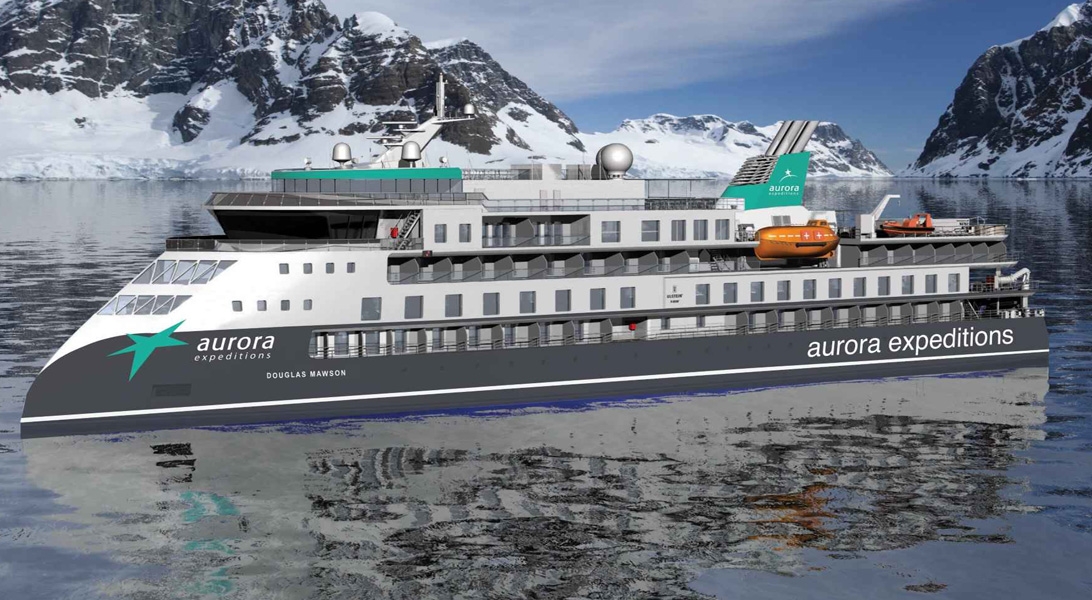
The images shown are for illustration purposes only and may not be an exact representation of what you find on the ship.
The images shown are for illustration purposes only and may not be an exact representation of what you find on the ship.
The images shown are for illustration purposes only and may not be an exact representation of what you find on the ship.
The images shown are for illustration purposes only and may not be an exact representation of what you find on the ship.
The images shown are for illustration purposes only and may not be an exact representation of what you find on the ship.


Our Fusion packages are all ABTA & ATOL protected ensuring that your booking is safe with us
| 13 nights aboard the Douglas Mawson | |||
| Fully-serviced accommodation in your chosen stateroom | |||
| An informative and entertaining lecture program by our team of experts | |||
| Complimentary 3-in-1 polar jacket and the use of gumboots | |||
| Entry fees to historic or tourist sites | |||
| Daily shore excursions, guided walks, Zodiac cruises and some activities | |||
| Daily breakfast, lunch and dinner including house wines, beers and soft drinks and afternoon tea and snacks | |||
| Complimentary use of fitness centre | |||
| Comprehensive pre-departure information kit and destination resource guide | |||
| Captain’s Welcome and Farewell Cocktail Reception including four-course dinner, house cocktails, house beer and wine, non-alcoholic beverages | |||
| Complimentary access to onboard medical doctor or clinic, if required | |||
| An experienced team of destination specialists and activity leaders | |||
| Pre-dinner cocktail hour including cold canapes and bar snacks | |||
| Photographic voyage log (post-voyage) | |||
| Port Taxes and Fees | |||
 | ABTA and ATOL Protection* | ||
Date 24th Jun 2027 |
Nts 13 |
Oceanview £6,198pp |
Balcony £6,698pp |
Suite £11,248pp |
Date 24th Jun 2027 |
Nts 13 |
Oceanview £6,198pp |
Balcony £6,698pp |
Suite £11,248pp |
| Oceanview staterooms from | £6,198pp | ||
| AS2D | Aurora Stateroom Twin Share | £6,198pp | |
| SASD | Aurora Stateroom Superior | £6,498pp | |
| Balcony staterooms from | £6,698pp | ||
| BSAD | Balcony Stateroom Category A | £7,598pp | |
| BSBD | Balcony Stateroom Category B | £7,048pp | |
| BSCD | Balcony Stateroom Category C | £6,698pp | |
| SBSD | Balcony Stateroom Superior | £8,298pp | |
| Suite staterooms from | £11,248pp | ||
| JSD | Junior Suite |  | |
| CSD | Captain Suite | £11,248pp | |
Fusion Holidays when selling travel arrangements is a trading name of Co-op Travel Services Limited, registration 08903986. Fusion Cruises is an Accredited Body Member of Co-op Travel Services Limited ATOL 12904.
Book with Confidence. We are a Member of ABTA which means you have the benefit of ABTA’s assistance and Code of Conduct.
Some of the flights and flight-inclusive holidays on this website are financially protected by the ATOL scheme but ATOL protection does not apply to all holiday and travel services offered on this website. This website will provide you with information on the protection that applies in the case of each holiday and travel service offered before you make your booking. If you do not receive an ATOL Certificate then the booking will not be ATOL protected. If you do receive an ATOL Certificate but all parts of your trip are not listed on it, those parts will not be ATOL protected. Please see our booking conditions for information, or for more information about financial protection and the ATOL Certificate go to: www.caa.co.uk