This site uses cookies as defined in our Cookie Policy, by continuing to use this site you agree to their use.
Continue

Welcome to Aurora’s Patagonia and Chilean Fjords expedition.
Sail the legendary Beagle Channel and marvel at the snow-covered peaks of rugged Patagonia. Zodiac-cruise through fjords flanked by glaciers and watch as the captain skilfully navigates narrow channels while you keep watch for acrobatic dolphins, penguins and seals. Enjoy two days hiking and exploring in Torres del Paine National Park, renowned for its majestic granite towers and jaw-dropping landscapes. Join us on a journey exploring the fjords and coast of southern Chile and discover why Chile was voted best adventur... e destination in South America for three consecutive years at the World Travel Awards.
| Arrive | Depart | ||||||
| 25th25 | MarMar | 202929 | Ushuaia, Argentina, embark on the Douglas Mawson | ||||
At 55 degrees latitude south, Ushuaia (pronounced oo-swy-ah) is closer to the South Pole than to Argentina's northern border with Bolivia. It is the capital and tourism base for Tierra del Fuego, the island at the southernmost tip of Argentina.Although its stark physical beauty is striking, Tierra del Fuego's historical allure is based more on its mythical past than on rugged reality. The island was inhabited for 6,000 years by Yámana, Haush, Selk'nam, and Alakaluf Indians. But in 1902 Argentina, eager to populate Patagonia to bolster its territorial claims, moved to initiate an Ushuaian penal colony, establishing the permanent settlement of its most southern territories and, by implication, everything in between.When the prison closed in 1947, Ushuaia had a population of about 3,000, made up mainly of former inmates and prison staff. Today the Indians of Darwin's "missing link" theory are long gone—wiped out by diseases brought by settlers and by indifference to their plight—and the 60,000 residents of Ushuaia are hitching their star to tourism.The city rightly (if perhaps too loudly) promotes itself as the southernmost city in the world (Puerto Williams, a few miles south on the Chilean side of the Beagle Channel, is a small town). You can make your way to the tourism office to get your clichéd, but oh-so-necessary, "Southernmost City in the World" passport stamp. Ushuaia feels like a frontier boomtown, at heart still a rugged, weather-beaten fishing village, but exhibiting the frayed edges of a city that quadrupled in size in the '70s and '80s and just keeps growing. Unpaved portions of Ruta 3, the last stretch of the Pan-American Highway, which connects Alaska to Tierra del Fuego, are finally being paved. The summer months (December through March) draw more than 120,000 visitors, and dozens of cruise ships. The city is trying to extend those visits with events like March's Marathon at the End of the World and by increasing the gamut of winter activities buoyed by the excellent snow conditions.A terrific trail winds through the town up to the Martial Glacier, where a ski lift can help cut down a steep kilometer of your journey. The chaotic and contradictory urban landscape includes a handful of luxury hotels amid the concrete of public housing projects. Scores of "sled houses" (wooden shacks) sit precariously on upright piers, ready for speedy displacement to a different site. But there are also many small, picturesque homes with tiny, carefully tended gardens. Many of the newer homes are built in a Swiss-chalet style, reinforcing the idea that this is a town into which tourism has breathed new life. At the same time, the weather-worn pastel colors that dominate the town's landscape remind you that Ushuaia was once just a tiny fishing village, snuggled at the end of the Earth.As you stand on the banks of the Canal Beagle (Beagle Channel) near Ushuaia, the spirit of the farthest corner of the world takes hold. What stands out is the light: at sundown the landscape is cast in a subdued, sensual tone; everything feels closer, softer, and more human in dimension despite the vastness of the setting. The snowcapped mountains reflect the setting sun back onto a stream rolling into the channel, as nearby peaks echo their image—on a windless day—in the still waters.Above the city rise the last mountains of the Andean Cordillera, and just south and west of Ushuaia they finally vanish into the often-stormy sea. Snow whitens the peaks well into summer. Nature is the principal attraction here, with trekking, fishing, horseback riding, wildlife spotting, and sailing among the most rewarding activities, especially in the Parque Nacional Tierra del Fuego (Tierra del Fuego National Park). Arrive in Ushuaia, where you will be met by a representative of Aurora Expeditions and transferred with your fellow expeditioners to your assigned pre-voyage hotel. If you are already in Ushuaia, we ask you to make your way to your hotel. Check-in is from 3.00 pm. This afternoon, visit the Aurora Expeditions hospitality desk in the hotel lobby, between 3.00 pm and 7.00 pm, to collect your luggage tags. Our team will confirm details regarding your embarkation day, answer any questions and provide you with information on where to dine or purchase last minute items. Expeditioners arriving after 7.00 pm will find a welcome pack waiting for them at check-in. We ask you to visit our hospitality desk tomorrow between 8.00 am – 10.00 am. The remainder of your time is at leisure. All meals today are at your own expense. Assigned accommodation: To be advised | |||||||
| 26th26 | MarMar | 202929 | Ushuaia, Argentina | ||||
At 55 degrees latitude south, Ushuaia (pronounced oo-swy-ah) is closer to the South Pole than to Argentina's northern border with Bolivia. It is the capital and tourism base for Tierra del Fuego, the island at the southernmost tip of Argentina.Although its stark physical beauty is striking, Tierra del Fuego's historical allure is based more on its mythical past than on rugged reality. The island was inhabited for 6,000 years by Yámana, Haush, Selk'nam, and Alakaluf Indians. But in 1902 Argentina, eager to populate Patagonia to bolster its territorial claims, moved to initiate an Ushuaian penal colony, establishing the permanent settlement of its most southern territories and, by implication, everything in between.When the prison closed in 1947, Ushuaia had a population of about 3,000, made up mainly of former inmates and prison staff. Today the Indians of Darwin's "missing link" theory are long gone—wiped out by diseases brought by settlers and by indifference to their plight—and the 60,000 residents of Ushuaia are hitching their star to tourism.The city rightly (if perhaps too loudly) promotes itself as the southernmost city in the world (Puerto Williams, a few miles south on the Chilean side of the Beagle Channel, is a small town). You can make your way to the tourism office to get your clichéd, but oh-so-necessary, "Southernmost City in the World" passport stamp. Ushuaia feels like a frontier boomtown, at heart still a rugged, weather-beaten fishing village, but exhibiting the frayed edges of a city that quadrupled in size in the '70s and '80s and just keeps growing. Unpaved portions of Ruta 3, the last stretch of the Pan-American Highway, which connects Alaska to Tierra del Fuego, are finally being paved. The summer months (December through March) draw more than 120,000 visitors, and dozens of cruise ships. The city is trying to extend those visits with events like March's Marathon at the End of the World and by increasing the gamut of winter activities buoyed by the excellent snow conditions.A terrific trail winds through the town up to the Martial Glacier, where a ski lift can help cut down a steep kilometer of your journey. The chaotic and contradictory urban landscape includes a handful of luxury hotels amid the concrete of public housing projects. Scores of "sled houses" (wooden shacks) sit precariously on upright piers, ready for speedy displacement to a different site. But there are also many small, picturesque homes with tiny, carefully tended gardens. Many of the newer homes are built in a Swiss-chalet style, reinforcing the idea that this is a town into which tourism has breathed new life. At the same time, the weather-worn pastel colors that dominate the town's landscape remind you that Ushuaia was once just a tiny fishing village, snuggled at the end of the Earth.As you stand on the banks of the Canal Beagle (Beagle Channel) near Ushuaia, the spirit of the farthest corner of the world takes hold. What stands out is the light: at sundown the landscape is cast in a subdued, sensual tone; everything feels closer, softer, and more human in dimension despite the vastness of the setting. The snowcapped mountains reflect the setting sun back onto a stream rolling into the channel, as nearby peaks echo their image—on a windless day—in the still waters.Above the city rise the last mountains of the Andean Cordillera, and just south and west of Ushuaia they finally vanish into the often-stormy sea. Snow whitens the peaks well into summer. Nature is the principal attraction here, with trekking, fishing, horseback riding, wildlife spotting, and sailing among the most rewarding activities, especially in the Parque Nacional Tierra del Fuego (Tierra del Fuego National Park). This morning, enjoy breakfast and check-out. Please ensure your cabin luggage is fitted with cabin tags clearly labelled with your name and cabin number. Take your cabin luggage to hotel reception, prior to, or at check-out. Your luggage will be stored and transferred directly to the port for clearance, to be placed in your cabin ahead of your arrival on board. Please keep any valuables or personal items with you throughout the day. Spend the day at leisure in the southernmost city in the world, where the dramatic peaks of the Andes meet the Beagle Channel. Relax and enjoy a complimentary late check-out, access to a hospitality room, and your hotel’s facilities. Alternatively, embark on a trek, take a stroll along the waterfront, or explore the city’s museums, shops, and cafés. At the designated time, meet in your hotel lobby or at the meeting point in the parking lot near the pier. Your exact meeting time and location will be confirmed by our ground staff at the hospitality desk. Once onboard, you’ll have time to settle into your cabin before our important mandatory briefings. As the ship pulls away from port, we’ll gather on the deck to commence our adventure with spectacular views over Ushuaia and Tierra del Fuego. This evening get to know your fellow expeditioners and friendly expedition team and crew at a welcome dinner to celebrate the start of a thrilling adventure to Antarctica. | |||||||
| 27th27 | MarMar | 202929 | Glacier Alley, Chile | ||||
We travel through a dazzling stretch of the 240-kilometre (150 mile) long Beagle Channel called Glacier Alley or ‘Avenue of the Glaciers’ as it’s more elegantly known. You will marvel at this string of tidewater glaciers pushing down to the edge of the sea from the enormous Darwin Ice Field. Surrounded by snow-capped peaks, most of the glaciers were named after European countries or the explorers who discovered them: Holland, Italy, Romanche, Spain, Garibaldi. Weather permitting, we’ll board our Zodiacs for a closer look at the impressive Romanche Glacier. Even if fog obscures the view, the sound of the cracking ice as it calves into the water is sure to impress. Apart from the spectacular scenery, Glacier Alley offers opportunities to spot wildlife such as penguin rookeries and South American fur seals. | |||||||
| 28th28 | MarMar | 202929 | Glacier Alley, Chile | ||||
| 29th29 | MarMar | 202929 | Glacier Alley, Chile | ||||
| 30th30 | MarMar | 202929 | Chilean Fjords, Chile | ||||
Strewn through the coast of Chile, these beautiful fjords are world renowned for being one of the most awe-inspiring places on earth. Snow-capped volcanoes nestle majestically alongside rolling valleys of ice and frosty glaciers. Rugged beauty, breathtaking scenery not to mention diverse and profuse wildlife abounds – expect to watch whales from the deck, see playful Magellan Penguins and perhaps even spot the rare Andean Condor. Affectionately named “The End of the World” by the Spaniards who discovered the region in eighteenth century in a quest to Christianise South America, these extraordinary waterways not only encompass a medley of jagged mountains and iceberg strewn bays, but feature a kaleidoscopic spectrum of unexpected colour that offers photographic opportunities like no other destination. As we venture north, we enter one of the many channels and fjords of Patagonian Chile. Be prepared to experience wild weather. The fjords and islands of Chilean Patagonia take the brunt of the prevailing westerlies that blow across the southern seas, and here, the wind can blow almost constantly, and rain and snow can fall all year round. We may sail through Montañas Fjord, a long fjord flanked by rugged mountains and a number of glaciers including Herman, Bernal, and Paredes. During low tide, we cross the White Narrows – a narrow channel of water approximately 80 metres (262 feet) wide. Find a spot on one of our many observation areas and appreciate the masterful skills of our Captain as they navigate us through this difficult channel. At the heart of Chilean Patagonia lies Bernardo O'Higgins National Park. More than 320 kilometres (200 miles) from one end to the other, the park encompasses Patagonia's Southern Ice Field, which in combination with its northern counterpart forms one of the largest expanses of glacial ice outside the Polar Regions. Apart from the spectacular scenery, Glacier Alley offers opportunities to spot wildlife such as penguin rookeries and South American fur seals. | |||||||
| 31st31 | MarMar | 202929 | Puerto Natales, Chile | ||||
With a population of roughly 18,000, Puerto Natales is the capital of the Ultima Esperanza Province. Founded in 1911, it quickly developed into a major residential center and shipping port for the area’s products. Nestled on a gently-sloping point amid spectacular scenery, the town overlooks the Ultima Esperanza Gulf and has a nice view of the Balmaceda Mountain. It provides services for the region’s intense livestock activity. Many of its inhabitants work at the Argentinian coal mines in Rio Turbio and return home over the weekend. A growing number of tourists are using the town as a jumping-off point for visiting the spectacular Torres del Paine and Balmaceda National Parks, and the nearby fjords. In 1892 and 1897, two geographic surveyors mapped the area and ascertained its potential for livestock farming. The first expedition was led by Capt. Eberhard, while the second, a Swedish one, was led by Otto Nordenskjöld. Eberhard discovered the Milodón Cave and was one of the first settlers in the area. A German-born immigrant in transit along the Strait of Magellan, he disembarked in Punta Arenas and decided to stay in this area. His brother continued to California, their original destination, where he later founded the renowned Eberhard Faber pencil making company. When the area opened to settlement in 1893, the lands lying along the coast were occupied mostly by German and English settlers who had previously come to Punta Arenas. There still remain a few interesting buildings dating from the estancia heydays. Pier Information The ship will remain at anchor. Guests will be brought ashore by ship’s tenders to the jetty located close to the center of town, which can be reached on foot. Shopping The main shopping area is located about 11 blocks from the landing jetty. Cuisine Two of the better restaurants in town are Tranquera and Circulo Español. Other Sites Cerro DoroteaA walk up this hill rewards with superb views of the whole Ultima Esperanza Sound.Milodón Cave National MonumentAbout 15 miles out of Puerto Natales stands this monument near the cave, where in 1895 Capt. Eberhard found the nearly intact remains of a prehistoric animal called milodón, a type of ground sloth. The finding caused such a stir that Wellington Furlog, a scientiest at Cornell University, set out in 1907 to comb Patagonia in search of living specimens of this species. Puerto Natales is the gateway to Torres del Paine National Park, world-renowned for its granite towers, which give the park its name. These gigantic spires were carved by glacial ice and upon entering the park, you will see a series of lakes with intense colours, mountains covered in ice, and an array of local fauna. In Patagonia, you will feel the immensity of nature and delight in feeling completely insignificant in its presence. The jaw-dropping landscapes of turquoise waters, glaciers and towering granite horns of the Torres del Paine National Park is a humbling experience. You will have two days to experience the wonders of Torres del Paine National Park on various hikes suited to your fitness level. You will pass several estancias (ranches) en route to the national park, and you will witness the landscape change from a steppe eco-region to deciduous forest. Along the way, pause amongst the mountains to admire views of the lakes called Amarga, Sarmiento, and Nordenskjold, and Salto Grande. You may be able to see some of the local fauna, including many species of birds including the majestic condor. Look out for foxes, huemul (Andean deer) and guanacos, which are wild camelids related to the llama. The reclusive difficult-to-spot puma has also been seen inside the national park where authorities are happy to report a healthy growing population. On the afternoon of your first day exploring Torres del Paine National Park, you will return to the vessel in time for dinner, sharing stories of the day’s adventures along the way. The following morning, you will head back into the park for another day of exploration, discovering more of Patagonia’s spectacular landscapes and natural wonders. You will be given three hiking options based on difficulty level (Easy, Medium, and Difficult) to choose from. | |||||||
| 1st01 | AprApr | 202929 | Puerto Natales, Chile | ||||
With a population of roughly 18,000, Puerto Natales is the capital of the Ultima Esperanza Province. Founded in 1911, it quickly developed into a major residential center and shipping port for the area’s products. Nestled on a gently-sloping point amid spectacular scenery, the town overlooks the Ultima Esperanza Gulf and has a nice view of the Balmaceda Mountain. It provides services for the region’s intense livestock activity. Many of its inhabitants work at the Argentinian coal mines in Rio Turbio and return home over the weekend. A growing number of tourists are using the town as a jumping-off point for visiting the spectacular Torres del Paine and Balmaceda National Parks, and the nearby fjords. In 1892 and 1897, two geographic surveyors mapped the area and ascertained its potential for livestock farming. The first expedition was led by Capt. Eberhard, while the second, a Swedish one, was led by Otto Nordenskjöld. Eberhard discovered the Milodón Cave and was one of the first settlers in the area. A German-born immigrant in transit along the Strait of Magellan, he disembarked in Punta Arenas and decided to stay in this area. His brother continued to California, their original destination, where he later founded the renowned Eberhard Faber pencil making company. When the area opened to settlement in 1893, the lands lying along the coast were occupied mostly by German and English settlers who had previously come to Punta Arenas. There still remain a few interesting buildings dating from the estancia heydays. Pier Information The ship will remain at anchor. Guests will be brought ashore by ship’s tenders to the jetty located close to the center of town, which can be reached on foot. Shopping The main shopping area is located about 11 blocks from the landing jetty. Cuisine Two of the better restaurants in town are Tranquera and Circulo Español. Other Sites Cerro DoroteaA walk up this hill rewards with superb views of the whole Ultima Esperanza Sound.Milodón Cave National MonumentAbout 15 miles out of Puerto Natales stands this monument near the cave, where in 1895 Capt. Eberhard found the nearly intact remains of a prehistoric animal called milodón, a type of ground sloth. The finding caused such a stir that Wellington Furlog, a scientiest at Cornell University, set out in 1907 to comb Patagonia in search of living specimens of this species. | |||||||
| 2nd02 | AprApr | 202929 | At Sea | ||||
| 3rd03 | AprApr | 202929 | At Sea | ||||
| 4th04 | AprApr | 202929 | Chilean Fjords, Chile | ||||
Strewn through the coast of Chile, these beautiful fjords are world renowned for being one of the most awe-inspiring places on earth. Snow-capped volcanoes nestle majestically alongside rolling valleys of ice and frosty glaciers. Rugged beauty, breathtaking scenery not to mention diverse and profuse wildlife abounds – expect to watch whales from the deck, see playful Magellan Penguins and perhaps even spot the rare Andean Condor. Affectionately named “The End of the World” by the Spaniards who discovered the region in eighteenth century in a quest to Christianise South America, these extraordinary waterways not only encompass a medley of jagged mountains and iceberg strewn bays, but feature a kaleidoscopic spectrum of unexpected colour that offers photographic opportunities like no other destination. We spend the next few days navigating our way through Patagonia’s maze of fjords, with hopefully some chances for Zodiac cruising and landings along the way. Spend time on the decks to scan for whales, dolphins and seabirds, while admiring the beautiful landscapes of the maze of channels and islands around. We will be sailing along part of the 145 km / 90-mile long Moraleda Channel, which separates the mainland from the huge archipelagos of Chonos and Guaitecas. We will see magnificent Andes peaks such as the Mentolat, Melimoyu and the Maca volcanoes. We will be scanning the waters for the occasional presence of pods of killer whale that predate on the numerous South American sea lion colonies located along the coast and forested islands. | |||||||
| 5th05 | AprApr | 202929 | Chilean Fjords, Chile | ||||
Strewn through the coast of Chile, these beautiful fjords are world renowned for being one of the most awe-inspiring places on earth. Snow-capped volcanoes nestle majestically alongside rolling valleys of ice and frosty glaciers. Rugged beauty, breathtaking scenery not to mention diverse and profuse wildlife abounds – expect to watch whales from the deck, see playful Magellan Penguins and perhaps even spot the rare Andean Condor. Affectionately named “The End of the World” by the Spaniards who discovered the region in eighteenth century in a quest to Christianise South America, these extraordinary waterways not only encompass a medley of jagged mountains and iceberg strewn bays, but feature a kaleidoscopic spectrum of unexpected colour that offers photographic opportunities like no other destination. | |||||||
| 6th06 | AprApr | 202929 | Chilean Fjords, Chile | ||||
Strewn through the coast of Chile, these beautiful fjords are world renowned for being one of the most awe-inspiring places on earth. Snow-capped volcanoes nestle majestically alongside rolling valleys of ice and frosty glaciers. Rugged beauty, breathtaking scenery not to mention diverse and profuse wildlife abounds – expect to watch whales from the deck, see playful Magellan Penguins and perhaps even spot the rare Andean Condor. Affectionately named “The End of the World” by the Spaniards who discovered the region in eighteenth century in a quest to Christianise South America, these extraordinary waterways not only encompass a medley of jagged mountains and iceberg strewn bays, but feature a kaleidoscopic spectrum of unexpected colour that offers photographic opportunities like no other destination. | |||||||
| 7th07 | AprApr | 202929 | Tic Toc Bay, Chile | ||||
Explore the delightful and impressive coastline of Tic Toc Bay – either ship cruising or perhaps by Zodiac and kayak. This whole area has been recently recognised as one of the few marine parks of Chile famous not only for the seasonal presence of blue whales but also for the rich array of other cetaceans, marine mammals, and seabirds. In the Corcovado Gulf, you will enjoy spotting a good variety of seabirds including black-browed albatross, southern giant petrel, southern fulmar and long-distance migrants such as the Arctic skua. | |||||||
| 8th08 | AprApr | 202929 | Puerto Montt, Chile, disembark the Douglas Mawson | ||||
For most of its history, windy Puerto Montt was the end of the line for just about everyone traveling in the Lake District. Now the Carretera Austral carries on southward, but for all intents and purposes Puerto Montt remains the region's last significant outpost, a provincial city that is the hub of local fishing, textile, and tourist activity.Today the city center is full of malls, condos, and office towers—it's the fastest-growing city in Chile—but away from downtown, Puerto Montt consists mainly of low clapboard houses perched above its bay, the Seno de Reloncaví. If it's a sunny day, head east to Playa Pelluco or one of the city's other beaches. If you're more interested in exploring the countryside, drive along the shore for a good view of the surrounding hills. Our voyage ends In Puerto Montt. Farewell your expedition team and fellow adventurers before transferring to the airport for your onward travels. Note: At the conclusion of the voyage, we do not recommend booking flights departing Puerto Montt prior to 11.00 am on the day of disembarkation in case there are delays. | |||||||
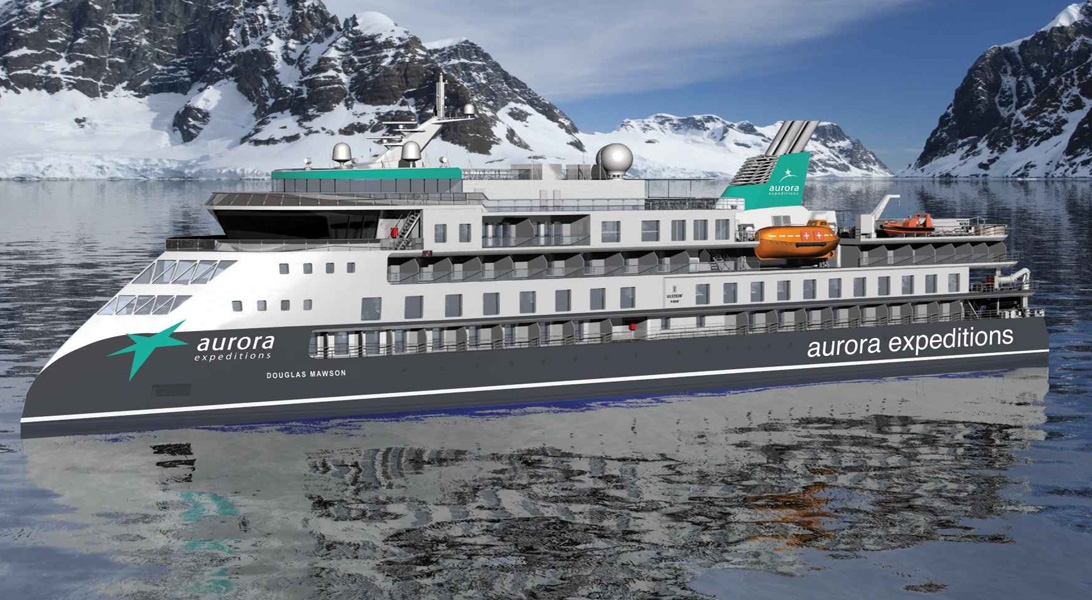
The images shown are for illustration purposes only and may not be an exact representation of what you find on the ship.
The images shown are for illustration purposes only and may not be an exact representation of what you find on the ship.
The images shown are for illustration purposes only and may not be an exact representation of what you find on the ship.
The images shown are for illustration purposes only and may not be an exact representation of what you find on the ship.
The images shown are for illustration purposes only and may not be an exact representation of what you find on the ship.


Our Fusion packages are all ABTA & ATOL protected ensuring that your booking is safe with us
| 14 nights aboard the Douglas Mawson | |||
| Fully-serviced accommodation in your chosen stateroom | |||
| An informative and entertaining lecture program by our team of experts | |||
| Complimentary 3-in-1 polar jacket and the use of gumboots | |||
| Entry fees to historic or tourist sites | |||
| Daily shore excursions, guided walks, Zodiac cruises and some activities | |||
| Daily breakfast, lunch and dinner including house wines, beers and soft drinks and afternoon tea and snacks | |||
| Complimentary use of fitness centre | |||
| Comprehensive pre-departure information kit and destination resource guide | |||
| Captain’s Welcome and Farewell Cocktail Reception including four-course dinner, house cocktails, house beer and wine, non-alcoholic beverages | |||
| Complimentary access to onboard medical doctor or clinic, if required | |||
| An experienced team of destination specialists and activity leaders | |||
| Pre-dinner cocktail hour including cold canapes and bar snacks | |||
| Photographic voyage log (post-voyage) | |||
| Port Taxes and Fees | |||
 | ABTA and ATOL Protection* | ||
Date 25th Mar 2029 |
Nts 14 |
Oceanview £11,270pp |
Balcony £12,255pp |
Suite £18,045pp |
Date 25th Mar 2029 |
Nts 14 |
Oceanview £11,270pp |
Balcony £12,255pp |
Suite £18,045pp |
| Oceanview staterooms from | £11,270pp | ||
| AS2D | Aurora Stateroom Twin Share | £11,270pp | |
| SASD | Aurora Stateroom Superior | £11,947pp | |
| Balcony staterooms from | £12,255pp | ||
| BSAD | Balcony Stateroom Category A | £13,856pp | |
| BSBD | Balcony Stateroom Category B | £12,871pp | |
| BSCD | Balcony Stateroom Category C | £12,255pp | |
| SBSD | Balcony Stateroom Superior | £15,150pp | |
| Suite staterooms from | £18,045pp | ||
| JSD | Junior Suite | £18,045pp | |
| CSD | Captain Suite | £20,632pp | |
Fusion Holidays when selling travel arrangements is a trading name of Co-op Travel Services Limited, registration 08903986. Fusion Cruises is an Accredited Body Member of Co-op Travel Services Limited ATOL 12904.
Book with Confidence. We are a Member of ABTA which means you have the benefit of ABTA’s assistance and Code of Conduct.
Some of the flights and flight-inclusive holidays on this website are financially protected by the ATOL scheme but ATOL protection does not apply to all holiday and travel services offered on this website. This website will provide you with information on the protection that applies in the case of each holiday and travel service offered before you make your booking. If you do not receive an ATOL Certificate then the booking will not be ATOL protected. If you do receive an ATOL Certificate but all parts of your trip are not listed on it, those parts will not be ATOL protected. Please see our booking conditions for information, or for more information about financial protection and the ATOL Certificate go to: www.caa.co.uk