| | | | | Arrive | Depart |
| 7th07 | MayMay | 202828 | Glasgow, Scotland, embark on the Sylvia Earle | | |
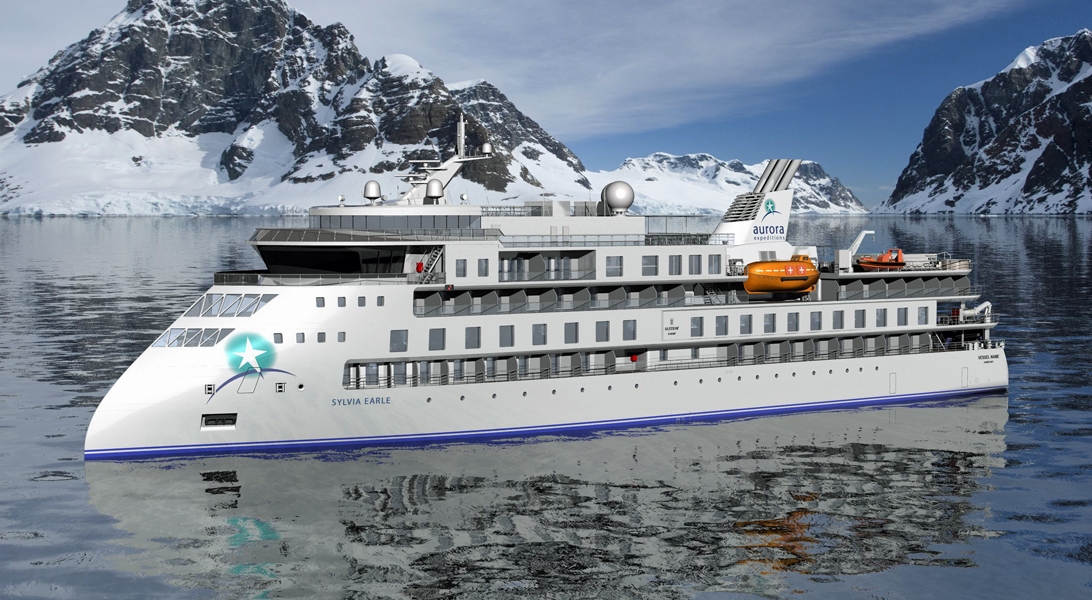
Start your adventure in Scotland’s largest city, Glasgow which is overflowing with historic landmarks and a vibrant culture. The distinct architecture is reminiscent classic 19th-century fused together with modern early 20th-century dubbed ‘Glasgow Style’. The checkerboard layout makes the city easy to navigate with lively street entertainment around every corner. Arrive at Glasgow International Airport and transfer to our Embarkation Suite (conditions apply below). Explore Glasgow at your leisure before returning to our Embarkation Suite at the designated times for the group transfer to Sylvia Earle. Important information: • Complimentary airport arrival transfers are provided as group transfers for passengers arriving at Glasgow International Airport prior to 12:00pm on Day 1 only. • Passengers who arrive after the airport transfer cut-off will need to make their own way to the Embarkation Suite before 2:00 pm to complete mandatory check-in. • For passengers already in Glasgow, we ask you to visit our centrally located Embarkation Suite with all luggage, which will be open for mandatory check-in between 9:00 am and 2:00 pm. • Passengers have access to our centrally located Embarkation Suite, including luggage storage, Aurora Expeditions staff for voyage and city information and cabin check-in, WIFI, tea, coffee and light refreshments. • Embarkation Suite location: advised 6 months prior to departure. • As your luggage will be transported to the ship at 2.30pm and ahead of you, please ensure you place any items you require during the day in your day bag, including passports, cash/cards and medicines. In the late afternoon join a mandatory group transfer to board the Sylvia Earle. After boarding, there’s time to settle into your cabin before our important safety briefings before we ‘throw the lines’ to begin our Scotland adventure. This evening, join your fellow travellers for an onboard Welcome Dinner, where your expedition team will introduce you to the expedition ahead and raise a toast to the adventures to come. |
| 8th08 | MayMay | 202828 | At Sea | | |
| 9th09 | MayMay | 202828 | At Sea | | |
| 10th10 | MayMay | 202828 | St. Kilda Archipelago, Scotland | | |
St Kilda is a remarkable uninhabited archipelago some 40 nautical miles beyond the Outer Hebrides. The stunning cliffs and sea stacks are home to the most important seabird breeding colony in northwest Europe. St Kilda is one of the few places in the world to have received dual World Heritage status from UNESCO in recognition of its Natural Heritage and cultural significance. Village Bay on the island of Hirta once supported a population of over 200, but the last islanders left in the 1930s. Recent restoration work on the village by the National Trust for Scotland offers a marvellous link with the past. One of the caretakers acts as shopkeeper and postmaster for any visitors who might like to send a postcard home from St. Kilda. We continue to the Outer Hebrides, also known as the Western Isles, a 209-kilometre (128-mile) chain facing the open Atlantic. On the Isle of Lewis, we plan to visit the remarkable Callanish Standing Stones, raised around 3,000 BCE and set within a landscape rich in prehistoric history. Weather permitting, we hope to land at the remote archipelago of St Kilda, recognised by UNESCO for both its natural and cultural significance. Abandoned stone homes tell of the resilient islanders who once raised Soay sheep and harvested seabirds, while immense cliffs and sea stacks support one of Europe’s most important seabird colonies. Across Orkney’s 70 windswept islands, layers of human history unfold—from 5,000-year-old Neolithic monuments and Norse heritage to wartime remains and present-day crofting communities. Seabirds crowd the imposing sea cliffs, coastal paths beckon hikers and, when conditions allow, kayakers can discover sections of the archipelago from the water. On Papa Westray, we plan to visit the Knap of Howar, where Northern Europe’s oldest known stone houses were occupied by Neolithic farmers more than 5,000 years ago. Later, experience the warmth of island hospitality at the local pub, where the Papa Westray folk ensemble Poor Man’s Corner may fill the room with lively tunes and irresistible rhythms. |
| 11th11 | MayMay | 202828 | Papa Westray, Orkney Islands, Scotland | | |
| 12th12 | MayMay | 202828 | Papa Westray, Orkney Islands, Scotland | | |
| 13th13 | MayMay | 202828 | Shetland Islands, Scotland | | |
Almost 160 kilometres (99 miles) north of mainland Scotland, the Shetland Islands sit at a similar latitude to Bergen and the southern tip of Greenland. Summer brings extraordinarily long days to this archipelago of around 100 islands, rich in nature reserves, archaeological treasures and distinctive island traditions. Depending on conditions, we hope to explore several of the following places: Between Orkney and Shetland, tiny Fair Isle is renowned for its bird observatory, distinctive knitwear and dramatic shipwreck history. Cliffs surround much of the island, while its small community lives mainly in traditional crofts across the more fertile south. Positioned beneath major migration routes from Scandinavia, Iceland and the Faroe Islands, Fair Isle is a paradise for birdwatchers. In summer, fulmars, kittiwakes, guillemots, gannets, shags and puffins crowd the cliffs. Wildflowers flourish across the island, and we may meet local residents, hike through the landscape or visit the museum. The surrounding waters are home to grey and common seals, with possible sightings of porpoises, dolphins, orcas and minke whales. From Lerwick, we plan to discover Jarlshof, one of Shetland’s most complex archaeological sites. Revealed by storms in the late 19th century, the site preserves evidence of more than 4,000 years of settlement, from Neolithic homes and a Bronze Age smithy to Iron Age buildings, Norse longhouses and a medieval farmstead. The name ‘Jarlshof’ was bestowed by Sir Walter Scott in his novel The Pirate. Noss National Nature Reserve is famed for its kilometre-long seabird cliffs. During breeding season, the calls of around 150,000 birds and chicks fill the air as gannets, guillemots and other seabirds occupy ledges in sandstone cliffs rising almost 200 metres (656 feet). Seals rest along the shoreline, while otters sometimes forage among the kelp. On the uninhabited island of Mousa stands Mousa Broch, the best preserved of Scotland’s Iron Age fortified towers. Nearly 2,000 years old, its remarkable stonework still rises more than 13 metres. By day, common and grey seals may be seen along the shore, and we will keep watch for otters—known locally as dratsies. |
| 14th14 | MayMay | 202828 | Shetland Islands, Scotland | | |
| 15th15 | MayMay | 202828 | Shetland Islands, Scotland | | |
| 16th16 | MayMay | 202828 | Kirkwall, Orkney Islands, Scotland | | |
In bustling Kirkwall, the main town on Orkney, there's plenty to see in the narrow, winding streets extending from the harbor. The cathedral and some museums are highlights. Kirkwall, the capital of Orkney, rewards exploration beyond its modern harbour. Narrow lanes wind through the historic centre, while the surrounding West Mainland blends fertile farmland, rolling hills, moorland and dramatic Atlantic cliffs. Depending on our chosen excursion, we may encounter some of Orkney’s great archaeological treasures, including the Stones of Stenness, Ring of Brodgar and Maeshowe chambered tomb. Personalise your expedition with an included ‘Your Choice’ experience suited to your interests and fitness level. Option 1: Orkney Treasures – Skara Brae Duration: 4 hours Level of difficulty: Moderately paced Travel through Orkney’s tranquil countryside into the UNESCO World Heritage-listed Heart of Neolithic Orkney. Pass the Standing Stones of Stenness and pause at the Ring of Brodgar, an immense ceremonial stone circle created almost 5,000 years ago. Continue to Skara Brae, where a remarkably preserved Neolithic village lay hidden beneath sand dunes until storms revealed it in the 19th century. Explore the visitor centre and ancient stone dwellings before walking approximately 200 metres to Skaill House. Built in 1620 on a site with Norse origins, this elegant manor has been home to 12 generations of the same family and contains a fascinating collection spanning four centuries. Option 2: The Heart of Neolithic Orkney Duration: 3.45 hours Level of difficulty: Moderately paced Journey into Orkney’s UNESCO World Heritage-listed Neolithic heartland. At the Ring of Brodgar, contemplate a vast ceremonial stone circle created almost 5,000 years ago, then visit the taller and even older Standing Stones of Stenness. Walk to the nearby settlement of Barnhouse and discover how its Neolithic inhabitants may have lived. Pause at a bird hide overlooking peaceful Harray Loch before returning to Kirkwall to visit St Magnus Cathedral, an enduring expression of Orkney’s Norse heritage. Together, these sites offer a fascinating view of the communities, beliefs and mysteries that have shaped the islands. |
| 17th17 | MayMay | 202828 | Aberdeen, Scotland, disembark the Sylvia Earle | | |
With close to 220,000 inhabitants, Aberdeen is Scotland's third most populous city. Locally quarried grey granite was used during the mid-18th to mid-20th centuries for many of Aberdeen's buildings, and hence the nicknames it has earned as the Granite City, or the Grey City. Aberdeen granite was also used to build the terraces of the Houses of Parliament and Waterloo Bridge in London. Since the discovery of North Sea oil in the 1970s, Aberdeen has also been called the Oil Capital of Europe or the Energy Capital of Europe. It is no wonder that because of the oil fields in the North Sea, Aberdeen's seaport is very important. The Heliport with its flights to the oil fields is one of the busiest commercial heliports in the world. On arrival in Aberdeen, disembark in the early morning and farewell your fellow travellers and Expedition Team before transferring to the airport for your onward journey. Note: At the conclusion of the voyage, we recommend booking flights departing after 12.00 pm on the day of disembarkation in case there are delays. |