This site uses cookies as defined in our Cookie Policy, by continuing to use this site you agree to their use.
Continue

Welcome to Aurora Expeditions Forever Irish
Though scattered far from the island of their forebears, over 80 million people worldwide continue to identify deeply with their Irish heritage. This voyage invites you to explore not only the landscapes and histories of Ireland itself, but also the intertwined stories of those who left, those who remained and the modern-day Irish who continue to live in communities bound by memory, identity, and a shared reverence for the past. Join us as we celebrate the resilience and legacy of a people whose story did not end at departure, but instead ... grew stronger across generations and continents, ensuring their descendants consider themselves to be ‘forever Irish’.
| Arrive | Depart | ||||||
| 29th29 | AprApr | 202828 | Dublin, Ireland, embark on the Sylvia Earle | ||||
Dublin is making a comeback. The decade-long "Celtic Tiger" boom era was quickly followed by the Great Recession, but The Recovery has finally taken a precarious hold. For visitors, this newer and wiser Dublin has become one of western Europe's most popular and delightful urban destinations. Whether or not you're out to enjoy the old or new Dublin, you'll find it a colossally entertaining city, all the more astonishing considering its intimate size.It is ironic and telling that James Joyce chose Dublin as the setting for his famous Ulysses, Dubliners, and A Portrait of the Artist as a Young Man because it was a "center of paralysis" where nothing much ever changed. Which only proves that even the greats get it wrong sometimes. Indeed, if Joyce were to return to his once-genteel hometown today—disappointed with the city's provincial outlook, he left it in 1902 at the age of 20—and take a quasi-Homeric odyssey through the city (as he so famously does in Ulysses), would he even recognize Dublin as his "Dear Dirty Dumpling, foostherfather of fingalls and dotthergills"?For instance, what would he make of Temple Bar—the city's erstwhile down-at-the-heels neighborhood, now crammed with cafés and trendy hotels and suffused with a nonstop, international-party atmosphere? Or the simple sophistication of the open-air restaurants of the tiny Italian Quarter (named Quartier Bloom after his own creation), complete with sultry tango lessons? Or of the hot–cool Irishness, where every aspect of Celtic culture results in sold-out theaters, from Once, the cult indie movie and Broadway hit, to Riverdance, the old Irish mass-jig recast as a Las Vegas extravaganza? Plus, the resurrected Joyce might be stirred by the songs of Hozier, fired up by the sultry acting of Michael Fassbender, and moved by the award-winning novels of Colum McCann. As for Ireland's capital, it's packed with elegant shops and hotels, theaters, galleries, coffeehouses, and a stunning variety of new, creative little restaurants can be found on almost every street in Dublin, transforming the provincial city that suffocated Joyce into a place almost as cosmopolitan as the Paris to which he fled. And the locals are a hell of a lot more fun! Now that the economy has finally turned a corner, Dublin citizens can cast a cool eye over the last 20 crazy years. Some argue that the boomtown transformation of their heretofore-tranquil city has permanently affected its spirit and character. These skeptics (skepticism long being a favorite pastime in the capital city) await the outcome of "Dublin: The Sequel," and their greatest fear is the possibility that the tattered old lady on the Liffey has become a little less unique, a little more like everywhere else.Oh ye of little faith: the rare ole gem that is Dublin is far from buried. The fundamentals—the Georgian elegance of Merrion Square, the Norman drama of Christ Church Cathedral, the foamy pint at an atmospheric pub—are still on hand to gratify. Most of all, there are the locals themselves: the nod and grin when you catch their eye on the street, the eagerness to hear half your life story before they tell you all of theirs, and their paradoxically dark but warm sense of humor. It's expected that 2016 will be an extra-special year in the capital, as centenary celebrations of the fateful 1916 Easter Rising will dominate much of the cultural calendar. Arrive at Dublin Airport and transfer to our Embarkation Suite (conditions apply below). Explore Dublin at your leisure before returning to our Embarkation Suite at the designated times for the group transfer to Sylvia Earle. Important information: Complimentary airport arrival transfers are provided as group transfers for expeditioners arriving at Dublin Airport prior to 10:00am on Day 1 only. Passengers who arrive after the airport transfer cut-off will need to make their own way to the Embarkation Suite before 12:00 pm to complete mandatory check-in. For passengers already in Dublin, we ask you to visit our centrally located Embarkation Suite with all luggage, which will be open for mandatory check-in between 9:00 am and 12:00 pm. Passengers have access to our centrally located Embarkation Suite, including luggage storage, Aurora Expeditions staff for voyage and city information and cabin check-in, WIFI, tea, coffee and light refreshments. Embarkation Suite location: to be advised closer to date of departure. As your luggage will be transported to the ship at 12.30pm and ahead of you, please ensure you place any items you require during the day in your day bag, including passports, cash/cards and medicines. Departing our Embarkation Suite at 1:00pm, we start our ‘Forever Irish’ story at a site dedicated to Ireland’s emigration, when we meet one of Ireland’s greatest exports, its people, with a self-guided tour of the award-winning EPIC – the Irish Emigration Museum. Discover what it means to hold Irish heritage, as you meet poets and presidents, singers and suffragettes. You will meet famous folk and families, from Bram Stoker to Oscar Wilde, Ned Kelly to JFK, as you follow your souvenir-passport to find out where they came from, why they left, and the differences they have made to our everyday lives. Housed within Dublin's historic CHQ building, EPIC provides an opportunity to delve into your own Irish ancestry at the Irish Family History Centre following your tour. Alternatively, you may wish to sample an Irish coffee, try a fine Irish whiskey, or savour a pint of Guinness in one of the centre's bars and cafés, before we transfer to the port of Dún Laoghaire, to board Sylvia Earle. This evening, join your fellow travellers for an onboard Welcome Dinner, where your expedition team will introduce you to the expedition ahead and raise a toast to the adventures to come. Meals: Dinner onboard. | |||||||
| 30th30 | AprApr | 202828 | Cobh, Ireland | ||||
Cork City's nearby harbor district has seen plenty of history. Cork Harbour's draws include Fota Island—with an arboretum, a wildlife park, and the Fota House ancestral estate—and the fishing port of Cobh. We enjoy a morning at sea to relax into shipboard life before arriving around midday at the County Cork port of Cobh. Few ports in the world tell such poignant stories of despair as Cobh. From its harbour, over two and a half million people left Ireland between the mid‑nineteenth and twentieth centuries, driven by famine, poverty, and hardship in search of survival in a new world many would never reach. Known then as Queenstown, it became a place of final farewells for the ironically named ‘famine ships’, where families parted knowing they might never meet again, and where hope mingled with fear as ships slipped toward the horizon. For countless emigrants, this was their last sight of home, including the final 123 passengers who boarded the ill-fated Titanic in 1912, adding another layer to Cobh’s enduring legacy of loss and remembrance. This afternoon, join your local guide for a walking tour of Cobh, exploring its steep streets, colourful terraces, and waterfront where generations once gathered to depart these shores. The tour brings to life the town’s emigration history before concluding at the Queenstown Story. Here, you will enjoy a self‑guided visit through a series of immersive exhibits tracing over three centuries of Irish emigration and maritime history. Personal stories bring the experience vividly to life, from emigrants and convicts to survivors of the ill-fated Lusitania and passengers connected to the Titanic. You will encounter figures such as Jeremiah Burke, whose message in a bottle became one of the most poignant relics of the Titanic, alongside accounts of families who journeyed to North America, Australia, Canada and beyond. Following your visit, there is time to stroll independently through the streets of Cobh, perhaps pausing along the harbour to remember those who stories you’ve heard, before returning to the ship for an early evening sailing. | |||||||
| 1st01 | MayMay | 202828 | Dingle, Ireland | ||||
Like the monks who once settled along Irelands’ remote shoreline, we find ourselves glancing skyward this morning to the weather gods, as we cruise, or possibly Zodiac ashore on one of Irelands little-known treasures. Lying off the western edge of the Dingle Peninsula amid the vast Atlantic Ocean, the Blasket Islands tell a story of resilience won and, ultimately, lost. For generations, a small community lived here in remarkable isolation, sustained by fishing, farming, and a deep connection to the sea. The islanders spoke their own rich Irish language dialect and became renowned for their storytelling and literary legacy. However, by 1953, worsening conditions, declining population, and the challenges of retaining young people on the islands made life unsustainable, leading to the evacuation of the remaining residents. Today, the islands stand empty of people, but alive with wildlife, home to seabirds, seals, and the ever-present rhythms of the Atlantic. Sailing to the mainland, we find the coastal gem of Dingle – gateway to the dramatic Dingle Peninsula. Once described by National Geographic Traveller as ‘the most beautiful place on earth’, Dingle is away from the general ‘tourist route’, affording us a lesser-known access to Ireland’s wild west coast. Visiting the Dingle Peninsula, northernmost of Ireland’s five great Atlantic ‘fingers’, offers a landscape where history, faith, and raw coastal beauty are deeply intertwined. This is an area steeped in early Christian heritage, closely associated with Saint Brendan the Navigator, born nearby in Tralee in the 5th century and famed for his legendary voyages into the Atlantic. Across these windswept slopes, monks once sought solitude, leaving behind the remarkable beehive huts that still cling to the hillsides, a testament to a life of devotion on the very edge of the known world. Driving the Slea Head loop, the scenery builds to a dramatic crescendo. At Dunquin, we pause to walk the iconic zig-zag path down to the pier, its steep switchbacks leading toward the might of the Atlantic Ocean and the Blasket Islands beyond. With each step, the sense of remoteness deepens, the Atlantic stretching endlessly ahead. From here, we continue to the Blasket Centre, where the story of island life unfolds, complementing our earlier visit, bringing to life a community shaped by isolation, resilience, and an enduring connection to the sea. This interactive museum holds actual footage and recordings of the islanders who survived in often unliveable conditions. We hear their stories and marvel at their tenacity. Note: Zodiac cruising or landing on Great Blasket Island is subject to permit confirmations and local conditions. | |||||||
| 1st01 | MayMay | 202828 | Dingle, Ireland | ||||
| 2nd02 | MayMay | 202828 | Galway, Ireland | ||||
Galway is a city in the West of Ireland in the province of Connacht. It lies on the River Corrib between Lough Corrib and Galway Bay and is surrounded by County Galway. It is the fourth most populous urban area in the Republic of Ireland and the sixth most populous city in the island of Ireland. It is both a picturesque and lively city with a wonderful avant-garde culture and a fascinating mixture of locally owned speciality shops, often featuring locally made crafts. Indeed local handcrafts are a feature of the entire region including hand knits, pottery, glass, jewellery and woodwork. The city’s hub is 18th-century Eyre Square, a popular meeting spot surrounded by shops, and traditional pubs that often offer live Irish folk music. Nearby, stone-clad cafes, boutiques and art galleries line the winding lanes of the Latin Quarter, which retains portions of the medieval city walls. The city bears the nickname "The City of the Tribes" because "fourteen tribes" of merchant families led the city in its Hiberno-Norman period. The merchants would have seen themselves as Irish gentry and loyal to the King. They later adopted the term as a badge of honour and pride in defiance of the town's Cromwellian occupier. Early morning we view the famed Cliffs of Moher from the decks of Sylvia Earle as we near the coastal city of Galway, where we anchor in its natural bay and tender ashore. Our onboard genealogist typically joins the voyage this evening. Over the coming days, she will present a series of engaging talks, sharing insider tips and expert guidance on researching Irish ancestry, navigating genealogical records, and discovering the many resources available to those interested in exploring their Irish heritage. The seaside charm of 21st-century Galway belies a far more turbulent past, with the city evolving from an early medieval settlement into a place shaped by some of the most challenging chapters in Ireland’s history. In the mid-17th century, with the rise of Oliver Cromwell, Britain’s rule over Ireland took a brutal turn. Across the east and south, Ireland’s landowners were stripped of their lands and driven west—along with their tenant farmers—across the River Shannon into what would become known as Connacht. They arrived having lost property, status, livelihoods, and any sense of certainty about their future, many coming to a city already under siege. When Galway surrendered to Cromwell’s forces, the transformation was swift. Much of the city’s property was seized, and many of its established Catholic merchant families were dispossessed or exiled. Others from the wider region faced an even harsher fate, with thousands forcibly transported to the Caribbean as bonded labourers—a practice remembered as being “Barbadosed.” Today County Galway invites us to hear more about the resilience of the Irish. Those joining our locally guided walking tour will hear the stories of the city’s past, traced in the streets, buildings, and spaces that still bear witness to its transformation, before enjoying an afternoon at leisure in Galway, while those travelling inland to the Workhouse or the National Famine Museum will encounter a more confronting reminder: the human cost of political power, and the stark realities faced by those with nowhere left to turn. Personalise your exploration with our included ‘Your Choice’ experiences. Option 1 - Morning experience: Getting to Know Galway Trace Galway’s transformation from a fortified medieval outpost to a vibrant cultural centre on this engaging 2-hour walk. You’ll witness Eyre Square, once backed by the city’s defensive walls, where you’ll uncover a town shaped as much by conflict as by trade. Shop Street and Lynch’s Castle who stand as a reminder of the powerful merchant families who governed Galway, and the stark justice they upheld, captured in the story of a mayor said to have executed his own son, while nearby, the hidden Hall of the Red Earl reveals a rougher early Galway, marked by rivalry and clan power. And of course, you’ll view the medieval wonders of St. Nicholas’ Church still in use today, where the past upheavals remain etched in stone. After your walk, choose to return to the ship, or linger in Galway where you may wish to experience another side of the city’s character, by trying a whisky tasting at one of the local bars or distilleries where centuries of craft and tradition are distilled into every glass, or simply follow the sound of music. In Galway, it often needs no stage or set time, step into the right pub, even in the afternoon, and you may find a ‘trad session’ already in full flow. Option 2 – Full-day experience: The Workhouse An hour or so inland, in the countryside of County Galway, we encounter a stark testament to some of Ireland’s darkest years. From the 17th through to the 19th centuries, Ireland was repeatedly wracked by poverty, displacement, and famine. For those who could not afford passage to the so-called “New World,” there was often only one option left: to enter an institution known simply as the workhouse. Across Ireland, a network of 163 workhouses was established in the 19th century under the Poor Law system. At their height during the Great Famine of the 1840s, these institutions held over 100,000 inmates at any one time, and across their decades of operation, hundreds of thousands—indeed millions—of people passed through their gates in desperation. As the name suggests, life inside was harsh. Inmates were required to work long hours in exchange for the barest provision of food and shelter, often in overcrowded and unsanitary conditions. The system was deliberately severe, designed to deter all but the most destitute, with one of the cruellest aspects of the workhouse being the systematic separation of families who frequently never saw one another again. Today, we visit a museum housed within one of Ireland’s best-preserved workhouses, a place that allows us to step inside this history. Its rooms and corridors offer a powerful insight into the choices people faced, when entering the workhouse, harsh as it was, could mean the difference between life and death. The artefacts on display, simple possessions, fragments of daily life, are more than objects. In many cases, they are the only surviving traces of the individuals who lived and died here, a quiet reminder of the human stories behind a system built on survival at its most desperate. Option 3 - Full day experience: In the footsteps of the Great Famine Approximately 1.5 hours' drive inland from Galway, we find a slice of Irelands history which is ingrained into the nations psyche for good reason. Offering a moving insight into Ireland’s most devastating era, the aptly named National Famine Museum, presents one of the most striking and personal accounts of the time; the fate of the tenants of the Strokestown Estate. In 1845, Major Denis Mahon inherited the estate just as potato blight took hold, destroying the crop on which his tenants depended. As poverty deepened and rents fell into arrears, he turned to ‘assisted emigration’ for those who literally couldn’t pay their rent. In 1847, nearly 1,500 tenants were removed from the land and sent to Canada on overcrowded vessels later known as ‘coffin ships,’ with around half dying enroute or shortly after arrival. Later that same year, Mahon was assassinated, the first landlord killed during the Great Famine. Today, the estate preserves this history through its archives and museum dedicated to all those who perished during this time. A walking trail traces part of the tenants’ journey to Dublin, marked by pairs of bronze shoes commemorating the children who perished. We will visit the estate and museum and walk a short section of this route in remembrance of those who had no choice but to leave and who never reached a new life on foreign shores. | |||||||
| 2nd02 | MayMay | 202828 | Galway, Ireland | ||||
Galway is a city in the West of Ireland in the province of Connacht. It lies on the River Corrib between Lough Corrib and Galway Bay and is surrounded by County Galway. It is the fourth most populous urban area in the Republic of Ireland and the sixth most populous city in the island of Ireland. It is both a picturesque and lively city with a wonderful avant-garde culture and a fascinating mixture of locally owned speciality shops, often featuring locally made crafts. Indeed local handcrafts are a feature of the entire region including hand knits, pottery, glass, jewellery and woodwork. The city’s hub is 18th-century Eyre Square, a popular meeting spot surrounded by shops, and traditional pubs that often offer live Irish folk music. Nearby, stone-clad cafes, boutiques and art galleries line the winding lanes of the Latin Quarter, which retains portions of the medieval city walls. The city bears the nickname "The City of the Tribes" because "fourteen tribes" of merchant families led the city in its Hiberno-Norman period. The merchants would have seen themselves as Irish gentry and loyal to the King. They later adopted the term as a badge of honour and pride in defiance of the town's Cromwellian occupier. | |||||||
| 3rd03 | MayMay | 202828 | At Sea | ||||
| 3rd03 | MayMay | 202828 | Achill Island, Ireland | ||||
| 4th04 | MayMay | 202828 | Mullaghmore, Ireland | ||||
As we Zodiac ashore in County Sligo, we arrive in a landscape where history, mythology, and dramatic scenery come together. Often associated with the poet W.B. Yeats, this region is known for its striking contrasts, rugged Atlantic coastline, broad beaches, and the distinctive flat-topped silhouette of Benbulben Mountain rising above the countryside. On its northern shores lies Mullaghmore. Today, it retains that sense of connection between land and sea, past and present as the gateway to this richly storied corner of Ireland. After our morning walk lunch will be served on board before you can join a complimentary 20-minute shuttle transfer to the nearby town of Sligo for an independent exploration of one of County Donegal’s authentic county towns. Try a whisky tasting at one of the local bars or soak in the Irish spirit by strolling the streets of the town known as ‘the capital of the northwest.’ Mullaghmore Head Walk A 20-minute drive from Sligo, finds us at the heart of ‘Yeats country’ at the coastal village of Mullaghmore, where we start and end our walk. Mullaghmore Head Walk (5km/3miles) is an easy walk along the stunning coastline of Mullaghmore which consists of a mixture of footpaths, off-road walking trails and quiet country roads, which offer stunning panoramic views of Donegal Bay and Slieve League beyond, the Dartry Mountains and distance views to Ben Bulben and Classiebawn Castle. Mullaghmore village, is largely the vision of Henry John Temple, better known as Lord Palmerston, who served two terms in office as British Prime Minister. He inherited a large estate of 10,000 acres in north Sligo and not only instigated the building of the magnificent stone harbour and the main buildings that characterise the village, but Classiebawn Castle, the dominant landmark of the area. Classiebawn Castle was long associated with the Mountbatten family, serving as one of their Irish residences. The location is most strongly linked with the tragic events of 27 August 1979, when Lord Mountbatten was holidaying in Mullaghmore. While out on his fishing boat in Donegal Bay, he was killed by an IRA bomb. The incident brought international attention to this quiet coastal village, and the castle—set beneath Benbulben—remains closely tied to both the family’s legacy and that moment in history.
| |||||||
| 5th05 | MayMay | 202828 | Killybegs, Ireland | ||||
Killybegs The days start early in Killybegs, as this quiet fishing town rumbles to life, and ships with red and blue paint peeling from their hulls quietly depart, ready for a morning's hard work at sea. Located in a scenic part of County Donegal, Killybegs is Ireland's fishing capital, and the salty breeze and pretty streets serve as a revitalising medicine for visitors. The town is also your gateway to some of the country's most majestic coastal scenery, which is dotted with flashing white lighthouses, keeping watch over invigorating seascapes. Killybegs enjoys a privileged position on the coast of north west of Ireland, close to the spectacular Slieve League - a titanic mountain, which explodes upwards from frothing ocean. Walk as close as you dare to the coastline’s sheer drops, or admire the folding cliffs from the best vantage point, down on the water. The fishing village of Killybegs is the gateway to the rugged beauty of Slieve League Cliffs and the dramatic backdrop of Ireland’s own Table Mountain, Ben Bulben. Jutting out of Sligo’s northern edge, the peninsula of Mullaghmore pokes into the North Atlantic. Land and sea meet in confluence along the coast of County Sligo, a landscape of jagged mountain peaks that inspired the work of Nobel-winning poet William Butler Yeats. Our experiences this morning offer an insight either into the traditional crafts or the scenic beauty of this authentic corner of Ireland. Personalise your exploration with our included ‘Your Choice’ experiences. Option 1 – Morning experience: Walk the Clifftop trail of Slieve League Here we’ll hike the Slieve League, Ireland’s ultimate sea cliff experience and a signature point on the Wild Atlantic Way. Believed to be Europe’s highest accessible marine cliffs, the cliff face of Bunglas rises over 600 m / 1,968 ft above the raging ocean. The lookouts here offer unspoiled views of the Atlantic as it slams the coastline of Donegal. Slieve League boasts a raw landscape and challenging lifestyle for those who call County Sligo home. Less experienced hikers can start from the Bunglas Viewpoint, that offer classic views of the cliffs. Most people only follow the first section of this cliff path, built out of stone steps, but within just 15-20 minutes of climbing, you’re in the wild. Follow the cliffs as long as you’d like, until you’re standing at the highest point of the Slieve League cliffs, watching diving sea birds. More experienced hikers may want to continue all the way to the Pilgrim’s Path – a 3 km / 1.9 mi hike taking approximately 2-3 hours roundtrip. The Pilgrim’s Path is narrow and steep. Parts of it can be rocky underfoot, and boggy in other places. The trail’s name comes from the time when Ireland’s Penal laws in the 18th and 19th centuries forced Irish Roman Catholic dissenters to convert to the English Anglican Church. This meant that official Catholic worship was outlawed. However, many Catholics refused to convert, and met secretly to say mass in remote, rural places, such as Slieve League. Option 2 - Morning experience: The Ardara Whiskey Distillery One of the five designated heritage towns in County Donegal, Ardara has built itself a reputation as a village of craftsmen and women. The movement towards uniquely Irish goods is a growth market for the villages scattered throughout Irelands isolated peninsulas. It provides work for young people and whole families who are typically involved in production. Steeped in tradition the Ardara Distillery produces An Dúlamán Irish Maritime Gin and Sliabh Liag Whiskeys. Established by two ‘scatterlings’, James and Moira Doherty, who returned to the peninsula to build a legacy, the distillery employs 30 people in the village of 700. We tour the distillery to appreciate a sustainable, boutique side of Irish whiskey making. One inspired by the almost lost tradition for a smoky style of spirit, brought up to date with the best distillation know-how. We will learn about the history of Donegal’s distilling heritage and see skilled workers breathing new life into it. All tied together by a tasting of this unique brew. | |||||||
| 5th05 | MayMay | 202828 | Slieve League Cliffs, Ireland | ||||
| 6th06 | MayMay | 202828 | Portrush, Northern Ireland | ||||
Portrush is adjacent to the stunning North Antrim coastline. Here lies the medieval Dunluce Castle ruins. Perched picturesquely at the edge of a rocky outcropping high above the sea, the castle is dramatically surrounded by terrifyingly steep drops, which the early Christians and Vikings would have considered a very important security feature. The castle and surrounding areas have been frequently used for the filming of “Game of Thrones”. Another attraction reached from Portrush is the Giant’s Causeway -40,000 hexagonal basalt columns that descend in a kind of pathway to the sea. Formed over 50 million years ago, visitors have marvelled at its majesty and mystery for centuries, and UNESCO has recognised this site with World Heritage status. Stretching along Northern Ireland’s dramatic Atlantic edge, the Causeway Coast is a landscape where myth and geology collide, jagged cliffs, hidden bays, and sweeping headlands shaped by both ancient volcanic forces and centuries of human story. This is a place where ruined castles cling to the shoreline, where the rhythm of the ocean has long defined both those who departed and those who remain. Both walks today visit its most famous natural attraction, the Giant’s Causeway. Listed as a UNESCO World Heritage Site, the Giant’s Causeway consists of some 40,000 interlocking basalt columns lifted from the ocean by volcanic activity over 60 million years ago. Of course, according to legend, giants strode across columns over the sea from Scotland, creating what looks like a giant pathway of stepping-stones that start on land and disappear into the ocean. In true Aurora style, our approach to the Giant’s Causeway embraces the spirit of discovery, when we experience the journey as it was meant to be; on foot, following the wild coastal paths that have long connected these shores. Personalise your exploration with our included ‘Your Choice’ experiences. Option 1 – Giant’s Causeway to Portballintrae – 5km (3 mile) leisurely walk A 20 – 30 minute drive brings us to the Giant’s Causeway, where we’ll spend time exploring this remarkable natural landmark before setting out on our walk toward Portballintrae. From here our walk follows the coastline where it eases into a more relaxed yet equally rewarding route of around 5 km (approx. 1 .5 hours.) The path follows the cliffs, offering lingering views back across the Causeway, before gradually descending toward quieter coves and open stretches of shoreline. As you continue, the landscape begins to soften, the dramatic headlands giving way to gentler terrain. The route then leads alongside the Bush River, where the pace naturally shifts as you approach the small harbour village of Portballintrae. Portballintrae is a quiet coastal settlement, centred around its sheltered harbour and sandy beach, with a long connection to the sea through fishing and local trade. Arriving here offers a different perspective on the coastline—one where the wild Atlantic gives way to a more settled rhythm of daily life, completing a walk that reflects both the drama and the quiet beauty of this stretch of coast. Option 2 – Dunseverick Castle to the Giant's Causeway – 8km (5 mile) moderate walk A short transfer brings us to Dunseverick Castle, where we begin one of the most dramatic sections of the Causeway Coast. Perched on a rocky outcrop above the sea, the castle now stands in ruins, but its story reaches back centuries. The site is traditionally linked to St. Patrick, and it later became a strategic stronghold contested by local rulers, kings, and rival lords, all seeking to control this exposed stretch of coastline. From here, we set out along a striking cliff-top route toward the Giant’s Causeway. This walk covers approximately 7.5–8 km (2.5–3 hours), following a well-defined path along the high headlands of the North Antrim coast. The route rises and falls gently at first, then opens onto more exposed stretches at Benbane Head and Hamilton’s Seat, where sweeping views extend across the Atlantic and along the coastline. Underfoot, the terrain is grassy and uneven, with sections that require steady footing. The most memorable descent comes at the Shepherd’s Steps, a steep flight of stone steps leading down toward the shoreline and the basalt columns below. As you approach the Causeway, the landscape shifts once again—from high, open cliffs to one of the most distinctive geological sites in the world. Arriving on foot offers a unique perspective, revealing the Giant’s Causeway gradually, as part of the wider coastal story rather than simply a destination. | |||||||
| 7th07 | MayMay | 202828 | Troon, Scotland, disembark the Sylvia Earle | ||||
| Troon is a town and sea port in South Ayrshire, situated on the west coast of Ayrshire in Scotland, about eight miles north of Ayr and three miles northwest of Glasgow Prestwick Airport. Troon has a port with ferry and freight services, and a yacht marina After breakfast, we disembark the Sylvia Earle in the port town of Troon and transfer to Glasgow airport. Meals: Breakfast onboard | |||||||
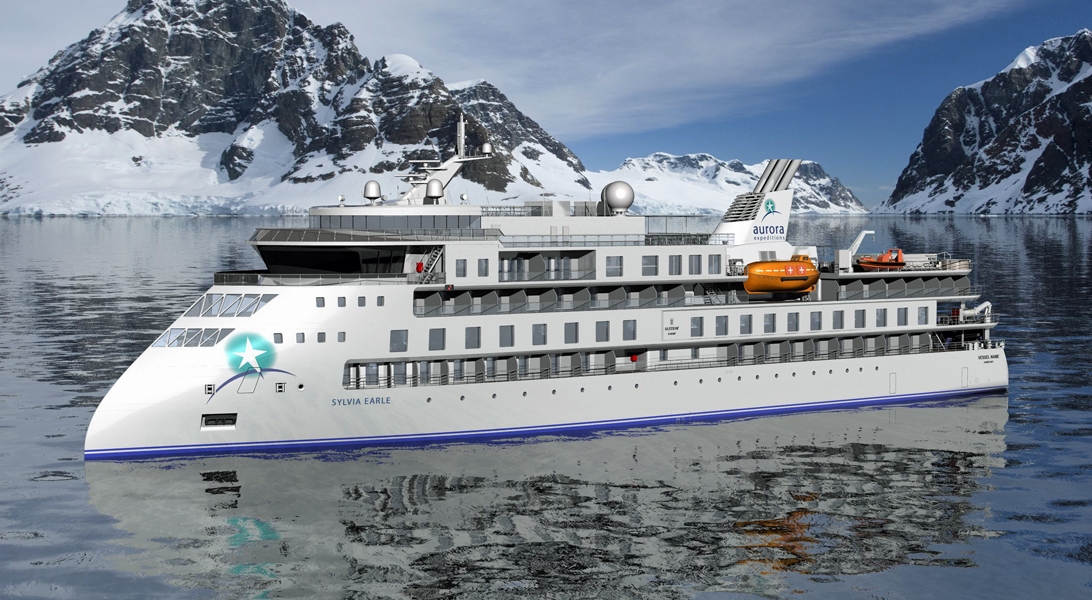
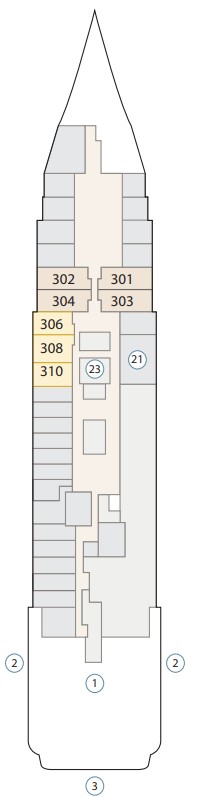

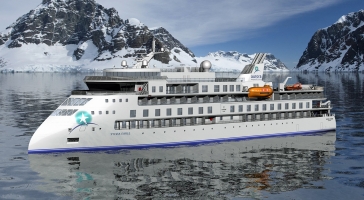
The images shown are for illustration purposes only and may not be an exact representation of what you find on the ship.
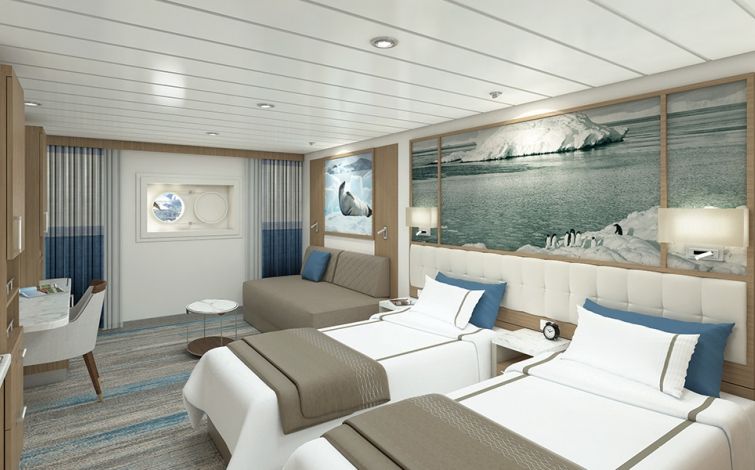
| Grade Code | From | To | |
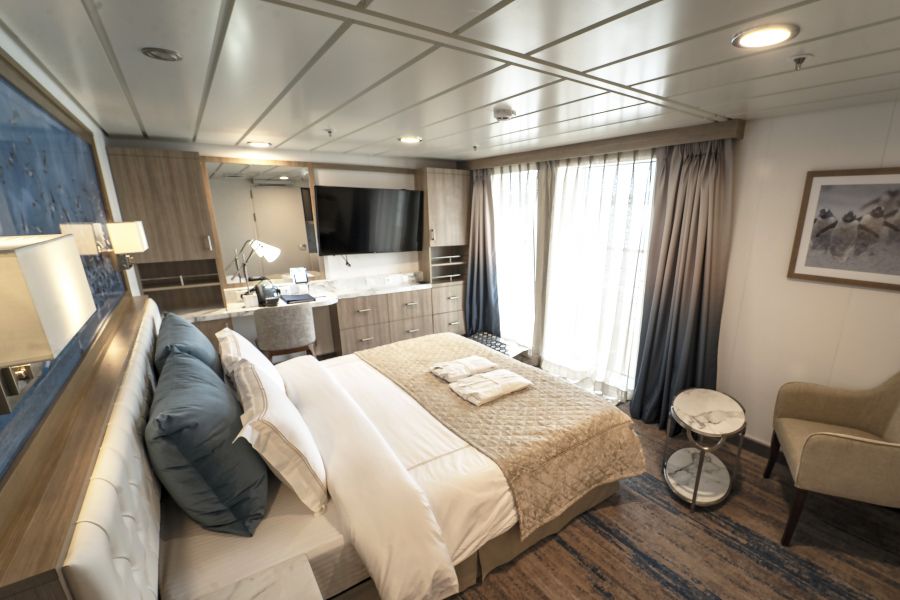
| SASS | Aurora Stateroom Superior | £8,501 | £10,626 |
Located on Deck 7, these comfortable Staterooms feature french balconies, floor to ceiling windows, en-suite bathrooms and a comfortable desk area.
Cabin Inclusion
Amenities
| Grade Code | From | To | |
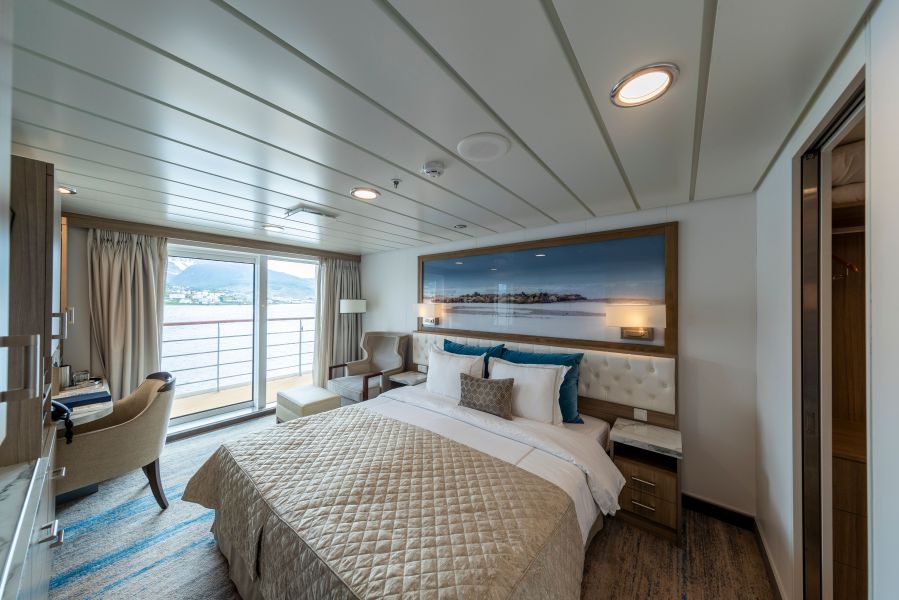
| SBSS | Balcony Stateroom Superior | £10,842 | £13,553 |
With a bit more room to stretch the legs, the Balcony Stateroom Superior cabins are perfect for polar adventurers who travel with plenty of gear. Located on Deck 4 and 6, the Staterooms feature floor to ceiling windows, en-suite bathrooms and a comfortable desk area.
Some of these rooms are equipped with wheelchair accessible bathrooms.
Cabin Inclusion
Some of these rooms are equipped with wheelchair accessible bathrooms.
Amenities
| Grade Code | From | To | |
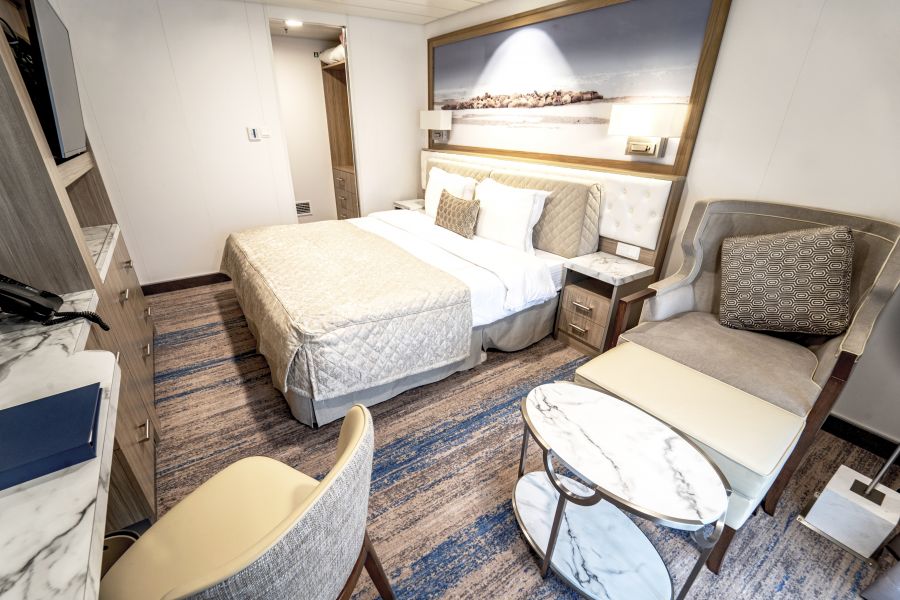
| CSS | Captain's Suite | £14,724 | £18,405 |
The largest of all our rooms, the singular Captain's Suite will take you to the polar regions in ultimate style and comfort. Complete with large lounge area, balcony, walk-in wardrobe and en-suite, you'll need to get in early to secure this suite.
Inclusion
Amenities
| Grade Code | From | To | |
| JSS | Junior Suite | £12,875 | £16,094 |
The four Junior Suites take in some impressive scenery from their vantage points on Deck 7. When you aren't enjoying a landing, you can relax in the suites' separate lounge area, or just watch the world float by from the private balcony.
Cabin Inclusion
*Valid on 1-hour massage or facial treatment only. Further details provided on board.
Amenities
^Mini bar is stocked only once.
The images shown are for illustration purposes only and may not be an exact representation of what you find on the ship.
The images shown are for illustration purposes only and may not be an exact representation of what you find on the ship.
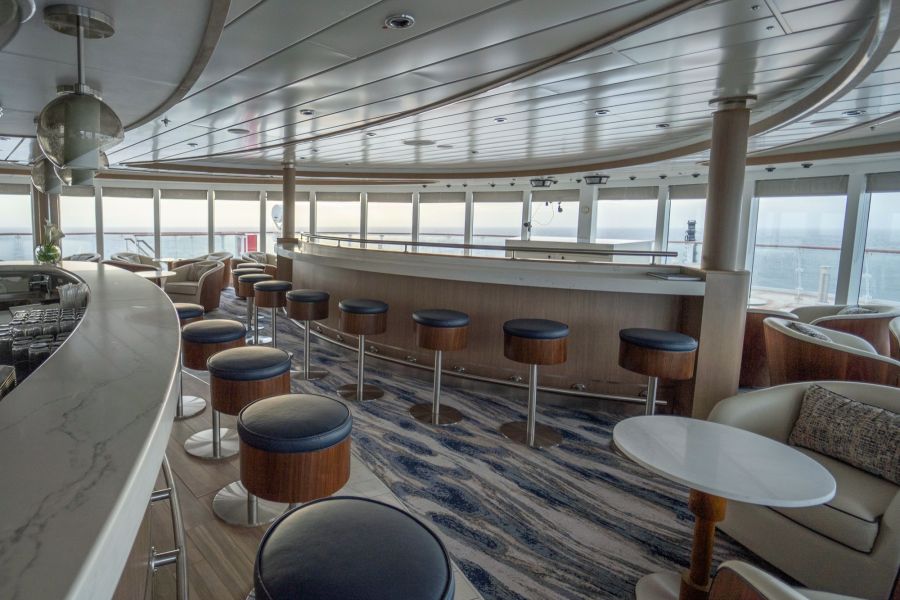
Let's face it – you don't want windowless rooms when travelling around some of the most beautiful locations around the world. This is why the Sylvia Earle is designed with plenty of dedicated observation spaces – ideal for keen bird spotters, wildlife watchers and those wanting to watch the scenery go past.
From the indoor 180-degree lounge and outdoor 360-degree open deck, both on deck 8, to the 270-degree open sundeck on level 7, there are plenty of observation points to share around the ship!
The images shown are for illustration purposes only and may not be an exact representation of what you find on the ship.
The images shown are for illustration purposes only and may not be an exact representation of what you find on the ship.


Our Fusion packages are all ABTA & ATOL protected ensuring that your booking is safe with us
| 8 nights aboard the Sylvia Earle | |||
| Fully-serviced accommodation in your chosen stateroom | |||
| An informative and entertaining lecture program by our team of experts | |||
| Complimentary 3-in-1 polar jacket and the use of gumboots | |||
| Entry fees to historic or tourist sites | |||
| Daily shore excursions, guided walks, Zodiac cruises and some activities | |||
| Daily breakfast, lunch and dinner including house wines, beers and soft drinks and afternoon tea and snacks | |||
| Complimentary use of fitness centre | |||
| Comprehensive pre-departure information kit and destination resource guide | |||
| Captain’s Welcome and Farewell Cocktail Reception including four-course dinner, house cocktails, house beer and wine, non-alcoholic beverages | |||
| Complimentary access to onboard medical doctor or clinic, if required | |||
| An experienced team of destination specialists and activity leaders | |||
| Pre-dinner cocktail hour including cold canapes and bar snacks | |||
| Photographic voyage log (post-voyage) | |||
| Port Taxes and Fees | |||
 | ABTA and ATOL Protection* | ||
Date 29th Apr 2028 |
Nts 8 |
Oceanview  |
Balcony £8,747pp |
Suite £12,875pp |
Date 29th Apr 2028 |
Nts 8 |
Oceanview |
Balcony £8,747pp |
Suite £12,875pp |
| Oceanview staterooms | | ||
| SASS | Aurora Stateroom Superior | | |
| Balcony staterooms from | £8,747pp | ||
| BSCS | Balcony Stateroom C (Forward / Aft) | £8,747pp | |
| BSBS | Balcony Stateroom B (Off Midship) | £9,240pp | |
| BSAS | Balcony Stateroom A (Midship) | £9,918pp | |
| SBSS | Balcony Stateroom Superior | £10,842pp | |
| Suite staterooms from | £12,875pp | ||
| JSS | Junior Suite | £12,875pp | |
| CSS | Captain's Suite | £14,724pp | |
Fusion Holidays when selling travel arrangements is a trading name of Co-op Travel Services Limited, registration 08903986. Fusion Cruises is an Accredited Body Member of Co-op Travel Services Limited ATOL 12904.
Book with Confidence. We are a Member of ABTA which means you have the benefit of ABTA’s assistance and Code of Conduct.
Some of the flights and flight-inclusive holidays on this website are financially protected by the ATOL scheme but ATOL protection does not apply to all holiday and travel services offered on this website. This website will provide you with information on the protection that applies in the case of each holiday and travel service offered before you make your booking. If you do not receive an ATOL Certificate then the booking will not be ATOL protected. If you do receive an ATOL Certificate but all parts of your trip are not listed on it, those parts will not be ATOL protected. Please see our booking conditions for information, or for more information about financial protection and the ATOL Certificate go to: www.caa.co.uk