This site uses cookies as defined in our Cookie Policy, by continuing to use this site you agree to their use.
Continue

We'll kickstart this epic Fort Lauderdale roundtrip by island-hopping around the Caribbean. Relax on the sugar sands of Grand Turk, hike through lush jungle in Samaná, and see and be seen in glamorous Gustavia. Enjoy some time at sea as we sail to Brazil, where we'll spend three days in Rio de Janeiro embracing the pulsing samba sounds and colorful street parties of Rio Carnival. European-influenced Buenos Aires beckons before we weave our way towards the wildlife-rich coast of northern Patagonia, then Ushuaia at the southernmost tip of South America, often dubbed the “End of the Worldâ€... �. Entering the wilds of Chile, we’ll cruise rugged Cape Horn and the glacier-carved Chilean Fjords to reach vibrant Valparaíso, the cultural center of Chile. There'll be fresh ceviche and plenty of pisco to enjoy in Peru, sweeping sands and a bustling boardwalk in Manta, Ecuador, and the thrill of cruising the Panama Canal. More Central American sensations await as we hop from Costa Rica to Honduras, Guatemala, and Belize. Mexico brings white sands and Maya ruins before we end our journey back in sunny Fort Lauderdale.
| Arrive | Depart | ||||||
| 19th19 | JanJan | 202929 | Fort Lauderdale, Florida, United States, embark on the Crystal Grace | 12:00 | 18:00 | ||
Like many southeast Florida neighbors, Fort Lauderdale has long been revitalizing. In a state where gaudy tourist zones often stand aloof from workaday downtowns, Fort Lauderdale exhibits consistency at both ends of the 2-mile Las Olas corridor. The sparkling look results from upgrades both downtown and on the beachfront. Matching the downtown's innovative arts district, cafés, and boutiques is an equally inventive beach area, with hotels, cafés, and shops facing an undeveloped shoreline, and new resort-style hotels replacing faded icons of yesteryear. Despite wariness of pretentious overdevelopment, city leaders have allowed a striking number of glittering high-rises. Nostalgic locals and frequent visitors fret over the diminishing vision of sailboats bobbing in waters near downtown; however, Fort Lauderdale remains the yachting capital of the world, and the water toys don’t seem to be going anywhere. | |||||||
| 20th20 | JanJan | 202929 | At Sea | ||||
| 21st21 | JanJan | 202929 | Grand Turk Island, Turks and Caicos Islands | 08:00 | 17:00 | ||
Just 7 miles (11 km) long and a little more than 1 mile (1½ km) wide, this island, the capital and seat of the Turks and Caicos government, has been a longtime favorite destination for divers eager to explore the 7,000-foot-deep pristine coral walls that drop down only 300 yards out to sea. On shore, the tiny, quiet island is home to white-sand beaches, the National Museum, and a small population of wild horses and donkeys, which leisurely meander past the white-walled courtyards, pretty churches, and bougainvillea-covered colonial inns on their daily commute into town. But things aren't entirely sleepy: a cruise-ship complex at the southern end of the island brings about 600,000 visitors per year. That said, the dock is self-contained and is about 3 miles (5 km) from the tranquil, small hotels of Cockburn Town, Pillory Beach, and the Ridge and far from most of the western-shore dive sites. Pristine beaches with vistas of turquoise waters, small local settlements, historic ruins, and native flora and fauna are among the sights on Grand Turk. Fewer than 4,000 people live on this 7½-square-mile (19-square-km) island, and it's hard to get lost, as there aren't many roads. | |||||||
| 22nd22 | JanJan | 202929 | Samaná, Dominican Republic | 08:00 | 17:00 | ||
Samaná (pronounced sah-mah-NAH) is a dramatically beautiful peninsula, like an island unto itself, of coconut trees stretching into the sea. It's something of a microcosm of the Dominican Republic: here you'll see poverty and fancy resorts, brand-new highways as well as bad roads, verdant mountainsides, tropical forests, tiny villages lined with street-side fruit vendors, secluded beaches, and the radiant warmth of the Dominican people. Samaná is the name of both the peninsula and its biggest town, as well as the bay to the south. It's worth noting that to locals, Samaná denotes only the largest town, Santa Bárbara de Samaná, which makes a great departure point for whale-watching or an excursion to Los Haitises Park across the bay. The bay is home to some of the world's best whale-watching from mid-January to late March. It is now the site of Puerto Bahia Marina and Residences and the Bannister Hotel, contemporary, luxurious yet moderately priced. This complex has brought an entirely new level of tourism to this area, and given yachts a full-service facility in what has always been a desirable cruising destination.A visit here is really about two things: exploring the preserved natural wonders and relaxing at a small beachfront hotel. The latter is most readily accomplished in Las Terrenas, the only true tourist center, where you can find picturesque restaurants, accommodations of all types (including the new oceanfront Sublime Samaná and the luxury condo-hotel, Balcones del Atlantico), and great beaches. At Las Terrenas you can enjoy peaceful playas, take advantage of the vibrant nightlife, and make all your plans for expeditions on the peninsula. The other pleasures are solitary—quiet beaches, the massive national park Los Haitises, and water sports and hiking. A relatively new toll road connects Santo Domingo to the peninsula; it's about a 2- to 2½-hour drive. Small El Catey International Airport is near Las Terrenas and is now being served by twice-weekly JetBlue flights (Wednesday and Saturday). On the Dominican Republic's Samaná Peninsula, the green mountains teem with coconut trees and dramatic vistas of the ocean. The area is full of hidden beaches reachable only on foot or by sea, protected coves, and undeveloped bays. A visit to Samaná is really about two things: exploring its preserved natural wonders and relaxing on the beach. There are a number of all-inclusive resorts where you can hang your hat, quaint and low-key beachfront hotels, as well as new world-class properties, where you can find complete relaxation and tranquillity. | |||||||
| 23rd23 | JanJan | 202929 | Great Harbour, Jost Van Dyke, British Virgin Islands | 10:00 | 19:00 | ||
Jost Van Dyke, four miles long, is truly known as the 'barefoot island'. The smallest of the British Virgin Islands, it is known as a popular destination for yachts and is celebrated for its casual lifestyle, protected anchorages, fine beaches and beachfront restaurants and bars. The island has fewer than 200 inhabitants and they are widely known as a welcoming people. The island's name conjures up its rich, colorful past. Jost Van Dyke is said to have been named for an early Dutch settler, a former pirate. At Great Harbour, Little Harbour, and White Bay there are safe, protected bays and pristine beaches shaded with coconut palms and seagrape trees. Discover inviting shops selling local treasures, restaurants, and bars. 'The Painkiller', one of the Caribbean’s most popular drinks, originated at the Soggy Dollar Bar. Foxy’s and Gertrude's in White Bay are renowned for drinks made with the island's famous rum, frosty beers, and tales of pirates and sunken treasure. Explore Jost Van Dyke's history in the vegetation-covered ruins of centuries-old sugar mills, or on the old trails that crisscross the island. Revel in the natural beauty of the pristine, untouched beaches. Hike up to the highest spot on the island, Majohnny Point, and take in a stunning 360 degree view of the Caribbean. Relax in the natural 'bubble pool', a popular tourist attraction. Jost Van Dyke conjures up images of what the British Virgin Islands may have looked like many years ago. | |||||||
| 24th24 | JanJan | 202929 | Saint John's, Antigua and Barbuda | 08:00 | 18:00 | ||
With its superb beaches, historical attractions and beautiful coral reefs, Antigua provides a host of diversions. It is said that the island contains 365 beaches, one for every day of the year. Antigua maintains its traditional West Indian character, with gingerbread-house style architecture, calypso music and carnival festivities. St John’s has been the administrative capital since the island’s colonisation in 1632, and has been the seat of government since it gained independence in 1981. From the port you can explore the colourful Redcliffe district, with its restored wooden houses, and Heritage Quay with its shopping mall and craft shops. The city has some fine examples of Colonial architecture, including the twin-towered cathedral, built in 1845 and considered one of the finest church buildings in the Caribbean. All coaches in Antigua are operated by smaller vehicles, and commentary will be given by a driver/guide. | |||||||
| 25th25 | JanJan | 202929 | Basseterre, Saint Kitts, Saint Kitts and Nevis | 08:00 | 18:00 | ||
Mountainous St. Kitts, the first English settlement in the Leeward Islands, crams some stunning scenery into its 65 square miles (168 square km). Vast, brilliant green fields of sugarcane (the former cash crop, now slowly being replanted) run to the shore. The fertile, lush island has some fascinating natural and historical attractions: a rain forest replete with waterfalls, thick vines, and secret trails; a central mountain range dominated by the 3,792-foot Mt. Liamuiga, whose crater has long been dormant; and Brimstone Hill, known in the 18th century as the Gibraltar of the West Indies. St. Kitts and Nevis, along with Anguilla, achieved self-government as an associated state of Great Britain in 1967. In 1983 St. Kitts and Nevis became an independent nation. English with a strong West Indian lilt is spoken here. People are friendly but shy; always ask before you take photographs. Also, be sure to wear wraps or shorts over beach attire when you're in public places. | |||||||
| 26th26 | JanJan | 202929 | Gustavia, Saint Barthélemy | 07:00 | 17:00 | ||
You can easily explore all of Gustavia during a two-hour stroll. Some shops close from noon to 3 or 4, so plan lunch accordingly, but stores stay open past 7 in the evening. Parking in Gustavia is a challenge, especially during vacation times. A good spot to park is rue de la République, alongside the catamarans, yachts, and sailboats. | |||||||
| 27th27 | JanJan | 202929 | San Juan (Puerto Rico), Puerto Rico | 06:00 | 18:00 | ||
If you associate Puerto Rico's capital with the colonial streets of Old San Juan, then you know only part of the picture. San Juan is a major metropolis, radiating out from the bay on the Atlantic Ocean that was discovered by Juan Ponce de León. More than a third of the island's nearly 4 million citizens proudly call themselves sanjuaneros. The city may be rooted in the past, but it has its eye on the future. Locals go about their business surrounded by colonial architecture and towering modern structures.By 1508 the explorer Juan Ponce de León had established a colony in an area now known as Caparra, southeast of present-day San Juan. He later moved the settlement north to a more hospitable peninsular location. In 1521, after he became the first colonial governor, Ponce de León switched the name of the island—which was then called San Juan Bautista in honor of St. John the Baptist—with that of the settlement of Puerto Rico ("rich port").Defended by the imposing Castillo San Felipe del Morro (El Morro) and Castillo San Cristóbal, Puerto Rico's administrative and population center remained firmly in Spain's hands until 1898, when it came under U.S. control after the Spanish-American War. Centuries of Spanish rule left an indelible imprint on the city, particularly in the walled area now known as Old San Juan. The area is filled with cobblestone streets and brightly painted, colonial-era structures, and its fortifications have been designated a UNESCO World Heritage Site.Old San Juan is a monument to the past, but most of the rest of the city is planted firmly in the 21st century and draws migrants island-wide and from farther afield to jobs in its businesses and industries. The city captivates residents and visitors alike with its vibrant lifestyle as well as its balmy beaches, pulsing nightclubs, globe-spanning restaurants, and world-class museums. Once you set foot in this city, you may never want to leave. | |||||||
| 28th28 | JanJan | 202929 | Gustavia, Saint Barthélemy | 08:00 | 18:00 | ||
You can easily explore all of Gustavia during a two-hour stroll. Some shops close from noon to 3 or 4, so plan lunch accordingly, but stores stay open past 7 in the evening. Parking in Gustavia is a challenge, especially during vacation times. A good spot to park is rue de la République, alongside the catamarans, yachts, and sailboats. | |||||||
| 29th29 | JanJan | 202929 | Pointe-à-Pitre, Guadeloupe | 08:00 | 17:00 | ||
This warm city is located in Guadeloupe and offers a choice of activities and places to visit for all the family. From markets to educational theme parks, children and adults alike will find something to entertain them. | |||||||
| 30th30 | JanJan | 202929 | Kingstown, Saint Vincent and the Grenadines | 08:00 | 18:00 | ||
| Kingstown is the capital of Saint Vincent and the Grenadines. The port city is known for its Botanical Gardens, founded in 1765 and home to tropical plants and aviaries. On a ridge above the bay, the 1806 Fort Charlotte offers panoramic views of the archipelago. The city center has 19th-century churches such as St. Mary’s Cathedral. The lively Kingstown Market sells local produce. Popular Villa Beach is nearby | |||||||
| 31st31 | JanJan | 202929 | Scarborough, Trinidad and Tobago | 07:00 | 17:00 | ||
Together, the islands of Trinidad and Tobago make up a state and as such are an independent member of the British Commonwealth. Located just off the coast of Venezuela, both islands are excellent getaways offering different attractions. While Trinidad pulses with life, the smaller and unspoiled island of Tobago is the place for a restful and relaxing holiday. Most of its appeal lies in the beautiful scenery and the availability of outdoor activities. The tourist area is concentrated on the southwestern end, about six miles from the island’s capital of Scarborough. The recently completed deep water harbor with its new cruise terminal has helped to spruce up the town a bit. Although not warranting an extended visit, Scarborough features interesting Botanic Gardens, a few historical buildings and the well-maintained Fort King George, located above the town. The primary appeal, however, lies without doubt in the great outdoors - swimming, snorkeling, diving, fishing, golfing, playing tennis or simply relaxing on Tobago's glorious beaches. | |||||||
| 1st01 | FebFeb | 202929 | At Sea | ||||
| 2nd02 | FebFeb | 202929 | Iles du Salut, French Guiana | 08:00 | 15:00 | ||
| 3rd03 | FebFeb | 202929 | At Sea | ||||
| 4th04 | FebFeb | 202929 | At Sea | ||||
| 5th05 | FebFeb | 202929 | Fortaleza, Brazil | 07:00 | 17:00 | ||
Called the "City of Light," Fortaleza claims that the sun shines on it 2,800 hours a year. And it's a good thing, too, as the coastline stretches far beyond the city. To the east, along the Litoral Leste or the Costa Sol Nascente (Sunrise Coast) are many fishing villages. To the west, along the Litoral Oeste or the Costa Sol Poente (Sunset Coast), there are pristine stretches of sand. The shores here are cooled by constant breezes and lapped by waters with an average temperature of 24°C (72°F).Today Fortaleza, a large, modern state capital with more than 2 million inhabitants, is Brazil's fifth-largest city. It's also on the move, with one of the country's newest airports, a modern convention center, a huge cultural center with a planetarium, large shopping malls, several museums and theaters, and an abundance of sophisticated restaurants. At Praia de Iracema there's a revitalized beachfront area of sidewalk cafés, bars, and dance clubs. But if you wander along the shore, you're still bound to encounter fishermen unloading their catch from traditional jangadas—just as they've done for hundreds of years. | |||||||
| 6th06 | FebFeb | 202929 | At Sea | ||||
| 7th07 | FebFeb | 202929 | Recife, Brazil | 08:00 | 18:00 | ||
This vibrant metropolis has a spirit that's halfway between that of the modern cities of Brazil's South and of the traditional northeastern centers. It offers both insight on the past and a window to the future.It was in Pernambuco State, formerly a captaincy, that the most violent battles between the Dutch and the Portuguese took place. Under the Portuguese, the capital city was the nearby community of Olinda. But beginning in 1637 and during the Dutch turn at the reins (under the powerful count Maurício de Nassau), both Olinda and Recife were greatly developed.The city has beautiful buildings alongside the rivers that remind many visitors of Europe. Unfortunately, huge swathes of 19th-century buildings were razed to make way for modern structures. As a result, the center of the city has pockets of neocolonial splendor surrounded by gap-toothed modern giants. Today Recife is a leader in health care and has benefited from significant government investment in recent years, resulting in a boom in infrastructure and construction industries. It's also Brazil's third-largest gastronomic center—it's almost impossible to get a bad meal here.Recife is built around three rivers and connected by 49 bridges. Its name comes from the recifes (reefs) that line the coast. Because of this unique location, water and light often lend the city interesting textures. In the morning, when the tide recedes from Boa Viagem Beach, the rocks of the reefs slowly reappear. Pools of water are formed, fish flap around beachgoers, and the rock formations dry into odd colors. And if the light is just right on the Rio Capibaribe, the ancient buildings of Recife Antigo (Old Recife) are reflected off the river's surface in a watercolor display. | |||||||
| 8th08 | FebFeb | 202929 | Maceió, Brazil | 07:00 | 17:00 | ||
Maceió, city, capital of Alagoas estado (state), northeastern Brazil. It is situated below low bluffs on a level strip of land between the Atlantic Ocean and the Norte (or Mundaú) Lagoon, a shallow body of water extending inward for several miles. Formerly called Macayo, the city dates from 1815, when a small settlement there was made a villa. In 1839 it became capital of Alagoas (then a provincia) and was given city status. | |||||||
| 9th09 | FebFeb | 202929 | At Sea | ||||
| 10th10 | FebFeb | 202929 | At Sea | ||||
| 11th11 | FebFeb | 202929 | Rio de Janeiro, Brazil | 08:00 | 23:59 | ||
Welcome to the Cidade Maravilhosa, or the Marvelous City, as Rio is known in Brazil. Synonymous with the girl from Ipanema, the dramatic views from Christ the Redeemer atop Corcovado mountain, and fabulously flamboyant Carnival celebrations, Rio is a city of stunning architecture, abundant museums, and marvelous food. Rio is also home to 23 beaches, an almost continuous 73-km (45-mile) ribbon of sand.As you leave the airport and head to Rio's beautiful Zona Sul (the touristic South Zone), you'll drive for about 40 minutes on a highway from where you'll begin to get a sense of the dramatic contrast between beautiful landscape and devastating poverty. In this teeming metropolis of 12 million people (6.2 million of whom live in Rio proper), the very rich and the very poor live in uneasy proximity. You'll drive past seemingly endless cinder-block favela, but by the time you reach Copacabana's breezy, sunny Avenida Atlântica—flanked on one side by white beach and azure sea and on the other by condominiums and hotels—your heart will leap with expectation as you begin to recognize the postcard-famous sights. Now you're truly in Rio, where cariocas (Rio residents) and tourists live life to its fullest.Enthusiasm is contagious in Rio. Prepare to have your senses engaged and your inhibitions untied. Rio seduces with a host of images: the joyous bustle of vendors at Sunday's Feira Hippie (Hippie Fair); the tipsy babble at sidewalk cafés as patrons sip their last glass of icy beer under the stars; the blanket of lights beneath the Pão de Açúcar (Sugarloaf Mountain); the bikers, joggers, strollers, and power walkers who parade along the beach each morning. Borrow the carioca spirit for your stay; you may find yourself reluctant to give it back. | |||||||
| 12th12 | FebFeb | 202929 | Rio de Janeiro, Brazil | 23:59 | |||
Welcome to the Cidade Maravilhosa, or the Marvelous City, as Rio is known in Brazil. Synonymous with the girl from Ipanema, the dramatic views from Christ the Redeemer atop Corcovado mountain, and fabulously flamboyant Carnival celebrations, Rio is a city of stunning architecture, abundant museums, and marvelous food. Rio is also home to 23 beaches, an almost continuous 73-km (45-mile) ribbon of sand.As you leave the airport and head to Rio's beautiful Zona Sul (the touristic South Zone), you'll drive for about 40 minutes on a highway from where you'll begin to get a sense of the dramatic contrast between beautiful landscape and devastating poverty. In this teeming metropolis of 12 million people (6.2 million of whom live in Rio proper), the very rich and the very poor live in uneasy proximity. You'll drive past seemingly endless cinder-block favela, but by the time you reach Copacabana's breezy, sunny Avenida Atlântica—flanked on one side by white beach and azure sea and on the other by condominiums and hotels—your heart will leap with expectation as you begin to recognize the postcard-famous sights. Now you're truly in Rio, where cariocas (Rio residents) and tourists live life to its fullest.Enthusiasm is contagious in Rio. Prepare to have your senses engaged and your inhibitions untied. Rio seduces with a host of images: the joyous bustle of vendors at Sunday's Feira Hippie (Hippie Fair); the tipsy babble at sidewalk cafés as patrons sip their last glass of icy beer under the stars; the blanket of lights beneath the Pão de Açúcar (Sugarloaf Mountain); the bikers, joggers, strollers, and power walkers who parade along the beach each morning. Borrow the carioca spirit for your stay; you may find yourself reluctant to give it back. | |||||||
| 13th13 | FebFeb | 202929 | Rio de Janeiro, Brazil | 17:00 | |||
Welcome to the Cidade Maravilhosa, or the Marvelous City, as Rio is known in Brazil. Synonymous with the girl from Ipanema, the dramatic views from Christ the Redeemer atop Corcovado mountain, and fabulously flamboyant Carnival celebrations, Rio is a city of stunning architecture, abundant museums, and marvelous food. Rio is also home to 23 beaches, an almost continuous 73-km (45-mile) ribbon of sand.As you leave the airport and head to Rio's beautiful Zona Sul (the touristic South Zone), you'll drive for about 40 minutes on a highway from where you'll begin to get a sense of the dramatic contrast between beautiful landscape and devastating poverty. In this teeming metropolis of 12 million people (6.2 million of whom live in Rio proper), the very rich and the very poor live in uneasy proximity. You'll drive past seemingly endless cinder-block favela, but by the time you reach Copacabana's breezy, sunny Avenida Atlântica—flanked on one side by white beach and azure sea and on the other by condominiums and hotels—your heart will leap with expectation as you begin to recognize the postcard-famous sights. Now you're truly in Rio, where cariocas (Rio residents) and tourists live life to its fullest.Enthusiasm is contagious in Rio. Prepare to have your senses engaged and your inhibitions untied. Rio seduces with a host of images: the joyous bustle of vendors at Sunday's Feira Hippie (Hippie Fair); the tipsy babble at sidewalk cafés as patrons sip their last glass of icy beer under the stars; the blanket of lights beneath the Pão de Açúcar (Sugarloaf Mountain); the bikers, joggers, strollers, and power walkers who parade along the beach each morning. Borrow the carioca spirit for your stay; you may find yourself reluctant to give it back. | |||||||
| 14th14 | FebFeb | 202929 | Santos, Brazil | 08:00 | 21:00 | ||
| 15th15 | FebFeb | 202929 | At Sea | ||||
| 16th16 | FebFeb | 202929 | At Sea | ||||
| 17th17 | FebFeb | 202929 | Montevideo, Uruguay | 08:00 | 19:00 | ||
Uruguay’s capital city hugs the eastern bank of the Río de la Plata. A massive coastal promenade (malecón) that passes fine beaches, restaurants, and numerous parks recalls the sunny sophistications of the Mediterranean and is always dotted with Montevideans strolling, exercising, and lounging along the water. Montevideo has its share of glitzy shopping avenues and modern office buildings, balanced with its historic old city and sumptuous colonial architecture, as well as numerous leafy plazas and parks. It is hard not to draw comparisons to its sister city Buenos Aires across the river, and indeed Montevideo strikes many as a calmer, more manageable incarnation of Argentina's capital.When the weather's good, La Rambla, a 22-km (14-mile) waterfront avenue that links the Old City with the eastern suburbs and changes names about a dozen times, gets packed with fishermen, ice-cream vendors, and joggers. Around sunset, volleyball and soccer games wind down as couples begin to appear for evening strolls. Polls consistently rate Montevideo as having the highest quality of life of any city in Latin America. After one visit here, especially on a lovely summer evening, you probably will agree. | |||||||
| 18th18 | FebFeb | 202929 | Buenos Aires, Argentina | 08:00 | 23:59 | ||
Glamorous and gritty, Buenos Aires is two cities in one. What makes Argentina's capital so fascinating is its dual heritage—part European, part Latin American. Plaza de Mayo resembles a grand square in Madrid, and the ornate Teatro Colón would not be out of place in Vienna. But you’ll know you’re in South America by the leather shoes for sale on cobbled streets and impromptu parades of triumphant soccer fans. Limited-production wines, juicy steaks, and ice cream in countless flavors are among the old-world imports the city has perfected. | |||||||
| 19th19 | FebFeb | 202929 | Buenos Aires, Argentina | 19:00 | |||
Glamorous and gritty, Buenos Aires is two cities in one. What makes Argentina's capital so fascinating is its dual heritage—part European, part Latin American. Plaza de Mayo resembles a grand square in Madrid, and the ornate Teatro Colón would not be out of place in Vienna. But you’ll know you’re in South America by the leather shoes for sale on cobbled streets and impromptu parades of triumphant soccer fans. Limited-production wines, juicy steaks, and ice cream in countless flavors are among the old-world imports the city has perfected. | |||||||
| 20th20 | FebFeb | 202929 | Punta del Este, Uruguay | 08:00 | 17:00 | ||
Often likened to the Hamptons or St-Tropez, Punta del Este is a flashy destination where parties run nonstop in peak season. But it is also a destination that draws a range of beachgoers to its shores, from summering families to the celebrity jet-set. There's a bustling city on the beach downtown, as well as quiet countryside populated solely with upscale ranches called chacras or estancias, and creative, buzzing hamlets like La Barra and José Ignacio. Though it's pricey and at times a logistical challenge to get around, everyone finds something about Punta to love.The resort takes its name from the "east point" marking the division of the Río de la Plata on the west from the Atlantic Ocean to the east. It also lends its name to the broader region encompassing the nearby communities of Punta Ballena and La Barra de Maldonado. These days even José Ignacio, some 20 miles away, is grouped in. It's usually a given that Argentina’s upper class spends at least part of the summer in Punta, soaking in the ample rays. | |||||||
| 21st21 | FebFeb | 202929 | At Sea | ||||
| 22nd22 | FebFeb | 202929 | Puerto Madryn, Argentina | 09:00 | 19:00 | ||
Approaching from Ruta 3, it's hard to believe that the horizon line of buildings perched just beyond the windswept dunes and badlands is the most successful of all coastal Patagonia settlements. But once you get past the outskirts of town and onto the wide coastal road known as the Rambla, the picture begins to change. Ranged along the clear and tranquil Golfo Nuevo are restaurants, cafés, dive shops, and hotels, all busy—but not yet overcrowded—with tourists from around the world.Puerto Madryn is more a base for visiting nearby wildlife-watching sites like Península Valdés and Punta Tombo than a destination in its own right. The town's architecture is unremarkable, and beyond a walk along the coast there isn't much to do. Indeed, even the few museums serve mainly to introduce you to the fauna you'll see elsewhere. The exception is the beginning of whale season (May through July), when the huge animals cavort right in the bay before heading north—you can even walk out alongside them on the pier. During these months it's worth the extra expense for a room with a sea view.The many tour agencies and rental-car companies here make excursion planning easy. Aim to spend most of your time here on one- or two-day trips exploring the surroundings. Note that competition is fierce between tourism operators in destinations such as Puerto Madryn and Puerto Pirámides on Península Valdés. Take information that tour operators and even the tourism office give you about these with a grain of salt: they often exaggerate Madryn's virtues and other areas' flaws. | |||||||
| 23rd23 | FebFeb | 202929 | At Sea | ||||
| 24th24 | FebFeb | 202929 | Port Stanley, Falkland Islands (Malvinas) | 08:00 | 18:00 | ||
Tiny Stanley, capital of the Falklands, seems in many ways like a British village fallen out of the sky. Many homes are painted in bright colours, adding visual appeal to this distant outpost. Not far offshore, the wreck of the Lady Elizabeth, is one of the many vessels remaining as a silent testimonial to the region's frequent harsh weather conditions.The islands, also known by their Spanish name of Islas Malvinas, are home to arguably more tuxedo-clad inhabitants of the penguin variety than human residents. Various species, such as Gentoo, Magellanic and the more elusive King penguins, either live here permanently or use the Falklands as a stopover on their migration route. Darwin found the islands' flora and fauna fascinating - no doubt you will, too. | |||||||
| 25th25 | FebFeb | 202929 | At Sea | ||||
| 26th26 | FebFeb | 202929 | Ushuaia, Argentina | 07:00 | 19:00 | ||
At 55 degrees latitude south, Ushuaia (pronounced oo-swy-ah) is closer to the South Pole than to Argentina's northern border with Bolivia. It is the capital and tourism base for Tierra del Fuego, the island at the southernmost tip of Argentina.Although its stark physical beauty is striking, Tierra del Fuego's historical allure is based more on its mythical past than on rugged reality. The island was inhabited for 6,000 years by Yámana, Haush, Selk'nam, and Alakaluf Indians. But in 1902 Argentina, eager to populate Patagonia to bolster its territorial claims, moved to initiate an Ushuaian penal colony, establishing the permanent settlement of its most southern territories and, by implication, everything in between.When the prison closed in 1947, Ushuaia had a population of about 3,000, made up mainly of former inmates and prison staff. Today the Indians of Darwin's "missing link" theory are long gone—wiped out by diseases brought by settlers and by indifference to their plight—and the 60,000 residents of Ushuaia are hitching their star to tourism.The city rightly (if perhaps too loudly) promotes itself as the southernmost city in the world (Puerto Williams, a few miles south on the Chilean side of the Beagle Channel, is a small town). You can make your way to the tourism office to get your clichéd, but oh-so-necessary, "Southernmost City in the World" passport stamp. Ushuaia feels like a frontier boomtown, at heart still a rugged, weather-beaten fishing village, but exhibiting the frayed edges of a city that quadrupled in size in the '70s and '80s and just keeps growing. Unpaved portions of Ruta 3, the last stretch of the Pan-American Highway, which connects Alaska to Tierra del Fuego, are finally being paved. The summer months (December through March) draw more than 120,000 visitors, and dozens of cruise ships. The city is trying to extend those visits with events like March's Marathon at the End of the World and by increasing the gamut of winter activities buoyed by the excellent snow conditions.A terrific trail winds through the town up to the Martial Glacier, where a ski lift can help cut down a steep kilometer of your journey. The chaotic and contradictory urban landscape includes a handful of luxury hotels amid the concrete of public housing projects. Scores of "sled houses" (wooden shacks) sit precariously on upright piers, ready for speedy displacement to a different site. But there are also many small, picturesque homes with tiny, carefully tended gardens. Many of the newer homes are built in a Swiss-chalet style, reinforcing the idea that this is a town into which tourism has breathed new life. At the same time, the weather-worn pastel colors that dominate the town's landscape remind you that Ushuaia was once just a tiny fishing village, snuggled at the end of the Earth.As you stand on the banks of the Canal Beagle (Beagle Channel) near Ushuaia, the spirit of the farthest corner of the world takes hold. What stands out is the light: at sundown the landscape is cast in a subdued, sensual tone; everything feels closer, softer, and more human in dimension despite the vastness of the setting. The snowcapped mountains reflect the setting sun back onto a stream rolling into the channel, as nearby peaks echo their image—on a windless day—in the still waters.Above the city rise the last mountains of the Andean Cordillera, and just south and west of Ushuaia they finally vanish into the often-stormy sea. Snow whitens the peaks well into summer. Nature is the principal attraction here, with trekking, fishing, horseback riding, wildlife spotting, and sailing among the most rewarding activities, especially in the Parque Nacional Tierra del Fuego (Tierra del Fuego National Park). | |||||||
| 27th27 | FebFeb | 202929 | At Sea | ||||
| 28th28 | FebFeb | 202929 | Punta Arenas, Chile | 09:00 | 19:00 | ||
Impenetrable forests, impassable mountains, and endless fields of ice define Chilean Patagonia, and meant that the region went largely unexplored until the beginning of the 20th century. Located in the southernmost part of the country, this area is still sparsely inhabited, though you will find a few populated places—like the colorful provincial city of Punta Arenas, which looks like it's about to be swept into the Strait of Magellan. Some unique wildlife, particularly colonies of elephant seals and penguins, call this breathtaking topography home. To the north is Parque Nacional Torres del Paine, the country's most magnificent natural wonder, and whose snow-covered peaks seem to rise vertically from the plains below. The vistas, such as the fantastic Avenue of the Glaciers, are breathtaking; along this stretch of the Beagle Channel, you can pass six tremendous glaciers all within a stone's throw of each other.Cruise SightsPunta Arenas. Founded a little more than 150 years ago, Punta Arenas (Sandy Point) was Chile's first permanent settlement in Patagonia. Plaza Muñoz Gamero, the central square, is surrounded by evidence of that early prosperity: buildings whose then-opulent brick exteriors recall a time when this was one of Chile's wealthiest cities. The newer houses here have colorful tin roofs, best appreciated when seen from a high vantage point such as the Mirador Cerro la Cruz. Although the city as a whole may not be particularly attractive, look for details: the pink-and-white house on a corner, the bay window full of potted plants, parking attendants wearing the regional blue and yellow colors, and schoolchildren in identical naval pea coats that remind you that the city's fate is tied to the sea.The Museo Naval y Marítimo extols Chile's high-seas prowess, particularly concerning Antarctica. Its exhibits are worth a visit for anyone with an interest in ships and sailing, merchant and military alike. Part of the second floor is designed like the interior of a ship, including a map and radio room. Pedro Montt 989. Admission charged.Housed in what was once the mansion of the powerful Braun-Menéndez family, the Museo Regional de Magallanes is an intriguing glimpse into the daily life of a wealthy provincial family at the beginning of the 20th century. Lavish Carrara marble hearths, English bath fixtures, and cordovan leather walls are among the original accoutrements. The museum also has an excellent group of displays depicting Punta Arenas's past, from the first European contact to the town's decline after the opening of the Panama Canal. The museum is half a block north of the main square. Magallanes 949. Admission charged.The resplendent 1895 Palacio Sara Braun is a national landmark and an architectural showpiece of southern Patagonia. Designed by a French architect, the house was built from materials and by craftsmen imported from Europe during the four years of construction. The city's central plaza and surrounding buildings soon followed, ushering in the region's golden era. Noteworthy are the lavish bedrooms, magnificent parquet floors, marble fireplaces, and hand-painted ceilings. Don't miss the portraits of Braun and her husband José Nogueira in the music room. Afterwards, head to the cellar for a drink or snack in the warm public tavern (a good portion of the mansion is leased to a hotel). Plaza Muñoz Gamero 716. Admission charged.Commonly referred to simply as "El Salesiano," the Museo Salesiano de Maggiorino Borgatello is operated by Italian missionaries whose order arrived in Punta Arenas in the 19th century. The Salesians, most of whom spoke no Spanish, proved to be daring explorers. Traveling throughout the region, they collected the artifacts made by indigenous tribes that are currently on display. Av. Bulnes 398. Admission charged.Isla Magdalena. Punta Arenas is the launching point for a boat trip to the Isla Magdalena to see the more than 100,000 Magellanic penguins at the Monumento Natural Los Pingúinos. A single trail, marked off by rope, is accessible to humans. The boat trip to the island, in the middle of the Estrecho de Magallanes, takes about two hours. Make sure to bring along warm clothing, even in summer; the island can be chilly, particularly if a breeze is blowing across the water.Parque Nacional Torres del Paine. Some 12 million years ago, lava flows pushed up through the thick sedimentary crust that covered the southwestern coast of South America, cooling to form a granite mass. Glaciers then swept through the region, grinding away all but the ash-gray spires that rise over the landscape of one of the world's most beautiful natural phenomena, now the Parque Nacional Torres del Paine (established in 1959). Snow formations dazzle along every turn of road, and the sunset views are spectacular.Among the 2,420-square-km (934-square-mi) park's most beautiful attractions are its lakes of turquoise, aquamarine, and emerald green waters. Another draw is its unusual wildlife. Creatures like the guanaco (a woollier version of the llama) and the ñandú (resembling a small ostrich) abound. They are used to visitors and don't seem to be bothered by the proximity of automobile traffic and the snapping of cameras. Predators, like the gray fox, make less frequent appearances. You may also spot the dramatic aerobatics of a falcon and the graceful soaring of the endangered condor. The beautiful puma is especially elusive, but sightings have become more common. Admission charged.Pingúinera de Seno Otway. The road to this penguin sanctuary begins 30 km (18 mi) north of Punta Arenas. Magellanic penguins, which live up to 20 years in the wild, return to their birthplace here every year to mate with the same partner. For about 2,000 penguin couples—no single penguins make the trip—home is this desolate and windswept land off the Otway Sound. In late September, the penguins begin to arrive from the southern coast of Brazil and the Falkland Islands. They mate and lay their eggs in early October, and brood their eggs in November. Offspring hatch between mid-November and early December. If you're lucky, you may catch sight of one of the downy gray chicks that stick their heads out of the burrows when their parents return to feed them. Otherwise you might see scores of the ungainly adult penguins waddling to the ocean from their nesting burrows. They swim for food every eight hours and dive up to 100 feet deep. The penguins depart from the sound in late March. Note that the sanctuary is a 1-km (1/2-mi) walk from the parking lot. It gets chilly, so bring a windbreaker. Admission charged.Reserva Nacional Laguna Parillar. This 47,000-acre reserve lies west of Puerto Hambre, a tranquil fishing village, and is centered around a shimmering lake in a valley flanked by hills. It's a great place for a picnic, and there are a number of well-marked paths that offer sweeping vistas over the Estrecho de Magallanes. About 2 km (1 mi) west of Puerto Hambre is a small white monolith that marks the geographical center of Chile, the midway point between Chile's northern port Arica and the South Pole.Cruise ShoppingWool may no longer be king of the economy, but vast flocks of sheep still yield a high-quality product that is woven into the clothing here. Leather products are also common, but the prices are not necessarily low. About 3 km (2 mi) north of Punta Arenas is the Zona Franca (Av. Bulnes). This duty-free zone is where people from all around the region come for low-priced electronics and other consumer items. | |||||||
| 1st01 | MarMar | 202929 | Chilean Fjords, Chile | ||||
Strewn through the coast of Chile, these beautiful fjords are world renowned for being one of the most awe-inspiring places on earth. Snow-capped volcanoes nestle majestically alongside rolling valleys of ice and frosty glaciers. Rugged beauty, breathtaking scenery not to mention diverse and profuse wildlife abounds – expect to watch whales from the deck, see playful Magellan Penguins and perhaps even spot the rare Andean Condor. Affectionately named “The End of the World” by the Spaniards who discovered the region in eighteenth century in a quest to Christianise South America, these extraordinary waterways not only encompass a medley of jagged mountains and iceberg strewn bays, but feature a kaleidoscopic spectrum of unexpected colour that offers photographic opportunities like no other destination. | |||||||
| 2nd02 | MarMar | 202929 | Chilean Fjords, Chile | ||||
Strewn through the coast of Chile, these beautiful fjords are world renowned for being one of the most awe-inspiring places on earth. Snow-capped volcanoes nestle majestically alongside rolling valleys of ice and frosty glaciers. Rugged beauty, breathtaking scenery not to mention diverse and profuse wildlife abounds – expect to watch whales from the deck, see playful Magellan Penguins and perhaps even spot the rare Andean Condor. Affectionately named “The End of the World” by the Spaniards who discovered the region in eighteenth century in a quest to Christianise South America, these extraordinary waterways not only encompass a medley of jagged mountains and iceberg strewn bays, but feature a kaleidoscopic spectrum of unexpected colour that offers photographic opportunities like no other destination. | |||||||
| 3rd03 | MarMar | 202929 | Laguna San Rafael National Park, Chile | 09:00 | 18:00 | ||
Some 150 nautical miles south of Puerto Chacabuco lies Laguna San Rafael National Park. Getting here is in itself a wonderful experience as the ship cruises through waterways, fjords and estuaries that offer stunning scenery. Within the park is the tallest peak in the Southern Andes, Mount San Valentín at 13,310 feet. Fields of ice extend over this mountain and the surrounding hills and from it 19 glaciers are born. However, the most famous attraction is the Mount San Valentín glacier. Here large blocks of ice can be seen calving off the glacier and crashing into the lake with a thunderous roar. Truly an amazing sight! | |||||||
| 4th04 | MarMar | 202929 | Puerto Chacabuco, Chile | 08:00 | 17:00 | ||
The drive from Coyhaique to the town of Puerto Aisén and its port, Chacabuco, is beautiful. The mist hangs low over farmland, adding a dripping somnolence to the scenery. Dozens of waterfalls and rivers wend their way through mountain formations. Yellow poplars surround charming rustic lodges, and sheep and cattle graze on mossy, vibrant fields. The picture of serenity terminates at the sea, where the nondescript town of Puerto Aisén and its port Chacabuco, Coyhaique's link to the ocean, sits, a conduit to further beauty. This harbor ringed by snowcapped mountains is where you board the ferries that transport you north to Puerto Montt in the Lake District and Quellón on Chiloé, as well as boats headed south to the spectacular Laguna San Rafael. | |||||||
| 5th05 | MarMar | 202929 | Castro, Chile | 09:00 | 18:00 | ||
Bright, wooden huts teeter on stilts over Castro's estuary waterfront, inviting you into a patchwork of colour that’s sure to brighten any day. These traditional palafitos give the warmest of welcomes, as you prepare to experience Chile at its most vibrant. Castro has faced something of a tumultuous past, having been hit by a by a succession of earthquakes and fires - the most recent a devastating earthquake in 1960. But this city is incredibly resilient, and today the capital of Chiloe Island makes for a fantastic base for exploring the archipelago that surrounds it. | |||||||
| 6th06 | MarMar | 202929 | Puerto Montt, Chile | 08:00 | 18:00 | ||
For most of its history, windy Puerto Montt was the end of the line for just about everyone traveling in the Lake District. Now the Carretera Austral carries on southward, but for all intents and purposes Puerto Montt remains the region's last significant outpost, a provincial city that is the hub of local fishing, textile, and tourist activity.Today the city center is full of malls, condos, and office towers—it's the fastest-growing city in Chile—but away from downtown, Puerto Montt consists mainly of low clapboard houses perched above its bay, the Seno de Reloncaví. If it's a sunny day, head east to Playa Pelluco or one of the city's other beaches. If you're more interested in exploring the countryside, drive along the shore for a good view of the surrounding hills. | |||||||
| 7th07 | MarMar | 202929 | At Sea | ||||
| 8th08 | MarMar | 202929 | Valparaiso, Chile | 08:00 | 23:59 | ||
Valparaíso's dramatic topography—45 cerros, or hills, overlooking the ocean—requires the use of winding pathways and wooden ascensores (funiculars) to get up many of the grades. The slopes are covered by candy-color houses—there are almost no apartments in the city—most of which have exteriors of corrugated metal peeled from shipping containers decades ago. Valparaíso has served as Santiago's port for centuries. Before the Panama Canal opened, Valparaíso was the busiest port in South America. Harsh realities—changing trade routes, industrial decline—have diminished its importance, but it remains Chile's principal port. Most shops, banks, restaurants, bars, and other businesses cluster along the handful of streets called El Plan (the flat area) that are closest to the shoreline. Porteños (which means "the residents of the port") live in the surrounding hills in an undulating array of colorful abodes. At the top of any of the dozens of stairways, the paseos (promenades) have spectacular views; many are named after prominent Yugoslavian, Basque, and German immigrants. Neighborhoods are named for the hills they cover. With the jumble of power lines overhead and the hundreds of buses that slow down—but never completely stop—to pick up agile riders, it's hard to forget you're in a city. Still, walking is the best way to experience Valparaíso. Be careful where you step, though—locals aren't very conscientious about curbing their dogs. | |||||||
| 9th09 | MarMar | 202929 | Valparaiso, Chile | 19:00 | |||
Valparaíso's dramatic topography—45 cerros, or hills, overlooking the ocean—requires the use of winding pathways and wooden ascensores (funiculars) to get up many of the grades. The slopes are covered by candy-color houses—there are almost no apartments in the city—most of which have exteriors of corrugated metal peeled from shipping containers decades ago. Valparaíso has served as Santiago's port for centuries. Before the Panama Canal opened, Valparaíso was the busiest port in South America. Harsh realities—changing trade routes, industrial decline—have diminished its importance, but it remains Chile's principal port. Most shops, banks, restaurants, bars, and other businesses cluster along the handful of streets called El Plan (the flat area) that are closest to the shoreline. Porteños (which means "the residents of the port") live in the surrounding hills in an undulating array of colorful abodes. At the top of any of the dozens of stairways, the paseos (promenades) have spectacular views; many are named after prominent Yugoslavian, Basque, and German immigrants. Neighborhoods are named for the hills they cover. With the jumble of power lines overhead and the hundreds of buses that slow down—but never completely stop—to pick up agile riders, it's hard to forget you're in a city. Still, walking is the best way to experience Valparaíso. Be careful where you step, though—locals aren't very conscientious about curbing their dogs. | |||||||
| 10th10 | MarMar | 202929 | Coquimbo, Chile | 09:00 | 18:00 | ||
The name Coquimbo is derived from a native Diaguita word meaning 'place of calm waters'. In fact, Charles Darwin had noted that the town was 'remarkable for nothing but its extreme quietness'. Since then, Coquimbo has developed into a bustling port and the region's major commercial and industrial centre from which minerals, fish products and fruits are exported. Used during the colonial period as a port for La Serena, Coquimbo attracted attention from English pirates, including Sir Francis Drake, who visited in 1578. Visitors enjoy strolling around the town, admiring some of the elaborate woodwork handcrafted on buildings by early British and American settlers. These wooden buildings are among Chile's most interesting historical structures. Out of town, the area offers some fine beaches in a desert-like setting. Coquimbo serves as a gateway to the popular resort town of La Serena and trips farther into the Elqui Valley, known as the production centre for Chile's national drink, pisco sour. The valley is also home to several international observatories that take advantage of the region's exceptional atmospheric conditions. | |||||||
| 11th11 | MarMar | 202929 | At Sea | ||||
| 12th12 | MarMar | 202929 | Iquique, Chile | 08:00 | 18:00 | ||
| 13th13 | MarMar | 202929 | At Sea | ||||
| 14th14 | MarMar | 202929 | Pisco, Peru | 07:00 | 18:00 | ||
Lending its name to the clear brandy that is Peru's favorite tipple and a source of fierce national pride, the coastal town of Pisco and its surroundings hold a special place in the national psyche. It's the point where the Argentinean hero General San Martín landed with his troops to fight for Peru's freedom from Spanish rule. It's the city from which pisco was first exported, and it's also an important seaport that had its heyday during the 1920s, when guano (bird droppings used as fertilizer) from the nearby Islas Ballestas were worth nearly as much as gold.Modern-day Pisco shows little evidence of its celebrated past. Instead, what you'll find is a city struggling to get back on its feet after the disaster of August 2007, when a magnitude 8 earthquake shook the town for three minutes. Disregard for planning permission, illegal building extensions, and the use of adobe (mud brick) as the main building material had left a vast number of Pisco's buildings unable to withstand the quake, and hundreds of lives were lost as homes, churches, and hospitals collapsed during the tremor.Most travelers now base themselves in Paracas, just a few kilometers down the coast. For travelers wishing to assist in Pisco's recovery, there are numerous opportunities to volunteer. Organizations active in the area vary over time, but a good place to start looking for current opportunities is www.idealist.org. Even those without the time to volunteer should know that every nuevo sol spent in local businesses is contributing to rebuilding the region's economy. | |||||||
| 15th15 | MarMar | 202929 | Callao, Peru | 07:00 | 19:00 | ||
When people discuss great South American cities, Lima is often overlooked. But Peru's capital can hold its own against its neighbors. It has an oceanfront setting, colonial-era splendor, sophisticated dining, and nonstop nightlife.It's true that the city—clogged with traffic and choked with fumes—doesn't make a good first impression, especially since the airport is in an industrial neighborhood. But wander around the regal edifices surrounding the Plaza de Armas, among the gnarled olive trees of San Isidro's Parque El Olivar, or along the winding lanes in the coastal community of Barranco, and you'll find yourself charmed.In 1535 Francisco Pizarro found the perfect place for the capital of Spain's colonial empire. On a natural port, the so-called Ciudad de los Reyes (City of Kings) allowed Spain to ship home all the gold the conquistador plundered from the Inca. Lima served as the capital of Spain's South American empire for 300 years, and it's safe to say that no other colonial city enjoyed such power and prestige during this period.When Peru declared its independence from Spain in 1821, the declaration was read in the square that Pizarro had so carefully designed. Many of the colonial-era buildings around the Plaza de Armas are standing today. Walk a few blocks in any direction for churches and elegant houses that reveal just how wealthy this city once was. But the poor state of most buildings attests to the fact that the country's wealthy families have moved to neighborhoods to the south over the past century.The walls that surrounded the city were demolished in 1870, making way for unprecedented growth. A former hacienda became the graceful residential neighborhood of San Isidro. In the early 1920s the construction of tree-lined Avenida Arequipa heralded the development of neighborhoods such as bustling Miraflores and bohemian Barranco.Almost a third of the country's population of 29 million lives in the metropolitan area, many of them in relatively poor conos: newer neighborhoods on the outskirts of the city. Most residents of those neighborhoods moved there from mountain villages during the political violence and poverty that marked the 1980s and ’90s, when crime increased dramatically. During the past decade the country has enjoyed peace and steady economic growth, which have been accompanied by many improvements and refurbishment in the city. Residents who used to steer clear of the historic center now stroll along its streets. And many travelers who once would have avoided the city altogether now plan to spend a day here and end up staying two or three. | |||||||
| 16th16 | MarMar | 202929 | Salaverry, Peru | 11:00 | 20:00 | ||
Located about nine hours north of Lima, Trujillo was founded in 1534 by the Spanish conquistador Pizarro. The attractive, colonial city retains much of its original charm with elegant casonas, or mansions, lining the streets. Nearby is Chan Chan, the ancient capital of the Chimú, a local Indian tribe who came under the rule of the Incas. The area has several other Chimú sites, some dating back about 1500 years. The region is also famous as the home of the Peruvian Paso horses, as well as excellent beaches offering world-class surfing and other water sports. | |||||||
| 17th17 | MarMar | 202929 | At Sea | ||||
| 18th18 | MarMar | 202929 | Manta, Ecuador | 07:00 | 18:00 | ||
| 19th19 | MarMar | 202929 | At Sea | ||||
| 20th20 | MarMar | 202929 | Fuerte Amador, Panama | 09:00 | 23:59 | ||
| 21st21 | MarMar | 202929 | Fuerte Amador, Panama | 23:59 | |||
| 22nd22 | MarMar | 202929 | Fuerte Amador, Panama | 04:00 | |||
| 23rd23 | MarMar | 202929 | Puerto Limón, Costa Rica | 08:00 | 18:00 | ||
Christopher Columbus became Costa Rica's first tourist when he landed on this stretch of coast in 1502 during his fourth and final voyage to the New World. Expecting to find vast mineral wealth, he named the region Costa Rica ("rich coast"). Imagine the Spaniards' surprise eventually to find there was none. Save for a brief skirmish some six decades ago, the country did prove itself rich in a long tradition of peace and democracy. No other country in Latin America can make that claim. Costa Rica is also abundantly rich in natural beauty, managing to pack beaches, volcanoes, rain forests, and diverse animal life into an area the size of Vermont and New Hampshire combined. It has successfully parlayed those qualities into its role as one the world's great ecotourism destinations. A day visit is short, but time enough for a quick sample. | |||||||
| 24th24 | MarMar | 202929 | At Sea | ||||
| 25th25 | MarMar | 202929 | Roatán Island, Honduras | 08:00 | 18:00 | ||
Experience true Caribbean island bliss, during your time on the immaculate paradise of Roatan, which is the largest of the Bay Islands. This slim island is framed by glorious powdery white beaches, and rich ocean beds carpeted with diverse coral reefs - alive with fish and marine life. Curious dolphins roll through the waves just offshore, while beach dwellers soak up the sun, and enjoy coconut cocktails, beside leaning palm trees. The beaches here are nothing short of dreamy - with wooden piers teetering out over the water, and thatched roofs providing welcome shade, as you dangle your legs towards the water. | |||||||
| 26th26 | MarMar | 202929 | Santo Tomás de Castilla, Guatemala | 08:00 | 19:00 | ||
Guatemala's short Caribbean shoreline doesn't generate the buzz of those of neighboring Belize and Mexico. The coast weighs in at a scant 74 mi (123 km), and this mostly highland country wears its indigenous culture on its sleeve and has historically looked inland rather than to the sea. You'll be drawn inland, too, with a variety of shore excursions. This is the land of the Maya, after all. But there's plenty to keep you occupied here in the lowlands. Tourist brochures tout the Caribbean coast as "The Other Guatemala". The predominantly indigenous and Spanish cultures of the highlands give way to an Afro-Caribbean tradition that listens more closely to the rhythms of far-off Jamaica rather than taking its cue from Guatemala City. Think of it as mixing a little reggae with your salsa. | |||||||
| 27th27 | MarMar | 202929 | Belize City, Belize | 07:00 | 17:00 | ||
Belize City, a coastal gem, seamlessly blends history and modern vibrancy. Colonial architecture graces lively streets, narrating tales of Mayan roots and cultural richness. A welcoming atmosphere emanates from friendly locals, and diverse festivals celebrate Belize's heritage. The city serves as a gateway to natural wonders, from serene river rides to the renowned Belize Barrier Reef. Pristine beaches like Old Belize Beach invite relaxation. Culinary delights abound, showcasing Belizean flavours. In this enchanting city, every smile, historical landmark, and cultural celebration embodies the warmth and charm that make Belize City an unforgettable destination. | |||||||
| 28th28 | MarMar | 202929 | Cozumel, Mexico | 08:00 | 17:00 | ||
Cozumel, a Caribbean gem off Mexico’s Yucatán Peninsula, is celebrated for its crystal-clear waters, vibrant coral reefs, and rich Mayan history. A haven for divers and snorkelers, the island is home to the Mesoamerican Reef, teeming with colorful marine life. Beyond the sea, explore ancient ruins like San Gervasio, enjoy local charm in San Miguel’s markets, or relax on pristine beaches. Eco-parks like Punta Sur offer lush landscapes and wildlife encounters. Blending natural beauty, cultural heritage, and adventure, Cozumel promises a tropical escape that captivates every traveler. | |||||||
| 29th29 | MarMar | 202929 | Progreso, Mexico | 08:00 | 17:00 | ||
| 30th30 | MarMar | 202929 | At Sea | ||||
| 31st31 | MarMar | 202929 | Fort Lauderdale, Florida, United States, disembark the Crystal Grace | 07:00 | |||
Like many southeast Florida neighbors, Fort Lauderdale has long been revitalizing. In a state where gaudy tourist zones often stand aloof from workaday downtowns, Fort Lauderdale exhibits consistency at both ends of the 2-mile Las Olas corridor. The sparkling look results from upgrades both downtown and on the beachfront. Matching the downtown's innovative arts district, cafés, and boutiques is an equally inventive beach area, with hotels, cafés, and shops facing an undeveloped shoreline, and new resort-style hotels replacing faded icons of yesteryear. Despite wariness of pretentious overdevelopment, city leaders have allowed a striking number of glittering high-rises. Nostalgic locals and frequent visitors fret over the diminishing vision of sailboats bobbing in waters near downtown; however, Fort Lauderdale remains the yachting capital of the world, and the water toys don’t seem to be going anywhere. | |||||||
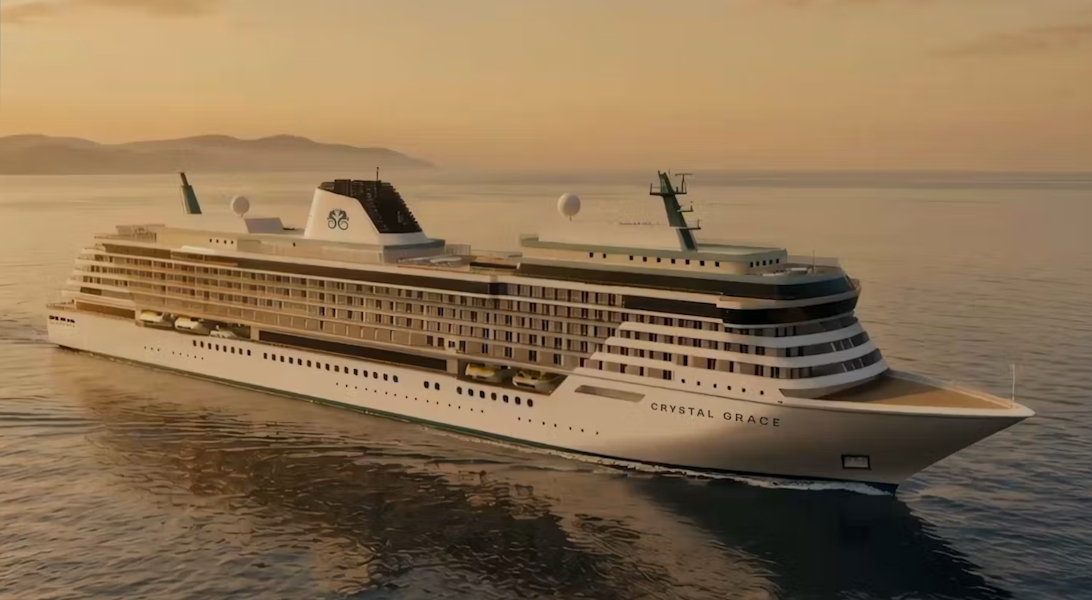
The images shown are for illustration purposes only and may not be an exact representation of what you find on the ship.
The images shown are for illustration purposes only and may not be an exact representation of what you find on the ship.
The images shown are for illustration purposes only and may not be an exact representation of what you find on the ship.
The images shown are for illustration purposes only and may not be an exact representation of what you find on the ship.
The images shown are for illustration purposes only and may not be an exact representation of what you find on the ship.

Our Fusion packages are all ABTA & ATOL protected ensuring that your booking is safe with us
| 71 nights aboard the Crystal Grace | |||
| Gratuities included | |||
| Complimentary drinks including wines, champagne, spirits throughout the ship | |||
| Award winning Broadway style entertainment | |||
| Complimentary speciality dining (one visit per restaurant) | |||
| Choice of shore excursions in every port | |||
| Butler Service | |||
| Enrichment programs & lectures | |||
| Complimentary shuttle buses in selected ports | |||
| Complimentary Wi-fi throughout the ship | |||
| Port Taxes and Fees | |||
 | ABTA and ATOL Protection* | ||
Date 19th Jan 2029 |
Nts 71 |
Balcony Call |
Suite £76,900pp |
Date 19th Jan 2029 |
Nts 71 |
Balcony Call |
Suite £76,900pp |
| Suite staterooms from | £76,900pp | ||
| S2G2 | Two Room Sapphire Deluxe Suite | £76,900pp | |
| PJG1 | Two Room Junior Penthouse Suite | £120,000pp | |
| PHG1 | Two Room Penthouse Suite | £140,900pp | |
| PAG1 | Two Room Penthouse Panorama Suite | £137,200pp | |
| OWG1 | Two Room Crystal Owner's Suite | £182,400pp | |
Fusion Holidays when selling travel arrangements is a trading name of Co-op Travel Services Limited, registration 08903986. Fusion Cruises is an Accredited Body Member of Co-op Travel Services Limited ATOL 12904.
Book with Confidence. We are a Member of ABTA which means you have the benefit of ABTA’s assistance and Code of Conduct.
Some of the flights and flight-inclusive holidays on this website are financially protected by the ATOL scheme but ATOL protection does not apply to all holiday and travel services offered on this website. This website will provide you with information on the protection that applies in the case of each holiday and travel service offered before you make your booking. If you do not receive an ATOL Certificate then the booking will not be ATOL protected. If you do receive an ATOL Certificate but all parts of your trip are not listed on it, those parts will not be ATOL protected. Please see our booking conditions for information, or for more information about financial protection and the ATOL Certificate go to: www.caa.co.uk