| | | | | Arrive | Depart |
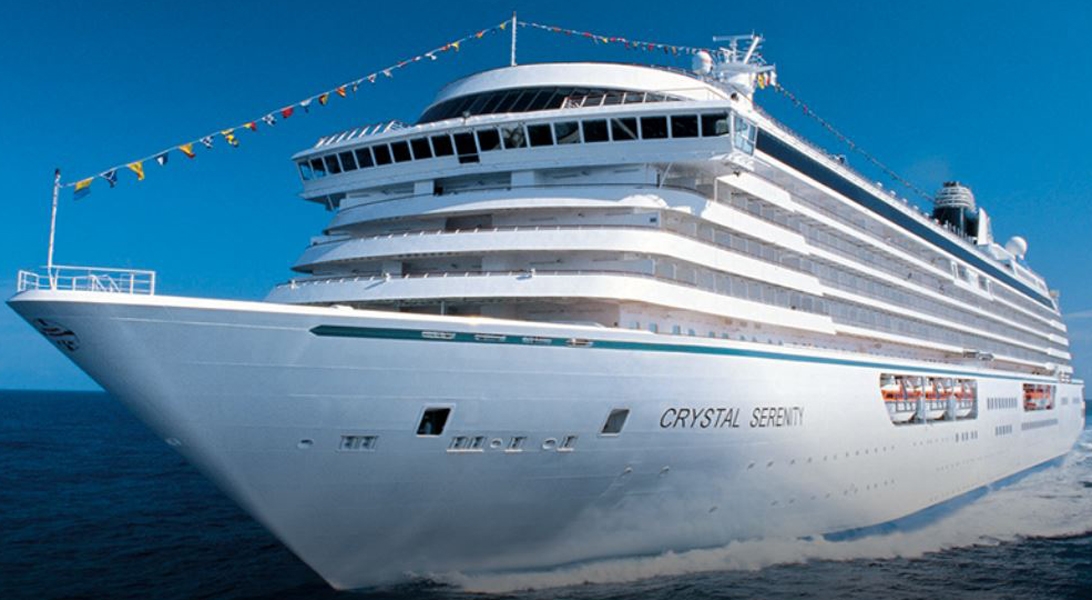
| 9th09 | JulJul | 202828 | Reykjavík, Iceland, embark on the Crystal Serenity | 12:00 | 18:00 |
Sprawling Reykjavík, the nation's nerve center and government seat, is home to half the island's population. On a bay overlooked by proud Mt. Esja (pronounced eh-shyuh), with its ever-changing hues, Reykjavík presents a colorful sight, its concrete houses painted in light colors and topped by vibrant red, blue, and green roofs. In contrast to the almost treeless countryside, Reykjavík has many tall, native birches, rowans, and willows, as well as imported aspen, pines, and spruces.Reykjavík's name comes from the Icelandic words for smoke, reykur, and bay, vík. In AD 874, Norseman Ingólfur Arnarson saw Iceland rising out of the misty sea and came ashore at a bay eerily shrouded with plumes of steam from nearby hot springs. Today most of the houses in Reykjavík are heated by near-boiling water from the hot springs. Natural heating avoids air pollution; there's no smoke around. You may notice, however, that the hot water brings a slight sulfur smell to the bathroom.Prices are easily on a par with other major European cities. A practical option is to purchase a Reykjavík City Card at the Tourist Information Center or at the Reykjavík Youth Hostel. This card permits unlimited bus usage and admission to any of the city's seven pools, the Family Park and Zoo, and city museums. The cards are valid for one (ISK 3,300), two (ISK 4,400), or three days (ISK 4,900), and they pay for themselves after three or four uses a day. Even lacking the City Card, paying admission (ISK 500, or ISK 250 for seniors and people with disabilities) to one of the city art museums (Hafnarhús, Kjarvalsstaðir, or Ásmundarsafn) gets you free same-day admission to the other two. |
| 10th10 | JulJul | 202828 | At Sea | | |
| 11th11 | JulJul | 202828 | At Sea | | |
| 12th12 | JulJul | 202828 | Nuuk (Godthaab), Greenland | 09:00 | 19:00 |
Nuuk, meaning “the cape”, was Greenland’s first town (1728). Started as a fort and later mission and trading post some 240 kilometers south of the Arctic Circle, it is the current capital. Almost 30% of Greenland’s population lives in the town. Not only does Nuuk have great natural beauty in its vicinity, but there are Inuit ruins, Hans Egede’s home, the parliament, and the Church of our Saviour as well. The Greenlandic National Museum has an outstanding collection of Greenlandic traditional dresses, as well as the famous Qilakitsoq mummies. The Katuaq Cultural Center’s building was inspired by the undulating Northern Lights and can house 10% of Nuuk’s inhabitants. |
| 13th13 | JulJul | 202828 | Paamiut (Fredrikshaab), Greenland | 08:00 | 18:00 |
| 14th14 | JulJul | 202828 | Qaqortoq (Julianehaab), Greenland | 09:00 | 19:00 |
The largest town in southern Greenland, Qaqortoq has been inhabited since prehistoric times. Upon arrival in this charming southern Greenland enclave, it's easy to see why. Qaqortoq rises quite steeply over the fjord system around the city, offering breath-taking panoramic vistas of the surrounding mountains, deep, blue sea, Lake Tasersuag, icebergs in the bay, and pastoral backcountry. Although the earliest signs of ancient civilization in Qaqortoq date back 4,300 years, Qaqortoq is known to have been inhabited by Norse and Inuit settlers in the 10th and 12th centuries, and the present-day town was founded in 1774. In the years since, Qaqortoq has evolved into a seaport and trading hub for fish and shrimp processing, tanning, fur production, and ship maintenance and repair. |
| 15th15 | JulJul | 202828 | Kristiansund, Norway | 07:00 | 13:00 |
| 16th16 | JulJul | 202828 | At Sea | | |
| 17th17 | JulJul | 202828 | At Sea | | |
| 18th18 | JulJul | 202828 | Thorshavn, Faroe Islands | 07:00 | 17:00 |
More than 600 miles (nearly 1,000 kilometres) from Denmark’s west coast lie the Faroes, a triangle of eighteen windswept islands, seventeen of which are inhabited. Only 48,500 people plus some 70,000 sheep roam these remote lands. Much of the islands’ heritage reflects a medieval past, beginning with the arrival of farmers from western Norway who settled here in the 9th century. Evidence of this Scandinavian heritage is preserved through centuries of isolation; ancient structures can still be seen in villages clustered around old churches. Sheer cliffs and waterfalls carve Streymoy, the largest of the islands, where Torshavn is one of the world’s smallest capitals with about 12,400 inhabitants, plus another 5,000 living in the suburbs of Argir and Hoyvik. Visitors find interesting museums, churches, monuments and all the amenities of a modern town and thriving harbour here. The world’s oldest, still active parliament was founded in the Viking age. Today, it houses the main offices of the local government. Many of the attractions are found outside of Torshavn in the rugged beauty of Streymoy. There are fields with grazing ponies and sheep, tiny hamlets where residents live in half-timbered houses topped by green grass roofs, and dramatic rock formations. Birds by the thousands populate the craggy seaside cliffs, which make an ideal stopover for migratory gannets, guillemots and puffins. The Faroes' climate is generally wet and windy. Because of the Gulf Stream, the temperature is a good deal more moderate than the latitude might imply; it also helps to keep Faroe harbours ice-free year-round. |
| 19th19 | JulJul | 202828 | Lerwick, Shetland Islands, Scotland | 09:00 | 17:00 |
Founded by Dutch fishermen in the 17th century, Lerwick today is a busy town and administrative center. Handsome stone buildings—known as lodberries—line the harbor; they provided loading bays for goods, some of them illegal. The town's twisting flagstone lanes and harbor once heaved with activity, and Lerwick is still an active port today. This is also where most visitors to Shetland dock, spilling out of cruise ships, allowing passengers to walk around the town. |
| 20th20 | JulJul | 202828 | Stavanger, Norway | 09:00 | 19:00 |
Overlooking the Atlantic Ocean, Stavanger flourished in the 19th century as a fishing port. While other towns in Norway have suffered with the decline of this industry, Stavanger has kept its economy booming by diversifying, first into shipbuilding and now into oil. These two contrasting industries have created a city of two halves – a modern area of high-rise buildings and a historic centre with cobbled streets and old wooden houses. The city centre was the birthplace of Alexander Kielland, one of the great 19th-century Norwegian novelists. Stavanger Cathedral, dating from 1125, is an impressive building and the only medieval cathedral in Norway that has not been substantially altered since it was first built. From Stavanger you can explore the attractive blue waters of Lysefjord, surrounded by cliffs and striking rock formations, and also visit Hafrsfjord where the Viking King Harald won an important battle that started the Unification of Norway. Those preferring to explore on their own may wish to visit the interesting Petroleum Museum. |
| 21st21 | JulJul | 202828 | Mandal, Norway | 08:00 | 17:00 |
| 22nd22 | JulJul | 202828 | Oslo, Norway | 09:00 | 23:59 |
Oslo is the capital of Norway and is also its largest city, situated at the head of Oslo Fjord and surrounded by hills and forests. Home to some 50 museums and full of galleries, cafés, a sculpture park and the Royal Palace, this vibrant city with its handsome 19th-century buildings and wide streets has much to offer. Its history dates back 1,000 years, and includes a rich seafaring heritage that ranges from the Viking era to Thor Heyerdahl’s Kon Tiki expedition. Discover more about this exciting city on our varied selection of excursions. |
| 23rd23 | JulJul | 202828 | Oslo, Norway, disembark the Crystal Serenity | | |
Oslo is the capital of Norway and is also its largest city, situated at the head of Oslo Fjord and surrounded by hills and forests. Home to some 50 museums and full of galleries, cafés, a sculpture park and the Royal Palace, this vibrant city with its handsome 19th-century buildings and wide streets has much to offer. Its history dates back 1,000 years, and includes a rich seafaring heritage that ranges from the Viking era to Thor Heyerdahl’s Kon Tiki expedition. Discover more about this exciting city on our varied selection of excursions. |