This site uses cookies as defined in our Cookie Policy, by continuing to use this site you agree to their use.
Continue

| Arrive | Depart | ||||||
| 8th08 | JunJun | 202828 | Busan, South Korea, embark on the Emerald Xara | ||||
White-sand city beaches and hot-spring resorts may not be everyone's first image of Korea, but these are what Koreans flock to Busan for all year. And there are plenty of opportunities for rest, relaxation, retail therapy, and even a touch of glamour every October with the Busan International Film Festival. Busan's beaches are the big summertime draw but there is plenty to be seen year round. Quintessential experiences include taking some rest and relaxation at a local spa and exploring the Beomeosa temple complex. Your journey begins in Busan, where you’ll board your luxury Emerald yacht and set sail along the stunning coasts of Korea en route to Japan. With its bustling markets, historic temples, vibrant neighbourhoods, and serene beaches, Busan offers the perfect introduction to the rich culture and unforgettable experiences that await on your voyage. Please book your flight to arrive into Busan prior to 02:00 PM. | |||||||
| 9th09 | JunJun | 202828 | Shimonoseki, Japan | ||||
Located at the westernmost tip of Honshu, Shimonoseki sits on the narrow Kanmon Strait, where sea views and busy waterways define the city’s character. Steeped in maritime history, it is well known for its fresh seafood and calm coastal atmosphere, offering a refined yet authentic glimpse of everyday life by the water. | |||||||
| 10th10 | JunJun | 202828 | Beppu, Kyushu Island, Oita, Japan | ||||
Arrive in Beppu, where plumes of steam rise from the earth and traditional onsen houses line the hillsides, creating one of Japan’s most atmospheric hot spring towns. Here, you can experience everything from mineral-rich baths and bubbling mud pools to sand baths by the shore, with quiet neighbourhood streets and mountain views framing your day of unhurried soaking and gentle exploration. | |||||||
| 11th11 | JunJun | 202828 | Uwajima, Japan | ||||
Located on Shikoku’s south-west coast, Uwajima is known for its pearl cultivation and fishing traditions, with the city offering many ways to discover both. Beyond the waterfront, rural valleys and forested mountains offer a contrasting landscape of quiet villages, farmsteads and river gorges, where wildlife and clear streams shape a slower, more pastoral side of Japan. | |||||||
| 12th12 | JunJun | 202828 | Miyazaki, Japan | ||||
On Japan’s sunny southern coast, Miyazaki offers a picturesque coastal stop on Kyushu’s eastern shore, known for its tranquil shrines, striking seaside cliffs, and the enduring legacy of samurai history. Surrounded by lush landscapes and sweeping ocean views, this relaxed destination offers a glimpse into Kyushu’s quieter, lesser-visited side, where nature, culture, and spirituality come together. | |||||||
| 13th13 | JunJun | 202828 | Kagoshima, Japan | ||||
Kagoshima city is the capital of Kagoshima prefecture and also Kyushu’s southernmost major city. This city is often compared to its Italian sister city Naples, due to its’s similarities such as mild climate and active volcano, Sakurajima. Sakurajima is one of the most renowned active volcanos not only in Japan but also in the whole entire world. This smoking Sakurajima is centred in Kinko Bay and is one of the main symbols of this prefecture. We cannot talk about Sakurajima without the history of continuous eruption. Sakurajima used to be an isolated island; however, the land has banded together with Osumi peninsula from the eruption in 1914. You may have a chance to see the smoke coming from the top of Sakurajima depending on the weather condition. Not only does the scenery of Sakurajima represent the beauty of Kagoshima City but Senganen garden is also symbolic to elegance in the Kagoshima region. This Japanese garden was constructed by a feudal lord, Mitsuhisa Shimazu, as a guest house of the Kagoshima castle which attracts many visitors for its splendid view. Relish a morning coffee on your luxury yacht as you admire the dramatic landscape of Kagoshima. At the southern tip of Kyushu, Mount Sakurajima volcano rises dramatically in Kagoshima Bay, creating a striking natural backdrop to this vibrant coastal city. Unearth its feudal history and explore the palm-lined streets of Kagoshima, or opt to spend the day on board, appreciating uninterrupted views of Sakurajima from the elegant Observation Sun Deck. | |||||||
| 14th14 | JunJun | 202828 | Yakushima, Japan | ||||
Yakushima is a round-shaped subtropical island off the southern coast of Kyushu island and part of Kagoshima prefecture. One fifth of this island is designated a Natural World Heritage Site in 1993, and it is covered by an extensive cedar forest that contains some of Japan’s oldest living trees. The symbol of Yakushima is called Yaku-Sugi, meaning Japanese cedar, which is only used for cedar trees over 1,000 years old. The oldest Yaku-Sugi is considered to be more than 7,000 years old. As a subtropical island with mountains that are nearly 2,000 meters high, Yakushima attracts a lot of rainfall around the year with a local saying that it rains 35 days a month! No matter how the weather is, the walking in the Cedar tree forest is what you cannot miss on this island. You can see many rare plants due to the abundance of water and the changes in temperature at different altitudes. The range of flora is very wide, from coral reef to alpine plants. Discover the enchanting island of Yakushima, a World Heritage-listed site famous for its ancient cedar forests, untouched nature, and stunning coastline. Home to the legendary Jomon Sugi, one of the oldest living trees on Earth, Yakushima is a paradise for nature lovers and adventurers alike. | |||||||
| 15th15 | JunJun | 202828 | Naze, Amani Oshima, Japan | ||||
A secluded jewel of the Amami Islands, Naze on Amami Oshima offers a tranquil blend of lush subtropical landscapes, clear waters, and rich island culture. Framed by verdant hills and a relaxed coastal atmosphere, it is a serene retreat where nature and tradition exist in perfect harmony. | |||||||
| 16th16 | JunJun | 202828 | Naha, Okinawa, Japan | ||||
Welcome to the capital of Okinawa, where the spirit of the Ryukyu Kingdom meets the turquoise waters of the Pacific. In Naha, historic castle sites and traditional crafts sit alongside lively markets, cafés, and a relaxed island pace. Celebrated as a Blue Zone, Okinawa is known for its long-lived residents, community connections and mindful way of life. | |||||||
| 17th17 | JunJun | 202828 | Miyako Islands, Japan | ||||
This morning brings you to the beautiful island of Miyakojima, known for its crystal-clear waters and pristine white-sand beaches. Part of Japan’s subtropical Okinawa region, this idyllic destination is defined by its relaxed charm and breathtaking coastal scenery. | |||||||
| 18th18 | JunJun | 202828 | Keelung (Chilung), Taiwan | ||||
With the glittering lights of Taipei - a futuristic metropolis of culture and ideas - sparkling nearby, Keelung is the first calling point for many visitors arriving in Taiwan. While this port city essentially serves as Taipei's ocean gateway, you shouldn’t be too hasty in dashing off to Taipei's neon-lit magic – first it’s well worth spending some time exploring the famous glowing night market, which hums with life each evening and is famous for its local seafood. Arriving at noon in Keelung, you’ll be welcomed by a vibrant harbour framed by lush green hills. This lively port city offers an authentic introduction to northern Taiwan, from its bustling waterfront to its renowned night markets. With the afternoon and evening at leisure, you may choose to explore the atmospheric streets, sample local delicacies, or venture to nearby Taipei for a taste of the capital’s cultural and culinary highlights. | |||||||
| 19th19 | JunJun | 202828 | Keelung (Chilung), Taiwan | ||||
With the glittering lights of Taipei - a futuristic metropolis of culture and ideas - sparkling nearby, Keelung is the first calling point for many visitors arriving in Taiwan. While this port city essentially serves as Taipei's ocean gateway, you shouldn’t be too hasty in dashing off to Taipei's neon-lit magic – first it’s well worth spending some time exploring the famous glowing night market, which hums with life each evening and is famous for its local seafood. Enjoy a leisurely morning in Keelung, perhaps discovering its striking coastline, historic temples, or vibrant local markets. With the day at your own pace, there’s ample opportunity to soak in the charm of this coastal gateway before returning to your yacht. | |||||||
| 20th20 | JunJun | 202828 | Penghu, Taiwan | ||||
Arriving at noon in Magong, the gateway to the Penghu Islands, you’ll be welcomed by a tranquil island setting of turquoise waters, dramatic basalt coastlines, and a rich maritime heritage. Historic temples, traditional streets, and a relaxed coastal atmosphere define the destination, offering a refined glimpse into local life. | |||||||
| 21st21 | JunJun | 202828 | At Sea | ||||
| 22nd22 | JunJun | 202828 | Hong Kong, Hong Kong | ||||
The Hong Kong Island skyline, with its ever-growing number of skyscrapers, speaks to ambition and money. Paris, London, even New York were centuries in the making, while Hong Kong's towers, bright lights, and glitzy shopping emporia weren't yet part of the urban scene when many of the young investment bankers who fuel one of the world's leading financial centers were born. Commerce is concentrated in the glittering high-rises of Central, tucked between Victoria Harbor and forested peaks on Hong Kong Island's north shore. While it's easy to think all the bright lights are the sum of today's Hong Kong, you need only walk or board a tram for the short jaunt west into Western to discover a side of Hong Kong that is more traditionally Chinese but no less high-energy. You'll discover the real Hong Kong to the east of Central, too, in Wan Chai, Causeway Bay, and beyond. Amid the residential towers are restaurants, shopping malls, bars, convention centers, a nice smattering of museums, and—depending on fate and the horse you wager on—one of Hong Kong's luckiest or unluckiest spots, the Happy Valley Racecourse. Kowloon sprawls across a generous swath of the Chinese mainland across Victoria Harbour from Central. Tsim Sha Tsui, at the tip of Kowloon peninsula, is packed with glitzy shops, first-rate museums, and eye-popping views of the skyline across the water. Just to the north are the teeming market streets of Mong Kok and in the dense residential neighborhoods beyond, two of Hong Kong's most enchanting spiritual sights, Wong Tai Sin Temple and Chi Lin Nunnery. As you navigate this huge metropolis (easy to do on the excellent transportation network), keep in mind that streets are usually numbered odd on one side, even on the other. There's no baseline for street numbers and no block-based numbering system, but street signs indicate building numbers for any given block. Welcome to Hong Kong, a dazzling global metropolis where dramatic skyscrapers rise above a bustling harbour framed by lush green peaks. This vibrant city blends rich cultural heritage with a dynamic modern energy, from traditional temples and lively street markets to world-class dining and iconic skyline views. In the afternoon, you’ll be welcomed on board your luxury Emerald yacht, ready to embark on your next voyage. | |||||||
| 23rd23 | JunJun | 202828 | At Sea | ||||
| 24th24 | JunJun | 202828 | Ha Long Bay, Vietnam | ||||
A visit to the north is not complete without a trip to Halong Bay, where placid waters give way to more than 3,000 limestone karsts and wind-sculpted limestone formations that jut from foggy lagoons. Dotting the bay are tiny islands bordered by white sandy coves and hidden caves, adding to the majestic landscape of this UNESCO World Heritage Site. Adding to this naturalist’s dream is the biodiversity of islets, grottos, and Cat Ba Island National Park. The bay, however, shows tourism’s impact: the clearing of mangrove forests to make way for jetties and piers, marine life threatened by game fishing, and garbage from passenger boats and fishing villages washed up on the shores.Beyond its geological uniqueness are activities like hiking, kayaking, rock climbing, or exploring one of the many floating villages where fishermen bring in their daily catch. The downside to all this allure is the large number of unlicensed boats it draws to the bay each day.Boat trips out onto the bay are the main tourism stock in trade farther north, but a more multifaceted side of the area can be experienced at Cat Ba Island. The largest island in Halong Bay, Cat Ba is very much its own entity. Its national park offers incredible biodiversity, with more than a thousand species of plants having been recorded here. Animal life is slightly thinner on the ground, but alert visitors may spy inhabitants such as the endangered golden-headed langur, wild boar, deer, civets, and several species of squirrel. Trekking through the wilderness is a highlight with a number of fascinating trails to follow.Cat Ba Island has also become a firm favorite with the adventure sports set. Indeed, along with Railay Beach in Thailand, it is recognized as one of the top spots in the region for rock climbing. Other outdoor pursuits include sailing and kayaking around the karsts. Although Halong Bay has arguably been tainted by over-exposure, Bai Tu Long Bay farther east toward China, retains all the majesty of Vietnam’s premier bucket-list natural attraction but sees a fraction of the traffic of its immediate neighbor to the west. Here, visitors will find islands of substantial size with deserted beaches and untamed jungle. Halong Bay's 3,000 islands of dolomite and limestone cover a 1,500-square-km (580-square-mile) area, extending across the Gulf of Tonkin nearly to the Chinese border. According to legend, this breathtaking land- and seascape was formed by a giant dragon that came barreling out of the mountains toward the ocean—hence the name (Halong translates into "descent of the dragon"). Geologists are more likely to attribute the formations to sedimentary limestone that formed here between 300 and 500 million years ago, in the Paleozoic Era. Over millions of years water receded and exposed the limestone to wind, rain, and tidal erosion.Today the limestone formations are exposed to hordes of tourists—but don't let that discourage you. Hundreds of fishing trawlers and tour boats share space on these crystal waters, yet there seems to be room for everyone. Most people use the main population center, Halong City, as a base from which to venture into the bay. Although it's now officially one municipality, Halong City was, until 1996, two separate towns: Bai Chay is now Halong City West, where Halong Road winds its way around the coast and past the lifeless central beach; Hon Gai is the grimier Halong City East, where a coal transportation depot dominates the center of town and covers nearby roads and buildings with a sooty film. Locals still refer to the towns by their old names, but they are now inexorably lassoed together by a bridge. Boat trips through Halong Bay are the main attraction. Little of the majesty of this region can be found in the city, so head out onto the water and start exploring. Countless 10- and 30-foot fishing boats have been converted into Halong Bay's formidable tourist-boat fleet. Hotels or travel agencies in Halong City or Hanoi can arrange boat trips for you (often they are part of organized tours from Hanoi). It is still possible to go down to the wharf and bargain yourself onto a boat for the day, but you are likely to be charged (sometimes significantly) more than you would pay for a prebooked tour, so this is not advised. Self-sufficient travelers have fallen victim to the old bait-and-switch: they've arranged a next-day boat tour with local fishermen, only to be told in no uncertain terms the following morning that they could not board their chosen boat, but they could take a different one for quite a bit more money. You may have no choice in the end. Usually travel agencies, however, have their tried-and-true favorites. Ha Long Bay, Vietnam, is renowned for its aquamarine waters and thousands of towering limestone islands topped with rainforest. This World Heritage-listed site offers one of the most striking natural landscapes in Southeast Asia, where dramatic karst formations rise from the sea to create an unforgettable cruising experience. | |||||||
| 25th25 | JunJun | 202828 | At Sea | ||||
| 26th26 | JunJun | 202828 | Da Nang, Vietnam | ||||
Da Nang is the third largest city in Vietnam with the land area of 1283 square kilometre and the population of approximately 1million people. Da Nang is growing into one of the most organized urban area, with attractive beach front villas on the one side and Han River flowing on the other. Of the few attractions that belong to the city, Museum of Cham stands out with its rich collection of Cham artefacts. For those who crave for more outdoors activities, My Khe beach is a good place to spend time, either by yourself or with your loved ones. Da Nang is in close proximity to Hue- 3 hours North and Hoi An- 30 minutes south, which makes it a perfect stop point for those who need a break from touristy areas. Hue was once the Royal Capital of Viet Nam. The city represents the outstanding demonstration of the power of the vanished Vietnamese feudal empire, including a complex of monuments, tombs and pagodas that attract tourists coming from all over the world. Hoi An has to this days well preserved its most sacred treasure, the centuries-old architecture. The town used to harbour foreign traders back in the 17-18th, and once is an important heavily-frequented trading port in Southeast Asia. Continue your journey in Da Nang, a vibrant coastal city known for its sweeping beaches and modern energy, getaway to the imperial city of Hue. | |||||||
| 27th27 | JunJun | 202828 | Da Nang, Vietnam | ||||
Da Nang is the third largest city in Vietnam with the land area of 1283 square kilometre and the population of approximately 1million people. Da Nang is growing into one of the most organized urban area, with attractive beach front villas on the one side and Han River flowing on the other. Of the few attractions that belong to the city, Museum of Cham stands out with its rich collection of Cham artefacts. For those who crave for more outdoors activities, My Khe beach is a good place to spend time, either by yourself or with your loved ones. Da Nang is in close proximity to Hue- 3 hours North and Hoi An- 30 minutes south, which makes it a perfect stop point for those who need a break from touristy areas. Hue was once the Royal Capital of Viet Nam. The city represents the outstanding demonstration of the power of the vanished Vietnamese feudal empire, including a complex of monuments, tombs and pagodas that attract tourists coming from all over the world. Hoi An has to this days well preserved its most sacred treasure, the centuries-old architecture. The town used to harbour foreign traders back in the 17-18th, and once is an important heavily-frequented trading port in Southeast Asia. In Hue, ancient citadels, royal tombs, and the Perfume River reflect Vietnam’s rich dynastic past, offering a compelling contrast between coastal charm and historic heritage. | |||||||
| 28th28 | JunJun | 202828 | Quy Nhon, Vietnam | ||||
Discover the peaceful coastal city of Quy Nhon, known for its unspoiled beaches and relaxed atmosphere. Offering a glimpse into traditional Vietnamese seaside life, the destination is framed by coastal landscapes and low-lying hills, with clear blue waters and an enduring local fishing heritage shaping its authentic charm. | |||||||
| 29th29 | JunJun | 202828 | Nha Trang, Vietnam | ||||
Nha Trang is one of Vietnam’s most celebrated beach cities, renowned for its crescent-shaped coastline, turquoise waters, and vibrant seaside promenade. Beyond its beaches, the city features ancient Cham towers, bustling markets, and offshore islands that highlight its blend of cultural heritage and natural beauty. | |||||||
| 30th30 | JunJun | 202828 | At Sea | ||||
| 1st01 | JulJul | 202828 | Ho Chi Minh City, Vietnam | ||||
Romantically referred to by the French as the Pearl of the Orient, Ho Chi Minh City today is a super-charged city of sensory overload. Motorbikes zoom day and night along the wide boulevards, through the narrow back alleys and past vendors pushing handcarts hawking goods of all descriptions. Still called Saigon by most residents, this is Vietnam's largest city and the engine driving the country's current economic resurgence, but despite its frenetic pace, it's a friendlier place than Hanoi and locals will tell you the food—simple, tasty, and incorporating many fresh herbs—is infinitely better than in the capital.This is a city full of surprises. The madness of the city's traffic—witness the oddball things that are transported on the back of motorcycles—is countered by tranquil pagodas, peaceful parks, quirky coffee shops, and whole neighborhoods hidden down tiny alleyways, although some of these quiet spots can be difficult to track down. Life in Ho Chi Minh City is lived in public: on the back of motorcycles, on the sidewalks, and in the parks. Even when its residents are at home, they're still on display. With many living rooms opening onto the street, grandmothers napping, babies being rocked, and food being prepared, are all in full view of passersby.Icons of the past endure in the midst of the city’s headlong rush into capitalism. The Hotel Continental, immortalized in Graham Greene's The Quiet American, continues to stand on the corner of old Indochina's most famous thoroughfare, the rue Catinat, known to American G.I.s during the Vietnam War as Tu Do (Freedom) Street and renamed Dong Khoi (Uprising) Street by the Communists. The city still has its ornate opera house and its old French city hall, the Hôtel de Ville. The broad colonial boulevards leading to the Saigon River and the gracious stucco villas are other remnants of the French colonial presence. Grisly reminders of the more recent past can be seen at the city's war-related museums. Residents, however, prefer to look forward rather than back and are often perplexed by tourists' fascination with a war that ended 40 years ago.The Chinese influence on the country is still very much in evidence in the Cholon district, the city's Chinatown, but the modern office towers and international hotels that mark the skyline symbolize Vietnam's fixation on the future. A dynamic and fast-evolving metropolis, Ho Chi Minh City is the commercial heart of Vietnam, where historic French colonial architecture stands alongside sleek skyscrapers. Bustling boulevards, vibrant markets, and a rich culinary scene reflect the city’s energy and diversity, while museums and historic landmarks offer insight into its complex and fascinating past. | |||||||
| 2nd02 | JulJul | 202828 | Ho Chi Minh City, Vietnam, disembark the Emerald Xara | ||||
Romantically referred to by the French as the Pearl of the Orient, Ho Chi Minh City today is a super-charged city of sensory overload. Motorbikes zoom day and night along the wide boulevards, through the narrow back alleys and past vendors pushing handcarts hawking goods of all descriptions. Still called Saigon by most residents, this is Vietnam's largest city and the engine driving the country's current economic resurgence, but despite its frenetic pace, it's a friendlier place than Hanoi and locals will tell you the food—simple, tasty, and incorporating many fresh herbs—is infinitely better than in the capital.This is a city full of surprises. The madness of the city's traffic—witness the oddball things that are transported on the back of motorcycles—is countered by tranquil pagodas, peaceful parks, quirky coffee shops, and whole neighborhoods hidden down tiny alleyways, although some of these quiet spots can be difficult to track down. Life in Ho Chi Minh City is lived in public: on the back of motorcycles, on the sidewalks, and in the parks. Even when its residents are at home, they're still on display. With many living rooms opening onto the street, grandmothers napping, babies being rocked, and food being prepared, are all in full view of passersby.Icons of the past endure in the midst of the city’s headlong rush into capitalism. The Hotel Continental, immortalized in Graham Greene's The Quiet American, continues to stand on the corner of old Indochina's most famous thoroughfare, the rue Catinat, known to American G.I.s during the Vietnam War as Tu Do (Freedom) Street and renamed Dong Khoi (Uprising) Street by the Communists. The city still has its ornate opera house and its old French city hall, the Hôtel de Ville. The broad colonial boulevards leading to the Saigon River and the gracious stucco villas are other remnants of the French colonial presence. Grisly reminders of the more recent past can be seen at the city's war-related museums. Residents, however, prefer to look forward rather than back and are often perplexed by tourists' fascination with a war that ended 40 years ago.The Chinese influence on the country is still very much in evidence in the Cholon district, the city's Chinatown, but the modern office towers and international hotels that mark the skyline symbolize Vietnam's fixation on the future. Your luxurious yacht journey comes to an end in Ho Chi Minh City. From here, you’ll be transferred to the airport for your flight home or onward travels, carrying with you unforgettable memories of your extraordinary voyage. Please book your flight to depart out of Ho Chi Minh City after 11:00 AM. This itinerary is a guide only and may be amended for operational reasons. As such, Emerald Cruises cannot guarantee the cruise will be operated unaltered from the itinerary stated above. | |||||||
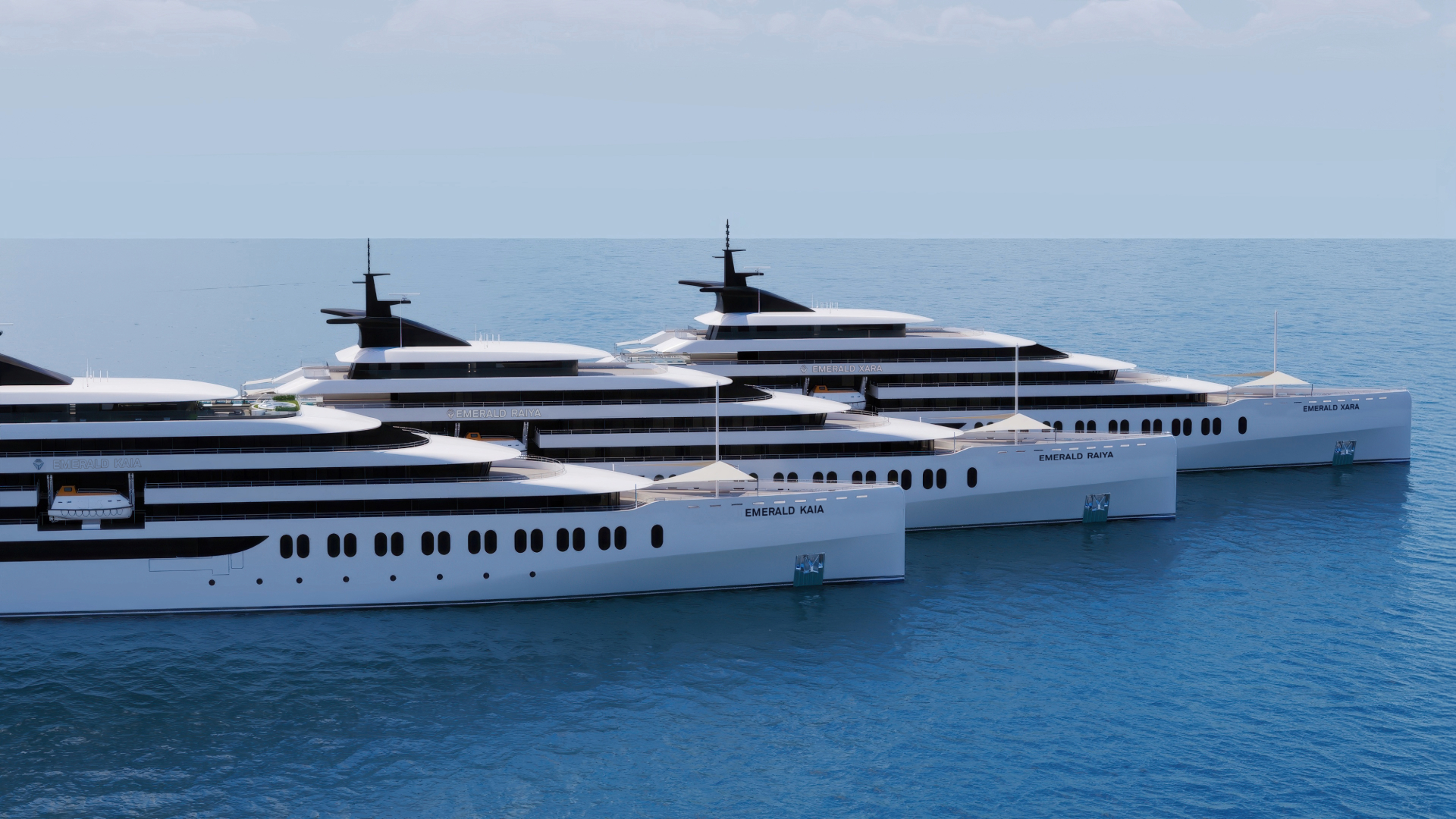
The images shown are for illustration purposes only and may not be an exact representation of what you find on the ship.
The images shown are for illustration purposes only and may not be an exact representation of what you find on the ship.
The images shown are for illustration purposes only and may not be an exact representation of what you find on the ship.
The images shown are for illustration purposes only and may not be an exact representation of what you find on the ship.
The images shown are for illustration purposes only and may not be an exact representation of what you find on the ship.


Our Fusion packages are all ABTA & ATOL protected ensuring that your booking is safe with us
| Return flights including luggage allowance | |||
| Overseas Transfers | |||
| 24 nights aboard the Emerald Xara | |||
| Return airport transfers | |||
| Wine, beer & soft drinks with lunch & dinner | |||
| Gratuities Included | |||
| One complimentary shore excursion in every port | |||
| Bikes for passenger use | |||
| Free Wi-Fi included | |||
| Port Taxes and Fees | |||
 | ABTA and ATOL Protection* | ||
Fly/cruise package |
Date 8th Jun 2028 |
Nts 24 |
Interior  |
Oceanview £20,983pp |
Balcony |
Suite £27,025pp |
Interior |
Oceanview £41,966pp |
Balcony |
Suite £48,008pp |
Date 8th Jun 2028 |
Nts 24 |
Interior |
Oceanview £20,983pp |
Balcony |
Suite £27,025pp |
Interior |
Oceanview £41,966pp |
Balcony |
Suite £48,008pp |
Fusion Holidays when selling travel arrangements is a trading name of Co-op Travel Services Limited, registration 08903986. Fusion Cruises is an Accredited Body Member of Co-op Travel Services Limited ATOL 12904.
Book with Confidence. We are a Member of ABTA which means you have the benefit of ABTA’s assistance and Code of Conduct.
Some of the flights and flight-inclusive holidays on this website are financially protected by the ATOL scheme but ATOL protection does not apply to all holiday and travel services offered on this website. This website will provide you with information on the protection that applies in the case of each holiday and travel service offered before you make your booking. If you do not receive an ATOL Certificate then the booking will not be ATOL protected. If you do receive an ATOL Certificate but all parts of your trip are not listed on it, those parts will not be ATOL protected. Please see our booking conditions for information, or for more information about financial protection and the ATOL Certificate go to: www.caa.co.uk


