This site uses cookies as defined in our Cookie Policy, by continuing to use this site you agree to their use.
Continue

| Arrive | Depart | ||||||
| 28th28 | DecDec | 202727 | Mahé, Seychelles, embark on the Emerald Raiya | ||||
Like jade-coloured jewels in the Indian Ocean, the more than 100 Seychelles Islands are often regarded as the Garden of Eden. Lying just four degrees south of the equator, the Seychelles are some 1,000 miles (1,610 km) from the nearest mainland Africa. Little more than 200 years ago, all 115 islands were uninhabited. Then in 1742 a French ship dispatched from Mauritius sailed into one of the small bays. Captain Lazare Picault was the first to explore these unnamed islands. He encountered breathtaking vistas of rugged mountains, lagoons, coral atolls, splendid beaches and secluded coves. After Picault sailed away, the islands remained untouched for the next 14 years. Then France took possession of the seven islands in the Mahé group. During an expedition Captain Morphey named them the Sechelles, in honour of Vicomte Moreau de Sechelles. This name was later anglicised to Seychelles. The first settlers arrived at St. Anne’s Island in 1770; 15 years later the population of Mahé consisted of seven Europeans and 123 slaves. Today there are about 80,000 Seychellois, the majority of whom live on Mahé; the rest are scattered in small communities throughout the archipelago. The people are a fusion of three continents - Africa, Asia and Europe. This has created a unique culture and the use of three languages - Creole, French and English. Mahé is the largest island in the archipelago and the location of the capital, Victoria. Ringed by steep, magnificent mountains, few capitals can claim a more beautiful backdrop. The town features a mixture of modern and indigenous architecture; it is the centre of business and commerce thanks to the extensive port facilities. Noteworthy sites in Victoria are the museum, cathedral, government house, clock tower, botanical gardens and an open-air market. The major attractions are found outside of town where the island’s quiet, lazy atmosphere delights visitors. With 68 pristine, white sand beaches, Mahé boasts more beaches and tourist facilities than any of the other Seychelles Islands. Beautiful and remote Mahé with its green-clad mountains and palm-fringed beaches is indeed an island of abundance; pleasant surprises are around every bend in the trail. Come ashore and discover for yourself this marvellous island paradise. Your tropical cruise begins on Mahé island, the largest in the Seychelles and home of the capital, Victoria. Transfer to your Emerald Cruises luxury yacht and embark on your discovery of the Seychelles. Please book your flight to arrive into Mahé, Seychelles prior to 01:00 PM. | |||||||
| 29th29 | DecDec | 202727 | Sainte Anne Island, Seychelles | ||||
Late this morning, cruise to Sainte Anne Island. It is encircled by a Marine National Park, home to incredible marine life including more than 150 species of fish. Sainte Anne is also a significant nesting site for Hawksbill turtles. | |||||||
| 30th30 | DecDec | 202727 | Therese Island, Seychelles | ||||
Sail to Thérèse Island in the morning. Sitting just one kilometre off the coast of Mahé, this jewel of the Seychelles is a tiny, uninhabited island with rugged rock formations, long white-sand beaches and lush vegetation. The island has two imposing rocky peaks, which are thought to resemble a giant’s staircase. A reef wraps around the southern edge of the island and offers incredible snorkelling. | |||||||
| 31st31 | DecDec | 202727 | Cousin Island, Seychelles | ||||
Early in the morning, cruise to Cousin, a small island renowned as a haven for seabirds. The granitic islet was a private property until 1968 when it was purchased by the International Council for Bird Preservation to transform it into a nature reserve. It’s the most protected island in the archipelago, providing a breeding ground for 11 sea bird species annually and a habitat for five birds native to the Seychelles. Later you will sail to Praslin to stay overnight. | |||||||
| 31st31 | DecDec | 202727 | Praslin Island, Seychelles | ||||
Forty kilometers (25 miles) northeast of Mahé, Praslin is just a 15-minute flight or 45-minute ferry ride away. Praslin, at 11 km (7 miles) long and 4 km (2.5 miles) wide, is the second-largest island in the Seychelles. First settled as a hideaway by pirates and Arab merchants, the island's original name, Isle de Palmes, bears testament to its reputation as home of the Vallée de Mai UNESCO World Heritage Site: the only place in the world where the famous Coco de Mer, the world's heaviest nut, grows abundantly in the wild. Praslin's endemic palm forests shelter many rare species, and the island is a major bird-watching destination. Surrounded by a coral reef, majestic bays, and gorgeous beaches, Praslin is much quieter and less developed than Mahé. With few real "sights," the pleasures of Praslin largely involve relaxing in or exploring its stunning beaches and fantastical forests. | |||||||
| 1st01 | JanJan | 202828 | Praslin Island, Seychelles | ||||
Forty kilometers (25 miles) northeast of Mahé, Praslin is just a 15-minute flight or 45-minute ferry ride away. Praslin, at 11 km (7 miles) long and 4 km (2.5 miles) wide, is the second-largest island in the Seychelles. First settled as a hideaway by pirates and Arab merchants, the island's original name, Isle de Palmes, bears testament to its reputation as home of the Vallée de Mai UNESCO World Heritage Site: the only place in the world where the famous Coco de Mer, the world's heaviest nut, grows abundantly in the wild. Praslin's endemic palm forests shelter many rare species, and the island is a major bird-watching destination. Surrounded by a coral reef, majestic bays, and gorgeous beaches, Praslin is much quieter and less developed than Mahé. With few real "sights," the pleasures of Praslin largely involve relaxing in or exploring its stunning beaches and fantastical forests. Praslin, the second largest island in the Seychelles, is visually stunning with tropical jungle-fringed beaches, emerald waters and powdery sand. Anse Lazio beach has been voted one of the world’s best several times and there’s a dazzling reef just offshore brimming with coral and marine life. On land, coconut palms and granite boulders create a picture-postcard landscape. In the centre of the island, discover the UNESCO World Heritage-listed Vallée de Mai Nature Reserve. | |||||||
| 1st01 | JanJan | 202828 | La Digue, Seychelles | ||||
La Digue Island is an island like no other. It is the smallest of the three populated islands in the Seychelles, but the tranquillity will make it feel like you’re the only one there. The stunning surroundings should be soaked up from cycling through the vanilla plantations to lying on the white-sandy beaches, your time on La Digue should be cherished. There is a little more to do on La Digue compared to the smaller, uninhabited islands where you can enjoy full moon tours, surfing and snorkelling with a local. | |||||||
| 2nd02 | JanJan | 202828 | La Digue, Seychelles | ||||
La Digue Island is an island like no other. It is the smallest of the three populated islands in the Seychelles, but the tranquillity will make it feel like you’re the only one there. The stunning surroundings should be soaked up from cycling through the vanilla plantations to lying on the white-sandy beaches, your time on La Digue should be cherished. There is a little more to do on La Digue compared to the smaller, uninhabited islands where you can enjoy full moon tours, surfing and snorkelling with a local. La Digue, the smallest of the three populated islands in the Seychelles, has exquisite natural wonders and incredible wildlife, like the population of giant Aldabra tortoises. Like Praslin Island, it is also fringed by world-famous beaches. One of the most recognisable is Anse Source d'Argent – it has pink-hued sands contrasting with rock formations and aquamarine waters. Sail to Curieuse later in the evening. | |||||||
| 2nd02 | JanJan | 202828 | Curieuse Island, Seychelles | ||||
| 3rd03 | JanJan | 202828 | Curieuse Island, Seychelles | ||||
Curieuse is a rugged island swathed in unspoilt wilderness and home to hundreds of Aldabra giant tortoises. Apart from its obvious natural beauty, it has a fascinating history. The island was once a quarantine station, and the original French colonial doctor’s house has a museum and visitor’s centre. Nature trails wind through the island, passing mangrove swamps and the native coco de mer palm trees. | |||||||
| 4th04 | JanJan | 202828 | Aride Island, Seychelles | ||||
Early in the morning, cruise to the lush, green island of Aride, a nature reserve managed by the International Conservation Society. Nature enthusiasts and wildlife photographers flock to this island, where more than 30 rare bird species nest in the verdant vegetation. The landscape is enticing with fine-sand beaches, coconut palms and soaring cliffs. | |||||||
| 5th05 | JanJan | 202828 | Mahé, Seychelles | ||||
Like jade-coloured jewels in the Indian Ocean, the more than 100 Seychelles Islands are often regarded as the Garden of Eden. Lying just four degrees south of the equator, the Seychelles are some 1,000 miles (1,610 km) from the nearest mainland Africa. Little more than 200 years ago, all 115 islands were uninhabited. Then in 1742 a French ship dispatched from Mauritius sailed into one of the small bays. Captain Lazare Picault was the first to explore these unnamed islands. He encountered breathtaking vistas of rugged mountains, lagoons, coral atolls, splendid beaches and secluded coves. After Picault sailed away, the islands remained untouched for the next 14 years. Then France took possession of the seven islands in the Mahé group. During an expedition Captain Morphey named them the Sechelles, in honour of Vicomte Moreau de Sechelles. This name was later anglicised to Seychelles. The first settlers arrived at St. Anne’s Island in 1770; 15 years later the population of Mahé consisted of seven Europeans and 123 slaves. Today there are about 80,000 Seychellois, the majority of whom live on Mahé; the rest are scattered in small communities throughout the archipelago. The people are a fusion of three continents - Africa, Asia and Europe. This has created a unique culture and the use of three languages - Creole, French and English. Mahé is the largest island in the archipelago and the location of the capital, Victoria. Ringed by steep, magnificent mountains, few capitals can claim a more beautiful backdrop. The town features a mixture of modern and indigenous architecture; it is the centre of business and commerce thanks to the extensive port facilities. Noteworthy sites in Victoria are the museum, cathedral, government house, clock tower, botanical gardens and an open-air market. The major attractions are found outside of town where the island’s quiet, lazy atmosphere delights visitors. With 68 pristine, white sand beaches, Mahé boasts more beaches and tourist facilities than any of the other Seychelles Islands. Beautiful and remote Mahé with its green-clad mountains and palm-fringed beaches is indeed an island of abundance; pleasant surprises are around every bend in the trail. Come ashore and discover for yourself this marvellous island paradise. Return to Mahé for the final days of your voyage. The capital city, Victoria, was founded in the French settler period in 1778 and named later by the British for Queen Victoria. The island of Mahé has pristine beaches dotted with huge rocks and tranquil nature trails threaded through the Morne Seychellois National Park. | |||||||
| 6th06 | JanJan | 202828 | Mahé, Seychelles | ||||
Like jade-coloured jewels in the Indian Ocean, the more than 100 Seychelles Islands are often regarded as the Garden of Eden. Lying just four degrees south of the equator, the Seychelles are some 1,000 miles (1,610 km) from the nearest mainland Africa. Little more than 200 years ago, all 115 islands were uninhabited. Then in 1742 a French ship dispatched from Mauritius sailed into one of the small bays. Captain Lazare Picault was the first to explore these unnamed islands. He encountered breathtaking vistas of rugged mountains, lagoons, coral atolls, splendid beaches and secluded coves. After Picault sailed away, the islands remained untouched for the next 14 years. Then France took possession of the seven islands in the Mahé group. During an expedition Captain Morphey named them the Sechelles, in honour of Vicomte Moreau de Sechelles. This name was later anglicised to Seychelles. The first settlers arrived at St. Anne’s Island in 1770; 15 years later the population of Mahé consisted of seven Europeans and 123 slaves. Today there are about 80,000 Seychellois, the majority of whom live on Mahé; the rest are scattered in small communities throughout the archipelago. The people are a fusion of three continents - Africa, Asia and Europe. This has created a unique culture and the use of three languages - Creole, French and English. Mahé is the largest island in the archipelago and the location of the capital, Victoria. Ringed by steep, magnificent mountains, few capitals can claim a more beautiful backdrop. The town features a mixture of modern and indigenous architecture; it is the centre of business and commerce thanks to the extensive port facilities. Noteworthy sites in Victoria are the museum, cathedral, government house, clock tower, botanical gardens and an open-air market. The major attractions are found outside of town where the island’s quiet, lazy atmosphere delights visitors. With 68 pristine, white sand beaches, Mahé boasts more beaches and tourist facilities than any of the other Seychelles Islands. Beautiful and remote Mahé with its green-clad mountains and palm-fringed beaches is indeed an island of abundance; pleasant surprises are around every bend in the trail. Come ashore and discover for yourself this marvellous island paradise. Today, your Emerald Cruises luxury voyage concludes in Mahé. This afternoon, fly onwards to Nairobi, Kenya’s vibrant capital, where bustling markets, leafy neighbourhoods and a thriving arts scene reflect the city’s energy and diversity. | |||||||
| 7th07 | JanJan | 202828 | Nairobi, Kenya | ||||
Fly to Victoria Falls, Zimbabwe, to discover one of the Seven Natural Wonders of the World. Stretching more than a mile across, the falls form an immense curtain of water that plunges into the gorge below. Known locally as Mosi-oa-Tunya, ‘the smoke that thunders’, this natural spectacle fills the air with a powerful roar and clouds of rising spray. Included Excursion Three Night Stay: Ilala Lodge Hotel | |||||||
| 7th07 | JanJan | 202828 | Victoria, British Columbia, Canada | ||||
Victoria, the capital of a province whose license plates brazenly label it "The Best Place on Earth," is a walkable, livable seaside city of fragrant gardens, waterfront paths, engaging museums, and beautifully restored 19th-century architecture. In summer, the Inner Harbour—Victoria's social and cultural center—buzzes with visiting yachts, horse-and-carriage rides, street entertainers, and excursion boats heading out to visit pods of friendly local whales. Yes, it might be a bit touristy, but Victoria's good looks, gracious pace, and manageable size are instantly beguiling, especially if you stand back to admire the mountains and ocean beyond. At the southern tip of Vancouver Island, Victoria dips slightly below the 49th parallel. That puts it farther south than most of Canada, giving it the mildest climate in the country, with virtually no snow and less than half the rain of Vancouver. The city's geography, or at least its place names, can cause confusion. Just to clarify: the city of Victoria is on Vancouver Island (not Victoria Island). The city of Vancouver is on the British Columbia mainland, not on Vancouver Island. At any rate, that upstart city of Vancouver didn't even exist in 1843 when Victoria, then called Fort Victoria, was founded as the westernmost trading post of the British-owned Hudson's Bay Company. Victoria was the first European settlement on Vancouver Island, and in 1868 it became the capital of British Columbia. The British weren't here alone, of course. The local First Nations people—the Songhees, the Saanich, and the Sooke—had already lived in the areas for thousands of years before anyone else arrived. Their art and culture are visible throughout southern Vancouver Island. You can see this in private and public galleries, in the totems at Thunderbird Park, in the striking collections at the Royal British Columbia Museum, and at the Quw'utsun'Cultural and Conference Centre in nearby Duncan. Spanish explorers were the first foreigners to explore the area, although they left little more than place names (Galiano Island and Cordova Bay, for example). The thousands of Chinese immigrants drawn by the gold rushes of the late 19th century had a much greater impact, founding Canada's oldest Chinatown and adding an Asian influence that's still quite pronounced in Victoria's multicultural mix. Despite its role as the provincial capital, Victoria was largely eclipsed, economically, by Vancouver throughout the 20th century. This, as it turns out, was all to the good, helping to preserve Victoria's historic downtown and keeping the city largely free of skyscrapers and highways. For much of the 20th century, Victoria was marketed to tourists as "The Most British City in Canada," and it still has more than its share of Anglo-themed pubs, tea shops, and double-decker buses. These days, however, Victorians prefer to celebrate their combined indigenous, Asian, and European heritage, and the city's stunning wilderness backdrop. Locals do often venture out for afternoon tea, but they're just as likely to nosh on dim sum or tapas. Decades-old shops sell imported linens and tweeds, but newer upstarts offer local designs in hemp and organic cotton. And let's not forget that fabric prevalent among locals: Gore-Tex. The outdoors is ever present here. You can hike, bike, kayak, sail, or whale-watch straight from the city center, and forests, beaches, offshore islands, and wilderness parklands lie just minutes away. A little farther afield, there's surfing near Sooke, wine touring in the Cowichan Valley, and kayaking among the Gulf Islands. | |||||||
| 8th08 | JanJan | 202828 | Victoria Falls, Zimbabwe | ||||
The Zambezi River shapes life on both sides of the border, creating experiences here that range from wildlife encounters to unforgettable sunset scenes. EmeraldPLUS EmeraldPLUS DiscoverMORE | |||||||
| 9th09 | JanJan | 202828 | Chobe National Park, Botswana | ||||
Chobe is shaped by the river that sustains it, and along its fertile banks wildlife gathers in extraordinary numbers. Today, experience the park from two different perspectives, on the water and on land, for a fuller appreciation of one of Botswana’s most biologically diverse reserves. | |||||||
| 10th10 | JanJan | 202828 | Victoria Falls, Zimbabwe | ||||
Fly to Johannesburg and check into your hotel for your two-night stay. Known as the ‘City of Gold’, Johannesburg is South Africa's largest city and a vibrant hub of art, culture, and history. | |||||||
| 10th10 | JanJan | 202828 | Johannesburg, South Africa | ||||
| 11th11 | JanJan | 202828 | Johannesburg, South Africa | ||||
Johannesburg, often referred to as Jo'burg, pulses with energy, reflecting the rapid transformation from a gold-mining settlement to a modern metropolis. The city is a gateway to South Africa's northern regions and offers diverse cultural experiences, from trendy galleries and world-class theatres to hip cafes and moving Mandela-related sites. This vibrant spirit is complemented by lush green spaces like the Johannesburg Botanical Garden and Emmarentia Dam, providing a tranquil retreat from the urban hustle. EmeraldPLUS | |||||||
| 12th12 | JanJan | 202828 | Johannesburg, South Africa | ||||
This morning, fly to Skukuza, gateway to Kruger National Park, and transfer to your lodge on the Sabie River. The area lies in southern Kruger, a wildlife-rich region where river systems attract a wide range of animals and create excellent game-viewing opportunities. Included Excursion Three Night Stay: Kruger Shalati - The Train on the Bridge | |||||||
| 12th12 | JanJan | 202828 | Kruger National Park, South Africa | ||||
| 13th13 | JanJan | 202828 | Kruger National Park, South Africa | ||||
Few places capture the essence of safari quite like Kruger, where changing light and shifting landscapes bring a different rhythm to every game drive. Today offers a deeper immersion in the bush, with time to appreciate everything from herds of elephants and graceful giraffes to colourful birdlife and smaller creatures often overlooked. Included Excursion | |||||||
| 14th14 | JanJan | 202828 | Kruger National Park, South Africa | ||||
Another day in Kruger brings another chance to encounter the wildlife that makes this reserve so revered. Travelling in specially adapted Land Rovers, continue exploring the park with expert rangers who help track animals and interpret the behaviour of the species you encounter. Included Excursion | |||||||
| 15th15 | JanJan | 202828 | Kruger National Park, South Africa | ||||
Fly to Cape Town, one of the world’s most beautifully situated cities, framed by Table Mountain and the Atlantic Ocean. South Africa’s ‘Mother City’ brings together colourful streets, historic architecture and a vibrant food scene, reflecting its diverse cultural heritage. Stay near the lively Victoria & Alfred Waterfront, where harbour views meet restaurants, boutiques and galleries. | |||||||
| 15th15 | JanJan | 202828 | Cape Town, South Africa | ||||
Sometimes referred to as the Mother City, Cape Town is the most famous port in South Africa and is influenced by many different cultures, including Dutch, British and Malay. The port was founded in 1652 by Dutch explorer Jan Van Riebeeck, and evidence of Dutch colonial rule remains throughout the region. The port is located on one of the world's most important trade routes, and is mainly a container port and handler of fresh fruit. Fishing is another vital industry, with large Asian fishing fleets using Cape Town as a logistical repair base for much of the year. The region is famous for its natural beauty, with the imposing Table Mountain and Lions Head, as well as the many nature reserves and botanical gardens such as Kirstenbosch which boasts an extensive range of indigenous plant life, including proteas and ferns. Cape Town's weather is mercurial, and can change from beautiful sunshine to dramatic thunderstorms within a short period. A local adage is that in Cape Town you can experience four seasons in one day. | |||||||
| 16th16 | JanJan | 202828 | Cape Town, South Africa | ||||
Sometimes referred to as the Mother City, Cape Town is the most famous port in South Africa and is influenced by many different cultures, including Dutch, British and Malay. The port was founded in 1652 by Dutch explorer Jan Van Riebeeck, and evidence of Dutch colonial rule remains throughout the region. The port is located on one of the world's most important trade routes, and is mainly a container port and handler of fresh fruit. Fishing is another vital industry, with large Asian fishing fleets using Cape Town as a logistical repair base for much of the year. The region is famous for its natural beauty, with the imposing Table Mountain and Lions Head, as well as the many nature reserves and botanical gardens such as Kirstenbosch which boasts an extensive range of indigenous plant life, including proteas and ferns. Cape Town's weather is mercurial, and can change from beautiful sunshine to dramatic thunderstorms within a short period. A local adage is that in Cape Town you can experience four seasons in one day. Cape Town’s dramatic setting is never more apparent than along the Cape Peninsula, where mountain, ocean and rugged coastline come together in spectacular views. Today, follow the Atlantic coast to Cape Point within Table Mountain National Park, an area known for panoramic sea views, rich biodiversity and its remarkable position on this wild southern peninsula. | |||||||
| 17th17 | JanJan | 202828 | Cape Town, South Africa | ||||
Sometimes referred to as the Mother City, Cape Town is the most famous port in South Africa and is influenced by many different cultures, including Dutch, British and Malay. The port was founded in 1652 by Dutch explorer Jan Van Riebeeck, and evidence of Dutch colonial rule remains throughout the region. The port is located on one of the world's most important trade routes, and is mainly a container port and handler of fresh fruit. Fishing is another vital industry, with large Asian fishing fleets using Cape Town as a logistical repair base for much of the year. The region is famous for its natural beauty, with the imposing Table Mountain and Lions Head, as well as the many nature reserves and botanical gardens such as Kirstenbosch which boasts an extensive range of indigenous plant life, including proteas and ferns. Cape Town's weather is mercurial, and can change from beautiful sunshine to dramatic thunderstorms within a short period. A local adage is that in Cape Town you can experience four seasons in one day. Cape Town rewards every change in perspective, from its lively waterfronts and colourful neighbourhoods to the commanding heights of Table Mountain above. Today, take in the city from one of its most iconic vantage points, then choose from a selection of DiscoverMORE experiences that reveal another side of this captivating destination. In the evening, enjoy a farewell dinner at a local restaurant celebrating South Africa’s cultural diversity. Included Excursion DiscoverMORE DiscoverMORE DiscoverMORE DiscoverMORE | |||||||
| 18th18 | JanJan | 202828 | Cape Town, South Africa, disembark the Emerald Raiya | ||||
Sometimes referred to as the Mother City, Cape Town is the most famous port in South Africa and is influenced by many different cultures, including Dutch, British and Malay. The port was founded in 1652 by Dutch explorer Jan Van Riebeeck, and evidence of Dutch colonial rule remains throughout the region. The port is located on one of the world's most important trade routes, and is mainly a container port and handler of fresh fruit. Fishing is another vital industry, with large Asian fishing fleets using Cape Town as a logistical repair base for much of the year. The region is famous for its natural beauty, with the imposing Table Mountain and Lions Head, as well as the many nature reserves and botanical gardens such as Kirstenbosch which boasts an extensive range of indigenous plant life, including proteas and ferns. Cape Town's weather is mercurial, and can change from beautiful sunshine to dramatic thunderstorms within a short period. A local adage is that in Cape Town you can experience four seasons in one day. Your journey comes to an end today. Transfer to the airport, taking with you the memories of southern Africa’s remarkable beauty, history and wildlife. The itinerary is a guide only and may be amended for operational reasons. As such Emerald Cruises cannot guarantee the cruise will be operated unaltered from the itinerary states above. | |||||||
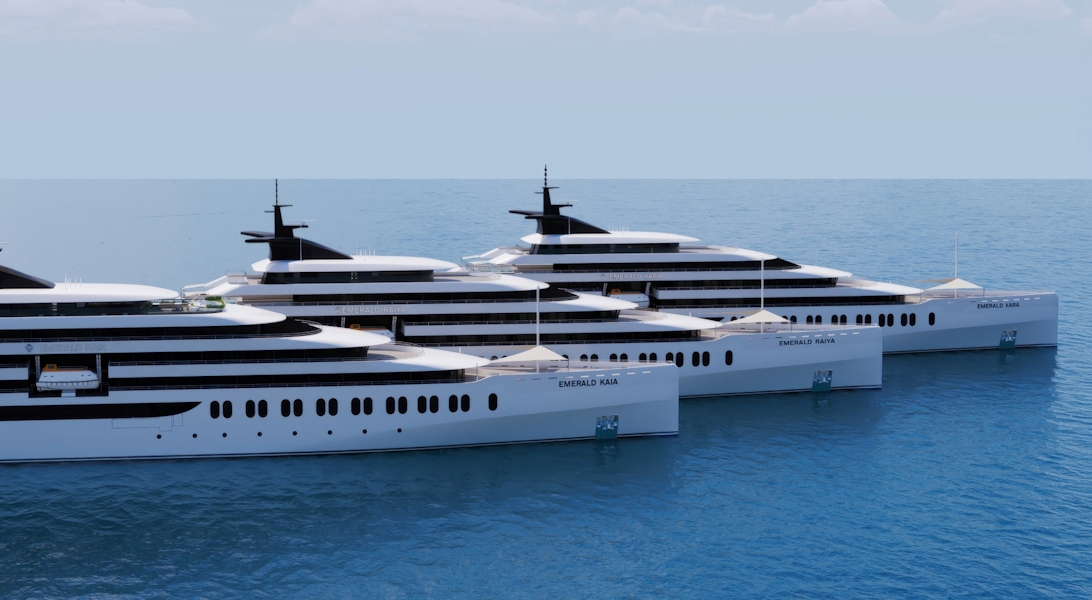
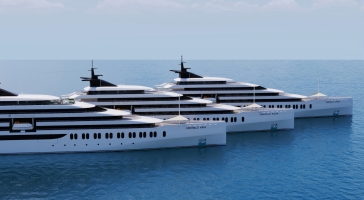
The images shown are for illustration purposes only and may not be an exact representation of what you find on the ship.
The images shown are for illustration purposes only and may not be an exact representation of what you find on the ship.
The images shown are for illustration purposes only and may not be an exact representation of what you find on the ship.
The images shown are for illustration purposes only and may not be an exact representation of what you find on the ship.
The images shown are for illustration purposes only and may not be an exact representation of what you find on the ship.

Our Fusion packages are all ABTA & ATOL protected ensuring that your booking is safe with us
| Return flights including luggage allowance | |||
| Overseas Transfers | |||
| 21 nights aboard the Emerald Raiya | |||
| Return airport transfers | |||
| Wine, beer & soft drinks with lunch & dinner | |||
| Gratuities Included | |||
| One complimentary shore excursion in every port | |||
| Bikes for passenger use | |||
| Free Wi-Fi included | |||
| Port Taxes and Fees | |||
 | ABTA and ATOL Protection* | ||
Fly/cruise package |
Date 28th Dec 2027 |
Nts 21 |
Interior  |
Oceanview £16,498pp |
Balcony |
Suite £18,379pp |
Interior |
Oceanview £32,996pp |
Balcony |
Suite £34,877pp |
Date 28th Dec 2027 |
Nts 21 |
Interior |
Oceanview £16,498pp |
Balcony |
Suite £18,379pp |
Interior |
Oceanview £32,996pp |
Balcony |
Suite £34,877pp |
Fusion Holidays when selling travel arrangements is a trading name of Co-op Travel Services Limited, registration 08903986. Fusion Cruises is an Accredited Body Member of Co-op Travel Services Limited ATOL 12904.
Book with Confidence. We are a Member of ABTA which means you have the benefit of ABTA’s assistance and Code of Conduct.
Some of the flights and flight-inclusive holidays on this website are financially protected by the ATOL scheme but ATOL protection does not apply to all holiday and travel services offered on this website. This website will provide you with information on the protection that applies in the case of each holiday and travel service offered before you make your booking. If you do not receive an ATOL Certificate then the booking will not be ATOL protected. If you do receive an ATOL Certificate but all parts of your trip are not listed on it, those parts will not be ATOL protected. Please see our booking conditions for information, or for more information about financial protection and the ATOL Certificate go to: www.caa.co.uk