| | | | | Arrive | Depart |
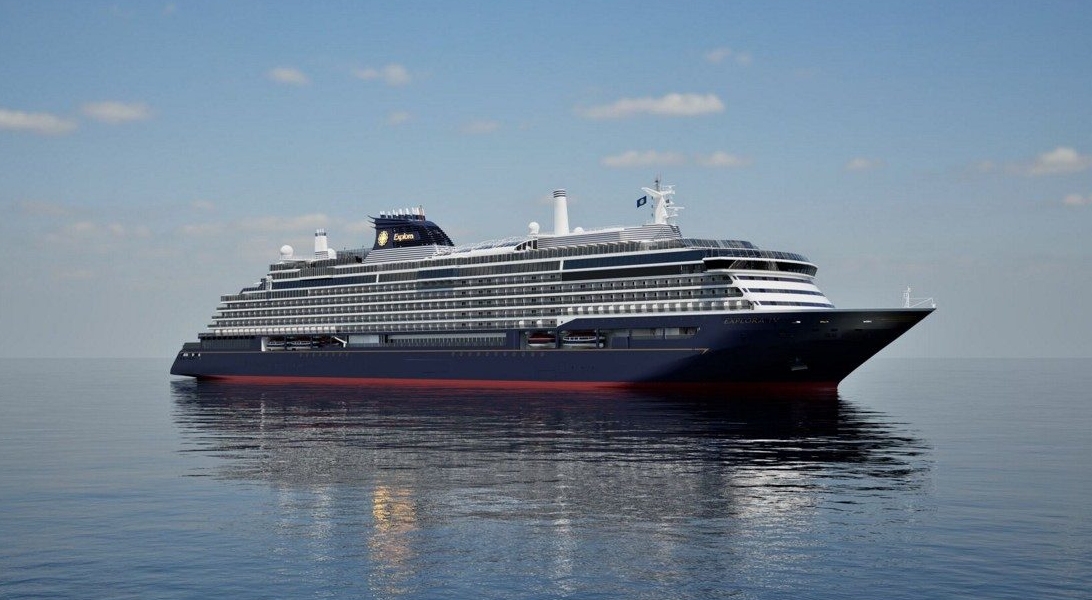
| 18th18 | MayMay | 202828 | Quebec City, Québec, Canada, embark on the EXPLORA IV | | 21:00 |
Québec City's alluring setting atop Cape Diamond (Cap Diamant) evokes a past of high adventure, military history, and exploration. This French-speaking capital city is the only walled city north of Mexico. Visitors come for the delicious and inventive cuisine, the remarkable historical continuity, and to share in the seasonal exuberance of the largest Francophone population outside France.The historic heart of this community is the Old City (Vieux-Québec), comprising the part of Upper Town (Haute-Ville) surrounded by walls and Lower Town (Basse-Ville), which spreads out at the base of the hill from Place Royale. Many sets of staircases and the popular funicular link the top of the hill with the bottom. Cobblestone streets, horse-drawn carriages, and elaborate cathedrals here are charming in all seasons. The Old City earned recognition as an official UNESCO World Heritage site in 1985, thanks largely to city planners who managed to update and preserve the 400-year-old buildings and attractions without destroying what made them worth preserving. The most familiar icon of the city, Fairmont Château Frontenac, is set on the highest point in Upper Town, where it holds court over the entire city.Sitting proudly above the confluence of the St. Lawrence and St. Charles rivers, the city's famous military fortification, La Citadelle, built in the early 19th century, remains the largest of its kind in North America. In summer, visitors should try to catch the Changing of the Guard, held every morning at 10 am; you can get much closer to the guards here than at Buckingham Palace in London.Enchanting as it is, the Old City is just a small part of the true Québec City experience. Think outside the walls and explore St-Roch, a downtown hot spot, which has artsy galleries, foodie haunts, and a bustling square. Cruise the Grande-Allée and avenue Cartier to find a livelier part of town dotted with nightclubs and fun eateries. Or while away the hours in St-Jean-Baptiste, a neighborhood with trendy shops and hipster hangouts. Prepare to encounter a province thriving with culture and cuisine, history and heritage, and so much more. Explore impressive architecture, intriguing history, imposing landmarks and the treasured streets of UNESCO praised Old Québec. Relax at Parisian-style bistros and modern art exhibitions or choose to partake in thrilling alfresco pursuits. Delve deep into nature to kayak through a fjord, walk the width of Montmorency Falls, zipline, paddleboard, surf and mountain bike in tranquil settings. Home to capital Montréal and an incredibly friendly nation, there’s something for everyone in this mostly French speaking region. |
| 19th19 | MayMay | 202828 | La Baie, Québec, Canada | 09:00 | 16:00 |
| Submerge into the almost hypnotic nature at the heart of The River Saguenay. Explore the raw beauty and protected wildlife within the Saguenay Fjord. Purify in a biome boreal forest under the canopy cover of climate-transforming coniferous trees. Learn about Canadian history, see black bears in their natural environment and embark on a wealth of activities from helicopter to kayak, sailing to skiing. Relax and restore in this natural habitat of mountains, valleys and forestry - for as far as the eye can see. |
| 20th20 | MayMay | 202828 | Sept-Iles, Québec, Canada | 09:00 | 18:00 |
Viewing the workings of this major Canadian port from a waterfront boardwalk, no one would guess this was once a quiet fishing village. The place boomed after World War II, when large companies decided Sept-Îles would make a good base for expanding northern Québec’s iron-mining industry. But all of the massive infrastructure can’t trump Mother Nature. Beautiful beaches line the coast, and the islands of an archipelago park sit just offshore. Campers and bird-watchers flock here, in part to spot the colorful beaks of the puffins. |
| 21st21 | MayMay | 202828 | Havre-Saint-Pierre, Québec, Canada | 08:00 | 15:00 |
Havre St. Pierre is a tiny seaside port on the north shore of the Saint Lawrence River in Quebec. It was settled in 1857 by Acadians from the Magdalen Island, and still today locals speak a dialect more similar to Acadian French than to Quebec French. It was originally called Saint-Pierre-de-la-Pointe-aux-Esquimaux until 1927, when it was officially shortened to Havre St Pierre. Until recently the local economy relied mainly on fishing and lumbering, today it is mainly a titanium ore-transhipment port. Nearby is one of the world’s most amazing natural phenomena – the Mingan Archipelago. They are the largest group of erosional monoliths in Canada, and were declared a Nation Park in 1984. These limestone monoliths have formed over thousands of years by wave action, strong winds and seasonal freezing and thawing. The result is a unique set of large limestone sculptures. Recharge on an escape to the Mingan Archipelago National Park. Visit historical sites amid an array of protected islands wrapped in sea-sculpted limestone. Discover impressive fossils on Niapiskau Island and wind your way through a rich array of flora and fauna on Quarry Island. Wander inland to the eco-friendly boreal forest where you’ll uncover impressive ancient limestone monuments. Tread quietly across pebble strewn beaches and striking coastal scenery to watch playful seals below soaring seabirds and meet the local Innu people to immerse in thousand-year culture. |
| 22nd22 | MayMay | 202828 | Corner Brook, Newfoundland and Labrador, Canada | 09:00 | 17:00 |
Newfoundland's fourth-largest city, Corner Brook is the hub of the island's west coast. Hills fringe three sides of the city, which has dramatic views of the harbor and the Bay of Islands. The town is also home to a large paper mill and a branch of Memorial University. Captain James Cook, the British explorer, charted the coast in the 1760s, and a memorial to him overlooks the bay.The town enjoys more clearly defined seasons than most of the rest of the island, and in summer it has many pretty gardens. The nearby Humber River is the best-known salmon river in the province, and there are many kilometers of well-maintained walking trails in the community. |
| 23rd23 | MayMay | 202828 | L'Anse aux Meadows, Newfoundland and Labrador, Canada | 08:00 | 14:00 |
Around the year 1000, Vikings from Greenland and Iceland founded the first European settlement in North America, near the northern tip of Newfoundland. They arrived in the New World 500 years before Columbus but stayed only a few years and were forgotten for centuries. Since the settlement's rediscovery in the last century, the archaeological site has brought tourism to the area. Viking themes abound but so do views, whales, icebergs, fun dining experiences, and outdoor activities. L'Anse Aux Meadows on the northern tip of the island of Newfoundland is a remote community of just 40 people, with St Anthony, 40 minutes away, having a population of only 3,500. The region is locally famous for springtime polar bears, nesting eider ducks, the northern extreme of the Appalachians at nearby Belle Isle, numerous spring and summer icebergs, and a rich ocean fishery. L’Anse Aux Meadows National Historic Site is the UNESCO World Heritage Site that tells the story of Leif Erickson and the first Europeans in the new world. This site is often the keystone attraction for cruises themed around the Vikings. Discovered in 1960, it is the site of a Norse village, the only known one in North America outside of Greenland. The site remains the only widely-accepted instance of pre-Columbian trans-oceanic contact, and is notable for possible connections with the attempted colony of Vinland established by Leif Ericson around 1003, or more broadly with Norse exploration of the Americas. The root of the name "L'Anse aux Meadows" is believed to have originated with French fishermen in the area during the nineteenth and twentieth centuries, who named the site L'Anse aux Meduses, meaning 'Jellyfish Bay'. |
| 24th24 | MayMay | 202828 | At Sea | | |
| 25th25 | MayMay | 202828 | At Sea | | |
| 26th26 | MayMay | 202828 | At Sea | | |
| 27th27 | MayMay | 202828 | Reykjavík, Iceland | 09:00 | |
Sprawling Reykjavík, the nation's nerve center and government seat, is home to half the island's population. On a bay overlooked by proud Mt. Esja (pronounced eh-shyuh), with its ever-changing hues, Reykjavík presents a colorful sight, its concrete houses painted in light colors and topped by vibrant red, blue, and green roofs. In contrast to the almost treeless countryside, Reykjavík has many tall, native birches, rowans, and willows, as well as imported aspen, pines, and spruces.Reykjavík's name comes from the Icelandic words for smoke, reykur, and bay, vík. In AD 874, Norseman Ingólfur Arnarson saw Iceland rising out of the misty sea and came ashore at a bay eerily shrouded with plumes of steam from nearby hot springs. Today most of the houses in Reykjavík are heated by near-boiling water from the hot springs. Natural heating avoids air pollution; there's no smoke around. You may notice, however, that the hot water brings a slight sulfur smell to the bathroom.Prices are easily on a par with other major European cities. A practical option is to purchase a Reykjavík City Card at the Tourist Information Center or at the Reykjavík Youth Hostel. This card permits unlimited bus usage and admission to any of the city's seven pools, the Family Park and Zoo, and city museums. The cards are valid for one (ISK 3,300), two (ISK 4,400), or three days (ISK 4,900), and they pay for themselves after three or four uses a day. Even lacking the City Card, paying admission (ISK 500, or ISK 250 for seniors and people with disabilities) to one of the city art museums (Hafnarhús, Kjarvalsstaðir, or Ásmundarsafn) gets you free same-day admission to the other two. Feel the magnetic lure of adventure at the world’s northernmost capital. Mystical landscapes promise dramatic snow-capped volcanoes, ice fields and mountains for thrilling quests; explore by helicopter, ride Icelandic horses, zip through lava tunnels on super trucks and rocket across glaciers on snow scooters. Then slow down to visit a geothermal-fired bakery and greenhouse, soak in wellbeing springs, the blue lagoon or refresh at the nearby face mask bar. And as the nightlife beckons under the sun that barely sets, drink black death schnapps as a poetic reminder of Reykjavik’s exhilarating activities. |
| 28th28 | MayMay | 202828 | Reykjavík, Iceland, disembark the EXPLORA IV | | |
Sprawling Reykjavík, the nation's nerve center and government seat, is home to half the island's population. On a bay overlooked by proud Mt. Esja (pronounced eh-shyuh), with its ever-changing hues, Reykjavík presents a colorful sight, its concrete houses painted in light colors and topped by vibrant red, blue, and green roofs. In contrast to the almost treeless countryside, Reykjavík has many tall, native birches, rowans, and willows, as well as imported aspen, pines, and spruces.Reykjavík's name comes from the Icelandic words for smoke, reykur, and bay, vík. In AD 874, Norseman Ingólfur Arnarson saw Iceland rising out of the misty sea and came ashore at a bay eerily shrouded with plumes of steam from nearby hot springs. Today most of the houses in Reykjavík are heated by near-boiling water from the hot springs. Natural heating avoids air pollution; there's no smoke around. You may notice, however, that the hot water brings a slight sulfur smell to the bathroom.Prices are easily on a par with other major European cities. A practical option is to purchase a Reykjavík City Card at the Tourist Information Center or at the Reykjavík Youth Hostel. This card permits unlimited bus usage and admission to any of the city's seven pools, the Family Park and Zoo, and city museums. The cards are valid for one (ISK 3,300), two (ISK 4,400), or three days (ISK 4,900), and they pay for themselves after three or four uses a day. Even lacking the City Card, paying admission (ISK 500, or ISK 250 for seniors and people with disabilities) to one of the city art museums (Hafnarhús, Kjarvalsstaðir, or Ásmundarsafn) gets you free same-day admission to the other two. Feel the magnetic lure of adventure at the world’s northernmost capital. Mystical landscapes promise dramatic snow-capped volcanoes, ice fields and mountains for thrilling quests; explore by helicopter, ride Icelandic horses, zip through lava tunnels on super trucks and rocket across glaciers on snow scooters. Then slow down to visit a geothermal-fired bakery and greenhouse, soak in wellbeing springs, the blue lagoon or refresh at the nearby face mask bar. And as the nightlife beckons under the sun that barely sets, drink black death schnapps as a poetic reminder of Reykjavik’s exhilarating activities. |