This site uses cookies as defined in our Cookie Policy, by continuing to use this site you agree to their use.
Continue

| Arrive | Depart | ||||||
| 18th18 | MayMay | 202828 | Quebec City, Québec, Canada, embark on the EXPLORA IV | 21:00 | |||
Québec City's alluring setting atop Cape Diamond (Cap Diamant) evokes a past of high adventure, military history, and exploration. This French-speaking capital city is the only walled city north of Mexico. Visitors come for the delicious and inventive cuisine, the remarkable historical continuity, and to share in the seasonal exuberance of the largest Francophone population outside France.The historic heart of this community is the Old City (Vieux-Québec), comprising the part of Upper Town (Haute-Ville) surrounded by walls and Lower Town (Basse-Ville), which spreads out at the base of the hill from Place Royale. Many sets of staircases and the popular funicular link the top of the hill with the bottom. Cobblestone streets, horse-drawn carriages, and elaborate cathedrals here are charming in all seasons. The Old City earned recognition as an official UNESCO World Heritage site in 1985, thanks largely to city planners who managed to update and preserve the 400-year-old buildings and attractions without destroying what made them worth preserving. The most familiar icon of the city, Fairmont Château Frontenac, is set on the highest point in Upper Town, where it holds court over the entire city.Sitting proudly above the confluence of the St. Lawrence and St. Charles rivers, the city's famous military fortification, La Citadelle, built in the early 19th century, remains the largest of its kind in North America. In summer, visitors should try to catch the Changing of the Guard, held every morning at 10 am; you can get much closer to the guards here than at Buckingham Palace in London.Enchanting as it is, the Old City is just a small part of the true Québec City experience. Think outside the walls and explore St-Roch, a downtown hot spot, which has artsy galleries, foodie haunts, and a bustling square. Cruise the Grande-Allée and avenue Cartier to find a livelier part of town dotted with nightclubs and fun eateries. Or while away the hours in St-Jean-Baptiste, a neighborhood with trendy shops and hipster hangouts. Prepare to encounter a province thriving with culture and cuisine, history and heritage, and so much more. Explore impressive architecture, intriguing history, imposing landmarks and the treasured streets of UNESCO praised Old Québec. Relax at Parisian-style bistros and modern art exhibitions or choose to partake in thrilling alfresco pursuits. Delve deep into nature to kayak through a fjord, walk the width of Montmorency Falls, zipline, paddleboard, surf and mountain bike in tranquil settings. Home to capital Montréal and an incredibly friendly nation, there’s something for everyone in this mostly French speaking region. | |||||||
| 19th19 | MayMay | 202828 | La Baie, Québec, Canada | 09:00 | 16:00 | ||
| Submerge into the almost hypnotic nature at the heart of The River Saguenay. Explore the raw beauty and protected wildlife within the Saguenay Fjord. Purify in a biome boreal forest under the canopy cover of climate-transforming coniferous trees. Learn about Canadian history, see black bears in their natural environment and embark on a wealth of activities from helicopter to kayak, sailing to skiing. Relax and restore in this natural habitat of mountains, valleys and forestry - for as far as the eye can see. | |||||||
| 20th20 | MayMay | 202828 | Sept-Iles, Québec, Canada | 09:00 | 18:00 | ||
Viewing the workings of this major Canadian port from a waterfront boardwalk, no one would guess this was once a quiet fishing village. The place boomed after World War II, when large companies decided Sept-Îles would make a good base for expanding northern Québec’s iron-mining industry. But all of the massive infrastructure can’t trump Mother Nature. Beautiful beaches line the coast, and the islands of an archipelago park sit just offshore. Campers and bird-watchers flock here, in part to spot the colorful beaks of the puffins. | |||||||
| 21st21 | MayMay | 202828 | Havre-Saint-Pierre, Québec, Canada | 08:00 | 15:00 | ||
Havre St. Pierre is a tiny seaside port on the north shore of the Saint Lawrence River in Quebec. It was settled in 1857 by Acadians from the Magdalen Island, and still today locals speak a dialect more similar to Acadian French than to Quebec French. It was originally called Saint-Pierre-de-la-Pointe-aux-Esquimaux until 1927, when it was officially shortened to Havre St Pierre. Until recently the local economy relied mainly on fishing and lumbering, today it is mainly a titanium ore-transhipment port. Nearby is one of the world’s most amazing natural phenomena – the Mingan Archipelago. They are the largest group of erosional monoliths in Canada, and were declared a Nation Park in 1984. These limestone monoliths have formed over thousands of years by wave action, strong winds and seasonal freezing and thawing. The result is a unique set of large limestone sculptures. Recharge on an escape to the Mingan Archipelago National Park. Visit historical sites amid an array of protected islands wrapped in sea-sculpted limestone. Discover impressive fossils on Niapiskau Island and wind your way through a rich array of flora and fauna on Quarry Island. Wander inland to the eco-friendly boreal forest where you’ll uncover impressive ancient limestone monuments. Tread quietly across pebble strewn beaches and striking coastal scenery to watch playful seals below soaring seabirds and meet the local Innu people to immerse in thousand-year culture. | |||||||
| 22nd22 | MayMay | 202828 | Corner Brook, Newfoundland and Labrador, Canada | 09:00 | 17:00 | ||
Newfoundland's fourth-largest city, Corner Brook is the hub of the island's west coast. Hills fringe three sides of the city, which has dramatic views of the harbor and the Bay of Islands. The town is also home to a large paper mill and a branch of Memorial University. Captain James Cook, the British explorer, charted the coast in the 1760s, and a memorial to him overlooks the bay.The town enjoys more clearly defined seasons than most of the rest of the island, and in summer it has many pretty gardens. The nearby Humber River is the best-known salmon river in the province, and there are many kilometers of well-maintained walking trails in the community. | |||||||
| 23rd23 | MayMay | 202828 | L'Anse aux Meadows, Newfoundland and Labrador, Canada | 08:00 | 14:00 | ||
Around the year 1000, Vikings from Greenland and Iceland founded the first European settlement in North America, near the northern tip of Newfoundland. They arrived in the New World 500 years before Columbus but stayed only a few years and were forgotten for centuries. Since the settlement's rediscovery in the last century, the archaeological site has brought tourism to the area. Viking themes abound but so do views, whales, icebergs, fun dining experiences, and outdoor activities. L'Anse Aux Meadows on the northern tip of the island of Newfoundland is a remote community of just 40 people, with St Anthony, 40 minutes away, having a population of only 3,500. The region is locally famous for springtime polar bears, nesting eider ducks, the northern extreme of the Appalachians at nearby Belle Isle, numerous spring and summer icebergs, and a rich ocean fishery. L’Anse Aux Meadows National Historic Site is the UNESCO World Heritage Site that tells the story of Leif Erickson and the first Europeans in the new world. This site is often the keystone attraction for cruises themed around the Vikings. Discovered in 1960, it is the site of a Norse village, the only known one in North America outside of Greenland. The site remains the only widely-accepted instance of pre-Columbian trans-oceanic contact, and is notable for possible connections with the attempted colony of Vinland established by Leif Ericson around 1003, or more broadly with Norse exploration of the Americas. The root of the name "L'Anse aux Meadows" is believed to have originated with French fishermen in the area during the nineteenth and twentieth centuries, who named the site L'Anse aux Meduses, meaning 'Jellyfish Bay'. | |||||||
| 24th24 | MayMay | 202828 | At Sea | ||||
| 25th25 | MayMay | 202828 | At Sea | ||||
| 26th26 | MayMay | 202828 | At Sea | ||||
| 27th27 | MayMay | 202828 | Reykjavík, Iceland | 09:00 | |||
Sprawling Reykjavík, the nation's nerve center and government seat, is home to half the island's population. On a bay overlooked by proud Mt. Esja (pronounced eh-shyuh), with its ever-changing hues, Reykjavík presents a colorful sight, its concrete houses painted in light colors and topped by vibrant red, blue, and green roofs. In contrast to the almost treeless countryside, Reykjavík has many tall, native birches, rowans, and willows, as well as imported aspen, pines, and spruces.Reykjavík's name comes from the Icelandic words for smoke, reykur, and bay, vík. In AD 874, Norseman Ingólfur Arnarson saw Iceland rising out of the misty sea and came ashore at a bay eerily shrouded with plumes of steam from nearby hot springs. Today most of the houses in Reykjavík are heated by near-boiling water from the hot springs. Natural heating avoids air pollution; there's no smoke around. You may notice, however, that the hot water brings a slight sulfur smell to the bathroom.Prices are easily on a par with other major European cities. A practical option is to purchase a Reykjavík City Card at the Tourist Information Center or at the Reykjavík Youth Hostel. This card permits unlimited bus usage and admission to any of the city's seven pools, the Family Park and Zoo, and city museums. The cards are valid for one (ISK 3,300), two (ISK 4,400), or three days (ISK 4,900), and they pay for themselves after three or four uses a day. Even lacking the City Card, paying admission (ISK 500, or ISK 250 for seniors and people with disabilities) to one of the city art museums (Hafnarhús, Kjarvalsstaðir, or Ásmundarsafn) gets you free same-day admission to the other two. Feel the magnetic lure of adventure at the world’s northernmost capital. Mystical landscapes promise dramatic snow-capped volcanoes, ice fields and mountains for thrilling quests; explore by helicopter, ride Icelandic horses, zip through lava tunnels on super trucks and rocket across glaciers on snow scooters. Then slow down to visit a geothermal-fired bakery and greenhouse, soak in wellbeing springs, the blue lagoon or refresh at the nearby face mask bar. And as the nightlife beckons under the sun that barely sets, drink black death schnapps as a poetic reminder of Reykjavik’s exhilarating activities. | |||||||
| 28th28 | MayMay | 202828 | Reykjavík, Iceland | 18:00 | |||
Sprawling Reykjavík, the nation's nerve center and government seat, is home to half the island's population. On a bay overlooked by proud Mt. Esja (pronounced eh-shyuh), with its ever-changing hues, Reykjavík presents a colorful sight, its concrete houses painted in light colors and topped by vibrant red, blue, and green roofs. In contrast to the almost treeless countryside, Reykjavík has many tall, native birches, rowans, and willows, as well as imported aspen, pines, and spruces.Reykjavík's name comes from the Icelandic words for smoke, reykur, and bay, vík. In AD 874, Norseman Ingólfur Arnarson saw Iceland rising out of the misty sea and came ashore at a bay eerily shrouded with plumes of steam from nearby hot springs. Today most of the houses in Reykjavík are heated by near-boiling water from the hot springs. Natural heating avoids air pollution; there's no smoke around. You may notice, however, that the hot water brings a slight sulfur smell to the bathroom.Prices are easily on a par with other major European cities. A practical option is to purchase a Reykjavík City Card at the Tourist Information Center or at the Reykjavík Youth Hostel. This card permits unlimited bus usage and admission to any of the city's seven pools, the Family Park and Zoo, and city museums. The cards are valid for one (ISK 3,300), two (ISK 4,400), or three days (ISK 4,900), and they pay for themselves after three or four uses a day. Even lacking the City Card, paying admission (ISK 500, or ISK 250 for seniors and people with disabilities) to one of the city art museums (Hafnarhús, Kjarvalsstaðir, or Ásmundarsafn) gets you free same-day admission to the other two. Feel the magnetic lure of adventure at the world’s northernmost capital. Mystical landscapes promise dramatic snow-capped volcanoes, ice fields and mountains for thrilling quests; explore by helicopter, ride Icelandic horses, zip through lava tunnels on super trucks and rocket across glaciers on snow scooters. Then slow down to visit a geothermal-fired bakery and greenhouse, soak in wellbeing springs, the blue lagoon or refresh at the nearby face mask bar. And as the nightlife beckons under the sun that barely sets, drink black death schnapps as a poetic reminder of Reykjavik’s exhilarating activities. | |||||||
| 29th29 | MayMay | 202828 | Isafjørdur, Iceland | 08:00 | 17:00 | ||
Two colossal terraces of sheer rock stand either side of this extraordinarily located town - which rides a jutting spit onto an immensity of black fjord water. Surprisingly, considering the remoteness of its location and its compact size, Isafjordur is a modern and lively place to visit, offering a great choice of cafes and delicious restaurants – which are well stocked to impress visitors. The town is a perfectly located base for adventures amongst Iceland's fantastic wilderness - with skiing, hiking and water-sports popular pursuits among visitors. Feel free within the peaceful, beautiful countryside that surrounds a handful of tin-roofed towns. Roam the wild Westfjords territory; whale watch, bird watch, kayak, horseback ride, hike, cycle or play golf – the options are endless. Learn of maritime heritage at the Westfjords Museum, travel by boat to the remote Hornstrandir peninsula, visit friendly fishing villages, spot Arctic foxes and experience life as a Viking at Skalinn Viking Centre. Small and unspoilt, Isafjordur exhibits a largely uninhabited Icelandic wonderland. | |||||||
| 30th30 | MayMay | 202828 | Akureyri, Iceland | 08:00 | 17:00 | ||
Akureyri, called the Capital of the North is the second largest urban area in Iceland, and a lively one at that. Hemmed by the 60-km (37-mile) long Eyjafjörður, Akureyri is sheltered from the ocean winds and embraced by mountains on three sides. Late 19th-century wooden houses impart a sense of history, and the twin spires of a modern Lutheran church rising on a green hill near the waterfront, provide a focal point. To the south of Akureyri is the pyramid-shape rhyolite mountain Súlur. Beyond it is Kerling, the highest peak in Eyjafjörður District. Quiet and unassuming, this charming town offers an abundance of authentic experiences. Located along one of the region’s largest fjords, discover museums, galleries, the northernmost botanical garden and nearly- northernmost golf course. Take to the skies for the ultimate view or watch the scenery unfold as you raft down a glacial canyon. Sink into a beer bath, ride Icelandic horses or visit the waterfall of Gods. Something of a bathing mecca, refresh in the town’s geothermal swimming pool, soak up hot spring minerals within My’vatn Nature Baths and encounter incredible views as you let the warm sea work miracles at the restorative GeoSea baths. Wellbeing personified. | |||||||
| 31st31 | MayMay | 202828 | At Sea | ||||
| 1st01 | JunJun | 202828 | Kirkwall, Orkney Islands, Scotland | 10:00 | 19:00 | ||
In bustling Kirkwall, the main town on Orkney, there's plenty to see in the narrow, winding streets extending from the harbor. The cathedral and some museums are highlights. Orkney’s capital and most southern isle is blessed with architectural wonders. Capture the true Viking spirit in the ‘Church on the Bay’; visit grand sandstone seafront buildings, visit St Magnus Cathedral and smaller churches, the enigmatic Standing Stones of Stenness and other ancient sites. Play Ba, eat cream teas, shop local boutiques and watch fishing fleets depart the bay. Previously claimed to be the most beautiful Scottish high street, soak up the cosmopolitan atmosphere and splendour of this royal Scottish Burgh. | |||||||
| 2nd02 | JunJun | 202828 | Portree, Isle of Skye, Scotland | 08:00 | 16:00 | ||
The Isle of Skye ranks near the top of most visitors' priority lists: the romance of Prince Charles Edward Stuart, known as Bonnie Prince Charlie, combined with the misty Cuillin Hills and their proximity to the mainland all contribute to its popularity. Today Skye remains mysterious and mountainous, an island of sunsets that linger brilliantly until late at night and of beautiful, soft mists. Much photographed are the really old crofts, one or two of which are still inhabited, with their thick stone walls and thatch roofs. Orientation on Skye is easy: follow the only roads around the loops on the northern part of the island and enjoy the road running the length of the Sleat Peninsula in southern Skye, taking the loop roads that exit to the north and south as you please. There are some stretches of single-lane road, but none poses a problem. Arrive at the sloping port of Portree, into the lands of the MacDonald clan. Wander through this wildlife haven where waterfalls tumble under shifting skies, wide-eyed deer stand alert, sheep lazily graze and sea eagles swoop. Explore the painted buildings of the charming fishing town, the Talisker distillery and relax in the comfort of a cosy local pub. Capture all the visual treats of this little piece of paradise, for a whole host of new memories. | |||||||
| 3rd03 | JunJun | 202828 | Belfast, Northern Ireland | 09:00 | 20:00 | ||
Before English and Scottish settlers arrived in the 1600s, Belfast was a tiny village called Béal Feirste ("sandbank ford") belonging to Ulster's ancient O'Neill clan. With the advent of the Plantation period (when settlers arrived in the 1600s), Sir Arthur Chichester, from Devon in southwestern England, received the city from the English Crown, and his son was made Earl of Donegall. Huguenots fleeing persecution from France settled near here, bringing their valuable linen-work skills. In the 18th century, Belfast underwent a phenomenal expansion—its population doubled every 10 years, despite an ever-present sectarian divide. Although the Anglican gentry despised the Presbyterian artisans—who, in turn, distrusted the native Catholics—Belfast's growth continued at a dizzying speed. The city was a great Victorian success story, an industrial boomtown whose prosperity was built on trade, especially linen and shipbuilding. Famously (or infamously), the Titanic was built here, giving Belfast, for a time, the nickname "Titanic Town." Having laid the foundation stone of the city's university in 1845, Queen Victoria returned to Belfast in 1849 (she is recalled in the names of buildings, streets, bars, monuments, and other places around the city), and in the same year, the university opened under the name Queen's College. Nearly 40 years later, in 1888, Victoria granted Belfast its city charter. Today its population is nearly 300,000, tourist numbers have increased, and this dramatically transformed city is enjoying an unparalleled renaissance.This is all a welcome change from the period when news about Belfast meant reports about "the Troubles." Since the 1994 ceasefire, Northern Ireland's capital city has benefited from major hotel investment, gentrified quaysides (or strands), a sophisticated new performing arts center, and major initiatives to boost tourism. Although the 1996 bombing of offices at Canary Wharf in London disrupted the 1994 peace agreement, the ceasefire was officially reestablished on July 20, 1997, and this embattled city began its quest for a newfound identity.Since 2008, the city has restored all its major public buildings such as museums, churches, theaters, City Hall, Ulster Hall—and even the glorious Crown Bar—spending millions of pounds on its built heritage. A gaol that at the height of the Troubles held some of the most notorious murderers involved in paramilitary violence is now a major visitor attraction.Belfast's city center is made up of three roughly contiguous areas that are easy to navigate on foot. From the south end to the north, it's about an hour's leisurely walk. | |||||||
| 4th04 | JunJun | 202828 | At Sea | ||||
| 5th05 | JunJun | 202828 | Southampton, England, disembark the EXPLORA IV | 07:00 | |||
Lying near the head of Southampton Water, a peninsula between the estuaries of the Rivers Test and Itchen, Southampton is Britain’s largest cruise port. It has been one of England’s major ports since the Middle Ages, when it exported wool and hides from the hinterland and imported wine from Bordeaux. The city suffered heavy damage during World War Two and as a result the centre has been extensively rebuilt, but there are still some interesting medieval buildings including the Bargate, one of the finest city gatehouses in England. Sail into this vibrant quay with enough shops and entertainment to form its own village. Modern and lively, this coastal town bustles with waterfront restaurants, heritage charm, bars, cinemas and offers great access to other spots in the South of England. Sit back and drift through heavenly countryside to ancient Stonehenge, see if the Queen’s at home in Windsor, learn secrets from the Bombay Sapphire gin distillery or slip up to London for some rich British culture. Then enjoy a cup of tea as you reflect on formal traditions, perfect your cockney accent and recall England’s green and pleasant lands. | |||||||
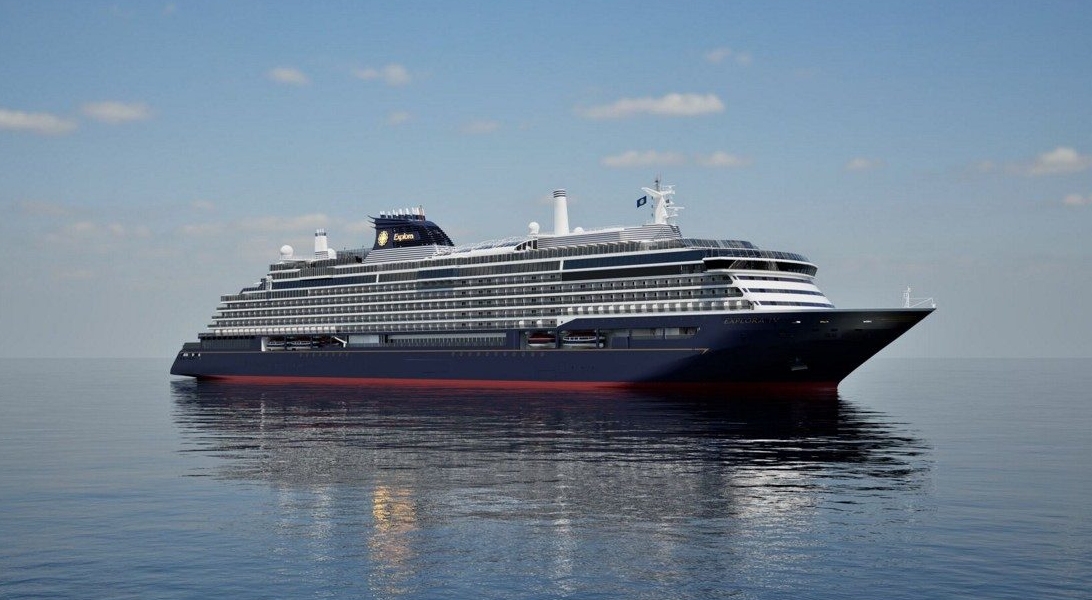
The images shown are for illustration purposes only and may not be an exact representation of what you find on the ship.
The images shown are for illustration purposes only and may not be an exact representation of what you find on the ship.
The images shown are for illustration purposes only and may not be an exact representation of what you find on the ship.
The images shown are for illustration purposes only and may not be an exact representation of what you find on the ship.
The images shown are for illustration purposes only and may not be an exact representation of what you find on the ship.

Our Fusion packages are all ABTA & ATOL protected ensuring that your booking is safe with us
| 18 nights aboard the EXPLORA IV | |||
| A complimentary welcome bottle of champagne upon arrival | |||
| A complimentary bottle of wine and a bottle of spirit of the guests’ choice upon arrival | |||
| Complimentary dining in all restaurants, excluding Anthology | |||
| In-suite dining | |||
| Complimentary unlimited beverages, fine wines and premium spirits, speciality coffees, teas and soft drinks available anytime, including in-suite mini-bar* | |||
| Access to the spa thermal area | |||
| Wellbeing and fitness programmes on board and at the destinations | |||
| All on-board gratuities | |||
| Complimentary Wi-Fi throughout the ship | |||
| Shuttle services from port to city centre (where required/available) | |||
| Port Taxes and Fees | |||
 | ABTA and ATOL Protection* | ||
Date 18th May 2028 |
Nts 18 |
Balcony £8,750pp |
Suite £11,795pp |
Date 18th May 2028 |
Nts 18 |
Balcony £8,750pp |
Suite £11,795pp |
| Balcony staterooms from | £8,750pp | ||
| OT1 | Ocean Terrace Suite OT1 | £8,750pp | |
| OT2 | Ocean Terrace Suite OT2 | £9,205pp | |
| OT3 | Ocean Terrace Suite OT3 | £9,590pp | |
| OT4 | Ocean Terrace Suite OT4 | £10,115pp | |
| GT | Ocean Grand Terrace Suite | £10,675pp | |
| Suite staterooms from | £11,795pp | ||
| PH | Penthouse | £11,795pp | |
| DP | Deluxe Penthouse | £12,250pp | |
| PP | Premier Penthouse | £12,705pp | |
| GP | Grand Penthouse | £14,875pp | |
| CO1 | Cove Residence CO1 | £16,625pp | |
| COJ | Cove Residence COJ | £17,535pp | |
| RR | Retreat Residence | £19,705pp | |
| SR | Serenity Residence | £35,105pp | |
| CR | Cocoon Residence | £39,445pp | |
| OR1 | Owner's Residence OR1 | £87,710pp | |
| OR2 | Owner's Residence OR2 | £96,530pp | |
Fusion Holidays when selling travel arrangements is a trading name of Co-op Travel Services Limited, registration 08903986. Fusion Cruises is an Accredited Body Member of Co-op Travel Services Limited ATOL 12904.
Book with Confidence. We are a Member of ABTA which means you have the benefit of ABTA’s assistance and Code of Conduct.
Some of the flights and flight-inclusive holidays on this website are financially protected by the ATOL scheme but ATOL protection does not apply to all holiday and travel services offered on this website. This website will provide you with information on the protection that applies in the case of each holiday and travel service offered before you make your booking. If you do not receive an ATOL Certificate then the booking will not be ATOL protected. If you do receive an ATOL Certificate but all parts of your trip are not listed on it, those parts will not be ATOL protected. Please see our booking conditions for information, or for more information about financial protection and the ATOL Certificate go to: www.caa.co.uk