This site uses cookies as defined in our Cookie Policy, by continuing to use this site you agree to their use.
Continue

| Arrive | Depart | ||||||
| 30th30 | JunJun | 202828 | Reykjavík, Iceland, embark on the EXPLORA IV | 21:00 | |||
Sprawling Reykjavík, the nation's nerve center and government seat, is home to half the island's population. On a bay overlooked by proud Mt. Esja (pronounced eh-shyuh), with its ever-changing hues, Reykjavík presents a colorful sight, its concrete houses painted in light colors and topped by vibrant red, blue, and green roofs. In contrast to the almost treeless countryside, Reykjavík has many tall, native birches, rowans, and willows, as well as imported aspen, pines, and spruces.Reykjavík's name comes from the Icelandic words for smoke, reykur, and bay, vík. In AD 874, Norseman Ingólfur Arnarson saw Iceland rising out of the misty sea and came ashore at a bay eerily shrouded with plumes of steam from nearby hot springs. Today most of the houses in Reykjavík are heated by near-boiling water from the hot springs. Natural heating avoids air pollution; there's no smoke around. You may notice, however, that the hot water brings a slight sulfur smell to the bathroom.Prices are easily on a par with other major European cities. A practical option is to purchase a Reykjavík City Card at the Tourist Information Center or at the Reykjavík Youth Hostel. This card permits unlimited bus usage and admission to any of the city's seven pools, the Family Park and Zoo, and city museums. The cards are valid for one (ISK 3,300), two (ISK 4,400), or three days (ISK 4,900), and they pay for themselves after three or four uses a day. Even lacking the City Card, paying admission (ISK 500, or ISK 250 for seniors and people with disabilities) to one of the city art museums (Hafnarhús, Kjarvalsstaðir, or Ásmundarsafn) gets you free same-day admission to the other two. Feel the magnetic lure of adventure at the world’s northernmost capital. Mystical landscapes promise dramatic snow-capped volcanoes, ice fields and mountains for thrilling quests; explore by helicopter, ride Icelandic horses, zip through lava tunnels on super trucks and rocket across glaciers on snow scooters. Then slow down to visit a geothermal-fired bakery and greenhouse, soak in wellbeing springs, the blue lagoon or refresh at the nearby face mask bar. And as the nightlife beckons under the sun that barely sets, drink black death schnapps as a poetic reminder of Reykjavik’s exhilarating activities. | |||||||
| 1st01 | JulJul | 202828 | Reykjavík, Iceland | 17:00 | |||
Sprawling Reykjavík, the nation's nerve center and government seat, is home to half the island's population. On a bay overlooked by proud Mt. Esja (pronounced eh-shyuh), with its ever-changing hues, Reykjavík presents a colorful sight, its concrete houses painted in light colors and topped by vibrant red, blue, and green roofs. In contrast to the almost treeless countryside, Reykjavík has many tall, native birches, rowans, and willows, as well as imported aspen, pines, and spruces.Reykjavík's name comes from the Icelandic words for smoke, reykur, and bay, vík. In AD 874, Norseman Ingólfur Arnarson saw Iceland rising out of the misty sea and came ashore at a bay eerily shrouded with plumes of steam from nearby hot springs. Today most of the houses in Reykjavík are heated by near-boiling water from the hot springs. Natural heating avoids air pollution; there's no smoke around. You may notice, however, that the hot water brings a slight sulfur smell to the bathroom.Prices are easily on a par with other major European cities. A practical option is to purchase a Reykjavík City Card at the Tourist Information Center or at the Reykjavík Youth Hostel. This card permits unlimited bus usage and admission to any of the city's seven pools, the Family Park and Zoo, and city museums. The cards are valid for one (ISK 3,300), two (ISK 4,400), or three days (ISK 4,900), and they pay for themselves after three or four uses a day. Even lacking the City Card, paying admission (ISK 500, or ISK 250 for seniors and people with disabilities) to one of the city art museums (Hafnarhús, Kjarvalsstaðir, or Ásmundarsafn) gets you free same-day admission to the other two. Feel the magnetic lure of adventure at the world’s northernmost capital. Mystical landscapes promise dramatic snow-capped volcanoes, ice fields and mountains for thrilling quests; explore by helicopter, ride Icelandic horses, zip through lava tunnels on super trucks and rocket across glaciers on snow scooters. Then slow down to visit a geothermal-fired bakery and greenhouse, soak in wellbeing springs, the blue lagoon or refresh at the nearby face mask bar. And as the nightlife beckons under the sun that barely sets, drink black death schnapps as a poetic reminder of Reykjavik’s exhilarating activities. | |||||||
| 2nd02 | JulJul | 202828 | At Sea | ||||
| 3rd03 | JulJul | 202828 | Stornoway, Isle of Lewis, Scotland | 09:00 | 18:00 | ||
Tour description Stornoway, Scotland The Isle of Lewis and Harris is the northernmost and largest of the Outer Hebrides-the Western Isles in common parlance. The island's only major town, Stornoway, is on a nearly landlocked harbor on the east coast of Lewis. It's the port capital for the Outer Hebrides and the island's cultural center, such that it is. Stornoway has an increasing number of good restaurants. Lewis has some fine historic attractions, including the Calanais Standing Stones-a truly magical place. The Uists are known for their rare, plentiful wildlife. Stornoway. Besides being the island's main entry point for ferries, Stornoway is also Lewis's main arts center. You'll find some good restaurants in town if you want to have lunch off the ship. The town can be explored by bicycle if you are so inclined. Local rental shops can give you advice on where to ride, including a route to Tolsta that takes in five stunning beaches before reaching the edge of moorland. An Lanntair Arts Centre. The fabulous An Lanntair Arts Centre has exhibitions of contemporary and traditional art, as well as a cinema, a gift shop, and a restaurant serving international and Scottish fare. There are frequent traditional musical and theatrical events in the impressive auditorium. Kenneth St.. Black House. In the small community of Arnol, the Black House is a well-preserved example of an increasingly rare type of traditional Hebridean home. Once common throughout the islands-even into the 1950s-these dwellings were built without mortar and thatched on a timber framework without eaves. Other characteristic features include an open central peat hearth and the absence of a chimney-hence the soot and the designation black. On display inside are many of the house's original furnishings. To reach Arnol from Port of Ness, head south on the A857 and pick up the A858 at Barvas. Off A858, 21 mi southwest of Port of Ness. Admission charged. Calanais Standing Stones. These impressive stones are actually part of a cluster of several different archaeological sites in this area. Probably positioned in several stages between 3000 BC and 1500 BC, the grouping consists of an avenue of 19 monoliths extending northward from a circle of 13 stones, with other rows leading south, east, and west. Ruins of a cairn sit within the circle on the east side. Researchers believe they may have been used for astronomical observations, but you can create your own explanations. The visitor center has an exhibit on the stones, a gift shop, and a tearoom. On an unmarked road off A858. Admission charged. Dun Carloway. One of the best-preserved Iron Age brochs (circular stone towers) in Scotland, Dun Carloway dominates the scattered community of Carloway. The mysterious tower was probably built around 2,000 years ago as protection against seaborne raiders. The Dun Broch Centre explains more about the broch and its setting. Off A857. Gearrannan. Up a side road north from Carloway, Gearrannan is an old black-house village that has been brought back to life with a museum screening excellent short films on peat cutting and weaving. For a unique experience, groups can rent the restored houses. Leverburgh. At Leverburgh you can take the ferry to North Uist. Nearby Northton has several attractions; St. Clement's Church at Rodel is particularly worth a visit. MacGillivray Centre. Located in a round building overlooking the bay, the MacGillivray Centre gives insight into the life and work of William MacGillivray (1796-1852), a noted naturalist with strong links to Harris. MacGillivray authored the five-volume History of British Birds. This is a great location for a picnic (there are tables for just such a purpose). A walk to a ruined church starts at the parking lot. A859, Northton. Seallam! Visitor Centre and Co Leis Thu? Genealogical Research Centre. The center is where you can trace your Western Isles ancestry. Photographs and interpretive signs describe the history of Harris and its people. The owners organize guided walks and cultural evenings weekly between May and September. Off A859, Northton. Admission charged. St. Clement's Church. At the southernmost point of Harris is the community of Rodel, where you can find St. Clement's Church, a cruciform church standing on a hillock. This is the most impressive pre-Reformation church in the Outer Hebrides; it was built around 1500 and contains the magnificently sculptured tomb (1528) of the church's builder, Alasdair Crotach, MacLeod chief of Dunvegan Castle. Rodel is 3 mi south of Leverburgh and 21 mi south of Tarbert. A859, Rodel. Port of Ness. The stark, windswept community of Port of Ness, 30 mi north of Stornoway, cradles a small harbor squeezed in among the rocks. Butt of Lewis Lighthouse. At the northernmost point of Lewis stands the Butt of Lewis Lighthouse, designed by David and Thomas Stevenson (of the prominent engineering family whose best-known member was not an engineer at all, but the novelist Robert Louis Stevenson). The structure was first lighted in 1862. The adjacent cliffs provide a good vantage point for viewing seabirds, whales, and porpoises. The lighthouse is northwest of Port of Ness along the B8014. Shopping Harris tweed is available at many outlets on the islands, including some of the weavers' homes; keep an eye out for signs directing you to weavers' workshops. Harris Tweed Artisans Cooperative. The Harris Tweed Artisans Cooperative sells stylish and quirky hand-crafted tweed clothing, hats, accessories, all made by artists belonging to the cooperative. 40 Point St., Stornoway. Borgh Pottery. At Borgh Pottery, open from Monday to Saturday 9:30 to 6, you can buy attractive hand-thrown studio pottery made on the premises, including lamps, vases, mugs, and dishes. Fivepenny House, A857, Borve. Head to a far-off land in the Outer Hebrides, where unique culture awaits you at one of Britain’s best kept secrets. Spot seals and whales from breathtaking beaches and dramatic headlands that fringe miles of peat-covered moorland. Visit Lews Castle, the prehistoric Standing Stones at Callandish, learn the art of weaving or crofting and enjoy peat-smoked scallops or battered fish and chips. And as you admire your new hand-woven Harris tweed jacket, bid farewell to authentic Gaelic values, and the fabulously iconic long-haired cattle. | |||||||
| 4th04 | JulJul | 202828 | Oban, Scotland | 08:00 | 17:00 | ||
Oban, "little bay" in Gaelic, today has a resident population of 8,500 and is the unofficial capital of the West Highlands - the "Gateway to the Isles." The panoramic views of the mountains, lochs and islands which have captivated artists, authors, composers, and poets for centuries are as striking now as they were when Dunollie Castle, a ruined keep which has stood sentinel over the narrow entrance to the sheltered bay for around six hundred years, was the northern outpost of the Dalriadic Scots. It is no surprise to find Oban in the 21st-century remains a magnet for travellers from all over the world. The town's present day popularity owes much to the Victorians, and as early as 1812, when the Comet steamship linked Oban with Glasgow, the town played host to intrepid travellers touring Staffa - the inspiration for Mendelssohn's Hebridean Overture - and Iona - home of Scottish Christianity since St Columba stepped ashore in AD563. Indeed once Oban had the royal seal of approval from Queen Victoria, who called it "one of the finest spots we have seen," the town's destiny as an endearingly enchanting holiday destination was as firmly set as the lava columns of Fingal's Cave in Oban is justifiably known as the “gateway to the Isles.” The town's south pier is the embarkation point for car ferries to Mull, Coll, Tiree, Barra, South Uist, Colonsay, Lismore and Islay. From these islands you can travel further a field to Iona, Staffa and to many of the smaller less well known isles. | |||||||
| 5th05 | JulJul | 202828 | Belfast, Northern Ireland | 09:00 | 20:00 | ||
Before English and Scottish settlers arrived in the 1600s, Belfast was a tiny village called Béal Feirste ("sandbank ford") belonging to Ulster's ancient O'Neill clan. With the advent of the Plantation period (when settlers arrived in the 1600s), Sir Arthur Chichester, from Devon in southwestern England, received the city from the English Crown, and his son was made Earl of Donegall. Huguenots fleeing persecution from France settled near here, bringing their valuable linen-work skills. In the 18th century, Belfast underwent a phenomenal expansion—its population doubled every 10 years, despite an ever-present sectarian divide. Although the Anglican gentry despised the Presbyterian artisans—who, in turn, distrusted the native Catholics—Belfast's growth continued at a dizzying speed. The city was a great Victorian success story, an industrial boomtown whose prosperity was built on trade, especially linen and shipbuilding. Famously (or infamously), the Titanic was built here, giving Belfast, for a time, the nickname "Titanic Town." Having laid the foundation stone of the city's university in 1845, Queen Victoria returned to Belfast in 1849 (she is recalled in the names of buildings, streets, bars, monuments, and other places around the city), and in the same year, the university opened under the name Queen's College. Nearly 40 years later, in 1888, Victoria granted Belfast its city charter. Today its population is nearly 300,000, tourist numbers have increased, and this dramatically transformed city is enjoying an unparalleled renaissance.This is all a welcome change from the period when news about Belfast meant reports about "the Troubles." Since the 1994 ceasefire, Northern Ireland's capital city has benefited from major hotel investment, gentrified quaysides (or strands), a sophisticated new performing arts center, and major initiatives to boost tourism. Although the 1996 bombing of offices at Canary Wharf in London disrupted the 1994 peace agreement, the ceasefire was officially reestablished on July 20, 1997, and this embattled city began its quest for a newfound identity.Since 2008, the city has restored all its major public buildings such as museums, churches, theaters, City Hall, Ulster Hall—and even the glorious Crown Bar—spending millions of pounds on its built heritage. A gaol that at the height of the Troubles held some of the most notorious murderers involved in paramilitary violence is now a major visitor attraction.Belfast's city center is made up of three roughly contiguous areas that are easy to navigate on foot. From the south end to the north, it's about an hour's leisurely walk. | |||||||
| 6th06 | JulJul | 202828 | At Sea | ||||
| 7th07 | JulJul | 202828 | Southampton, England | 07:00 | 20:00 | ||
Lying near the head of Southampton Water, a peninsula between the estuaries of the Rivers Test and Itchen, Southampton is Britain’s largest cruise port. It has been one of England’s major ports since the Middle Ages, when it exported wool and hides from the hinterland and imported wine from Bordeaux. The city suffered heavy damage during World War Two and as a result the centre has been extensively rebuilt, but there are still some interesting medieval buildings including the Bargate, one of the finest city gatehouses in England. Sail into this vibrant quay with enough shops and entertainment to form its own village. Modern and lively, this coastal town bustles with waterfront restaurants, heritage charm, bars, cinemas and offers great access to other spots in the South of England. Sit back and drift through heavenly countryside to ancient Stonehenge, see if the Queen’s at home in Windsor, learn secrets from the Bombay Sapphire gin distillery or slip up to London for some rich British culture. Then enjoy a cup of tea as you reflect on formal traditions, perfect your cockney accent and recall England’s green and pleasant lands. | |||||||
| 8th08 | JulJul | 202828 | At Sea | ||||
| 9th09 | JulJul | 202828 | Greencastle, Ireland | 08:00 | 19:00 | ||
| The Eire Force is strong along the Wild Atlantic Way. Scout the filming sites of Star Wars movies on the rugged cape of Mailin Head. Taste the legends of Donegal County in gin and whiskey at Sliabh Liag Distillery. Take a swing at the two courses at Ballyliffin, which golfing superstar Rory McIIroy proclaims, “are must-play championship links”. Step back in time at Grianan of Aileach, a massive man-made stone ring fort and one of Gaelic Ireland’s royal sites. Go with the flow along the Lough Foyle to the bold Greencastle, built in 1305 by the Earl of Ulster. Or delver deeper into nearby Derry to see how its “Troubles” have eased into a vibrant and beautiful community. And never forget, “Go mbeidh an fórsa leat” or “May the force be with you”! | |||||||
| 10th10 | JulJul | 202828 | Killybegs, Ireland | 08:00 | 17:00 | ||
Killybegs The days start early in Killybegs, as this quiet fishing town rumbles to life, and ships with red and blue paint peeling from their hulls quietly depart, ready for a morning's hard work at sea. Located in a scenic part of County Donegal, Killybegs is Ireland's fishing capital, and the salty breeze and pretty streets serve as a revitalising medicine for visitors. The town is also your gateway to some of the country's most majestic coastal scenery, which is dotted with flashing white lighthouses, keeping watch over invigorating seascapes. Killybegs enjoys a privileged position on the coast of north west of Ireland, close to the spectacular Slieve League - a titanic mountain, which explodes upwards from frothing ocean. Walk as close as you dare to the coastline’s sheer drops, or admire the folding cliffs from the best vantage point, down on the water. | |||||||
| 11th11 | JulJul | 202828 | Portree, Isle of Skye, Scotland | 09:00 | 18:00 | ||
The Isle of Skye ranks near the top of most visitors' priority lists: the romance of Prince Charles Edward Stuart, known as Bonnie Prince Charlie, combined with the misty Cuillin Hills and their proximity to the mainland all contribute to its popularity. Today Skye remains mysterious and mountainous, an island of sunsets that linger brilliantly until late at night and of beautiful, soft mists. Much photographed are the really old crofts, one or two of which are still inhabited, with their thick stone walls and thatch roofs. Orientation on Skye is easy: follow the only roads around the loops on the northern part of the island and enjoy the road running the length of the Sleat Peninsula in southern Skye, taking the loop roads that exit to the north and south as you please. There are some stretches of single-lane road, but none poses a problem. Arrive at the sloping port of Portree, into the lands of the MacDonald clan. Wander through this wildlife haven where waterfalls tumble under shifting skies, wide-eyed deer stand alert, sheep lazily graze and sea eagles swoop. Explore the painted buildings of the charming fishing town, the Talisker distillery and relax in the comfort of a cosy local pub. Capture all the visual treats of this little piece of paradise, for a whole host of new memories. | |||||||
| 12th12 | JulJul | 202828 | Kirkwall, Orkney Islands, Scotland | 08:00 | 18:00 | ||
In bustling Kirkwall, the main town on Orkney, there's plenty to see in the narrow, winding streets extending from the harbor. The cathedral and some museums are highlights. Orkney’s capital and most southern isle is blessed with architectural wonders. Capture the true Viking spirit in the ‘Church on the Bay’; visit grand sandstone seafront buildings, visit St Magnus Cathedral and smaller churches, the enigmatic Standing Stones of Stenness and other ancient sites. Play Ba, eat cream teas, shop local boutiques and watch fishing fleets depart the bay. Previously claimed to be the most beautiful Scottish high street, soak up the cosmopolitan atmosphere and splendour of this royal Scottish Burgh. | |||||||
| 13th13 | JulJul | 202828 | Invergordon, Scotland | 08:00 | 18:00 | ||
The port of Invergordon is your gateway to the Great Glen, an area of Scotland that includes Loch Ness and the city of Inverness. Inverness, the capital of the Highlands, has the flavor of a Lowland town, its winds blowing in a sea-salt air from the Moray Firth. The Great Glen is also home to one of the world's most famous monster myths: in 1933, during a quiet news week, the editor of a local paper decided to run a story about a strange sighting of something splashing about in Loch Ness. But there's more to look for here besides Nessie, including inland lochs, craggy and steep-sided mountains, rugged promontories, deep inlets, brilliant purple and emerald moorland, and forests filled with astonishingly varied wildlife, including mountain hares, red deer, golden eagles, and ospreys. Bottlenose dolphins escort you into this land of legends, history and spectacular scenery. Explore auld castles, battlefields, steam railways, wildlife parks, nature reserves and forts in the spectacular Scottish Highlands. Play golf on championship courses, mountain bike or hike through hills, fish wild salmon and taste the world’s finest malt whisky at the Glenmorangie Distillery. And then there’s Loch Ness. No visit to Scotland would be complete without searching for a wee glimpse of the legendary hump-backed monster. End your day with rosy cheeks, lungs full of the purest air and a dram (or two) of scotch. | |||||||
| 14th14 | JulJul | 202828 | Edinburgh, Scotland | 08:00 | 20:00 | ||
Edinburgh is to London as poetry is to prose, as Charlotte Brontë once wrote. One of the world's stateliest cities and proudest capitals, it's built—like Rome—on seven hills, making it a striking backdrop for the ancient pageant of history. In a skyline of sheer drama, Edinburgh Castle watches over the capital city, frowning down on Princes Street’s glamour and glitz. But despite its rich past, the city’s famous festivals, excellent museums and galleries, as well as the modern Scottish Parliament, are reminders that Edinburgh has its feet firmly in the 21st century.Nearly everywhere in Edinburgh (the burgh is always pronounced burra in Scotland) there are spectacular buildings, whose Doric, Ionic, and Corinthian pillars add touches of neoclassical grandeur to the largely Presbyterian backdrop. Large gardens are a strong feature of central Edinburgh, where the city council is one of the most stridently conservationist in Europe. Arthur's Seat, a mountain of bright green and yellow furze, rears up behind the spires of the Old Town. This child-size mountain jutting 822 feet above its surroundings has steep slopes and little crags, like a miniature Highlands set down in the middle of the busy city. Appropriately, these theatrical elements match Edinburgh's character—after all, the city has been a stage that has seen its fair share of romance, violence, tragedy, and triumph.Modern Edinburgh has become a cultural capital, staging the Edinburgh International Festival and the Fringe Festival in every possible venue each August. The stunning Museum of Scotland complements the city’s wealth of galleries and artsy hangouts. Add Edinburgh’s growing reputation for food and nightlife and you have one of the world’s most beguiling cities.Today the city is the second most important financial center in the United Kingdom, and the fifth most important in Europe. The city regularly is ranked near the top in quality-of-life surveys. Accordingly, New Town apartments on fashionable streets sell for considerable sums. In some senses the city is showy and materialistic, but Edinburgh still supports learned societies, some of which have their roots in the Scottish Enlightenment. The Royal Society of Edinburgh, for example, established in 1783 "for the advancement of learning and useful knowledge," remains an important forum for interdisciplinary activities.Even as Edinburgh moves through the 21st century, its tall guardian castle remains the focal point of the city and its venerable history. Take time to explore the streets—peopled by the spirits of Mary, Queen of Scots; Sir Walter Scott; and Robert Louis Stevenson—and pay your respects to the world's best-loved terrier, Greyfriars Bobby. In the evenings you can enjoy candlelit restaurants or a folk ceilidh (pronounced kay-lee, a traditional Scottish dance with music), though you should remember that you haven't earned your porridge until you've climbed Arthur's Seat. Should you wander around a corner, say, on George Street, you might see not an endless cityscape, but blue sea and a patchwork of fields. This is the county of Fife, beyond the inlet of the North Sea called the Firth of Forth—a reminder, like the mountains to the northwest that can be glimpsed from Edinburgh's highest points, that the rest of Scotland lies within easy reach. | |||||||
| 15th15 | JulJul | 202828 | At Sea | ||||
| 16th16 | JulJul | 202828 | Southampton, England, disembark the EXPLORA IV | 07:00 | |||
Lying near the head of Southampton Water, a peninsula between the estuaries of the Rivers Test and Itchen, Southampton is Britain’s largest cruise port. It has been one of England’s major ports since the Middle Ages, when it exported wool and hides from the hinterland and imported wine from Bordeaux. The city suffered heavy damage during World War Two and as a result the centre has been extensively rebuilt, but there are still some interesting medieval buildings including the Bargate, one of the finest city gatehouses in England. Sail into this vibrant quay with enough shops and entertainment to form its own village. Modern and lively, this coastal town bustles with waterfront restaurants, heritage charm, bars, cinemas and offers great access to other spots in the South of England. Sit back and drift through heavenly countryside to ancient Stonehenge, see if the Queen’s at home in Windsor, learn secrets from the Bombay Sapphire gin distillery or slip up to London for some rich British culture. Then enjoy a cup of tea as you reflect on formal traditions, perfect your cockney accent and recall England’s green and pleasant lands. | |||||||
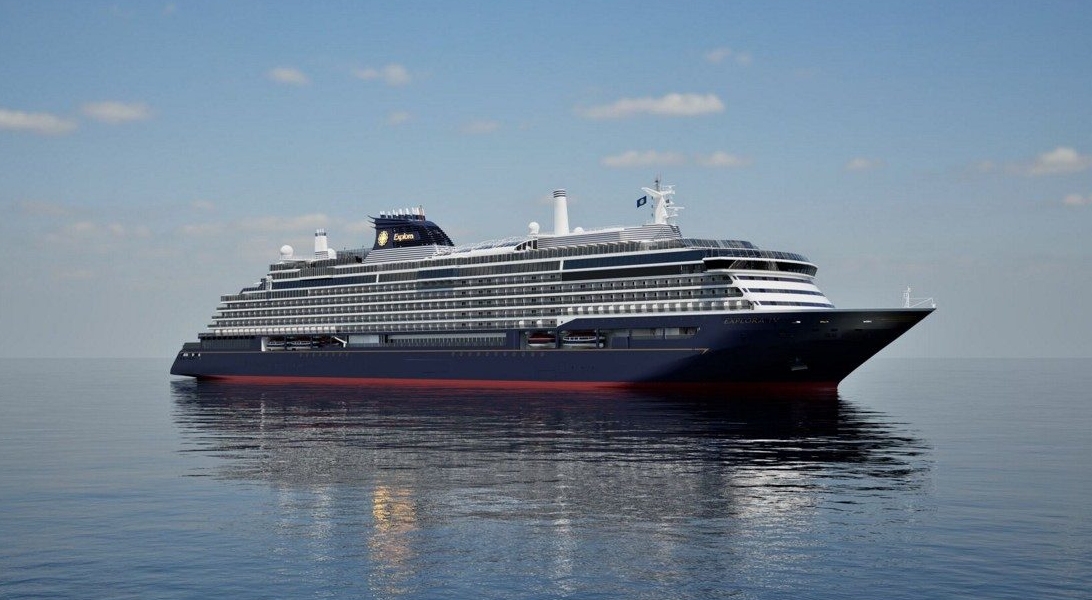
The images shown are for illustration purposes only and may not be an exact representation of what you find on the ship.
The images shown are for illustration purposes only and may not be an exact representation of what you find on the ship.
The images shown are for illustration purposes only and may not be an exact representation of what you find on the ship.
The images shown are for illustration purposes only and may not be an exact representation of what you find on the ship.
The images shown are for illustration purposes only and may not be an exact representation of what you find on the ship.

Our Fusion packages are all ABTA & ATOL protected ensuring that your booking is safe with us
| 16 nights aboard the EXPLORA IV | |||
| A complimentary welcome bottle of champagne upon arrival | |||
| A complimentary bottle of wine and a bottle of spirit of the guests’ choice upon arrival | |||
| Complimentary dining in all restaurants, excluding Anthology | |||
| In-suite dining | |||
| Complimentary unlimited beverages, fine wines and premium spirits, speciality coffees, teas and soft drinks available anytime, including in-suite mini-bar* | |||
| Access to the spa thermal area | |||
| Wellbeing and fitness programmes on board and at the destinations | |||
| All on-board gratuities | |||
| Complimentary Wi-Fi throughout the ship | |||
| Shuttle services from port to city centre (where required/available) | |||
| Port Taxes and Fees | |||
 | ABTA and ATOL Protection* | ||
Date 30th Jun 2028 |
Nts 16 |
Balcony £8,400pp |
Suite £11,375pp |
Date 30th Jun 2028 |
Nts 16 |
Balcony £8,400pp |
Suite £11,375pp |
| Balcony staterooms from | £8,400pp | ||
| OT1 | Ocean Terrace Suite OT1 | £8,400pp | |
| OT2 | Ocean Terrace Suite OT2 | £8,855pp | |
| OT3 | Ocean Terrace Suite OT3 | £9,205pp | |
| OT4 | Ocean Terrace Suite OT4 | £9,730pp | |
| GT | Ocean Grand Terrace Suite | £10,255pp | |
| Suite staterooms from | £11,375pp | ||
| PH | Penthouse | £11,375pp | |
| DP | Deluxe Penthouse | £11,795pp | |
| PP | Premier Penthouse | £12,180pp | |
| GP | Grand Penthouse | £14,315pp | |
| CO1 | Cove Residence CO1 | £15,995pp | |
| COJ | Cove Residence COJ | £16,835pp | |
| RR | Retreat Residence | £18,970pp | |
| SR | Serenity Residence | £33,705pp | |
| CR | Cocoon Residence | £37,940pp | |
| OR1 | Owner's Residence OR1 | £84,315pp | |
| OR2 | Owner's Residence OR2 | £92,715pp | |
Fusion Holidays when selling travel arrangements is a trading name of Co-op Travel Services Limited, registration 08903986. Fusion Cruises is an Accredited Body Member of Co-op Travel Services Limited ATOL 12904.
Book with Confidence. We are a Member of ABTA which means you have the benefit of ABTA’s assistance and Code of Conduct.
Some of the flights and flight-inclusive holidays on this website are financially protected by the ATOL scheme but ATOL protection does not apply to all holiday and travel services offered on this website. This website will provide you with information on the protection that applies in the case of each holiday and travel service offered before you make your booking. If you do not receive an ATOL Certificate then the booking will not be ATOL protected. If you do receive an ATOL Certificate but all parts of your trip are not listed on it, those parts will not be ATOL protected. Please see our booking conditions for information, or for more information about financial protection and the ATOL Certificate go to: www.caa.co.uk