Sprawling Reykjavík, the nation's nerve center and government seat, is home to half the island's population. On a bay overlooked by proud Mt. Esja (pronounced eh-shyuh), with its ever-changing hues, Reykjavík presents a colorful sight, its concrete houses painted in light colors and topped by vibrant red, blue, and green roofs. In contrast to the almost treeless countryside, Reykjavík has many tall, native birches, rowans, and willows, as well as imported aspen, pines, and spruces.Reykjavík's name comes from the Icelandic words for smoke, reykur, and bay, vík. In AD 874, Norseman Ingólfur Arnarson saw Iceland rising out of the misty sea and came ashore at a bay eerily shrouded with plumes of steam from nearby hot springs. Today most of the houses in Reykjavík are heated by near-boiling water from the hot springs. Natural heating avoids air pollution; there's no smoke around. You may notice, however, that the hot water brings a slight sulfur smell to the bathroom.Prices are easily on a par with other major European cities. A practical option is to purchase a Reykjavík City Card at the Tourist Information Center or at the Reykjavík Youth Hostel. This card permits unlimited bus usage and admission to any of the city's seven pools, the Family Park and Zoo, and city museums. The cards are valid for one (ISK 3,300), two (ISK 4,400), or three days (ISK 4,900), and they pay for themselves after three or four uses a day. Even lacking the City Card, paying admission (ISK 500, or ISK 250 for seniors and people with disabilities) to one of the city art museums (Hafnarhús, Kjarvalsstaðir, or Ásmundarsafn) gets you free same-day admission to the other two. Explore the world’s northernmost capital Your adventure begins in Reykjavík. A laid-back city of art, culture and history, delightful Reykjavík is well worth spending some time getting to know. Take a stroll along Laugavegur with its boutiques and outdoor shops, gaze in awe at the striking Hallgrímskirkja Church, and drop in on the fascinating Reykjavík Art Museum. If you have the time, we recommend booking a Pre-Programme with us and discovering some of Iceland’s natural highlights before your cruise begins. |
Scoresbysund is the ultimate fjord system; likely the longest, largest and deepest of any in the world. The massive fjord is tucked into the eastern coast of Greenland and on the icy western edges of the Greenland Sea. Scoresbysund’s scale deserves several days to explore, especially while plying the waters between castle-sized icebergs as they gently drift under the persuasion of the Arctic waters in the mighty fjord. Scattered in the remote bays and smaller fjords are places to discover old Inuit settlements, slowly growing over with Arctic willow and dwarf birch. The lower slopes of many mountains are draped in the herbs and grasses favoured by muskox, Arctic fox, lemmings, Ptarmigan, Barnacle Geese, and Snowy Owls. Tundra walks give impressive views of landscape, flora and fauna. Not to be neglected, the waters of Scoresbysund warrant a vigilant eye for sightings of whales, seals, narwhals, beluga whales and walrus. Explore the wild east We’ll spend the next 10 days exploring Greenland’s remote and pristine east coast. Extending for over 1,740 miles from north to south, this long stretch of coast is cold, isolated, and remote even by Greenlandic standards. The south-flowing East Greenland Current brings lots of sea ice directly from the Arctic Ocean, challenging human settlement but creating a heaven for ice-dependant wildlife, including the polar bear. Local weather and ice conditions will dictate our exact route, but our plan is to sail first to Scoresby Sund, the world’s largest fjord system. You’ll feel a deep sense of serenity in this wild and rugged region, with white and blue icebergs floating in mirror-like waters surrounded by looming mountains. If conditions permit, we’ll visit Ittoqqortoormiit – the most remote inhabited community in the Western Hemisphere. Should the sea ice be favourable, we’ll continue our journey north to the beautiful Northeast Greenland National Park – the world’s largest national park. Visiting this fragile Arctic wilderness is a rare privilege as only a few visitors are permitted here each year. Apart from old trapper huts, some science research stations, and a military outpost, there are very few traces of human life in this 375,000 square mile park. Be assured that this is one of the quietest places on Earth, and you’ll enjoy a feeling of great peace as we explore this beautiful wilderness. As this is an expedition cruise, the Captain and Expedition Team will guide us to the most favourable spots on a daily basis. Our goal will be to pack in as many shore landings, small boat cruises, nature walks, kayaking adventures and wildlife sightings as possible. |
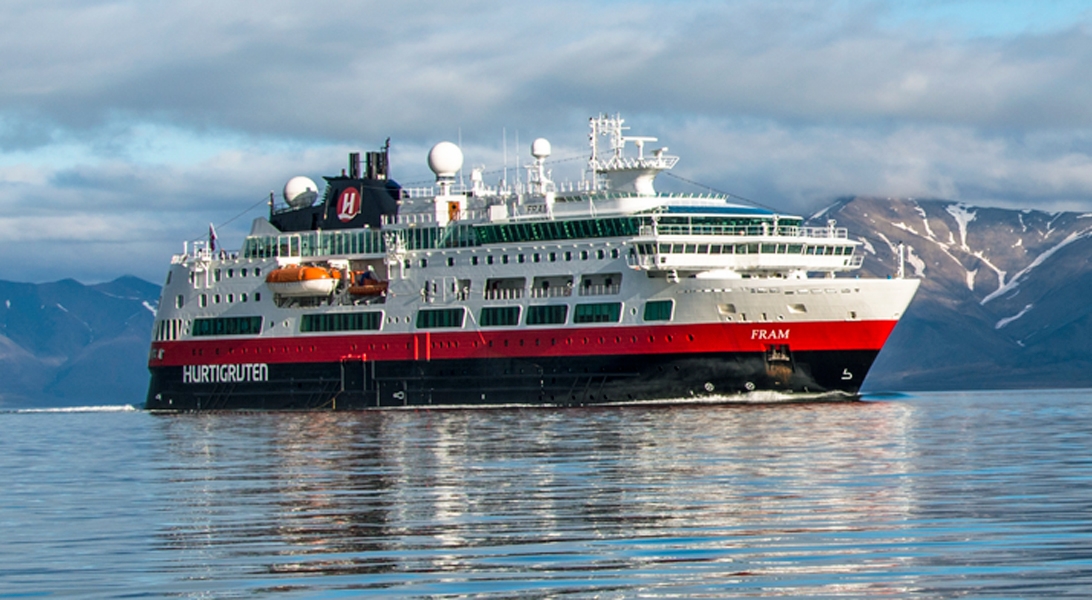
Sprawling Reykjavík, the nation's nerve center and government seat, is home to half the island's population. On a bay overlooked by proud Mt. Esja (pronounced eh-shyuh), with its ever-changing hues, Reykjavík presents a colorful sight, its concrete houses painted in light colors and topped by vibrant red, blue, and green roofs. In contrast to the almost treeless countryside, Reykjavík has many tall, native birches, rowans, and willows, as well as imported aspen, pines, and spruces.Reykjavík's name comes from the Icelandic words for smoke, reykur, and bay, vík. In AD 874, Norseman Ingólfur Arnarson saw Iceland rising out of the misty sea and came ashore at a bay eerily shrouded with plumes of steam from nearby hot springs. Today most of the houses in Reykjavík are heated by near-boiling water from the hot springs. Natural heating avoids air pollution; there's no smoke around. You may notice, however, that the hot water brings a slight sulfur smell to the bathroom.Prices are easily on a par with other major European cities. A practical option is to purchase a Reykjavík City Card at the Tourist Information Center or at the Reykjavík Youth Hostel. This card permits unlimited bus usage and admission to any of the city's seven pools, the Family Park and Zoo, and city museums. The cards are valid for one (ISK 3,300), two (ISK 4,400), or three days (ISK 4,900), and they pay for themselves after three or four uses a day. Even lacking the City Card, paying admission (ISK 500, or ISK 250 for seniors and people with disabilities) to one of the city art museums (Hafnarhús, Kjarvalsstaðir, or Ásmundarsafn) gets you free same-day admission to the other two. End of the expedition We say a fond farewell to MS Fram as we end our expedition cruise in the lovely city of Reykjavík. With its interesting museums, stylish galleries, restaurants and geothermal pools, there’s so much to enjoy in Iceland’s capital. And if you want to discover more of Iceland, you can join our optional Post-Programme before you head home. Or simply extend your stay to enjoy more of Reykjavík and its surrounding geothermal attractions. It’s a great place to end an epic journey! |