This site uses cookies as defined in our Cookie Policy, by continuing to use this site you agree to their use.
Continue

| Arrive | Depart | ||||||
| 11th11 | OctOct | 202828 | Reykjavík, Iceland, embark on the MS Fram | 20:00 | |||
Sprawling Reykjavík, the nation's nerve center and government seat, is home to half the island's population. On a bay overlooked by proud Mt. Esja (pronounced eh-shyuh), with its ever-changing hues, Reykjavík presents a colorful sight, its concrete houses painted in light colors and topped by vibrant red, blue, and green roofs. In contrast to the almost treeless countryside, Reykjavík has many tall, native birches, rowans, and willows, as well as imported aspen, pines, and spruces.Reykjavík's name comes from the Icelandic words for smoke, reykur, and bay, vík. In AD 874, Norseman Ingólfur Arnarson saw Iceland rising out of the misty sea and came ashore at a bay eerily shrouded with plumes of steam from nearby hot springs. Today most of the houses in Reykjavík are heated by near-boiling water from the hot springs. Natural heating avoids air pollution; there's no smoke around. You may notice, however, that the hot water brings a slight sulfur smell to the bathroom.Prices are easily on a par with other major European cities. A practical option is to purchase a Reykjavík City Card at the Tourist Information Center or at the Reykjavík Youth Hostel. This card permits unlimited bus usage and admission to any of the city's seven pools, the Family Park and Zoo, and city museums. The cards are valid for one (ISK 3,300), two (ISK 4,400), or three days (ISK 4,900), and they pay for themselves after three or four uses a day. Even lacking the City Card, paying admission (ISK 500, or ISK 250 for seniors and people with disabilities) to one of the city art museums (Hafnarhús, Kjarvalsstaðir, or Ásmundarsafn) gets you free same-day admission to the other two. Start in the land of Ice and Fire Your expedition starts in the cool capital of Reykjavík. There’s plenty to see and do here, with art, history, and an exciting food scene to enjoy. Stroll along the city’s main street Laugavegur with its boutiques and galleries, admire the striking Hallgrímskirkja church, and peruse Reykjavík Art Museum. You can even seek out a heittur pottur, or geothermal pool – literally a 'hot pot' – an important part of Icelandic culture. If you have the time, we recommend booking a pre-voyage programme with us and discovering some of Iceland’s natural highlights before your cruise begins. | |||||||
| 12th12 | OctOct | 202828 | At Sea | ||||
| 13th13 | OctOct | 202828 | At Sea | ||||
| 14th14 | OctOct | 202828 | Stornoway, Isle of Lewis, Scotland | 08:00 | 19:00 | ||
Tour description Stornoway, Scotland The Isle of Lewis and Harris is the northernmost and largest of the Outer Hebrides-the Western Isles in common parlance. The island's only major town, Stornoway, is on a nearly landlocked harbor on the east coast of Lewis. It's the port capital for the Outer Hebrides and the island's cultural center, such that it is. Stornoway has an increasing number of good restaurants. Lewis has some fine historic attractions, including the Calanais Standing Stones-a truly magical place. The Uists are known for their rare, plentiful wildlife. Stornoway. Besides being the island's main entry point for ferries, Stornoway is also Lewis's main arts center. You'll find some good restaurants in town if you want to have lunch off the ship. The town can be explored by bicycle if you are so inclined. Local rental shops can give you advice on where to ride, including a route to Tolsta that takes in five stunning beaches before reaching the edge of moorland. An Lanntair Arts Centre. The fabulous An Lanntair Arts Centre has exhibitions of contemporary and traditional art, as well as a cinema, a gift shop, and a restaurant serving international and Scottish fare. There are frequent traditional musical and theatrical events in the impressive auditorium. Kenneth St.. Black House. In the small community of Arnol, the Black House is a well-preserved example of an increasingly rare type of traditional Hebridean home. Once common throughout the islands-even into the 1950s-these dwellings were built without mortar and thatched on a timber framework without eaves. Other characteristic features include an open central peat hearth and the absence of a chimney-hence the soot and the designation black. On display inside are many of the house's original furnishings. To reach Arnol from Port of Ness, head south on the A857 and pick up the A858 at Barvas. Off A858, 21 mi southwest of Port of Ness. Admission charged. Calanais Standing Stones. These impressive stones are actually part of a cluster of several different archaeological sites in this area. Probably positioned in several stages between 3000 BC and 1500 BC, the grouping consists of an avenue of 19 monoliths extending northward from a circle of 13 stones, with other rows leading south, east, and west. Ruins of a cairn sit within the circle on the east side. Researchers believe they may have been used for astronomical observations, but you can create your own explanations. The visitor center has an exhibit on the stones, a gift shop, and a tearoom. On an unmarked road off A858. Admission charged. Dun Carloway. One of the best-preserved Iron Age brochs (circular stone towers) in Scotland, Dun Carloway dominates the scattered community of Carloway. The mysterious tower was probably built around 2,000 years ago as protection against seaborne raiders. The Dun Broch Centre explains more about the broch and its setting. Off A857. Gearrannan. Up a side road north from Carloway, Gearrannan is an old black-house village that has been brought back to life with a museum screening excellent short films on peat cutting and weaving. For a unique experience, groups can rent the restored houses. Leverburgh. At Leverburgh you can take the ferry to North Uist. Nearby Northton has several attractions; St. Clement's Church at Rodel is particularly worth a visit. MacGillivray Centre. Located in a round building overlooking the bay, the MacGillivray Centre gives insight into the life and work of William MacGillivray (1796-1852), a noted naturalist with strong links to Harris. MacGillivray authored the five-volume History of British Birds. This is a great location for a picnic (there are tables for just such a purpose). A walk to a ruined church starts at the parking lot. A859, Northton. Seallam! Visitor Centre and Co Leis Thu? Genealogical Research Centre. The center is where you can trace your Western Isles ancestry. Photographs and interpretive signs describe the history of Harris and its people. The owners organize guided walks and cultural evenings weekly between May and September. Off A859, Northton. Admission charged. St. Clement's Church. At the southernmost point of Harris is the community of Rodel, where you can find St. Clement's Church, a cruciform church standing on a hillock. This is the most impressive pre-Reformation church in the Outer Hebrides; it was built around 1500 and contains the magnificently sculptured tomb (1528) of the church's builder, Alasdair Crotach, MacLeod chief of Dunvegan Castle. Rodel is 3 mi south of Leverburgh and 21 mi south of Tarbert. A859, Rodel. Port of Ness. The stark, windswept community of Port of Ness, 30 mi north of Stornoway, cradles a small harbor squeezed in among the rocks. Butt of Lewis Lighthouse. At the northernmost point of Lewis stands the Butt of Lewis Lighthouse, designed by David and Thomas Stevenson (of the prominent engineering family whose best-known member was not an engineer at all, but the novelist Robert Louis Stevenson). The structure was first lighted in 1862. The adjacent cliffs provide a good vantage point for viewing seabirds, whales, and porpoises. The lighthouse is northwest of Port of Ness along the B8014. Shopping Harris tweed is available at many outlets on the islands, including some of the weavers' homes; keep an eye out for signs directing you to weavers' workshops. Harris Tweed Artisans Cooperative. The Harris Tweed Artisans Cooperative sells stylish and quirky hand-crafted tweed clothing, hats, accessories, all made by artists belonging to the cooperative. 40 Point St., Stornoway. Borgh Pottery. At Borgh Pottery, open from Monday to Saturday 9:30 to 6, you can buy attractive hand-thrown studio pottery made on the premises, including lamps, vases, mugs, and dishes. Fivepenny House, A857, Borve. Local life on Lewis Welcome to Stornoway, gateway to Scotland’s wild Outer Hebrides. Once a Viking settlement, today the town has a beautiful waterfront with museums, galleries, cafés, and shops. Head for Lewis Castle, and venture further to visit folk museums, ancient sites, and workshops where Scotland’s most unique and precious fabric – Harris Tweed – is woven. You may also choose to take a walk around the Hebrides’ least hilly island, spotting red deer, eagles, otters, gannets, and butterflies as you go. | |||||||
| 15th15 | OctOct | 202828 | Tobermory, Isle of Mull, Scotland | 08:00 | 17:00 | ||
You'll always receive a welcome to remember, as the colourful cafes, houses and shops that line Tobermory's picturesque harbour salute your arrival. Located on the craggy Scottish Inner Hebrides, Tobermory serves as the capital of the Isle of Mull. There's a high chance you'll recognise the town’s colourfully-daubed buildings, as their charming exteriors have featured in countless TV shows - most notably in the children’s favourite, Balamory. There's always a new story to discover here – not least the legend that suggests there's a sunken Spanish galleon, brimming with lost gold, sitting just below the waves that roll around the harbour. Learn a little more of the area’s history at the Mull Museum, or head out to enjoy some of the fabulous wildlife watching opportunities on offer on a boat tour. You can spot majestic birds like white tail and golden eagles circling in the skies, or turn your attention to the waves, where friendly dolphins and Minke whales are regular visitors. Treat yourself to a sample of one of the island's finest exports before leaving, as you drop in at the Tobermory Distillery for some whiskey tasting. Established in 1798, it’s one of Scotland's oldest distilleries. Whisky, walks and white-tailed eagles Today we arrive at the picturesque fishing port of Tobermory, located on the Isle of Mull. Your guide will bring the port to life, retelling stories of its past and present as you take in the brightly coloured Georgian houses that line the waterfront. As you stroll the harbour, take the opportunity to try a dram of whisky, or venture along the wooded coastal path for views across the Ardnamurchan Peninsula, the most westerly point on the British mainland. You may spot white-tailed eagles soaring above you as you take a walk with the Expedition Team along the coast. You’ll also have the chance to visit one of the historic castles that guarded the region when the Lord of the Isles ruled here in the 12th century. | |||||||
| 16th16 | OctOct | 202828 | Belfast, Northern Ireland | 08:00 | 18:00 | ||
Before English and Scottish settlers arrived in the 1600s, Belfast was a tiny village called Béal Feirste ("sandbank ford") belonging to Ulster's ancient O'Neill clan. With the advent of the Plantation period (when settlers arrived in the 1600s), Sir Arthur Chichester, from Devon in southwestern England, received the city from the English Crown, and his son was made Earl of Donegall. Huguenots fleeing persecution from France settled near here, bringing their valuable linen-work skills. In the 18th century, Belfast underwent a phenomenal expansion—its population doubled every 10 years, despite an ever-present sectarian divide. Although the Anglican gentry despised the Presbyterian artisans—who, in turn, distrusted the native Catholics—Belfast's growth continued at a dizzying speed. The city was a great Victorian success story, an industrial boomtown whose prosperity was built on trade, especially linen and shipbuilding. Famously (or infamously), the Titanic was built here, giving Belfast, for a time, the nickname "Titanic Town." Having laid the foundation stone of the city's university in 1845, Queen Victoria returned to Belfast in 1849 (she is recalled in the names of buildings, streets, bars, monuments, and other places around the city), and in the same year, the university opened under the name Queen's College. Nearly 40 years later, in 1888, Victoria granted Belfast its city charter. Today its population is nearly 300,000, tourist numbers have increased, and this dramatically transformed city is enjoying an unparalleled renaissance.This is all a welcome change from the period when news about Belfast meant reports about "the Troubles." Since the 1994 ceasefire, Northern Ireland's capital city has benefited from major hotel investment, gentrified quaysides (or strands), a sophisticated new performing arts center, and major initiatives to boost tourism. Although the 1996 bombing of offices at Canary Wharf in London disrupted the 1994 peace agreement, the ceasefire was officially reestablished on July 20, 1997, and this embattled city began its quest for a newfound identity.Since 2008, the city has restored all its major public buildings such as museums, churches, theaters, City Hall, Ulster Hall—and even the glorious Crown Bar—spending millions of pounds on its built heritage. A gaol that at the height of the Troubles held some of the most notorious murderers involved in paramilitary violence is now a major visitor attraction.Belfast's city center is made up of three roughly contiguous areas that are easy to navigate on foot. From the south end to the north, it's about an hour's leisurely walk. Gateway to the Giant’s Causeway Welcome to Belfast, the capital of Northern Ireland. Once a powerhouse of shipbuilding and industry, the city is perhaps best known as the birthplace of the famous ocean liner, the Titanic. Today, the Titanic Museum is one of the city’s top attractions – but do take some time to stroll around the revitalised waterfront, markets, and neighbourhoods, appreciating the Victorian architecture and lively pub scene. Beyond the city, dramatic coastlines, green hills and historic sites – including the Giant’s Causeway – offer a glimpse into the landscapes that have shaped Ireland’s story for centuries. | |||||||
| 17th17 | OctOct | 202828 | Douglas, Isle of Man | 08:00 | 17:00 | ||
The Isle of Man, situated in the Irish Sea off the west coast of England, is a mountainous, cliff-fringed island and one of Britain’s most beautiful spots. Measuring just 30 miles by 13 miles, the Isle of Man remains semi-autonomous. With its own postage stamps, laws, currency, and the Court of Tynwald (the world’s oldest democratic parliament), the Isle of Man is rich with history and lore.Inhabited from Neolithic times, the island became a refuge for Irish missionaries after the 5th Century. Norsemen took the island during the 9th Century and sold it to Scotland in 1266. However, since the 14th Century, it has been held by England. Manx, the indigenous Celtic language, is still spoken by a small minority. The Isle of Man has no income tax, which has encouraged many Britains to regard the island as a refuge. Otherwise, it is populated by Gaelic farmers, fishermen, and the famous tailless manx cats. The varied landscape features austere moorlands and wooded glens, interspersed by fine castles, narrow-gauge railways, and scores of standing stones with Celtic crosses. The hilly terrain rises to a height of 2,036 feet at Mount Snaefell, which dominates the center of the island. Manx heritage on an isolated island Head to the Observation Deck for the scenic approach to Douglas, capital of the Isle of Man. Today, we’ll immerse ourselves in the island’s Celtic and Viking heritage, and visit the eerie Peel Castle, originally a Viking stronghold that’s now said to be haunted. Elsewhere, we’ll visit the Manx Museum – which details the island’s 10,000 years of history – gaze up at the murals of St Thomas’s Church and learn how Douglas evolved into a Victorian tourist resort. | |||||||
| 18th18 | OctOct | 202828 | Fishguard, Wales | 08:00 | 19:00 | ||
Coastal trails and cathedrals in Wales Located part way between the Preseli Hills and the Pembrokeshire coast in Wales is the charming coastal town of Fishguard. Today, you can take a stroll around the original hamlet and pretty boat-filled harbour in Lower Fishguard before taking in the spectacular sea views from the ‘Main Town’ on the clifftop. From there, you may choose to walk further, skimming the coastline along the Pencaer Peninsula, known as Strumble Head, in search of wildlife. The ruins of Fishguard Fort at Castle Point are also a must-visit, as is St David’s Cathedral, Britain’s most ancient cathedral settlement that dates back 14 centuries. | |||||||
| 19th19 | OctOct | 202828 | Saint Mary's, Isles of Scilly, England | 08:00 | 19:00 | ||
St Mary’s is the Isle of Scilly’s largest island with a population of 1800 residents and an area of 6.58 square Kilometres; this is the gateway to the rest of the magnificent islands. Hugh town -a beautiful Old town with its own beach, nature reserve and church is the main attractions of St Mary’s, with tiny streets brimming with shops to pick up the perfect souvenir. St Mary’s is a hidden gem, with long stretches of white sandy beaches and a breath-taking untouched landscape. The coastline holds many archaeological sites along with miles of splendid walks along the coastal and country paths. A paradisical archipelago Just 30 miles off the tip of Cornwall, England, are the enchanting Isles of Scilly. This photogenic archipelago is home to small islands where pristine beaches are lapped by dazzling blue waters. We’ll anchor the ship and head ashore by local boats, giving you the chance to explore more fully. If conditions allow, we'll split our time here. Perhaps we'll visit Tresco's white sand beaches and the sub-tropical blooms of its 19th century Abbey Gardens, head to tranquil St Agnes on the wild Atlantic edge, or wander the charming streets of Hugh Town on St Mary's. | |||||||
| 20th20 | OctOct | 202828 | At Sea | ||||
| 21st21 | OctOct | 202828 | At Sea | ||||
| 22nd22 | OctOct | 202828 | Leixões, Portugal | 07:00 | 14:00 | ||
Ever since the Romans constructed a fort here and began using it as a trading post, Oporto has been a prosperous commercial centre. In the 15th and 16th centuries the city benefited from the wealth generated by Portugal’s maritime discoveries, and later, the establishment of a lucrative wine trade with Britain compensated for the loss of the spice trade. Today, Portugal’s second-largest city is a thriving, cosmopolitan place and is famous for its production of the fortified, sweet 'port' wine. Its historic centre is a UNESCO World Heritage Site and the city was also awarded the status of European Capital of Culture in 2001. A large sandbar prevents ships from sailing into Oporto itself, so for over a century they have used nearby Leixões instead, a man-made seaport constructed nine miles from the city. Leixões is one of Portugal's major sea ports and is also home to one of the country's oldest football clubs, winners of the Taça de Portugal cup in 1961. The city of white and blue wonders The lighthouse of Leça, the Boa Nova Chapel and the golden sands of Praia Azul are just some of the sights you can take in as we dock in Leixões, Portugal. From here, it’s a short drive to Porto, so hop on the shuttle bus to explore the city’s UNESCO-listed historic centre. Take your time exploring the hilly city on foot, pausing at pastel houses, colourful tiled façades and street art murals, before seeking out ornate churches and panoramic views across the Douro River. Sample wine at the port cellars of Vila Nova de Gaia and snack on local petiscos, meaning small plates, for lunch. In the afternoon, we’ll continue sailing south. | |||||||
| 23rd23 | OctOct | 202828 | Lisbon, Portugal, disembark the MS Fram | 06:00 | |||
Set on seven hills on the banks of the River Tagus, Lisbon has been the capital of Portugal since the 13th century. It is a city famous for its majestic architecture, old wooden trams, Moorish features and more than twenty centuries of history. Following disastrous earthquakes in the 18th century, Lisbon was rebuilt by the Marques de Pombal who created an elegant city with wide boulevards and a great riverfront and square, Praça do Comércio. Today there are distinct modern and ancient sections, combining great shopping with culture and sightseeing in the Old Town, built on the city's terraced hillsides. The distance between the ship and your tour vehicle may vary. This distance is not included in the excursion grades. The trip concludes in Portugal’s colourful capital Lisbon marks the end of your expedition. As you bid farewell to MS Fram, the Expedition Team and your fellow travellers, we hope you leave with lasting memories of your voyage. Be sure to leave time to explore Lisbon itself – the buzzy Portuguese capital is rich in history and culture. Take a stroll along its hilly cobbled streets, hop on a canary-yellow tram to take in a panoramic viewpoint and tuck into flaky pastel de nata (custard tarts) freshly made at the city’s decades-old bakeries. Embrace the opportunity to explore the districts of Baixa, Bairro Alto and Chiado, where fado music floats out of the open doors of bars and cafes, and pause for a drink at one of the city’s many lively squares. Just outside of the city you can visit the impressive UNESCO World Heritage sites of Belém Tower and Jerónimos Monastery. | |||||||
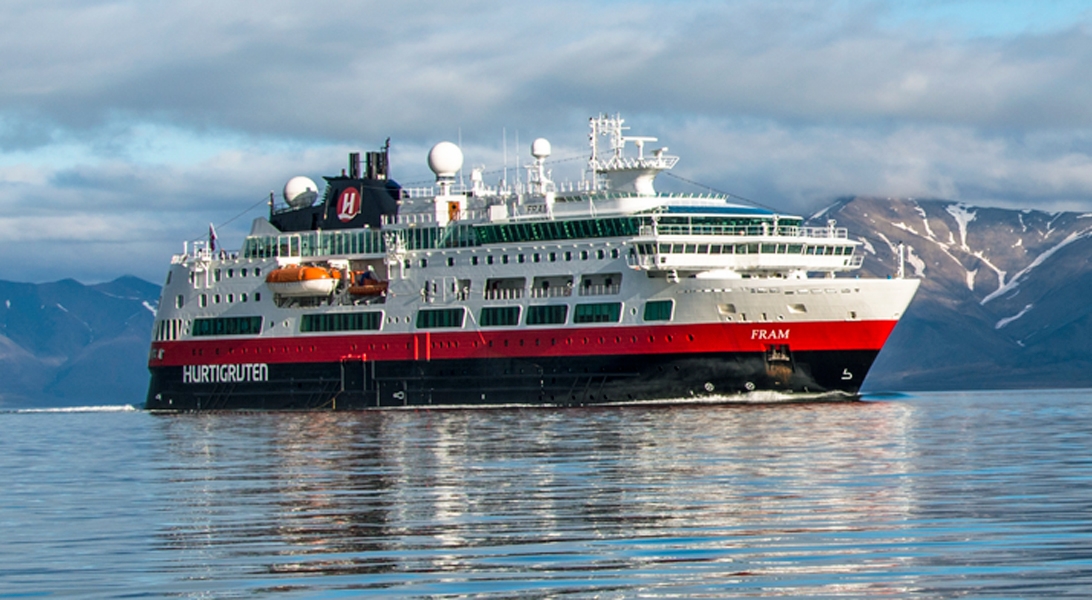
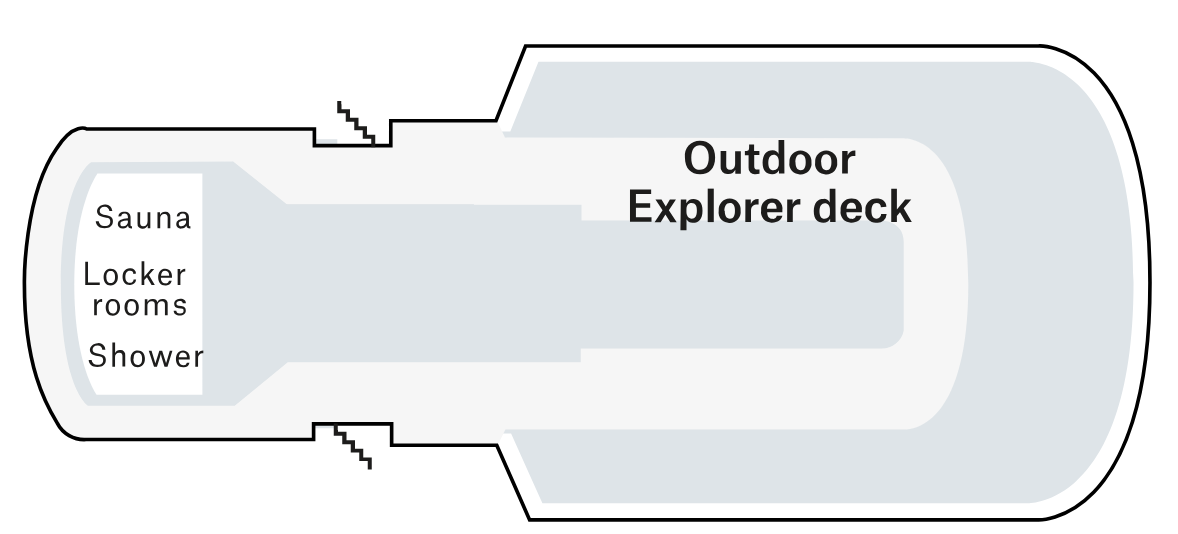

The images shown are for illustration purposes only and may not be an exact representation of what you find on the ship.
The images shown are for illustration purposes only and may not be an exact representation of what you find on the ship.
The images shown are for illustration purposes only and may not be an exact representation of what you find on the ship.
The images shown are for illustration purposes only and may not be an exact representation of what you find on the ship.
The images shown are for illustration purposes only and may not be an exact representation of what you find on the ship.

Our Fusion packages are all ABTA & ATOL protected ensuring that your booking is safe with us
| 12 nights aboard the MS Fram | |||
| Full-board dining included | |||
| Wine, beer & soft drinks included with lunch & dinner | |||
| Complimentary tea and coffee | |||
| Range of included excursions | |||
| No gratuities | |||
| Complimentary Wi-Fi on board | |||
| Engaging onboard activities and lectures | |||
| Port Taxes and Fees | |||
 | ABTA and ATOL Protection* | ||
Date 11th Oct 2028 |
Nts 12 |
Interior  |
Oceanview £4,651pp |
Suite £5,986pp |
Date 11th Oct 2028 |
Nts 12 |
Interior |
Oceanview £4,651pp |
Suite £5,986pp |
| Interior staterooms | | ||
| USP | Unspecified Polar Inside | | |
| Oceanview staterooms from | £4,651pp | ||
| N2 | Polar Outside Cabin | £4,651pp | |
| SD | Polar Outside Cabin (wheelchair-accessible) | £4,651pp | |
| F2 | Arctic Superior Cabin | £5,543pp | |
| U2 | Arctic Superior Outside Cabin | £4,923pp | |
| FJ | Polar Outside Cabin (quad) | £4,651pp | |
| USPO | Unspecified Polar Outside | | |
| Suite staterooms from | £5,986pp | ||
| MG | Grand Suite with Balcony | £9,034pp | |
| Q2 | Mini Suite | £5,986pp | |
| Q4 | Mini Suite | £5,986pp | |
| USPB | Unspecified Arctic Superior | | |
| USPS | Unspecified Expedition Suite | | |
Fusion Holidays when selling travel arrangements is a trading name of Co-op Travel Services Limited, registration 08903986. Fusion Cruises is an Accredited Body Member of Co-op Travel Services Limited ATOL 12904.
Book with Confidence. We are a Member of ABTA which means you have the benefit of ABTA’s assistance and Code of Conduct.
Some of the flights and flight-inclusive holidays on this website are financially protected by the ATOL scheme but ATOL protection does not apply to all holiday and travel services offered on this website. This website will provide you with information on the protection that applies in the case of each holiday and travel service offered before you make your booking. If you do not receive an ATOL Certificate then the booking will not be ATOL protected. If you do receive an ATOL Certificate but all parts of your trip are not listed on it, those parts will not be ATOL protected. Please see our booking conditions for information, or for more information about financial protection and the ATOL Certificate go to: www.caa.co.uk