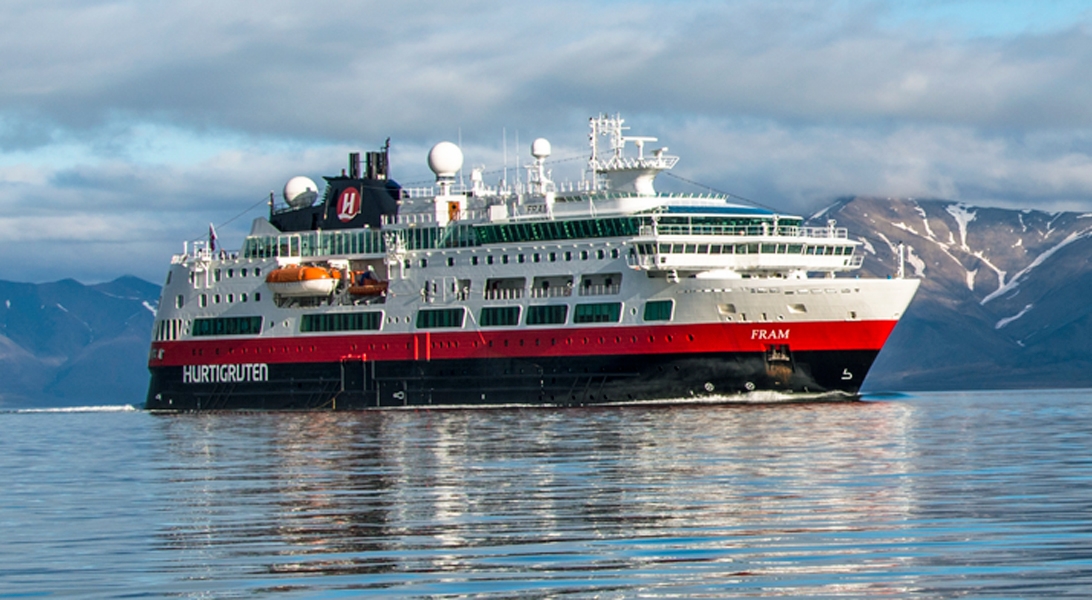
| | | | | Arrive | Depart |
| 26th26 | JulJul | 202727 | Oslo, Norway, embark on the MS Fram | | |
Oslo is the capital of Norway and is also its largest city, situated at the head of Oslo Fjord and surrounded by hills and forests. Home to some 50 museums and full of galleries, cafés, a sculpture park and the Royal Palace, this vibrant city with its handsome 19th-century buildings and wide streets has much to offer. Its history dates back 1,000 years, and includes a rich seafaring heritage that ranges from the Viking era to Thor Heyerdahl’s Kon Tiki expedition. Discover more about this exciting city on our varied selection of excursions. Enjoy time in Oslo before flying to Svalbard Your expedition begins in Oslo, Norway's fjord-side capital, a city rich in history with a thriving art scene. Wander the Ekebergparken sculpture park, admire the striking Opera House and Munch Museum, relax in a floating sauna on the harbour, or head to Sørenga for urban beach life and New Nordic cuisine, before settling in for the night in an airport hotel. |
| 27th27 | JulJul | 202727 | Longyearbyen, Svalbard and Jan Mayen | | 20:00 |
Longyearbyen is the biggest settlement in Svalbard. Seat of the Norwegian administration, it also has the best services and infrastructure in the archipelago. Located deep in the Adventfjord, a sidearm of the Isfjorden (Icefjord), Longyearbyen’s airport can be used all-year round, but its harbor is blocked by ice in winter. Most shops, hotels, restaurants and a hospital are within easy walking distance of the port. One of the most prominent buildings in town is the UNIS center, where several Norwegian universities have joined forces to operate and offer the northernmost higher education to both Norwegian and international students. Adjacent to UNIS, and well worth a visit, is the Svalbard Museum, covering the natural history and exploitation of Svalbard. Remnants of the former mining activity can be seen all around Longyearbyen and even in town. The town at the top of the world After an early breakfast, you’ll fly to Longyearbyen. A short panoramic bus tour offers a first glimpse of the town and its surroundings before lunch. Afterwards, enjoy some free time in Longyearbyen before being transferred to the ship for boarding. This former coal-mining settlement is small and easy to explore on foot. Wander along the main street, lined with boutique shops, an art gallery, and inviting restaurants. You might even spot a Svalbard reindeer wandering by. Come evening, we’ll set sail. |
| 28th28 | JulJul | 202727 | Ny-Ålesund, Svalbard and Jan Mayen | 12:00 | 19:00 |
A land of spectacular beauty Spitsbergen, Svalbard’s largest island, offers Arctic wilderness at its most striking – sharp-edged mountains, calving glaciers, and remote, rugged shores shaped by ice and wind. Over the next three days, we’ll navigate some of the world’s most dramatic fjords, where the stillness is broken only by the thunderous crack of icebergs breaking free. This is polar bear territory. Keep watch along the sea-ice edge where these apex predators roam, hunting seals across the frozen frontier. We may chart a course into Northwest Spitsbergen National Park, cruising beneath towering glaciers that stretch into cobalt waters. Or, visit Ny-Ålesund – once the launch point for explorer Roald Amundsen’s daring airship expeditions, now a centre for cutting-edge climate research. We’ll make the most of every opportunity to step ashore, using our small expedition boats to reach landings few others can. If conditions allow, there may even be a chance to kayak through the waters in near-perfect silence. With the Midnight Sun overhead, daylight lingers – giving us time to explore deeper into this extraordinary landscape. |
| 29th29 | JulJul | 202727 | Spitsbergen, Svalbard and Jan Mayen | | |
| 30th30 | JulJul | 202727 | Spitsbergen, Svalbard and Jan Mayen | | |
| 31st31 | JulJul | 202727 | Blomster Bugt, Greenland | 07:00 | 20:00 |
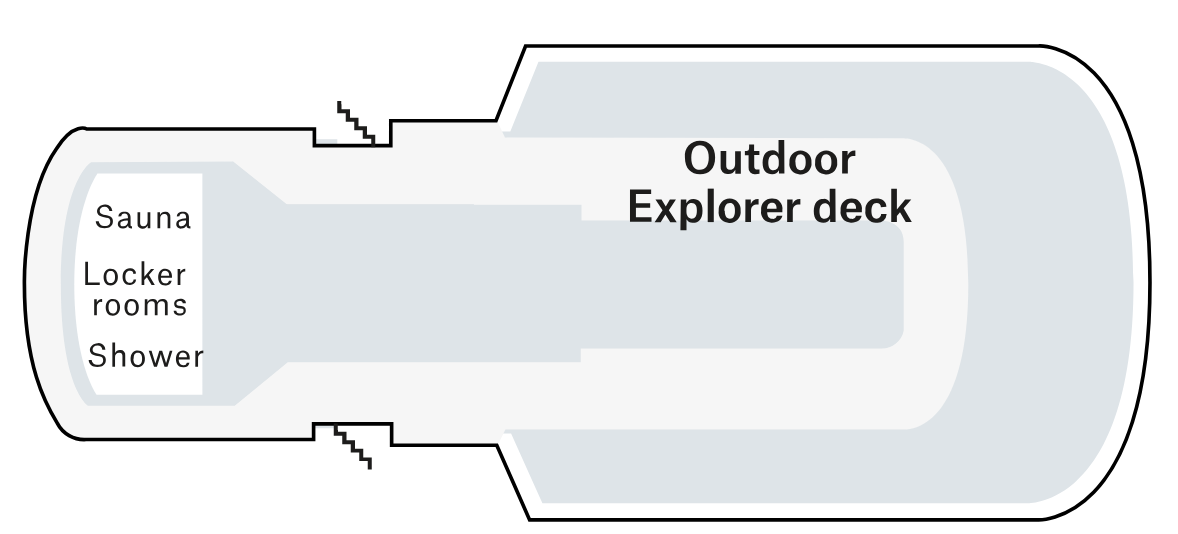
Getting ready for Greenland - Kalaallit Nunaat As we sail into the Greenland Sea on our way to the world’s largest island, it’s time to relax, find your sea legs and get acquainted with the onboard facilities. In the lecture hall, you’ll find out what to expect in the epic landscapes of East Greenland National Park and the stunning fjords of Scoresby Sund. If you’re feeling active, head to the gym and do a workout with a view. On the other hand, you could sample the sauna, laze in a hot tub or just find a quiet corner to read a book with a hot drink. Love science? Then why not join one of our onboard Citizen Science projects, a fun and engaging way to contribute to global research. |
| 1st01 | AugAug | 202727 | At Sea | 08:00 | 20:00 |
| 2nd02 | AugAug | 202727 | Northeast Greenland National Park, Greenland | | |
Explore the wild east We’ll spend the next eight days exploring Greenland’s remote and pristine east coast. Extending for over 1,740 miles from north to south, this long stretch of coast is cold, isolated, and remote even by Greenlandic standards. The south-flowing East Greenland Current brings lots of sea ice directly from the Arctic Ocean, challenging human settlement but creating a heaven for ice-dependant wildlife, including the polar bear. Local weather and ice conditions will dictate our exact route, but our plan is to sail first to Scoresby Sund, the world’s largest fjord system. You’ll feel a deep sense of serenity in this wild and rugged region, with white and blue icebergs floating in mirror-like waters surrounded by looming mountains. If conditions permit, we’ll visit Ittoqqortoormiit – the most remote inhabited community in the Western Hemisphere. Should the sea ice be favourable, we’ll continue our journey north to the beautiful Northeast Greenland National Park – the world’s largest national park. Visiting this fragile Arctic wilderness is a rare privilege as only a few visitors are permitted here each year. Apart from old trapper huts, some science research stations, and a military outpost, there are very few traces of human life in this 375,000 square mile park. Be assured that this is one of the quietest places on Earth, and you’ll enjoy a feeling of great peace as we explore this beautiful wilderness. As this is an expedition cruise, the Captain and Expedition Team will guide us to the most favourable spots on a daily basis. Our goal will be to pack in as many shore landings, small boat cruises, nature walks, kayaking adventures and wildlife sightings as possible. |
| 3rd03 | AugAug | 202727 | Bear Islands, Scoresby Sound, Greenland | 13:00 | 20:00 |
| 4th04 | AugAug | 202727 | At Sea | 08:00 | 20:00 |
| 5th05 | AugAug | 202727 | Rodefjord, Greenland | 08:00 | 20:00 |
| 6th06 | AugAug | 202727 | Danmark Island, Greenland | 08:00 | 20:00 |
| 7th07 | AugAug | 202727 | Ittoqqortoormiit (ex Scoresbysund), Greenland | 08:00 | 14:00 |
Scoresbysund is the ultimate fjord system; likely the longest, largest and deepest of any in the world. The massive fjord is tucked into the eastern coast of Greenland and on the icy western edges of the Greenland Sea. Scoresbysund’s scale deserves several days to explore, especially while plying the waters between castle-sized icebergs as they gently drift under the persuasion of the Arctic waters in the mighty fjord. Scattered in the remote bays and smaller fjords are places to discover old Inuit settlements, slowly growing over with Arctic willow and dwarf birch. The lower slopes of many mountains are draped in the herbs and grasses favoured by muskox, Arctic fox, lemmings, Ptarmigan, Barnacle Geese, and Snowy Owls. Tundra walks give impressive views of landscape, flora and fauna. Not to be neglected, the waters of Scoresbysund warrant a vigilant eye for sightings of whales, seals, narwhals, beluga whales and walrus. |
| 8th08 | AugAug | 202727 | At Sea | | |
| 9th09 | AugAug | 202727 | Reykjavík, Iceland | 07:00 | |
Sprawling Reykjavík, the nation's nerve center and government seat, is home to half the island's population. On a bay overlooked by proud Mt. Esja (pronounced eh-shyuh), with its ever-changing hues, Reykjavík presents a colorful sight, its concrete houses painted in light colors and topped by vibrant red, blue, and green roofs. In contrast to the almost treeless countryside, Reykjavík has many tall, native birches, rowans, and willows, as well as imported aspen, pines, and spruces.Reykjavík's name comes from the Icelandic words for smoke, reykur, and bay, vík. In AD 874, Norseman Ingólfur Arnarson saw Iceland rising out of the misty sea and came ashore at a bay eerily shrouded with plumes of steam from nearby hot springs. Today most of the houses in Reykjavík are heated by near-boiling water from the hot springs. Natural heating avoids air pollution; there's no smoke around. You may notice, however, that the hot water brings a slight sulfur smell to the bathroom.Prices are easily on a par with other major European cities. A practical option is to purchase a Reykjavík City Card at the Tourist Information Center or at the Reykjavík Youth Hostel. This card permits unlimited bus usage and admission to any of the city's seven pools, the Family Park and Zoo, and city museums. The cards are valid for one (ISK 3,300), two (ISK 4,400), or three days (ISK 4,900), and they pay for themselves after three or four uses a day. Even lacking the City Card, paying admission (ISK 500, or ISK 250 for seniors and people with disabilities) to one of the city art museums (Hafnarhús, Kjarvalsstaðir, or Ásmundarsafn) gets you free same-day admission to the other two. |
| 10th10 | AugAug | 202727 | At Sea | | |
| 11th11 | AugAug | 202727 | Reykjavík, Iceland, disembark the MS Fram | | |
Sprawling Reykjavík, the nation's nerve center and government seat, is home to half the island's population. On a bay overlooked by proud Mt. Esja (pronounced eh-shyuh), with its ever-changing hues, Reykjavík presents a colorful sight, its concrete houses painted in light colors and topped by vibrant red, blue, and green roofs. In contrast to the almost treeless countryside, Reykjavík has many tall, native birches, rowans, and willows, as well as imported aspen, pines, and spruces.Reykjavík's name comes from the Icelandic words for smoke, reykur, and bay, vík. In AD 874, Norseman Ingólfur Arnarson saw Iceland rising out of the misty sea and came ashore at a bay eerily shrouded with plumes of steam from nearby hot springs. Today most of the houses in Reykjavík are heated by near-boiling water from the hot springs. Natural heating avoids air pollution; there's no smoke around. You may notice, however, that the hot water brings a slight sulfur smell to the bathroom.Prices are easily on a par with other major European cities. A practical option is to purchase a Reykjavík City Card at the Tourist Information Center or at the Reykjavík Youth Hostel. This card permits unlimited bus usage and admission to any of the city's seven pools, the Family Park and Zoo, and city museums. The cards are valid for one (ISK 3,300), two (ISK 4,400), or three days (ISK 4,900), and they pay for themselves after three or four uses a day. Even lacking the City Card, paying admission (ISK 500, or ISK 250 for seniors and people with disabilities) to one of the city art museums (Hafnarhús, Kjarvalsstaðir, or Ásmundarsafn) gets you free same-day admission to the other two. End of the expedition We say a fond farewell to MS Fram as we end our expedition cruise in the lovely city of Reykjavík. With its interesting museums, stylish galleries, restaurants and geothermal pools, there’s so much to enjoy in Iceland’s capital. And if you want to discover more of Iceland, you can join our optional Post-Programme before you head home. Or simply extend your stay to enjoy more of Reykjavík and its surrounding geothermal attractions. It’s a great place to end an epic journey! |