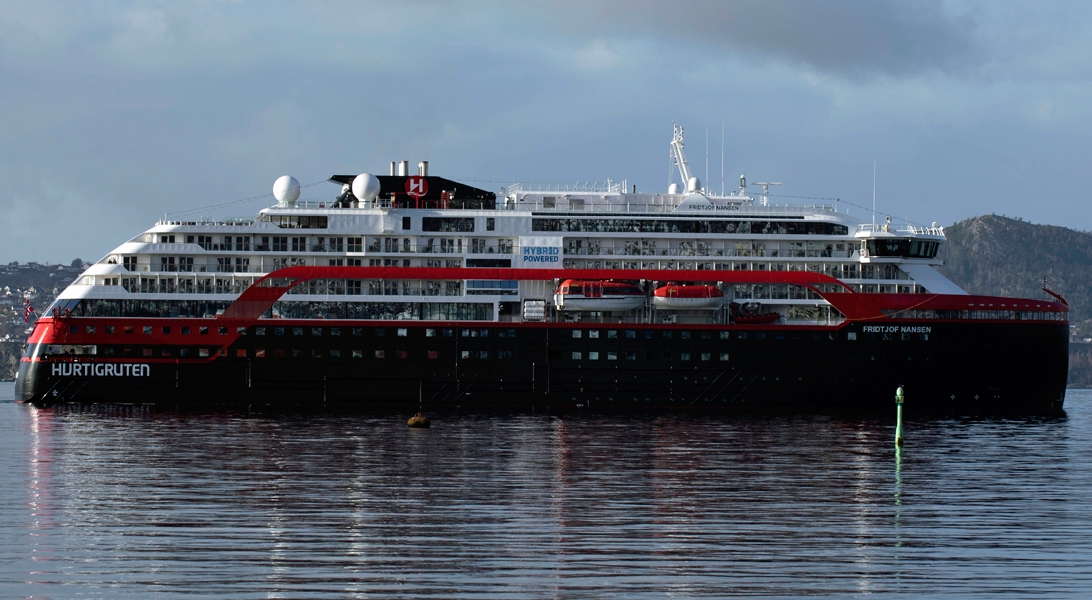
Uruguay’s capital city hugs the eastern bank of the Río de la Plata. A massive coastal promenade (malecón) that passes fine beaches, restaurants, and numerous parks recalls the sunny sophistications of the Mediterranean and is always dotted with Montevideans strolling, exercising, and lounging along the water. Montevideo has its share of glitzy shopping avenues and modern office buildings, balanced with its historic old city and sumptuous colonial architecture, as well as numerous leafy plazas and parks. It is hard not to draw comparisons to its sister city Buenos Aires across the river, and indeed Montevideo strikes many as a calmer, more manageable incarnation of Argentina's capital.When the weather's good, La Rambla, a 22-km (14-mile) waterfront avenue that links the Old City with the eastern suburbs and changes names about a dozen times, gets packed with fishermen, ice-cream vendors, and joggers. Around sunset, volleyball and soccer games wind down as couples begin to appear for evening strolls. Polls consistently rate Montevideo as having the highest quality of life of any city in Latin America. After one visit here, especially on a lovely summer evening, you probably will agree. Discover the charm of Uruguay’s capital Before boarding the ship, spend time getting to know Montevideo. Follow the Rambla, the city's famous waterfront promenade that hugs nearly 14 miles of coastline, then wander inland to Ciudad Vieja, where colonial architecture lines cobbled streets and the scent of grilling meat drifts from Mercado del Puerto. This is a UNESCO City of Literature too, so duck into one of its dozens of independent bookshops between palm-lined plazas and quiet churches with views out over the water. In the afternoon, board the MS Fridtjof Nansen and settle into your cabin. As evening falls meet your fellow passengers and the Expedition Team, your experts for the adventure ahead. |
According to Salvador's adopted son Jorge Amado, "In Salvador, magic becomes part of the every-day." From the shimmering golden light of sunset over the Baía do Todos os Santos, to the rhythmic beats that race along the streets, Salvador, while no longer Brazil's capital, remains one of its most captivating cities. A large dose of its exoticism comes down to its African heritage—at least 70% of its 2,675,000 population is classified as Afro-Brazilian—and how it has blended into Brazil's different strands, from the native Indians to the Christian colonizers. Salvadorans may tell you that you can visit a different church every day of the year, which is almost true—the city has about 300. Churches whose interiors are covered with gold leaf were financed by the riches of the Portuguese colonial era, when slaves masked their traditional religious beliefs under a thin Catholic veneer. And partly thanks to modern-day acceptance of those beliefs, Salvador has become the fount of Candomblé, a religion based on personal dialogue with the orixás, a family of African deities closely linked to nature and the Catholic saints. The influence of Salvador's African heritage on Brazilian music has also turned the city into one of the musical capitals of Brazil, resulting in a myriad of venues to enjoy live music across the city, along with international acclaim for exponents like Gilberto Gil, Caetano Veloso, and Daniela Mercury. Salvador's economy today is focused on telecommunications and tourism. The still-prevalent African culture draws many tourists—this is the best place in Brazil to hear African music, learn or watch African dance, and see capoeira, a martial art developed by slaves. In the district of Pelourinho, many colorful 18th- and 19th-century houses remain, part of the reason why this is the center of the tourist trade. Salvador sprawls across a peninsula surrounded by the Baía de Todos os Santos on one side and the Atlantic Ocean on the other. The city has about 50 km (31 miles) of coastline. The original city, referred to as the Centro Histórica (Historical Center), is divided into the Cidade Alta (Upper City), also called Pelourinho, and Cidade Baixa (Lower City). The Cidade Baixa is a commercial area—known as Comércio—that runs along the port and is the site of Salvador's indoor market, Mercado Modelo. You can move between the upper and lower cities on foot, via the landmark Elevador Lacerda, behind the market, or on the Plano Inclinado, a funicular lift, which connects Rua Guindaste dos Padres on Comércio with the alley behind Cathedral Basílica. From the Cidade Histórica you can travel north along the bay to the hilltop Igreja de Nosso Senhor do Bonfim. You can also head south to the point, guarded by the Forte Santo Antônio da Barra, where the bay waters meet those of the Atlantic. This area on Salvador's southern tip is home to the trendy neighborhoods of Barra, Ondina, and Rio Vermelho, with many museums, theaters, shops, and restaurants. Beaches along the Atlantic coast and north of Forte Santo Antônio da Barra are among the city's cleanest. Many are illuminated at night and have bars and restaurants that stay open late. Experience the city’s pulsing energy Brazil's first colonial capital is one of Latin America's most compelling cities. African, indigenous, and Portuguese influences collide here, creating an atmosphere you won't find anywhere else. Explore Salvador at your leisure, from its cobbled streets and rainbow-coloured houses, to the beautiful beaches. |
Your next stop will be Cape Verde’s cultural capital, Mindelo. Get along with the locals listening to the real morna in the bars of the old town and sipping the local drink, a sugarcane spirit. This island is also known by its British and Portuguese colonial architecture and pastel-coloured houses, the municipal market and the facades of the old Governor’s Palace. Cape Verde's cultural heartbeat Welcome to Mindelo, the city at the beating heart of Cape Verdean culture. Famed for its lively music, beautiful beaches and mountain backdrop, this is a city that looks and feels quite unlike anywhere else. Take some time to explore the multi-coloured homes that dot the streets or peruse the stalls at Mercardo Municipal, the capital’s food market that dates back to the 18th century. The colonial-era centre is a must, but leave time for a cold drink and people-watching at one of the seafront bars. |
Perhaps the prettiest of the Canary Islands, Gran Canaria is an almost circular isle with the peak of Pozo de Las Nieves, its highest point, at the centre. With a wealth of natural beauty and all the exciting attractions of city life in the capital, the island offers the best of both worlds. You will no doubt wish to see the sights of the capital’s old quarter, which dates back to the 15th century and encompassses the Vegueta and Triana districts, and wherever you go you can enjoy the glorious subtropical climate, perfect for growing exotic palms and fruits. Explore the city’s historic old town Today we dock in the lush Canary Island of Gran Canaria. Las Palmas is located at the crossroads of three continents: Europe, Africa, and America. Stroll the streets of the old town, at your leisure, taking in cosmopolitan cafés, 16th-century architecture, and the impressive Santa Ana Cathedral. This is a place to learn about the island's volcanic origins and feel the relaxed rhythm that defines life in the Canaries. |
Set on seven hills on the banks of the River Tagus, Lisbon has been the capital of Portugal since the 13th century. It is a city famous for its majestic architecture, old wooden trams, Moorish features and more than twenty centuries of history. Following disastrous earthquakes in the 18th century, Lisbon was rebuilt by the Marques de Pombal who created an elegant city with wide boulevards and a great riverfront and square, Praça do Comércio. Today there are distinct modern and ancient sections, combining great shopping with culture and sightseeing in the Old Town, built on the city's terraced hillsides. The distance between the ship and your tour vehicle may vary. This distance is not included in the excursion grades. Disembark in Portugal’s colourful capital Lisbon marks the end of your expedition. As you bid farewell to MS Fridtjof Nansen, the Expedition Team, and your fellow travellers, we hope you leave with lasting memories of your voyage. Be sure to leave time to explore Lisbon itself – the buzzy Portuguese capital is rich in history and culture. Take a stroll along its hilly cobbled streets, hop on a canary-yellow tram to take in a panoramic viewpoint and tuck into flaky pastel de nata (custard tarts) freshly made at the city’s decades-old bakeries. Embrace the opportunity to explore the districts of Baixa, Bairro Alto, and Chiado, where fado music floats out of the open doors of bars and cafés, and pause for a drink at one of the city’s many lively squares. Just outside of the city you can visit the impressive UNESCO World Heritage sites of Belém Tower and Jerónimos Monastery. You also have the option to stay on board MS Fridtjof Nansen, by joining our expedition cruise along the rich coastline of Europe, on the way to Hamburg. |