| | | | | Arrive | Depart |
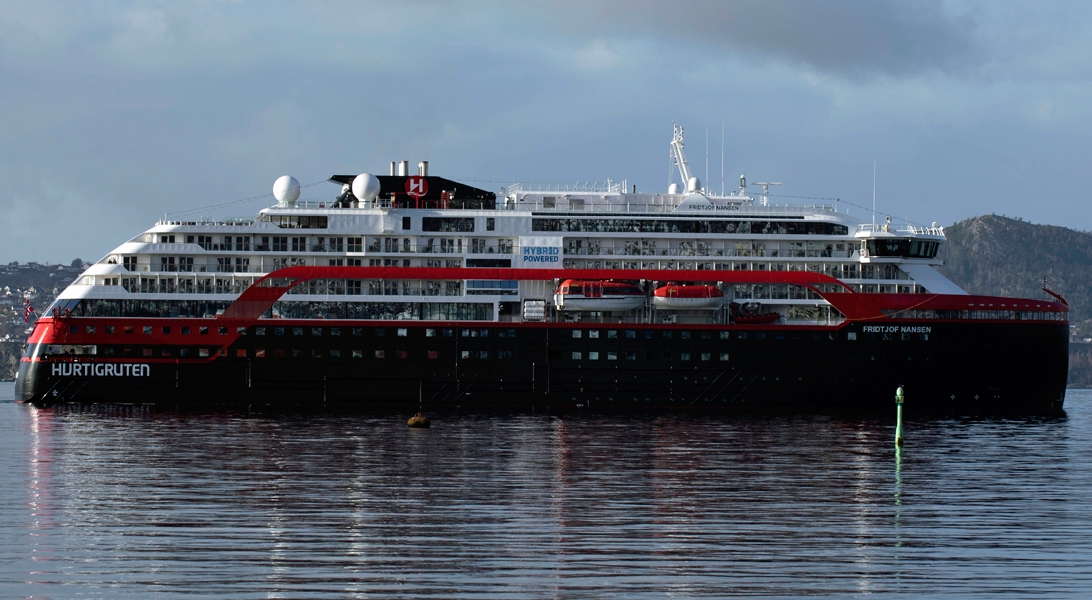
| 12th12 | AugAug | 202828 | Nuuk (Godthaab), Greenland, embark on the MS Fridtjof Nansen | | 22:00 |
Nuuk, meaning “the cape”, was Greenland’s first town (1728). Started as a fort and later mission and trading post some 240 kilometers south of the Arctic Circle, it is the current capital. Almost 30% of Greenland’s population lives in the town. Not only does Nuuk have great natural beauty in its vicinity, but there are Inuit ruins, Hans Egede’s home, the parliament, and the Church of our Saviour as well. The Greenlandic National Museum has an outstanding collection of Greenlandic traditional dresses, as well as the famous Qilakitsoq mummies. The Katuaq Cultural Center’s building was inspired by the undulating Northern Lights and can house 10% of Nuuk’s inhabitants. Gateway to the Greenlandic Arctic Arrive in Nuuk, Greenland’s compact capital, set along a deep fjord system framed by rugged mountains. Despite its small scale, the city is a vibrant centre of modern Greenlandic life. If time allows, we’ll explore this fascinating city. Nuuk is also where you start to feel the essence of the Arctic: ice, sea, and the mountainous peaks of Quassussuaq and Ukkusissat. Once on board, meet the Expedition Team, settle into your cabin, and enjoy your first dinner on board. |
| 13th13 | AugAug | 202828 | At Sea | | |
| 14th14 | AugAug | 202828 | Ilulissat (Jakobshavn), Greenland | 08:00 | 18:00 |
Known as the birthplace of icebergs, the Ilulissat Icefjord produces nearly 20 million tons of ice each day. In fact, the word Ilulissat means “icebergs” in the Kalaallisut language. The town of Ilulissat is known for its long periods of calm and settled weather, but the climate tends to be cold due to its proximity to the fjord. Approximately 4,500 people live in Ilulissat, the third-largest town in Greenland after Nuuk and Sisimiut. Some people here estimate that there are nearly as many sled dogs as human beings living in the town that also boasts a local history museum located in the former home of Greenlandic folk hero and famed polar explorer Knud Rasmussen. Explore the volcanic island landscape Today we spend more time exploring the inky blue waters of Disko Bay. In our Zodiacs, cruise between ice floes and towering glaciers, taking in the sheer scale of this Arctic landscape. We'll also step ashore on Disko Island, the only major island in Greenland formed by ancient basalt lava flows, giving it a completely different character to the mainland: dramatic columns, red flat-topped peaks, and unusually lush vegetation fed by volcanic soils. Hike through tundra rich with wildflowers and birdlife, and visit the colourful town of Qeqertarsuaq, nestled beneath towering basalt cliffs where a small community lives amid one of the Arctic's most striking geological landscapes. |
| 15th15 | AugAug | 202828 | Uummannaq, Greenland | 10:00 | 20:00 |
In the iceberg-laden waters surrounding the remote community of Uummannaq it is common to see whales. This area of Greenland is also known for its huge basalt mountains, and the small hunting and fishing village of Uummannaq rests at the foot of the heart-shaped Uummannaq Mountain, a name that translates to mean “in the shape of a seal’s heart”. The town of over 1200 people has a granite church and the country’s most northerly ferry terminal. The economy of Uummannaq revolves largely around the halibut/fish-processing factory. Entering through the gateway to the north Greenland’s tar north begins beyond the Nuussuaq peninsula. Here, life moves at the rhythm of the Arctic; unhurried and guided by the elements. This rugged, beautiful land has drawn people for over 4,000 years. Early settlers navigated its coastline and carved out a life in conditions few could endure. Today, archaeological sites stand as quiet markers of their resilience, including the famous Qilakitsoq mummies discovered in this very region. Potential landings may include visits to small, remote communities like Uummannaq, watched over by its striking heart-shaped mountain, or Ukkusissat. Weather and ice permitting, we’ll explore the Qilakitsoq site, cruise into secluded fjords, or step ashore to take in Greenland’s raw Arctic landscapes. |
| 16th16 | AugAug | 202828 | At Sea | | |
| 17th17 | AugAug | 202828 | Savissivik, Greenland | 09:00 | 20:00 |
Explore life at the edge of the world Ultima Thule is the term used by Greek explorer Pytheas in the 4th century BC to describe a mythical land in the far north. Nobody knows for sure which land he meant, but the name has come to refer to the far north in Greenland. Even by Arctic standards, the Thule region is harsh. And yet, it was the first region in Greenland to be populated, some 4,500 years ago, by the forerunners of the Inuit. How they managed to survive and thrive here still puzzles archaeologists, but the abundant bird and animal life provides sustenance, and the traditional hunting culture has survived better here than elsewhere in Greenland. The polar travel know-how of the locals has been highly sought after on European and American expeditions, either as guides or saviours. Over the coming days, we'll explore the region, always adapting our programme to the weather and ice conditions as we go. Expect visits to local communities, Zodiac landings, and sailing through icy channels. |
| 18th18 | AugAug | 202828 | Dundas, Greenland | 08:00 | 20:00 |
| 19th19 | AugAug | 202828 | Siorapaluk, Greenland | 08:00 | 18:00 |
| 20th20 | AugAug | 202828 | Hans Island, Greenland | 08:00 | 18:00 |
| 21st21 | AugAug | 202828 | Qaanaaq, Greenland | 08:00 | 20:00 |
In AD 850, the Vikings established their parliament in Tórshavn, a name which translates as "Thor's harbor." It was named after Thor, the god of thunder and lightning in Norse mythology. The town became a center of trade for the island, and in fact was designated as the only legal place for the islanders to sell and buy products. This trade monopoly was abolished in 1856. Today it is the capital and largest city of the Faroe Islands, with fish-processing plants, a shipyard, and woolen products making up. It is considered to be one of the oldest capitals in Northern Europe. |
| 22nd22 | AugAug | 202828 | At Sea | | |
| 23rd23 | AugAug | 202828 | At Sea | | |
| 24th24 | AugAug | 202828 | Qeqertarsuaq (Godhavn), Greenland | 07:00 | 17:00 |
Marvel at the UNESCO-listed wonder This spectacular UNESCO World Heritage Site regularly tops the list of things to see and do in Greenland, and today you'll find out why. Enjoy the scenery as you walk along the wooden path to the breathtaking ice fjord. Marvel at giant icebergs floating in the deep blue waters as they take on different hues of white, grey, and blue. All photographers, regardless of skill, will return to the ship with the most enviable images. Back in pretty Ilulissat, visit the Icefjord Centre to learn more about the ice in this fascinating area and take a hike to Sermermiut to take in the incredible views. |
| 25th25 | AugAug | 202828 | Itilleq, Greenland | 09:00 | 14:00 |
Itilleq is an idyllic little village located on a small island about ahalf a mile off the west coast of Greenland, and only about a mile north of theArctic Circle. It is one of the most picturesque villages in Greenland with itsquaint colorful houses surrounded by stunning rugged mountains and glaciers.Originally, the village of Itilleq was founded on another island in 1847, butwas later moved to its present location. The 100 people living here todaysurvive mainly on hunting and fishing, with a fish factory being the mainemployer. Modern towns on the edge of the wilderness The central west coast of Greenland is a land of contrasts, where long fjords cut deep into a vast and sparsely populated landscape. Here, distances are great, and the sense of remoteness is part of everyday life. As we sail south, we'll visit communities where Greenlandic traditions remain strong. A possible call is Itilleq, a small fishing and hunting village perched near the Arctic Circle, where warm local welcomes, traditional kaffemik gatherings, personal stories, or maybe even a friendly soccer match offer an authentic glimpse into everyday Greenlandic life. |
| 26th26 | AugAug | 202828 | Nuuk (Godthaab), Greenland, disembark the MS Fridtjof Nansen | 06:00 | |
Nuuk, meaning “the cape”, was Greenland’s first town (1728). Started as a fort and later mission and trading post some 240 kilometers south of the Arctic Circle, it is the current capital. Almost 30% of Greenland’s population lives in the town. Not only does Nuuk have great natural beauty in its vicinity, but there are Inuit ruins, Hans Egede’s home, the parliament, and the Church of our Saviour as well. The Greenlandic National Museum has an outstanding collection of Greenlandic traditional dresses, as well as the famous Qilakitsoq mummies. The Katuaq Cultural Center’s building was inspired by the undulating Northern Lights and can house 10% of Nuuk’s inhabitants. Return to Greenland’s capital Today, as we arrive at Nuuk, you will say a fond farewell to MS Fridtjof Nansen, the crew, the Expedition Team and the new friends you will have made. The lively capital of Greenland is a big city to all other towns in the country you have visited over the last couple of weeks. If you have time before flying back home, it is a fascinating window onto modern Greenland. From here, you'll catch a flight back to London, taking with you a wealth of fantastic memories that will no doubt endure. |