This site uses cookies as defined in our Cookie Policy, by continuing to use this site you agree to their use.
Continue

| Arrive | Depart | ||||||
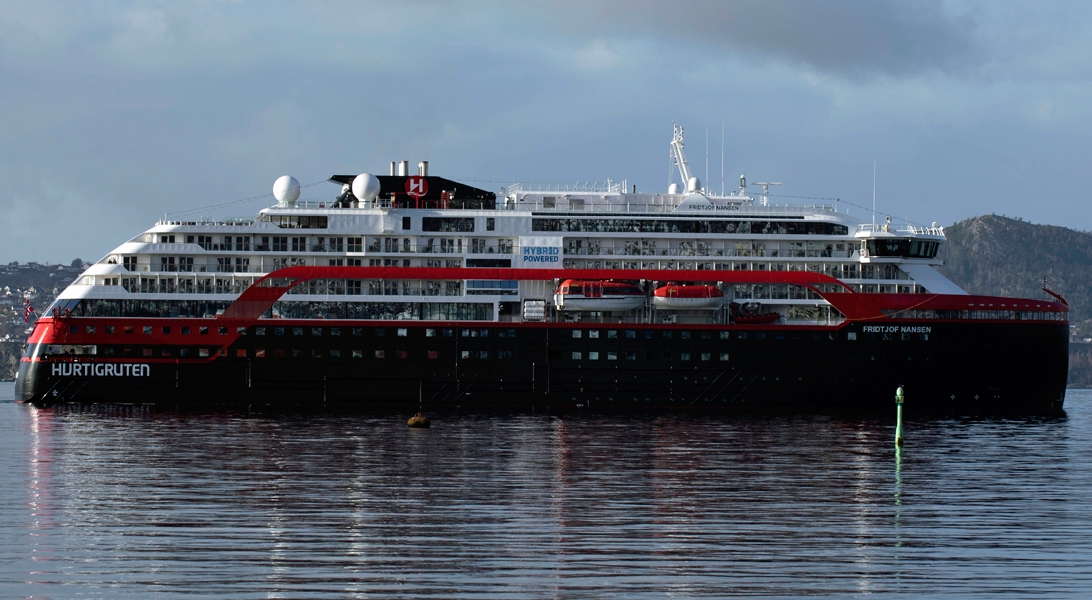
| 17th17 | OctOct | 202626 | Valparaiso, Chile, embark on the MS Fridtjof Nansen | 20:00 | |||
Valparaíso's dramatic topography—45 cerros, or hills, overlooking the ocean—requires the use of winding pathways and wooden ascensores (funiculars) to get up many of the grades. The slopes are covered by candy-color houses—there are almost no apartments in the city—most of which have exteriors of corrugated metal peeled from shipping containers decades ago. Valparaíso has served as Santiago's port for centuries. Before the Panama Canal opened, Valparaíso was the busiest port in South America. Harsh realities—changing trade routes, industrial decline—have diminished its importance, but it remains Chile's principal port. Most shops, banks, restaurants, bars, and other businesses cluster along the handful of streets called El Plan (the flat area) that are closest to the shoreline. Porteños (which means "the residents of the port") live in the surrounding hills in an undulating array of colorful abodes. At the top of any of the dozens of stairways, the paseos (promenades) have spectacular views; many are named after prominent Yugoslavian, Basque, and German immigrants. Neighborhoods are named for the hills they cover. With the jumble of power lines overhead and the hundreds of buses that slow down—but never completely stop—to pick up agile riders, it's hard to forget you're in a city. Still, walking is the best way to experience Valparaíso. Be careful where you step, though—locals aren't very conscientious about curbing their dogs. Begin your adventure in this vibrant hilltop city Your expedition ship awaits you in Valparaíso, the 'Jewel of the Pacific'. Built on steep hillsides overlooking the ocean, it's well worth spending time in this UNESCO-listed city. Filled with attractions, the city is an exhilarating maze of winding alleyways, colourful houses, and mercados packed with local produce. Why not take it all in on a funicular ride up to Cerro Alegre and Concepción. If you’d like to explore more of Valparaíso, you can join one of our optional Pre-Programmes. After picking up your expedition jacket and meeting your Expedition Team, find your cabin and explore the ship, before enjoying the first of many delicious meals on board as we set sail. | |||||||
| 18th18 | OctOct | 202626 | At Sea | ||||
| 19th19 | OctOct | 202626 | Niebla, Chile | 10:00 | 17:00 | ||
Niebla is a small village on the banks of the Rio Valdivia where Chile's Corral Bay meets the Pacific Ocean. Today Niebla is a beach resort, but in 1671 it was a defensive fortress built by the order of the Viceroy of Peru to prevent attacks against the town of Valdivia by pirates and corsairs. Niebla is well-known for its lively markets, the remains of the colonial fortress declared a National Monument in 1950 and restored in 1992, and a museum dedicated to its history. Nearby is the charming river port city of Valdivia, where cultural influences from the native Mapuche, Spanish settlers, and German immigrants have blended. Explore Spanish fortresses and lively markets We go ashore at the pretty seaside town of Niebla, set on a picturesque peninsula with views of Corral Bay on one side and the Valdivia River on the other. Take a stroll on the wide sandy beach and, if the Feria Costumbrista market is on, you may want to sample some traditional snacks, such as empanadas, anticuchos and churros. Aside from the town itself, the ruins of the old Spanish fort and its associated museum are well worth a visit. Learn more about the region's history here, then wander around the lighthouse. You'll enjoy beautiful views across the river and bay. | |||||||
| 20th20 | OctOct | 202626 | Castro, Chile | 12:00 | 18:00 | ||
Bright, wooden huts teeter on stilts over Castro's estuary waterfront, inviting you into a patchwork of colour that’s sure to brighten any day. These traditional palafitos give the warmest of welcomes, as you prepare to experience Chile at its most vibrant. Castro has faced something of a tumultuous past, having been hit by a by a succession of earthquakes and fires - the most recent a devastating earthquake in 1960. But this city is incredibly resilient, and today the capital of Chiloe Island makes for a fantastic base for exploring the archipelago that surrounds it. Stilt houses and historic churches Set amidst the lush greenery of Chiloé Island, Castro is Chile’s third oldest city. It’s also home to two UNESCO World Heritage Sites – Iglesia San Francisco and Iglesia de Nuestra Señora de Gracia de Nercón. The former is one of the oldest colonial era buildings in the country and has survived 15 major earthquakes. Keep your camera ready for views of the city’s colourful palafitos – stilt houses along the waterfront. For an insight into local history and culture, head to the Museo Regional de Castro and the Modern Art Museum. | |||||||
| 21st21 | OctOct | 202626 | At Sea | ||||
| 22nd22 | OctOct | 202626 | Caleta Tortel, Chile | 09:00 | 19:00 | ||
Tortel is a commune located in Southern Patagonia, a spectacular wilderness region of rugged mountains, glaciers, rivers and forests of infinite beauty. The uneven geography of Tortel shapes a unique landscape, characterized by an archipelagic area with numerous islands and channels. Tortel is known as the “footbridge city” for the unique beauty of its wooden walkways that connect the piers and houses of this quaint place through bridges and stairs, built from cypress wood, that run for four and a half miles around the cove and that respect the rich vegetation that grows under them. Even though it is the sixth largest commune in Chile, it has the lowest population of all with roughly 531 people. The history of the town dates back to 1520 when it was inhabited by nomadic Kawesqar, now extinct. Its definitive foundation was in 1955, after numerous attempts to populate the area. In 2001, it was declared by the Chilean government as a Picturesque Zone of National Heritage. Receive a warm welcome in Caleta Tortel We continue off the well-trodden path to visit isolated Caleta Tortel. Lying at the mouth of Río Baker, Chile's largest river, this charming village is home to around 500 inhabitants. Instead of streets, a maze of boardwalks connects the close-knit community, spreading over the water and around the mountain base. If conditions permit, you'll be able to investigate the milky blue waters here by kayak. While exploring the village, you'll come across locals selling handicrafts and you may even be treated to a performance by folk dancers. | |||||||
| 23rd23 | OctOct | 202626 | Puerto Edén, Chile | 09:00 | 15:00 | ||
Explore the Patagonian fjords and cross the White Narrows We’ll spend the next two days sailing through the maze of the Chilean fjords. Tidal conditions allowing, we hope to visit Puerto Edén, an enchanting village only accessible by sea. The 250-strong community here are some of the last remaining members of the Indigenous Kawésqar people, offering a fascinating insight into Patagonian culture. Alternatively, we’ll spend the day cruising the majestic fjords, drinking in the incredible scenery and spotting wildlife along the way. We may take the opportunity to launch our small expedition boats and explore even closer. Be ready for spontaneous adventures! The next day, according to the tide, we’ll sail through the White Narrows into Puerto Natales. At less than 330 feet wide in parts, this striking waterway between islets and sheer rock cliffs is only passable in slack water and daylight. Head out on deck to witness some of the most beautiful landscapes on the continent as your Captain skilfully navigates the ship through these famed channels. | |||||||
| 24th24 | OctOct | 202626 | Puerto Natales, Chile | 15:00 | 09:00 | ||
With a population of roughly 18,000, Puerto Natales is the capital of the Ultima Esperanza Province. Founded in 1911, it quickly developed into a major residential center and shipping port for the area’s products. Nestled on a gently-sloping point amid spectacular scenery, the town overlooks the Ultima Esperanza Gulf and has a nice view of the Balmaceda Mountain. It provides services for the region’s intense livestock activity. Many of its inhabitants work at the Argentinian coal mines in Rio Turbio and return home over the weekend. A growing number of tourists are using the town as a jumping-off point for visiting the spectacular Torres del Paine and Balmaceda National Parks, and the nearby fjords. In 1892 and 1897, two geographic surveyors mapped the area and ascertained its potential for livestock farming. The first expedition was led by Capt. Eberhard, while the second, a Swedish one, was led by Otto Nordenskjöld. Eberhard discovered the Milodón Cave and was one of the first settlers in the area. A German-born immigrant in transit along the Strait of Magellan, he disembarked in Punta Arenas and decided to stay in this area. His brother continued to California, their original destination, where he later founded the renowned Eberhard Faber pencil making company. When the area opened to settlement in 1893, the lands lying along the coast were occupied mostly by German and English settlers who had previously come to Punta Arenas. There still remain a few interesting buildings dating from the estancia heydays. Pier Information The ship will remain at anchor. Guests will be brought ashore by ship’s tenders to the jetty located close to the center of town, which can be reached on foot. Shopping The main shopping area is located about 11 blocks from the landing jetty. Cuisine Two of the better restaurants in town are Tranquera and Circulo Español. Other Sites Cerro DoroteaA walk up this hill rewards with superb views of the whole Ultima Esperanza Sound.Milodón Cave National MonumentAbout 15 miles out of Puerto Natales stands this monument near the cave, where in 1895 Capt. Eberhard found the nearly intact remains of a prehistoric animal called milodón, a type of ground sloth. The finding caused such a stir that Wellington Furlog, a scientiest at Cornell University, set out in 1907 to comb Patagonia in search of living specimens of this species. | |||||||
| 25th25 | OctOct | 202626 | Puerto Natales, Chile | ||||
With a population of roughly 18,000, Puerto Natales is the capital of the Ultima Esperanza Province. Founded in 1911, it quickly developed into a major residential center and shipping port for the area’s products. Nestled on a gently-sloping point amid spectacular scenery, the town overlooks the Ultima Esperanza Gulf and has a nice view of the Balmaceda Mountain. It provides services for the region’s intense livestock activity. Many of its inhabitants work at the Argentinian coal mines in Rio Turbio and return home over the weekend. A growing number of tourists are using the town as a jumping-off point for visiting the spectacular Torres del Paine and Balmaceda National Parks, and the nearby fjords. In 1892 and 1897, two geographic surveyors mapped the area and ascertained its potential for livestock farming. The first expedition was led by Capt. Eberhard, while the second, a Swedish one, was led by Otto Nordenskjöld. Eberhard discovered the Milodón Cave and was one of the first settlers in the area. A German-born immigrant in transit along the Strait of Magellan, he disembarked in Punta Arenas and decided to stay in this area. His brother continued to California, their original destination, where he later founded the renowned Eberhard Faber pencil making company. When the area opened to settlement in 1893, the lands lying along the coast were occupied mostly by German and English settlers who had previously come to Punta Arenas. There still remain a few interesting buildings dating from the estancia heydays. Pier Information The ship will remain at anchor. Guests will be brought ashore by ship’s tenders to the jetty located close to the center of town, which can be reached on foot. Shopping The main shopping area is located about 11 blocks from the landing jetty. Cuisine Two of the better restaurants in town are Tranquera and Circulo Español. Other Sites Cerro DoroteaA walk up this hill rewards with superb views of the whole Ultima Esperanza Sound.Milodón Cave National MonumentAbout 15 miles out of Puerto Natales stands this monument near the cave, where in 1895 Capt. Eberhard found the nearly intact remains of a prehistoric animal called milodón, a type of ground sloth. The finding caused such a stir that Wellington Furlog, a scientiest at Cornell University, set out in 1907 to comb Patagonia in search of living specimens of this species. Enter the gateway to Torres del Paine Today you’ll awake in Puerto Natales, gateway to the Torres del Paine National Park. The rugged landscape features steppe, forest and desert, punctuated by glaciers and lakes, and you can choose to see it either on a panoramic bus or hiking tour. Andean animals such as guanacos, rheas and the elusive puma roam here. Look out for Chilean Flamingos as well as the mighty Andean Condor. Puerto Natales is a popular hub for hikers and adventurers, with many eateries, bars and outdoor shops. Visit the artisan village at Etherh Aike or stroll along the photogenic waterfront. | |||||||
| 26th26 | OctOct | 202626 | Chilean Fjords, Chile | ||||
Strewn through the coast of Chile, these beautiful fjords are world renowned for being one of the most awe-inspiring places on earth. Snow-capped volcanoes nestle majestically alongside rolling valleys of ice and frosty glaciers. Rugged beauty, breathtaking scenery not to mention diverse and profuse wildlife abounds – expect to watch whales from the deck, see playful Magellan Penguins and perhaps even spot the rare Andean Condor. Affectionately named “The End of the World” by the Spaniards who discovered the region in eighteenth century in a quest to Christianise South America, these extraordinary waterways not only encompass a medley of jagged mountains and iceberg strewn bays, but feature a kaleidoscopic spectrum of unexpected colour that offers photographic opportunities like no other destination. Sail through the Magellan Strait We’ll depart Puerto Natales as the tides and currents allow, sailing through the White Narrows again. Once through, we’ll cruise deep into the heart of the Chilean fjords, surrounded by panoramic views, as we head towards Garibaldi Fjord. Sailing south along the Chilean coast, join your Expedition Team for fascinating lectures on topics that might include pre-Columbian history, the geology of our surroundings and the folklore of local communities. Enjoy the serenity and beauty of the maze of fjords we pass, surrounded by islands, glaciers and steep mountains. And keep an eye out for elephant seals, dolphins and whales, who often swim alongside the ship. Our resident photographer will be on hand to help you get the most from your wildlife and landscape photography. | |||||||
| 27th27 | OctOct | 202626 | Chilean Fjords, Chile | ||||
Strewn through the coast of Chile, these beautiful fjords are world renowned for being one of the most awe-inspiring places on earth. Snow-capped volcanoes nestle majestically alongside rolling valleys of ice and frosty glaciers. Rugged beauty, breathtaking scenery not to mention diverse and profuse wildlife abounds – expect to watch whales from the deck, see playful Magellan Penguins and perhaps even spot the rare Andean Condor. Affectionately named “The End of the World” by the Spaniards who discovered the region in eighteenth century in a quest to Christianise South America, these extraordinary waterways not only encompass a medley of jagged mountains and iceberg strewn bays, but feature a kaleidoscopic spectrum of unexpected colour that offers photographic opportunities like no other destination. | |||||||
| 28th28 | OctOct | 202626 | Garibaldi Glacier, Chile | 08:00 | 20:00 | ||
See one of Chile’s most impressive glaciers The goal for the day is a scenic cruise within Garibaldi Fjord in Alberto de Agostini National Park, all the way up to Garibaldi Glacier. Here, the Andes tumble into the Pacific and great glaciers calve ice into the beautiful fjords. The area is also a UNESCO Biosphere Reserve, and its rich waters are home to seals, sea lions and many seabirds, including the impressive Andean Condor. If conditions allow, we'll reach the Garibaldi Glacier at the head of the fjord, one of the most impressive glaciers in all of Chile. | |||||||
| 29th29 | OctOct | 202626 | Puerto Williams, Chile | 08:00 | 20:00 | ||
Visit a remote paradise Soak up the peaceful atmosphere of Puerto Williams, another contender for the world's southernmost city. Drop into the Martin Gusinde Anthropological Museum where you'll find Indigenous Yaghan artifacts, maps, photographs and a traditional canoe. You can also see a replica of the bow of the Yelcho – the ship that rescued Shackleton’s men in 1916. Hike through the gorgeous scenery, on your own or as part of a guided excursion. You may be able to kayak if the weather allows, and keen birdwatchers should have their binoculars handy to spot seabirds, including the mighty albatross. | |||||||
| 30th30 | OctOct | 202626 | Cape Horn, Chile | 08:00 | 18:00 | ||
Round Cape Horn and cruise the Beagle Channel Today we cruise through the Beagle Channel and sail down to the southernmost tip of South America – Cape Horn. The rocky walls of the channel plunge straight into the deep blue icy waters of this wild and remote seascape. Watch out for rare, endemic Peale’s dolphins and other wildlife here. Cape Horn is where the open waters of the Atlantic and Pacific collide, creating powerful, swirling waves. Rounding the cape would once strike fear into the heart of hardened sailors. But with the benefit of our modern instruments, we'll attempt to safely land on and explore the cape … if the conditions cooperate, of course. Your expedition cruise continues through fabled waterways toward Ushuaia, our final stop. | |||||||
| 31st31 | OctOct | 202626 | Ushuaia, Argentina, disembark the MS Fridtjof Nansen | 06:00 | |||
At 55 degrees latitude south, Ushuaia (pronounced oo-swy-ah) is closer to the South Pole than to Argentina's northern border with Bolivia. It is the capital and tourism base for Tierra del Fuego, the island at the southernmost tip of Argentina.Although its stark physical beauty is striking, Tierra del Fuego's historical allure is based more on its mythical past than on rugged reality. The island was inhabited for 6,000 years by Yámana, Haush, Selk'nam, and Alakaluf Indians. But in 1902 Argentina, eager to populate Patagonia to bolster its territorial claims, moved to initiate an Ushuaian penal colony, establishing the permanent settlement of its most southern territories and, by implication, everything in between.When the prison closed in 1947, Ushuaia had a population of about 3,000, made up mainly of former inmates and prison staff. Today the Indians of Darwin's "missing link" theory are long gone—wiped out by diseases brought by settlers and by indifference to their plight—and the 60,000 residents of Ushuaia are hitching their star to tourism.The city rightly (if perhaps too loudly) promotes itself as the southernmost city in the world (Puerto Williams, a few miles south on the Chilean side of the Beagle Channel, is a small town). You can make your way to the tourism office to get your clichéd, but oh-so-necessary, "Southernmost City in the World" passport stamp. Ushuaia feels like a frontier boomtown, at heart still a rugged, weather-beaten fishing village, but exhibiting the frayed edges of a city that quadrupled in size in the '70s and '80s and just keeps growing. Unpaved portions of Ruta 3, the last stretch of the Pan-American Highway, which connects Alaska to Tierra del Fuego, are finally being paved. The summer months (December through March) draw more than 120,000 visitors, and dozens of cruise ships. The city is trying to extend those visits with events like March's Marathon at the End of the World and by increasing the gamut of winter activities buoyed by the excellent snow conditions.A terrific trail winds through the town up to the Martial Glacier, where a ski lift can help cut down a steep kilometer of your journey. The chaotic and contradictory urban landscape includes a handful of luxury hotels amid the concrete of public housing projects. Scores of "sled houses" (wooden shacks) sit precariously on upright piers, ready for speedy displacement to a different site. But there are also many small, picturesque homes with tiny, carefully tended gardens. Many of the newer homes are built in a Swiss-chalet style, reinforcing the idea that this is a town into which tourism has breathed new life. At the same time, the weather-worn pastel colors that dominate the town's landscape remind you that Ushuaia was once just a tiny fishing village, snuggled at the end of the Earth.As you stand on the banks of the Canal Beagle (Beagle Channel) near Ushuaia, the spirit of the farthest corner of the world takes hold. What stands out is the light: at sundown the landscape is cast in a subdued, sensual tone; everything feels closer, softer, and more human in dimension despite the vastness of the setting. The snowcapped mountains reflect the setting sun back onto a stream rolling into the channel, as nearby peaks echo their image—on a windless day—in the still waters.Above the city rise the last mountains of the Andean Cordillera, and just south and west of Ushuaia they finally vanish into the often-stormy sea. Snow whitens the peaks well into summer. Nature is the principal attraction here, with trekking, fishing, horseback riding, wildlife spotting, and sailing among the most rewarding activities, especially in the Parque Nacional Tierra del Fuego (Tierra del Fuego National Park). Enjoy your final stop before heading off to the city of the tango Your expedition cruise to Patagonia and the Chilean fjords comes to an end in Ushuaia, the capital of Argentina’s Tierra del Fuego Province. Set against the magnificent backdrop of the Martial Glacier, Ushuaia vies for the title of the world’s southernmost city. From here, you’ll take a flight back to Buenos Aires, but it doesn’t have to be the end of your journey. If you have time before your onward journey join our optional Post-Programme to enjoy even more adventure. | |||||||
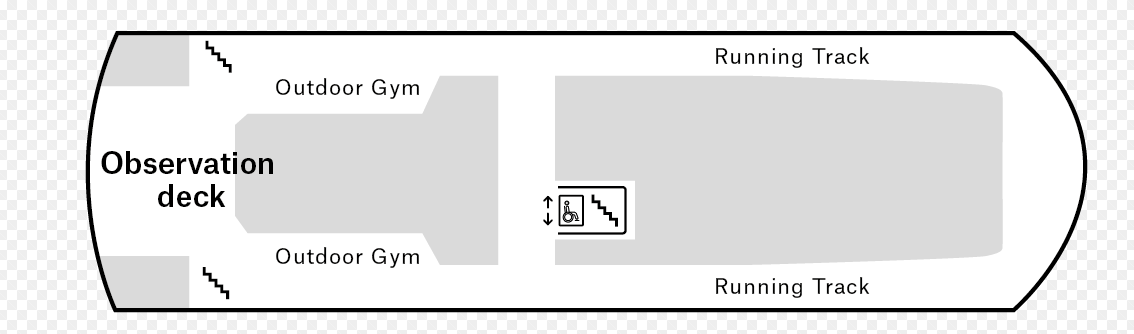

The images shown are for illustration purposes only and may not be an exact representation of what you find on the ship.
The images shown are for illustration purposes only and may not be an exact representation of what you find on the ship.
The images shown are for illustration purposes only and may not be an exact representation of what you find on the ship.
The images shown are for illustration purposes only and may not be an exact representation of what you find on the ship.
The images shown are for illustration purposes only and may not be an exact representation of what you find on the ship.

Our Fusion packages are all ABTA & ATOL protected ensuring that your booking is safe with us
| 14 nights aboard the MS Fridtjof Nansen | |||
| Full-board dining included | |||
| Wine, beer & soft drinks included with lunch & dinner | |||
| Complimentary tea and coffee | |||
| Range of included excursions | |||
| No gratuities | |||
| Complimentary Wi-Fi on board | |||
| Engaging onboard activities and lectures | |||
| Port Taxes and Fees | |||
 | ABTA and ATOL Protection* | ||
Date 17th Oct 2026 |
Nts 14 |
Oceanview £5,029pp |
Balcony £6,227pp |
Suite £8,693pp |
Date 17th Oct 2026 |
Nts 14 |
Oceanview £5,029pp |
Balcony £6,227pp |
Suite £8,693pp |
| Oceanview staterooms from | £5,029pp | ||
| RR | Polar Outside Cabin | £5,029pp | |
| TT | Large Arctic Superior Cabin |  | |
| TY | Arctic Superior Cabin (wheelchair-accessible) | | |
| USPO | Unspecified Polar Outside | | |
| USP | Unspecified Polar Outside | | |
| USPY | Unspecified Arctic Superior (without balcony, accessible) | | |
| Balcony staterooms from | £6,227pp | ||
| XT | Arctic Superior Cabin with Balcony (quad) | £6,227pp | |
| XTD | Arctic Superior Cabin with Balcony | | |
| XY | Arctic Superior with Balcony (wheelchair-accessible) | £6,227pp | |
| XTJ | Arctic Superior with Balcony | | |
| USPX | Unspecified Arctic Superior | | |
| USXY | Unspecified Arctic Superior (accessible) | | |
| Suite staterooms from | £8,693pp | ||
| MA | XL Corner Suite with Private Balcony | £11,881pp | |
| MB | XL Corner Suite | £8,693pp | |
| MC | Expedition Suite | £9,305pp | |
| MD | Large Suite with Balcony | | |
| ME | Suite with Balcony | | |
| MF | Corner Suite | | |
| USPS | Unspecified Expedition Suite | | |
| USSY | Unspecified Expedition Suite (accessible) | | |
Fusion Holidays when selling travel arrangements is a trading name of Co-op Travel Services Limited, registration 08903986. Fusion Cruises is an Accredited Body Member of Co-op Travel Services Limited ATOL 12904.
Book with Confidence. We are a Member of ABTA which means you have the benefit of ABTA’s assistance and Code of Conduct.
Some of the flights and flight-inclusive holidays on this website are financially protected by the ATOL scheme but ATOL protection does not apply to all holiday and travel services offered on this website. This website will provide you with information on the protection that applies in the case of each holiday and travel service offered before you make your booking. If you do not receive an ATOL Certificate then the booking will not be ATOL protected. If you do receive an ATOL Certificate but all parts of your trip are not listed on it, those parts will not be ATOL protected. Please see our booking conditions for information, or for more information about financial protection and the ATOL Certificate go to: www.caa.co.uk