This site uses cookies as defined in our Cookie Policy, by continuing to use this site you agree to their use.
Continue

| Arrive | Depart | ||||||
| 2nd02 | SepSep | 202626 | Reykjavík, Iceland, embark on the MS Roald Amundsen | ||||
Sprawling Reykjavík, the nation's nerve center and government seat, is home to half the island's population. On a bay overlooked by proud Mt. Esja (pronounced eh-shyuh), with its ever-changing hues, Reykjavík presents a colorful sight, its concrete houses painted in light colors and topped by vibrant red, blue, and green roofs. In contrast to the almost treeless countryside, Reykjavík has many tall, native birches, rowans, and willows, as well as imported aspen, pines, and spruces.Reykjavík's name comes from the Icelandic words for smoke, reykur, and bay, vík. In AD 874, Norseman Ingólfur Arnarson saw Iceland rising out of the misty sea and came ashore at a bay eerily shrouded with plumes of steam from nearby hot springs. Today most of the houses in Reykjavík are heated by near-boiling water from the hot springs. Natural heating avoids air pollution; there's no smoke around. You may notice, however, that the hot water brings a slight sulfur smell to the bathroom.Prices are easily on a par with other major European cities. A practical option is to purchase a Reykjavík City Card at the Tourist Information Center or at the Reykjavík Youth Hostel. This card permits unlimited bus usage and admission to any of the city's seven pools, the Family Park and Zoo, and city museums. The cards are valid for one (ISK 3,300), two (ISK 4,400), or three days (ISK 4,900), and they pay for themselves after three or four uses a day. Even lacking the City Card, paying admission (ISK 500, or ISK 250 for seniors and people with disabilities) to one of the city art museums (Hafnarhús, Kjarvalsstaðir, or Ásmundarsafn) gets you free same-day admission to the other two. Explore the world’s northernmost capital, Reykjavík Your adventure begins with an overnight stay in Reykjavík. A laid-back city of art, culture and history, delightful Reykjavík is well worth spending some time getting to know. Take a stroll along Laugavegur with its boutiques and outdoor shops, gaze in awe at the striking Hallgrímskirkja Church, and drop in on the fascinating Reykjavík Art Museum. If you have the time, we recommend booking a Pre-Programme with us and discovering some of Iceland’s natural highlights before your cruise begins. | |||||||
| 3rd03 | SepSep | 202626 | Nuuk (Godthaab), Greenland | 22:00 | |||
Nuuk, meaning “the cape”, was Greenland’s first town (1728). Started as a fort and later mission and trading post some 240 kilometers south of the Arctic Circle, it is the current capital. Almost 30% of Greenland’s population lives in the town. Not only does Nuuk have great natural beauty in its vicinity, but there are Inuit ruins, Hans Egede’s home, the parliament, and the Church of our Saviour as well. The Greenlandic National Museum has an outstanding collection of Greenlandic traditional dresses, as well as the famous Qilakitsoq mummies. The Katuaq Cultural Center’s building was inspired by the undulating Northern Lights and can house 10% of Nuuk’s inhabitants. Welcome to the capital of Greenland You'll have an early start today as we depart Reykjavík and fly to Nuuk. Nuuk is Greenland’s colourful and compact capital with a population of fewer than 20,000. Located just 150 miles from the Arctic Circle, this picturesque city is a striking mix of old and modern buildings, set against a backdrop of the mountainous peaks Quassussuaq and Ukkusissat. Your expedition ship awaits you in the harbour. After being welcomed aboard and collecting your complimentary expedition jacket, it's time to settle into your cabin before enjoying your first dinner on board. | |||||||
| 4th04 | SepSep | 202626 | At Sea | ||||
| 5th05 | SepSep | 202626 | Qikiqtarjuaq, Nunavut, Canada | 08:00 | 17:00 | ||
Cross into the majesty of the unknown The shores of Baffin Island (Qikiqtaaluk) are guarded by ice for most of the year. In August, the ice begins to recede allowing for ships to navigate these waters for just a short period of time. The sea ice environment around the island is a natural wonder which creates a rich habitat for wildlife. Our objective is to reach the small settlement of Qikiqtarjuaq, where we hope to begin our adventures in Arctic Canada. In true explorer style, our route will be determined by the presence and concentration of sea ice. We will plan our excursions and landing sites in consultation with local communities, so as not to disrupt their seasonal activities. Possible destinations include: Isabella Bay (Ninginganiq) Ninginganiq (Isabella Bay) National Wildlife Area is a critical habitat for Arctic wildlife, most notably bowhead whales. As a summer feeding ground for these massive marine mammals, it’s a crucial area for their conservation. Sam Ford Fjord (Kangiqtualuk Uqquqti) and Gibbs Fjord With towering peaks and epic glaciers, these fjords are renowned for their impressive scenery and are popular with nature enthusiasts and adventure seekers alike. This area is rich in wildlife, with marine mammals like seals and whales, and a variety of bird species. Coutts Inlet (Inalugaarjuup Kangiqłua) Experience the solitude and serenity of this remote and seldom-visited wilderness. The 50-mile-deep fjord system contains two arms; the ’North Arm‘ and the main inlet itself. One of the Arctic’s most elusive species, the narwhal, can be found here. | |||||||
| 6th06 | SepSep | 202626 | Isabella Bay, Baffin Island, Nunavut, Canada | 08:00 | 16:00 | ||
| 7th07 | SepSep | 202626 | Gibbs Fjord, Nunavut, Canada | 08:00 | 18:00 | ||
There are few places on earth where the simple grandeur of the landscape can dwarf a ship with giant peaks, steep cliffs, and glacial rivers of ice. In Gibbs Fjord it is possible to see only towering cliffs and the seemingly impenetrable fortress of 4,000-foot walls and buttresses that make up Sillem Island, eventually dividing the dark, deep waters of Gibbs and Clark Fjords. The geological formations here make for excellent photo opportunities and it is astounding to realize that very little of this spectacular terrain has ever been explored. | |||||||
| 8th08 | SepSep | 202626 | At Sea | ||||
| 9th09 | SepSep | 202626 | Dundas Harbour, Devon Island, Nunavut, Canada | 07:00 | 18:00 | ||
Dundas Harbour is located in the southeast of Devon Island, Canada’s 6th largest island. It is a forlorn but starkly beautiful spot. The island was first sighted by Europeans in 1616 by the English explorers Robert Bylot and William Baffin. But it did not appear on maps until after explorer William Edward Parry’s exploration in the 1820’s. Parry named it after Devon, England. In the local Inuktitut language, the place is called Talluruti, which translates as “a woman’s chin with tattoos on it.” This refers to the deep crevasses and streaks on Devon Island, which from a distance resemble traditional facial tattoos. On land there are remains of a Thule settlement dating back to 1000 A.D., including tent rings, middens and a gravesite. There are also much more recent remains a Royal Canadian Mounted Police outpost. The first post was established in 1924 to monitor and control illegal activities, such as foreign whaling, in the eastern entrance to the Northwest Passage. But conditions were so isolated and severe that the post was abandoned in 1933. It was reopened in 1945, but again closed, this time permanently, in 1951. Today, Devon Island is the largest uninhabited island in the world. Lancaster Sound and Devon Island Welcome to Lancaster Sound (Tallurutiup Imanga), the gateway to the Northwest Passage. This breathtaking sound is home to incredible scenery, iconic Arctic wildlife and colourful Inuit communities. We plan to sail deep into the sound, and over the course of three days in the area, our possible exploration sites include: Dundas Harbour This historic and scenic site is on the southern shores of Devon Island. The harbour is a former Royal Canadian Mounted Police (RCMP) post, and it was also a base for scientific research and exploration. A great spot for a hike, musk oxen are frequently seen along the peninsula. Beechey Island (Iluvilik) This site holds a significant place in the history of Arctic exploration, known particularly for the ill-fated Franklin expedition in the mid-19th century. The island is home to several well-preserved grave sites of expedition members and a monument commemorating Arctic exploration efforts. Croker Bay A picturesque bay on the south coast of Devon Island. With two large outlet glaciers streaming down from the island’s ice cap, this is an excellent place for small boat cruising. You may even spot walruses lounging around the calved ice floes. Coburg Island (Nirjutiqarvik) This island is a protected National Wildlife Area, and it lives up to its Inuktitut name, Nirjutiqarvik, meaning ’The Place of Animals‘. The island is renowned for its significant seabird colonies, including large populations of Thick-billed Murres and Northern Fulmars, and it’s an important feeding ground for marine mammals. | |||||||
| 10th10 | SepSep | 202626 | Beechey Island, Nunavut, Canada | 08:00 | 17:00 | ||
Beechey Island is a small island off the southwest coast of Devon Island, separated by a narrow waterway called the Barrow Strait. Captain William Edward Parry was the first European to visit the island in 1819. His lieutenant, Frederick William Beechey, named the island after his father, the artist William Beechey (1753–1839). Beechey Island played a significant role in the history of Arctic Exploration. During the winter of 1845-46, Sir John Franklin and his men camped on the island as part of their ill-fated quest to find the Northwest Passage. Mummified remains of three of Franklin’s crew were discovered, giving a better understanding of what happened before the disappearance of the expedition. In 1850 Edward Belcher used the island as a base while surveying the area. Later, in 1903, Norwegian explorer Roald Amundsen stopped at the island at the beginning of his successful voyage in search for the Northwest Passage. Subsequently, Beechey Island has been declared a "Territorial Historic Site" since 1975 by the Northwest Territories government | |||||||
| 11th11 | SepSep | 202626 | Croker Bay, Nunavut, Canada | 08:00 | 17:00 | ||
| 12th12 | SepSep | 202626 | Coburg Island, Nunavut, Canada | 08:00 | 18:00 | ||
The beautiful uninhabited Coburg Island has a diverse landscape including cliffs, rocky shores, and lush tundra while bowhead whales, narwhals and beluga are known to frequent the surrounding waters. It is one of the Queen Elizabeth Islands and due to its unique ecology and wildlife, this island has been designated an International Biological Program site and a Key Migratory Bird Terrestrial Habitat site. Tens of thousands of seabirds, including Black-legged Kittiwakes, Thick-billed Murres, Glaucous Gulls and Northern Fulmars all nestle together on the rocky cliffs. | |||||||
| 13th13 | SepSep | 202626 | Baffin Bay, Nunavut, Canada | ||||
Enjoy a day of adventure in the Far North Before your adventure continues to Northwest Greenland, enjoy a day on expedition in the north of Baffin Bay. From landings to kayaking, be ready for anything as your Captain and Expedition Team decide on the best sites and activities based on the day’s conditions. Land at sites linked to early exploration history, visit Inuit communities, and look out for Arctic wildlife such as whales, narwhals, seals and seabirds. | |||||||
| 14th14 | SepSep | 202626 | Qaanaaq, Greenland | 08:00 | 16:00 | ||
In AD 850, the Vikings established their parliament in Tórshavn, a name which translates as "Thor's harbor." It was named after Thor, the god of thunder and lightning in Norse mythology. The town became a center of trade for the island, and in fact was designated as the only legal place for the islanders to sell and buy products. This trade monopoly was abolished in 1856. Today it is the capital and largest city of the Faroe Islands, with fish-processing plants, a shipyard, and woolen products making up. It is considered to be one of the oldest capitals in Northern Europe. Explore life at the edge of the world ’Ultima Thule‘ was the term used in the 4th century BC by the Greek explorer Pytheas to describe a mythical land in the far north. Nobody knows for sure which land Pytheas had in mind when he coined this name, but for some, it has come to refer to the far north in Greenland. As we explore here, expect wild beauty at the edge of the inhabitable world. Extreme climatic conditions year-round guarantee isolation and tough living conditions for the inhabitants, and even by Arctic standards the Thule region is harsh and remote. And yet, this was the first region in Greenland ever to be colonised by the forerunners of the Inuit, somewhere around 4,500 years ago. How they managed to survive and thrive in that environment still puzzles Arctic archaeologists. The abundant bird and animal life provides sustenance, and the traditional hunting culture has survived better here than elsewhere in Greenland. The polar travel know-how of the locals has been highly sought after on European and American expeditions, either as guides or saviours. In fact, thanks to its position, the region has been the natural starting point for many travellers heading towards the North Pole. Always adapting our programme to the changeable weather and ice conditions, we will spend the next days exploring the region. We aim to visit some of the local communities, land with expedition boats to marvel at the power of nature, sail through icy channels and – with a bit of luck – spot some of the giants of the Arctic, including walruses, orcas, narwhals, belugas, and perhaps even polar bears. | |||||||
| 15th15 | SepSep | 202626 | Bushnan Island, Greenland | 08:00 | 16:00 | ||
| 16th16 | SepSep | 202626 | Melville Bay, Greenland | ||||
Relax and learn at sea We’ll spend the day on the open seas crossing Melville Bay. This is a huge bay bordering the icy coast of Lauge Koch, where the ice caps meet the sea. Known by the locals as Qimusseriarsuaq, meaning ’The Great Dog Sledding Place‘, the bay was renamed by British explorers after Robert Dundas, 2nd Viscount of Melville in the mid-19th century. Enjoy your day as we sail well beyond 70 degrees north. Relax on board, join in with wildlife watches out on deck with the Expedition Team, and learn more about the Arctic with the ongoing series of lectures on topics such as nature, geology and mythology. | |||||||
| 17th17 | SepSep | 202626 | Uummannaq, Greenland | 08:00 | 18:00 | ||
In the iceberg-laden waters surrounding the remote community of Uummannaq it is common to see whales. This area of Greenland is also known for its huge basalt mountains, and the small hunting and fishing village of Uummannaq rests at the foot of the heart-shaped Uummannaq Mountain, a name that translates to mean “in the shape of a seal’s heart”. The town of over 1200 people has a granite church and the country’s most northerly ferry terminal. The economy of Uummannaq revolves largely around the halibut/fish-processing factory. Discover the wonders of west Greenland The final chapter of our epic voyage around Baffin Bay takes us to an area of extreme natural beauty – the fjords of West Greenland and Disko Bay. Known as the ’iceberg factory of the Arctic‘, this area produces the most ice of anywhere in the northern hemisphere. As always nature is in charge and our exact route will depend on the weather and ice conditions on the day. Possible landing sites include: Uummannaq Fjord In Greenland’s ‘Far North’, the beauty of the land and the relative productivity of the environment have attracted people here for thousands of years. Intriguing archaeological sites are mute witness of the ability of Arctic people to thrive in such a harsh environment. We may visit the community of Uummannaq – a beautiful island town with a heart-shaped mountain – or the archaeological site of Qilakitsok, where the famed Greenland mummies were discovered. Viagat Sound Also called Sullorsuaq Strait, this beautiful waterway sits between two rugged land masses at the north end of Disko Bay. Depending on the weather and wildlife conditions, we might use our small expedition boats to land on a beach or perhaps get up close to a glacier. Have your binoculars and camera ready as wildlife sightings in this region can include humpbacks, orcas and bowhead whales, as well as several types of seals. UNESCO-listed Ilulissat Icefjord This spectacular UNESCO World Heritage Site regularly tops the list of things to see and do in Greenland. Marvel at giant icebergs floating placidly in the deep blue waters as they take on different hues of white, grey and blue. All photographers, regardless of skill, will return to the ship with the most enviable images. Visit the Icefjord Centre in Ilulissat to learn more about the ice in this fascinating area and take a hike to Sermermiut to drink in the incredible views. | |||||||
| 18th18 | SepSep | 202626 | Vaigat Sound, Greenland | 08:00 | 18:00 | ||
| 19th19 | SepSep | 202626 | Ilulissat (Jakobshavn), Greenland | 08:00 | 17:00 | ||
Known as the birthplace of icebergs, the Ilulissat Icefjord produces nearly 20 million tons of ice each day. In fact, the word Ilulissat means “icebergs” in the Kalaallisut language. The town of Ilulissat is known for its long periods of calm and settled weather, but the climate tends to be cold due to its proximity to the fjord. Approximately 4,500 people live in Ilulissat, the third-largest town in Greenland after Nuuk and Sisimiut. Some people here estimate that there are nearly as many sled dogs as human beings living in the town that also boasts a local history museum located in the former home of Greenlandic folk hero and famed polar explorer Knud Rasmussen. | |||||||
| 20th20 | SepSep | 202626 | Sisimiut (Holsteinsborg), Greenland | 07:00 | 14:00 | ||
Located just north of the Arctic Circle, Sisimiut is the northernmost town in Greenland where the port remains free of ice in the winter. Yet it is also the southernmost town where there is enough snow and ice to drive a dogsled in winter and spring. In Sisimiut, travelling by sled has been the primary means of winter transportation for centuries. In fact, the area has been inhabited for approximately 4,500 years. Modern Sisimiut is the largest business center in the north of Greenland, and is one of the fastest growing Greenlandic cities. Commercial fishing is the lead economy in the town‘s thriving industrial base. A modern town on the edge of the wilderness On our journey south we’ll visit Sisimiut, which lies 25 miles north of the Arctic Circle. The modern town has grown alongside ancient remains that date back to more than 4,000 years. You can learn more about the ancient Saqqaq cultureat the interesting local museum. If you're looking for a special souvenir, pick up a scarf, hat or mittens made of qiviut, the inner wool of a musk ox, said to be 10 times warmer than sheep wool. | |||||||
| 21st21 | SepSep | 202626 | Nuuk (Godthaab), Greenland | 06:00 | |||
Nuuk, meaning “the cape”, was Greenland’s first town (1728). Started as a fort and later mission and trading post some 240 kilometers south of the Arctic Circle, it is the current capital. Almost 30% of Greenland’s population lives in the town. Not only does Nuuk have great natural beauty in its vicinity, but there are Inuit ruins, Hans Egede’s home, the parliament, and the Church of our Saviour as well. The Greenlandic National Museum has an outstanding collection of Greenlandic traditional dresses, as well as the famous Qilakitsoq mummies. The Katuaq Cultural Center’s building was inspired by the undulating Northern Lights and can house 10% of Nuuk’s inhabitants. Return to Nuuk Today, as we arrive back in Nuuk, you’ll have completed your voyage around Baffin Bay. Say a fond farewell to MS Roald Amundsen, her crew and the Expedition Team. Nuuk is a relative metropolis compared to all other towns in the country you have visited over the last couple of weeks, and it's a fascinating window into modern Greenland. From here, you'll catch a flight back to Reykjavík and enjoy an overnight stay at a local hotel. | |||||||
| 22nd22 | SepSep | 202626 | Reykjavík, Iceland, disembark the MS Roald Amundsen | ||||
Sprawling Reykjavík, the nation's nerve center and government seat, is home to half the island's population. On a bay overlooked by proud Mt. Esja (pronounced eh-shyuh), with its ever-changing hues, Reykjavík presents a colorful sight, its concrete houses painted in light colors and topped by vibrant red, blue, and green roofs. In contrast to the almost treeless countryside, Reykjavík has many tall, native birches, rowans, and willows, as well as imported aspen, pines, and spruces.Reykjavík's name comes from the Icelandic words for smoke, reykur, and bay, vík. In AD 874, Norseman Ingólfur Arnarson saw Iceland rising out of the misty sea and came ashore at a bay eerily shrouded with plumes of steam from nearby hot springs. Today most of the houses in Reykjavík are heated by near-boiling water from the hot springs. Natural heating avoids air pollution; there's no smoke around. You may notice, however, that the hot water brings a slight sulfur smell to the bathroom.Prices are easily on a par with other major European cities. A practical option is to purchase a Reykjavík City Card at the Tourist Information Center or at the Reykjavík Youth Hostel. This card permits unlimited bus usage and admission to any of the city's seven pools, the Family Park and Zoo, and city museums. The cards are valid for one (ISK 3,300), two (ISK 4,400), or three days (ISK 4,900), and they pay for themselves after three or four uses a day. Even lacking the City Card, paying admission (ISK 500, or ISK 250 for seniors and people with disabilities) to one of the city art museums (Hafnarhús, Kjarvalsstaðir, or Ásmundarsafn) gets you free same-day admission to the other two. See more of Iceland’s capital Your adventure concludes in Reykjavík, giving you another chance to explore Iceland's stylish capital. If you want to discover more, you can join our optional Post-Programme before heading home. Or simply extend your stay and enjoy Reykjavík and its surrounding geothermal attractions. | |||||||
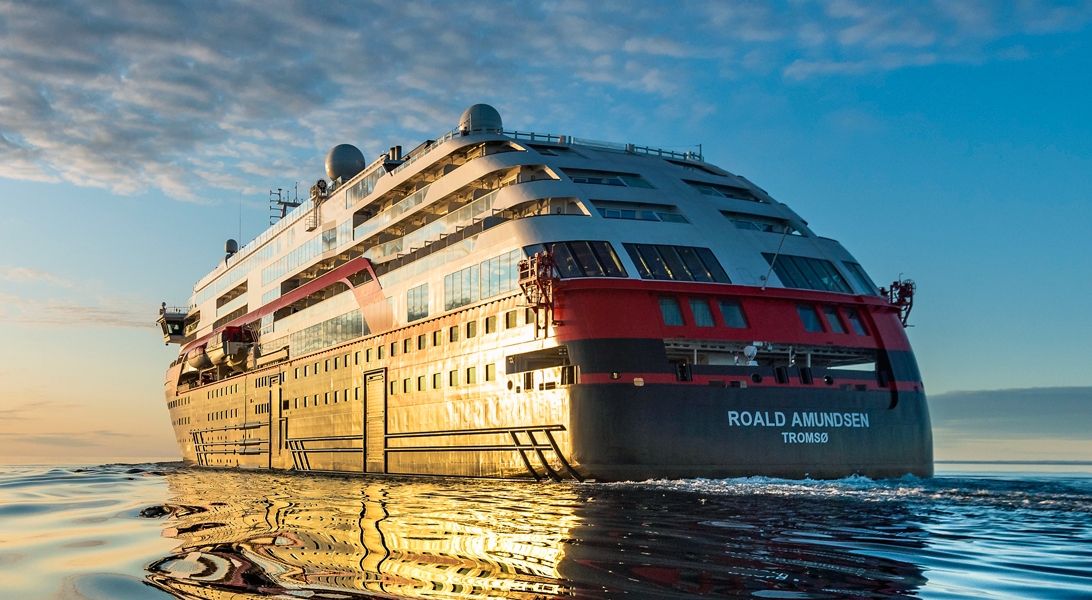


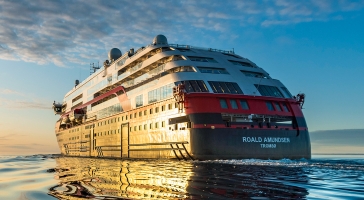
The images shown are for illustration purposes only and may not be an exact representation of what you find on the ship.
The images shown are for illustration purposes only and may not be an exact representation of what you find on the ship.
The images shown are for illustration purposes only and may not be an exact representation of what you find on the ship.
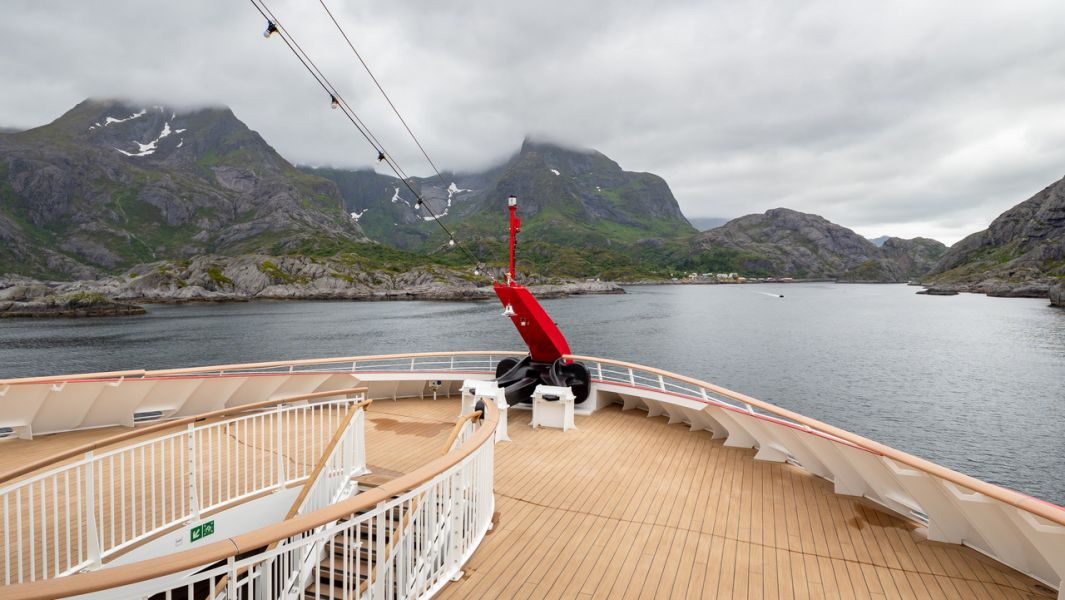
The ship has spacious outdoor areas. They are perfect vantage points to sit back, relax and watch the world go by. The observation deck is located on deck 11, where you will also find the outdoor gym and running track.
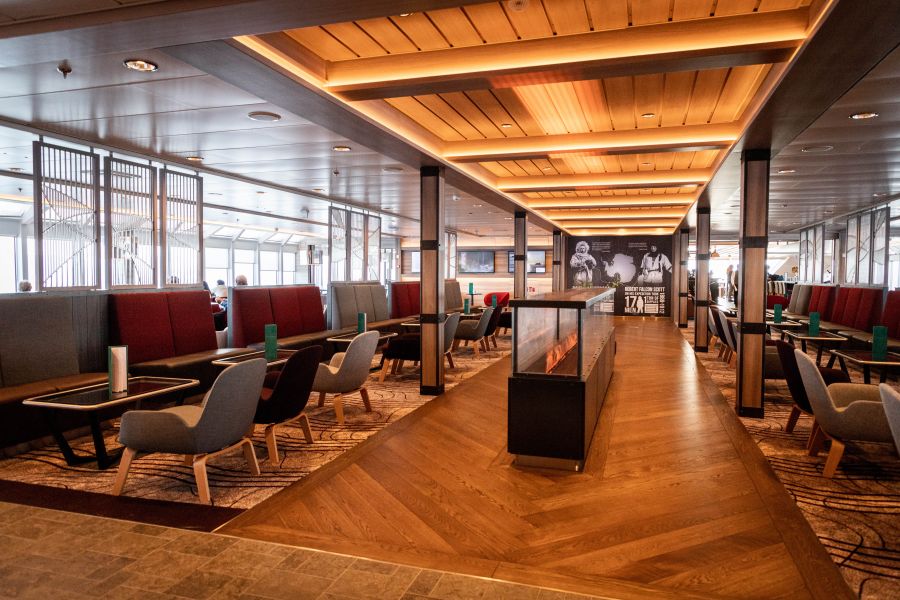
Relax and rejuvenate in the elegant Explorer lounge & bar. Sink into a comfortable armchair and gaze out at the magnificent views through the floor-to-ceiling windows.
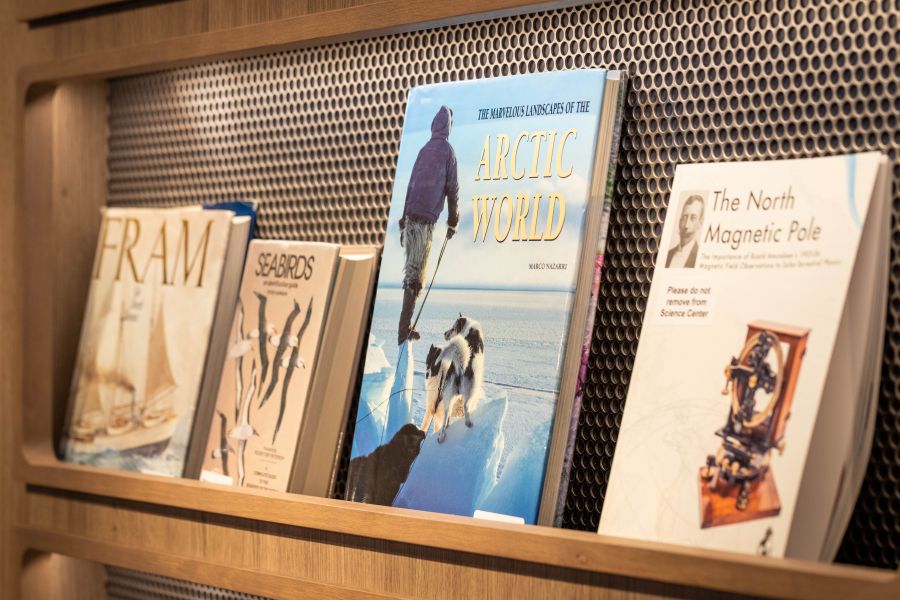
The ship has a small selection of books on different topics that is available to guests while on board. The library is located on deck 6.
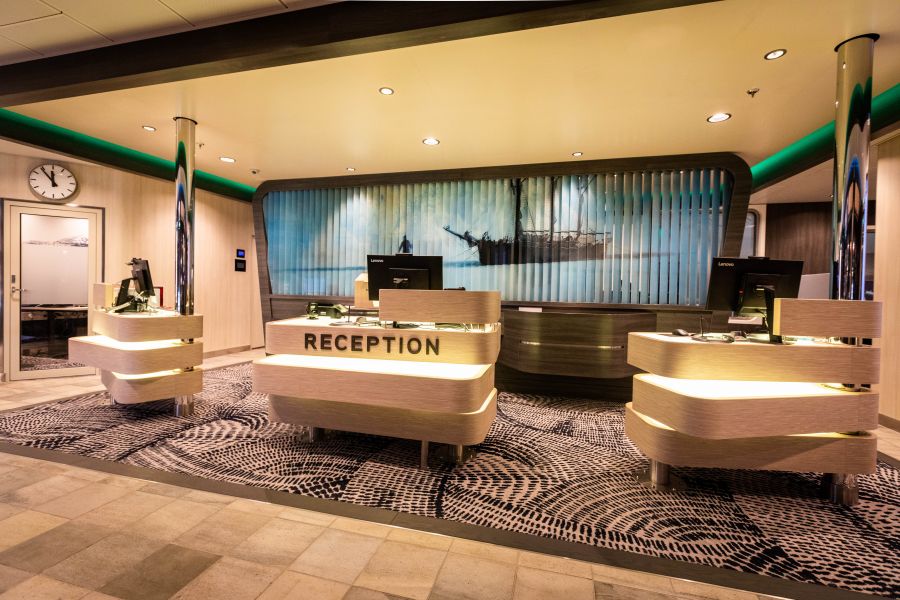
The reception is located on deck 6.
The images shown are for illustration purposes only and may not be an exact representation of what you find on the ship.
The images shown are for illustration purposes only and may not be an exact representation of what you find on the ship.

Our Fusion packages are all ABTA & ATOL protected ensuring that your booking is safe with us
| 20 nights aboard the MS Roald Amundsen | |||
| Full-board dining included | |||
| Wine, beer & soft drinks included with lunch & dinner | |||
| Complimentary tea and coffee | |||
| Range of included excursions | |||
| No gratuities | |||
| Complimentary Wi-Fi on board | |||
| Engaging onboard activities and lectures | |||
| Port Taxes and Fees | |||
 | ABTA and ATOL Protection* | ||
Date 2nd Sep 2026 |
Nts 20 |
Oceanview £13,307pp |
Balcony £15,476pp |
Suite £23,578pp |
Date 2nd Sep 2026 |
Nts 20 |
Oceanview £13,307pp |
Balcony £15,476pp |
Suite £23,578pp |
| USP | Unspecified Polar Outside |  | |
| USPY | Unspecified Arctic Superior | | |
| USSY | Unspecified Expedition Suite | | |
| USXY | Unspecified Arctic Superior | | |
| Oceanview staterooms from | £13,307pp | ||
| RR | Polar Outside Cabin | £13,307pp | |
| TT | Large Arctic Superior Cabin | £14,563pp | |
| TY | Large Arctic Superior Cabin (wheelchair-accessible) | £14,563pp | |
| USPO | Unspecified Polar Outside | | |
| Balcony staterooms from | £15,476pp | ||
| XT | Arctic Superior Cabin with Balcony (quad) | £16,274pp | |
| XTD | Arctic Superior Cabin with Balcony | £16,274pp | |
| XY | Arctic Superior Cabin with Balcony (wheelchair-accessible) | £16,274pp | |
| XTJ | Arctic Superior Cabin with Balcony (wheelchair-accessible, limited view, quad) | £15,476pp | |
| USPX | Unspecified Arctic Superior | | |
| Suite staterooms from | £23,578pp | ||
| MA | XL Expedition Corner Suite with Balcony (Upper Deck) | £31,909pp | |
| MB | XL Expedition Corner Suite with Balcony (Lower Deck) | £23,578pp | |
| MC | Expedition Suite | | |
| MD | Large Expedition Suite with Balcony | | |
| ME | Expedition Suite with Balcony | | |
| MF | Expedition Corner Suite | | |
| USPS | Unspecified Expedition Suite | | |
Fusion Holidays when selling travel arrangements is a trading name of Co-op Travel Services Limited, registration 08903986. Fusion Cruises is an Accredited Body Member of Co-op Travel Services Limited ATOL 12904.
Book with Confidence. We are a Member of ABTA which means you have the benefit of ABTA’s assistance and Code of Conduct.
Some of the flights and flight-inclusive holidays on this website are financially protected by the ATOL scheme but ATOL protection does not apply to all holiday and travel services offered on this website. This website will provide you with information on the protection that applies in the case of each holiday and travel service offered before you make your booking. If you do not receive an ATOL Certificate then the booking will not be ATOL protected. If you do receive an ATOL Certificate but all parts of your trip are not listed on it, those parts will not be ATOL protected. Please see our booking conditions for information, or for more information about financial protection and the ATOL Certificate go to: www.caa.co.uk