| | | | | Arrive | Depart |
| 8th08 | AugAug | 202727 | Seattle, Washington, United States, embark on the MS Roald Amundsen | | |
Seattle is a scenic seaport city in western Washington, situated on an isthmus between Puget Sound to the west and Lake Washington to the east. It is the largest city in Washington. Five pioneer families from Illinois first settled the area in 1851, and named the town after a friendly Suquamish Indian chief. It was incorporated as a city in 1869, and grew quickly after the Great Northern Railway arrived in 1893, especially during the Alaska Gold Rush of 1897. When the Panama Canal opened in 1914, Seattle became a major Pacific port of entry, and today it is the region's commercial and transportation hub and the centre of manufacturing, trade, and finance, with an estimated 684,451 residents as of 2015. Enjoy the city before your expedition cruise begins The adventure begins in the Emerald City of Seattle, on the Pacific coast of the United States. If you can, why not arrive early and see what the Emerald City has to offer. Take a stroll through the nine-acre Olympic Sculpture Park for incredible views of Puget Sound and the surrounding mountains, admiring the work of renowned artists as you go. For a feast of the senses, visit the famous Pike Place Market. Operating for over a century, this lively farmer’s market boasts everything from buskers and bars to salmon-throwing fishmongers! You’ll spend the night here in Seattle before your connecting flight to Alaska tomorrow. |
| 9th09 | AugAug | 202727 | Nome, Alaska, United States | | 22:00 |
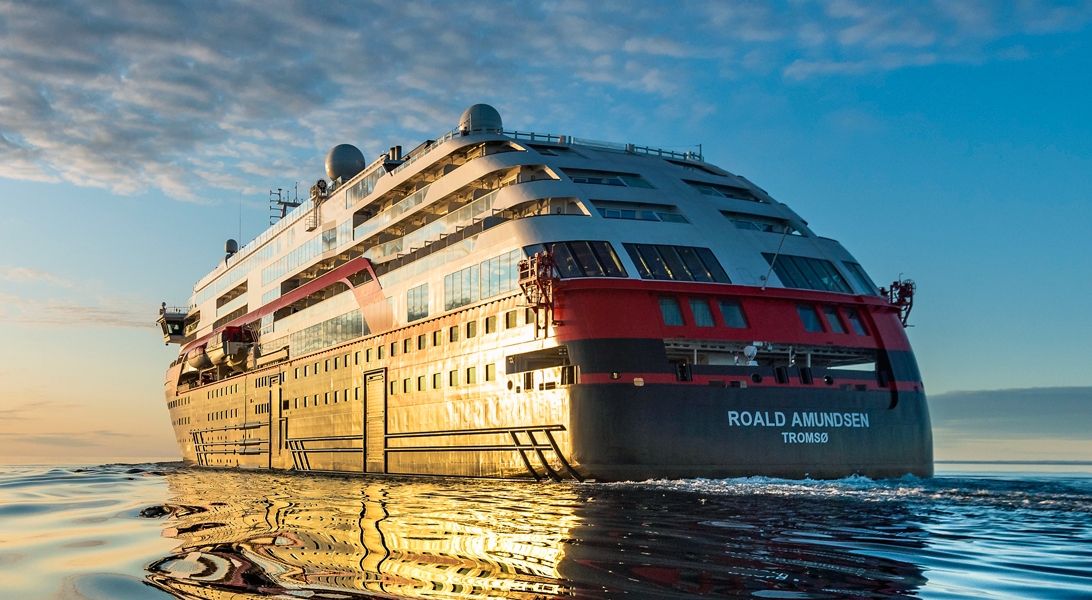
Nome is located on the edge of the Bering Sea, on the southwest side of the Seward Peninsula. Unlike other towns which are named for explorers, heroes or politicians, Nome was named as a result of a 50 year-old spelling error. In the 1850's an officer on a British ship off the coast of Alaska noted on a manuscript map that a nearby prominent point was not identified. He wrote "? Name" next to the point. When the map was recopied, another draftsman thought that the “?” was a C and that the “a” in "Name" was an o, and thus a map-maker in the British Admiralty christened "Cape Nome." The area has an amazing history dating back 10,000 years of Inupiaq Eskimo use for subsistence living. Modern history started in 1898 when "Three Lucky Swedes”, Jafet Lindberg, Erik Lindblom and John Brynteson, discovered gold in Anvil Creek…the rush was on! In 1899 the population of Nome swelled from a handful to 28,000. Today the population is just over 3,500. Much of Nome's gold rush architecture remains. Setting off on your adventure Today you’ll take an early flight from Seattle to Nome, Alaska, where your state-of-the art expedition ship awaits to take you on a journey through the famed Northwest Passage and beyond. Nome is a small coastal town on the edge of the Bering Sea. Once a boomtown of the 1898 Gold Rush, it still carries traces of its frontier past in rusting dredges, old steam engines, and railway remnants. The town also drew big names, including Wyatt Earp, who opened a saloon here, and it later became the endpoint for three of Roald Amundsen’s polar expeditions. That legacy of ambition and exploration sets the stage for what’s to come… Once on board, collect your expedition jacket, settle into your cabin, meet the Expedition Team, and get ready for the adventure. |
| 10th10 | AugAug | 202727 | At Sea | | |
| 11th11 | AugAug | 202727 | At Sea | | |
| 12th12 | AugAug | 202727 | At Sea | | |
| 13th13 | AugAug | 202727 | At Sea | | |
| 14th14 | AugAug | 202727 | Herschel Island, Yukon, Canada | 08:00 | 16:00 |
Spend eight days exploring the Western section of the fabled Northwest Passage Our excursions begin on day seven as we enter the Western Canadian Arctic. Over the next eight days in this section of our voyage we’ll transit through three distinct regions - Nunavut, Northwest Territories, and Yukon – and two traditional Inuit Territories – Inuvialuit and Nunavut. During our time here, we anticipate up to five days of shore excursions and four transit days. Excursion stops and local highlights we hope to be able to visit include: |
| 15th15 | AugAug | 202727 | At Sea | | |
| 16th16 | AugAug | 202727 | Ulukhaktok, Northwest Territories, Canada | 12:30 | 20:00 |
| 17th17 | AugAug | 202727 | At Sea | | |
| 18th18 | AugAug | 202727 | Cambridge Bay, Nunavut, Canada | 08:00 | 18:00 |
| 19th19 | AugAug | 202727 | At Sea | | |
| 20th20 | AugAug | 202727 | Gjoa Haven, Nunavut, Canada | 10:00 | 18:00 |
| 21st21 | AugAug | 202727 | At Sea | | |
| 22nd22 | AugAug | 202727 | Coningham Bay, Nunavut, Canada | 07:00 | 12:00 |
Navigate the dividing line between West and East The ‘Rubicon’ of the Canadian Arctic that divides West from East is the infamous Bellot Strait. This narrow body of water separates the northernmost part of mainland North America from Somerset Island, one of the largest islands in the Canadian Arctic archipelago. Bellot Strait is approximately 15 nautical miles long and just over half a mile wide at its narrowest point. Our ability to navigate this passage will be determined by ice and weather conditions. |
| 22nd22 | AugAug | 202727 | Fort Ross, Nunavut, Canada | 18:00 | 12:00 |
Navigate the dividing line between West and East The ‘Rubicon’ of the Canadian Arctic that divides West from East is the infamous Bellot Strait. This narrow body of water separates the northernmost part of mainland North America from Somerset Island, one of the largest islands in the Canadian Arctic archipelago. Bellot Strait is approximately 15 nautical miles long and just over half a mile wide at its narrowest point. Our ability to navigate this passage will be determined by ice and weather conditions. |
| 23rd23 | AugAug | 202727 | At Sea | | |
| 24th24 | AugAug | 202727 | At Sea | | |
| 25th25 | AugAug | 202727 | Beechey Island, Nunavut, Canada | 12:00 | 17:00 |
Beechey Island is a small island off the southwest coast of Devon Island, separated by a narrow waterway called the Barrow Strait. Captain William Edward Parry was the first European to visit the island in 1819. His lieutenant, Frederick William Beechey, named the island after his father, the artist William Beechey (1753–1839). Beechey Island played a significant role in the history of Arctic Exploration. During the winter of 1845-46, Sir John Franklin and his men camped on the island as part of their ill-fated quest to find the Northwest Passage. Mummified remains of three of Franklin’s crew were discovered, giving a better understanding of what happened before the disappearance of the expedition. In 1850 Edward Belcher used the island as a base while surveying the area. Later, in 1903, Norwegian explorer Roald Amundsen stopped at the island at the beginning of his successful voyage in search for the Northwest Passage. Subsequently, Beechey Island has been declared a "Territorial Historic Site" since 1975 by the Northwest Territories government |
| 25th25 | AugAug | 202727 | Radstock Bay, Devon Island, Canada | 21:00 | 22:00 |
Devon Island is Canada’s sixth largest island and was first seen by Europeans in the early 17th century. The Thule culture had already settled there many centuries before, and left behind qarmat homes, made of rocks, whale bones, rock and sod walls, and skins for roofs that tell a story of over 800 years of human habitation. Other striking finds in this area are the many fossils of corals, crinoids and nautiloids that can be seen. Just across Lancaster Sound is Prince Leopold Island, a Canadian Important Bird Area, a federally listed migratory bird sanctuary, and a Key Migratory Bird Terrestrial Habitat site with large numbers of Thick-billed Murres, Northern Fulmars and Black-legged Kittiwakes that breed there. |
| 26th26 | AugAug | 202727 | Croker Bay, Nunavut, Canada | 08:00 | 09:00 |
| 26th26 | AugAug | 202727 | Dundas Harbour, Devon Island, Nunavut, Canada | 12:00 | 18:00 |
Dundas Harbour is located in the southeast of Devon Island, Canada’s 6th largest island. It is a forlorn but starkly beautiful spot. The island was first sighted by Europeans in 1616 by the English explorers Robert Bylot and William Baffin. But it did not appear on maps until after explorer William Edward Parry’s exploration in the 1820’s. Parry named it after Devon, England. In the local Inuktitut language, the place is called Talluruti, which translates as “a woman’s chin with tattoos on it.” This refers to the deep crevasses and streaks on Devon Island, which from a distance resemble traditional facial tattoos. On land there are remains of a Thule settlement dating back to 1000 A.D., including tent rings, middens and a gravesite. There are also much more recent remains a Royal Canadian Mounted Police outpost. The first post was established in 1924 to monitor and control illegal activities, such as foreign whaling, in the eastern entrance to the Northwest Passage. But conditions were so isolated and severe that the post was abandoned in 1933. It was reopened in 1945, but again closed, this time permanently, in 1951. Today, Devon Island is the largest uninhabited island in the world. |
| 27th27 | AugAug | 202727 | Pond Inlet, Nunavut, Canada | 10:00 | 16:00 |
Located in northern Baffin Island, Pond Inlet is a small, predo¬minantly Inuit community, with a population of roughly 1,500 inhabitants. In 1818, the British explorer John Ross named a bay in the vicinity after the English astronomer John Pond. Today Pond Inlet is considered one of Canada's "jewels of the North" thanks to several picturesque glaciers and mountain ranges nearby. Many archaeological sites of ancient Dorset and Thule peoples can be found near Pond Inlet. The Inuit hunted caribou, ringed and harp seals, fish, polar bears, walrus, narwhals, geese, ptarmigans and Arctic hares, long before European and American whalers came here to harvest bowhead whales. Pond Inlet is also known as a major center of Inuit art, especially the printmaking and stone carving that are featured in the town’s art galleries. |
| 28th28 | AugAug | 202727 | Baffin Bay, Nunavut, Canada | | |
Watch for wildlife and get involved in Citizen Science Leaving Nunavut behind, our expedition cruise continues to Greenland across Baffin Bay. While at sea, your Expedition Team continues to lead lectures on topics such as Arctic wildlife and the history of exploration in the region, and you can still take part in Citizen Science, such as the GLOBE Program, observing clouds to help scientists study our climate. You’ll also continue to learn about the cultures and traditions of the communities in Greenland with our onboard Cultural Ambassadors. Or if you prefer, simply take time to relax – enjoy a drink with fellow explorers, watch the world drift by from the hot tub, or soothe your body and mind in the sauna. |
| 29th29 | AugAug | 202727 | Ilulissat (Jakobshavn), Greenland | 14:00 | 20:00 |
Known as the birthplace of icebergs, the Ilulissat Icefjord produces nearly 20 million tons of ice each day. In fact, the word Ilulissat means “icebergs” in the Kalaallisut language. The town of Ilulissat is known for its long periods of calm and settled weather, but the climate tends to be cold due to its proximity to the fjord. Approximately 4,500 people live in Ilulissat, the third-largest town in Greenland after Nuuk and Sisimiut. Some people here estimate that there are nearly as many sled dogs as human beings living in the town that also boasts a local history museum located in the former home of Greenlandic folk hero and famed polar explorer Knud Rasmussen. Discover the magical beauty of Greenland The final chapter of our journey encompasses the majestic coast of West Greenland. We will begin by sailing into Disko Bay – a haven for whales and seals. Over the next three days you’ll experience some of the most iconic sites in all of Greenland. Our objectives include: Ilulissat Nestled at the edge of the magnificent Ilulissat Icefjord, a UNESCO World Heritage Site, is Ilulissat. Here you’ll find an ever-changing gallery of passing icebergs set against a backdrop of colourful houses. In town you can visit a multitude of shops selling local crafts, and on the outskirts walking trails take you along the epic icefjord. Sisimiut Sisimiut is Greenland’s second city, situated in a spectacular location just above the Arctic Circle. This area has history spanning more than 4,500 years, and old traditions are alive and well. Learn more about ancient Saqqaq artifacts in the local museum or stretch your legs on a hike. If you're looking for a special souvenir, pick up a scarf, hat or mittens made of qiviut, the inner wool of the musk ox that’s said to be 10 times warmer than sheep’s wool. Evighedsfjord As we head north, we plan to offer an exploration day in the magical and pristine Evighedsfjord near Maniitsoq. We'll determine on the day what adventures we can take part in. The 'Fjord of Eternity' is fed by an ice cap that calves huge icebergs into its 2,300 ft deep waters. It's surrounded by mist-cloaked mountains with beautiful white ridges, punctuated by crystal blue ice caves. |
| 30th30 | AugAug | 202727 | Sisimiut (Holsteinsborg), Greenland | 13:00 | 20:00 |
Located just north of the Arctic Circle, Sisimiut is the northernmost town in Greenland where the port remains free of ice in the winter. Yet it is also the southernmost town where there is enough snow and ice to drive a dogsled in winter and spring. In Sisimiut, travelling by sled has been the primary means of winter transportation for centuries. In fact, the area has been inhabited for approximately 4,500 years. Modern Sisimiut is the largest business center in the north of Greenland, and is one of the fastest growing Greenlandic cities. Commercial fishing is the lead economy in the town‘s thriving industrial base. |
| 31st31 | AugAug | 202727 | Evighedsfjorden, Greenland | 08:00 | 17:00 |
| 1st01 | SepSep | 202727 | Nuuk (Godthaab), Greenland, disembark the MS Roald Amundsen | 06:00 | |
Nuuk, meaning “the cape”, was Greenland’s first town (1728). Started as a fort and later mission and trading post some 240 kilometers south of the Arctic Circle, it is the current capital. Almost 30% of Greenland’s population lives in the town. Not only does Nuuk have great natural beauty in its vicinity, but there are Inuit ruins, Hans Egede’s home, the parliament, and the Church of our Saviour as well. The Greenlandic National Museum has an outstanding collection of Greenlandic traditional dresses, as well as the famous Qilakitsoq mummies. The Katuaq Cultural Center’s building was inspired by the undulating Northern Lights and can house 10% of Nuuk’s inhabitants. The trip concludes in colourful Nuuk Your trip ends in Nuuk, Greenland’s compact capital. Striking contrasts define this city: traditional wooden houses sit alongside contemporary architecture, including the Greenland Parliament Building. Explore Nuuk Cathedral and Hans Egede House, or walk the harbour where fishing vessels and modern maritime activity share the same waters. From here, you fly to Reykjavik, carrying memories of a journey shaped by ice, culture, and the vast scale of the Arctic world. |