This site uses cookies as defined in our Cookie Policy, by continuing to use this site you agree to their use.
Continue

| Arrive | Depart | ||||||
| 21st21 | SepSep | 202828 | Oslo, Norway, embark on the MS Spitsbergen | ||||
Oslo is the capital of Norway and is also its largest city, situated at the head of Oslo Fjord and surrounded by hills and forests. Home to some 50 museums and full of galleries, cafés, a sculpture park and the Royal Palace, this vibrant city with its handsome 19th-century buildings and wide streets has much to offer. Its history dates back 1,000 years, and includes a rich seafaring heritage that ranges from the Viking era to Thor Heyerdahl’s Kon Tiki expedition. Discover more about this exciting city on our varied selection of excursions. Enjoy time in Oslo before flying to Svalbard Your expedition begins in Oslo, Norway's fjord-side capital, a city rich in history with a thriving art scene. Wander the Ekebergparken sculpture park, admire the striking Opera House and Munch Museum, relax in a floating sauna on the harbour, or head to Sørenga for urban beach life and New Nordic cuisine, before settling in for the night in an airport hotel. | |||||||
| 22nd22 | SepSep | 202828 | Longyearbyen, Svalbard and Jan Mayen | ||||
Longyearbyen is the biggest settlement in Svalbard. Seat of the Norwegian administration, it also has the best services and infrastructure in the archipelago. Located deep in the Adventfjord, a sidearm of the Isfjorden (Icefjord), Longyearbyen’s airport can be used all-year round, but its harbor is blocked by ice in winter. Most shops, hotels, restaurants and a hospital are within easy walking distance of the port. One of the most prominent buildings in town is the UNIS center, where several Norwegian universities have joined forces to operate and offer the northernmost higher education to both Norwegian and international students. Adjacent to UNIS, and well worth a visit, is the Svalbard Museum, covering the natural history and exploitation of Svalbard. Remnants of the former mining activity can be seen all around Longyearbyen and even in town. The town at the top of the world After a morning flight from Oslo, your adventure begins with two nights in Longyearbyen, a colourful frontier town at the edge of the Arctic wilderness, where snowmobiles outnumber people. Beyond exploring the town at your own pace, join our curated two-day programme of excursions designed to reveal Longyearbyen's history, nature and resilient spirit. Discover how a settlement once built on coal mining has reinvented itself around science, tourism and a deep connection to the Arctic wilderness, while retaining the traditions that unite those who call this remote frontier home. | |||||||
| 23rd23 | SepSep | 202828 | Longyearbyen, Svalbard and Jan Mayen | ||||
Longyearbyen is the biggest settlement in Svalbard. Seat of the Norwegian administration, it also has the best services and infrastructure in the archipelago. Located deep in the Adventfjord, a sidearm of the Isfjorden (Icefjord), Longyearbyen’s airport can be used all-year round, but its harbor is blocked by ice in winter. Most shops, hotels, restaurants and a hospital are within easy walking distance of the port. One of the most prominent buildings in town is the UNIS center, where several Norwegian universities have joined forces to operate and offer the northernmost higher education to both Norwegian and international students. Adjacent to UNIS, and well worth a visit, is the Svalbard Museum, covering the natural history and exploitation of Svalbard. Remnants of the former mining activity can be seen all around Longyearbyen and even in town. | |||||||
| 24th24 | SepSep | 202828 | Longyearbyen, Svalbard and Jan Mayen | 20:00 | |||
Longyearbyen is the biggest settlement in Svalbard. Seat of the Norwegian administration, it also has the best services and infrastructure in the archipelago. Located deep in the Adventfjord, a sidearm of the Isfjorden (Icefjord), Longyearbyen’s airport can be used all-year round, but its harbor is blocked by ice in winter. Most shops, hotels, restaurants and a hospital are within easy walking distance of the port. One of the most prominent buildings in town is the UNIS center, where several Norwegian universities have joined forces to operate and offer the northernmost higher education to both Norwegian and international students. Adjacent to UNIS, and well worth a visit, is the Svalbard Museum, covering the natural history and exploitation of Svalbard. Remnants of the former mining activity can be seen all around Longyearbyen and even in town. Welcome to your expedition home After two days exploring Longyearbyen, it’s time to board your expedition ship. The Expedition Team and crew will be waiting to welcome you aboard. Once you've settled into your cabin, we'll cast off and set course for the remote wilderness and extraordinary wildlife of the High Arctic. | |||||||
| 25th25 | SepSep | 202828 | Spitsbergen, Svalbard and Jan Mayen | 08:00 | 18:00 | ||
A land of spectacular beauty Spitsbergen, Svalbard's largest island, is a wilderness of steep mountains, glaciers, and scattered offshore islands. Over the next few days, we'll explore dramatic fjords where glaciers creak and calve icebergs into the sea, push north towards Northwest Spitsbergen National Park where sea ice may shape our route, and scan for the wildlife that thrives here: polar bears, walruses, Arctic foxes, reindeer, and colonies of seabirds nesting on the cliffs. Each day will be different. Landings, Zodiac cruises, kayaking, hikes: be ready for anything as your Captain and Expedition Team read the conditions and seize every opportunity the Arctic offers.
| |||||||
| 26th26 | SepSep | 202828 | Spitsbergen, Svalbard and Jan Mayen | 13:00 | |||
| 27th27 | SepSep | 202828 | At Sea | ||||
| 28th28 | SepSep | 202828 | Jan Mayen Island, Norway | 17:00 | 22:00 | ||
Described as one of the most remote islands in the world, Jan Mayen liesbetween Norway to the east and Greenland to the west. It is a rugged volcanicisland 34 miles long and is made up of two parts – the larger section to thenorth (Beerenbeg Volcano) and the longer but narrower section to the south. Amile-wide isthmus links these two parts. Geologically, the island was formed bya ‘hotspot’ where molten magma pushes up through the earth’s crust to createvolcanoes in the middle of nowhere. Politically, Jan Mayen is an integral partof Norway. The eighteen people living on the island work for either the NorwegianArmed Forces or the Norwegian Meteorological Institute. Their main purpose isto operate the Loran-C radio navigation system. From 1615 to 1638, the Dutchran a whaling station here. Today, the island is a nature reserve underNorwegian jurisdiction aimed at preserving the pristine Arctic island and themarine life, including the ocean floor. Visit an active volcano that's a haven for birdlife Today we reach Jan Mayen, a volcanic island suspended 500 km offshore with no permanent residents and almost no visitors. The only inhabitants are temporarily stationed Norwegian military personnel, meaning we join a very select group given the chance to set foot here. Dominated by Beerenberg, the world's northernmost active volcano, the landscape feels almost alien: volcanic rock, moss, and lichen stretching to the horizon. Conditions permitting, we'll go ashore to explore. While there are no land mammals, Jan Mayen is a designated Important Bird Area, home to large colonies of northern fulmars, Brünnich's guillemots, and little auks. Keep watch for whales and seals in the surrounding waters too. This is one of the true highlights of any Arctic expedition. | |||||||
| 29th29 | SepSep | 202828 | At Sea | ||||
| 30th30 | SepSep | 202828 | Husavik, Iceland | 08:00 | 17:00 | ||
The town of Húsavík sits below Húsavíkurfjall mountain on the eastern shore of Skjálfandi bay. Just above the town is lake Botnsvatn, a popular place for outings. The lake is just the right size for a nice hike around it. The lakes surroundings are rich in vegetation and bird life and trout is said to be abundant, though small. Húsavík harbour lies below the bank right in the heart of town. The harbour once boasted a large fishing fleet, bustling with the activity of fishermen. It still serves as a fishing harbour but today's activity revolves more around the successful whale watching businesses. The first organised whale watching excursions in Iceland started from here in 1995. Since then, whale watching has become a major attraction and Húsavík continues to be the leading destination for whale watching. In addition to the tours, a fascinating whale museum is located right by the harbour. Húsavík is considered to be the oldest settlement in Iceland. The Swedish explorer, Gardar Svavarsson, spent one winter there in 870 AD during which time he built himself a house from which the settlement derives its name. Iceland's best whale watching spot Today you'll discover Húsavík, a charming fishing town and one of the best places in the world to see whales. It looks out over Skjálfandi Bay, where humpback and minke whales, white-beaked dolphins, harbour porpoises, and even the elusive blue whale are regularly spotted. On shore, the Whale Museum brings you closer to these giants, while the Exploration Museum tells a more unexpected story: in the 1960s, NASA sent 32 Apollo astronauts to train in the lunar-like lava fields nearby, preparing them to collect rock samples on the Moon. For something more relaxing, soak in the geothermal waters at GeoSea overlooking the bay, or end the day with a beer at the local microbrewery. | |||||||
| 1st01 | OctOct | 202828 | Djupavik, Iceland | 08:00 | 19:00 | ||
Local folklore and natural beauty Today we'll explore Djúpivogur, a quiet village on Iceland's east coast where discovery unfolds at a slower, more intimate pace. From the historic harbour, wander a place where creativity and nature intertwine: the remarkable Stone & Mineral Museum reveals the hidden beauty within Iceland's rocks, while the striking Eggs of Merry Bay sculptures line the waterfront. Gentle trails lead past cairns, bird-filled lakes, and sweeping coastal views beneath the iconic, pyramid-shaped Búlandstindur mountain. Old fish oil tanks now echo with music and art. Whether walking to secluded black sand beaches or sharing simple local flavours, this is Iceland up close: unhurried, authentic, and deeply connected to its land and people. | |||||||
| 2nd02 | OctOct | 202828 | At Sea | ||||
| 3rd03 | OctOct | 202828 | Elduvík, Faroe Islands | 08:00 | 20:00 | ||
Surround yourself with the sounds of Faroese nature Today we stop at Elduvík, a tiny village of just 23 inhabitants set in the Funningsfjørður inlet in the Faroe Islands. Split in two by the river Stórá, this is a place of astonishing quiet. Despite its size, Elduvík has a school, church, dock, and pier. From the waterfront, look across sparkling waters to the nearby island of Kalsoy. Walk the charming streets and listen for seabirds, bleating sheep, and waves lapping from the fjord. You'll notice many houses still wear traditional grass roofs, offering natural insulation against the Faroese weather. | |||||||
| 4th04 | OctOct | 202828 | Thorshavn, Faroe Islands | 07:00 | 12:00 | ||
More than 600 miles (nearly 1,000 kilometres) from Denmark’s west coast lie the Faroes, a triangle of eighteen windswept islands, seventeen of which are inhabited. Only 48,500 people plus some 70,000 sheep roam these remote lands. Much of the islands’ heritage reflects a medieval past, beginning with the arrival of farmers from western Norway who settled here in the 9th century. Evidence of this Scandinavian heritage is preserved through centuries of isolation; ancient structures can still be seen in villages clustered around old churches. Sheer cliffs and waterfalls carve Streymoy, the largest of the islands, where Torshavn is one of the world’s smallest capitals with about 12,400 inhabitants, plus another 5,000 living in the suburbs of Argir and Hoyvik. Visitors find interesting museums, churches, monuments and all the amenities of a modern town and thriving harbour here. The world’s oldest, still active parliament was founded in the Viking age. Today, it houses the main offices of the local government. Many of the attractions are found outside of Torshavn in the rugged beauty of Streymoy. There are fields with grazing ponies and sheep, tiny hamlets where residents live in half-timbered houses topped by green grass roofs, and dramatic rock formations. Birds by the thousands populate the craggy seaside cliffs, which make an ideal stopover for migratory gannets, guillemots and puffins. The Faroes' climate is generally wet and windy. Because of the Gulf Stream, the temperature is a good deal more moderate than the latitude might imply; it also helps to keep Faroe harbours ice-free year-round. A visit to Streymoy in the Faroe Islands Founded by Norsemen in the 10th century, Tórshavn, Thor's Harbour, is one of Northern Europe's oldest capitals, set on Streymoy, the largest of the Faroe Islands. Wander through cobbled alleyways lined with colourful turf-roofed houses, or visit the local museums to learn about the city's origins and the islands' flora, fauna and geology. A short walk out of town brings you to Svartafoss, where a waterfall tumbles over mossy rocks. Along the seafront, look out for eider ducks and the distinctive Faroese starling with its beige-tipped wings.
| |||||||
| 5th05 | OctOct | 202828 | Kirkwall, Orkney Islands, Scotland | 08:00 | 14:00 | ||
In bustling Kirkwall, the main town on Orkney, there's plenty to see in the narrow, winding streets extending from the harbor. The cathedral and some museums are highlights. Explore Scotland's northernmost town Welcome to the Shetland Islands. Lerwick, the capital, is a friendly, Victorian-influenced fishing town set in beautiful scenery. Navigate its narrow lanes on foot to discover little shops selling local whiskies, woollen sweaters, and fudge, then head to the old waterfront for the Shetland Museum, home to Pictish carvings and intricate lace shawls. Nearby, Fort Charlotte and the regal town hall are worth a look. Keep your binoculars handy: grey and common seals bask along Lerwick's beaches, and red-throated divers, redshanks, and curlews are often spotted from the shore.
| |||||||
| 6th06 | OctOct | 202828 | At Sea | ||||
| 7th07 | OctOct | 202828 | Kiel, Germany | 14:00 | 22:00 | ||
Known for the Kiel Canal and Kiel Week, the city boasts an important maritime history. Kiel is also a great place to sight-see, do some shopping and take part in one of the many festivals taking place there. A canal that shortcuts a continent Today we pass through the Kiel Canal, one of the world's busiest waterways, linking the North Sea with the Baltic. As we navigate this narrow ribbon of water, northern Germany unfolds on either side: small villages, green farmlands, quiet forests, and cargo ships passing close enough to wave at. It's a day best spent on deck, watching locks open, bridges rise, and over a century of maritime engineering work around you. Seabirds follow in our wake, vessels share the passage, and the landscape shifts with every mile. In the evening, gather for the Captain's Farewell and celebrate the voyage shared. | |||||||
| 8th08 | OctOct | 202828 | Kiel, Germany, disembark the MS Spitsbergen | ||||
Known for the Kiel Canal and Kiel Week, the city boasts an important maritime history. Kiel is also a great place to sight-see, do some shopping and take part in one of the many festivals taking place there. On the edge of the Baltic Sea Kiel is a true maritime hub on the Northern coast of Germany. For generations, it's been the starting point for voyages to the North Atlantic, Baltic Sea and beyond. Today, it marks the end point of your expedition. Bid farewell to ship, crew and your fellow travellers, and take some time to stroll along the wide promenades of city, appreciating the unique German and Scandinavian culture that's been carved out over countless generations of maritime travel. Head home, feeling relaxed and inspired by your beautiful autumn adventure. | |||||||
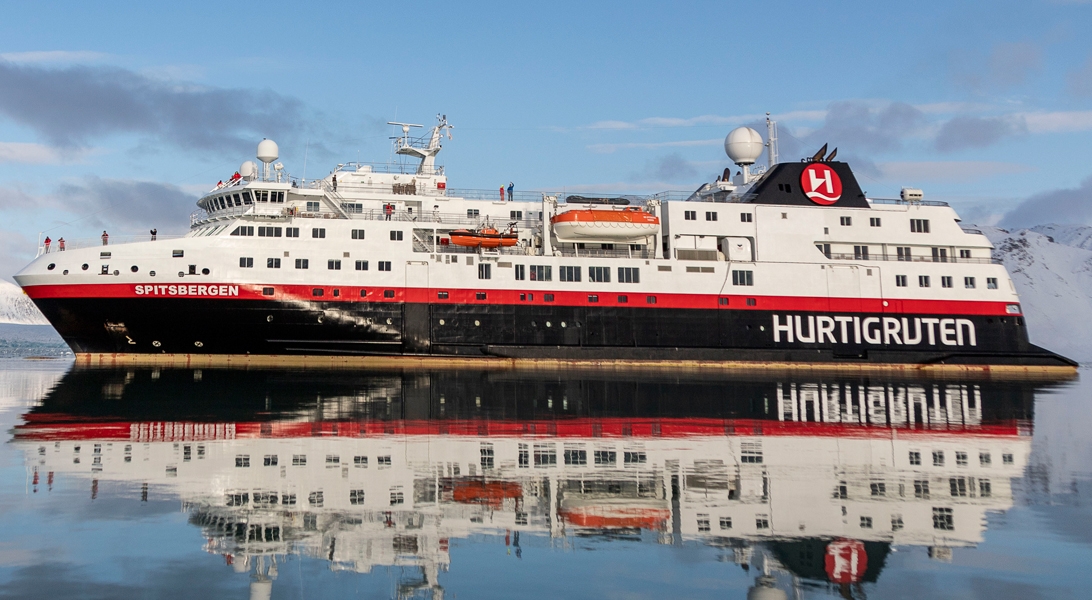
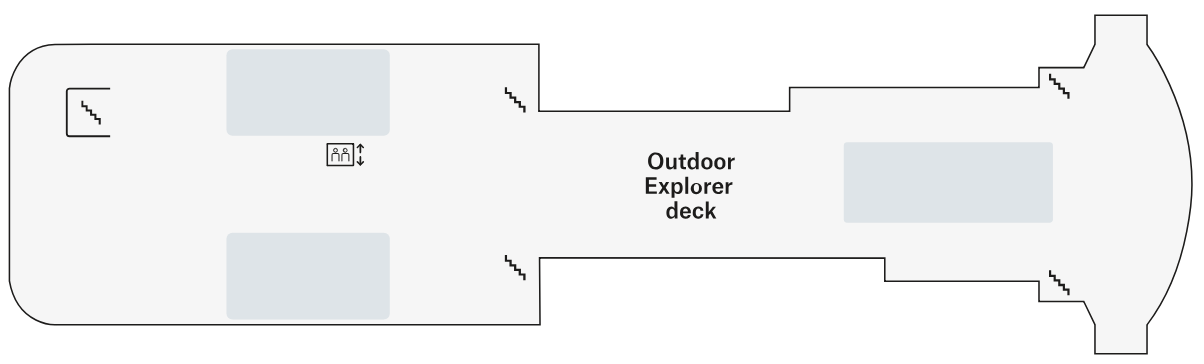

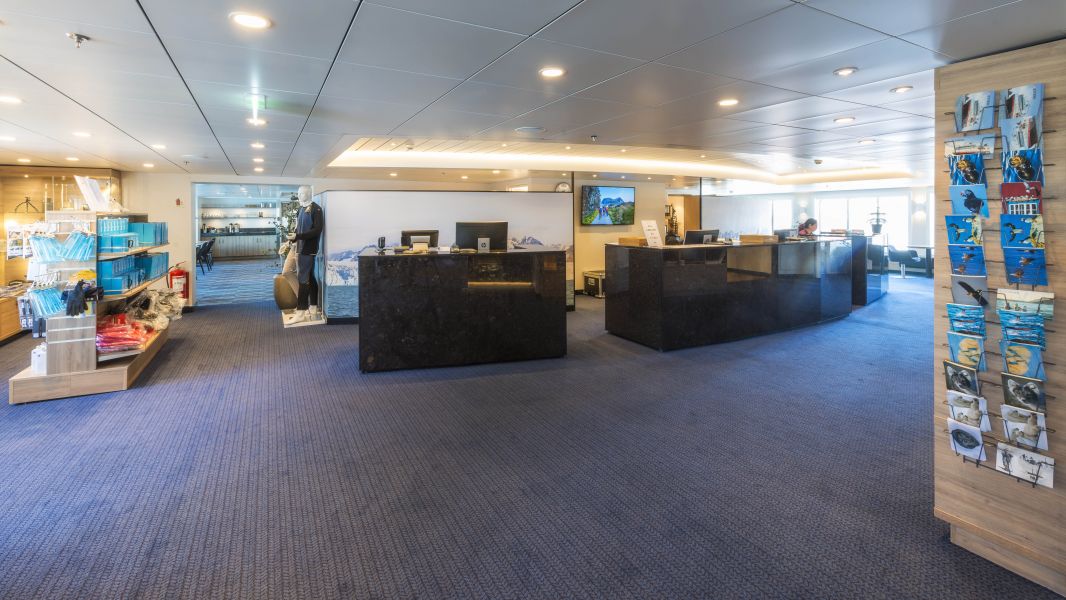
The images shown are for illustration purposes only and may not be an exact representation of what you find on the ship.
The images shown are for illustration purposes only and may not be an exact representation of what you find on the ship.
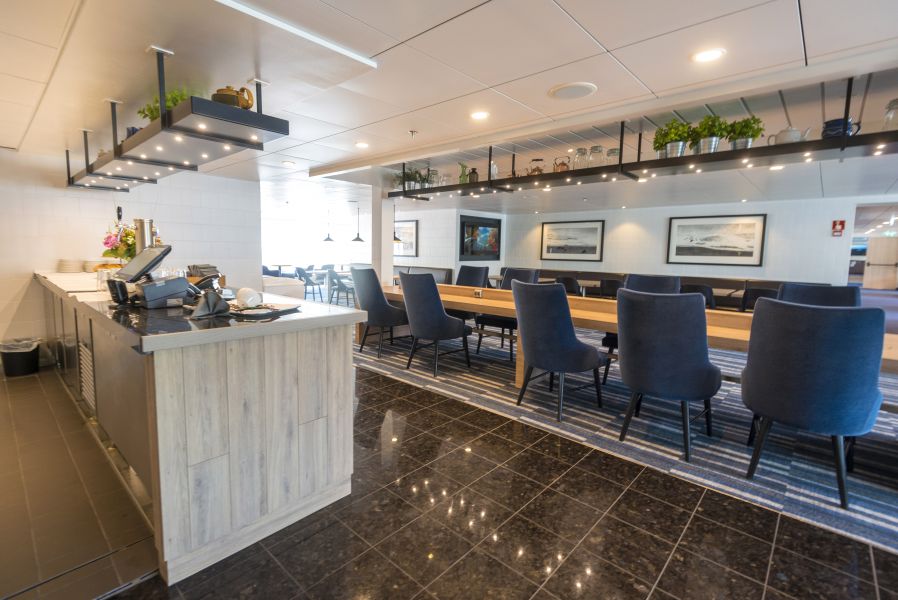
A casual venue new since 2025 serving snacks and light meals between restaurant hours. Perfect for when you've worked up an appetite in between landings.
The images shown are for illustration purposes only and may not be an exact representation of what you find on the ship.
Located on Deck 5.
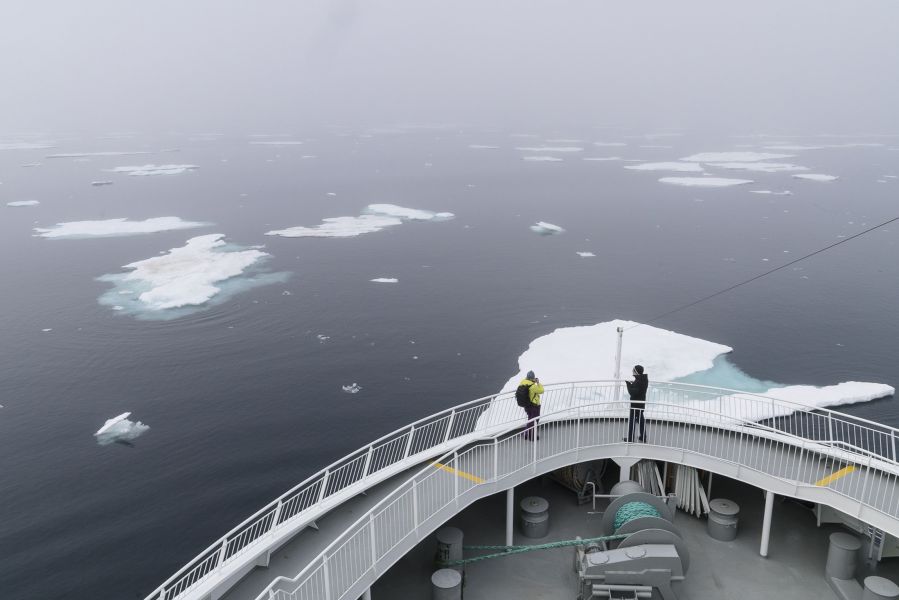
The ship has spacious outdoor areas. They are perfect vantage points to sit back, relax and watch the world go by.
The images shown are for illustration purposes only and may not be an exact representation of what you find on the ship.
The images shown are for illustration purposes only and may not be an exact representation of what you find on the ship.


Our Fusion packages are all ABTA & ATOL protected ensuring that your booking is safe with us
| 17 nights aboard the MS Spitsbergen | |||
| Full-board dining included | |||
| Wine, beer & soft drinks included with lunch & dinner | |||
| Complimentary tea and coffee | |||
| Range of included excursions | |||
| No gratuities | |||
| Complimentary Wi-Fi on board | |||
| Engaging onboard activities and lectures | |||
| Port Taxes and Fees | |||
 | ABTA and ATOL Protection* | ||
Date 21st Sep 2028 |
Nts 17 |
Interior £7,835pp |
Oceanview £8,896pp |
Suite £11,561pp |
Date 21st Sep 2028 |
Nts 17 |
Interior £7,835pp |
Oceanview £8,896pp |
Suite £11,561pp |
| Interior staterooms from | £7,835pp | ||
| I2D | Polar Inside Cabin | £7,835pp | |
| K2D | Large Polar Inside Cabin | £8,147pp | |
| USPI | Unspecified Polar Inside (nested into K2D) |  | |
| USP | Unspecified Polar Inside (nested into K2D, O2D, J2D, QJ) | | |
| Oceanview staterooms from | £8,896pp | ||
| O2D | Polar Outside Cabin | £10,081pp | |
| J2D | Polar Outside Cabin (limited view) | £8,896pp | |
| YA | Arctic Superior Cabin (wheelchair-accessible, limited view) | £9,707pp | |
| P2D | Arctic Superior Cabin (limited view, quad) | £10,331pp | |
| U2D | Arctic Superior Cabin | £10,643pp | |
| QJ | Arctic Superior Cabin (limited view, double/quad) | £9,707pp | |
| O3 | Polar Outside Cabin (triple) | £10,081pp | |
| USPO | Unspecified Polar Outside (nested into O2D) | | |
| Suite staterooms from | £11,561pp | ||
| MX | Owners Suite with Balcony | £18,654pp | |
| Q3 | Mini Suite (triple) | £11,561pp | |
| Q4 | Mini Suite (quad) | £11,561pp | |
| MG | Grand Suite with Balcony | £13,157pp | |
| Q2 | Mini Suite | £11,561pp | |
| USPB | Unspecified Arctic Superior (nested into P2D U2D cabins) | | |
| USPS | Unspecified | | |
Fusion Holidays when selling travel arrangements is a trading name of Co-op Travel Services Limited, registration 08903986. Fusion Cruises is an Accredited Body Member of Co-op Travel Services Limited ATOL 12904.
Book with Confidence. We are a Member of ABTA which means you have the benefit of ABTA’s assistance and Code of Conduct.
Some of the flights and flight-inclusive holidays on this website are financially protected by the ATOL scheme but ATOL protection does not apply to all holiday and travel services offered on this website. This website will provide you with information on the protection that applies in the case of each holiday and travel service offered before you make your booking. If you do not receive an ATOL Certificate then the booking will not be ATOL protected. If you do receive an ATOL Certificate but all parts of your trip are not listed on it, those parts will not be ATOL protected. Please see our booking conditions for information, or for more information about financial protection and the ATOL Certificate go to: www.caa.co.uk