This site uses cookies as defined in our Cookie Policy, by continuing to use this site you agree to their use.
Continue

| Arrive | Depart | ||||||
| 22nd22 | JulJul | 202828 | Southampton, England, embark on the Sky Princess | 16:00 | |||
Lying near the head of Southampton Water, a peninsula between the estuaries of the Rivers Test and Itchen, Southampton is Britain’s largest cruise port. It has been one of England’s major ports since the Middle Ages, when it exported wool and hides from the hinterland and imported wine from Bordeaux. The city suffered heavy damage during World War Two and as a result the centre has been extensively rebuilt, but there are still some interesting medieval buildings including the Bargate, one of the finest city gatehouses in England. | |||||||
| 23rd23 | JulJul | 202828 | At Sea | ||||
| 24th24 | JulJul | 202828 | Kristiansand, Norway | 07:00 | 16:00 | ||
Nicknamed "Sommerbyen" ("Summer City"), Norway's fifth-largest city has 78,000 inhabitants. Norwegians come here for its sun-soaked beaches and beautiful harbor. Kristiansand has also become known internationally for the outdoor Quart Festival, which hosts local and international rock bands every July. According to legend, in 1641 King Christian IV marked the four corners of Kristiansand with his walking stick, and within that framework the grid of wide streets was laid down. The center of town, called the Kvadraturen, still retains the grid, even after numerous fires. In the northeast corner is Posebyen, one of northern Europe's largest collections of low, connected wooden house settlements, and there's a market here every Saturday in summer. Kristiansand's Fisketorvet (fish market) is near the south corner of the town's grid, right on the sea. | |||||||
| 25th25 | JulJul | 202828 | Copenhagen, Denmark | 07:00 | 16:00 | ||
By the 11th century, Copenhagen was already an important trading and fishing centre and today you will find an attractive city which, although the largest in Scandinavia, has managed to retain its low-level skyline. Discover some of the famous attractions including Gefion Fountain and Amalienborg Palace, perhaps cruise the city’s waterways, visit Rosenborg Castle or explore the medieval fishing village of Dragoer. Once the home of Hans Christian Andersen, Copenhagen features many reminders of its fairytale heritage and lives up to the reputation immortalised in the famous song ‘Wonderful Copenhagen’. | |||||||
| 26th26 | JulJul | 202828 | Warnemünde, Germany | 07:30 | 22:00 | ||
Warnemünde, officially a suburb of Rostock, is a quaint seaside resort town with the best hotels and restaurants in the area, as well as 20 km (12 miles) of beautiful white-sand beach. It's been a popular summer getaway for families in eastern Germany for years.There is little to do in Warnemünde except relax, and the town excels brilliantly at that. However, Warnemünde is a major cruise-ship terminal. Whenever there is more than one ship at dock, the town explodes with a county fair–like atmosphere, and shops and restaurants stay open until the ships leave at midnight. The city celebrates the dreifache Anlauf, when three ships dock simultaneously, with fireworks. | |||||||
| 27th27 | JulJul | 202828 | At Sea | ||||
| 28th28 | JulJul | 202828 | Tallinn, Estonia | 09:00 | 21:00 | ||
Estonia's history is sprinkled liberally with long stretches of foreign domination, beginning in 1219 with the Danes, followed without interruption by the Germans, Swedes, and Russians. Only after World War I, with Russia in revolutionary wreckage, was Estonia able to declare its independence. Shortly before World War II, in 1940, that independence was usurped by the Soviets, who—save for a brief three-year occupation by Hitler's Nazis—proceeded to suppress all forms of national Estonian pride for the next 50 years. Estonia finally regained independence in 1991. In the early 1990s, Estonia's own Riigikogu (Parliament), not some other nation's puppet ruler, handed down from the Upper City reforms that forced Estonia to blaze its post-Soviet trail to the European Union. Estonia has been a member of the EU since 2004, and in 2011, the country and its growing economy joined the Eurozone. Tallinn was also named the European City of Culture in 2011, cementing its growing reputation as a cultural hot spot. | |||||||
| 29th29 | JulJul | 202828 | Helsinki, Finland | 07:00 | 16:00 | ||
A city of the sea, Helsinki was built along a series of oddly shaped peninsulas and islands jutting into the Baltic coast along the Gulf of Finland. Streets and avenues curve around bays, bridges reach to nearby islands, and ferries ply among offshore islands.Having grown dramatically since World War II, Helsinki now absorbs more than one-tenth of the Finnish population. The metro area covers 764 square km (474 square miles) and 315 islands. Most sights, hotels, and restaurants cluster on one peninsula, forming a compact central hub. The greater Helsinki metropolitan area, which includes Espoo and Vantaa, has a total population of more than a million people.Helsinki is a relatively young city compared with other European capitals. In the 16th century, King Gustav Vasa of Sweden decided to woo trade from the Estonian city of Tallinn and thus challenge the Hanseatic League's monopoly on Baltic trade. Accordingly, he commanded the people of four Finnish towns to pack up their belongings and relocate to the rapids on the River Vantaa. The new town, founded on June 12, 1550, was named Helsinki.For three centuries, Helsinki (Helsingfors in Swedish) had its ups and downs as a trading town. Turku, to the west, remained Finland's capital and intellectual center. However, Helsinki's fortunes improved when Finland fell under Russian rule as an autonomous grand duchy. Czar Alexander I wanted Finland's political center closer to Russia and, in 1812, selected Helsinki as the new capital. Shortly afterward, Turku suffered a disastrous fire, forcing the university to move to Helsinki. The town's future was secure.Just before the czar's proclamation, a fire destroyed many of Helsinki's traditional wooden structures, precipitating the construction of new buildings suitable for a nation's capital. The German-born architect Carl Ludvig Engel was commissioned to rebuild the city, and as a result, Helsinki has some of the purest neoclassical architecture in the world. Add to this foundation the influence of Stockholm and St. Petersburg with the local inspiration of 20th-century Finnish design, and the result is a European capital city that is as architecturally eye-catching as it is distinct from other Scandinavian capitals. You are bound to discover endless engaging details—a grimacing gargoyle; a foursome of males supporting a balcony's weight on their shoulders; a building painted in striking colors with contrasting flowers in the windows. The city's 400 or so parks make it particularly inviting in summer.Today, Helsinki is still a meeting point of eastern and western Europe, which is reflected in its cosmopolitan image, the influx of Russians and Estonians, and generally multilingual population. Outdoor summer bars ("terrassit" as the locals call them) and cafés in the city center are perfect for people watching on a summer afternoon. | |||||||
| 30th30 | JulJul | 202828 | Stockholm, Sweden | 08:00 | |||
Stockholm is a city in the flush of its second youth. Since the mid-1990s, Sweden's capital has emerged from its cold, Nordic shadow to take the stage as a truly international city. What started with entry into the European Union in 1995 gained pace with the extraordinary IT boom of the late 1990s, strengthened with the Skype-led IT second wave of 2003, and solidified with the hedge-fund invasion that is still happening today as Stockholm gains even more global confidence. And despite more recent economic turmoil, Stockholm's 1 million or so inhabitants have, almost as one, realized that their city is one to rival Paris, London, New York, or any other great metropolis.With this realization comes change. Stockholm has become a city of design, fashion, innovation, technology, and world-class food, pairing homegrown talent with an international outlook. The streets are flowing with a young and confident population keen to drink in everything the city has to offer. The glittering feeling of optimism, success, and living in the here and now is rampant in Stockholm.Stockholm also has plenty of history. Positioned where the waters of Lake Mälaren rush into the Baltic, it’s been an important trading site and a wealthy international city for centuries. Built on 14 islands joined by bridges crossing open bays and narrow channels, Stockholm boasts the story of its history in its glorious medieval old town, grand palaces, ancient churches, sturdy edifices, public parks, and 19th-century museums—its history is soaked into the very fabric of its airy boulevards, built as a public display of trading glory. | |||||||
| 31st31 | JulJul | 202828 | Stockholm, Sweden | 14:00 | |||
Stockholm is a city in the flush of its second youth. Since the mid-1990s, Sweden's capital has emerged from its cold, Nordic shadow to take the stage as a truly international city. What started with entry into the European Union in 1995 gained pace with the extraordinary IT boom of the late 1990s, strengthened with the Skype-led IT second wave of 2003, and solidified with the hedge-fund invasion that is still happening today as Stockholm gains even more global confidence. And despite more recent economic turmoil, Stockholm's 1 million or so inhabitants have, almost as one, realized that their city is one to rival Paris, London, New York, or any other great metropolis.With this realization comes change. Stockholm has become a city of design, fashion, innovation, technology, and world-class food, pairing homegrown talent with an international outlook. The streets are flowing with a young and confident population keen to drink in everything the city has to offer. The glittering feeling of optimism, success, and living in the here and now is rampant in Stockholm.Stockholm also has plenty of history. Positioned where the waters of Lake Mälaren rush into the Baltic, it’s been an important trading site and a wealthy international city for centuries. Built on 14 islands joined by bridges crossing open bays and narrow channels, Stockholm boasts the story of its history in its glorious medieval old town, grand palaces, ancient churches, sturdy edifices, public parks, and 19th-century museums—its history is soaked into the very fabric of its airy boulevards, built as a public display of trading glory. | |||||||
| 1st01 | AugAug | 202828 | Visby, Sweden | 08:00 | 17:00 | ||
Gotland is Sweden's main holiday island, a place of ancient history, a relaxed summer-party vibe, wide sandy beaches, and wild cliff formations called raukar (the remnants of reefs formed more than 400 million years ago). Measuring 125 km (78 miles) long and 52 km (32 miles) at its widest point, Gotland is where Swedish sheep farming has its home. In its charming glades, 35 varieties of wild orchids thrive, attracting botanists from all over the world. | |||||||
| 2nd02 | AugAug | 202828 | At Sea | ||||
| 3rd03 | AugAug | 202828 | Skagen, Denmark | 07:00 | 16:00 | ||
| 4th04 | AugAug | 202828 | At Sea | ||||
| 5th05 | AugAug | 202828 | Southampton, England | 07:00 | 16:00 | ||
Lying near the head of Southampton Water, a peninsula between the estuaries of the Rivers Test and Itchen, Southampton is Britain’s largest cruise port. It has been one of England’s major ports since the Middle Ages, when it exported wool and hides from the hinterland and imported wine from Bordeaux. The city suffered heavy damage during World War Two and as a result the centre has been extensively rebuilt, but there are still some interesting medieval buildings including the Bargate, one of the finest city gatehouses in England. | |||||||
| 6th06 | AugAug | 202828 | At Sea | ||||
| 7th07 | AugAug | 202828 | Greenock, Scotland | 10:00 | |||
Trendy stores, a booming cultural life, fascinating architecture, and stylish restaurants reinforce Glasgow's claim to being Scotland's most exciting city. After decades of decline, it has experienced an urban renaissance uniquely its own. The city’s grand architecture reflects a prosperous past built on trade and shipbuilding. Today buildings by Charles Rennie Mackintosh hold pride of place along with the Zaha Hadid–designed Riverside Museum.Glasgow (the "dear green place," as it was known) was founded some 1,500 years ago. Legend has it that the king of Strathclyde, irate about his wife's infidelity, had a ring he had given her thrown into the river Clyde. (Apparently she had passed it on to an admirer.) When the king demanded to know where the ring had gone, the distraught queen asked the advice of her confessor, St. Mungo. He suggested fishing for it—and the first salmon to emerge had the ring in its mouth. The moment is commemorated on the city's coat of arms.The medieval city expanded when it was given a royal license to trade; the current High Street was the main thoroughfare at the time. The vast profits from American cotton and tobacco built the grand mansions of the Merchant City in the 18th century. In the 19th century the river Clyde became the center of a vibrant shipbuilding industry, fed by the city’s iron and steel works. The city grew again, but its internal divisions grew at the same time. The West End harbored the elegant homes of the newly rich shipyard owners. Down by the river, areas like the infamous Gorbals, with its crowded slums, sheltered the laborers who built the ships. They came from the Highlands, expelled to make way for sheep, or from Ireland, where the potato famines drove thousands from their homes.During the 19th century the population grew from 80,000 to more than a million. And the new prosperity gave Glasgow its grand neoclassical buildings, such as those built by Alexander "Greek" Thomson, as well as the adventurous visionary buildings designed by Charles Rennie Mackintosh and others who produced Glasgow’s Arts and Crafts movement. The City Chambers, built in 1888, are a proud statement in marble and gold sandstone, a clear symbol of the wealthy and powerful Victorian industrialists' hopes for the future.The decline of shipbuilding and the closure of the factories led to much speculation as to what direction the city would take now. The curious thing is that, at least in part, the past gave the city a new lease of life. It was as if people looked at their city and saw Glasgow’s beauty for the first time: its extraordinarily rich architectural heritage, its leafy parks, its artistic heritage, and its complex social history. Today Glasgow is a vibrant cultural center and a commercial hub, as well as a launching pad from which to explore the rest of Scotland, which, as it turns out, is not so far away. In fact, it takes only 40 minutes to reach Loch Lomond, where the other Scotland begins. | |||||||
| 8th08 | AugAug | 202828 | Greenock, Scotland | 06:00 | |||
Trendy stores, a booming cultural life, fascinating architecture, and stylish restaurants reinforce Glasgow's claim to being Scotland's most exciting city. After decades of decline, it has experienced an urban renaissance uniquely its own. The city’s grand architecture reflects a prosperous past built on trade and shipbuilding. Today buildings by Charles Rennie Mackintosh hold pride of place along with the Zaha Hadid–designed Riverside Museum.Glasgow (the "dear green place," as it was known) was founded some 1,500 years ago. Legend has it that the king of Strathclyde, irate about his wife's infidelity, had a ring he had given her thrown into the river Clyde. (Apparently she had passed it on to an admirer.) When the king demanded to know where the ring had gone, the distraught queen asked the advice of her confessor, St. Mungo. He suggested fishing for it—and the first salmon to emerge had the ring in its mouth. The moment is commemorated on the city's coat of arms.The medieval city expanded when it was given a royal license to trade; the current High Street was the main thoroughfare at the time. The vast profits from American cotton and tobacco built the grand mansions of the Merchant City in the 18th century. In the 19th century the river Clyde became the center of a vibrant shipbuilding industry, fed by the city’s iron and steel works. The city grew again, but its internal divisions grew at the same time. The West End harbored the elegant homes of the newly rich shipyard owners. Down by the river, areas like the infamous Gorbals, with its crowded slums, sheltered the laborers who built the ships. They came from the Highlands, expelled to make way for sheep, or from Ireland, where the potato famines drove thousands from their homes.During the 19th century the population grew from 80,000 to more than a million. And the new prosperity gave Glasgow its grand neoclassical buildings, such as those built by Alexander "Greek" Thomson, as well as the adventurous visionary buildings designed by Charles Rennie Mackintosh and others who produced Glasgow’s Arts and Crafts movement. The City Chambers, built in 1888, are a proud statement in marble and gold sandstone, a clear symbol of the wealthy and powerful Victorian industrialists' hopes for the future.The decline of shipbuilding and the closure of the factories led to much speculation as to what direction the city would take now. The curious thing is that, at least in part, the past gave the city a new lease of life. It was as if people looked at their city and saw Glasgow’s beauty for the first time: its extraordinarily rich architectural heritage, its leafy parks, its artistic heritage, and its complex social history. Today Glasgow is a vibrant cultural center and a commercial hub, as well as a launching pad from which to explore the rest of Scotland, which, as it turns out, is not so far away. In fact, it takes only 40 minutes to reach Loch Lomond, where the other Scotland begins. | |||||||
| 9th09 | AugAug | 202828 | At Sea | ||||
| 10th10 | AugAug | 202828 | Reykjavík, Iceland | 08:00 | 21:00 | ||
Sprawling Reykjavík, the nation's nerve center and government seat, is home to half the island's population. On a bay overlooked by proud Mt. Esja (pronounced eh-shyuh), with its ever-changing hues, Reykjavík presents a colorful sight, its concrete houses painted in light colors and topped by vibrant red, blue, and green roofs. In contrast to the almost treeless countryside, Reykjavík has many tall, native birches, rowans, and willows, as well as imported aspen, pines, and spruces.Reykjavík's name comes from the Icelandic words for smoke, reykur, and bay, vík. In AD 874, Norseman Ingólfur Arnarson saw Iceland rising out of the misty sea and came ashore at a bay eerily shrouded with plumes of steam from nearby hot springs. Today most of the houses in Reykjavík are heated by near-boiling water from the hot springs. Natural heating avoids air pollution; there's no smoke around. You may notice, however, that the hot water brings a slight sulfur smell to the bathroom.Prices are easily on a par with other major European cities. A practical option is to purchase a Reykjavík City Card at the Tourist Information Center or at the Reykjavík Youth Hostel. This card permits unlimited bus usage and admission to any of the city's seven pools, the Family Park and Zoo, and city museums. The cards are valid for one (ISK 3,300), two (ISK 4,400), or three days (ISK 4,900), and they pay for themselves after three or four uses a day. Even lacking the City Card, paying admission (ISK 500, or ISK 250 for seniors and people with disabilities) to one of the city art museums (Hafnarhús, Kjarvalsstaðir, or Ásmundarsafn) gets you free same-day admission to the other two. | |||||||
| 11th11 | AugAug | 202828 | Grundarfjørdur, Iceland | 07:00 | 18:00 | ||
| 12th12 | AugAug | 202828 | Isafjørdur, Iceland | 07:00 | 18:00 | ||
Two colossal terraces of sheer rock stand either side of this extraordinarily located town - which rides a jutting spit onto an immensity of black fjord water. Surprisingly, considering the remoteness of its location and its compact size, Isafjordur is a modern and lively place to visit, offering a great choice of cafes and delicious restaurants – which are well stocked to impress visitors. The town is a perfectly located base for adventures amongst Iceland's fantastic wilderness - with skiing, hiking and water-sports popular pursuits among visitors. | |||||||
| 13th13 | AugAug | 202828 | Akureyri, Iceland | 07:00 | 16:00 | ||
Akureyri, called the Capital of the North is the second largest urban area in Iceland, and a lively one at that. Hemmed by the 60-km (37-mile) long Eyjafjörður, Akureyri is sheltered from the ocean winds and embraced by mountains on three sides. Late 19th-century wooden houses impart a sense of history, and the twin spires of a modern Lutheran church rising on a green hill near the waterfront, provide a focal point. To the south of Akureyri is the pyramid-shape rhyolite mountain Súlur. Beyond it is Kerling, the highest peak in Eyjafjörður District. | |||||||
| 14th14 | AugAug | 202828 | At Sea | ||||
| 15th15 | AugAug | 202828 | Kirkwall, Orkney Islands, Scotland | 09:00 | 19:00 | ||
In bustling Kirkwall, the main town on Orkney, there's plenty to see in the narrow, winding streets extending from the harbor. The cathedral and some museums are highlights. | |||||||
| 16th16 | AugAug | 202828 | Lerwick, Shetland Islands, Scotland | 07:00 | 17:00 | ||
Founded by Dutch fishermen in the 17th century, Lerwick today is a busy town and administrative center. Handsome stone buildings—known as lodberries—line the harbor; they provided loading bays for goods, some of them illegal. The town's twisting flagstone lanes and harbor once heaved with activity, and Lerwick is still an active port today. This is also where most visitors to Shetland dock, spilling out of cruise ships, allowing passengers to walk around the town. | |||||||
| 17th17 | AugAug | 202828 | At Sea | ||||
| 18th18 | AugAug | 202828 | Zeebrugge, Belgium | 07:00 | 17:00 | ||
In 1895 work began to construct a new seaport and harbour next to the tiny village of Zeebrugge, situated on the North Sea coast. Today the fast-expanding port of Zeebrugge is one of the busiest in Europe and its marina is Belgium’s most important fishing port. Many attempts were made to destroy this important port during both World Wars. Zeebrugge is ideally located for discovering the historic city of Bruges, and delightful seaside resorts with long sandy beaches can be visited by using the trams that run the whole length of the Belgian coast. Please note that no food may be taken ashore in Belgium. We shall not be offering shuttle buses to Bruges, but you may visit the city on an optional excursion: those visiting Bruges should note that there may be quite a long walk from the coach to the town centre. | |||||||
| 19th19 | AugAug | 202828 | Southampton, England, disembark the Sky Princess | 07:00 | |||
Lying near the head of Southampton Water, a peninsula between the estuaries of the Rivers Test and Itchen, Southampton is Britain’s largest cruise port. It has been one of England’s major ports since the Middle Ages, when it exported wool and hides from the hinterland and imported wine from Bordeaux. The city suffered heavy damage during World War Two and as a result the centre has been extensively rebuilt, but there are still some interesting medieval buildings including the Bargate, one of the finest city gatehouses in England. | |||||||
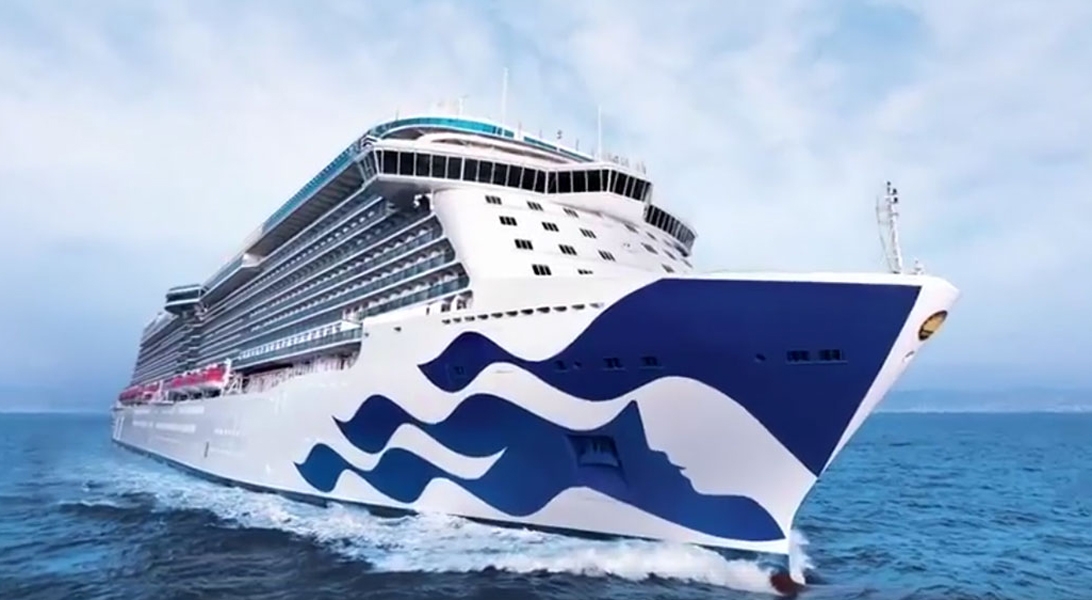
The images shown are for illustration purposes only and may not be an exact representation of what you find on the ship.
The images shown are for illustration purposes only and may not be an exact representation of what you find on the ship.
The images shown are for illustration purposes only and may not be an exact representation of what you find on the ship.
The images shown are for illustration purposes only and may not be an exact representation of what you find on the ship.
The images shown are for illustration purposes only and may not be an exact representation of what you find on the ship.


Our Fusion packages are all ABTA & ATOL protected ensuring that your booking is safe with us
| 28 nights aboard the Sky Princess | |||
| Evening entertainment & Broadway style shows | |||
| Complimentary daily afternoon tea | |||
| Choice of traditional or anytime dining | |||
| Complimentary 24-hour room service | |||
| Speciality Restaurants (charges may apply) | |||
| Drinks package available | |||
| Port Taxes and Fees | |||
 | ABTA and ATOL Protection* | ||
Date 22nd Jul 2028 |
Nts 28 |
Interior £3,329pp |
Balcony £4,830pp |
Suite £6,149pp |
Date 22nd Jul 2028 |
Nts 28 |
Interior £3,329pp |
Balcony £4,830pp |
Suite £6,149pp |
| Interior staterooms from | £3,329pp | ||
| ID | Interior | £3,491pp | |
| IB | Interior | £3,575pp | |
| IF | Interior | £3,329pp | |
| IC | Interior |  | |
| IE | Interior | £3,463pp | |
| IA | Interior | £3,631pp | |
| Balcony staterooms from | £4,830pp | ||
| BA | Balcony | £5,510pp | |
| DB | Deluxe Balcony | £5,919pp | |
| BD | Balcony | £5,329pp | |
| BB | Balcony | £5,420pp | |
| BF | Balcony | £5,059pp | |
| DE | Deluxe Balcony | £5,647pp | |
| DW | Deluxe Balcony (Obstructed) | | |
| BC | Balcony | £5,374pp | |
| BE | Balcony | £5,283pp | |
| DF | Deluxe Balcony | £5,465pp | |
| DC | Deluxe Balcony | £5,828pp | |
| DA | Deluxe Balcony | | |
| D4 | Premium Deluxe Balcony | £6,146pp | |
| BW | Balcony (Obstructed) | £4,830pp | |
| O6 | Deluxe Oceanview | | |
| Suite staterooms from | £6,149pp | ||
| ME | Mini-Suite | £6,710pp | |
| MY | Reserve Mini-Suite No Balcony | | |
| MA | Mini-Suite | £7,047pp | |
| MC | Mini-Suite | £6,822pp | |
| MB | Mini-Suite | £6,935pp | |
| MF | Mini-Suite | £6,149pp | |
| S0 | Sky Suite | | |
| S7 | Window Suite | £10,876pp | |
| S4 | Penthouse Suite | | |
| S2 | Owner's Suite | £15,467pp | |
| S3 | Penthouse Suite | £13,331pp | |
| S5 | Premium Suite | £12,263pp | |
| M1 | Club Class Mini-Suite | | |
| S6 | Vista Suite | £11,199pp | |
Fusion Holidays when selling travel arrangements is a trading name of Co-op Travel Services Limited, registration 08903986. Fusion Cruises is an Accredited Body Member of Co-op Travel Services Limited ATOL 12904.
Book with Confidence. We are a Member of ABTA which means you have the benefit of ABTA’s assistance and Code of Conduct.
Some of the flights and flight-inclusive holidays on this website are financially protected by the ATOL scheme but ATOL protection does not apply to all holiday and travel services offered on this website. This website will provide you with information on the protection that applies in the case of each holiday and travel service offered before you make your booking. If you do not receive an ATOL Certificate then the booking will not be ATOL protected. If you do receive an ATOL Certificate but all parts of your trip are not listed on it, those parts will not be ATOL protected. Please see our booking conditions for information, or for more information about financial protection and the ATOL Certificate go to: www.caa.co.uk