This site uses cookies as defined in our Cookie Policy, by continuing to use this site you agree to their use.
Continue

| Arrive | Depart | ||||||
| 1st01 | AprApr | 202828 | Yokohama, Japan, embark on the Voyager of the Seas | 17:00 | |||
In 1853, a fleet of four American warships under Commodore Matthew Perry sailed into the bay of Tokyo (then Edo) and presented the reluctant Japanese with the demands of the U.S. government for the opening of diplomatic and commercial relations. The following year Perry returned and first set foot on Japanese soil at Yokohama—then a small fishing village on the mudflats of Tokyo bay. Two years later New York businessman Townsend Harris became America's first diplomatic representative to Japan. In 1858 he was finally able to negotiate a commercial treaty between the two countries; part of the deal designated four locations—one of them Yokohama—as treaty ports. In 1859 the shogunate created a special settlement in Yokohama for the growing community of merchants, traders, missionaries, and other assorted adventurers drawn to this exotic new land of opportunity. The foreigners (predominantly Chinese and British, plus a few French, Americans, and Dutch) were confined here to a guarded compound about 5 square km (2 square miles)—placed, in effect, in isolation—but not for long. Within a few short years the shogunal government collapsed, and Japan began to modernize. Western ideas were welcomed, as were Western goods, and the little treaty port became Japan's principal gateway to the outside world. In 1872 Japan's first railway was built, linking Yokohama and Tokyo. In 1889 Yokohama became a city; by then the population had grown to some 120,000. As the city prospered, so did the international community and by the early 1900s Yokohama was the busiest and most modern center of international trade in all of East Asia. Then Yokohama came tumbling down. On September 1, 1923, the Great Kanto Earthquake devastated the city. The ensuing fires destroyed some 60,000 homes and took more than 40,000 lives. During the six years it took to rebuild the city, many foreign businesses took up quarters elsewhere, primarily in Kobe and Osaka, and did not return. Over the next 20 years Yokohama continued to grow as an industrial center—until May 29, 1945, when in a span of four hours, some 500 American B-29 bombers leveled nearly half the city and left more than half a million people homeless. When the war ended, what remained became—in effect—the center of the Allied occupation. General Douglas MacArthur set up headquarters here, briefly, before moving to Tokyo; the entire port facility and about a quarter of the city remained in the hands of the U.S. military throughout the 1950s. By the 1970s Yokohama was once more rising from the debris; in 1978 it surpassed Osaka as the nation's second-largest city, and the population is now inching up to the 3.5 million mark. Boosted by Japan's postwar economic miracle, Yokohama has extended its urban sprawl north to Tokyo and south to Kamakura—in the process creating a whole new subcenter around the Shinkansen Station at Shin-Yokohama. The development of air travel and the competition from other ports have changed the city's role in Japan's economy. The great liners that once docked at Yokohama's piers are now but a memory, kept alive by a museum ship and the occasional visit of a luxury vessel on a Pacific cruise. Modern Large as Yokohama is, the central area is very negotiable. As with any other port city, much of what it has to offer centers on the waterfront—in this case, on the west side of Tokyo Bay. The downtown area is called Kannai (literally, "within the checkpoint"); this is where the international community was originally confined by the shogunate. Though the center of interest has expanded to include the waterfront and Ishikawa-cho, to the south, Kannai remains the heart of town. Think of that heart as two adjacent areas. One is the old district of Kannai, bounded by Basha-michi on the northwest and Nippon-odori on the southeast, the Keihin Tohoku Line tracks on the southwest, and the waterfront on the northeast. This area contains the business offices of modern Yokohama. The other area extends southeast from Nippon-odori to the Moto-machi shopping street and the International Cemetery, bordered by Yamashita Koen and the waterfront to the northeast; in the center is Chinatown, with Ishikawa-cho Station to the southwest. This is the most interesting part of town for tourists. Whether you're coming from Tokyo, Nagoya, or Kamakura, make Ishikawa-cho Station your starting point. Take the South Exit from the station and head in the direction of the waterfront. | |||||||
| 2nd02 | AprApr | 202828 | At Sea | ||||
| 3rd03 | AprApr | 202828 | Osaka, Japan | 07:00 | 19:00 | ||
From Minami's neon-lighted Dotombori and historic Tenno-ji to the high-rise class and underground shopping labyrinths of Kita, Osaka is a city that pulses with its own unique rhythm. Though Osaka has no shortage of tourist sites, it is the city itself that is the greatest attraction. Home to some of Japan's best food, most unique fashions, and warmest locals, Osaka does not beg to be explored—it demands it. More than anywhere else in Japan, it rewards the impulsive turn down an interesting side street or the chat with a random stranger. People do not come here to see the city, they come to experience it.Excluded from the formal circles of power and aristocratic culture in 16th-century Edo (Tokyo), Osaka took advantage of its position as Japan's trading center, developing its own art forms such as Bunraku puppet theater and Rakugo comic storytelling. It was in Osaka that feudal Japan's famed Floating World—the dining, theater, and pleasure district—was at its strongest and most inventive. Wealthy merchants and common laborers alike squandered fortunes on culinary delights, turning Osaka into "Japan's Kitchen," a moniker the city still has today. Though the city suffered a blow when the Meiji government canceled all of the samurai class's outstanding debts to the merchants, it was quick to recover. At the turn of the 20th century, it had become Japan's largest and most prosperous city, a center of commerce and manufacturing.Today Osaka remains Japan's iconoclastic metropolis, refusing to fit Tokyo's norms and expectations. Unlike the hordes of Tokyo, Osakans are fiercely independent. As a contrast to the neon and concrete surroundings, the people of Osaka are known as Japan's friendliest and most outgoing. Ask someone on the street for directions in Tokyo and you are lucky to get so much as a glance. Ask someone in Osaka and you get a conversation.The main areas of the city, Kita (north) and Minami (south), are divided by two rivers: the Dojima-gawa and the Tosabori-gawa. Between Kita and Minami is Naka-no-shima, an island and the municipal center of Osaka. Kita (north of Chuo Dori) is Osaka's economic hub and contains Osaka's largest stations: JR Osaka and Hankyu Umeda. The area is crammed with shops, department stores, and restaurants. Nearby are a nightlife district, Kita-shinchi; Naka-no-shima and the Museum of Oriental Ceramics; Osaka-jo (Osaka Castle); and Osaka Koen (Osaka Park). Restaurants, bars, department stores, and boutiques attract Osaka's youth to Minami (south Chuo Dori); theatergoers head to the National Bunraku Theatre and electronics-lovers to Den Den Town. For a glimpse of old Osaka, visit Tenno-ji Temple and Shin Sekai. The main stations are Namba, Shin-sai-bashi, Namba Nankai, and Tenno-ji. There's easy access to the Municipal Museum of Fine Art and Sumiyoshi Taisha (Sumiyoshi Grand Shrine).The bay area, to the west of the city center, is home to the Osaka Aquarium and Universal Studios Japan. The Shinkansen stops at Shin-Osaka, three stops (about five minutes) north of Osaka Station on the Mido-suji subway line. To the north of Shin-Osaka is Senri Expo Park. | |||||||
| 4th04 | AprApr | 202828 | At Sea | ||||
| 5th05 | AprApr | 202828 | Seogwipo, South Korea | 07:00 | 19:00 | ||
| 6th06 | AprApr | 202828 | Fukuoka, Japan | 07:00 | 20:00 | ||
| 7th07 | AprApr | 202828 | At Sea | ||||
| 8th08 | AprApr | 202828 | Okinawa, Japan | 07:00 | |||
| 9th09 | AprApr | 202828 | Okinawa, Japan | 14:00 | |||
| 10th10 | AprApr | 202828 | Kagoshima, Japan | 11:00 | 21:00 | ||
Kagoshima city is the capital of Kagoshima prefecture and also Kyushu’s southernmost major city. This city is often compared to its Italian sister city Naples, due to its’s similarities such as mild climate and active volcano, Sakurajima. Sakurajima is one of the most renowned active volcanos not only in Japan but also in the whole entire world. This smoking Sakurajima is centred in Kinko Bay and is one of the main symbols of this prefecture. We cannot talk about Sakurajima without the history of continuous eruption. Sakurajima used to be an isolated island; however, the land has banded together with Osumi peninsula from the eruption in 1914. You may have a chance to see the smoke coming from the top of Sakurajima depending on the weather condition. Not only does the scenery of Sakurajima represent the beauty of Kagoshima City but Senganen garden is also symbolic to elegance in the Kagoshima region. This Japanese garden was constructed by a feudal lord, Mitsuhisa Shimazu, as a guest house of the Kagoshima castle which attracts many visitors for its splendid view. | |||||||
| 11th11 | AprApr | 202828 | At Sea | ||||
| 12th12 | AprApr | 202828 | Shimizu, Japan | 07:00 | 17:00 | ||
The salt and pepper cone of Japan's most famous natural landmark won’t fail to take your breath away, as it soars into the sky in a vision of spectacular symmetry. Make sure your camera is fully prepared before you dock in Shimizu’s port, where unparalleled views of the extraordinary Mount Fuji’s dramatic peak await. Take your time to soak up one of Japan's most iconic views, before dipping your toes into the rest of what this destination of tranquil temples has to offer. While there’s a bustling fish market, and a charming amusement park waiting close to the port, most new arrivals immediately set off in pursuit of the best views of Mount Fuji, or to see the stunning panorama on offer from the heights of the Kunozan Toshogu Shrine. Take the cable car up to the top, to experience the tranquillity around the forested shrine, and to enjoy its stunning architecture of deep scarlets and gleaming golds. You can also enjoy heart-stopping views out over the Bay of Suruga, and the tea plantations below. | |||||||
| 13th13 | AprApr | 202828 | Yokohama, Japan, disembark the Voyager of the Seas | 05:30 | |||
In 1853, a fleet of four American warships under Commodore Matthew Perry sailed into the bay of Tokyo (then Edo) and presented the reluctant Japanese with the demands of the U.S. government for the opening of diplomatic and commercial relations. The following year Perry returned and first set foot on Japanese soil at Yokohama—then a small fishing village on the mudflats of Tokyo bay. Two years later New York businessman Townsend Harris became America's first diplomatic representative to Japan. In 1858 he was finally able to negotiate a commercial treaty between the two countries; part of the deal designated four locations—one of them Yokohama—as treaty ports. In 1859 the shogunate created a special settlement in Yokohama for the growing community of merchants, traders, missionaries, and other assorted adventurers drawn to this exotic new land of opportunity. The foreigners (predominantly Chinese and British, plus a few French, Americans, and Dutch) were confined here to a guarded compound about 5 square km (2 square miles)—placed, in effect, in isolation—but not for long. Within a few short years the shogunal government collapsed, and Japan began to modernize. Western ideas were welcomed, as were Western goods, and the little treaty port became Japan's principal gateway to the outside world. In 1872 Japan's first railway was built, linking Yokohama and Tokyo. In 1889 Yokohama became a city; by then the population had grown to some 120,000. As the city prospered, so did the international community and by the early 1900s Yokohama was the busiest and most modern center of international trade in all of East Asia. Then Yokohama came tumbling down. On September 1, 1923, the Great Kanto Earthquake devastated the city. The ensuing fires destroyed some 60,000 homes and took more than 40,000 lives. During the six years it took to rebuild the city, many foreign businesses took up quarters elsewhere, primarily in Kobe and Osaka, and did not return. Over the next 20 years Yokohama continued to grow as an industrial center—until May 29, 1945, when in a span of four hours, some 500 American B-29 bombers leveled nearly half the city and left more than half a million people homeless. When the war ended, what remained became—in effect—the center of the Allied occupation. General Douglas MacArthur set up headquarters here, briefly, before moving to Tokyo; the entire port facility and about a quarter of the city remained in the hands of the U.S. military throughout the 1950s. By the 1970s Yokohama was once more rising from the debris; in 1978 it surpassed Osaka as the nation's second-largest city, and the population is now inching up to the 3.5 million mark. Boosted by Japan's postwar economic miracle, Yokohama has extended its urban sprawl north to Tokyo and south to Kamakura—in the process creating a whole new subcenter around the Shinkansen Station at Shin-Yokohama. The development of air travel and the competition from other ports have changed the city's role in Japan's economy. The great liners that once docked at Yokohama's piers are now but a memory, kept alive by a museum ship and the occasional visit of a luxury vessel on a Pacific cruise. Modern Large as Yokohama is, the central area is very negotiable. As with any other port city, much of what it has to offer centers on the waterfront—in this case, on the west side of Tokyo Bay. The downtown area is called Kannai (literally, "within the checkpoint"); this is where the international community was originally confined by the shogunate. Though the center of interest has expanded to include the waterfront and Ishikawa-cho, to the south, Kannai remains the heart of town. Think of that heart as two adjacent areas. One is the old district of Kannai, bounded by Basha-michi on the northwest and Nippon-odori on the southeast, the Keihin Tohoku Line tracks on the southwest, and the waterfront on the northeast. This area contains the business offices of modern Yokohama. The other area extends southeast from Nippon-odori to the Moto-machi shopping street and the International Cemetery, bordered by Yamashita Koen and the waterfront to the northeast; in the center is Chinatown, with Ishikawa-cho Station to the southwest. This is the most interesting part of town for tourists. Whether you're coming from Tokyo, Nagoya, or Kamakura, make Ishikawa-cho Station your starting point. Take the South Exit from the station and head in the direction of the waterfront. | |||||||
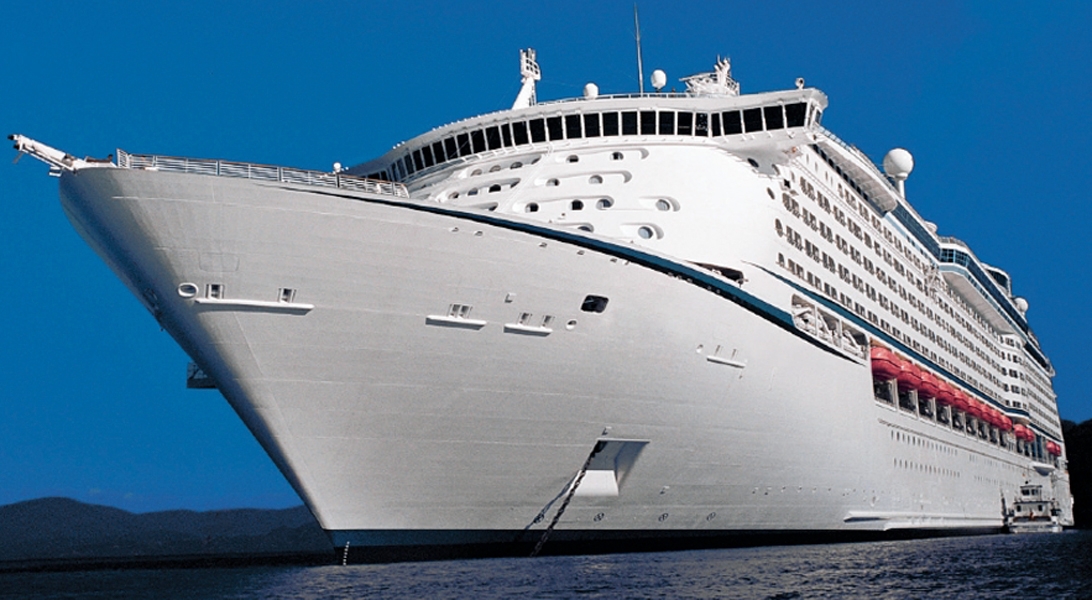


The images shown are for illustration purposes only and may not be an exact representation of what you find on the ship.
The images shown are for illustration purposes only and may not be an exact representation of what you find on the ship.
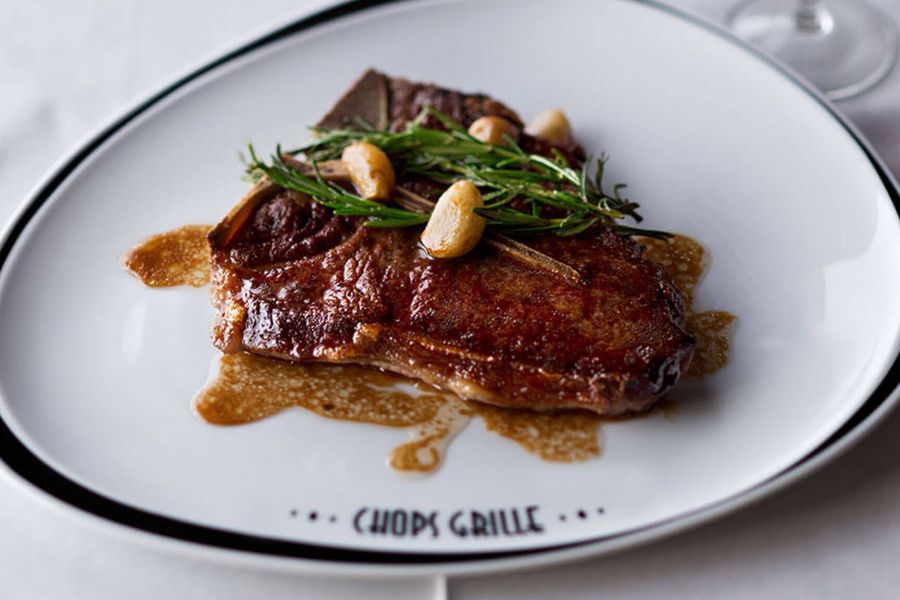
CLASSIC AMERICAN STEAKHOUSE
For over a decade, the chefs at Chops Grille have proudly presented quality, hand-cut steaks at this hallmark Royal Caribbean restaurant. Now, they give you a fresh twist on a favourite, with a revamped menu that brings contemporary flair to traditional steakhouse offerings. Most intriguing: our exceptional prime meat. This prime beef is joined by Maine lobster, grilled branzino and other succulent dishes paired with addictive side dishes and irresistible desserts.
ATTIRE
Smart Casual
INSIDER TIP
Open for lunch on sea days only.
MENU HIGHLIGHTS
The best way to begin a meal at Chops Grille is with the charred beef carpaccio, sliced thin and served rare with fresh arugula, Parmesan cheese, and truffle mustard dressing. If you’re a seafood lover, upgrade your menu with one of the restaurant’s chilled seafood towers — each comes with jumbo shrimp, green-lipped mussels, clams, Jonah crab claws, and Maine lobster. As far as entrees go, the tender filet is one of the most popular items on the menu. If nine ounces is a bit too much for you, opt for the smaller 6-ounce petite filet — it packs in just as much flavour as the standard cut. If you’re a traditionalist, complement your meal with an order of steaming Yukon Gold mashed potatoes and creamed spinach, or change things up with Chops’ signature gruyere cheese tater tots and truffled French fries. And don’t forget to save room for a refreshing slice of tart key lime meringue pie or classic New York cheesecake, served with raspberries and lemon confit.
PRO TIP
The chefs at Chops Grille will hand cut, season, and grill each steak to your specifications. When in doubt, don’t be afraid to ask for the chef’s recommendation.
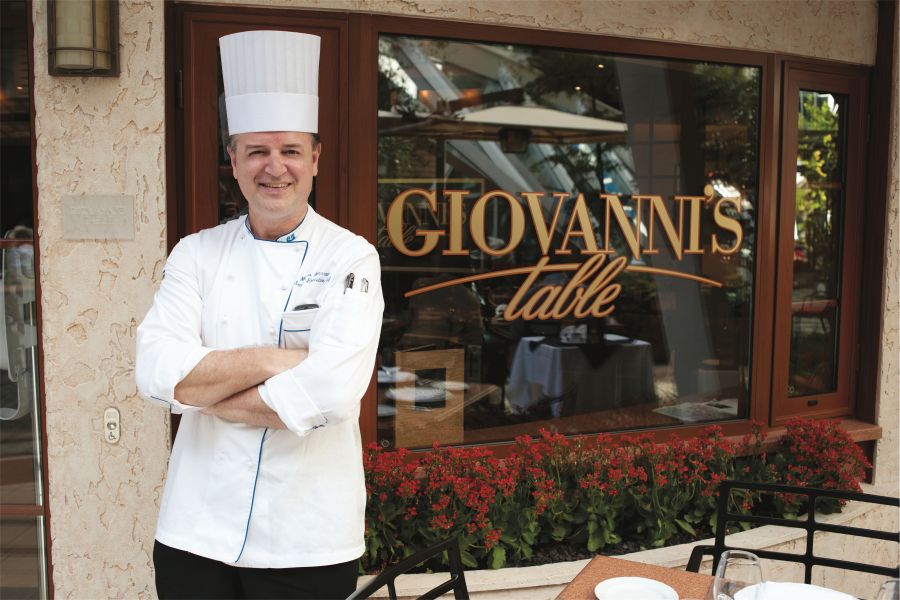
EAT MORE ITALIAN
Every meal at Giovanni’s Table is a family-style celebration of rustic Italian flavour. You’ll find all your favourite Old-World classics on the menu here, like house focaccia served with marinated artichokes, olives and pesto, fluffy gnocchi tossed in a thyme-scented sauce of lamb and root vegetables, traditional risotto finished with porcini and truffle mushroom tapenade and veal osso buco paired with creamy cheese polenta, ripe tomatoes and sautéed green beans.
ATTIRE
Smart Casual
HOW TO PURCHASE
Cruise Planner or Onboard
MENU HIGHLIGHTS
First things first – ask for an order of the house focaccia, which comes with marinated artichokes, olives and pesto. And don’t miss the antipasti per due, an appetiser big enough for two that comes heaped with Italian salami, prosciutto, marinated anchovies, grilled artichokes, Cambozola cheese and more. There are plenty of tasty options to choose from if you’re a pasta lover, from parpadelle with pancetta in a rich radicchio cream, to taglierini tossed with cherry tomatoes, calamari, bay scallops and pesto. And if you’re craving a hearty Italian-style main course, try the polpette alla romana — tender veal meatballs in a rich tomato-herb sauce — or the costolette d’agnello alle erbe — grilled lamb chops served in a Merlot reduction with baby vegetable caponata and sautéed spinach.
PRO TIP
Giovanni’s Table is a great restaurant to dial up date night. If you’re celebrating a special occasion, just let the staff know ahead of time. They’ll help make it extra special!
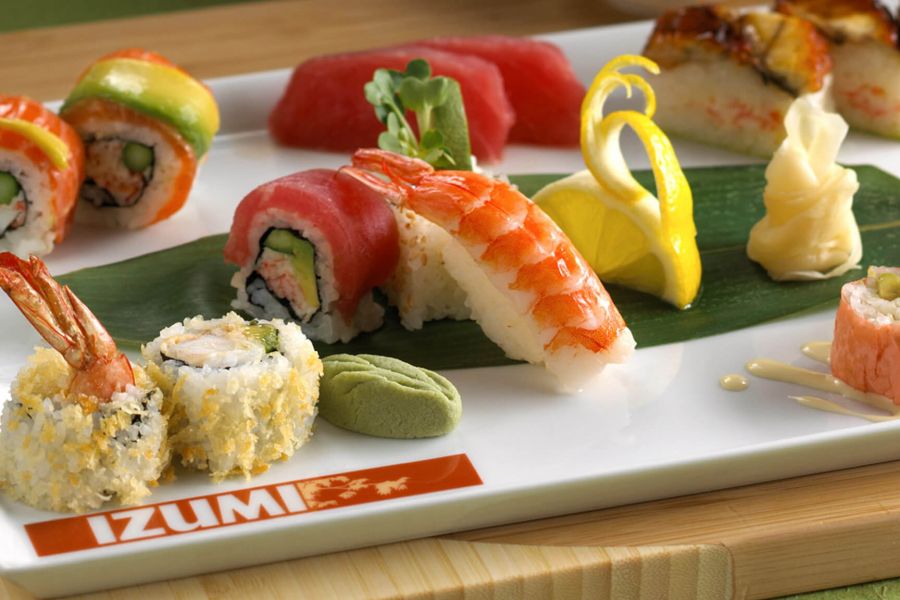
ASIAN FLAVOUR THAT ROCKS
From expertly rolled sushi, fresh sashimi, and delicate nigiri, to izakaya-style appetisers and flavourful meats cooked perfectly on ishiyaki grilling stones — this hard-rocking spin on the fleet favourite Izumi is one specialty dining experience you don’t want to miss out on.
ATTIRE
Smart Casual
HOW TO PURCHASE
Cruise Planner or Onboard
MENU HIGHLIGHTS
At Izumi Sushi & Hot Rocks, every meal begins with a complimentary appetiser of edamame served with course kosher salt. Level up your meal with a deep-fried firecracker spring roll, filled with tender shrimp, crabmeat, cream cheese and sambal chili. If you like spice, try the tuna wasabi carpaccio, sliced thin and paired with the house ponzu olive oil, wasabi aioli, masago smelt eggs, garlic chips and jalapeno. For sushi lovers, the Izumi spider roll is a must — it comes filled with tempura soft shell crab, creamy avocado, masago, and sweet unagi sauce. And of course, you can’t leave without trying something from the ishiyaki hot rock section of the menu. Go all out with the surf and turf experience — you’ll enjoy a half lobster tail, beef tenderloin, and assorted Asian vegetables served sizzling on a hot cooking stone and accompanied by white or fried rice and a selection of delicious homemade dipping sauces.
PRO TIP
Can’t decide what to order from the menu? Look for items with a symbol indicating the chef’s recommendations.
The images shown are for illustration purposes only and may not be an exact representation of what you find on the ship.
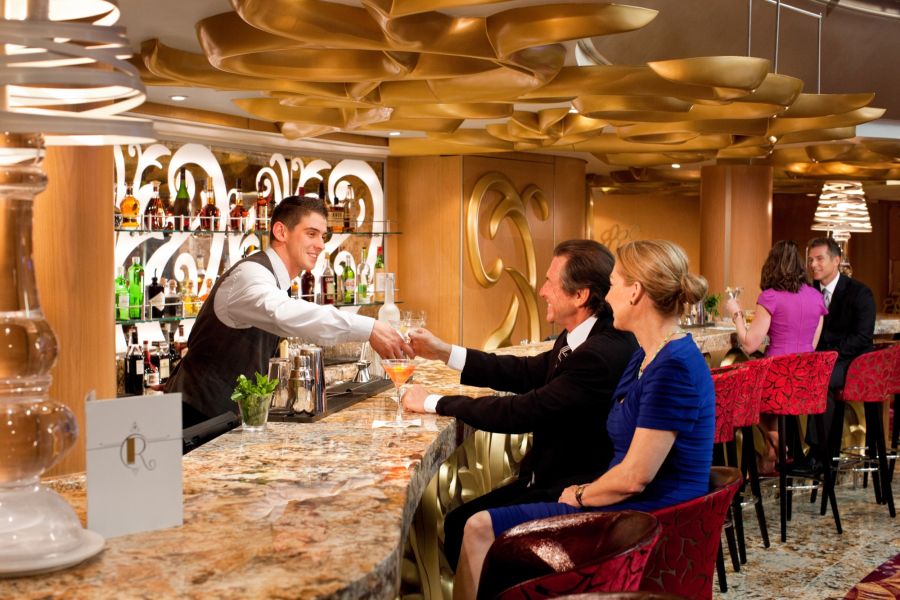
SHAKING UP THE CLASSICS
Swanky, sophisticated, and suffused with retro style, R Bar serves up classic cocktails garnished with vintage vibes. Whether your drink of choice is a dry gin martini, an expertly mixed old fashioned, or the perfect gin and tonic, you’ll find plenty to savour here.
AGE RESTRICTION
21+ on sailings from North America, 18+ on sailings from South America, Europe, Asia, Australia and New Zealand.
MENU HIGHLIGHTS
The vintage décor at R Bar creates the perfect atmosphere to order a classic old fashioned or gimlet, but you should definitely also try one of the signature cocktails on the menu. Those who prefer their drinks on the fruity side will love the Purple Haze, made with Bacardi 8 rum, blue curacao and Pernod, and shaken with pineapple juice, passion fruit puree and a splash of grenadine. For a cocktail that doubles as dessert, opt for the aptly-named Red Velvet Cake, a decadent infusion of limoncello, dark chocolate liqueur, crème de cacao white and strawberry puree. If you’re craving something smooth, but strong, there’s the Green Goddess. It’s a potent blend of Belvedere vodka, Hennessy, blue curacao and mango puree, topped off with a twist of lemon. And for fans of fizzy drinks, it doesn’t get better than the Let’s Get Fizzical, a refreshingly light combination of passion fruit puree, apple juice and St-Germain elderflower liquere topped with prosecco.
PRO TIP
The bartenders here are pros. Let them surprise you with something that’s not on the menu.
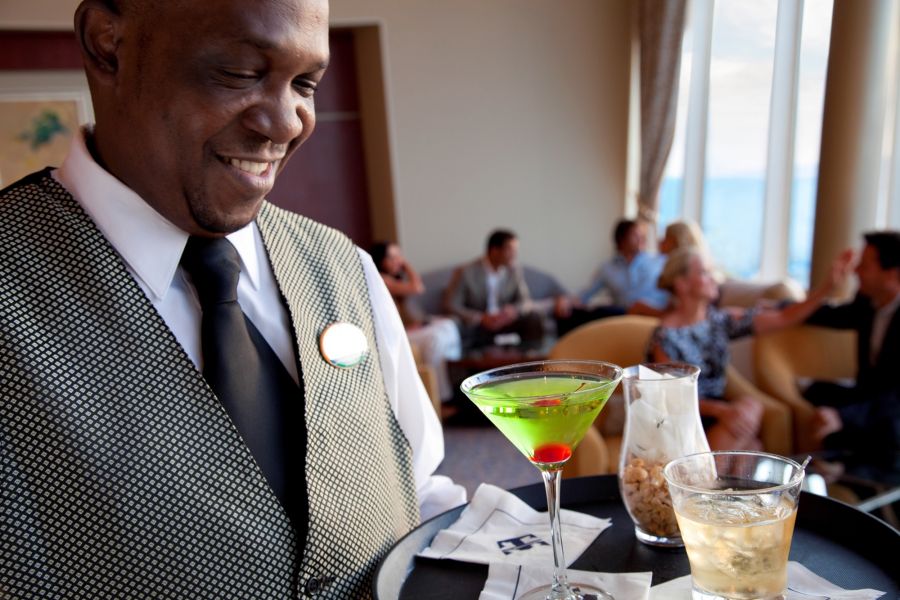
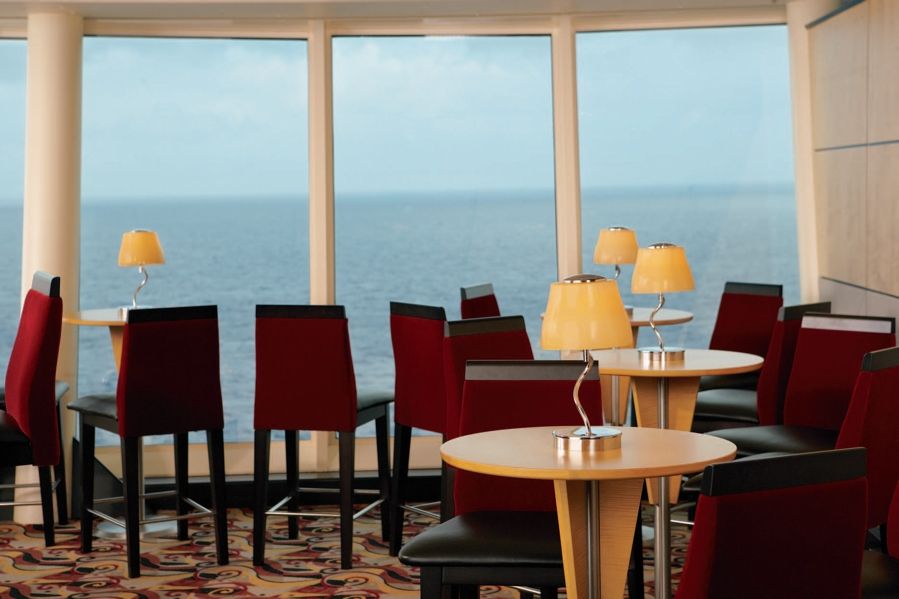
SAVOUR THE SIPS & THE SIGHTS
Our fleet’s signature architectural wonder, the Viking Crown Lounge® is the ultimate spot to soak up panoramic views while you sip your favourite cocktails. Catch the sunset through its floor-to-ceiling windows, then linger as the space comes alive with strobe lights, live music, and plenty of action on the dance floor.
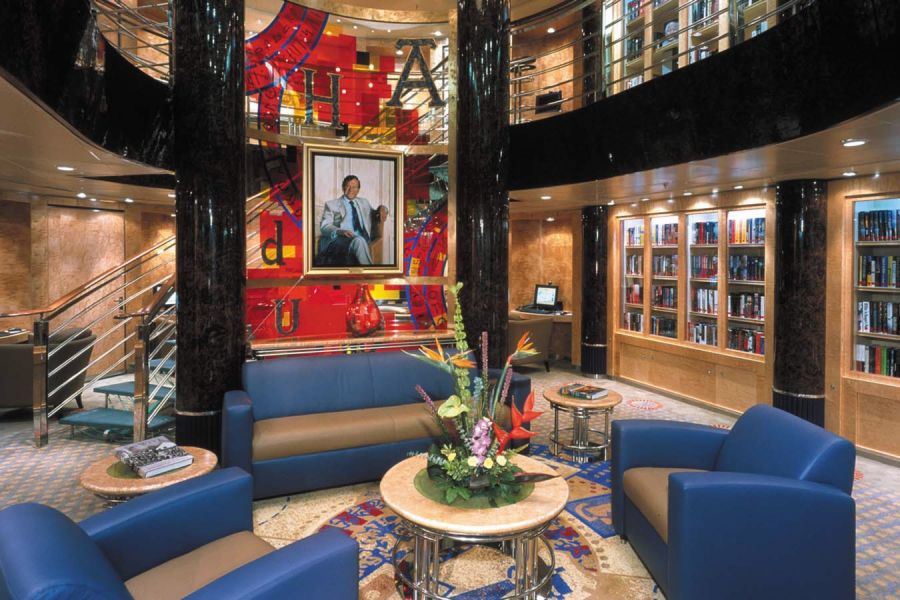
Peace, quiet, and your next great read – find it all at the well-stocked library, featuring a variety of genres, plus tables for cards and board games. Everything’s complimentary for your enjoyment.
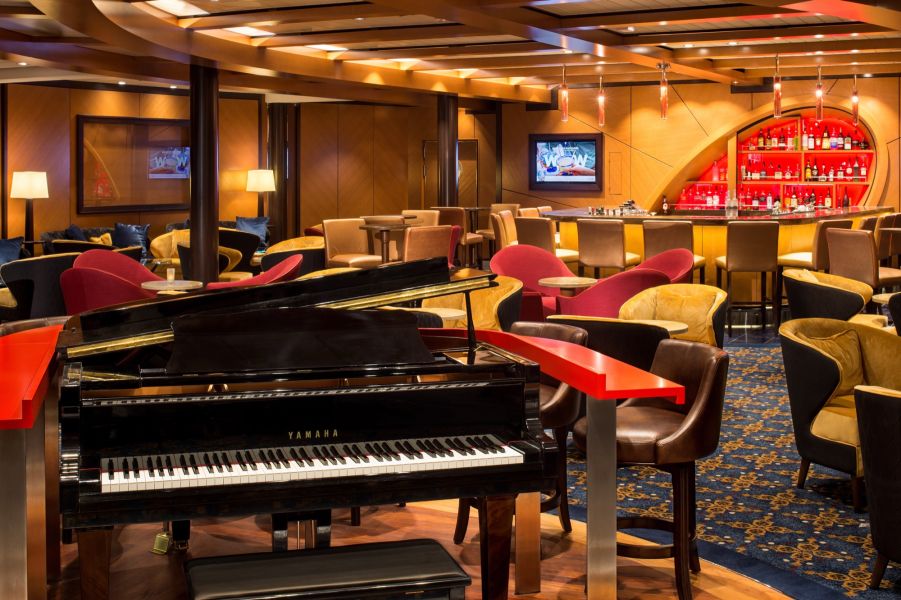
LIVE MUSIC & MASTERFUL MIXING
Wrap up your night at Schooner Bar, where perfectly mixed cocktails and live entertainment come together in a warm-lit nautical-themed lounge. Cozy up in a seat under the mast, by the portholes, or right by the gleaming grand piano. The sing-along's about to being.
HOW TO PURCHASE
Beverage Package or A La Carte
AGE RESTRICTION
21+ on sailings from North America, 18+ on sailings from South America, Europe, Asia, Australia and New Zealand.
MENU HIGHLIGHTS
If you love a great old fashioned, you’ll find five versions of it on the menu at Schooner Bar, including a tropical twist that blends muddled cherries and pineapple with orange bitters and Malibu Coconut rum, and an innovative New Fashioned that brings in pink grapefruit, fresh raspberries, and a little bit of Southern Comfort. You can also dial up your night with a glamorous champagne cocktail, topped with Domaine Chandon and sweetened with an Angostura-doused sugar cube. Or sip your way across the Caribbean with a Zacapa rum-spiked daiquiri, shaken hard and double-strained, or a classic Papa Doble, prepared with Bacardi Superior rum, lychee and grapefruit juice. If you’re a fan of the Tom Collins, you’ll find that, too — plus four additional versions that each spotlight a different spirit.
PRO TIP
Up for something different? Let the bartender know what your favourite spirit is, and ask them to whip you up a surprise.
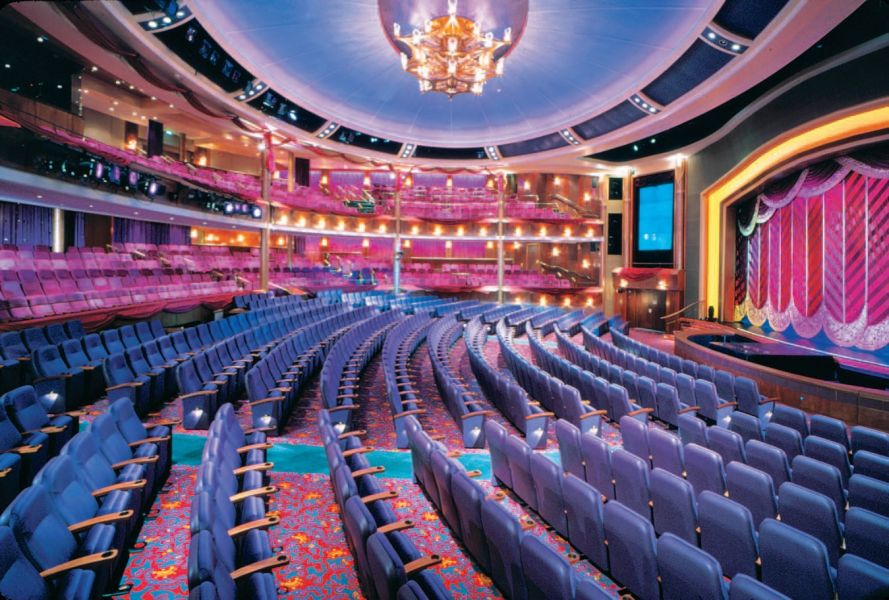
Standing five decks high (from orchestra pit to domed ceiling), the impressive theatre showcases contemporary musical stage productions, West End style shows and stand up comedians.
Broadway Rhythm & Rhyme - ENTER STAGE RIGHT
Sing along to your favourite show tunes as the rhythm, rhyme, words and music of Broadway transport you to NYC.
Music In Pictures - SCENE STEALING SOUNDTRACKS
The silver screen takes centre stage as classic soundtracks come to life.
The images shown are for illustration purposes only and may not be an exact representation of what you find on the ship.
The images shown are for illustration purposes only and may not be an exact representation of what you find on the ship.


Our Fusion packages are all ABTA & ATOL protected ensuring that your booking is safe with us
| 12 nights aboard the Voyager of the Seas | |||
| Evening entertainment & Broadway style shows | |||
| Choice of traditional or anytime dining | |||
| Drinks Packages available | |||
| Speciality Restaurants (charges may apply) | |||
| 24-hour room service | |||
| Port Taxes and Fees | |||
 | ABTA and ATOL Protection* | ||
Date 1st Apr 2028 |
Nts 12 |
Interior £1,578pp |
Oceanview £1,822pp |
Balcony £1,873pp |
Suite £4,340pp |
Date 1st Apr 2028 |
Nts 12 |
Interior £1,578pp |
Oceanview £1,822pp |
Balcony £1,873pp |
Suite £4,340pp |
| Interior staterooms from | £1,579pp | ||
| 1V | Interior | £1,874pp | |
| 3V | Interior | £1,786pp | |
| 4V | Interior | £1,727pp | |
| ZI | Interior Guarantee | £1,579pp | |
| 4U | Interior with Virtual Balcony | £1,764pp | |
| 2T | Promenade View Interior | £1,837pp | |
| 2U | Interior Room with Virtyal Balcony | £1,801pp | |
| Oceanview staterooms from | £1,823pp | ||
| 1N | Ocean View | £2,147pp | |
| 2N | Ocean View | £2,044pp | |
| 3N | Ocean View | £2,066pp | |
| YO | Ocean View Guarantee | £1,823pp | |
| 4M | Spacious Ocean View | £2,147pp | |
| 1L | Spacious Panoramic Ocean View | £2,258pp | |
| 4N | Oceanview | £2,000pp | |
| 3M | Spacious Oceanview | £2,192pp | |
| Balcony staterooms from | £1,874pp | ||
| 2D | Ocean View Balcony | £2,737pp | |
| 4D | Ocean View Balcony | £2,685pp | |
| 5D | Ocean View Balcony | £2,752pp | |
| XB | Ocean View Balcony Guarantee | £2,456pp | |
| 1B | Spacious Ocean View Balcony | £2,855pp | |
| 2B | Spacious Ocean View Balcony | £2,848pp | |
| 3B | Spacious Ocean View Balcony | £2,803pp | |
| 4B | Spacious Ocean View Balcony | £2,796pp | |
| CB | Connecting Balcony | £2,766pp | |
| CP | Connecting Promenade | £1,874pp | |
| SB | Sunset Balcony | £2,803pp | |
| SG | Sunset Large Balcony | £2,914pp | |
| Suite staterooms from | £4,341pp | ||
| GS | Grand Suite (1 Bedroom) | £6,201pp | |
| GT | Grand Suite (2 Bedroom) | £8,024pp | |
| J3 | Junior Suite | £4,946pp | |
| J4 | Junior Suite | £4,762pp | |
| JT | Sunset Junior Suite | £5,190pp | |
| VP | Ocean View Panoramic Suite (No Balcony) | £6,636pp | |
| OS | Owner's Suite (1 Bedroom) | £9,213pp | |
| RS | Royal Suite | £9,604pp | |
| WS | Suite Guarantee | £4,341pp | |
Fusion Holidays when selling travel arrangements is a trading name of Co-op Travel Services Limited, registration 08903986. Fusion Cruises is an Accredited Body Member of Co-op Travel Services Limited ATOL 12904.
Book with Confidence. We are a Member of ABTA which means you have the benefit of ABTA’s assistance and Code of Conduct.
Some of the flights and flight-inclusive holidays on this website are financially protected by the ATOL scheme but ATOL protection does not apply to all holiday and travel services offered on this website. This website will provide you with information on the protection that applies in the case of each holiday and travel service offered before you make your booking. If you do not receive an ATOL Certificate then the booking will not be ATOL protected. If you do receive an ATOL Certificate but all parts of your trip are not listed on it, those parts will not be ATOL protected. Please see our booking conditions for information, or for more information about financial protection and the ATOL Certificate go to: www.caa.co.uk