This site uses cookies as defined in our Cookie Policy, by continuing to use this site you agree to their use.
Continue

| Arrive | Depart | ||||||
| 6th06 | MarMar | 202929 | Hong Kong, Hong Kong, embark on the Scenic Eclipse II | ||||
The Hong Kong Island skyline, with its ever-growing number of skyscrapers, speaks to ambition and money. Paris, London, even New York were centuries in the making, while Hong Kong's towers, bright lights, and glitzy shopping emporia weren't yet part of the urban scene when many of the young investment bankers who fuel one of the world's leading financial centers were born. Commerce is concentrated in the glittering high-rises of Central, tucked between Victoria Harbor and forested peaks on Hong Kong Island's north shore. While it's easy to think all the bright lights are the sum of today's Hong Kong, you need only walk or board a tram for the short jaunt west into Western to discover a side of Hong Kong that is more traditionally Chinese but no less high-energy. You'll discover the real Hong Kong to the east of Central, too, in Wan Chai, Causeway Bay, and beyond. Amid the residential towers are restaurants, shopping malls, bars, convention centers, a nice smattering of museums, and—depending on fate and the horse you wager on—one of Hong Kong's luckiest or unluckiest spots, the Happy Valley Racecourse. Kowloon sprawls across a generous swath of the Chinese mainland across Victoria Harbour from Central. Tsim Sha Tsui, at the tip of Kowloon peninsula, is packed with glitzy shops, first-rate museums, and eye-popping views of the skyline across the water. Just to the north are the teeming market streets of Mong Kok and in the dense residential neighborhoods beyond, two of Hong Kong's most enchanting spiritual sights, Wong Tai Sin Temple and Chi Lin Nunnery. As you navigate this huge metropolis (easy to do on the excellent transportation network), keep in mind that streets are usually numbered odd on one side, even on the other. There's no baseline for street numbers and no block-based numbering system, but street signs indicate building numbers for any given block. Step into the vibrant energy of Hong Kong, a city where soaring skyscrapers meet historic temples and bustling markets. From the dazzling Victoria Harbour to the hidden lanes of traditional neighbourhoods, the city is a captivating blend of modern sophistication and timeless culture. Please book your flight to arrive into Hong Kong prior to 02:00 PM. | |||||||
| 7th07 | MarMar | 202929 | Hong Kong, Hong Kong | ||||
The Hong Kong Island skyline, with its ever-growing number of skyscrapers, speaks to ambition and money. Paris, London, even New York were centuries in the making, while Hong Kong's towers, bright lights, and glitzy shopping emporia weren't yet part of the urban scene when many of the young investment bankers who fuel one of the world's leading financial centers were born. Commerce is concentrated in the glittering high-rises of Central, tucked between Victoria Harbor and forested peaks on Hong Kong Island's north shore. While it's easy to think all the bright lights are the sum of today's Hong Kong, you need only walk or board a tram for the short jaunt west into Western to discover a side of Hong Kong that is more traditionally Chinese but no less high-energy. You'll discover the real Hong Kong to the east of Central, too, in Wan Chai, Causeway Bay, and beyond. Amid the residential towers are restaurants, shopping malls, bars, convention centers, a nice smattering of museums, and—depending on fate and the horse you wager on—one of Hong Kong's luckiest or unluckiest spots, the Happy Valley Racecourse. Kowloon sprawls across a generous swath of the Chinese mainland across Victoria Harbour from Central. Tsim Sha Tsui, at the tip of Kowloon peninsula, is packed with glitzy shops, first-rate museums, and eye-popping views of the skyline across the water. Just to the north are the teeming market streets of Mong Kok and in the dense residential neighborhoods beyond, two of Hong Kong's most enchanting spiritual sights, Wong Tai Sin Temple and Chi Lin Nunnery. As you navigate this huge metropolis (easy to do on the excellent transportation network), keep in mind that streets are usually numbered odd on one side, even on the other. There's no baseline for street numbers and no block-based numbering system, but street signs indicate building numbers for any given block. Discover the quieter side of Hong Kong at Mirs Bay, where calm waters, inviting beaches, and diverse marine life provide a peaceful coastal escape. The surrounding marine parks and nearby UNESCO Geopark highlight the area’s rarely seen natural landscapes. | |||||||
| 8th08 | MarMar | 202929 | At Sea | ||||
| 9th09 | MarMar | 202929 | Keelung (Chilung), Taiwan | ||||
With the glittering lights of Taipei - a futuristic metropolis of culture and ideas - sparkling nearby, Keelung is the first calling point for many visitors arriving in Taiwan. While this port city essentially serves as Taipei's ocean gateway, you shouldn’t be too hasty in dashing off to Taipei's neon-lit magic – first it’s well worth spending some time exploring the famous glowing night market, which hums with life each evening and is famous for its local seafood. The port of Keelung welcomes you to the enchanting island of Taiwan, where vibrant city streets, ancient temples, and bustling night markets mingle with serene mountain landscapes and coastal vistas. From the cosmopolitan energy of Taipei to the tranquil beauty of surrounding regions, every moment invites you to experience the rich culture, culinary delights, and timeless charm of this East China Sea gem. | |||||||
| 10th10 | MarMar | 202929 | Ishigaki, Japan | ||||
After a restorative night of rest in your luxurious suite and signature Scenic Slumber Bed, wake up on your own time. With an afternoon arrival into Naha, the morning is yours to spend as you wish. Perhaps ask your butler to deliver breakfast to your suite or join new friends for a leisurely meal at the Yacht Club. | |||||||
| 11th11 | MarMar | 202929 | Naha, Okinawa, Japan | ||||
After a restorative night of rest in your luxurious suite and signature Scenic Slumber Bed, wake up on your own time. With an afternoon arrival into Naha, the morning is yours to spend as you wish. Perhaps ask your butler to deliver breakfast to your suite or join new friends for a leisurely meal at the Yacht Club. | |||||||
| 12th12 | MarMar | 202929 | Zamami, Japan | ||||
A haven of calm, Zamami Island offers lush greenery, soft white-sand beaches, and waters that shimmer in many shades of blue. Beneath the surface, colourful coral reefs and tropical fish create a quiet underwater spectacle. Mount Takatsuki crowns the island, with sweeping views over the Kerama Islands and a serene panorama of beaches, forests, and open sea. | |||||||
| 13th13 | MarMar | 202929 | Maedomari/Iheya, Japan | ||||
Iheya Island is a tranquil retreat in the Okinawa archipelago, with lush interiors and quiet coastal shores. Known for its natural beauty and traditional island character, it offers a peaceful escape framed by clear waters and green hills, capturing the essence of Okinawa’s more remote islands. | |||||||
| 14th14 | MarMar | 202929 | Naze, Amani Oshima, Japan | ||||
Awaken to watch the sun dance across the crystalline waters of World Heritage-listed site Amami Oshima. The largest island in the Satsunan chain, Amami Oshima is an unspoiled haven for a diverse eco-system of endemic flora and fauna. | |||||||
| 15th15 | MarMar | 202929 | Yakushima, Japan | ||||
Yakushima is a round-shaped subtropical island off the southern coast of Kyushu island and part of Kagoshima prefecture. One fifth of this island is designated a Natural World Heritage Site in 1993, and it is covered by an extensive cedar forest that contains some of Japan’s oldest living trees. The symbol of Yakushima is called Yaku-Sugi, meaning Japanese cedar, which is only used for cedar trees over 1,000 years old. The oldest Yaku-Sugi is considered to be more than 7,000 years old. As a subtropical island with mountains that are nearly 2,000 meters high, Yakushima attracts a lot of rainfall around the year with a local saying that it rains 35 days a month! No matter how the weather is, the walking in the Cedar tree forest is what you cannot miss on this island. You can see many rare plants due to the abundance of water and the changes in temperature at different altitudes. The range of flora is very wide, from coral reef to alpine plants. Yakushima is a lush, enchanting island in southern Japan, celebrated for its ancient forests and recognised as a World Heritage-listed site. Towering cedar trees, some thousands of years old, create a mystical landscape that has inspired countless stories and imaginations. The island’s pristine beaches and vibrant ecosystems are home to Japanese macaques, sika deer, and green sea turtles, offering glimpses of wildlife in their natural habitat. | |||||||
| 16th16 | MarMar | 202929 | Beppu, Kyushu Island, Oita, Japan | ||||
Discover Beppu, Japan’s iconic hot spring city, where steaming pools, soothing mud baths, and black sand baths invite you to relax and rejuvenate. Surrounded by dramatic landscapes, this charming city offers a perfect blend of wellness, culture, and natural beauty. | |||||||
| 17th17 | MarMar | 202929 | Hiroshima, Japan | ||||
History buffs will want to write home Hiroshima. Despite being devastated in 1945, this Japanese city is known to all for its commitment peace – its ruin on the 6th August 1945 led to the end of the war and today, the Peace Memorial (a UNESCO World Heritage Site) , is a constant reminder of the destruction that war brings. A walk in the leafy boulevards of Peace Memorial Park brings quiet contemplation. The Flames of Peace – set in the park’s central feature pond – burn brightly and will continue to do so until all the nuclear bombs I the world have been destroyed. There are many other inspiring messages of hope around the city too; the Children’s’ Peace Monument just north of the park is a homage to little Sadako Sasaki, who was just two in 1945. When she developed leukemia in 1956, she believed that if she folded 1,000 paper cranes – a symbol of longevity and happiness in Japan – she would recover. Sadly she died before she finished her task but her classmates finished the rest. It is impossible to ignore the events of 1945 in Hiroshima, but this is far from a depressing place. The great efforts that have been made in rebuilding of the city over the years have given Hiroshima a vibrant, eclectic edge, with the downtown shopping area and street food stalls being well worth a visit. The proximity to Miyajima and its iconic, impressive, Torii gate should not be overlooked either. If you are lucky enough to visit during the unpredictable and short-lived Sakura (cherry blossom) season, then the extraordinary sight of the delicate pink blossom floating across the water to the red gate, means you can consider yourself one of the luckiest people on the planet. Hiroshima is a thoughtful, quietly compelling city, shaped by history yet defined by its calm, contemporary atmosphere. The Hiroshima Peace Memorial and surrounding park invite reflection, whilst Hiroshima Castle and the tranquil Shukkeien Garden reveal layers of older tradition and refined landscape design. Tree-lined avenues, riverside paths, and lively neighbourhoods round out a day that balances remembrance with everyday city life, offering a nuanced sense of place and renewal. | |||||||
| 18th18 | MarMar | 202929 | Tamano, Japan | ||||
This morning, you will arrive at the port of Uno, the gateway to the garden city of Okayama, the second-largest city in the Chugoku region. Okayama is home to the majestic Korakuen Garden, which was commissioned by a feudal lord in 1687 as a place to receive guests. Choose to spend your day strolling through the immaculately manicured gardens, admiring historic architecture or contemplating thought-provoking art. | |||||||
| 19th19 | MarMar | 202929 | Takamatsu, Japan | ||||
Takamatsu city is the capital of Kagawa prefecture which is Japan’s smallest prefecture. This city is a vibrant blend of natural beauty and cosmopolitan functionality with a population of 420,000 people. The port of Takamatsu used to be the main gateway to Shikoku Island until the opening of the 37km long Seto Ohashi Bridge in 1988. Takamatsu city has flourished along with the Seto Inland Sea since 17th century when Matsudaira family, the relatives of the Tokugawa Shogun, ruled this area. Matsudaira family has completed the famous Japanese “Ritsurin Garden”. It took more than 100 years to complete this spacious garden with 75 hectares of land which features 13 landscaped hills, 6 ponds and many stone arrangements that have been placed in perfect balance in front of a vast green vista of Mt. Shiun. This garden was constructed as a villa of Matsudaira family and it attracts many visitors from all over the world. Furthermore, Takamatsu is a great place to find fresh seafood, its product, and famous Sanuki Udon noodles. Nestled on the sparkling shores of the Seto Inland Sea, Takamatsu, the capital of Kagawa, serves as a serene gateway to the region’s many picturesque islands. From this charming port, admire the sweeping vistas and marvel at the engineering wonder of the Seto Ohashi Bridge, stretching gracefully across the water. | |||||||
| 20th20 | MarMar | 202929 | Osaka, Japan, disembark the Scenic Eclipse II | ||||
From Minami's neon-lighted Dotombori and historic Tenno-ji to the high-rise class and underground shopping labyrinths of Kita, Osaka is a city that pulses with its own unique rhythm. Though Osaka has no shortage of tourist sites, it is the city itself that is the greatest attraction. Home to some of Japan's best food, most unique fashions, and warmest locals, Osaka does not beg to be explored—it demands it. More than anywhere else in Japan, it rewards the impulsive turn down an interesting side street or the chat with a random stranger. People do not come here to see the city, they come to experience it.Excluded from the formal circles of power and aristocratic culture in 16th-century Edo (Tokyo), Osaka took advantage of its position as Japan's trading center, developing its own art forms such as Bunraku puppet theater and Rakugo comic storytelling. It was in Osaka that feudal Japan's famed Floating World—the dining, theater, and pleasure district—was at its strongest and most inventive. Wealthy merchants and common laborers alike squandered fortunes on culinary delights, turning Osaka into "Japan's Kitchen," a moniker the city still has today. Though the city suffered a blow when the Meiji government canceled all of the samurai class's outstanding debts to the merchants, it was quick to recover. At the turn of the 20th century, it had become Japan's largest and most prosperous city, a center of commerce and manufacturing.Today Osaka remains Japan's iconoclastic metropolis, refusing to fit Tokyo's norms and expectations. Unlike the hordes of Tokyo, Osakans are fiercely independent. As a contrast to the neon and concrete surroundings, the people of Osaka are known as Japan's friendliest and most outgoing. Ask someone on the street for directions in Tokyo and you are lucky to get so much as a glance. Ask someone in Osaka and you get a conversation.The main areas of the city, Kita (north) and Minami (south), are divided by two rivers: the Dojima-gawa and the Tosabori-gawa. Between Kita and Minami is Naka-no-shima, an island and the municipal center of Osaka. Kita (north of Chuo Dori) is Osaka's economic hub and contains Osaka's largest stations: JR Osaka and Hankyu Umeda. The area is crammed with shops, department stores, and restaurants. Nearby are a nightlife district, Kita-shinchi; Naka-no-shima and the Museum of Oriental Ceramics; Osaka-jo (Osaka Castle); and Osaka Koen (Osaka Park). Restaurants, bars, department stores, and boutiques attract Osaka's youth to Minami (south Chuo Dori); theatergoers head to the National Bunraku Theatre and electronics-lovers to Den Den Town. For a glimpse of old Osaka, visit Tenno-ji Temple and Shin Sekai. The main stations are Namba, Shin-sai-bashi, Namba Nankai, and Tenno-ji. There's easy access to the Municipal Museum of Fine Art and Sumiyoshi Taisha (Sumiyoshi Grand Shrine).The bay area, to the west of the city center, is home to the Osaka Aquarium and Universal Studios Japan. The Shinkansen stops at Shin-Osaka, three stops (about five minutes) north of Osaka Station on the Mido-suji subway line. To the north of Shin-Osaka is Senri Expo Park. Today, it is time to farewell your Scenic Discovery Yacht after 15 incredible days on board. Be sure to fit in one last indulgent breakfast at the Yacht Club or ask your butler to deliver coffee to your suite so you can take your time packing. Then disembark in Osaka, carrying with you memories of an unforgettable Discovery Voyage. Please book your flight to depart out of Osaka after 12:00 PM. #Spa treatments and services at additional cost. Daily activities may be subject to change; please consult your Daily Wonder for updates. Helicopter and submersible not in operation in Japan. The itinerary is a guide only and may be amended for operational reasons. As such Scenic cannot guarantee the voyage will operate unaltered from the itinerary stated above. Please refer to our terms and conditions for further information. | |||||||
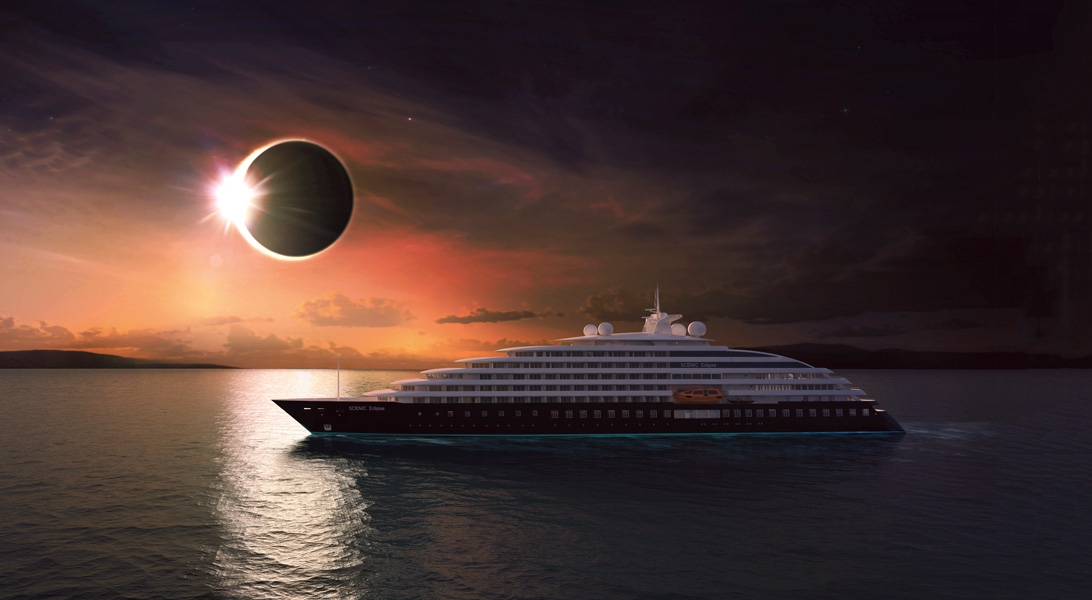
The images shown are for illustration purposes only and may not be an exact representation of what you find on the ship.
The images shown are for illustration purposes only and may not be an exact representation of what you find on the ship.
The images shown are for illustration purposes only and may not be an exact representation of what you find on the ship.
The images shown are for illustration purposes only and may not be an exact representation of what you find on the ship.
The images shown are for illustration purposes only and may not be an exact representation of what you find on the ship.


Our Fusion packages are all ABTA & ATOL protected ensuring that your booking is safe with us
| Return flights including luggage allowance | |||
| Overseas Transfers | |||
| 14 nights aboard the Scenic Eclipse II | |||
| Return Flights (including regional) | |||
| All Verandah Suites | |||
| Butler service for every guest | |||
| Nine Dining Venues | |||
| Gratuities Included | |||
| Complimentary drinks on-board | |||
| Free use of electric bikes | |||
| Comprehensive choice of shore excursions | |||
| Complimentary Wi-Fi | |||
| Explore under the sea in our submarine (additional charge) | |||
| Soar above and beyond by helicopter (additional charge) | |||
| Port Taxes and Fees | |||
 | ABTA and ATOL Protection* | ||
Fly/cruise package |
Date 6th Mar 2029 |
Nts 14 |
Interior  |
Oceanview |
Balcony |
Suite £18,266pp |
Interior |
Oceanview |
Balcony |
Suite £36,532pp |
Date 6th Mar 2029 |
Nts 14 |
Interior |
Oceanview |
Balcony |
Suite £18,266pp |
Interior |
Oceanview |
Balcony |
Suite £36,532pp |
Fusion Holidays when selling travel arrangements is a trading name of Co-op Travel Services Limited, registration 08903986. Fusion Cruises is an Accredited Body Member of Co-op Travel Services Limited ATOL 12904.
Book with Confidence. We are a Member of ABTA which means you have the benefit of ABTA’s assistance and Code of Conduct.
Some of the flights and flight-inclusive holidays on this website are financially protected by the ATOL scheme but ATOL protection does not apply to all holiday and travel services offered on this website. This website will provide you with information on the protection that applies in the case of each holiday and travel service offered before you make your booking. If you do not receive an ATOL Certificate then the booking will not be ATOL protected. If you do receive an ATOL Certificate but all parts of your trip are not listed on it, those parts will not be ATOL protected. Please see our booking conditions for information, or for more information about financial protection and the ATOL Certificate go to: www.caa.co.uk