| | | | | Arrive | Depart |
| 26th26 | MarMar | 202828 | Valparaiso, Chile, embark on the Scenic Eclipse II | | |
Valparaíso's dramatic topography—45 cerros, or hills, overlooking the ocean—requires the use of winding pathways and wooden ascensores (funiculars) to get up many of the grades. The slopes are covered by candy-color houses—there are almost no apartments in the city—most of which have exteriors of corrugated metal peeled from shipping containers decades ago. Valparaíso has served as Santiago's port for centuries. Before the Panama Canal opened, Valparaíso was the busiest port in South America. Harsh realities—changing trade routes, industrial decline—have diminished its importance, but it remains Chile's principal port. Most shops, banks, restaurants, bars, and other businesses cluster along the handful of streets called El Plan (the flat area) that are closest to the shoreline. Porteños (which means "the residents of the port") live in the surrounding hills in an undulating array of colorful abodes. At the top of any of the dozens of stairways, the paseos (promenades) have spectacular views; many are named after prominent Yugoslavian, Basque, and German immigrants. Neighborhoods are named for the hills they cover. With the jumble of power lines overhead and the hundreds of buses that slow down—but never completely stop—to pick up agile riders, it's hard to forget you're in a city. Still, walking is the best way to experience Valparaíso. Be careful where you step, though—locals aren't very conscientious about curbing their dogs. The World Heritage-listed city of Valparaíso welcomes travellers with its long and colourful history dating back to the Conquistadors. This vibrant city is rich in theatre, music, performance, street art and exquisite Victorian architecture. You’ll find every colour of the rainbow in this vibrant city’s streets, staircases, alleyways and buildings.
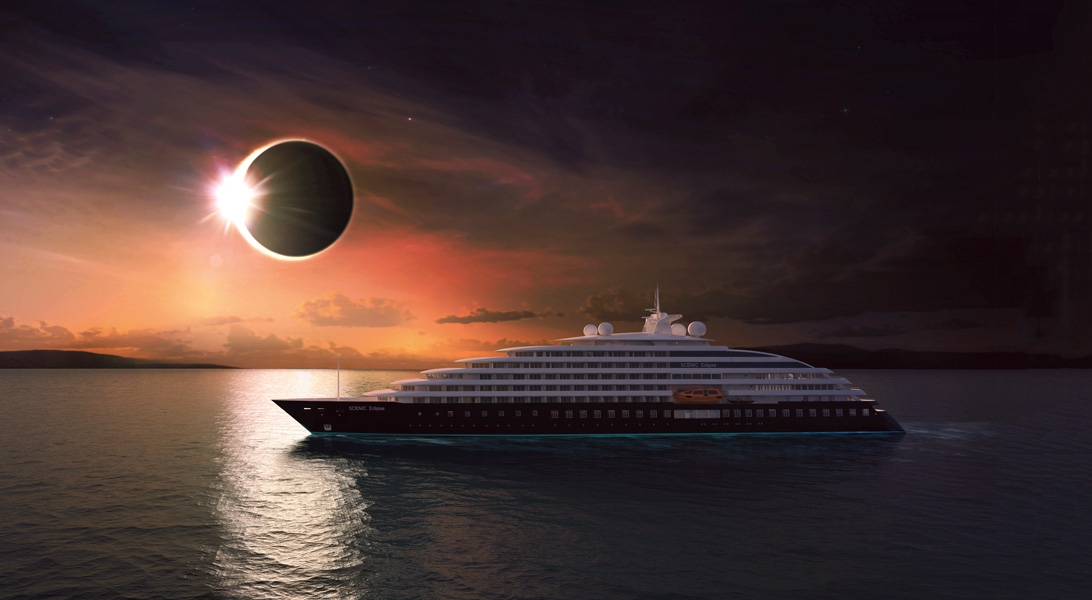
Be warmly greeted by your crew as you arrive on board Scenic Eclipse II. Enjoy a glass of Champagne as you are introduced to your butler and take a moment to get familiar with your spacious suite, admiring the city views from your private verandah. Please book your flight to arrive into Santiago prior to 12:00 PM. |
| 27th27 | MarMar | 202828 | At Sea | | |
| 28th28 | MarMar | 202828 | San Juan Bautista (Robinson Crusoe Island), Chile | | |
Robinson Crusoe Island is located 600 kilometres off the coast of Chile. The island is a rugged volcanic speck where 70 percent of its plant species are endemic, and is the largest of the Juan Fernandez Islands, a small archipelago that since 1935 is a Chilean National Park which was declared a UNESCO World Biosphere Reserve. This island has witnessed and played an important role in Chilean and world history. In 1750 the village of San Juan Bautista was founded at Cumberland Bay and by 1779 there were already 7 fortresses bristling with guns. The island’s isolation offered Spain a splendid place for setting up a penal colony, to which high-ranking Chilean patriots were deported in the early 19th century. In 1915, during the First World War, three British ships and a German one, the Dresden, engaged in a sea battle which ended with the scuttling of the German cruiser. Today there are currently around one thousand people living in the archipelago, most of them in the village of San Juan Bautista engaged in fishing for the “pincer-less lobster”, a delicacy in the mainland. Located within the Juan Fernandez Archipelago, the volcanic wonderland of Robinson Crusoe Island will captivate you just as it did Daniel Defoe. The author heard the story of a Scottish sailor, Alexander Selkirk, who was voluntarily marooned here for two years and immortalised his tale, and the island, in his legendary book, published in 1719.
True to his description, the island is a captivating lost paradise where you can swim in crystal-clear waters and discover its rich, diverse array of flora represented by more than 130 endemic species. Scenic Discovery:
Today, subject to weather and local authority approvals, you may have the opportunity to join your Discovery Team for a guided hike, nature walk or kayaking experience, offering a deeper connection to your surroundings. |
| 29th29 | MarMar | 202828 | Alexander Selkirk Island, Chile | | |
Named after the infamous marooned sailor, Alexander Selkirk Island is the largest in the Juan Fernández Archipelago. Densely wooded and marked by ranges and deep ravines that lead to a sheer, rugged coast, a visit here promises a dramatic and truly unforgettable experience. Be captivated by the striking volcanic landscape and its unique biodiversity where a number of rare and endangered plant and bird species can be found.
Tonight, indulge in refined French cuisine at Lumière+, where elegance meets exceptional culinary craftsmanship. Enjoy exquisite dishes paired with fine wines in a sophisticated atmosphere, perfect for a special evening. Scenic Discovery:
Today may offer another opportunity, subject to weather and local authority approvals, to join your Discovery Team for a guided hike, nature walk or kayaking experience, providing further insight into the island’s unique landscapes and natural environment. |
| 30th30 | MarMar | 202828 | At Sea | | |
| 31st31 | MarMar | 202828 | At Sea | | |
| 1st01 | AprApr | 202828 | At Sea | | |
| 2nd02 | AprApr | 202828 | At Sea | | |
| 3rd03 | AprApr | 202828 | Hangaroa, Easter Island, Chile | | |
Discovered (by the Western world) on Easter Sunday, 1722, Easter Island is a UNESCO World Heritage Site and one of the most isolated places on the face of the Earth, some 2,300 miles from the Chilean mainland. Although more Polynesian than South American in character, the 64-square mile island was annexed by Chile in 1888, and is now famous as the world’s largest ‘open air museum’ on account of the Moai, or human-like stone statues, that can be found on the island. The Moai remain very much a mystery, which archaeologists are still trying to unlock by interpreting an ancient language of the Rapa Nui, which is the key to understanding this culture, and is written on the so called ‘rongo rongo tablets’. The island owes its origin to three volcanoes which erupted some three million years ago: Poike, Rano Kau and Maunga Terevaka. It is not known when or how the island was first populated, but the most credible theory suggests that the Rapa Nui people came from other Pacific islands in the 4th century AD. In addition to the cultural and archaeological interest, there are the beautiful beaches, transparent waters, and coral reefs that might be expected of a Pacific Island. Uncover the secrets of Easter Island, the most remote and isolated inhabited island on the planet, with a mysterious and enigmatic past. From astonishing volcanic terrain to imposing archaeological sites, Easter Island offers a deeply immersive journey through history and culture.
Today you will come face to face with some of the 600 volcanic stone figures, known as Moai, and ancient petroglyphs that dot the island’s green hillsides. The oldest of these statues date back more than 700 years and are sacred to the local Rapa Nui people, created to embody the spiritual presence of their ancestors. |
| 4th04 | AprApr | 202828 | Hangaroa, Easter Island, Chile | | |
Discovered (by the Western world) on Easter Sunday, 1722, Easter Island is a UNESCO World Heritage Site and one of the most isolated places on the face of the Earth, some 2,300 miles from the Chilean mainland. Although more Polynesian than South American in character, the 64-square mile island was annexed by Chile in 1888, and is now famous as the world’s largest ‘open air museum’ on account of the Moai, or human-like stone statues, that can be found on the island. The Moai remain very much a mystery, which archaeologists are still trying to unlock by interpreting an ancient language of the Rapa Nui, which is the key to understanding this culture, and is written on the so called ‘rongo rongo tablets’. The island owes its origin to three volcanoes which erupted some three million years ago: Poike, Rano Kau and Maunga Terevaka. It is not known when or how the island was first populated, but the most credible theory suggests that the Rapa Nui people came from other Pacific islands in the 4th century AD. In addition to the cultural and archaeological interest, there are the beautiful beaches, transparent waters, and coral reefs that might be expected of a Pacific Island. A second day on Easter Island allows for deeper exploration and quiet reflection. As dawn breaks, watch the rising sun illuminate the Moai and volcanic landscape, with ocean and sky stretching beyond. Whether from your private verandah or the Observation Terrace, this serene moment sets the tone for continued discovery across one of the world’s most remote and evocative destinations.
After a day of discovery, step into Koko’s Asian Fusion, where bold, authentic flavours from across Asia are brought to life in a sleek, modern setting. From expertly rolled sushi to sizzling stir-fries, every dish offers a vibrant taste of the East. |
| 5th05 | AprApr | 202828 | At Sea | | |
| 6th06 | AprApr | 202828 | At Sea | | |
| 7th07 | AprApr | 202828 | At Sea | | |
| 8th08 | AprApr | 202828 | Pitcairn Island, Pitcairn | | |
With a total of 56 residents on the island, Adamstown is the capital of the Pitcairn Islands and the only populated settlement, as all of the other Pitcairn Islands are uninhabited (although were populated by Polynesians in the 11th through 15th centuries). Halfway between Peru and New Zealand, Pitcairn was the perfect hiding spot for the famed HMS Bounty mutineers and their Tahitian wives. Not only had the island been misplaced on early maps of the region, but it can also be very difficult to come ashore as large breakers tend to build up just in front of the small harbour of Bounty Bay. On shore visit the local museum that houses the HMS Bounty Bible, the historic Adamstown Church, view Fletcher Christian’s cave, or keep an eye out for the Pitcairn Reed Warbler. Halfway between New Zealand and Chile, Pitcairn Island boasts untouched subtropical ecosystems and unique wildlife. One of the most remote communities on earth, it is home to just 50 locals, direct descendants of the Bounty mutineers who arrived in 1790. Few travellers make it this far and each cruise vessel arrival is a moment of celebration for the Pitcairn Islanders. |
| 9th09 | AprApr | 202828 | Rikitea, Gambier Islands, French Polynesia | | |
A small, isolated group of coral reef islands in the southeast extreme of the Tuamotu Archipelago, the Gambier Islands boast lush, green landscapes surrounded by exquisite blue and green lagoons that are as clear as air. Adding to the allure are the famous Tahitian black pearls, which are cultivated in the pristine waters around the island.
Be welcomed to the island with a traditional dance show and local food tasting. Join a guided village walk to see its many archaeological treasures, including the 19th-century St Michel of Rikitea Church, built from coral limestone and inlaid with iridescent mother-of pearl. The highlight is its altar, a true masterpiece richly decorated with pearls and mother-of-pearl. |
| 10th10 | AprApr | 202828 | At Sea | | |
| 11th11 | AprApr | 202828 | At Sea | | |
| 12th12 | AprApr | 202828 | Fakarava, French Polynesia | | |
Fakarava is home to the second-largest lagoon in the Tuamotu Atolls and is protected as a UNESCO-listed Biosphere Reserve, recognised for its rich marine life and pristine ecosystems. Framed by turquoise waters and coral reefs, the island offers a rare sense of tranquillity and natural balance. Spend your day exploring the lagoon, relaxing on secluded beaches, or simply absorbing the unspoilt beauty of one of French Polynesia’s most environmentally significant destinations. |
| 13th13 | AprApr | 202828 | Papeete, Tahiti, French Polynesia, disembark the Scenic Eclipse II | | |
Papeete will be your gateway to the tropical paradise of French Polynesia, where islands fringed with gorgeous beaches and turquoise ocean await to soothe the soul. This spirited city is the capital of French Polynesia, and serves as a superb base for onward exploration of Tahiti – an island of breathtaking landscapes and oceanic vistas. Wonderful lagoons of crisp, clear water beg to be snorkelled, stunning black beaches and blowholes pay tribute to the island's volcanic heritage, and lush green mountains beckon you inland on adventures, as you explore extraordinary Tahiti. Visit to relax inside picturesque stilted huts, which stand out over shimmering water, as you settle into the intoxicating rhythm of life, in this Polynesian paradise. Your journey ends in Papeete, the vibrant capital of French Polynesia. A busy, multicultural city with a distinctly French feel, Papeete boasts an eclectic and fascinating mix of landscapes and culture. Farewell the crew and disembark after breakfast, taking with you unforgettable memories of your journey.
Transfer to the airport or perhaps extend your journey to spend more time exploring the islands of French Polynesia. Please book your flight to depart out of Papeete after 12:00 PM. #Spa treatments and services at additional cost. Daily activities may be subject to change; please consult your Daily Wonder for updates.
+All drinks on board, including those stocked in your mini bar, are included, except for a very small number of rare, fine and vintage wines, Champagnes and spirits. Specialty restaurants require a reservation, enquire on board.
^Experiences on board our two helicopters and submersible are at additional cost, subject to regulatory approval, availability, weight restrictions, medical approval and weather conditions.
~Kayak and stand-up paddleboard not available in all locations. The itinerary is a guide only and may be amended for operational reasons. As such Scenic cannot guarantee the voyage will operate unaltered from the itinerary stated above. Please refer to our terms and conditions for further information. |