This site uses cookies as defined in our Cookie Policy, by continuing to use this site you agree to their use.
Continue

| Arrive | Depart | ||||||
| 26th26 | MarMar | 202828 | Valparaiso, Chile, embark on the Scenic Eclipse II | ||||
Valparaíso's dramatic topography—45 cerros, or hills, overlooking the ocean—requires the use of winding pathways and wooden ascensores (funiculars) to get up many of the grades. The slopes are covered by candy-color houses—there are almost no apartments in the city—most of which have exteriors of corrugated metal peeled from shipping containers decades ago. Valparaíso has served as Santiago's port for centuries. Before the Panama Canal opened, Valparaíso was the busiest port in South America. Harsh realities—changing trade routes, industrial decline—have diminished its importance, but it remains Chile's principal port. Most shops, banks, restaurants, bars, and other businesses cluster along the handful of streets called El Plan (the flat area) that are closest to the shoreline. Porteños (which means "the residents of the port") live in the surrounding hills in an undulating array of colorful abodes. At the top of any of the dozens of stairways, the paseos (promenades) have spectacular views; many are named after prominent Yugoslavian, Basque, and German immigrants. Neighborhoods are named for the hills they cover. With the jumble of power lines overhead and the hundreds of buses that slow down—but never completely stop—to pick up agile riders, it's hard to forget you're in a city. Still, walking is the best way to experience Valparaíso. Be careful where you step, though—locals aren't very conscientious about curbing their dogs. The World Heritage-listed city of Valparaíso welcomes travellers with its long and colourful history dating back to the Conquistadors. This vibrant city is rich in theatre, music, performance, street art and exquisite Victorian architecture. You’ll find every colour of the rainbow in this vibrant city’s streets, staircases, alleyways and buildings. Please book your flight to arrive into Santiago prior to 12:00 PM. | |||||||
| 27th27 | MarMar | 202828 | At Sea | ||||
| 28th28 | MarMar | 202828 | San Juan Bautista (Robinson Crusoe Island), Chile | ||||
Robinson Crusoe Island is located 600 kilometres off the coast of Chile. The island is a rugged volcanic speck where 70 percent of its plant species are endemic, and is the largest of the Juan Fernandez Islands, a small archipelago that since 1935 is a Chilean National Park which was declared a UNESCO World Biosphere Reserve. This island has witnessed and played an important role in Chilean and world history. In 1750 the village of San Juan Bautista was founded at Cumberland Bay and by 1779 there were already 7 fortresses bristling with guns. The island’s isolation offered Spain a splendid place for setting up a penal colony, to which high-ranking Chilean patriots were deported in the early 19th century. In 1915, during the First World War, three British ships and a German one, the Dresden, engaged in a sea battle which ended with the scuttling of the German cruiser. Today there are currently around one thousand people living in the archipelago, most of them in the village of San Juan Bautista engaged in fishing for the “pincer-less lobster”, a delicacy in the mainland. Located within the Juan Fernandez Archipelago, the volcanic wonderland of Robinson Crusoe Island will captivate you just as it did Daniel Defoe. The author heard the story of a Scottish sailor, Alexander Selkirk, who was voluntarily marooned here for two years and immortalised his tale, and the island, in his legendary book, published in 1719. Scenic Discovery: | |||||||
| 29th29 | MarMar | 202828 | Alexander Selkirk Island, Chile | ||||
Named after the infamous marooned sailor, Alexander Selkirk Island is the largest in the Juan Fernández Archipelago. Densely wooded and marked by ranges and deep ravines that lead to a sheer, rugged coast, a visit here promises a dramatic and truly unforgettable experience. Be captivated by the striking volcanic landscape and its unique biodiversity where a number of rare and endangered plant and bird species can be found. Scenic Discovery: | |||||||
| 30th30 | MarMar | 202828 | At Sea | ||||
| 31st31 | MarMar | 202828 | At Sea | ||||
| 1st01 | AprApr | 202828 | At Sea | ||||
| 2nd02 | AprApr | 202828 | At Sea | ||||
| 3rd03 | AprApr | 202828 | Hangaroa, Easter Island, Chile | ||||
Discovered (by the Western world) on Easter Sunday, 1722, Easter Island is a UNESCO World Heritage Site and one of the most isolated places on the face of the Earth, some 2,300 miles from the Chilean mainland. Although more Polynesian than South American in character, the 64-square mile island was annexed by Chile in 1888, and is now famous as the world’s largest ‘open air museum’ on account of the Moai, or human-like stone statues, that can be found on the island. The Moai remain very much a mystery, which archaeologists are still trying to unlock by interpreting an ancient language of the Rapa Nui, which is the key to understanding this culture, and is written on the so called ‘rongo rongo tablets’. The island owes its origin to three volcanoes which erupted some three million years ago: Poike, Rano Kau and Maunga Terevaka. It is not known when or how the island was first populated, but the most credible theory suggests that the Rapa Nui people came from other Pacific islands in the 4th century AD. In addition to the cultural and archaeological interest, there are the beautiful beaches, transparent waters, and coral reefs that might be expected of a Pacific Island. Uncover the secrets of Easter Island, the most remote and isolated inhabited island on the planet, with a mysterious and enigmatic past. From astonishing volcanic terrain to imposing archaeological sites, Easter Island offers a deeply immersive journey through history and culture. | |||||||
| 4th04 | AprApr | 202828 | Hangaroa, Easter Island, Chile | ||||
Discovered (by the Western world) on Easter Sunday, 1722, Easter Island is a UNESCO World Heritage Site and one of the most isolated places on the face of the Earth, some 2,300 miles from the Chilean mainland. Although more Polynesian than South American in character, the 64-square mile island was annexed by Chile in 1888, and is now famous as the world’s largest ‘open air museum’ on account of the Moai, or human-like stone statues, that can be found on the island. The Moai remain very much a mystery, which archaeologists are still trying to unlock by interpreting an ancient language of the Rapa Nui, which is the key to understanding this culture, and is written on the so called ‘rongo rongo tablets’. The island owes its origin to three volcanoes which erupted some three million years ago: Poike, Rano Kau and Maunga Terevaka. It is not known when or how the island was first populated, but the most credible theory suggests that the Rapa Nui people came from other Pacific islands in the 4th century AD. In addition to the cultural and archaeological interest, there are the beautiful beaches, transparent waters, and coral reefs that might be expected of a Pacific Island. A second day on Easter Island allows for deeper exploration and quiet reflection. As dawn breaks, watch the rising sun illuminate the Moai and volcanic landscape, with ocean and sky stretching beyond. Whether from your private verandah or the Observation Terrace, this serene moment sets the tone for continued discovery across one of the world’s most remote and evocative destinations. | |||||||
| 5th05 | AprApr | 202828 | At Sea | ||||
| 6th06 | AprApr | 202828 | At Sea | ||||
| 7th07 | AprApr | 202828 | At Sea | ||||
| 8th08 | AprApr | 202828 | Pitcairn Island, Pitcairn | ||||
With a total of 56 residents on the island, Adamstown is the capital of the Pitcairn Islands and the only populated settlement, as all of the other Pitcairn Islands are uninhabited (although were populated by Polynesians in the 11th through 15th centuries). Halfway between Peru and New Zealand, Pitcairn was the perfect hiding spot for the famed HMS Bounty mutineers and their Tahitian wives. Not only had the island been misplaced on early maps of the region, but it can also be very difficult to come ashore as large breakers tend to build up just in front of the small harbour of Bounty Bay. On shore visit the local museum that houses the HMS Bounty Bible, the historic Adamstown Church, view Fletcher Christian’s cave, or keep an eye out for the Pitcairn Reed Warbler. Halfway between New Zealand and Chile, Pitcairn Island boasts untouched subtropical ecosystems and unique wildlife. One of the most remote communities on earth, it is home to just 50 locals, direct descendants of the Bounty mutineers who arrived in 1790. Few travellers make it this far and each cruise vessel arrival is a moment of celebration for the Pitcairn Islanders. | |||||||
| 9th09 | AprApr | 202828 | Rikitea, Gambier Islands, French Polynesia | ||||
A small, isolated group of coral reef islands in the southeast extreme of the Tuamotu Archipelago, the Gambier Islands boast lush, green landscapes surrounded by exquisite blue and green lagoons that are as clear as air. Adding to the allure are the famous Tahitian black pearls, which are cultivated in the pristine waters around the island. | |||||||
| 10th10 | AprApr | 202828 | At Sea | ||||
| 11th11 | AprApr | 202828 | At Sea | ||||
| 12th12 | AprApr | 202828 | Fakarava, French Polynesia | ||||
Fakarava is home to the second-largest lagoon in the Tuamotu Atolls and is protected as a UNESCO-listed Biosphere Reserve, recognised for its rich marine life and pristine ecosystems. Framed by turquoise waters and coral reefs, the island offers a rare sense of tranquillity and natural balance. Spend your day exploring the lagoon, relaxing on secluded beaches, or simply absorbing the unspoilt beauty of one of French Polynesia’s most environmentally significant destinations. | |||||||
| 13th13 | AprApr | 202828 | Papeete, Tahiti, French Polynesia | ||||
Papeete will be your gateway to the tropical paradise of French Polynesia, where islands fringed with gorgeous beaches and turquoise ocean await to soothe the soul. This spirited city is the capital of French Polynesia, and serves as a superb base for onward exploration of Tahiti – an island of breathtaking landscapes and oceanic vistas. Wonderful lagoons of crisp, clear water beg to be snorkelled, stunning black beaches and blowholes pay tribute to the island's volcanic heritage, and lush green mountains beckon you inland on adventures, as you explore extraordinary Tahiti. Visit to relax inside picturesque stilted huts, which stand out over shimmering water, as you settle into the intoxicating rhythm of life, in this Polynesian paradise. Welcome to Papeete, the vibrant capital of French Polynesia and the largest city on the island of Tahiti, part of a chain of 118 islands scattered across the South Pacific. Situated roughly halfway between Los Angeles and Sydney, the city offers a unique blend of French elegance and Polynesian charm. Stroll through the bustling waterfront, explore colourful markets, and sample local delicacies infused with tropical flavours. Beyond the city, lush volcanic peaks, black-sand beaches, and serene bays create a striking natural backdrop. Papeete’s eclectic mix of culture, cuisine, and scenery makes it a perfect introduction to the treasures of Tahiti. | |||||||
| 14th14 | AprApr | 202828 | Cook's Bay, Moorea Island, French Polynesia | ||||
Step into the vibrant beauty of Moorea, where shimmering turquoise lagoons, lush tropical fruits, dramatic mountain peaks, and palm-lined beaches create an unforgettable island escape. Enjoy water activities off the water sports marina, organised by the Discovery Team, or simply relax and soak in the serene coastal atmosphere. | |||||||
| 15th15 | AprApr | 202828 | Bora-Bora, French Polynesia | ||||
Simply saying the name Bora Bora is usually enough to induce gasps of jealousy, as images of milky blue water, sparkling white beaches and casually leaning palm trees immediately spring to mind. The imagination doesn't lie, either, and if you visit, you’ll soon realise this island is every bit as gorgeous as you ever imagined. Thatched wooden huts stand out over shallow, sparkling seawater, with vivid fish swirling just below. Soak up the sun, scuba dive, or simply revel in the opulent luxury of one of the island's many magnificent resorts. If blissful inactivity doesn't appeal, then get active, and hike the greenery of the sharp Mount Pahia. Bora Bora greets you with its iconic turquoise lagoon and the striking silhouette of Mount Otemanu. Stroll along pristine white-sand beaches, feel the gentle ocean breeze, and take in sweeping views of the dramatic volcanic peaks. Enjoy a variety of water-based activities in the crystal-clear lagoon, from kayaking and paddleboarding to snorkelling among vibrant coral reefs, all framed by the island’s breathtaking scenery. For a more leisurely pace, relax on the beach, explore secluded coves, or simply soak in the tranquil beauty of one of the South Pacific’s most celebrated islands. | |||||||
| 16th16 | AprApr | 202828 | At Sea | ||||
| 17th17 | AprApr | 202828 | Aitutaki, Cook Islands | ||||
Even high praise like the 'world's most beautiful island' from Lonely Planet's co-founder, Tony Wheeler, won't prepare you for the intoxicating intensity of the coal blue ocean, the glow of the pure white sand, and the soothing ripple of the palm-tree forests at incredible Aitutaki. Breathless romance hangs thick in the air here, especially when a riot of purples, reds and oranges are spreading across the sky, accompanying the sun's descent each evening. It wasn't until 1789 that Europeans discovered this island haven, with the HMS Bounty's crew arriving, just a few weeks before a mutiny tore them apart. The Europeans were beaten to the islands, however, by the streamlined wooden canoes of the Polynesian settlers, who arrived around 900AD. While Western missionaries would eventually visit to spread Christianity to the island - evidenced by the white, coral-encrusted walls of the many churches - their efforts to repress the people’s deep love of communal singing and dancing ultimately failed, and music forms a key component of the islanders' culture to this day.The beaches here are flawless, and swaying in a hammock, suspended between leaning palm trees, as the ocean gently ruffles the sand nearby, feels gloriously indulgent. Aitutaki Lagoon is a huge aquamarine pool of water, alive with a kaleidoscopic swirl of tropical fish, which lurk just below the surface. You may even be lucky enough to spot turtles padding across the sand, scraping themselves towards the open ocean.The snorkelling opportunities here, and on One Foot Island - where you'll want to acquire the badge of honour of having your passport stamped with the island's iconic huge footprint - are sublime. Don't miss the tiny island of Moturakau either, which is crammed full of exotic birds and crabs, who have dominion over the island's tangled, jungle terrain. Aitutaki reveals one of the world’s most stunning lagoons, stretching over 50 square kilometres and dotted with a constellation of islands and islets, most untouched and pristine. With gentle elevations never exceeding 124 metres, the sweeping, picture-perfect vistas remain uninterrupted at every turn. | |||||||
| 18th18 | AprApr | 202828 | Palmerston Island, Cook Islands | ||||
The low-lying atoll of Palmerston is inhabited by three families, all descendants of William Marsters (1831-1899). Members of the community are known to greet visitors and guide small boats into the lagoon through a maze of coral reef. Once ashore, the whole community generally turns out to meet visitors as it is a rare occurrence. The island’s highlights include a church, the oldest house, the cemetery, the school, the underground gardens and “Duke’s Pool,” inviting for a swim or snorkel. In the lagoon’s waters it is possible to find colorful reef-fish, sea cucumbers, rays, and sea turtles. Overhead there is birdlife including tropicbirds, boobies, noddies, frigatebirds and terns. One of the most remote communities in the world, Palmerston Island lies within a brilliant turquoise lagoon formed by a coral atoll in the northern Cook Islands. Six small islets sit within an 11-kilometre-wide ring of reef, creating a protected haven rich in marine life. | |||||||
| 19th19 | AprApr | 202828 | At Sea | ||||
| 20th20 | AprApr | 202828 | Alofi, Niue | ||||
Niue, or “The Rock” as it is known to its inhabitants, is one of the largest raised coral atolls in the Pacific, an island type named “Makatea” after an island in French Polynesia. Niue’s coast lends itself to exploration with stops at points of historical and scenic interest including opportunities for snorkeling, exploring limestone caves, and swimming in Niue’s crystal clear water. Step into Alofi, the heart of Niue, one of the world’s smallest nations with fewer than 2,000 residents. This peaceful town offers a glimpse of the South Pacific as it once was, with charming churches and quiet streets reflecting its rich Polynesian heritage. | |||||||
| 21st21 | AprApr | 202828 | At Sea | ||||
| 22nd22 | AprApr | 202828 | Neiafu, Tonga | ||||
With a population of 6,000, Neiafu is the capital city and the second largest municipality in the Polynesian nation of Tonga (a 169-island archipelago in the South Pacific). The city is situated in a deep- water harbor (Port of Refuge) on the south coast of Vava͛u, the main island of the Vava͛u archipelago in northern Tonga. The waters of this region are known for their clarity and beauty, and the area attracts many humpback whales between June and November. A popular destination in Neiafu is the Ene͛io Botanical Garden, a bird sanctuary that promotes the survival of exotic and native bird species as well as supports and conserves a diverse array of plant life. The island's city life can be experienced at the numerous cafes and restaurants that welcome visitors. Tonga’s Vava’u archipelago, a cluster of around 40 coral islands, enchants with lush landscapes, sandy beaches, and vibrant marine life. Towering Mount Talau offers sweeping views, while local traditions—from pandanus weaving to vanilla extraction—bring the island’s rich culture to life. Scenic Discovery: | |||||||
| 23rd23 | AprApr | 202828 | Lakeba Island, Fiji | ||||
Arrive on Lakeba Island and explore the charming Tubou Village, where Fijian customs and everyday life unfold against a backdrop of verdant landscapes. Meander through quiet lanes, meet welcoming locals, and enjoy the atmosphere of this lesser-known South Pacific haven. | |||||||
| 24th24 | AprApr | 202828 | Tavenui Island, Solomon Islands | ||||
Somosomo, the largest village on Fiji’s Taveuni Island, offers a gateway to some of the region’s most spectacular marine environments. Nearby waters are home to vibrant coral reefs teeming with diverse marine life, making it a haven for snorkelling enthusiasts. On land, lush landscapes invite discovery, from cascading waterfalls to serene lakes, providing an idyllic balance of adventure and relaxation. | |||||||
| 25th25 | AprApr | 202828 | Lautoka, Fiji, disembark the Scenic Eclipse II | ||||
North of Nadi through sugarcane plantations and past the Sabeto Mountains is Lautoka, nicknamed the Sugar City for the local agriculture and its big processing mill. With a population of around 50,000, it's the only city besides Suva and, like the capital, has a pleasant waterfront. It's the sailing point for Blue Lagoon and Beachcomber Cruises but is otherwise unremarkable for tourists, itself having few hotels and fewer good restaurants. Locals recommend the city as a less-expensive place to shop for clothing, but note that it can take as long as 45 minutes to drive here. Legend has it that Lautoka acquired its name when two chiefs engaged in combat and one hit the other with a spear. He proclaimed "lau toka" (spear hit) and thus the future town was named. Your Discovery Voyage concludes today. Enjoy your final morning on board the ultra-luxury of Scenic Eclipse II and take the chance to reflect on the incredible experiences and remarkable places you’ve visited. Please book your flight to depart out of Nadi after 12:00 PM. #Spa treatments and services at additional cost. Daily activities may be subject to change; please consult your Daily Wonder for updates. The itinerary is a guide only and may be amended for operational reasons. As such Scenic cannot guarantee the voyage will operate unaltered from the itinerary stated above. Please refer to our terms and conditions for further information. | |||||||
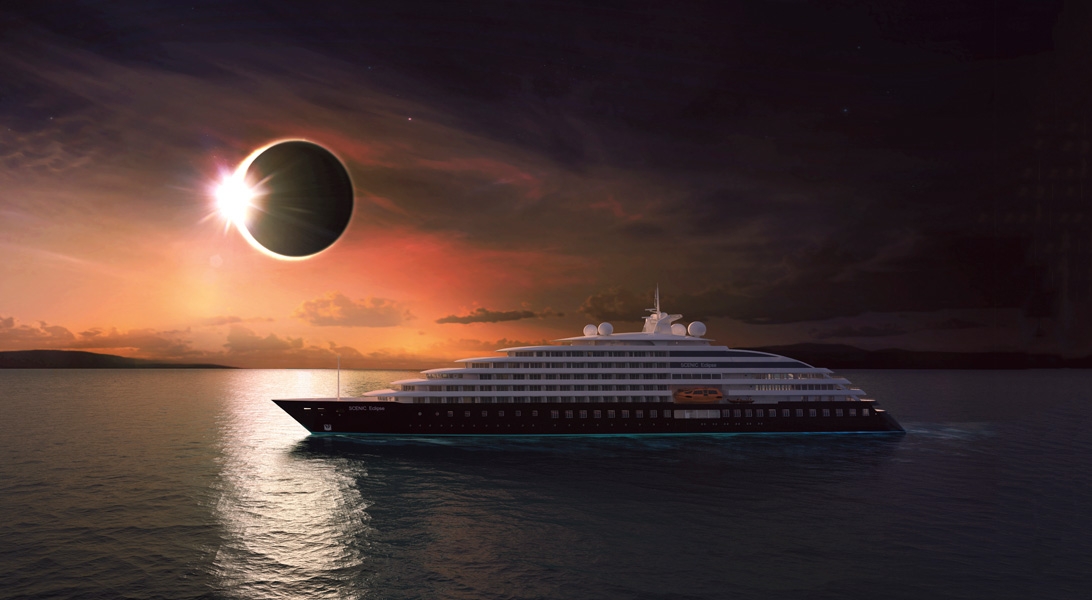
The images shown are for illustration purposes only and may not be an exact representation of what you find on the ship.
The images shown are for illustration purposes only and may not be an exact representation of what you find on the ship.
The images shown are for illustration purposes only and may not be an exact representation of what you find on the ship.
The images shown are for illustration purposes only and may not be an exact representation of what you find on the ship.
The images shown are for illustration purposes only and may not be an exact representation of what you find on the ship.

Our Fusion packages are all ABTA & ATOL protected ensuring that your booking is safe with us
| Return flights including luggage allowance | |||
| Overseas Transfers | |||
| 30 nights aboard the Scenic Eclipse II | |||
| Return Flights (including regional) | |||
| All Verandah Suites | |||
| Butler service for every guest | |||
| Nine Dining Venues | |||
| Gratuities Included | |||
| Complimentary drinks on-board | |||
| Free use of electric bikes | |||
| Comprehensive choice of shore excursions | |||
| Complimentary Wi-Fi | |||
| Explore under the sea in our submarine (additional charge) | |||
| Soar above and beyond by helicopter (additional charge) | |||
| Port Taxes and Fees | |||
 | ABTA and ATOL Protection* | ||
Fly/cruise package |
Date 26th Mar 2028 |
Nts 30 |
Interior  |
Oceanview |
Balcony |
Suite £26,232pp |
Interior |
Oceanview |
Balcony |
Suite £52,464pp |
Date 26th Mar 2028 |
Nts 30 |
Interior |
Oceanview |
Balcony |
Suite £26,232pp |
Interior |
Oceanview |
Balcony |
Suite £52,464pp |
Fusion Holidays when selling travel arrangements is a trading name of Co-op Travel Services Limited, registration 08903986. Fusion Cruises is an Accredited Body Member of Co-op Travel Services Limited ATOL 12904.
Book with Confidence. We are a Member of ABTA which means you have the benefit of ABTA’s assistance and Code of Conduct.
Some of the flights and flight-inclusive holidays on this website are financially protected by the ATOL scheme but ATOL protection does not apply to all holiday and travel services offered on this website. This website will provide you with information on the protection that applies in the case of each holiday and travel service offered before you make your booking. If you do not receive an ATOL Certificate then the booking will not be ATOL protected. If you do receive an ATOL Certificate but all parts of your trip are not listed on it, those parts will not be ATOL protected. Please see our booking conditions for information, or for more information about financial protection and the ATOL Certificate go to: www.caa.co.uk