This site uses cookies as defined in our Cookie Policy, by continuing to use this site you agree to their use.
Continue

Includes return flights from the UK*. Savour the essence of Italy and Croatia on a 17-day journey from Dubrovnik to Rome. Discover timeless cities, coastal charm, and artisan traditions. From golden Tuscan hills to Venetian canals and the sparkling Adriatic, enjoy boutique stays, immersive experiences, and a luxurious cruise — where every moment is steeped in flavour, culture, and Mediterranean beauty.
| Arrive | Depart | ||||||
| 5th05 | OctOct | 202727 | Dubrovnik, Croatia, embark on the Princess Eleganza | ||||
Nothing can prepare you for your first sight of Dubrovnik. Lying 216 km (135 miles) southeast of Split and commanding a jaw-dropping coastal location, it is one of the world's most beautiful fortified cities. Its massive stone ramparts and fortress towers curve around a tiny harbor, enclosing graduated ridges of sun-bleached orange-tiled roofs, copper domes, and elegant bell towers. Your imagination will run wild picturing what it looked like seven centuries ago when the walls were built, without any suburbs or highways around it, just this magnificent stone city rising out of the sea.In the 7th century AD, residents of the Roman city Epidaurum (now Cavtat) fled the Avars and Slavs of the north and founded a new settlement on a small rocky island, which they named Laus, and later Ragusa. On the mainland hillside opposite the island, the Slav settlement called Dubrovnik grew up. In the 12th century the narrow channel separating the two settlements was filled in (now the main street through the Old Town, called Stradun), and Ragusa and Dubrovnik became one. The city was surrounded by defensive walls during the 13th century, and these were reinforced with towers and bastions in the late 15th century.From 1358 to 1808 the city thrived as a powerful and remarkably sophisticated independent republic, reaching its golden age during the 16th century. In 1667 many of its splendid Gothic and Renaissance buildings were destroyed by an earthquake. The defensive walls survived the disaster, and the city was rebuilt in baroque style.Dubrovnik lost its independence to Napoléon in 1808, and in 1815 passed to Austria-Hungary. During the 20th century, as part of Yugoslavia, the city became a popular tourist destination, and in 1979 it was listed as a UNESCO World Heritage Site. During the war for independence, it came under heavy siege. Thanks to careful restoration, few traces of damage remain; however, there are maps inside the Pile and Ploče Gates illustrating the points around the city where damage was done. It’s only when you experience Dubrovnik yourself that you can understand what a treasure the world nearly lost Arrive in Dubrovnik and transfer to your Travelmarvel Coastal Cruising ship, the Princess Eleganza. Unpack and settle into your cabin, ready for exploration of the Adriatic Coast. Later, enjoy a Captain’s Welcome Dinner and meet your fellow travellers and Cruise Director. | |||||||
| 6th06 | OctOct | 202727 | Korčula, Croatia | ||||
Off the coast of Croatia in the southern Adriatic Sea lie some thousand islands and the largest of them, Korçula, is considered the most beautiful. With an average of 3,000 hours of sunshine per annum, which guarantees a wide assortment of Mediterranean vegetation, it is not difficult to understand why seasoned travelers compare Korçula to a latter-day Eden. Separated from the mainland by a channel of only one mile, Korçula's main town, named the same as the island, ranks among the best preserved medieval towns in the Mediterranean. It is the island's main tourist, economic and cultural center. Thanks to its strategic location along the sea trade routes, Korçula has always attracted travelers and settlers. Korcula was founded by Greek colonists, who were followed by Illyrians, Romans and finally the Croats. The Korçula Statute of 1214 is one of the oldest legal documents to have been adopted in this part of Europe. The same century saw the birth of the famous world traveler, Marco Polo. The house said to be his birthplace can be seen in town. Korçulans have always been known as keen seafarers, excellent shipbuilders, stonemasons and artists. From their many voyages, sailors brought back new ideas, which eventually mixed with local customs. To this day, Korçula has maintained the tradition of performing knightly games such as the chivalrous Moreska dance, which has been in existence for more than 400 years. Visitors to Korçula enjoy its stunning location, natural beauty and medieval ambiance. And if that's not enough, the town offers numerous attractions that are within walking distance from the pier, including the City Museum and the Bishop's Treasury. Spend the morning exploring Dubrovnik’s UNESCO World Heritage-listed Old Town on a guided walk. Begin at the impressive Pile Gate and wander through narrow limestone alleys, passing the Rector’s Palace, Sponza Palace, and the Dominican and Franciscan monasteries. After returning to your ship for lunch, set sail for Korčula. Here, enjoy a guided tour through its maze of cobblestone streets and elegant squares, lined with palaces once home to the island’s nobility. While less well known than Dubrovnik, Korčula offers an equally captivating experience. The evening is at leisure — perfect for dining along the scenic waterfront esplanade. | |||||||
| 7th07 | OctOct | 202727 | Split, Croatia | ||||
Split's ancient core is so spectacular and unusual that a visit is more than worth your time. The heart of the city lies within the walls of Roman emperor Diocletian's retirement palace, which was built in the 3rd century AD. Diocletian, born in the nearby Roman settlement of Salona in AD 245, achieved a brilliant career as a soldier and became emperor at the age of 40. In 295 he ordered this vast palace to be built in his native Dalmatia, and when it was completed he stepped down from the throne and retired to his beloved homeland. Upon his death, he was laid to rest in an octagonal mausoleum, around which Split's magnificent cathedral was built.In 615, when Salona was sacked by barbarian tribes, those fortunate enough to escape found refuge within the stout palace walls and divided up the vast imperial apartments into more modest living quarters. Thus, the palace developed into an urban center, and by the 11th century the settlement had expanded beyond the ancient walls.Under the rule of Venice (1420–1797), Split—as a gateway to the Balkan interior—became one of the Adriatic's main trading ports, and the city's splendid Renaissance palaces bear witness to the affluence of those times. When the Habsburgs took control during the 19th century, an overland connection to Central Europe was established by the construction of the Split–Zagreb–Vienna railway line.After World War II, the Tito years saw a period of rapid urban expansion: industrialization accelerated and the suburbs extended to accommodate high-rise apartment blocks. Today the historic center of Split is included on UNESCO's list of World Heritage Sites. Cruise to the Croatian island of Vis, where you’ll disembark to explore its remote, unspoilt beauty on a scenic drive around the island. Then sail to Split, one of the Adriatic’s most vibrant port cities. Join your guide for a walking tour of Diocletian’s Palace, built by the Roman emperor as his retirement residence around AD 305. Today, the city’s historic centre lies within and around the palace walls, making it one of the best-preserved and still-inhabited Roman complexes in the world. Your ship remains docked overnight, giving you the opportunity to explore Split at leisure after dinner on board. | |||||||
| 8th08 | OctOct | 202727 | Split, Croatia | ||||
Split's ancient core is so spectacular and unusual that a visit is more than worth your time. The heart of the city lies within the walls of Roman emperor Diocletian's retirement palace, which was built in the 3rd century AD. Diocletian, born in the nearby Roman settlement of Salona in AD 245, achieved a brilliant career as a soldier and became emperor at the age of 40. In 295 he ordered this vast palace to be built in his native Dalmatia, and when it was completed he stepped down from the throne and retired to his beloved homeland. Upon his death, he was laid to rest in an octagonal mausoleum, around which Split's magnificent cathedral was built.In 615, when Salona was sacked by barbarian tribes, those fortunate enough to escape found refuge within the stout palace walls and divided up the vast imperial apartments into more modest living quarters. Thus, the palace developed into an urban center, and by the 11th century the settlement had expanded beyond the ancient walls.Under the rule of Venice (1420–1797), Split—as a gateway to the Balkan interior—became one of the Adriatic's main trading ports, and the city's splendid Renaissance palaces bear witness to the affluence of those times. When the Habsburgs took control during the 19th century, an overland connection to Central Europe was established by the construction of the Split–Zagreb–Vienna railway line.After World War II, the Tito years saw a period of rapid urban expansion: industrialization accelerated and the suburbs extended to accommodate high-rise apartment blocks. Today the historic center of Split is included on UNESCO's list of World Heritage Sites. Set sail for Šibenik, stopping for a swim along the way. Often considered the gateway to Krka National Park, Šibenik provides access to one of Croatia’s most beautiful natural areas. Your ship remains in port overnight, giving you the flexibility to dine on board or head into town to a local restaurant. Insider Experience – Krka National Park Spend the afternoon exploring the dramatic waterfalls of Krka National Park. Wander along wooden boardwalks and bridges at Skradinski Buk, a series of turquoise cascades and pools set amid lush greenery. | |||||||
| 9th09 | OctOct | 202727 | Zadar, Croatia | ||||
Dalmatia's capital for more than 1,000 years, Zadar is all too often passed over by travelers on their way to Split or Dubrovnik. What they miss out on is a city of more than 73,000 that is remarkably lovely and lively despite—and, in some measure, because of—its tumultuous history. The Old Town, separated from the rest of the city on a peninsula some 4 km (2½ miles) long and just 1,640 feet wide, is bustling and beautiful: the marble pedestrian streets are replete with Roman ruins, medieval churches, palaces, museums, archives, and libraries. Parts of the new town are comparatively dreary, a testament to what a world war followed by decades of communism, not to mention a civil war, can do to the architecture of a city that is 3,000 years old. A settlement had already existed on the site of the present-day city for some 2,000 years when Rome finally conquered Zadar in the 1st century BC; the foundations of the forum can be seen today. Before the Romans came the Liburnians had made it a key center for trade with the Greeks and Romans for 800 years. In the 3rd century BC the Romans began to seriously pester the Liburnians, but required two centuries to bring the area under their control. During the Byzantine era, Zadar became the capital of Dalmatia, and this period saw the construction of its most famous church, the 9th-century St. Donat's Basilica. It remained the region's foremost city through the ensuing centuries. The city then experienced successive onslaughts and occupations—both long and short—by the Osogoths, the Croatian-Hungarian kings, the Venetians, the Turks, the Habsburgs, the French, the Habsburgs again, and finally the Italians before becoming part of Yugoslavia and, in 1991, the independent republic of Croatia. Zadar was for centuries an Italian-speaking city, and Italian is still spoken widely, especially by older people. Indeed, it was ceded to Italy in 1921 under the Treaty of Rapallo (and reverted to its Italian name of Zara). Its occupation by the Germans from 1943 led to intense bombing by the Allies during World War II, which left most of the city in ruins. Zadar became part of Tito's Yugoslavia in 1947, prompting many Italian residents to leave. Zadar's most recent ravages occurred during a three-month siege by Serb forces and months more of bombardment during the Croatian-Serbian war between 1991 and 1995. But you'd be hard-pressed to find outward signs of this today in what is a city to behold. There are helpful interpretive signs in English all around the Old Town, so you certainly won't feel lost when trying to make sense of the wide variety of architectural sites you might otherwise pass by with only a cursory look. This morning, take a guided walk through Šibenik’s remarkably well-preserved old town. Return to your ship and set sail for Zadar, an ancient port city that once rivalled Venice as a major power on the Adriatic coast. Arrive in the early evening and join a guided tour of the historic centre. Enjoy dinner ashore tonight, with your ship moored near a lively waterfront lined with charming restaurants and bars serving freshly caught seafood. | |||||||
| 10th10 | OctOct | 202727 | Zadar, Croatia | ||||
Dalmatia's capital for more than 1,000 years, Zadar is all too often passed over by travelers on their way to Split or Dubrovnik. What they miss out on is a city of more than 73,000 that is remarkably lovely and lively despite—and, in some measure, because of—its tumultuous history. The Old Town, separated from the rest of the city on a peninsula some 4 km (2½ miles) long and just 1,640 feet wide, is bustling and beautiful: the marble pedestrian streets are replete with Roman ruins, medieval churches, palaces, museums, archives, and libraries. Parts of the new town are comparatively dreary, a testament to what a world war followed by decades of communism, not to mention a civil war, can do to the architecture of a city that is 3,000 years old. A settlement had already existed on the site of the present-day city for some 2,000 years when Rome finally conquered Zadar in the 1st century BC; the foundations of the forum can be seen today. Before the Romans came the Liburnians had made it a key center for trade with the Greeks and Romans for 800 years. In the 3rd century BC the Romans began to seriously pester the Liburnians, but required two centuries to bring the area under their control. During the Byzantine era, Zadar became the capital of Dalmatia, and this period saw the construction of its most famous church, the 9th-century St. Donat's Basilica. It remained the region's foremost city through the ensuing centuries. The city then experienced successive onslaughts and occupations—both long and short—by the Osogoths, the Croatian-Hungarian kings, the Venetians, the Turks, the Habsburgs, the French, the Habsburgs again, and finally the Italians before becoming part of Yugoslavia and, in 1991, the independent republic of Croatia. Zadar was for centuries an Italian-speaking city, and Italian is still spoken widely, especially by older people. Indeed, it was ceded to Italy in 1921 under the Treaty of Rapallo (and reverted to its Italian name of Zara). Its occupation by the Germans from 1943 led to intense bombing by the Allies during World War II, which left most of the city in ruins. Zadar became part of Tito's Yugoslavia in 1947, prompting many Italian residents to leave. Zadar's most recent ravages occurred during a three-month siege by Serb forces and months more of bombardment during the Croatian-Serbian war between 1991 and 1995. But you'd be hard-pressed to find outward signs of this today in what is a city to behold. There are helpful interpretive signs in English all around the Old Town, so you certainly won't feel lost when trying to make sense of the wide variety of architectural sites you might otherwise pass by with only a cursory look. Wake this morning and enjoy a relaxing sail to the island of Rab. This afternoon, you are free to wander the white-walled harbour foreshore. Later, perhaps enjoy dinner at a local restaurant overlooking the lively marina. | |||||||
| 11th11 | OctOct | 202727 | Rab Island, Croatia | ||||
This morning, anchor off the island of Krk, where you may enjoy a refreshing swim in the inviting Adriatic. Continue cruising to Opatija and spend the afternoon at leisure. This evening, join your newfound friends for a special Captain’s Farewell Dinner on board your ship. | |||||||
| 12th12 | OctOct | 202727 | Opatija, Croatia | ||||
Stroll along Opatija’s seaside promenade, and soak up the splendour, as you enjoy fresh sea air, the sight of waving yacht masts, and the presence of grand ocean-facing buildings. Historically a fashionable destination for European aristocracy, the city is just as in-demand today - with palatial structures watching out over an inviting blue sea, and a border of lush green mountains stretching around the city. Vibrant gardens, glorious weather and endless seafront combine to ensure that Croatia’s original tourist destination remains one of the country’s finest. Disembark your ship and transfer by coach via Slovenia’s eccentric capital, Ljubljana, to Venice, where you’ll check in to your hotel. Later, enjoy dinner at a local restaurant. | |||||||
| 13th13 | OctOct | 202727 | Venice, Italy | ||||
Venice is a city unlike any other. No matter how often you've seen it in photos and films, the real thing is more dreamlike than you could imagine. With canals where streets should be, water shimmers everywhere. The fabulous palaces and churches reflect centuries of history in what was a wealthy trading center between Europe and the Orient. Getting lost in the narrow alleyways is a quintessential part of exploring Venice, but at some point you'll almost surely end up in Piazza San Marco, where tourists and locals congregate for a coffee or an aperitif. After an engaging Insider Experience this morning, join a guided tour of Venice’s most iconic landmarks, including St Mark’s Square and St Mark’s Basilica, a masterpiece blending Byzantine, Gothic, Romanesque and Renaissance influences. You’ll also pass the impressive 14th-century Doge’s Palace, once the residence of the Venetian doges and the seat of government, before exploring the maze of narrow streets and canals that define the city. Insider Experience – Gondola Workshop Visit a local squero (gondola workshop) and learn about the craftsmanship behind these iconic boats and the centuries-old trade that keeps the tradition alive. | |||||||
| 14th14 | OctOct | 202727 | Venice, Italy | ||||
Venice is a city unlike any other. No matter how often you've seen it in photos and films, the real thing is more dreamlike than you could imagine. With canals where streets should be, water shimmers everywhere. The fabulous palaces and churches reflect centuries of history in what was a wealthy trading center between Europe and the Orient. Getting lost in the narrow alleyways is a quintessential part of exploring Venice, but at some point you'll almost surely end up in Piazza San Marco, where tourists and locals congregate for a coffee or an aperitif. This morning, discover the traditional art of glassblowing during a visit to a working furnace on Murano, where local artisans demonstrate their craft. Afterwards, continue to Florence. Arrive this afternoon and enjoy time to explore before an Insider Experience this evening. Insider Experience – Florence Sensory Exploration Experience Florence through its flavours and hidden corners. Widely regarded as the birthplace of the Renaissance, the city is rich in artistic heritage and local traditions. Sample regional dishes and visit one of Florence’s famous wine windows, where you can order a glass of Italian wine through a small opening set into a historic wall. | |||||||
| 15th15 | OctOct | 202727 | Florence, Italy | ||||
Today venture into the Tuscan countryside. Visit Siena and explore its medieval streets, seeing the impressive Piazza del Campo and Siena Cathedral. Afterwards, continue to a special Insider Experience. Insider Experience – Tuscan Winery Experience Meet the family behind a local Tuscan winery, hear their stories and enjoy a farm-to-table lunch paired with regional wines. This relaxed experience offers an authentic taste of Tuscany’s hospitality and flavours. | |||||||
| 16th16 | OctOct | 202727 | Florence, Italy | ||||
Today is yours to enjoy Florence at your own pace. Wander the historic streets, browse local shops or relax in one of the city’s lively piazzas. Art lovers may wish to visit the renowned Uffizi Gallery, home to masterpieces by artists such as Botticelli and Leonardo da Vinci, or admire landmarks including the Ponte Vecchio. Enhance Your Journey – Explore Pisa Join an optional excursion to Pisa to see the world-famous Leaning Tower and the Piazza dei Miracoli, also home to the striking cathedral and baptistery. Alternatively, spend time soaking up the atmosphere of this historic city. | |||||||
| 17th17 | OctOct | 202727 | Florence, Italy | ||||
Enjoy a relaxed start to the morning before travelling to Naples. Continue on to Sorrento, where the remainder of the day is yours to enjoy at leisure. | |||||||
| 18th18 | OctOct | 202727 | Sorrento, Italy | ||||
Sorrento may have become a jumping-off point for visitors to Pompeii, Capri, and Amalfi, but you can find countless reasons to love it for itself. The Sorrentine people are fair-minded and hardworking, bubbling with life and warmth. The tuff cliff on which the town rests is spread over the bay, absorbing sunlight, while orange and lemon trees waft their perfume in spring. Winding along a cliff above a small beach and two harbors, the town is split in two by a narrow ravine formed by a former mountain stream. To the east, dozens of hotels line busy Via Correale along the cliff—many have "grand" included in their names, and some indeed still are. To the west, however, is the historic sector, which still enchants. It's a relatively flat area, with winding, stone-paved lanes bordered by balconied buildings, some joined by medieval stone arches. The central piazza is named after the poet Torquato Tasso, born here in 1544. This part of town is a delightful place to walk through. Craftspeople are often at work in their stalls and shops and are happy to let you watch; in fact, that's the point. Music spots and bars cluster in the side streets near Piazza Tasso. Spend the day at leisure, exploring Sorrento at your own pace. Renowned for its breathtaking coastline, charming piazzas, fragrant lemon groves and dramatic cliffs, this captivating town invites you to discover its many delights. Wander the bustling Piazza Tasso — Sorrento’s lively central square — or gaze down into the Valley of the Mills, a collection of atmospheric ruins nestled within a green gorge. This evening, a memorable Insider Experience awaits. Insider Experience – Interactive Cooking Experience Join a hands-on cooking class in Sorrento and learn the art of traditional Italian cuisine with expert local chefs. Prepare authentic dishes using fresh regional ingredients, then savour the flavours of your own creations. Enhance Your Journey – Discover Capri Visit the island of Capri and explore its villas and picturesque villages, set against the sparkling blue waters of the Tyrrhenian Sea. | |||||||
| 19th19 | OctOct | 202727 | Sorrento, Italy | ||||
Sorrento may have become a jumping-off point for visitors to Pompeii, Capri, and Amalfi, but you can find countless reasons to love it for itself. The Sorrentine people are fair-minded and hardworking, bubbling with life and warmth. The tuff cliff on which the town rests is spread over the bay, absorbing sunlight, while orange and lemon trees waft their perfume in spring. Winding along a cliff above a small beach and two harbors, the town is split in two by a narrow ravine formed by a former mountain stream. To the east, dozens of hotels line busy Via Correale along the cliff—many have "grand" included in their names, and some indeed still are. To the west, however, is the historic sector, which still enchants. It's a relatively flat area, with winding, stone-paved lanes bordered by balconied buildings, some joined by medieval stone arches. The central piazza is named after the poet Torquato Tasso, born here in 1544. This part of town is a delightful place to walk through. Craftspeople are often at work in their stalls and shops and are happy to let you watch; in fact, that's the point. Music spots and bars cluster in the side streets near Piazza Tasso. Today, travel by coach to Rome, stopping en route at the UNESCO World Heritage-listed Archaeological Park of Pompeii. Enjoy a guided tour of the ancient city, remarkably preserved beneath layers of ash following the eruption of Mount Vesuvius in AD 79. Afterwards, continue on to Rome. | |||||||
| 20th20 | OctOct | 202727 | Rome, Italy | ||||
Rome, Italy, the Eternal City, is a stunning blend of ancient history and vibrant modern life. Iconic landmarks like the Colosseum, Vatican City, and the Pantheon showcase its glorious past. Cobblestone streets lead to charming piazzas, bustling markets, and world-renowned museums. Rome's culinary scene delights with traditional Italian cuisine and lively cafes. The city's rich culture, impressive architecture, and warm, welcoming atmosphere make it an unforgettable destination for travellers. Begin your first full day in Rome with a skip-the-line guided visit to the Vatican Museums. Discover remarkable artworks and treasures, gaze up at the iconic Sistine Chapel and admire the grandeur of St Peter’s Basilica. Afterwards, set out on a walking tour of the city, taking in landmarks such as the Spanish Steps and views of the Colosseum. This evening, enjoy a Farewell Dinner at a local restaurant. Enhance Your Journey – Colosseum Guided Visit Join a guided visit inside the Colosseum for deeper insight into the history and significance of this world-famous monument. | |||||||
| 21st21 | OctOct | 202727 | Rome, Italy, disembark the Princess Eleganza | ||||
Rome, Italy, the Eternal City, is a stunning blend of ancient history and vibrant modern life. Iconic landmarks like the Colosseum, Vatican City, and the Pantheon showcase its glorious past. Cobblestone streets lead to charming piazzas, bustling markets, and world-renowned museums. Rome's culinary scene delights with traditional Italian cuisine and lively cafes. The city's rich culture, impressive architecture, and warm, welcoming atmosphere make it an unforgettable destination for travellers. Early risers may wish to join your Tour Director for a tranquil dawn walk through Rome before the city stirs to life. Take in the serene beauty of iconic sights, including the intricate sculptures of the Trevi Fountain and the Spanish Steps, bathed in the soft morning light. Afterwards, stop at a local cafe for a traditional Italian breakfast — a cornetto and cappuccino. Your Italian journey comes to an end today. After breakfast, transfer to the airport for your onward flight. | |||||||
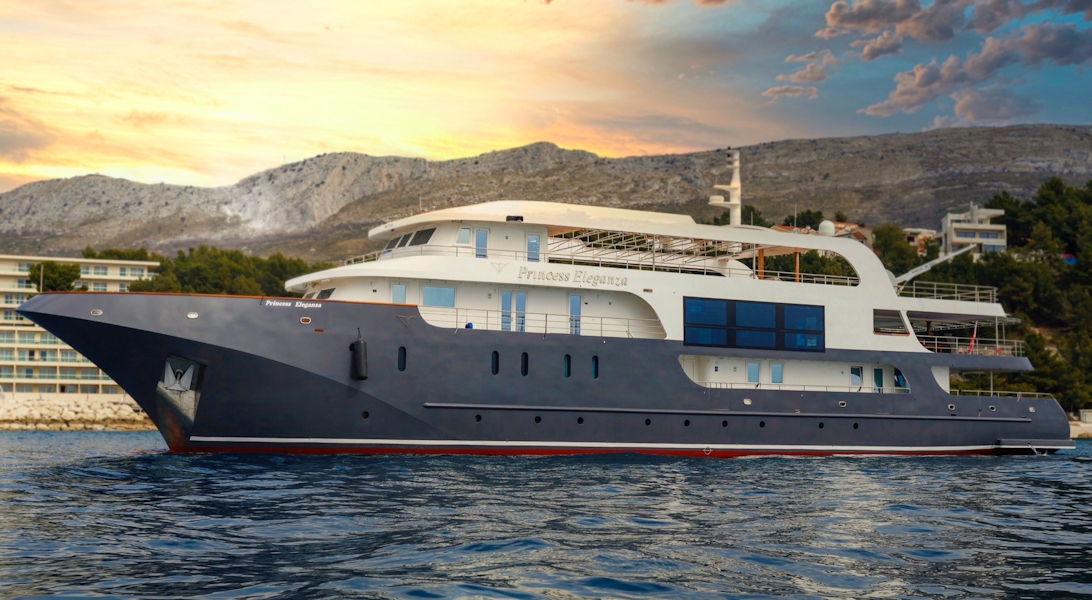
The images shown are for illustration purposes only and may not be an exact representation of what you find on the ship.
The images shown are for illustration purposes only and may not be an exact representation of what you find on the ship.
The images shown are for illustration purposes only and may not be an exact representation of what you find on the ship.
The images shown are for illustration purposes only and may not be an exact representation of what you find on the ship.
The images shown are for illustration purposes only and may not be an exact representation of what you find on the ship.


Our Fusion packages are all ABTA & ATOL protected ensuring that your booking is safe with us
| Return flights including luggage allowance | |||
| Overseas Transfers | |||
| 9 nights aboard the Princess Eleganza | |||
| Port Taxes and Fees | |||
 | ABTA and ATOL Protection* | ||
Fly/cruise package |
Date 5th Oct 2027 |
Nts 9 |
Interior  |
Oceanview £7,395pp |
Balcony |
Suite |
Interior |
Oceanview £14,790pp |
Balcony |
Suite |
Date 5th Oct 2027 |
Nts 9 |
Interior |
Oceanview £7,395pp |
Balcony |
Suite |
Interior |
Oceanview £14,790pp |
Balcony |
Suite |
| (All prices are £GBP per person) |
| Tue 15th Jun 202715 Jun 27 | Please call for availability |
| Tue 15th Jun 202715 Jun 27 | from 7,295 |
Fusion Holidays when selling travel arrangements is a trading name of Co-op Travel Services Limited, registration 08903986. Fusion Cruises is an Accredited Body Member of Co-op Travel Services Limited ATOL 12904.
Book with Confidence. We are a Member of ABTA which means you have the benefit of ABTA’s assistance and Code of Conduct.
Some of the flights and flight-inclusive holidays on this website are financially protected by the ATOL scheme but ATOL protection does not apply to all holiday and travel services offered on this website. This website will provide you with information on the protection that applies in the case of each holiday and travel service offered before you make your booking. If you do not receive an ATOL Certificate then the booking will not be ATOL protected. If you do receive an ATOL Certificate but all parts of your trip are not listed on it, those parts will not be ATOL protected. Please see our booking conditions for information, or for more information about financial protection and the ATOL Certificate go to: www.caa.co.uk