This site uses cookies as defined in our Cookie Policy, by continuing to use this site you agree to their use.
Continue

Includes return flights from the UK*. Be mesmerised by the treasures of Slovenia on a small group tour with no more than 24 guests. Discover breathtaking mountain scenery, picturesque alpine villages and beautiful Lake Bled. Soak up the authentic lifestyle of the Istrian Peninsula and uncover the gems of Croatia's Dalmatian Coast on an eight-night cruise aboard a luxury yacht.
| Arrive | Depart | ||||||
| 6th06 | AugAug | 202727 | Ljubljana, Slovenia, embark on the MV Lady Eleganza | ||||
Be met on arrival in Slovenia's capital, Ljubljana, and transfer to your hotel. Tonight, get to know your fellow guests and Tour Director at a welcome dinner. | |||||||
| 7th07 | AugAug | 202727 | Ljubljana, Slovenia | ||||
Embark on a guided discovery of Ljubljana. Enjoy the scenery as you capture views of the entire city from Ljubljana Castle's lookout tower. You will also delight in a wine tasting, where you will sample fine Slovenian varieties. The evening is yours at leisure. | |||||||
| 8th08 | AugAug | 202727 | Ljubljana, Slovenia | ||||
Farewell Ljubljana as you make your way to the Logar Valley. Here, you'll be astounded by the stunning scenery of rolling emerald slopes, snow-dusted mountains and pristine lakes. This rarely visited region is tucked away and offers a harmonious blend of peace and nature. Tonight, enjoy dinner accompanied by local entertainers. | |||||||
| 9th09 | AugAug | 202727 | Logar Valley Scenic Park, Slovenia | ||||
Today, take a walk with a local guide through Logarska Dolina Nature Park, where you will learn more about the region and the local fauna and flora. Later, visit the Rinka Centre and dive into the Earth's ancient history at the 'Exploring the Past: A Journey Through Fossils' exhibition. Discover rare specimens and interactive displays showcasing the wonders of palaeontology, butterflies and gardens. | |||||||
| 10th10 | AugAug | 202727 | Logar Valley Scenic Park, Slovenia | ||||
In Slovenia's Alps, the villages of Bohinj and Vogel offer incredible vistas and evergreen slopes. Take a cable car ride from Bohinj to Vogel, located 1,534 metres above sea level. Here, you'll be met with stunning views of Lake Bohinj and the surrounding Julian Alps. Continue to Lake Bled and arrive at your hotel, which overlooks the idyllic shores of Lake Bled. | |||||||
| 11th11 | AugAug | 202727 | Bled, Slovenia | ||||
Board a traditional Pletna boat and enjoy a cruise to Bled Island, situated in the middle of picturesque Lake Bled. Afterwards, tour Bled Castle, whose origins date back to 1004. Then, continue to your hotel in Portoroz. | |||||||
| 12th12 | AugAug | 202727 | Portoroz, Slovenia | ||||
Explore the World Heritage-listed Skocjan Caves, the largest known underground canyon in the world. Afterwards, visit a stud farm famous for breeding Lipizzan horses. This is the original farm responsible for perpetuating this breed, which are provided to the Spanish Riding School in Vienna. | |||||||
| 13th13 | AugAug | 202727 | Opatija, Croatia | ||||
Stroll along Opatija’s seaside promenade, and soak up the splendour, as you enjoy fresh sea air, the sight of waving yacht masts, and the presence of grand ocean-facing buildings. Historically a fashionable destination for European aristocracy, the city is just as in-demand today - with palatial structures watching out over an inviting blue sea, and a border of lush green mountains stretching around the city. Vibrant gardens, glorious weather and endless seafront combine to ensure that Croatia’s original tourist destination remains one of the country’s finest. Explore the fascinating Piran Salt Pans, where salt is still produced using centuries-old processes of natural crystallisation. Later, travel to the Croatian region of Istria, where you'll gain an insight into truffle hunting, including a delicious tasting. Then, transfer to Opatija, where you will board the MV Lady Eleganza. Tonight, come together to share a welcome dinner on board. You will dock overnight in this magnificent town. | |||||||
| 14th14 | AugAug | 202727 | Rab Island, Croatia | ||||
Embark on a guided tour of Opatija, then set sail for the beautiful island of Krk. Weather permitting, your yacht will drop its anchor so you can enjoy a swim right off the deck at the stern of the MV Lady Eleganza. Later, sail to the island of Rab and spend some time meandering through the narrow alleys of the picturesque Old Town. | |||||||
| 15th15 | AugAug | 202727 | Zadar, Croatia | ||||
Dalmatia's capital for more than 1,000 years, Zadar is all too often passed over by travelers on their way to Split or Dubrovnik. What they miss out on is a city of more than 73,000 that is remarkably lovely and lively despite—and, in some measure, because of—its tumultuous history. The Old Town, separated from the rest of the city on a peninsula some 4 km (2½ miles) long and just 1,640 feet wide, is bustling and beautiful: the marble pedestrian streets are replete with Roman ruins, medieval churches, palaces, museums, archives, and libraries. Parts of the new town are comparatively dreary, a testament to what a world war followed by decades of communism, not to mention a civil war, can do to the architecture of a city that is 3,000 years old. A settlement had already existed on the site of the present-day city for some 2,000 years when Rome finally conquered Zadar in the 1st century BC; the foundations of the forum can be seen today. Before the Romans came the Liburnians had made it a key center for trade with the Greeks and Romans for 800 years. In the 3rd century BC the Romans began to seriously pester the Liburnians, but required two centuries to bring the area under their control. During the Byzantine era, Zadar became the capital of Dalmatia, and this period saw the construction of its most famous church, the 9th-century St. Donat's Basilica. It remained the region's foremost city through the ensuing centuries. The city then experienced successive onslaughts and occupations—both long and short—by the Osogoths, the Croatian-Hungarian kings, the Venetians, the Turks, the Habsburgs, the French, the Habsburgs again, and finally the Italians before becoming part of Yugoslavia and, in 1991, the independent republic of Croatia. Zadar was for centuries an Italian-speaking city, and Italian is still spoken widely, especially by older people. Indeed, it was ceded to Italy in 1921 under the Treaty of Rapallo (and reverted to its Italian name of Zara). Its occupation by the Germans from 1943 led to intense bombing by the Allies during World War II, which left most of the city in ruins. Zadar became part of Tito's Yugoslavia in 1947, prompting many Italian residents to leave. Zadar's most recent ravages occurred during a three-month siege by Serb forces and months more of bombardment during the Croatian-Serbian war between 1991 and 1995. But you'd be hard-pressed to find outward signs of this today in what is a city to behold. There are helpful interpretive signs in English all around the Old Town, so you certainly won't feel lost when trying to make sense of the wide variety of architectural sites you might otherwise pass by with only a cursory look. Arrive in Pag, a distinctively rocky island, where you will have the chance to take a refreshing dip straight off your deck. Later, continue to Zadar and enjoy a guided walk through the city's well-preserved Old Town, which sits on a peninsula and is entirely pedestrianised. The streets are filled with Roman ruins, Romanesque churches and Renaissance palaces. You'll also experience a striking modern atmosphere here with the Sea Organ, a remarkable sound art installation that plays music with the rhythm of the waves, and the iconic Greeting to the Sun, a captivating light display. Your yacht will dock here overnight, so perhaps you may like to try one of the local taverns. | |||||||
| 16th16 | AugAug | 202727 | Sibenik, Croatia | ||||
Šibenik's main monument, its Gothic-Renaissance cathedral, built of pale-gray Dalmatian stone and designated a UNESCO World Heritage Site, stands on a raised piazza close to the seafront promenade. From here a network of narrow, cobbled streets leads through the medieval quarter of tightly packed, terra-cotta–roof houses, and up to the ruins of a 16th-century hilltop fortress. The city has never been a real tourist destination. Before the Croatian war for independence, it was a relatively prosperous industrial center, but when the factories closed, Šibenik sank into an economic depression. However, the cathedral more than warrants a look, and it makes a decent base for visiting the waterfalls of Krka National Park. Set sail for Šibenik this morning. On arrival, travel to the traditional village of Radošić for a Signature Experience. Your ship will dock in Šibenik overnight. Signature Experience — Taste and Traditions of Radošić On arrival in Radošić, sample some of the local brandy and home-made doughnuts, then take a tour of the family estate, including restored stone houses and a small museum. Afterwards, enjoy a traditional dinner, then watch on as the locals perform songs that have been passed down through generations since the 18th century. | |||||||
| 17th17 | AugAug | 202727 | Sibenik, Croatia | ||||
Šibenik's main monument, its Gothic-Renaissance cathedral, built of pale-gray Dalmatian stone and designated a UNESCO World Heritage Site, stands on a raised piazza close to the seafront promenade. From here a network of narrow, cobbled streets leads through the medieval quarter of tightly packed, terra-cotta–roof houses, and up to the ruins of a 16th-century hilltop fortress. The city has never been a real tourist destination. Before the Croatian war for independence, it was a relatively prosperous industrial center, but when the factories closed, Šibenik sank into an economic depression. However, the cathedral more than warrants a look, and it makes a decent base for visiting the waterfalls of Krka National Park. Today, head to beautiful Krka National Park. Here, explore the dramatic waterfalls, the most spectacular of which is Skradinski Buk, a large natural pool with high waterfalls at one end and cascades at the other. Take a walk along wooden jetties and bridges to admire the falls, as well as the unique flora and fauna. Return to the yacht and cruise to Split. Enjoy dinner on board as your ship moors overnight. You also have the option to experience life like the locals and visit a tavern. | |||||||
| 18th18 | AugAug | 202727 | Split, Croatia | ||||
Split's ancient core is so spectacular and unusual that a visit is more than worth your time. The heart of the city lies within the walls of Roman emperor Diocletian's retirement palace, which was built in the 3rd century AD. Diocletian, born in the nearby Roman settlement of Salona in AD 245, achieved a brilliant career as a soldier and became emperor at the age of 40. In 295 he ordered this vast palace to be built in his native Dalmatia, and when it was completed he stepped down from the throne and retired to his beloved homeland. Upon his death, he was laid to rest in an octagonal mausoleum, around which Split's magnificent cathedral was built.In 615, when Salona was sacked by barbarian tribes, those fortunate enough to escape found refuge within the stout palace walls and divided up the vast imperial apartments into more modest living quarters. Thus, the palace developed into an urban center, and by the 11th century the settlement had expanded beyond the ancient walls.Under the rule of Venice (1420–1797), Split—as a gateway to the Balkan interior—became one of the Adriatic's main trading ports, and the city's splendid Renaissance palaces bear witness to the affluence of those times. When the Habsburgs took control during the 19th century, an overland connection to Central Europe was established by the construction of the Split–Zagreb–Vienna railway line.After World War II, the Tito years saw a period of rapid urban expansion: industrialization accelerated and the suburbs extended to accommodate high-rise apartment blocks. Today the historic center of Split is included on UNESCO's list of World Heritage Sites. Sail to Hvar, where you’ll embark on a guided walking discovery of Hvar’s stunning Old Town. Commence in the iconic main square, which is the largest piazza in Dalmatia, then see the cathedral and the Franciscan Monastery. You’ll then sail to Vis. Once a strategic military base for the Yugoslav army, the island only opened up to tourism in 1989. This prolonged isolation and lack of development has preserved its pristine beauty, which is the island's main attraction. | |||||||
| 19th19 | AugAug | 202727 | Vis Island, Croatia | ||||
This morning embark on a guided tour in Vis, before sailing to the enchanting island of Korčula, known for its lush pine forests, crystal-clear beaches, relaxing atmosphere and rich history. Explore the charming Old Town and wander through the labyrinth of cobblestone streets. Tonight, dine in a traditional local restaurant, then perhaps go for an evening stroll or check out the nightlife. | |||||||
| 20th20 | AugAug | 202727 | Dubrovnik, Croatia | ||||
Nothing can prepare you for your first sight of Dubrovnik. Lying 216 km (135 miles) southeast of Split and commanding a jaw-dropping coastal location, it is one of the world's most beautiful fortified cities. Its massive stone ramparts and fortress towers curve around a tiny harbor, enclosing graduated ridges of sun-bleached orange-tiled roofs, copper domes, and elegant bell towers. Your imagination will run wild picturing what it looked like seven centuries ago when the walls were built, without any suburbs or highways around it, just this magnificent stone city rising out of the sea.In the 7th century AD, residents of the Roman city Epidaurum (now Cavtat) fled the Avars and Slavs of the north and founded a new settlement on a small rocky island, which they named Laus, and later Ragusa. On the mainland hillside opposite the island, the Slav settlement called Dubrovnik grew up. In the 12th century the narrow channel separating the two settlements was filled in (now the main street through the Old Town, called Stradun), and Ragusa and Dubrovnik became one. The city was surrounded by defensive walls during the 13th century, and these were reinforced with towers and bastions in the late 15th century.From 1358 to 1808 the city thrived as a powerful and remarkably sophisticated independent republic, reaching its golden age during the 16th century. In 1667 many of its splendid Gothic and Renaissance buildings were destroyed by an earthquake. The defensive walls survived the disaster, and the city was rebuilt in baroque style.Dubrovnik lost its independence to Napoléon in 1808, and in 1815 passed to Austria-Hungary. During the 20th century, as part of Yugoslavia, the city became a popular tourist destination, and in 1979 it was listed as a UNESCO World Heritage Site. During the war for independence, it came under heavy siege. Thanks to careful restoration, few traces of damage remain; however, there are maps inside the Pile and Ploče Gates illustrating the points around the city where damage was done. It’s only when you experience Dubrovnik yourself that you can understand what a treasure the world nearly lost This morning, continue to your last port of call, Dubrovnik. Here, embark on a guided discovery of this spectacular walled city, known as the 'Pearl of the Adriatic'. Historically famous, Dubrovnik has gained even more attention since being featured as King's Landing in the television series 'Game of Thrones'. Tonight, come together to share a farewell dinner. | |||||||
| 21st21 | AugAug | 202727 | Dubrovnik, Croatia, disembark the MV Lady Eleganza | ||||
Nothing can prepare you for your first sight of Dubrovnik. Lying 216 km (135 miles) southeast of Split and commanding a jaw-dropping coastal location, it is one of the world's most beautiful fortified cities. Its massive stone ramparts and fortress towers curve around a tiny harbor, enclosing graduated ridges of sun-bleached orange-tiled roofs, copper domes, and elegant bell towers. Your imagination will run wild picturing what it looked like seven centuries ago when the walls were built, without any suburbs or highways around it, just this magnificent stone city rising out of the sea.In the 7th century AD, residents of the Roman city Epidaurum (now Cavtat) fled the Avars and Slavs of the north and founded a new settlement on a small rocky island, which they named Laus, and later Ragusa. On the mainland hillside opposite the island, the Slav settlement called Dubrovnik grew up. In the 12th century the narrow channel separating the two settlements was filled in (now the main street through the Old Town, called Stradun), and Ragusa and Dubrovnik became one. The city was surrounded by defensive walls during the 13th century, and these were reinforced with towers and bastions in the late 15th century.From 1358 to 1808 the city thrived as a powerful and remarkably sophisticated independent republic, reaching its golden age during the 16th century. In 1667 many of its splendid Gothic and Renaissance buildings were destroyed by an earthquake. The defensive walls survived the disaster, and the city was rebuilt in baroque style.Dubrovnik lost its independence to Napoléon in 1808, and in 1815 passed to Austria-Hungary. During the 20th century, as part of Yugoslavia, the city became a popular tourist destination, and in 1979 it was listed as a UNESCO World Heritage Site. During the war for independence, it came under heavy siege. Thanks to careful restoration, few traces of damage remain; however, there are maps inside the Pile and Ploče Gates illustrating the points around the city where damage was done. It’s only when you experience Dubrovnik yourself that you can understand what a treasure the world nearly lost Following breakfast, be transferred to the airport for your onward flight. | |||||||
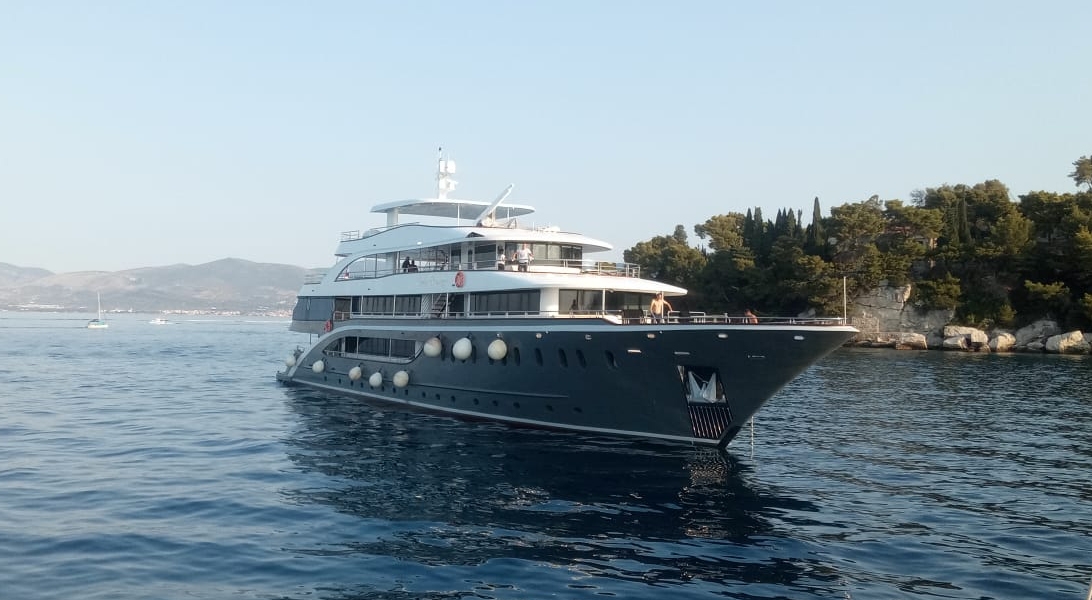
The images shown are for illustration purposes only and may not be an exact representation of what you find on the ship.
The images shown are for illustration purposes only and may not be an exact representation of what you find on the ship.
The images shown are for illustration purposes only and may not be an exact representation of what you find on the ship.
The images shown are for illustration purposes only and may not be an exact representation of what you find on the ship.
The images shown are for illustration purposes only and may not be an exact representation of what you find on the ship.


Our Fusion packages are all ABTA & ATOL protected ensuring that your booking is safe with us
| Return flights including luggage allowance | |||
| Overseas Transfers | |||
| 8 nights aboard the MV Lady Eleganza | |||
| Beer, wine & soft drinks at lunch & dinner | |||
| Exclusive special events | |||
| Choice of shore excursions In every port | |||
| Bikes for Passenger Use | |||
| Speciality restaurants included | |||
| Free Wi-Fi Included | |||
| Port Taxes and Fees | |||
 | ABTA and ATOL Protection* | ||
Fly/cruise package |
Date 6th Aug 2027 |
Nts 8 |
Interior  |
Oceanview |
Balcony |
Suite £8,995pp |
Interior |
Oceanview |
Balcony |
Suite £17,990pp |
Date 6th Aug 2027 |
Nts 8 |
Interior |
Oceanview |
Balcony |
Suite £8,995pp |
Interior |
Oceanview |
Balcony |
Suite £17,990pp |
| (All prices are £GBP per person) |
| Fri 25th Jun 202725 Jun 27 | Please call for availability |
| Fri 25th Jun 202725 Jun 27 | from 8,995 |
Fusion Holidays when selling travel arrangements is a trading name of Co-op Travel Services Limited, registration 08903986. Fusion Cruises is an Accredited Body Member of Co-op Travel Services Limited ATOL 12904.
Book with Confidence. We are a Member of ABTA which means you have the benefit of ABTA’s assistance and Code of Conduct.
Some of the flights and flight-inclusive holidays on this website are financially protected by the ATOL scheme but ATOL protection does not apply to all holiday and travel services offered on this website. This website will provide you with information on the protection that applies in the case of each holiday and travel service offered before you make your booking. If you do not receive an ATOL Certificate then the booking will not be ATOL protected. If you do receive an ATOL Certificate but all parts of your trip are not listed on it, those parts will not be ATOL protected. Please see our booking conditions for information, or for more information about financial protection and the ATOL Certificate go to: www.caa.co.uk