This site uses cookies as defined in our Cookie Policy, by continuing to use this site you agree to their use.
Continue

Welcome to Aurora Expeditions’ Myths of The Mediterranean
Embark on an epic journey through legendary kingdoms, mythical lands and ancient sites as we explore Greece, Turkey, Montenegro, Croatia, Italy and Sicily. Discover tales of all-powerful gods and heroic figures in Greece and hear tales of the opulent communities of ancient Athens, Ephesus, and Pompeii. Immerse yourself in the rich folklore of Montenegro’s waterfront villages and uncover stories of political fervour and island communities in Croatia. Witness Italy’s enduring legacy of Sicilian feuds, piratic treasures,... and the tumultuous reigns of dictatorial Roman emperors. This voyage promises experiences as diverse and captivating as the tales that have shaped these lands. Join us as we navigate these enchanting stories, to uncover enough intriguing titbits and inspiring trivia to last a lifetime.
| Arrive | Depart | ||||||
| 14th14 | SepSep | 202626 | Athens, Greece, embark on the Douglas Mawson | ||||
Welcome to Athens. On arrival at Athens airport make your way to the Arrivals Hall to meet our representative, followed by a transfer to our group hotel. At the hotel, visit our hospitality desk in the lobby to meet our team who will provide you with useful information regarding pre-embarkation procedures and about your time in Athens. You will also receive cabin tags for your luggage. Please clearly label the tags with your name and your cabin number on the ship. This evening offers time to relax in preparation for tomorrow. Accommodation: The Stanley Hotel (or similar) | |||||||
| 15th15 | SepSep | 202626 | Athens, Greece | ||||
After breakfast, enjoy a morning ‘Your Choice’ experience. Walk in Socrates' footsteps, explore the ancient wonders of the Acropolis, or immerse yourself in Athens' vibrant food scene with a local guide. You can then rejoin the coach to return to our hotel or take a leisurely stroll to the nearby Plaka district. This charming area is filled with streets and alleys lined with restaurants, cafes, and shops—ideal for a bite to eat or picking up gifts (lunch at your own expense). Tonight, we kick off our journey with a Welcome Event, celebrating Greek style. With a rich recorded history spanning 3,500 years, Athens is a city brimming with stories. Widely hailed as the ‘cradle of civilisation’ and revered as the birthplace of democracy, philosophy and theatre, Athens seamlessly merges its illustrious past with its vibrant present. This bustling metropolis, home to three million inhabitants, is adorned with a wealth of ancient sites that punctuate its landscape like temples, iconic columns and former city centres. Athens’ influence in antiquity transcended its borders, ushering in a Golden Age characterised by political discussion, education and philosophy, hosting luminaries such as Socrates, Plato and Aristotle. The democratic principles forged in Athens laid the groundwork for modern governance systems worldwide. Yet, Athens is more than just a relic of ancient history. As a historical seat of power, it has weathered waves of invasions, shaping its contemporary identity with a diverse fusion of architectural styles, culinary delights and cultural traditions. Whether you are wandering amid ancient ruins or indulging in the flavours of modern Greek cuisine, Athens offers a captivating journey through the ages, beckoning travellers from across the globe to explore its timeless allure. Personalise your exploration with our included ‘Your Choice’ experiences. Option 1 – Morning experience: A Taste of Athens For foodie fans, travellers who have visited Athens before, and those who enjoy a personal view of Athens, this experience is perfect. We begin our guided walk at Syntagma Square, where Greece’s Parliament building stands, guarded by traditionally attired Evzone guards. Our local expert warmly welcomes you to their home city, leading you on an intriguing walking tour through Athens’ historical areas. With passion and knowledge, they unveil authentic Athens and its secrets. Stroll through Plaka, the charming ‘old quarter’ of Athens nestled at the base of the Acropolis. Admire its eclectic neoclassical architecture, picturesque alleys, and inviting tavernas. Pause at a colourful local cafe to indulge in Greek delicacies such as olives, fragrant cheeses and cured meats. Continue through Monastir Aki, famous for its bustling flea market and vibrant shops brimming with local crafts and souvenirs. From there, we wander to Thission, offering the best panoramic views of the Acropolis, Ancient Agora, and the majestic Temple of Hephaestus. Here, we treat ourselves to a traditional Greek coffee, accompanied perhaps by a sweet delight like baklava, a favourite among Greeks for its rich layers of pastry, nuts and honey. Our morning offers us a taste of this fascinating city. Option 2 – Morning experience: Ancient Athens This comprehensive tour combines a visit to the Acropolis with the city’s major landmarks. Begin with a view of the Greek parliament at Syntagma Square, once a royal residence, where the iconic Evzones still stand guard in traditional attire. Next, enjoy a brief photo stop at the Panathenaic Stadium, the site of the first modern Olympic Games in 1896, where athletes revived the ancient Olympic spirit. Perched high above the city, the Acropolis is not only an architectural marvel, but also a symbol of the birthplace of democracy. This ancient citadel stands as a testament to the enduring legacy of Greek culture and ideals, representing advancements in art, architecture and political thought that originated in Athens. Feel the essence of civic pride and religious devotion in ancient Greek society, at the city’s centre for political and cultural life. The Parthenon exemplifies the height of classical Greek architecture, adorned with Doric columns and intricate sculptures. Built under the leadership of Pericles, the Parthenon symbolised the city’s wealth and power, with friezes and statues depicting various mythological scenes. After touring the Acropolis, take a short walk to the Acropolis Museum. This modern museum houses over 3,000 artefacts from the Athenian Acropolis, offering unique insights into ancient Greek life and including an archaeological excavation beneath it. Option 3 – Morning experience: Highlights of Athens This panoramic tour offers a captivating introduction to the ancient city, with visits to its most iconic landmarks. Begin at the Greek Parliament in Syntagma Square, once a royal palace, where the Evzones, dressed in traditional uniforms, stand guard in a solemn ceremonial display. Next, enjoy a photo stop at the historic Panathenaic Stadium, the site of the first modern Olympic Games in 1896, where the Olympic spirit was reborn. Continuing the Olympic theme, head to the Temple of Zeus, a colossal, ruined sanctuary dedicated to the king of the Olympian gods. Then, take in sweeping views of the Acropolis, the ancient citadel perched high above Athens, home to legendary temples like the Parthenon, built in honour of the city’s patron goddess, Athena. On a facing hilltop lies the Agora, the bustling heart of ancient Athenian life, a vibrant marketplace and political centre where citizens once gathered to shop, debate, and shape the course of democracy. Rejoin the coach for a short drive or take a stroll to the city’s popular Plaka precinct nearby. A series of streets and laneways filled with restaurants, cafes and shops, it is the perfect place to grab a bite to eat or shop for gifts to purchase before returning to your hotel. Accommodation: The Stanley Hotel (or similar) Meals: Breakfast, Welcome Event canapés | |||||||
| 16th16 | SepSep | 202626 | Piraeus, Greece | ||||
It's no wonder that all roads lead to the fascinating and maddening metropolis of Athens. Lift your eyes 200 feet above the city to the Parthenon, its honey-color marble columns rising from a massive limestone base, and you behold architectural perfection that has not been surpassed in 2,500 years. But, today, this shrine of classical form dominates a 21st-century boomtown. To experience Athens—Athína in Greek—fully is to understand the essence of Greece: ancient monuments surviving in a sea of cement, startling beauty amid the squalor, tradition juxtaposed with modernity. Locals depend on humor and flexibility to deal with the chaos; you should do the same. The rewards are immense. Although Athens covers a huge area, the major landmarks of the ancient Greek, Roman, and Byzantine periods are close to the modern city center. You can easily walk from the Acropolis to many other key sites, taking time to browse in shops and relax in cafés and tavernas along the way. From many quarters of the city you can glimpse "the glory that was Greece" in the form of the Acropolis looming above the horizon, but only by actually climbing that rocky precipice can you feel the impact of the ancient settlement. The Acropolis and Filopappou, two craggy hills sitting side by side; the ancient Agora (marketplace); and Kerameikos, the first cemetery, form the core of ancient and Roman Athens. Along the Unification of Archaeological Sites promenade, you can follow stone-paved, tree-lined walkways from site to site, undisturbed by traffic. Cars have also been banned or reduced in other streets in the historical center. In the National Archaeological Museum, vast numbers of artifacts illustrate the many millennia of Greek civilization; smaller museums such as the Goulandris Museum of Cycladic Art Museum and the Byzantine and Christian Museum illuminate the history of particular regions or periods. Athens may seem like one huge city, but it is really a conglomeration of neighborhoods with distinctive characters. The Eastern influences that prevailed during the 400-year rule of the Ottoman Empire are still evident in Monastiraki, the bazaar area near the foot of the Acropolis. On the northern slope of the Acropolis, stroll through Plaka (if possible by moonlight), an area of tranquil streets lined with renovated mansions, to get the flavor of the 19th-century's gracious lifestyle. The narrow lanes of Anafiotika, a section of Plaka, thread past tiny churches and small, color-washed houses with wooden upper stories, recalling a Cycladic island village. In this maze of winding streets, vestiges of the older city are everywhere: crumbling stairways lined with festive tavernas; dank cellars filled with wine vats; occasionally a court or diminutive garden, enclosed within high walls and filled with magnolia trees and the flaming trumpet-shaped flowers of hibiscus bushes. Formerly run-down old quarters, such as Thission, Gazi and Psirri, popular nightlife areas filled with bars and mezedopoleia (similar to tapas bars), are now in the process of gentrification, although they still retain much of their original charm, as does the colorful produce and meat market on Athinas. The area around Syntagma Square, the tourist hub, and Omonia Square, the commercial heart of the city about 1 km (½ mi) northwest, is distinctly European, having been designed by the court architects of King Otho, a Bavarian, in the 19th century. The chic shops and bistros of ritzy Kolonaki nestle at the foot of Mt. Lycabettus, Athens's highest hill (909 feet). Each of Athens's outlying suburbs has a distinctive character: in the north is wealthy, tree-lined Kifissia, once a summer resort for aristocratic Athenians, and in the south and southeast lie Glyfada, Voula, and Vouliagmeni, with their sandy beaches, seaside bars, and lively summer nightlife. Just beyond the city's southern fringes is Piraeus, a bustling port city of waterside fish tavernas and Saronic Gulf views. Enjoy a leisurely morning in Athens with your hop‑on‑hop‑off bus pass. Revisit your favourite sites, browse the city’s markets and shops, or uncover hidden treasures at your own pace. This convenient pass makes independent exploration easy, while warm Greek hospitality ensures you are never far from helpful advice on how to make the most of your time. Mid-afternoon, we transfer from our hotel to the port of Piraeus to board the Douglas Mawson and sail towards the famed island of Mykonos. This evening, we enjoy a ‘Welcome Aboard’ dinner where we meet our crew and Aurora Expeditions team. | |||||||
| 17th17 | SepSep | 202626 | Mykonos, Greece | ||||
Although the fishing boats still go out in good weather, Mykonos largely makes its living from tourism these days. The summer crowds have turned one of the poorest islands in Greece into one of the richest. Old Mykonians complain that their young, who have inherited stores where their grandfathers once sold eggs or wine, get so much rent that they have lost ambition, and in summer sit around pool bars at night with their friends, and hang out in Athens in winter when island life is less scintillating. Put firmly on the map by Jackie O in the 1960s, Mykonos town—called Hora by the locals—remains the Saint-Tropez of the Greek islands. The scenery is memorable, with its whitewashed streets, Little Venice, the Kato Myli ridge of windmills, and Kastro, the town's medieval quarter. Its cubical two- or three-story houses and churches, with their red or blue doors and domes and wooden balconies, have been long celebrated as some of the best examples of classic Cycladic architecture. Luckily, the Greek Archaeological Service decided to preserve the town, even when the Mykonians would have preferred to rebuild, and so the Old Town has been impressively preserved. Pink oleander, scarlet hibiscus, and trailing green pepper trees form a contrast amid the dazzling whiteness, whose frequent renewal with whitewash is required by law. Any visitor who has the pleasure of getting lost in its narrow streets (made all the narrower by the many outdoor stone staircases, which maximize housing space in the crowded village) will appreciate how its confusing layout was designed to foil pirates—if it was designed at all. After Mykonos fell under Turkish rule in 1537, the Ottomans allowed the islanders to arm their vessels against pirates, which had a contradictory effect: many of them found that raiding other islands was more profitable than tilling arid land. At the height of Aegean piracy, Mykonos was the principal headquarters of the corsair fleets—the place where pirates met their fellows, found willing women, and filled out their crews. Eventually the illicit activity evolved into a legitimate and thriving trade network. Morning on Mykonos town's main quay is busy with deliveries, visitors for the Delos boats, lazy breakfasters, and street cleaners dealing with the previous night's mess. In late morning the cruise-boat people arrive, and the shops are all open. In early afternoon, shaded outdoor tavernas are full of diners eating salads (Mykonos's produce is mostly imported); music is absent or kept low. In mid- and late afternoon, the town feels sleepy, since so many people are at the beach, on excursions, or sleeping in their air-conditioned rooms; even some tourist shops close for siesta. By sunset, people have come back from the beach, having taken their showers and rested. At night, the atmosphere in Mykonos ramps up. The cruise-boat people are mostly gone, coughing three-wheelers make no deliveries in the narrow streets, and everyone is dressed sexy for summer and starting to shimmy with the scene. Many shops stay open past midnight, the restaurants fill up, and the bars and discos make ice cubes as fast as they can. Ready to dive in? Begin your tour of Mykonos town (Hora) by starting out at its heart: Mando Mavrogenous Square. This morning, we arrive at one of Greece’s most renowned islands. The island of Mykonos, with its iconic whitewashed buildings and charming cobblestone lanes, has been a crossroads of cultures for centuries. Renowned for their hospitality, the people of Mykonos excel at making visitors feel at home amid the island’s historical treasures and picturesque landscapes. From ancient ruins to traditional windmills, Mykonos offers a captivating glimpse into a storied past. The local cuisine, festivals and vibrant arts scene reflect a deep cultural heritage, making Mykonos a unique and enriching destination. While recent years have boosted its reputation for vibrant nightlife, bustling beaches, and world-famous beach clubs, there is much more to discover beyond the surface of this famed island. Delve deeper, and you will find a community that embraces tradition, a fact that truly shines when you engage with the locals. Take the time to chat with them, and you will find that the true wealth of Mykonos lies in its people. Spending time at one of Mykonos’s famous beaches is a popular way to enjoy your day. If this is your preference, we recommend taking a taxi from the port to your chosen beach. Many of Mykonos’ beaches are lined with restaurants, clubs, and hotels, which provide rows of recliners on the section of the beach adjacent to their property. These establishments often offer food and beverages to their beachfront clients and charge a fee for using their facilities. Therefore, be prepared to pay when visiting many of Mykonos’ beaches. Personalise your exploration with our included ‘Your Choice’ experiences. Option 1 – Morning experience: Iconic Mykonos Explore some of Mykonos’ most stunning locations this morning on this locally guided tour. Witness local fishermen with their “kaikis” (traditional fishing boats), admire the quaint private chapels, and marvel at the charming Cycladic architecture. Your first destination is Ano Mera, a quintessential Cycladic village that enchants visitors with its beauty. At its heart lies the historic Panagia Tourliani Monastery, a cultural and spiritual landmark. Ano Mera serves as a gateway to renowned beaches like Elia and Kalafatis. The village’s public square is encircled by a labyrinth of interconnected lanes, where traditional bakeries, cafes, and taverns offer an authentic taste of local life. Next, you will visit Kalafatis Beach, where you can enjoy free time to soak in the stunning blue waters of the Aegean Sea. The tour continues with a walking tour of Mykonos Town, also known as Chora. This mesmerising town is a maze of narrow streets, characterised by brilliant white buildings adorned with vibrant blue accents. The bustling alleyways are filled with chic boutiques, quaint cafes, and lively tavernas, offering a diverse array of experiences. The iconic windmills, once used to mill grain and a symbol of the island’s agricultural past, stand proudly overlooking the Aegean Sea. The enchanting waterfront area of ‘Little Venice’ blends historical charm and contemporary vibe. Option 2 – Morning experience: Mythical Delos More than any island in the Cyclades archipelago, Delos holds immense significance in Greek mythology and history. Revered as the birthplace of Apollo and Artemis, this ancient land was a paramount religious and cultural centre. Delos thrived from around 900 BC to AD 100, evolving from a sacred shrine to a bustling commercial hub. However, its decline began after repeated attacks by pirates in the 1st century BC and the eventual shift of trade routes, leading to its abandonment. Today, Delos is a UNESCO World Heritage Site, boasting some of the most extensive excavations in the Mediterranean, with ongoing archaeological work still taking place. Located fourteen kilometres off the coast of Mykonos, a thirty-minute boat ride transports us to this historical treasure. We immerse ourselves in the remnants of its ancient civilization, strolling through the sacred Agora and along the iconic Terrace of the Lions, while our guide will bring this ancient city to life. Whether you are a history enthusiast or simply enjoy a good story, Delos promises a mesmerising experience unlike any other. | |||||||
| 18th18 | SepSep | 202626 | Kusadasi, Turkey | ||||
Whilst the busy resort town of Kusadasi offers much in the way of shopping and dining – not to mention a flourishing beach life scene, the real jewel here is Ephesus and the stunning ruined city that really take centre stage. With only 20% of the classical ruins having been excavated, this archaeological wonder has already gained the status as Europe’s most complete classical metropolis. And a metropolis it really is; built in the 10th century BC this UNESCO World Heritage site is nothing short of spectacular. Although regrettably very little remains of the Temple of Artemis (one of the seven wonders of the ancient world), the superb Library of Celsus’ façade is practically intact and it is one of life’s great joys to attend an evening performance in the illuminated ruins once all the tourists have left. The history of the city is fascinating and multi-layered and it is well worth reading up on this beforehand if a visit is planned. Another point of interest for historians would be the house of the Virgin Mary, located on the romantically named Mount Nightingale and just nine kilometres away from Ephesus proper. Legend has it that Mary (along with St. John) spent her final years here, secluded from the rest of the population, spreading Christianity. An edifying experience, even for non-believers. For the less historical minded amongst you, Kusadasi offers plenty in the way of activities. After a stroll through the town, jump in a taxi to Ladies’ Beach (men are allowed), sample a Turkish kebap on one of the many beachfront restaurants and enjoy the clement weather. If you do want to venture further afield, then the crystal clear beaches of Guzelcamli (or the Millipark), the cave of Zeus and the white scalloped natural pools at Pamukkale, known as Cleopatra’s pools, are definitely worth a visit. We meet the Turkish coast at Kuşadası which draws visitors with its vibrant bazaars, waterfront cafes, and nearby beaches. This historic settlement, with roots in the Leleges and Carian civilizations, is close to the ancient city of Ephesus, one of the Seven Wonders of the Ancient World. In the Ottoman era, Kuşadası thrived as a key port city, highlighted by the impressive Kuşadası Castle, or Pigeon Island, built to defend against pirates. The 17th-century Öküz Mehmed Pasha Caravanserai, originally for traders and their animals, now operates as a hotel and marketplace. A day in Kuşadası offers a delightful mix of historical significance, Ottoman architecture, and lively shopping. Personalise your exploration with our included ‘Your Choice’ experiences. Option 1 – Half-day experience: Ancient Ephesus Join a guided tour of the UNESCO World Heritage Site of Ephesus this morning with a traditional Turkish lunch after your visit, before returning to the ship mid- afternoon. Step into history with our locally guided tour of Ephesus, one of the best-preserved ancient cities in the world. Originally a Greek settlement, Ephesus flourished under Roman rule, with the Emperor Hadrian dedicating a temple to himself, and the Emperor Trajan adding aqueducts and roads. Sadly, the city’s importance declined due to invasions, and the silting of its harbour, which hindered trade, with it eventually being left in ruins. This guided tour offers a fascinating insight into the lives of those who once thrived here, as we wander among the remarkable ruins of this ancient metropolis. Hosted by our expert guide, we stroll the marble-paved streets of Ephesus, stepping back in time amid the city’s well-preserved ruins. Hear voices from long ago at the Odeon, a small theatre used for political meetings and concerts, and the Prytaneion, where sacred fires honoured the goddess Hestia. Visit the iconic Library of Celsus, once home to thousands of scrolls and the tomb of Roman senator Celsus. Its intricately carved columns and statues bring it to life. Explore the Great Theatre, which seated 25,000 cheering spectators for gladiatorial contests and performances. Discover the Temple of Hadrian, dedicated to Emperor Hadrian, adorned with detailed reliefs and sculptures. Finally, stroll through the agora, the commercial and political heart of Ephesus, where merchants traded goods, and citizens haggled over bargains and traded gossip, bringing to life the vibrant community of this ancient metropolis. Option 2 – Full-day experience: Explore the Village of Şirince and Join a Hands-on Turkish Cooking Class Leaving the coast behind, we head inland to discover the rich flavours and traditions of Turkish cuisine while immersing ourselves in the rural lifestyle of the village of Şirince. Join a cooking class at the charming Nişanyan Houses boutique hotel, beginning your culinary adventure with a hands-on session led by an expert chef, the guardian of generations-old family recipes. Prepare traditional Turkish dishes, learning the secrets of making classic mezes (appetisers), savoury pastries, and flavourful main courses using fresh, locally sourced ingredients, before enjoying a tasting session of your creations in the relaxed setting of Nişanyan Houses. With full bellies, embark on a guided tour of Şirince, known for its traditional houses, cobblestone streets and lush surroundings. Explore the village’s Greek and Turkish heritage with a local guide and browse local markets for handmade crafts, souvenirs and local delicacies such as olive oil, wine and dried fruits. This delightful experience is perfect for food enthusiasts and culture lovers alike. Option 3 – Full-day experience: Sail the Aegean on a Traditional Gulet Today we board a craft slightly smaller than Douglas Mawson - a traditional Turkish gulet. Turkey’s breathtaking coastline, hidden coves, and popular beaches offer an ideal setting for a day of exploration. Enjoy stops at secluded bays for swimming and snorkelling, with equipment provided to discover vibrant marine life and coral reefs. Gulets, steeped in Turkish maritime tradition, started as ancient fishing and cargo vessels and have evolved into elegant wooden sailboats. Celebrated for their sturdy construction and graceful lines, gulets combine modern comforts with traditional craftsmanship. Built mainly in coastal towns like Bodrum and Marmaris, these vessels promise a relaxing day on the azure Aegean Sea. Lounge on sunbeds or seek shade on deck while savouring fresh Turkish dishes and local specialties prepared for lunch onboard, accompanied by local beverages. | |||||||
| 19th19 | SepSep | 202626 | Santorini, Greece | ||||
Undoubtedly the most extraordinary island in the Aegean, crescent-shape Santorini remains a mandatory stop on the Cycladic tourist route—even if it's necessary to enjoy the sensational sunsets from Ia, the fascinating excavations, and the dazzling white towns with a million other travelers. Called Kállisti (the "Loveliest") when first settled, the island has now reverted to its subsequent name of Thira, after the 9th-century-BC Dorian colonizer Thiras. The place is better known, however, these days as Santorini, a name derived from its patroness, St. Irene of Thessaloniki, the Byzantine empress who restored icons to Orthodoxy and died in 802. You can fly conveniently to Santorini, but to enjoy a true Santorini rite of passage, opt instead for the boat trip here, which provides a spectacular introduction. After the boat sails between Sikinos and Ios, your deck-side perch approaches two close islands with a passage between them. The bigger one on the left is Santorini, and the smaller on the right is Thirassia. Passing between them, you see the village of Ia adorning Santorini's northernmost cliff like a white geometric beehive. You are in the caldera (volcanic crater), one of the world's truly breathtaking sights: a demilune of cliffs rising 1,100 feet, with the white clusters of the towns of Fira and Ia perched along the top. The bay, once the high center of the island, is 1,300 feet in some places, so deep that when boats dock in Santorini's shabby little port of Athinios, they do not drop anchor. The encircling cliffs are the ancient rim of a still-active volcano, and you are sailing east across its flooded caldera. On your right are the Burnt isles, the White isle, and other volcanic remnants, all lined up as if some outsize display in a geology museum. Hephaestus's subterranean fires smolder still—the volcano erupted in 198 BC, about 735, and there was an earthquake in 1956. Indeed, Santorini and its four neighboring islets are the fragmentary remains of a larger landmass that exploded about 1600 BC: the volcano's core blew sky high, and the sea rushed into the abyss to create the great bay, which measures 10 km by 7 km (6 mi by 4½ mi) and is 1,292 feet deep. The other pieces of the rim, which broke off in later eruptions, are Thirassia, where a few hundred people live, and deserted little Aspronissi ("White isle"). In the center of the bay, black and uninhabited, two cones, the Burnt Isles of Palea Kameni and Nea Kameni, appeared between 1573 and 1925. There has been too much speculation about the identification of Santorini with the mythical Atlantis, mentioned in Egyptian papyri and by Plato (who says it's in the Atlantic), but myths are hard to pin down. This is not true of old arguments about whether tidal waves from Santorini's cataclysmic explosion destroyed Minoan civilization on Crete, 113 km (70 mi) away. The latest carbon-dating evidence, which points to a few years before 1600 BC for the eruption, clearly indicates that the Minoans outlasted the eruption by a couple of hundred years, but most probably in a weakened state. In fact, the island still endures hardships: since antiquity, Santorini has depended on rain collected in cisterns for drinking and irrigating—the well water is often brackish—and the serious shortage is alleviated by the importation of water. However, the volcanic soil also yields riches: small, intense tomatoes with tough skins used for tomato paste (good restaurants here serve them); the famous Santorini fava beans, which have a light, fresh taste; barley; wheat; and white-skin eggplants. Arriving at Santorini, it is easy to see why this iconic island is a favourite among travellers. The sheer cliffs soaring above the Aegean Sea are awe-inspiring as we cross the immense crater of a submerged volcano that leads to its shores. Shaped by a cataclysmic eruption 3,600 years ago, Santorini is famed for its striking sunsets and unique caldera views. Named Thira in ancient times, Santorini has always attracted the curious. Its ancient ruins, including the Minoan site of Akrotiri, offer a rich cultural heritage reflected in local cuisine, wine production, vibrant festivals, and artisanal crafts. Whether wandering through the charming streets of Oia or enjoying the unique black sand beaches, Santorini offers a deeply enriching experience that melds history and natural beauty into the ideal Grecian Island. We enjoy a day on Santorini, before sailing at sunset. Personalise your exploration with our included ‘Your Choice’ experiences. Option 1 – Morning experience: The village of Pygros and Wine Tasting Santorini Style Ascending Santorini's rocky caldera wall we reach Pyrgos, the highest village on the island, and enjoy breathtaking vistas. Pyrgos, once the capital of Santorini, preserves its traditional charm with narrow, winding streets, whitewashed houses, and blue-domed churches. Explore the remains of the Venetian Kasteli, a testament to the island's medieval period, offering panoramic views of the landscape. Take a guided walking tour through the village's labyrinthine lanes, discovering its unique charm and rich history. Visit the Church of Theotokaki, one of the island's oldest churches. Pyrgos' stunning views and historical significance make it a must-visit destination on Santorini. Afterwards, a short drive takes us to one of the island’s most acclaimed wineries, where we sample the locally produced wines. Here, we’ll learn about the “kalathies” vines and the unique way locals have been growing grapes for centuries and explore the cave-like cellars housed in beautiful traditional architecture. Following our wine tasting, we continue across the island to the capital of Santorini, Fira. Fira boasts fantastic views over the Caldera and offers an array of tempting boutiques and craft stores. Enjoy leisure time before our cable car ride takes us from Fira to the port below, where we tender back to our ship. Option 2 – Morning experience: Fira and the village of Oia Our scenic drive takes us to the picturesque village of Oia, home to around 1,000 residents. This charming village is renowned for its immaculate, white-washed houses and blue-domed churches. The residents here live a relaxed and traditional lifestyle surrounded by stunning views across the Aegean. You will have free time to capture stunning photos and explore the quaint streets before we continue to the capital town of Fira, where we wander its narrow alleyways at leisure, before our tour ends with a scenic cable car ride from Fira down to the port, where our tender awaits. Option 3 – Morning experience: Akotiri – Stepping into the past Setting off from the port of Athinios, we drive to one of Santorini’s most popular sites; the ancient site of Akrotiri. This Bronze Age settlement, destroyed by a massive eruption in the 17th century BC, was buried under volcanic ash, which remarkably preserved the entire city. The people of Akrotiri were advanced for their time, with a well-organised society evidenced by their sophisticated infrastructure, vibrant frescoes, and complex urban layout. Its inhabitants had a high standard of living, with access to imported goods from across the Mediterranean. The ruins remained hidden until 1860, when workers quarrying volcanic ash for the Suez Canal uncovered them. The discovery of their homes and artefacts provides valuable insights into daily life and social structure, offering one of Greece’s most compelling windows into ancient island civilisation. | |||||||
| 20th20 | SepSep | 202626 | Khania, Greece | ||||
The second-largest city in Crete and capital of the Homonym Prefecture, Chania is located in Minoan Kidonia at the end of the Homonym Gulf between the Akrotiri and Onicha peninsulas. Chania City is divided into two parts; the Old Town, which is comprised of several connected districts built around the old Venetian Harbour, and New Town, a larger, more modern city whose centre is situated next to, and south of, the Old Town. The Old Town is home to Venetian buildings and Turkish elements that combine to create a unique architectural style, and is considered to be the most beautiful urban district on Crete. It was once surrounded by old Venetian fortifications that separated it from the New Town; however, only the eastern and western parts remain today. Due to its compact size, Skiathos can be easily explored in just a single day. Crete, the largest of the Greek islands hosts our journey this morning. This land of myths, history, and natural wonders is steeped in ancient mythology. In fact, Crete is believed to be the birthplace of Zeus, king of the gods. Its labyrinthine ruins resonate with tales of the Minotaur and King Minos. Crete’s landscape is equally captivating, with rugged mountains, fertile plains, and idyllic beaches kissed by azure waters. Charming villages dot the countryside, where time stands still amidst whitewashed buildings adorned with vibrant bougainvillea. Our port of call is Chania, the lively gateway to Crete’s best preserved old town and renowned for its eclectic and picturesque surrounding plains. This region offers a variety of engaging experiences to discover before we return to the ship for lunch and sail westward to the Peloponnese Peninsula. Personalise your exploration with our included ‘Your Choice’ experiences. Option 1 – Morning experience: Walk Chania Old Town and Artisan Demonstration Starting at the port of Chania, our journey takes us through the Akrotiri Peninsula to Chania Old Town, built upon an ancient Minoan settlement dating back to 3600 BC. This historic city has witnessed the reigns of Byzantines, Arabs, Venetians, and Ottomans before uniting with Greece. Explore Chania Old Town on a guided walking tour, where millennia of Greek history unfold amid Hellenistic walls, Ottoman bathhouses, and Venetian bastions. Driving through the city, we arrive in Chania’s Old Town, where our local guide captivates us with stories of the city’s past and present. Wander through narrow cobblestone alleys lined with shops, cafés, and restaurants, each district revealing its unique history and character rooted in the ancient city of Kydonia. Discover the influences of Muslim, Jewish, and Christian cultures interwoven throughout Chania’s eclectic past. Along the way, experience a unique pottery demonstration, offering a hands-on glimpse into Chania’s artisanal heritage and enriching your exploration of this storied city. Option 2 – Morning experience: The Battle for Crete Your excursion today will retrace portions of the Battle of Crete (May-June 1941), honouring the fallen soldiers who valiantly fought for the island’s freedom. Around Chania, the battle was fierce, and several sites remain as reminders of these brutal conflicts. In Maleme, you will see where German paratroopers landed, leading to intense fighting. Nearby, Hill 107 offers a vantage point that witnessed heavy combat. The nearby RAF War Memorial commemorates the bravery of the Royal Air Force, while Galatas, known as “Prison Valley,” marks another pivotal battleground, while the Tavronitis Bridge, vital in the German invasion strategy, stands as a testament to the conflict’s intensity. The war profoundly affected the local people, who suffered great hardship and loss. Many Cretians joined the resistance, bravely fighting alongside Allied forces despite the immense danger. Finally, you will visit the Souda Commonwealth Cemetery, a solemn resting place for Allied soldiers. These sites provide a profound glimpse into the history and heroism of the Battle of Crete, ensuring the sacrifices made are never forgotten. Option 3 – Morning experience: Crete’s Liquid Gold Once labelled ‘green gold,’ Crete’s olive oil has for centuries been not only the foundation of Greek cuisine but also a treasured commodity traded across the Mediterranean as liquid wealth. Today, your visit to a traditional olive farm reveals how this remarkable legacy continues. Among the sunlit groves, you’ll wander beneath ancient trees whose fruit has shaped local life for generations. Here, you’ll hear how fresh olives are harvested at just the right moment and taken to the mill, where they’re crushed using only mechanical, low‑temperature methods to produce pure extra virgin olive oil. You’ll learn how olive varieties, terroir, and the producer’s craft each influence the oil’s aroma and flavour, and how the deep connection between the land and the families who care for it becomes clear. Your visit ends with a relaxed tasting of freshly pressed oils, a simple, enjoyable way to appreciate this age‑old craft. | |||||||
| 21st21 | SepSep | 202626 | Kyllini, Greece | ||||
Today, our ‘Your Choice’ experiences are truly Olympic in scope, offering you two classic Greek treats. Steeped in maritime history, the Peloponnese Peninsula remains the gateway to the ancient site of Olympia. One of the most important sanctuaries in ancient Greece, Olympia was dedicated to Zeus, the king of the gods. Every four years, athletes from across the Greek world gathered here to compete in various sports, honouring Zeus and fostering unity among the city states. Today this region remains a cultural highlight of Greece. Supplemented by the century's old trades of olive oil and goat cheese production, this region offers a true flavour of Greece. Personalise your exploration with our included ‘Your Choice’ experiences. Option 1 – Afternoon experience: An Olympic Encounter Renowned as the birthplace of the ancient Olympic Games, the 8th-century BCE site of Olympia was the Greek world’s most revered religious sanctuary, dedicated to Zeus, the king of the gods. The site housed numerous temples, altars, and sporting facilities, with the Temple of Zeus featuring a 40-foot statue of Zeus sitting on an elaborate cedarwood throne adorned with ebony, ivory, gold and precious stones. This statue was one of the Seven Wonders of the Ancient World. Held every four years from 776 BCE to 393 CE, the games at Olympia attracted athletes from all over the Greek world. Over 45,000 spectators cheered on their sporting heroes, who competed in a range of sports such as running, wrestling, boxing, and chariot racing. The games were not only a display of physical prowess, but also a celebration of Greek unity and religious devotion. Victors were awarded olive wreaths and gained immense prestige and honour in their home cities. Today, Olympia continues to influence the modern Olympic Games. Many of the ancient sports, lost throughout the centuries, were revived in 1896 by Pierre de Coubertin’s ‘Modern Olympics’. The Olympic flame, a symbol of peace and unity, is lit in a ceremony at the ancient site of Olympia before every modern Olympics, and then relayed to the host city. This tradition underscores the connection between the ancient and modern games. A visit to Olympia is a lesson not only in its historical and archaeological importance, but also in its lasting impact on global culture through the ongoing tradition of the Olympic Games. The site fosters a spirit of unity and excellence that resonates nearly 3,000 years after those first games. Our local guide brings the story of Olympia to life with tales of sporting heroes, revered gods, and generations of families who have lived on this land. The museum is a short walk from the site and contains the 4th-century BCE statue of Hermes by Praxiteles, plus several finds from the excavations, including Paeonius’ Nike of Victory, who according to Olympic legend, came down from the heavens to hand a palm leaf to every winner. Option 2 – Afternoon experience: Farm and Feast Nestled among olive trees and vineyards, this 30-acre, family-owned estate lies approximately 45 minutes from the port in the picturesque region of Floka near Ancient Olympia. Embracing traditional farming methods and organic cultivation passed down through generations, the estate exudes a timeless charm. Upon arrival, guests are greeted with a classic shot of ouzo, a beloved Greek spirit celebrated for its distinct anise flavour and potent clarity. Integral to Greek culture, ouzo is often savoured as an aperitif or paired with meze (small dishes). Accompanying the ouzo is a freshly baked local pie, served as our hosts share insights into the estate’s non-mechanised olive-harvesting techniques. Delve into a captivating history of olive oil and its revered properties, underscoring the profound connection between Greek cuisine and the land. Enjoy a leisurely stroll around the farm, interacting with the resident animals. Later, we gather in the charming stone farmhouse, now transformed into a cosy dining area. Here, traditional snacks sourced from the farm and the local area, complemented by the estate’s wine drawn straight from large oak barrels. | |||||||
| 22nd22 | SepSep | 202626 | Corfu, Greece | ||||
Corfu town today is a vivid tapestry of cultures—a sophisticated weave, where charm, history, and natural beauty blend. Located about midway along the island's east coast, this spectacularly lively capital is the cultural heart of Corfu and has a remarkable historic center that UNESCO designated as a World Heritage Site in 2007. All ships and planes dock or land near Corfu town, which occupies a small peninsula jutting into the Ionian Sea.Whether arriving by ferry from mainland Greece or Italy, from another island, or directly by plane, catch your breath by first relaxing with a coffee or a gelato in Corfu town's shaded Liston Arcade, then stroll the narrow lanes of its pedestrians-only quarter. For an overview of the immediate area, and a quick tour of Mon Repos palace, hop on the little tourist train that runs from May to September. Corfu town has a different feel at night, so book a table at one of its famed tavernas to savor the island's unique cuisine.The best way to get around Corfu town is on foot. The town is small enough so that you can easily walk to every sight. There are local buses, but they do not thread their way into the streets (many now car-free) of the historic center. If you are arriving by ferry or plane, it's best to take a taxi to your hotel. Expect to pay about €10 from the airport or ferry terminal to a hotel in Corfu town. If there are no taxis waiting, you can call for one. We spend the morning on the island of Corfu before sailing in the early afternoon north to Montenegro. Located in the Ionian Sea, the island of Corfu is a captivating fusion of past dynasties, including the Venetians and the British, with notable ties to Queen Elizabeth II consort, Prince Philip, who was born on Corfu. Its rich history is evident in its diverse architectural styles, Byzantine churches, Venetian fortresses, and British colonial buildings. Corfu’s Old Town stands as a testament to its cultural heritage, enclosed by Venetian fortifications. Wandering through its narrow cobblestone streets reveals elegant mansions, Byzantine churches and charming squares. Venetian influences adorn the architecture, with arched colonnades, grand palaces, and picturesque bell towers. A leisurely stroll along the iconic Liston Promenade, lined with cafes and boutiques, offers views of the surrounding sea and distant mountains. Every street seems to lead to a quintessential British icon: a cricket pitch. Beyond the Old Town, Corfu unveils a Greek lifestyle and seaside resorts. Personalise your exploration with our included ‘Your Choice’ experiences. Option 1 – Morning experience: Mon Repos and the Bay of Palaiokastritsa Departing from the port of Corfu, we travel to Mon Repos Estate, located just outside Corfu Town. Built in the early 19th century as a summer residence, Mon Repos is best known as the birthplace of Prince Philip, Duke of Edinburgh, who later became the consort of Queen Elizabeth II of the United Kingdom. Overlooking the Ionian Sea, we’ll take time to walk its gardens and explore this neoclassical residence, which tells the story of the Greek royal family, their period of rule, and the events that led to the abolition of the monarchy and the end of royal life in Greece. Leaving Mon Repos, we will head to the bay of Palaiokastritsa. Here, you will have some leisure time to stroll along the beachfront and through the picturesque village. Next, we have a short visit to the Byzantine Monastery of the Blessed Virgin Mary just outside Palaiokastritsa. Originally dating back to 1228, the current building, including the church, monk cells, and courtyard, was constructed in the 18th century. In the courtyard, a ‘wishing well’ invites visitors to throw coins or pieces of paper with their wishes. (Note: Due to current renovations to its interior, Achilleion Palace has been replaced by Mon Repos in 2026.) Option 2 – Morning experience: Walking tour of UNESCO World Heritage Site, Old Corfu Town Explore Corfu’s Old Town on a locally guided walking tour. The Old Town is an icon of the island, full of markets and shops. Wander its narrow cobblestone streets lined with Venetian-style buildings, revealing centuries of history. Discover iconic landmarks like the Liston Promenade and the grand Old Fortress, with expansive views of the Ionian Sea. Immerse yourself in the charm of Spianada Square, Greece’s largest square, surrounded by elegant cafes and historic architecture. Encounter Byzantine churches adorned with frescoes, vibrant markets brimming with local crafts, and hidden tavernas offering authentic Greek cuisine. Let the stories of past rulers, Venetian rule, and British influence unfold as you delve into the rich history of this UNESCO World Heritage Site. | |||||||
| 23rd23 | SepSep | 202626 | Kotor, Montenegro | ||||
Backed by imposing mountains, tiny Kotor lies hidden from the open sea, tucked into the deepest channel of the Bokor Kotorska (Kotor Bay), which is Europe's most southerly fjord. To many, this town is more charming than its sister UNESCO World Heritage Site, Dubrovnik, retaining more authenticity, but with fewer tourists and spared the war damage and subsequent rebuilding which has given Dubrovnik something of a Disney feel.Kotor's medieval Stari Grad (Old Town) is enclosed within well-preserved defensive walls built between the 9th and 18th centuries and is presided over by a proud hilltop fortress. Within the walls, a labyrinth of winding cobbled streets leads through a series of splendid paved piazzas, rimmed by centuries-old stone buildings. The squares are now haunted by strains from buskers but although many now house trendy cafés and chic boutiques, directions are still given medieval-style by reference to the town’s landmark churches.In the Middle Ages, as Serbia's chief port, Kotor was an important economic and cultural center with its own highly regarded schools of stonemasonry and iconography. From 1391 to 1420 it was an independent city-republic and later, it spent periods under Venetian, Austrian, and French rule, though it was undoubtedly the Venetians who left the strongest impression on the city's architecture. Since the breakup of Yugoslavia, some 70% of the stone buildings in the romantic Old Town have been snapped up by foreigners, mostly Brits and Russians. Porto Montenegro, a new marina designed to accommodate some of the world’s largest super yachts, opened in nearby Tivat in 2011, and along the bay are other charming seaside villages, all with better views of the bay than the vista from Kotor itself where the waterside is congested with cruise ships and yachts. Try sleepy Muo or the settlement of Prčanj in one direction around the bay, or Perast and the Roman mosaics of Risan in the other direction. Early morning we cruise the fjord system leading us to the bayside city of Kotor. Montenegro’s Bay of Kotor boasts stunning steep cliffs descending to a narrow inlet of the Adriatic Sea. Unlike true fjords shaped by glaciers, this bay is a ria—formed when rising sea levels submerged an ancient river valley. Characterised by its branching outline and large estuary, a ria like the Bay of Kotor offers exceptional natural harbour conditions. The bay’s unique bay-within-a-bay configuration, featuring the 300-meter-wide Verige Strait, adds to its striking beauty. Our tenders transfer us ashore from our point at anchor in the Fjord to Kotor, where we find a selection of experiences. The boutique Balkan country of Montenegro, famed for its rugged mountains and stunning Adriatic coastline, is home to one of the region’s most enchanting destinations: Kotor. This historical town is packed with medieval charm. Surrounded by towering limestone cliffs and clear waters, the bay itself is a UNESCO World Heritage Site. The people of Kotor and Montenegro are known for their warm hospitality and deep connection to their land and traditions. Montenegrins take considerable pride in their history and cultural heritage, which is reflected in their vibrant festivals, local cuisine, and traditional music. The city’s history, coupled with the stunning landscapes of the fjord and the genuine warmth of its people, makes Kotor a highlight of any voyage. Option 1 – Morning experience: Vistas of Kotor Our morning begins with a guided walking tour through the charming streets of Kotor’s Old Town, where we pass endless medieval architecture and delve into 2,500 years of history. We visit the iconic St. Tryphon Cathedral, a masterpiece that dates to the 12th century, and hear tales of the city’s past. After soaking in Kotor’s enchanting atmosphere, we drive to the base of the cable-car station and embark on a 10-minute scenic cable-car ride, which offers the stunning views of Boka Bay. Ascending the summit of Lovćen Mountain, be prepared to be captivated by sweeping views of Kotor, the Bay of Kotor, and the surrounding landscapes. Option 2 – Morning experience: A Taste of Kotor Experience Kotor with an added touch of local flair on a locally guided wine and food tour. This journey immerses you in Montenegro’s culinary traditions, beginning with home-cooked local specialties made with passion and dedication. Delve into the town’s history on a walking tour before exploring the bustling marketplace, the heart of Kotor, where we sample locally cured smoked ham, cheese, and olives. Upon arriving at one of the city's cobblestoned squares we sample olive oil, homemade spreads, and freshly baked bread. Savour local favourites like black risotto and mussels in “buzara” sauce, all of which connect you to the rich culinary heritage of the coastal Balkan region. To complete our morning, choose to enjoy a Montenegrin wine, beer, or grappa, for a taste of Kotor’s delicious local flair. Option 3 – Morning experience: Boka Bays’ Waterfront Wonders Experience the beauty of Boka Bay on a scenic speedboat cruise, when we visit waterfront villages, church studded islands and some rather unique tunnels. Begin your journey at Our Lady of the Rocks, a solo Baroque church sitting on a manmade islet in the Bay of Kotor. Here, you will find an original church built in 1452, adorned with 68 magnificent paintings by Tripo Kokolja. Our cruise continues to Perast, a charming Baroque village known for its rich maritime heritage. Stroll its cobblestone streets, where historical stone houses reflect the town’s prosperous past. The centrepiece is the grand Cathedral of St Nicholas, a striking 18th-century structure that dominates its famous skyline. From Perast, our speedboat takes us to the intriguing Submarine Tunnels constructed by the Yugoslav Army, cleverly camouflaged with fake rocks to remain hidden from view, before we journey to Prcanj, a picturesque seaside town celebrated for its 17th- and 18th-century stone villas, remnants of its prosperous history as an administrative centre of the Venetian Republic. Finally, we visit the Church of St Nicholas and the Franciscan Monastery at the foot of Mount Vrmac, where we learn about the Franciscan monks and the town’s notable explorer, Ivan Visin, the first Croat to circumnavigate the globe. Option 4 – Full day experience: Montenegro: A Day in the Country For outdoor enthusiasts, this day in rural Montenegro is a delightful blend of nature and culture. Start with a scenic boat trip on Skadar Lake, gliding past water lilies, lush reed beds, and historic islands. Surrounded by ancient monasteries, fishing villages, and churches, Skadar Lake is a birdwatcher’s paradise, home to over 270 species. Local myths, like its creation by a fairy’s tears or a young woman’s forgotten tap, add a touch of magic. From here we visit the village of Rvaši for a vineyard visit and wine tasting, and a homemade lunch with a local family, offering a true taste of Montenegrin hospitality. Finish the day with a visit to Cetinje, Montenegro’s historic Old Royal Capital, before returning to Kotor for a touch of city life. | |||||||
| 24th24 | SepSep | 202626 | Dubrovnik, Croatia | ||||
Nothing can prepare you for your first sight of Dubrovnik. Lying 216 km (135 miles) southeast of Split and commanding a jaw-dropping coastal location, it is one of the world's most beautiful fortified cities. Its massive stone ramparts and fortress towers curve around a tiny harbor, enclosing graduated ridges of sun-bleached orange-tiled roofs, copper domes, and elegant bell towers. Your imagination will run wild picturing what it looked like seven centuries ago when the walls were built, without any suburbs or highways around it, just this magnificent stone city rising out of the sea.In the 7th century AD, residents of the Roman city Epidaurum (now Cavtat) fled the Avars and Slavs of the north and founded a new settlement on a small rocky island, which they named Laus, and later Ragusa. On the mainland hillside opposite the island, the Slav settlement called Dubrovnik grew up. In the 12th century the narrow channel separating the two settlements was filled in (now the main street through the Old Town, called Stradun), and Ragusa and Dubrovnik became one. The city was surrounded by defensive walls during the 13th century, and these were reinforced with towers and bastions in the late 15th century.From 1358 to 1808 the city thrived as a powerful and remarkably sophisticated independent republic, reaching its golden age during the 16th century. In 1667 many of its splendid Gothic and Renaissance buildings were destroyed by an earthquake. The defensive walls survived the disaster, and the city was rebuilt in baroque style.Dubrovnik lost its independence to Napoléon in 1808, and in 1815 passed to Austria-Hungary. During the 20th century, as part of Yugoslavia, the city became a popular tourist destination, and in 1979 it was listed as a UNESCO World Heritage Site. During the war for independence, it came under heavy siege. Thanks to careful restoration, few traces of damage remain; however, there are maps inside the Pile and Ploče Gates illustrating the points around the city where damage was done. It’s only when you experience Dubrovnik yourself that you can understand what a treasure the world nearly lost Experience a ‘Your Choice’ adventure before boarding the Douglas Mawson. If you prefer a morning excursion, you’ll have ample time to explore Dubrovnik until mid-afternoon. We’ll arrange a convenient transfer from our hotel to the port, making your embarkation smooth and effortless. Once aboard, you’ll have time to settle into your cabin before our essential safety briefings. Later in the evening, join us for a Welcome drink with the crew and the Aurora Expeditions team, followed by dinner as we set sail across the Adriatic. This stunning walled city boasts a history spanning over a millennium. Founded in the 7th century, Dubrovnik thrived as the Republic of Ragusa, a prominent maritime power. Its strategic location encouraged trade across the Mediterranean, with the associated wealth shaping its unique blend of architecture and culture. Throughout its history, Dubrovnik faced periods of prosperity and challenges, including conflicts with rival states and invasions. The city’s formidable defensive walls, begun in the 9th century and expanded in the 14th and 15th centuries, symbolise its strategic significance. In modern times, Dubrovnik gained global recognition as a filming location for motion pictures such as “Game of Thrones,” where its ancient walls and historic streets provided the backdrop for King’s Landing. Today, Dubrovnik’s well-preserved medieval architecture, including churches, monasteries, and palaces, continues to attract visitors seeking to explore its rich heritage and cinematic allure along the scenic Adriatic coast. Personalise your exploration with our included ‘Your Choice’ experiences. Option 1 – Morning experience: Locally Guided Walking Tour of Dubrovnik and its City Walls Experience the essence of Dubrovnik with a locally guided walking tour that includes a stroll along its iconic city walls. Beginning at Pile Gate, built in 1537 and adorned with a statue of St Blaise, patron saint of Dubrovnik, the tour takes you through the bustling Stradun, past historical buildings, shops and cafes. Discover landmarks like Onofrio’s Fountain, the Franciscan Monastery, boasting Europe’s oldest pharmacy, and the majestic Rector’s Palace. The highlight awaits as you ascend the ancient city walls, started in the 9th century and fortified through the 15th century against Turkish attacks. Stretching over one mile in length and rising 25 metres high, these walls offer panoramic views of the Adriatic Sea and the terracotta rooftops below. Explore forts and towers, each steeped in history, while glimpsing into hidden gardens and courtyards along the residential fringes. From the northern Minčeta Tower to Fort Bokar at the southwestern corner, and ending at Fort St John by the Old Harbour, the walls provide insights into Dubrovnik’s resilience, contrasting with remnants of shelling damage from the 1990s conflict. A walking tour of Dubrovnik’s Old Town and city walls promises an unforgettable journey through time. Option 2 – Morning experience: Walking Dubrovnik and St Vicenzo Dominican Monastery Herbal Gardens Embark on a guided walking tour through Dubrovnik’s Old Town, starting at the historical Pile Gate, built in 1537 and featuring a statue of St Blaise, Dubrovnik’s patron saint. Wander down the bustling Stradun, passing by historical buildings, shops and cafes. Explore landmarks such as Onofrio’s Fountain, the Franciscan Monastery boasting Europe’s oldest pharmacy, and the grand Rector’s Palace. After delving into Dubrovnik’s vibrant history, journey to the lush valley of Zupa Dubrovacka, to discover the St Vicenzo Dominican Monastery. Here, among olive trees and aromatic herbs, experience centuries-old traditions of essential oil and honey production dating back to the 17th century. Learn about the meticulous olive oil production process and the art of beekeeping through informative presentations displaying Croatian traditions. Indulge in tastings of homemade cheeses, pancetta and cured meats, accompanied by smashed olives and savoury delights. | |||||||
| 25th25 | SepSep | 202626 | Bari, Italy | ||||
Bari, capital of the province of Apulia, lies on southern Italy's Adriatic coast. Its busy port is a leading commercial and industrial centre as well as a transit point for travellers catching ferries across the Adriatic to Greece. Bari comprises a new and an old town. To the north, on a promontory between the old and new harbours, lies the picturesque old town, or Citta Vecchia, with a maze of narrow, crooked streets. To the south is the spacious and regularly planned new town, which has developed considerably since 1930, when the Levant Fair was first held here. The heart of the modern town is Piazza della Liberta. The busy thoroughfare, Corso Vittorio Emanuele II, separates the new town from the old. At the eastern end of the Corso begins the Lungomare Nazario Sauro, a magnificent seafront promenade that runs along the old harbour. Bari and the Apulian region were long recognized for their strategic location, attracting a succession of colonizers such as the Normans, Moors and Spaniards, each leaving their mark. Bari acts as our gateway today with its popular neighbours of Alberobello, Matera and Castel di Monte in our sights. As the capital of Italy’s up-and-coming Puglia region, Bari is undergoing a renaissance, transforming once-neglected suburbs into colourful neighbourhoods. The city’s bustling port has been a hub of trade and culture for centuries, showcasing its rich maritime heritage, while Bari’s charming old town, Bari Vecchia, features narrow, winding streets leading to historical sites like the Basilica di San Nicola and the imposing Norman-Swabian Castle. Famed for its orecchiette pasta, often handmade by local women right on the streets, Bari adds a personal touch to its culinary scene, with seafood a local specialty. Stories rich in legends such as that of Saint Nicholas, whose relics were brought to Bari from Myra in 1087, further enrich the city’s mystical allure as does a devotion to the 150,000 tons of olive oil produced in the region annually, which funds its ongoing facelift. Option 1 – Morning experience: UNESCO World Heritage Site - Alberobello A one-hour drive takes us to the unique town of Alberobello, where our local guide introduces us to its streets lined with enchanting trulli houses. These whitewashed limestone dwellings with their conical roofs, are a UNESCO World Heritage Site and symbolise the region’s rich architectural heritage. Strolling through Alberobello’s narrow lanes makes you feel like you’re in a fairytale village. The story behind the trulli is as fascinating as their appearance. Their cone-shaped roofs, constructed without mortar, allowed residents to dismantle the houses quickly – an ingenious form of tax evasion during medieval times when property taxes were levied based on the number of permanent dwellings. Today, Alberobello is more than just a historical curiosity; it is a vibrant town where we can explore local crafts, savour traditional Apulian cuisine and immerse ourselves in the magical ambience of this wonderfully quirky town. Option 3 – Full-day experience: UNESCO World Heritage Site - Matera Matera, a UNESCO World Heritage Site in southern Italy, enchants us with its ancient Sassi cave dwellings carved out of limestone cliffs. As we wander the labyrinthine streets of the suburbs of Sasso Caveoso and Sasso Barisano, we enter its troglodyte dwellings, many of which were inhabited until the 1950s, while we ponder the intricate rock churches adorned with Byzantine frescoes. Matera’s Sassi cave dwellings, once inhabited for millennia, were gradually abandoned due to poor living conditions and social issues in the mid-20th century. The cramped spaces lacked sanitation and basic amenities, leading to health concerns and government intervention to relocate residents to modern housing. This exodus left the ancient caves vacant for decades until efforts in recent years restored some areas for cultural preservation and tourism. Today, Matera’s Sassi districts stand as a testament to human adaptation and resilience, offering travellers a glimpse into a bygone era, while thanks to Hollywood, Matera’s Sassi districts gained international attention as a location for movies like The Passion of the Christ. This unique town entices us to consider how populations have lived in the past and whether the Adriatic renaissance will breathe new life into this fascinating town. | |||||||
| 26th26 | SepSep | 202626 | Gallipoli, Italy | ||||
Kalè polis, meaning beautiful city, is the name ancient Greek mariners bestowed on Gallipoli, with good reason. Situated on a mound, the Old Town with its labyrinth of winding lanes, emerges from the Ionian Sea. It is connected to the mainland and modern Gallipoli via a 17th-century bridge. The area lies on the Salentina Peninsula in the extreme southeast end of Italy, commonly referred to as the heel of the boot. The Salento region was inhabited already in prehistoric times; later centuries were marked by Greek, Norman, Byzantine and Baroque cultures. It is a land of farms, castles, works of art, myths and legends. Many heroic battles were fought; fierce resistance was shown by Gallipoli’s citizens against numerous invaders that included Romans, Vandals, Swabians, Venetians, French and lastly the English in 1809. In addition to its tumultuous history and natural beauty, the city’s claim to fame rests in its art treasures, most notably, the Basilica of Sant’Agata with its majestic 17th-century façade. Inside, the church contains a rich and important art collection with numerous works by its great native son, Giovanni Andrea Coppola. As a small ship we moor alongside at the walled coastal town of Gallipoli, our gateway to the ‘bottom of the boot’. This unique town acts as our gateway to the southern tip of Italy, offering time to explore the regions hidden treasures on one of our ‘Your Choice’ experiences. Personalise your exploration with our included ‘Your Choice’ experiences. Option 1 – Morning experience: The Walled City of Gallipoli Our local guide tells tales of the past and present as we enjoy a guided walk of Gallipoli. Situated at the base of Italy’s Apulia region, this picturesque town is steeped in history and Mediterranean charm. Its unique location on a limestone island connected to the mainland by a 17th-century bridge, makes our every step appear medieval. Gallipoli’s maze of narrow streets, lined with whitewashed buildings and ancient churches, creates a true ‘old town’ appeal, while ancient wooden fishing machines, called trabucchi, are now preserved as cultural landmarks along the coast. Derived from the Greek Kallipolis, meaning ‘beautiful city,’ the town’s name reflects its stunning setting overlooking the Ionian Sea. Gallipoli fascinates with its storied past involving pirates who raided its shores during the medieval and Renaissance periods, prompting the construction of defensive fortifications like the Castello Angioino, which dominate its walls. This pirate history adds another layer to Gallipoli’s rich sense of maritime heritage, making it an intriguing destination. Option 2 – Morning experience: Lecce Heralded as the ‘Florence of the South’, Lecce lies around 30 minutes’ drive from Gallipoli. This impressive town played a crucial role in spreading Renaissance and baroque influences from the powerful duchies of the north to the southern peninsula. It flourished as a hub of artistic and architectural innovation, attracting scholars, artists and architects who enriched its cultural heritage. The city’s renowned baroque architecture, characterised by intricate ornamentation and the use of local golden limestone, reflects this period. The central square, Piazza Sant’Oronzo, is the beating heart of Lecce. It stands at the end of the majestic Colonna del Santo Patrono, erected by the inhabitants to express gratitude for the city’s deliverance from a devastating plague that threatened the Kingdom of Naples in the 17th century, but Lecce’s cultural vitality extends beyond its architecture. The city is renowned for its traditional festivals, lively markets and delicious cuisine. Local specialties, like rustico leccese and pasticciotto leccese, are tempting treats best enjoyed with a glass of Primitivo wine from nearby vineyards. Whether admiring its architectural wonders, savouring its culinary delights, or simply soaking in its laid-back charm, Lecce offers us a cultural fix in the heart of Puglia. Option 3 – Full-day experience: Otranto’s Adriatic Coast We cross the peninsula to explore the UNESCO World Heritage Site of Otranto. This historic town boasts a 16-mile coastline with diverse seascapes, from sandy beaches to rugged cliffs and secluded coves, ideal for a refreshing swim. The town’s eclectic streets are lined with historic buildings, including the imposing Aragonese Castle, which dominates the townscape. Constructed from 1485 by Alfonso of Aragon, this fortress was built to defend against Turkish raids and features a striking pentagonal layout and deep moat. Today we will enjoy a leisurely stroll through Otranto, a swim in the warm waters of the Adriatic and a delicious lunch featuring Apulian specialities, making this a quintessential Italian day out. (Note: swimming at your own discretion.) | |||||||
| 27th27 | SepSep | 202626 | Crotone, Italy | ||||
We follow the Italian coast west towards Sicily, with a stop at the Calabrian city of Crotone. Overlooking the Ionian Sea, Crotone boasts a fascinating old town where the medieval Castello di Carlo V stands as a testament to its storied past. Founded by Greek colonists, this ancient city was once home to everyone’s favourite mathematician: Pythagoras. A symbol of Crotone is the Capo Colonna promontory, housing the last standing column of the ancient Temple of Hera Lacinia. Dedicated to the queen of the Greek gods, this temple was a significant religious sanctuary during the days of Magna Graecia, drawing pilgrims and worshippers from across the region. In recent years, Crotone has revitalised its marina and beachfront, becoming a perfect spot for sailing and sunbathing. Despite modern development, remnants of its old-town charm persist, while its coastal waters, stretching to Capo Rizzuto, form Italy’s largest protected marine reserve. Personalise your exploration with our included ‘Your Choice’ experiences. Option 1 – Morning experience: Le Castella Perched on a narrow strip of land facing the island of Capo Rizzuto, Le Castella’s medieval fortress dominates this fishing village. With origins dating back to 204 BCE, it is believed by some scholars to have inspired Homer’s mythical island of Calypso, adding an air of mystery. The fortress was rebuilt by the wealthy Kingdom of Aragon of Spain and then by the influential Angevin dynasty of France, transforming it into a formidable fortification to protect the vulnerable coastline of their far-flung influence. The village of Le Castella is also renowned for its traditional ceramics. Local artisans create distinctive pottery and masks that highlight the region’s cultural heritage. The narrow streets and traditional buildings of the village provide a picturesque setting for the fortress. A locally guided tour offers the chance to explore the fortress, discover local ceramics, and immerse yourself in the village’s character, capturing the essence of Calabria’s coastal charm. Option 2 – Morning experience: The Hilltop Village of Santa Severina With a population of just 2,000, the hilltop village of Santa Severina offers a charming glimpse into southern Calabrian life. Our visit immerses us in the authentic atmosphere of this picturesque town, where narrow streets and traditional stone buildings create a timeless ambiance. Central to our exploration is the Castle of Santa Severina, a striking symbol of the village’s rich history. Covering approximately 10,000 square metres, the fortress commands an impressive view over the Neto River valley. Built in the 11th century by Norman King Robert Guiscard on the ruins of a Byzantine fort, it features a square keep, four cylindrical towers, and projecting bastions. The castle is one of southern Italy’s best-preserved military fortresses and houses the Archaeological Museum of Santa Severina, which displays artefacts from the castle and the Neto Valley. Beyond the village, we enjoy a wine tasting at a nearby farm, savouring typical Calabrian food and local Cirò wine. This delightful experience complements our exploration of Santa Severina, offering a full taste of Calabria’s heritage and flavours. Option 3 – Full-day experience: The Secret Silk Producers of Calabria Calabria, known for its pivotal role in Europe’s silk history, invites you to delve into its past at the San Floro Silk Museum, located within the Caracciolo Castle. Overlooking the Corace Valley, this castle, built in the 1400s, preserves the rich legacy of Calabrian silk. During the 14th to 18th centuries, Catanzaro was coveted as the epicentre of silk production, with San Floro at its heart. The museum’s first section features historical costumes, Catanzaro damask, and sacred vestments, reflecting the region’s prominence in silk craftsmanship. The second section highlights contemporary raw silk artefacts, including crocheted pieces and textiles made on traditional four-heddle looms. A highlight of the day is a guided farm visit, as we walk through a pine forest and mulberry fields, where 3,500 Kokusò variety plants and silkworms bring the ancient silk-making process to life. Experience feeding the silkworms, witness silk reeling, and end your visit with a tasting of local organic products under a century-old pine tree. This immersive experience weaves together Calabria’s rich silk history with its cultural heritage. | |||||||
| 28th28 | SepSep | 202626 | Messina, Italy | ||||
Home to the Museo Regionale of Messina, known for featuring two of Caravaggio's paintings, the city is also famous for having been the capital of the ancient kingdom of Sicily. This morning, we arrive in Messina, the guardian of Sicily. Overlooking the entrance to the Straits of Messina, just a short 15-minute ferry ride from the Italian mainland, Messina has long been a pivotal city in the region. Though it has endured numerous invasions and disasters, including two major earthquakes and a tsunami that devastated the town, Messina remains resilient. Historically notable for its role in World War II, when it was the site of a famous race between Generals Montgomery and Eisenhower to reach the city first, Messina now serves as our gateway to Europe’s highest active volcano and the surrounding coastal treasures. Our morning experiences offer a variety of activities. Scale Mt. Etna, take a seat at an ancient Roman Ampitheatre for one of the best views in Sicily, or follow Francis Ford Coppola’s iconic trilogy on a ‘Godfather’ tour. Returning to the ship, we sail north through the Straits of Messina in the early afternoon enjoying lunch onboard as we return to the Italian mainland. Personalise your exploration with our included ‘Your Choice’ experiences. Option 1 ‒ Morning experience: Taormina Topped by an ancient Greco-Roman theatre, with spectacular views of Mt Etna, the hilltop enclave of Taormina is at the top of the list when it comes to visiting Sicily. Once a holiday resort for Greeks and Romans, it attracted numerous foes, however today it fights a different form of invasion with the town performing solidly on the Hollywood A-lister bucket list. Its luxurious hotels, restaurants and tile-terraced piazzas appear on the front page of Vogue, and with views across the Mediterranean, no wonder it is a ‘must see’ for all travellers to Italy. Option 2 ‒ Morning experience: The Godfather Follow the footsteps of Marlin Brando and Al Pacino on the guided tour of ‘Godfather’ proportions. Our first stop is the charming village of Savoca, one of the picturesque seafront towns immortalised in Francis Ford Coppola’s iconic trilogy. In Savoca, we visit the renowned Bar Vitelli, which houses a rich collection of film memorabilia. A leisurely stroll through Savoca leads us to the Catacombs and the Capuchin Convent, both steeped in history and mystery. Our journey continues to the hilltop village of Forza D’Agro, perched at an impressive 365 metres. This picturesque setting served as the backdrop for numerous scenes in the trilogy. As you wander the narrow lanes and historic churches, you’ll be transported to a world where the real and cinematic past intertwine, creating a truly immersive experience. The region was chosen for the film shoots due to its timeless Sicilian atmosphere. The rustic charm and historic architecture provided an ideal backdrop for the dramatic narrative of ‘The Godfather’. While Sicily, including Savoca and Forza D’Agro, has a complex history with the Mafia, today it is celebrated more for its cultural heritage and cinematic connections. Option 3 - Morning experience: Mt. Etna At 3,369 metres Mt Etna is the highest active volcano in Europe. Her constant state of irritation is monitored by vulcanologists worldwide, yet it is the people who live in her shadow who know her best. We join a local guide to scale her slopes in a 4 x 4 WD. We will drive through charming villages imbued with history and tradition before finding the winding dirt roads which take us along the edge of extinct craters where we experience the life cycle of an eruption, while we view Etna in all her glory with a deeper understanding of her eruptive power. | |||||||
| 29th29 | SepSep | 202626 | Salerno, Italy | ||||
Salerno is an Italian city located on the Gulf of Salerno. Famous for being home to the first medical university, Salerno is a great destination for anyone looking for gorgeous sea views filled with sunshine and Italian food. The port town of Salerno plays gateway to one of Europe’s most famous coastlines; the Amalfi Coast. A magnet to both ancient and modern visitors its interspersed villages appear to almost grow from the rockface on which they are built. The dramatic cliffs and natural harbours of the Amalfi Coast have hosted holiday homes of the rich and revered throughout time. Our excursions offer a hint of the coast’s abundant past and present as we view the excavations of luxurious villas, theatres and bathhouses at Pompeii, or search the beachfront villages of the Amalfi for tantalising tales at the heart of Amalfi life. Personalise your exploration with our included ‘Your Choice’ experiences. Option 1 – Full day experience: Pompeii and the Wines of Mount Vesuvius Known to the Neapolitans simply as ‘him’, Mount Vesuvius towers over the surrounding fertile plains at 13,779 feet (4,200 metres). He has been quiet of late, but it was a different story in 79 BCE, when lava and ash vomited forth engulfing the city of Pompeii. Albeit a tragedy, the excavation of these extensive sites reveals treasure for travellers. Physical evidence of the city’s final dramatic moments, preserved forever amongst the volcanic ash, speak louder than words. Each tells a tale of intrigue, returned to life by the ruins and remains, of these Roman cities. Our guided tour of Pompeii’s buried city is amongst one of the most intriguing in world history. After exploring Pompeii, we journey to the sun-drenched lower slopes of Mount Vesuvius, where centuries-old vineyards thrive in mineral-rich volcanic soil. Here, we’ll uncover the secrets behind the region’s iconic wines, followed by a curated tasting paired with local specialties for a light lunch, before returning to Salerno-mid-afternoon. Option 2 – Full day experience: The Amalfi Coast by Land and Sea Driving the Amalfi Coast from Castellammare di Stabia is like navigating through a real-life postcard, with a delightful twist! The famously winding road twists around hairpin turns and clings to cliff edges, offering breathtaking drops and stunning views of the turquoise Tyrrhenian Sea. Hold on tight as you wind your way through charming coastal villages. Make a stop in Amalfi, the town that gives the coast its name. Explore its narrow streets, medieval architecture and vibrant piazzas, which are perfect for a leisurely stroll and a gelato break. As you continue, the road curves around the rugged coastline, leading to Positano, where colourful buildings cascade down the hillside to a sun-umbrellaed sandy beach. This drive is filled with twists, turns and spectacular vistas, making it an unforgettable journey along one of Italy’s most scenic driving routes. Your homeward journey begins on the water, with a motorboat transfer back to Salerno, where we reconnect with our own vessel in the mid-afternoon. Option 3 - Morning experience: Amalfi Sail from Salerno and discover the Amalfi Coast in true local style, aboard a local ferry that sails past dramatic cliffs, sparkling turquoise waters, and hillside villages that tumble toward the Tyrrhenian Sea. It’s like cruising through a living postcard, with a splash of glamour and a twist of lemon! As we cruise along this iconic coastline, keep an eye out for sleek super-yachts and the endless terraces of lemon groves clinging to the cliffs. These golden fruits are more than just scenic, they’re the soul of the region, flavouring everything from desserts to the famous Limoncello, Italy’s beloved citrus liqueur. Stop at Amalfi, the waterfront town that lends its name to the coast, we'll hear some salty tales, while enjoying one of Amalfi's iconic lemon sorbet, before time to wander through winding alleys and soak up the lively atmosphere of its piazzas. It’s the perfect spot for a refreshing lemon sorbet or a bit of boutique browsing. Whether you're snapping photos, sipping something citrusy, or simply soaking in the sun, this coastal adventure is a feast for the senses and a highlight of any visit to southern Italy. | |||||||
| 30th30 | SepSep | 202626 | Naples, Italy | ||||
Naples, in the Campania region, is Italy's third largest city. Its claim to fame is the spectacular location along one of the world's most splendid bays, backed by the perfect cone of Mount Vesuvius. In addition to its beautiful setting, Naples' surprises with other outstanding attractions such as the Royal Palace, San Carlos Opera House, the impressive National Archaeological Museum and the Castel Nuovo, dating from the 13th-century. The city's central area is best explored on foot. Chaotic traffic conditions make driving around the city a very frustrating experience. Naples provides a convenient starting point for trips to such favored destinations as Pompeii, Herculaneum and Mount Vesuvius. The Isle of Capri can be reached via a 45-minute hydrofoil service. The region of Campania was home to Greeks settlers some 300 years before Rome was founded. Pompeii, too, was a Greek town before being conquered by the Romans during the 5th century BC. It was under the Romans that Pompeii flourished and grew prosperous. When Mount Vesuvius erupted in 79 AD, the population of 20,000 was wiped out, but dozens of buildings were preserved under layers of cinder more than 20 feet deep. The most important finds from Pompeii are displayed in Naples' National Archaeological Museum. A visit here will no doubt enhance a visit to ancient Pompeii. We disembark at the northern edge of the Bay of Naples, in Naples itself. There’s time today to enjoy a morning ‘Your Choice’ experience, before an afternoon at leisure to explore Naples independently. Mid-afternoon, we transfer to our Naples hotel, before gathering to enjoy an evening together at a Farewell Event. Shrouded by the shadow of a brooding Mount Vesuvius, Naple’s ‘underworld’ reputation has mellowed in recent years providing the perfect culmination of our explorations. Survivors of successive imperial invasions, outbreaks of plagues and infamous natural disasters Neapolitans are well-known for their dramatic personalities. Developed by Romes elite as a series of holiday resorts and prosperous towns, the southern coastline of the Bay of Naples offers a wealth of insights into the ancient world, while the modern city of Naples is an eclectic mix of winding lanes, underground channels and glass fronted high-rises, making it a town with more than its share of tall tales. Personalise your exploration with our included ‘Your Choice’ experiences Option 1 – Morning experience: Napoli on a Plate Embark on a journey through time as you delve into the richness of Italy’s culinary heritage. Join us on a gastronomic expedition through Naples where the timeless traditions of the beloved pizza originated. Experience the artistry of centuries-old culinary practices as you savour two distinct varieties of pizza, immersing yourself in the gastronomic culture of Naples. Soak up the authentic charm of a local pizzeria, and indulge in one of Naples’ iconic pastries, a sweet finale to a morning steeped in the flavours of history and tradition. Option 2 – Morning experience: Naples; Yesterday – Today A city of complex themes, and one of the bedrocks of Italian culture, Naples’ immense history plays out amongst the winding alleys of its old town, and what lies beneath. We begin with a stroll through these lively streets that still follow the decumani, or ancient Roman roads, originally laid out 2,000 years ago. Underneath the Gothic church of San Lorenzo Maggiore where the city of Neapolis’ forum once lay, we encounter its main street – Decumanus Maximus. Here we see traces of the former city, as we descend underground and explore this archaeological complex, which has both Greek and Roman roots. We learn the role of the Greek Agora and the subsequent Roman Forum, in civic and commercial life during antiquity, before skipping to the 20th century. Naples was Italy’s most bombed city during World War II, and these tunnels are thought to have saved the lives of more than 200,000 people who used the tunnels as bomb shelters. Back above ground we explore the city’s political and social history, from its Greek origins as Neapolis (the new city) to modern times. Option 3 – Full day experience: The Palace of Caserta You are forgiven if you have never heard of the Palace of Caserta, but once you have visited it you may never stop talking about it. A masterpiece of Baroque architecture, Caserta sprawls over five floors, 1,200 rooms, 11 acres of gardens, pools, fountains and cascades, and almost 300 acres of parklands. Designed according to the wishes of Charles of Bourbon III, by Luigi Vanvitelli, one of the greatest Italian architects of the 18th century, Caserta was a palace ahead of its time. Respect for nature became the palace’s calling card, drawing from trends spreading across Europe at the time. Hundreds of rare and precious plants from around the world were brought to Caserta, and still grown there today. Grand, excessive and opulent, a visit to Caserta will fill your diary with superlatives. On our return to Naples, we pause to savour authentic cuisine and enjoy a traditional lunch prepared in true Neapolitan style. Accommodation: The Royal Continental Naples (or similar) Meals: Breakfast onboard, Farewell Reception canapés and drinks | |||||||
| 1st01 | OctOct | 202626 | Naples, Italy, disembark the Douglas Mawson | ||||
Naples, in the Campania region, is Italy's third largest city. Its claim to fame is the spectacular location along one of the world's most splendid bays, backed by the perfect cone of Mount Vesuvius. In addition to its beautiful setting, Naples' surprises with other outstanding attractions such as the Royal Palace, San Carlos Opera House, the impressive National Archaeological Museum and the Castel Nuovo, dating from the 13th-century. The city's central area is best explored on foot. Chaotic traffic conditions make driving around the city a very frustrating experience. Naples provides a convenient starting point for trips to such favored destinations as Pompeii, Herculaneum and Mount Vesuvius. The Isle of Capri can be reached via a 45-minute hydrofoil service. The region of Campania was home to Greeks settlers some 300 years before Rome was founded. Pompeii, too, was a Greek town before being conquered by the Romans during the 5th century BC. It was under the Romans that Pompeii flourished and grew prosperous. When Mount Vesuvius erupted in 79 AD, the population of 20,000 was wiped out, but dozens of buildings were preserved under layers of cinder more than 20 feet deep. The most important finds from Pompeii are displayed in Naples' National Archaeological Museum. A visit here will no doubt enhance a visit to ancient Pompeii. After breakfast, check-out of your hotel and transfer to the airport for your onward flight. Meals: Breakfast | |||||||
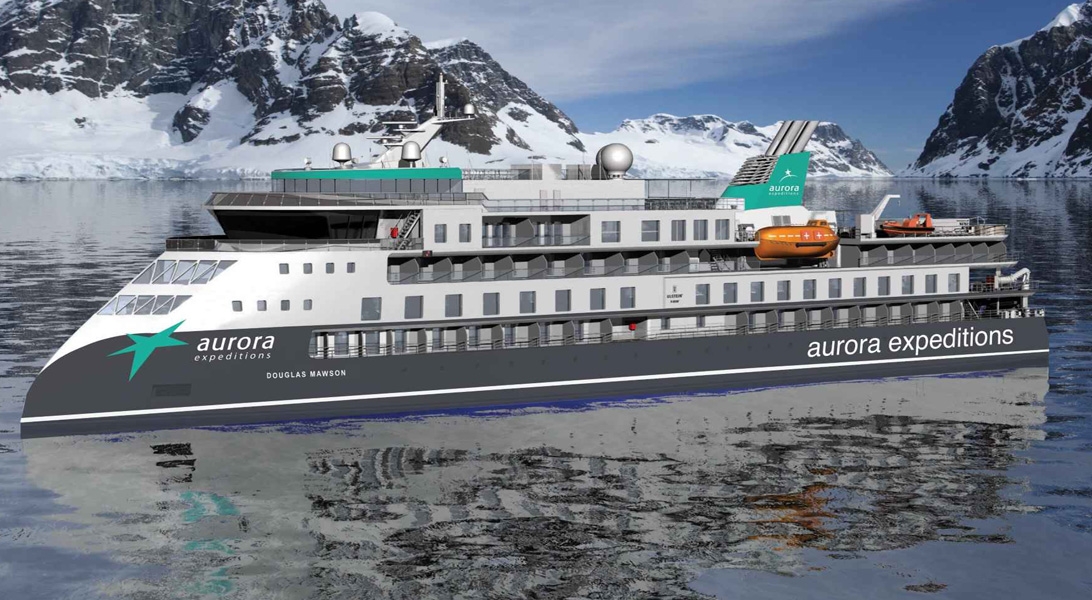
The images shown are for illustration purposes only and may not be an exact representation of what you find on the ship.
The images shown are for illustration purposes only and may not be an exact representation of what you find on the ship.
The images shown are for illustration purposes only and may not be an exact representation of what you find on the ship.
The images shown are for illustration purposes only and may not be an exact representation of what you find on the ship.
The images shown are for illustration purposes only and may not be an exact representation of what you find on the ship.


Our Fusion packages are all ABTA & ATOL protected ensuring that your booking is safe with us
| 17 nights aboard the Douglas Mawson | |||
| Fully-serviced accommodation in your chosen stateroom | |||
| An informative and entertaining lecture program by our team of experts | |||
| Complimentary 3-in-1 polar jacket and the use of gumboots | |||
| Entry fees to historic or tourist sites | |||
| Daily shore excursions, guided walks, Zodiac cruises and some activities | |||
| Daily breakfast, lunch and dinner including house wines, beers and soft drinks and afternoon tea and snacks | |||
| Complimentary use of fitness centre | |||
| Comprehensive pre-departure information kit and destination resource guide | |||
| Captain’s Welcome and Farewell Cocktail Reception including four-course dinner, house cocktails, house beer and wine, non-alcoholic beverages | |||
| Complimentary access to onboard medical doctor or clinic, if required | |||
| An experienced team of destination specialists and activity leaders | |||
| Pre-dinner cocktail hour including cold canapes and bar snacks | |||
| Photographic voyage log (post-voyage) | |||
| Port Taxes and Fees | |||
 | ABTA and ATOL Protection* | ||
Date 14th Sep 2026 |
Nts 17 |
Please Call for Availability |
Date 14th Sep 2026 |
Nts 17 |
Please Call for Availability |
Fusion Holidays when selling travel arrangements is a trading name of Co-op Travel Services Limited, registration 08903986. Fusion Cruises is an Accredited Body Member of Co-op Travel Services Limited ATOL 12904.
Book with Confidence. We are a Member of ABTA which means you have the benefit of ABTA’s assistance and Code of Conduct.
Some of the flights and flight-inclusive holidays on this website are financially protected by the ATOL scheme but ATOL protection does not apply to all holiday and travel services offered on this website. This website will provide you with information on the protection that applies in the case of each holiday and travel service offered before you make your booking. If you do not receive an ATOL Certificate then the booking will not be ATOL protected. If you do receive an ATOL Certificate but all parts of your trip are not listed on it, those parts will not be ATOL protected. Please see our booking conditions for information, or for more information about financial protection and the ATOL Certificate go to: www.caa.co.uk