This site uses cookies as defined in our Cookie Policy, by continuing to use this site you agree to their use.
Continue

Welcome to Aurora Expeditions’ Costa Rica and the Panama Canal voyage.
Immerse yourself in the remarkable coastlines of Costa Rica and Panama. Costa Rica is one of the most biodiverse regions on earth. Discover tropical rainforests teeming with outstanding variety of wildlife, dazzling birdlife and flamboyant flora. In Panama, discover pristine coral reefs and learn the remarkable history of the Panama Canal on a guaranteed daylight crossing from the Pacific Ocean to the Caribbean Sea.
| Arrive | Depart | ||||||
| 15th15 | AprApr | 202828 | San José, Costa Rica, embark on the Douglas Mawson | ||||
Having made your way to San Jose, you will be met by a representative of Aurora Expeditions and transferred to our group hotel. Please visit the Aurora Expeditions hospitality desk to collect your luggage cabin tags and to speak with our ground operations team, who may have information to share with you about pre-embarkation or to provide you with information about where to dine, withdraw cash or purchase last minute items from a local pharmacy or supermarket. Enjoy free time, and in the evening, dine at your leisure (dinner not included). Assigned accommodation: San Jose Hotel (to be advised) | |||||||
| 16th16 | AprApr | 202828 | San José, Costa Rica | ||||
This morning, enjoy breakfast and check-out. Please ensure your cabin luggage is fitted with cabin tags clearly labelled with your name and cabin number. Take your cabin luggage to hotel reception, prior to, or at check-out. Your luggage will be stored and transferred directly to the port for clearance, to be placed in your cabin ahead of your arrival on board. Please keep any valuables or personal items with you throughout the day. Today we make our way to Hacienda Doka for a unique coffee experience. Discover Costa Rica's rich coffee heritage, starting at the seedbed where the journey of every coffee bean begins. Explore the diverse coffee plant varieties and their growth cycles while learning about the local history that has shaped the country’s coffee culture. Enjoy a coffee and chocolate pairing show, followed by a traditional buffet lunch featuring typical local dishes. In the early afternoon, we head to the coastal port of Puntarenas, where we will board the Douglas Mawson. Once onboard, there is time to settle into your cabin before attending important safety briefings. Enjoy the thrill of departure as we ‘throw the lines’ and set sail for an exciting tropical adventure. | |||||||
| 17th17 | AprApr | 202828 | Curú Wildlife Refuge, Costa Rica | ||||
Located on the southeast tip of the Nicoya Peninsula, the Curu Wildlife Refuge is known for its pristine, white-sand beaches and impressive variety of species ranging from monkeys to sand crabs. In total the refuge covers 3,707 total acres and 656 feet of coastline. Travelers to the Curu Wildlife Refuge will quickly notice that they are in the minority at the site, with only a few people in the area among the abundance of animals and sea creatures. All of your senses will be captivated by this overwhelming amount of wildlife at the reserve, which offers some of the best eco-tourism in Costa Rica. Curu officially received support from the Costa Rican government to protect its wildlife in 1981 and the area officially became known as the Curu Wildlife Refuge in 1983. Today, the refuge is privately owned, extremely-well cared for and even more exclusive than many of the national parks in the country. If you're looking to participate in some of the vast eco-tourism opportunities in Costa Rica, the refuge should be a top priority because of its exclusivity and the ability of visitors to personally interact with the diverse animal population. The refuge also features 17 peaceful trails, where travellers can check out this abundant wildlife in a number of different ecosystems, including mangrove swamps and both dry and wet tropical forests. Curú National Wildlife Refuge is a privately-owned nature reserve offering visitors outstanding eco-tourism experiences. The refuge is the first privately-owned refuge in Costa Rica, encompassing more than 3,700 acres of tropical forests, mangroves, and well-marked paths. 17 hiking trails wind through the varied terrain within the reserve, where you may see white-tail deer, armadillos and iguanas. Various monkey species are prolific within refuge including native capuchin, spider, and howler monkeys. Located on the southern Nicoya Peninsula of north-western Costa Rica, the refuge is brimming with wildlife and hosts one of the most beautiful beaches and protected bays on the Nicoya Peninsula, a great place to enjoy water activities. | |||||||
| 18th18 | AprApr | 202828 | Manuel Antonio National Park, Costa Rica | ||||
Boasting over 100 species of mammals, 184 species of birds and an impressive variety flora, Manuel Antonio National Park understandably attracts wildlife enthusiasts from all over the world. Costa Rica’s star attractions - two and three toed sloths, as well as white-faced monkeys, toucans, agoutis, armadillos and coatis are a few of the exciting animals that you may encounter within the park. We explore the park in the cool, early hours of the morning before returning to the vessel for lunch. In the afternoon, you have the option to explore Quepos town or enjoy some water activities. | |||||||
| 19th19 | AprApr | 202828 | At Sea | ||||
| 19th19 | AprApr | 202828 | Golfo Dulce, Costa Rica | ||||
Wild, scenic and incredibly bio-diverse, Golfo Dulce is not on most tourists itineraries. The name, says it all, Golfo Dulce or sweet gulf, in English. After a well justified visit to the Golfo Dulce, located in the South Pacific region of Costa Rica, and adjacent to the Osa Peninsula, visitors will be delighted and perplexed, wondering why they would ever leave this wonderland. Several coastal hamlets reside along this enchanting gulf, namely Puerto Jiménez, Golfito, Zancudo and Pavones, as well as the Piedras Blancas National Park. This is one stop on the itinerary that won’t soon be forgotten. Easily one of the wettest and most humid sections in the country, Golfo Dulce and the southwest can receive more than 200 inches (500 cm) of rainfall per year. This assures the surrounding area will be thriving with wild and plant life, perfect for aspiring adventurers. Surrounded by Corcovado National Park to the southwest, and Costa Rica’s mainland to the northeast, Golfo Dulce serves up a large platter of entertainment for all who visit. Sprouting along the edges of the Golfo Dulce are mangroves and estuaries full of wildlife. Explore these ecosystems crowded with crocodiles, river otters, waterfowl, monkeys and much more. Fed by the Coto Colorado River, the Coto River Swamps are an excellent choice for discovering these uncanny wetlands and the secrets that lay within. | |||||||
| 20th20 | AprApr | 202828 | Golfo Dulce, Costa Rica | ||||
Wild, scenic and incredibly bio-diverse, Golfo Dulce is not on most tourists itineraries. The name, says it all, Golfo Dulce or sweet gulf, in English. After a well justified visit to the Golfo Dulce, located in the South Pacific region of Costa Rica, and adjacent to the Osa Peninsula, visitors will be delighted and perplexed, wondering why they would ever leave this wonderland. Several coastal hamlets reside along this enchanting gulf, namely Puerto Jiménez, Golfito, Zancudo and Pavones, as well as the Piedras Blancas National Park. This is one stop on the itinerary that won’t soon be forgotten. Easily one of the wettest and most humid sections in the country, Golfo Dulce and the southwest can receive more than 200 inches (500 cm) of rainfall per year. This assures the surrounding area will be thriving with wild and plant life, perfect for aspiring adventurers. Surrounded by Corcovado National Park to the southwest, and Costa Rica’s mainland to the northeast, Golfo Dulce serves up a large platter of entertainment for all who visit. Sprouting along the edges of the Golfo Dulce are mangroves and estuaries full of wildlife. Explore these ecosystems crowded with crocodiles, river otters, waterfowl, monkeys and much more. Fed by the Coto Colorado River, the Coto River Swamps are an excellent choice for discovering these uncanny wetlands and the secrets that lay within. Golfo Dulce, or Sweet Gulf, is a large bay that hugs pristine beaches, rivers and tall evergreen forests - a protected area known as the Golfo Dulce Forest Reserve. As one of the wettest places on Earth with over 5,000 millimetres (200 inches) of rainfall per year, the Golfo Dulce Forest Reserve features some of the world’s tallest trees. The warm tropical waters in the gulf are a great place to enjoy aquatic activities, where spinner dolphins are often seen frolicking in the bay. There are ancient coral reefs to explore, where you can see enormous coral gardens and the creatures that inhabit them. On land, there are more pristine rainforest trails for you to explore, where you can marvel at the extraordinary flora and fauna that contributes to Costa Rica’s biodiversity. By Zodiac, we shuttle ashore to Saladero Ecolodge and explore the gardens and walking trails filled with flowering plants. Keep a watch for birds including toucans, scarlet macaw, caracara and woodpeckers. In Golfo Dulce we exit Costa Rica and continue our journey as we sail to Panama. | |||||||
| 21st21 | AprApr | 202828 | Coiba Island, Panama | ||||
We continue to Coiba Island, a National Park and a UNESCO World Heritage site, located off the southwest coast of Panama. The national park includes the main island of Coiba and 38 smaller islands in the surrounding marine areas within the Gulf of Chiriquí. Protected from the cold winds and the effects of El Niño, the Pacific tropical forest if Coiba Island features exceptionally high levels of endemic mammals, birds and plants. It is the last refuge for a number of threatened animals including the crested eagle. On Coiba Island, we spend the morning in the area of Granito de Oro islet, a unique place that allows snorkellers to encounter a diversity and volume of marine life that is usually reserved for scuba divers. This is one of the world’s most sought-after diving destinations. The local ranger will provide guidance on the optimal places where we can enjoy water activities. The following morning, we plan to land at Punta Clara, which served as a penal colony from 1919 to 1996, where Panama’s most notorious criminals and political prisoners were incarcerated. At the peak of its operations, the prison housed up to approximately 3,000 inmates in about 30 camps spread around the islands. You can visit the dilapidated penitentiary buildings or walk along the beach looking for scarlet macaws, yellow caracara and various seabirds. Back on board, enjoy lunch as we set towards the Pearl Islands. | |||||||
| 22nd22 | AprApr | 202828 | Coiba Island, Panama | ||||
| 23rd23 | AprApr | 202828 | Pearl Islands, Panama | ||||
After a morning at sea, we reach The Pearl Islands of Panama, an archipelago located in the North Pacific Ocean in the Gulf of Panama, covering around 250 small islands. The Spanish Conquistadors discovered the islands in 1503 and gave the Islands its name due to the great amounts of pearls found on them. The Pearl Islands were originally named by the Spanish explorer Vasco Nuñez de Balboa due to the bountiful pearls that were harvested off the islands’ shores. The Pearl Islands are most famous for their spectacular and tranquil white sand beaches, untouched forests, and colourful coral reefs offshore. We plan to visit one of the islands to enjoy some paddleboarding, paddling in kayaks and snorkelling in the warm, turquoise waters. | |||||||
| 24th24 | AprApr | 202828 | Panama City, Panama | ||||
Expect incredible morning views as you arrive into the port for Panama City. Tinged with a silver pre-dawn light, the city will metamorphosise into a golden glow as the sun rises above it. And from then on expect one stunning view after another. Very interesting in its own right, Fuerte Amador is obviously overshadowed by its proximity to Panama City. So should the Miraflores museum of the Canal, which offers a comprehensive and immersive tour of the Canal including a 3-D experience, four exhibition halls, an observation deck, and a surprisingly good restaurant not interest you then there is always the option of lovely Casco Viejo – literally the old quartier of Panama. The grand old colonial houses, cobbled streets, independent boutiques and buzzing street scene make this a must stop on your itinerary. And if you like seafood, you will not want miss the many restaurants and market stalls serving different variations of so-fresh-it’s-still-practically-swimming ceviche. Best eaten like the Panamanians do, with salty crackers and a cold beer on the beach. And if money is no object, a cup of geisha coffee – supposedly the world’s best and definitely the world’s most expensive at $7 a shot is definitely a pick me up! Cool cosmopolitan capital aside, Panama has a skyscraper filled skyline that is worthy of some of its North American counterparts. But if urban utopia is not your scene then fear not, the sandy beaches and lush rainforests are never more than a short cab ride away. Three million years ago, the Isthmus of Panama emerged from the sea and changed the world forever. It divided an ocean and joined two continents together, triggering one of the most important natural evolution events in the history of the world. Today, this narrow land bridge in Central America is home to more species of birds and trees than the whole of North America. Panama is of course world-famous for its 77 km (48 mi) canal that connects the Pacific Ocean with the Atlantic Ocean. Panama’s history has been formed by a rich pre-Columbian era for more than 12,000 years. Early cultures in Panama were the Monagrillo, the Cueva and the Conte, particularly famous for their pottery, which was the first in the Americas. The first European claiming the territory of today’s Panama was Rodrigo de Bastidas, coming from Colombia’s Atlantic coast in 1501. In 1513 Vasco Nuñez de Balboa became the first Spaniard to see the Pacific Ocean from the top of a hill. Four days later he and his men stood at the shores of the Pacific Ocean. In 1519, Panama City was founded and became an important hub for seized goods making its way from Peru to Spain. Select one of the below tour options to explore Panama further: Option 1 – Emberá Village + Gamboa Lunch We start the day with a boat trip on Gatun Lake, heading north on the canal, where we may get close to some of the larger ships that transit the canal daily. Enjoy a cruise along the forested banks of Gatun Lake looking for wildlife such as capuchin monkeys, howler monkeys, three-toed sloth, various kinds of toucans and other bird life. This is a place to observe the raw regenerative power of the forest as it struggles to claim what was once wild. Next, we visit an Emberá village, an indigenous tribe who have inhabited this region for centuries. There are about 33,000 Emberá living in the Darién, Panama, and 50,000 in Colombia. On our visit to one of the Emberá villages near Panama City, you will be warmly welcomed by the local villagers and enjoy a presentation to learn about their history, culture and way of life. On a guided walk through their village, you will meet more villagers who may show you inside their home, sample local snacks and learn about their medicinal plants. The Emberá are renowned for their exquisite handmade jewellery and woven handicrafts, and you will have the chance to appreciate and to purchase their work. Enjoy a delicious buffet lunch at the Gamboa Rainforest Reserve before transferring back to the ship. Option 2 – Casco Viejo walking tour Explore the historic heart of Panama City, where centuries of history and culture come together. Recognized as a UNESCO World Heritage Site, the city's historic quarter is renowned for its beautifully preserved colonial architecture, charming cobblestone streets, and vibrant plazas. Originally founded in 1519, Panama was the first permanent European settlement on the Pacific coast of the Americas and has played a pivotal role in the region's history ever since. Enjoy a guided exploration of this fascinating district, taking in a selection of historic landmarks, churches, plazas, and beautifully restored buildings while learning about the city's rich cultural and architectural heritage. Option 3 – Miraflores Locks On this excursion visit the Miraflores Visitor Centre overlooking the Miraflores Locks of the Panama Canal. Four exhibition halls showcase the canal's history and biodiversity, while three viewing terraces and observation decks provide excellent opportunities to watch ships transit the locks. There will also be time for a private canal tour, along with a short film offering an immersive look at the history and significance of the Panama Canal. | |||||||
| 25th25 | AprApr | 202828 | At Sea | ||||
| 26th26 | AprApr | 202828 | Colón, Panama | ||||
The provincial capital of Colón, beside the canal's Atlantic entrance, is named for the Spanish-language surname of Christopher Columbus, though the Americans called it Aspinwall in the 19th century.. The city was founded in 1850 by Americans working on the Panama railroad and named Aspinwall for one of the railway engineers. Following completion in 1855, Colon gained in importance, which was furthered by the plans for an isthmian canal. During the time of the French canal attempt, a fire in 1885 burned the city nearly to the ground and left thousands of people homeless. Colon was rebuilt in the architectural style then popular in France. Buildings from that era plus the ones constructed by Americans between 1904 and 1914 are still in use today, although the majority is on the verge of collapse. In addition to its importance as a port, Colon boasts the world’s second largest duty-free zone, known as Zona Libre, which is contained in a huge fortress like, walled-off area with giant international stores. However, most of the merchandise is sold in bulk to commercial businesses throughout the country. Disembark in Colon, on the Caribbean side of the Panama Canal, where you'll farewell your expedition team before transferring to Panama City Airport. Those of you with later flights will have the opportunity to explore Casco Viejo (Panama City's historic district) independently for a few hours before being transferred to the airport. Transfer procedures and detailed information will be provided on board prior to disembarkation. Note: At the conclusion of the voyage, we do not recommend booking flights departing Panama City prior to 2.00 pm. Please advise your departure flight information to your reservations consultant. | |||||||
| 26th26 | AprApr | 202828 | Panama City, Panama, disembark the Douglas Mawson | ||||
Expect incredible morning views as you arrive into the port for Panama City. Tinged with a silver pre-dawn light, the city will metamorphosise into a golden glow as the sun rises above it. And from then on expect one stunning view after another. Very interesting in its own right, Fuerte Amador is obviously overshadowed by its proximity to Panama City. So should the Miraflores museum of the Canal, which offers a comprehensive and immersive tour of the Canal including a 3-D experience, four exhibition halls, an observation deck, and a surprisingly good restaurant not interest you then there is always the option of lovely Casco Viejo – literally the old quartier of Panama. The grand old colonial houses, cobbled streets, independent boutiques and buzzing street scene make this a must stop on your itinerary. And if you like seafood, you will not want miss the many restaurants and market stalls serving different variations of so-fresh-it’s-still-practically-swimming ceviche. Best eaten like the Panamanians do, with salty crackers and a cold beer on the beach. And if money is no object, a cup of geisha coffee – supposedly the world’s best and definitely the world’s most expensive at $7 a shot is definitely a pick me up! Cool cosmopolitan capital aside, Panama has a skyscraper filled skyline that is worthy of some of its North American counterparts. But if urban utopia is not your scene then fear not, the sandy beaches and lush rainforests are never more than a short cab ride away. | |||||||
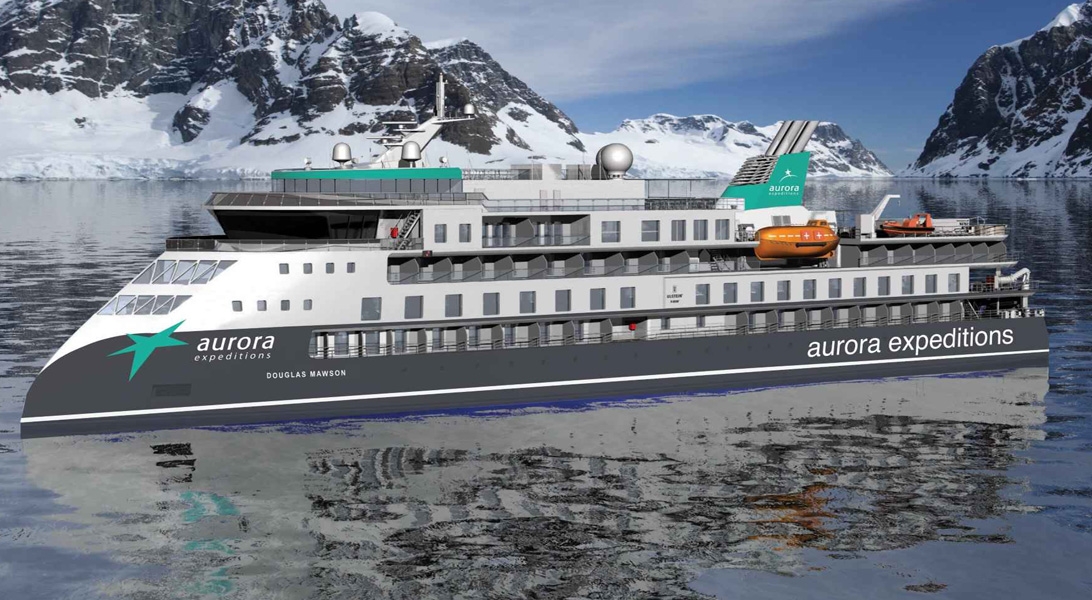
The images shown are for illustration purposes only and may not be an exact representation of what you find on the ship.
The images shown are for illustration purposes only and may not be an exact representation of what you find on the ship.
The images shown are for illustration purposes only and may not be an exact representation of what you find on the ship.
The images shown are for illustration purposes only and may not be an exact representation of what you find on the ship.
The images shown are for illustration purposes only and may not be an exact representation of what you find on the ship.

Our Fusion packages are all ABTA & ATOL protected ensuring that your booking is safe with us
| 11 nights aboard the Douglas Mawson | |||
| Fully-serviced accommodation in your chosen stateroom | |||
| An informative and entertaining lecture program by our team of experts | |||
| Complimentary 3-in-1 polar jacket and the use of gumboots | |||
| Entry fees to historic or tourist sites | |||
| Daily shore excursions, guided walks, Zodiac cruises and some activities | |||
| Daily breakfast, lunch and dinner including house wines, beers and soft drinks and afternoon tea and snacks | |||
| Complimentary use of fitness centre | |||
| Comprehensive pre-departure information kit and destination resource guide | |||
| Captain’s Welcome and Farewell Cocktail Reception including four-course dinner, house cocktails, house beer and wine, non-alcoholic beverages | |||
| Complimentary access to onboard medical doctor or clinic, if required | |||
| An experienced team of destination specialists and activity leaders | |||
| Pre-dinner cocktail hour including cold canapes and bar snacks | |||
| Photographic voyage log (post-voyage) | |||
| Port Taxes and Fees | |||
 | ABTA and ATOL Protection* | ||
Date 15th Apr 2028 |
Nts 11 |
Oceanview £10,226pp |
Balcony £11,089pp |
Suite £16,388pp |
Date 15th Apr 2028 |
Nts 11 |
Oceanview £10,226pp |
Balcony £11,089pp |
Suite £16,388pp |
| Oceanview staterooms from | £10,226pp | ||
| AS2D | Aurora Stateroom Twin Share | £10,226pp | |
| SASD | Aurora Stateroom Superior | £10,842pp | |
| Balcony staterooms from | £11,089pp | ||
| BSAD | Balcony Stateroom Category A | £12,567pp | |
| BSBD | Balcony Stateroom Category B | £11,705pp | |
| BSCD | Balcony Stateroom Category C | £11,089pp | |
| SBSD | Balcony Stateroom Superior | £13,738pp | |
| Suite staterooms from | £16,388pp | ||
| JSD | Junior Suite | £16,388pp | |
| CSD | Captain Suite | £18,668pp | |
Fusion Holidays when selling travel arrangements is a trading name of Co-op Travel Services Limited, registration 08903986. Fusion Cruises is an Accredited Body Member of Co-op Travel Services Limited ATOL 12904.
Book with Confidence. We are a Member of ABTA which means you have the benefit of ABTA’s assistance and Code of Conduct.
Some of the flights and flight-inclusive holidays on this website are financially protected by the ATOL scheme but ATOL protection does not apply to all holiday and travel services offered on this website. This website will provide you with information on the protection that applies in the case of each holiday and travel service offered before you make your booking. If you do not receive an ATOL Certificate then the booking will not be ATOL protected. If you do receive an ATOL Certificate but all parts of your trip are not listed on it, those parts will not be ATOL protected. Please see our booking conditions for information, or for more information about financial protection and the ATOL Certificate go to: www.caa.co.uk