This site uses cookies as defined in our Cookie Policy, by continuing to use this site you agree to their use.
Continue

Welcome to Aurora Expeditions’ Crossing the Canal
Stretching 65 kilometres (40 miles) from shoreline to shoreline, the Panama Canal slices through one of the world’s most captivating isthmuses. Join us for a remarkable crossing as we navigate the locks and lakes of this engineering marvel. Beyond the canal, we journey into the heartland of Central America’s wildlife-rich rainforests and waterways and meet its warm and welcoming people. This voyage blends the marvels of human ingenuity with the wonders of the natural world in a region where wildlife, culture, and biodiversity com... bine to create the ultimate travel experience.
| Arrive | Depart | ||||||
| 20th20 | OctOct | 202727 | Panama City, Panama, embark on the Douglas Mawson | ||||
Expect incredible morning views as you arrive into the port for Panama City. Tinged with a silver pre-dawn light, the city will metamorphosise into a golden glow as the sun rises above it. And from then on expect one stunning view after another. Very interesting in its own right, Fuerte Amador is obviously overshadowed by its proximity to Panama City. So should the Miraflores museum of the Canal, which offers a comprehensive and immersive tour of the Canal including a 3-D experience, four exhibition halls, an observation deck, and a surprisingly good restaurant not interest you then there is always the option of lovely Casco Viejo – literally the old quartier of Panama. The grand old colonial houses, cobbled streets, independent boutiques and buzzing street scene make this a must stop on your itinerary. And if you like seafood, you will not want miss the many restaurants and market stalls serving different variations of so-fresh-it’s-still-practically-swimming ceviche. Best eaten like the Panamanians do, with salty crackers and a cold beer on the beach. And if money is no object, a cup of geisha coffee – supposedly the world’s best and definitely the world’s most expensive at $7 a shot is definitely a pick me up! Cool cosmopolitan capital aside, Panama has a skyscraper filled skyline that is worthy of some of its North American counterparts. But if urban utopia is not your scene then fear not, the sandy beaches and lush rainforests are never more than a short cab ride away. Welcome to Panama City. On arrival at Panama City airport make your way to the Arrivals Hall to meet our representative, followed by a transfer to our group hotel. At the hotel, visit our hospitality desk in the lobby to meet our team who will provide you with useful information regarding pre-embarkation procedures and about your time in Panama City. You will also receive cabin tags for your luggage. Please clearly label the tags with your name and your cabin number on the ship. This evening offers time to relax in preparation for our journey. Accommodation: Panama City Hotel | |||||||
| 21st21 | OctOct | 202727 | Panama City, Panama | ||||
Expect incredible morning views as you arrive into the port for Panama City. Tinged with a silver pre-dawn light, the city will metamorphosise into a golden glow as the sun rises above it. And from then on expect one stunning view after another. Very interesting in its own right, Fuerte Amador is obviously overshadowed by its proximity to Panama City. So should the Miraflores museum of the Canal, which offers a comprehensive and immersive tour of the Canal including a 3-D experience, four exhibition halls, an observation deck, and a surprisingly good restaurant not interest you then there is always the option of lovely Casco Viejo – literally the old quartier of Panama. The grand old colonial houses, cobbled streets, independent boutiques and buzzing street scene make this a must stop on your itinerary. And if you like seafood, you will not want miss the many restaurants and market stalls serving different variations of so-fresh-it’s-still-practically-swimming ceviche. Best eaten like the Panamanians do, with salty crackers and a cold beer on the beach. And if money is no object, a cup of geisha coffee – supposedly the world’s best and definitely the world’s most expensive at $7 a shot is definitely a pick me up! Cool cosmopolitan capital aside, Panama has a skyscraper filled skyline that is worthy of some of its North American counterparts. But if urban utopia is not your scene then fear not, the sandy beaches and lush rainforests are never more than a short cab ride away. This morning, we join a local guide to stroll the cobbled streets of Casco Viejo, Panama City's historic ‘Old Town’. Colonial facades, vibrant plazas, and centuries-old churches tell stories of Spanish conquests and marauding pirates, as the tour winds through this UNESCO-listed gem, where the aroma of Panamanian coffee mingles with the sweet scent of hojaldres, a sugary fried treat, from the districts open-air cafés. Our tour leads to the Museo del Canal Interoceánico de Panama, a beautifully restored building that chronicles the epic saga of the Panama Canal. Inside, exhibits trace its tumultuous history, from failed French ambitions to American triumph, and its profound impact on global commerce. Choose to return to the hotel, or linger longer, to explore further at your own pace. This evening, we gather at a Welcome reception to meet our host and fellow travellers. Accommodation: Panama City Hotel Meals: Breakfast, Welcome reception (drinks and canapes) | |||||||
| 22nd22 | OctOct | 202727 | Miraflores, Panama | ||||
Departing Panama City, we stop en route to boarding our own engineering marvel, at the Miraflores Locks - a testament to the ingenuity that transformed global shipping. Built on a site chosen for its elevation and proximity to the Pacific, the Miraflores Locks allow gravity-fed chambers to manage sea level differences, making them an indispensable facet of the canal. This extensive lock system lifts and lowers ships up to 16 metres (52.5 feet) using massive concrete chambers and sluice gates that control water flow. Constructed in the early 20th century, they were engineered with precision to handle vessels of varying sizes, using hydraulics and gravity rather than pumps. Without them, the Canal simply couldn’t operate, with ships being unable to cross the hilly terrain and freshwater lakes that separate the oceans. The Miraflores Visitors Center offers a compelling insight into the strategic and mechanical core of the Panama Canal. Our visit begins with an award-winning IMAX documentary that highlights the Canal’s global significance and the formidable engineering challenges overcome during its construction. Afterwards, we move to the observation terraces on the ground and first floors, where we watch vessels as they are raised and lowered through the locks in an intricate process that showcases the Canal’s precision and power. With our curiosity piqued by our visit, we board the Douglas Mawson at the port of Colon ready to experience our own Panama Canal transit firsthand tomorrow. Meals: Breakfast, Lunch, Dinner onboard | |||||||
| 22nd22 | OctOct | 202727 | Colón, Panama | ||||
The provincial capital of Colón, beside the canal's Atlantic entrance, is named for the Spanish-language surname of Christopher Columbus, though the Americans called it Aspinwall in the 19th century.. The city was founded in 1850 by Americans working on the Panama railroad and named Aspinwall for one of the railway engineers. Following completion in 1855, Colon gained in importance, which was furthered by the plans for an isthmian canal. During the time of the French canal attempt, a fire in 1885 burned the city nearly to the ground and left thousands of people homeless. Colon was rebuilt in the architectural style then popular in France. Buildings from that era plus the ones constructed by Americans between 1904 and 1914 are still in use today, although the majority is on the verge of collapse. In addition to its importance as a port, Colon boasts the world’s second largest duty-free zone, known as Zona Libre, which is contained in a huge fortress like, walled-off area with giant international stores. However, most of the merchandise is sold in bulk to commercial businesses throughout the country. | |||||||
| 23rd23 | OctOct | 202727 | At Sea | ||||
| 24th24 | OctOct | 202727 | Balboa (Panama City), Panama | ||||
We offer two distinctly different ‘Your Choice’ experiences this morning. Choose to immerse yourself in the culture of the Emberá people, or ride in a tramway high in the tropical forest canopy, before we sail west to Costa Rica, late afternoon. Personalise your exploration with our included ‘Your Choice’ experiences. Option 1 – Morning experience: Emberá village visit Our journey takes us on land and river today, when we visit an Emberá village on a journey into the heart of Panama’s indigenous heritage. Nestled deep within the rainforest, the community lives in stilted wooden homes with thatched roofs, surrounded by lush greenery. The Emberá people maintain a lifestyle closely tied to nature, fishing in nearby rivers, cultivating crops like yucca and plantains, and crafting baskets and carvings from local materials. Their lives are guided by ancestral knowledge, passed down through oral storytelling, music, and dance. Children learn through observation and participation, while elders serve as cultural guardians. The village operates with a strong sense of cooperation and respect, where decisions are made collectively and traditions are honoured. We are welcomed to the village not just as guests, but as students, invited to learn about a way of life that values simplicity, sustainability, and a deep connection to the land. Option 2 – Morning experience: Treetop rainforest experience Board an aerial tram for a fascinating ride through Panama’s rainforest canopy, revealing a world few get to see from the ground. The tram travels around 600 meters (approximately 1,970 feet) through the jungle, rising gradually above the forest floor, passing towering trees like the kapok and Panama tree, tangled vines, and bursts of orchids. Wildlife sightings are common, with howler monkeys, toucans, and sloths often appearing among the branches. The ride is guided as an audio feed, making this a fascinating journey for nature lovers. The tram is smooth, quiet, and ideal for anyone wanting a close-up rainforest experience without having to hike. | |||||||
| 25th25 | OctOct | 202727 | At Sea | ||||
| 26th26 | OctOct | 202727 | Golfito, Costa Rica | ||||
Golfito, is situated along a small inlet of Golfo Dulce. This small port city is a narrow strip along Golfito Bay backed against steep green hills covered with pristine rainforest, with the Golfo Dulce seaward outside Golfito Bay. Surrounded by tropical rainforest, Golfito provides an ideal location to escape from your hectic schedule and enjoy some of the most beautiful beaches in Costa Rica with a stunning backdrop of verdant hills and lush rainforest. Follow a trail through the densely forested Golfito National Wildlife Refuge to observe rare flora and fauna, and emerge at a scenic outlook with views of the ocean, also the city has a variety of hotels and restaurants, many of which now provide free wireless Internet service for customers. Golfito was the main port on the South Pacific Coast of Costa Rica in the days when there was little except for the huge banana plantations. To help remedy the resulting economy decrease of the region, the government established a duty-free zone, support and impulse the touristic development. Tucked between the Osa Peninsula and the southern mainland, Golfo Dulce is a deep, sheltered gulf where rainforest spills into the sea. It’s one of the only tropical fjords in the world, and its calm waters are a magnet for marine life, from dolphins and sea turtles to migrating humpback whales. Scarlet macaws flash overhead, mangroves fringe the shore, and the forest hums with life. Unlike busier coastal spots, Golfo Dulce feels untouched, quiet, wild, and deeply alive. Whether you're paddling, walking nearby trails or joining a boat cruise of the bay, it’s a place that invites you to slow down and look closer. Personalise your exploration with our included ‘Your Choice’ experiences. Option 1 – Morning experience: Golfo Dulce’s Waterworld From August to December, the warm waters of Golfo Dulce welcome southern humpback whales arriving from Antarctica to give birth and care for their young. October is an ideal time to witness mothers and calves swimming together, practicing breaching, and communicating through deep, resonant calls, accompanied by resident dolphins darting through the waves. Golfo Dulce is one of the few places on Earth where northern and southern humpbacks overlap, though the southern whales dominate this season. As we head out on the water, we’ll be keeping our eyes peeled for these majestic creatures, hoping to catch a glimpse of a tail slap or a calf learning to leap. It’s a quiet, awe-inspiring moment in one of Costa Rica’s most biodiverse marine environments. Option 2 – Morning Experience: The Wild Heart of Golfo Dulce Step into the rainforest and experience the living, breathing heart of Costa Rica. With over half the country covered in tropical forest, this trail walk offers a glimpse into one of the most biodiverse places in the Americas. As you follow your guide along shaded paths, you’ll learn how the rainforest supports everything from towering trees to tiny orchids. In the Golfo Dulce region, wildlife is spotted high in the forest canopy. Listen for howler monkeys in the treetops, spot colourful frogs near the forest floor, and watch for flashes of toucans, parrots, or even a macaw overhead. The trail winds through a landscape shaped by water, sunlight, and time, offering quiet moments and unexpected encounters. This trail walk is perfect for nature lovers, an opportunity to slow down, look closely, and connect with the rhythms of the rainforest. Option 3 – Morning Experience: Golfo Dulce by Kayak Kayaking in Golfo Dulce offers a peaceful way to explore one of Costa Rica’s most biodiverse marine environments. Whether gliding across the open bay or weaving through narrow mangrove channels, the experience is quiet, slow-paced, and deeply immersive. The stillness is part of the magic—especially in the mangroves, where silence allows you to observe wildlife without disturbing it. Birds perch overhead, fish ripple beneath the surface, and crabs scuttle along tangled roots. In the bay, you might spot dolphins, sea turtles, or rays gliding through the clear water. This region is rich in life, and paddling at water level offers a unique perspective on the ecosystems that thrive here. It’s not just about movement—it’s about noticing, listening, and being one with nature. | |||||||
| 27th27 | OctOct | 202727 | Quepos (Puerto Quepos), Costa Rica | ||||
Quepos allows tourists to experience a once in a lifetime nature experience in Manuel Antonio National Park without leaving any of the familiar amenities behind. The close proximity of the park, located just 4.3 miles (7 km) to the south, and a wide array of services makes Quepos the perfect place to visit for those who wish to explore this enchanting area. The amenities available include everything from banks, restaurants, hotels, gift shops, bakeries, bars, a hospital, supermarket and even a post office. The area was once dependent on banana plantations which used to line the surrounding area. After disease infiltrated the harvest, interest transferred to African Palms as the prominent crop. Now, tourism has deemed itself the major economic factor, contributing to just about everything in the area. Quepos lures in many tourists for its fantastic sport fishing. In fact, some have come solely to participate in this world class experience and have never left, but besides sport fishing, many other activities are available. Exploring this maze of wetlands by boat is amazing but not the only way to see crocodiles, monkeys, herons, raccoons and more. This small paradise has the perfect balance between nature and the comfort and facilities someone might need. The lively coastal town of Quepos, nestled on Costa Rica’s central Pacific coast, welcomes us today with three ‘Your Choice’ experiences on offer. Just minutes from the renowned Manuel Antonio National Park, Quepos is a gateway to unique wildlife encounters. Nearby mangrove forests play a vital role in Costa Rica’s fragile ecosystem, offering shelter to countless species and helping protect the coastline. Add to this the efforts of local farmers who are putting sustainable practices to good use, and you’ll discover a region rich in nature, culture, and character. Personalise your exploration with our included ‘Your Choice’ experiences. Option 1 – Morning experience: The Mighty Mangrove Gliding through the mangrove forests near Quepos, feels like entering a hidden world shaped by tides and time, as the mangroves grow where rivers meet the ocean, creating a rich, ever-changing environment that supports everything from crabs and caimans to monkeys and spoonbills. These coastal forests, especially around Damas Island, are home to an extraordinary mix of land and sea life. The tangled roots of red, black, and white mangrove trees do more than look surreal—they hold the coastline together, protect against storms, and provide shelter for young marine life. Costa Rica’s Pacific coast is lined with mangroves, covering over 40,000 hectares. These forests are not only beautiful but essential: they clean the water, store carbon, and support local fisheries. As you explore the winding estuary channels, your guide will explain how this part of the forest plays an essential role. Birds perch in the canopy, fish dart below the surface of the water, and the roots form a maze of life. Our boat journey provides us with a living classroom. Quiet, wild, and full of surprises. Option 2 – Morning experience: Manuel Antonio National Park - Guided Rainforest Trail Established in 1972, Manuel Antonio National Park is one of Costa Rica’s most ecologically diverse protected areas, and the place to visit when in Quepos. On a guided walk, we explore national park trails through tropical forest, where the focus loops between elusive wildlife to the rich plant life. Towering trees like espavel and guácimo form the canopy, while ferns, vines, and flowering plants crowd the understory. Guides point out medicinal plants, epiphytes like bromeliads and orchids, and explain how different species interact within the ecosystem. Because many animals hide high in the trees or blend into their surroundings, guides often carry scopes to spot sloths, monkeys, or birds tucked away in the foliage. This walk offers a chance to slow down and appreciate the complexity of the forest from the ground up, with the opportunity to glimpse some of Costa Rica’s unique wildlife. Option 3 – Half-day experience: A Costa Rican chocolate story Step into the lush countryside near Quepos for a sensory journey through Costa Rica’s most iconic crops; chocolate, vanilla, and coffee. Set on a private ranch, this immersive tour invites you to explore how these beloved ingredients are grown, harvested, and transformed, with a guided walk through the gardens, where cacao pods ripen on trees, vanilla vines climb and coffee plants thrive in the tropical climate. Our guide explains how each crop is cultivated sustainably while we discover the traditional methods used to process them into the rich flavours enjoyed around the world. After exploring the gardens and learning about the plants, sit down to a fresh farm-to-table lunch made with local produce. It’s a delicious way to connect with the land and the people who care for it. | |||||||
| 28th28 | OctOct | 202727 | Punta Arenas, Chile | ||||
Impenetrable forests, impassable mountains, and endless fields of ice define Chilean Patagonia, and meant that the region went largely unexplored until the beginning of the 20th century. Located in the southernmost part of the country, this area is still sparsely inhabited, though you will find a few populated places—like the colorful provincial city of Punta Arenas, which looks like it's about to be swept into the Strait of Magellan. Some unique wildlife, particularly colonies of elephant seals and penguins, call this breathtaking topography home. To the north is Parque Nacional Torres del Paine, the country's most magnificent natural wonder, and whose snow-covered peaks seem to rise vertically from the plains below. The vistas, such as the fantastic Avenue of the Glaciers, are breathtaking; along this stretch of the Beagle Channel, you can pass six tremendous glaciers all within a stone's throw of each other.Cruise SightsPunta Arenas. Founded a little more than 150 years ago, Punta Arenas (Sandy Point) was Chile's first permanent settlement in Patagonia. Plaza Muñoz Gamero, the central square, is surrounded by evidence of that early prosperity: buildings whose then-opulent brick exteriors recall a time when this was one of Chile's wealthiest cities. The newer houses here have colorful tin roofs, best appreciated when seen from a high vantage point such as the Mirador Cerro la Cruz. Although the city as a whole may not be particularly attractive, look for details: the pink-and-white house on a corner, the bay window full of potted plants, parking attendants wearing the regional blue and yellow colors, and schoolchildren in identical naval pea coats that remind you that the city's fate is tied to the sea.The Museo Naval y Marítimo extols Chile's high-seas prowess, particularly concerning Antarctica. Its exhibits are worth a visit for anyone with an interest in ships and sailing, merchant and military alike. Part of the second floor is designed like the interior of a ship, including a map and radio room. Pedro Montt 989. Admission charged.Housed in what was once the mansion of the powerful Braun-Menéndez family, the Museo Regional de Magallanes is an intriguing glimpse into the daily life of a wealthy provincial family at the beginning of the 20th century. Lavish Carrara marble hearths, English bath fixtures, and cordovan leather walls are among the original accoutrements. The museum also has an excellent group of displays depicting Punta Arenas's past, from the first European contact to the town's decline after the opening of the Panama Canal. The museum is half a block north of the main square. Magallanes 949. Admission charged.The resplendent 1895 Palacio Sara Braun is a national landmark and an architectural showpiece of southern Patagonia. Designed by a French architect, the house was built from materials and by craftsmen imported from Europe during the four years of construction. The city's central plaza and surrounding buildings soon followed, ushering in the region's golden era. Noteworthy are the lavish bedrooms, magnificent parquet floors, marble fireplaces, and hand-painted ceilings. Don't miss the portraits of Braun and her husband José Nogueira in the music room. Afterwards, head to the cellar for a drink or snack in the warm public tavern (a good portion of the mansion is leased to a hotel). Plaza Muñoz Gamero 716. Admission charged.Commonly referred to simply as "El Salesiano," the Museo Salesiano de Maggiorino Borgatello is operated by Italian missionaries whose order arrived in Punta Arenas in the 19th century. The Salesians, most of whom spoke no Spanish, proved to be daring explorers. Traveling throughout the region, they collected the artifacts made by indigenous tribes that are currently on display. Av. Bulnes 398. Admission charged.Isla Magdalena. Punta Arenas is the launching point for a boat trip to the Isla Magdalena to see the more than 100,000 Magellanic penguins at the Monumento Natural Los Pingúinos. A single trail, marked off by rope, is accessible to humans. The boat trip to the island, in the middle of the Estrecho de Magallanes, takes about two hours. Make sure to bring along warm clothing, even in summer; the island can be chilly, particularly if a breeze is blowing across the water.Parque Nacional Torres del Paine. Some 12 million years ago, lava flows pushed up through the thick sedimentary crust that covered the southwestern coast of South America, cooling to form a granite mass. Glaciers then swept through the region, grinding away all but the ash-gray spires that rise over the landscape of one of the world's most beautiful natural phenomena, now the Parque Nacional Torres del Paine (established in 1959). Snow formations dazzle along every turn of road, and the sunset views are spectacular.Among the 2,420-square-km (934-square-mi) park's most beautiful attractions are its lakes of turquoise, aquamarine, and emerald green waters. Another draw is its unusual wildlife. Creatures like the guanaco (a woollier version of the llama) and the ñandú (resembling a small ostrich) abound. They are used to visitors and don't seem to be bothered by the proximity of automobile traffic and the snapping of cameras. Predators, like the gray fox, make less frequent appearances. You may also spot the dramatic aerobatics of a falcon and the graceful soaring of the endangered condor. The beautiful puma is especially elusive, but sightings have become more common. Admission charged.Pingúinera de Seno Otway. The road to this penguin sanctuary begins 30 km (18 mi) north of Punta Arenas. Magellanic penguins, which live up to 20 years in the wild, return to their birthplace here every year to mate with the same partner. For about 2,000 penguin couples—no single penguins make the trip—home is this desolate and windswept land off the Otway Sound. In late September, the penguins begin to arrive from the southern coast of Brazil and the Falkland Islands. They mate and lay their eggs in early October, and brood their eggs in November. Offspring hatch between mid-November and early December. If you're lucky, you may catch sight of one of the downy gray chicks that stick their heads out of the burrows when their parents return to feed them. Otherwise you might see scores of the ungainly adult penguins waddling to the ocean from their nesting burrows. They swim for food every eight hours and dive up to 100 feet deep. The penguins depart from the sound in late March. Note that the sanctuary is a 1-km (1/2-mi) walk from the parking lot. It gets chilly, so bring a windbreaker. Admission charged.Reserva Nacional Laguna Parillar. This 47,000-acre reserve lies west of Puerto Hambre, a tranquil fishing village, and is centered around a shimmering lake in a valley flanked by hills. It's a great place for a picnic, and there are a number of well-marked paths that offer sweeping vistas over the Estrecho de Magallanes. About 2 km (1 mi) west of Puerto Hambre is a small white monolith that marks the geographical center of Chile, the midway point between Chile's northern port Arica and the South Pole.Cruise ShoppingWool may no longer be king of the economy, but vast flocks of sheep still yield a high-quality product that is woven into the clothing here. Leather products are also common, but the prices are not necessarily low. About 3 km (2 mi) north of Punta Arenas is the Zona Franca (Av. Bulnes). This duty-free zone is where people from all around the region come for low-priced electronics and other consumer items. Disembark and head to Hacienda Doka, nestled in Costa Rica’s fertile Central Valley, for an immersive coffee experience that blends tradition, taste, and storytelling. Costa Rica’s coffee is world-renowned, not just for its smooth, balanced flavour, but for the deep cultural roots it holds in the country’s identity and economy. At the plantation, we follow its journey through the growth cycle, harvest, and roasting process. Along the way, we explore different coffee plant varieties and learn how Costa Rica’s unique climate and volcanic soil contribute to its high-quality beans. A coffee and chocolate tasting adds a delicious end to our tour, before we tuck into a traditional buffet lunch, offering a taste of local flavours. We continue to San José for our overnight stay. Accommodation: San José Hotel (or similar) Meals: Breakfast, Lunch | |||||||
| 28th28 | OctOct | 202727 | San José, Costa Rica | ||||
| 29th29 | OctOct | 202727 | San José, Costa Rica, disembark the Douglas Mawson | ||||
After breakfast, farewell your fellow travellers and board your share service transfer to San José airport for your onward flight. Meals: Breakfast | |||||||
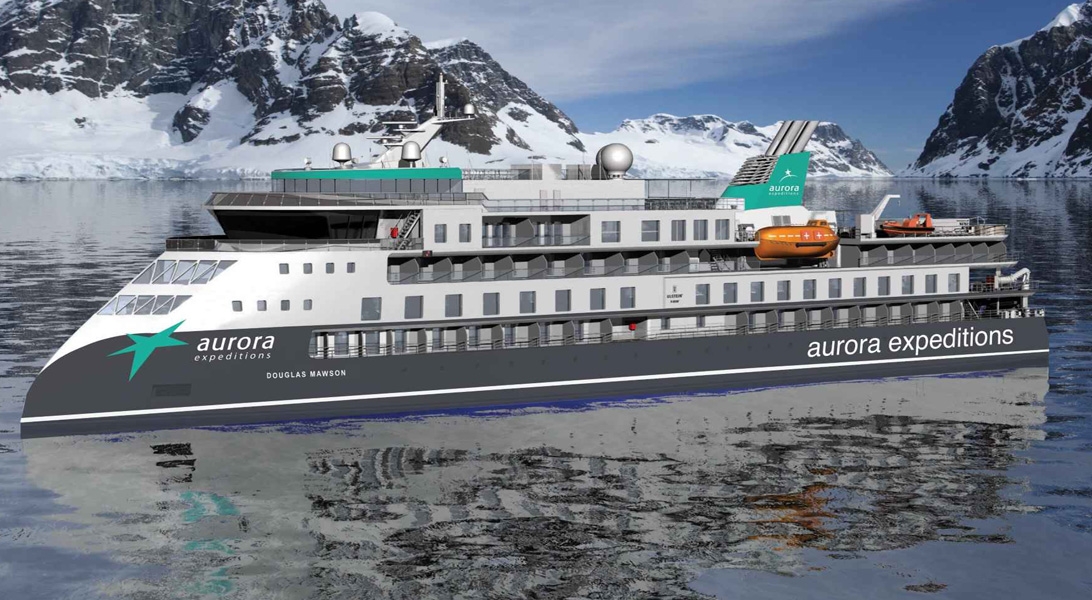
The images shown are for illustration purposes only and may not be an exact representation of what you find on the ship.
The images shown are for illustration purposes only and may not be an exact representation of what you find on the ship.
The images shown are for illustration purposes only and may not be an exact representation of what you find on the ship.
The images shown are for illustration purposes only and may not be an exact representation of what you find on the ship.
The images shown are for illustration purposes only and may not be an exact representation of what you find on the ship.


Our Fusion packages are all ABTA & ATOL protected ensuring that your booking is safe with us
| 9 nights aboard the Douglas Mawson | |||
| Fully-serviced accommodation in your chosen stateroom | |||
| An informative and entertaining lecture program by our team of experts | |||
| Complimentary 3-in-1 polar jacket and the use of gumboots | |||
| Entry fees to historic or tourist sites | |||
| Daily shore excursions, guided walks, Zodiac cruises and some activities | |||
| Daily breakfast, lunch and dinner including house wines, beers and soft drinks and afternoon tea and snacks | |||
| Complimentary use of fitness centre | |||
| Comprehensive pre-departure information kit and destination resource guide | |||
| Captain’s Welcome and Farewell Cocktail Reception including four-course dinner, house cocktails, house beer and wine, non-alcoholic beverages | |||
| Complimentary access to onboard medical doctor or clinic, if required | |||
| An experienced team of destination specialists and activity leaders | |||
| Pre-dinner cocktail hour including cold canapes and bar snacks | |||
| Photographic voyage log (post-voyage) | |||
| Port Taxes and Fees | |||
 | ABTA and ATOL Protection* | ||
Date 20th Oct 2027 |
Nts 9 |
Oceanview £4,498pp |
Balcony £4,898pp |
Suite £7,148pp |
Date 20th Oct 2027 |
Nts 9 |
Oceanview £4,498pp |
Balcony £4,898pp |
Suite £7,148pp |
| Oceanview staterooms from | £4,498pp | ||
| AS2D | Aurora Stateroom Twin Share | £4,498pp | |
| SASD | Aurora Stateroom Superior | £4,748pp | |
| Balcony staterooms from | £4,898pp | ||
| BSAD | Balcony Stateroom Category A | £5,548pp | |
| BSBD | Balcony Stateroom Category B | £5,148pp | |
| BSCD | Balcony Stateroom Category C | £4,898pp | |
| SBSD | Balcony Stateroom Superior | £6,048pp | |
| Suite staterooms from | £7,148pp | ||
| JSD | Junior Suite | £7,148pp | |
| CSD | Captain Suite | £8,198pp | |
Fusion Cruises when selling travel arrangements is a trading name of Co-op Travel Services Ltd. Fusion Cruises is an Accredited Body Member of Co-operative Travel Consortium. (ABTA:P6652, ATOL:12904).
Book with Confidence. We are a Member of ABTA which means you have the benefit of ABTA’s assistance and Code of Conduct.
Some of the flights and flight-inclusive holidays on this website are financially protected by the ATOL scheme but ATOL protection does not apply to all holiday and travel services offered on this website. This website will provide you with information on the protection that applies in the case of each holiday and travel service offered before you make your booking. If you do not receive an ATOL Certificate then the booking will not be ATOL protected. If you do receive an ATOL Certificate but all parts of your trip are not listed on it, those parts will not be ATOL protected. Please see our booking conditions for information, or for more information about financial protection and the ATOL Certificate go to: www.caa.co.uk