This site uses cookies as defined in our Cookie Policy, by continuing to use this site you agree to their use.
Continue

| Arrive | Depart | ||||||
| 4th04 | FebFeb | 202929 | Auckland, New Zealand, embark on the Azamara Pursuit | 18:00 | |||
The only city in the world built on an active basaltic volcanic field, Auckland’s warm, coastal climate allows for surfing at black-sand beaches, picnics in secluded coves, wine tasting and horseback riding. | |||||||
| 5th05 | FebFeb | 202929 | Russel, Bay of Islands, New Zealand | 08:00 | 18:00 | ||
A subtropical micro-region, the Bay of Islands is known for its beauty and history and is a popular golfing, fishing and sailing destination, where you can take advantage of its relaxed marine lifestyle. | |||||||
| 6th06 | FebFeb | 202929 | Tauranga, New Zealand | 09:00 | 17:00 | ||
The population center of the Bay of Plenty, Tauranga is one of New Zealand's fastest-growing cities. Along with its neighbor, Whakatane, this seaside city claims to be one of the country's sunniest towns. Unlike most local towns, Tauranga doesn't grind to a halt in the off-season, because it has one of the busiest ports in the country, and the excellent waves at the neighboring beach resort of Mount Maunganui—just across Tauranga's harbor bridge—always draw surfers and holiday folk. A popular coastal town with a subtropical climate, Tauranga offers beautiful golden beaches, lush parks and a laidback atmosphere, with an array of adventures including dolphin watching, hiking and fishing. | |||||||
| 7th07 | FebFeb | 202929 | Napier, New Zealand | 12:00 | 20:00 | ||
The earthquake that struck Napier at 10:46 am on February 3, 1931, was—at 7.8 on the Richter scale—the largest quake ever recorded in New Zealand. The coastline was wrenched upward several feet. Almost all the town's brick buildings collapsed; many people were killed on the footpaths as they rushed outside. The quake triggered fires throughout town, and with water mains shattered, little could be done to stop the blazes that devoured the remaining wooden structures. Only a few buildings survived (the Public Service Building with its neoclassical pillars is one), and the death toll was well over 100.The surviving townspeople set up tents and cookhouses in Nelson Park, and then tackled the city's reconstruction at a remarkable pace. In the rush to rebuild, Napier went mad for art deco, the bold, geometric style that had burst on the global design scene in 1925. Now a walk through the art deco district, concentrated between Emerson, Herschell, Dalton, and Browning streets, is a stylistic immersion. The decorative elements are often above the ground floors, so keep your eyes up. In Napier you can visit Pania of the Reef (one of the most photographed tourist attractions in the country), take a guided city walk, explore Cape Kidnappers or enjoy the day wine tasting at local vineyards. | |||||||
| 8th08 | FebFeb | 202929 | Wellington, New Zealand | 12:00 | 20:00 | ||
New Zealand's capital is, arguably, the country's most cosmopolitan metropolis. It's world-class Te Papa Tongarewa-Museum of New Zealand is a don't-miss attraction, and the burgeoning film industry led, of course, by the Lord of the Rings extravaganzas has injected new life into the local arts scene. Attractive and compact enough to be explored easily on foot, Wellington is a booming destination. Modern high-rise buildings gaze over Port Nicholson, surely one of the finest natural anchorages in the world. Known to local Māori as The Great Harbor of Tara, its two massive arms form the jaws of the fish of Maui from Māori legend. Sometimes referred to as the windy city, Wellington has been the seat of New Zealand's government since 1865. With its fantastic nightlife, the renowned entertainment district of Courtenay Place and an internationally recognized coffee culture, Wellington is often referred to as “the coolest little capital in the world”. | |||||||
| 9th09 | FebFeb | 202929 | Nelson, New Zealand | 08:00 | 20:00 | ||
A haven for artists and outdoor enthusiasts, Nelson is a sunny, stunning, and sophisticated city in the center of New Zealand marked by beautiful beaches, national parks, wineries and other charms. | |||||||
| 10th10 | FebFeb | 202929 | Picton, New Zealand | 08:00 | 16:00 | ||
The maritime township of Picton (population 4,000) lies at the head of Queen Charlotte Sound and is the arrival point for ferries from the North Island, as well as a growing number of international cruise ships. It plays a major role in providing services and transport by water taxi to a multitude of remote communities in the vast area of islands, peninsulas, and waterways that make up the Marlborough Sounds Maritime Park. There's plenty to do in town, with crafts markets in summer, historical sights to see, and walking tracks to scenic lookouts over the sounds. The main foreshore is lined by London Quay, which looks up Queen Charlotte Sound to the bays beyond. High Street runs down to London Quay from the hills, and between them these two streets make up the center of town. A seaside town situated in the Marlborough region and close to the head of Queen Charlotte Sound, Picton is a great jumping off point for wine tours, fishing, swimming, bird watching and great local seafood. | |||||||
| 11th11 | FebFeb | 202929 | Christchurch, New Zealand | 08:00 | 17:00 | ||
Christchurch is one of New Zealand’s most English cities. The Anglisation of the area is quickly evident throughout. The name Christchurch, is named after one of the most famous Oxford Colleges. Traditional English styled punts can be seen drifting lazily along the Avon River, and customary striped blazers are still worn by students at Christ’s College. Ōtautahi. The Garden City. The Most English City Outside England. It may go by many names, but one thing’s for certain: There’s so much to explore in Christchurch, you’re going to have to plan strategically. | |||||||
| 12th12 | FebFeb | 202929 | Dunedin, New Zealand | 07:30 | 16:00 | ||
Clinging to the walls of the natural amphitheater at the west end of Otago Harbour, the South Island's second-largest city is enriched with inspiring nearby seascapes and wildlife. Because Dunedin is a university town, floods of students give the city a vitality far greater than its population of 122,000 might suggest. Its manageable size makes it easy to explore on foot—with the possible exception of Baldwin Street, the world's steepest residential street and home to the annual "gutbuster" race, in which people run up it, and the "Jaffa" race, in which people roll the namesake spherical chocolate candy down it.Dunedin, the Gaelic name for Edinburgh, was founded in 1848 by settlers of the Free Church of Scotland, a breakaway group from the Presbyterian Church. The city's Scottish roots are still visible; you'll find New Zealand's first and only (legal) whisky distillery, a statue of Scottish poet Robert Burns, and more kilts, sporrans, and gillies than you can shake a stick at! The Scottish settlers and local Māori came together in relative peace, but this wasn't true of the European whalers who were here three decades before, as places with names such as Murdering Beach illustrate.Dunedin has always had a reputation for the eccentric. Wearing no shoes and a big beard here marks a man as bohemian rather than destitute, and the residents wouldn't have it any other way. The University of Otago was the country's first university and has been drawing writers ever since its founding in 1871, most notably Janet Frame and the poet James K. Baxter. Dunedin also has a musical heritage, which blossomed into the "Dunedin Sound" of the 1970s and '80s. Bordered by the Tasman Sea, the Scottish-influenced city of Dunedin features many beautiful, white sandy beaches, the Otago Peninsula and wildlife unique to the area like the Little Blue Penguin and the Kiwi. | |||||||
| 13th13 | FebFeb | 202929 | Milford Sound, New Zealand | 16:00 | 19:00 | ||
New Zealand fiord country along with Fiordland National Park is one of New Zealand's premier attractions. Incredibly beautiful, wild and remote, the region is an intriguing combination of rugged mountain ranges, dense rainforest, solitary alpine lakes, sparkling rivers and splashing waterfalls. Much of Fiordland is virtually unexplored wilderness and still the habitat of rare birds. As the ship cruises the beautiful Doubtful, Dusky and Milford Sounds, experience the majestic fiordland of South Island's western coast. Captain James Cook sailed along this coast in 1770 and again in 1773, when he anchored at Dusky Sound for a rest and ship repair. Doubtful Sound is one of the region's most majestic fiords. It is ten times larger than Milford Sound. As the ship cruises into Hall Arm, gaze at vertical cliffs and mighty waterfalls plunging over sheer rock faces. In fine weather, mountains and greenery are reflected in the protected waters of the fiord. Farther north lies Milford Sound. Far from any populated area, Milford Sound is famous for its grandeur and spectacular beauty. It is perhaps the best example of New Zealand's renowned classic landscape of steep granite peaks framing glacier-carved inlets with mirrored reflections on dark waters. Dominating the scene is Milford's landmark, the triangular pinnacle of Mitre Peak. Along the sheer cliffs, several waterfalls tumble more than 500 feet (154 metres) into the sheltered Sound. Only a few moored boats and a scattering of buildings at the head of the Sound break the unity of mountains, forest and water. This spectacular beauty and unspoiled setting is yours to enjoy as the ship cruises Milford Sound. An unspoiled place of staggering and dramatic natural beauty. Milford Sound captures your attention and your imagination with staggering waterfalls and towering jagged peaks. | |||||||
| 14th14 | FebFeb | 202929 | At Sea | ||||
| 15th15 | FebFeb | 202929 | At Sea | ||||
| 16th16 | FebFeb | 202929 | Hobart, Tasmania, Australia | 08:00 | 22:00 | ||
Straddling the Derwent River at the foot of Mt. Wellington's forested slopes, Hobart was founded as a penal settlement in 1803. It's the second-oldest city in the country after Sydney, and it certainly rivals its mainland counterpart as Australia's most beautiful state capital. Close-set colonial brick-and-sandstone shops and homes line the narrow, quiet streets, creating a genteel setting for this historic city of 215,000. Life revolves around the broad Derwent River port, one of the deepest harbors in the world. Here warehouses that once stored Hobart's major exports of fruit, wool, and corn and products from the city's former whaling fleet still stand alongside the wharf today.Hobart sparkles between Christmas and New Year's—summer Down Under—during the annual Sydney-to-Hobart yacht race. The event dominates conversations among Hobart's citizens, who descend on Constitution Dock to welcome the yachts and join in the boisterous festivities of the crews. The New Year also coincides with the Tastes of Tasmania Festival, when the dockside area comes alive with the best of Tasmanian food and wine on offer in numerous cafés, bars, and waterfront stalls. Otherwise, Hobart is a placid city whose nightlife is largely confined to excellent restaurants, jazz clubs, and the action at the Wrest Point Casino in Sandy Bay.The Hobart Tasmanian Travel and Information Centre hours are weekdays 8:30–5:30 and Saturday 9–5. The capital and most populous city in Tasmania, Hobart is wonderful for strolling the historic waterfront, famous for its Georgian buildings, climbing Mount Wellington or taking a day trip to Bruny Island. | |||||||
| 17th17 | FebFeb | 202929 | At Sea | ||||
| 18th18 | FebFeb | 202929 | Eden, New South Wales, Australia | 08:00 | 15:00 | ||
A paradise on the Sapphire Coast, Eden, Australia is home to rugged wilderness, beautiful views, and a rich seafaring history that is a whale of a time to uncover. | |||||||
| 19th19 | FebFeb | 202929 | Sydney, New South Wales, Australia | 06:30 | 18:00 | ||
Sydney, capital of New South Wales and one of Australia's largest cities, is best known for its harbourfront Sydney Opera House, with a distinctive sail-like design. Massive Darling Harbour and the smaller Circular Quay port are hubs of waterside life, with the arched Harbour Bridge and esteemed Royal Botanic Garden nearby. Sydney Tower’s outdoor platform, the Skywalk, offers 360-degree views of the city and suburbs. One of the Southern Hemisphere’s most spectacular cities, Sydney’s amazing architecture and beachy atmosphere often start or begin our Australia and New Zealand cruises. Discover a city where water is the way to travel, and explore intriguing convict history, expansive green spaces, and trendy districts. | |||||||
| 20th20 | FebFeb | 202929 | At Sea | ||||
| 21st21 | FebFeb | 202929 | Mooloolaba, Queensland, Australia | 08:00 | 20:00 | ||
Mooloolaba is a suburban township in Queensland and a popular beach destination where you can dine on world-class cuisine, swim in waterfalls, dive with sharks and visit the world-famous Australia Zoo. | |||||||
| 22nd22 | FebFeb | 202929 | At Sea | ||||
| 23rd23 | FebFeb | 202929 | Airlie Beach, Australia | 08:00 | 20:00 | ||
| Airlie Beach, nestled in Queensland’s tropical Whitsunday Region, is a vibrant gateway to the Great Barrier Reef and the idyllic Whitsunday Islands. Renowned for its stunning waterfront, the town offers a relaxed yet lively atmosphere, with a picturesque lagoon perfect for swimming and sunbathing. Adventure seekers can enjoy sailing, snorkeling, scuba diving, and skydiving, while the surrounding rainforest and hiking trails provide scenic escapes for nature lovers. The town’s bustling streets are lined with cafés, restaurants, and lively nightlife, ensuring entertainment for all tastes. Airlie Beach is also a launch point for unforgettable island tours, including trips to the world-famous Whitehaven Beach. With its combination of natural beauty, adventure opportunities, and welcoming local culture, Airlie Beach is a must-visit destination for travelers seeking both relaxation and excitement in tropical paradise. This laid-back town seems as if it’s permanently on vacation—and for good reason. It’s the heart of the Great Barrier Reef and the gateway to the 74 Whitsunday Islands. | |||||||
| 24th24 | FebFeb | 202929 | Townsville, Queensland, Australia | 08:00 | 20:00 | ||
This coastal city has little in the way of sandy beaches or surf, but it does have shady parks, charming colonial buildings, and a boardwalk-flanked waterfront Esplanade with a terrific man-made beach and picnic facilities. The historic town center has thrived recently, with an influx of lively eateries and bars. There are also some excellent museum and a world-class aquarium.Queensland Parks and Wildlife Service has an office on Magnetic Island, but Townsville Enterprise's information kiosks in Flinders Square and the Museum of Tropical Queensland (MTQ), on the mainland, are the best sources of visitor info about the island. | |||||||
| 25th25 | FebFeb | 202929 | Cairns, Queensland, Australia | 08:30 | 22:00 | ||
Tourism is the lifeblood of Cairns (pronounced Caans). The city makes a good base for exploring the wild top half of Queensland, and tens of thousands of international travelers use it as a jumping-off point for activities such as scuba diving and snorkeling trips to the Barrier Reef, as well as boating, fishing, parasailing, scenic flights, and rain-forest treks.It's a tough environment, with intense heat and fierce wildlife. Along with wallabies and grey kangaroos in the savannah and tree kangaroos in the rain forest, you'll find stealthy saltwater crocodiles, venomous snakes, and jellyfish so deadly they put the region’s stunning beaches off- limits to swimmers for nearly half the year. Yet despite this formidable setting, Cairns and tropical North Queensland are far from intimidating places. The people are warm and friendly, the sights spectacular, and—at the right time of year—the beachside lounging is world-class. Cairns is a popular destination due to its relaxed ambiance, year-round tropical climate and proximity to such natural wonders as the Great Barrier Reef, Daintree Rainforest and the Atherton Tablelands. | |||||||
| 26th26 | FebFeb | 202929 | Cooktown, Queensland, Australia | 07:30 | 13:00 | ||
| 27th27 | FebFeb | 202929 | At Sea | ||||
| 28th28 | FebFeb | 202929 | At Sea | ||||
| 1st01 | MarMar | 202929 | Darwin, Northern Territory, Australia | 13:30 | |||
Darwin is Australia's most colorful, and exotic, capital city. Surrounded on three sides by the turquoise waters of the Timor Sea, the streets are lined with tropical flowers and trees. Warm and dry in winter, hot and steamy in summer, it's a relaxed and casual place, as well as a beguiling blend of tropical frontier outpost and Outback hardiness. Thanks to its close proximity to Southeast Asia and its multicultural population it also seems more like Asia than the rest of Australia. Darwin is a city that has always had to fight for its survival. The seductiveness of contemporary Darwin lifestyles belies a history of failed attempts that date from 1824 when Europeans attempted to establish an enclave in this harsh, unyielding climate. The original 1869 settlement, called Palmerston, was built on a parcel of mangrove wetlands and scrub forest that had changed little in 15 million years. It was not until 1911, after it had already weathered the disastrous cyclones of 1878, 1882, and 1897, that the town was named after the scientist who had visited Australia's shores aboard the Beagle in 1839. During World War II it was bombed more than 60 times, as the harbor full of warships was a prime target for the Japanese war planes. Then, on the night of Christmas Eve 1974, the city was almost completely destroyed by Cyclone Tracy, Australia’s greatest natural disaster. It's a tribute to those who stayed and to those who have come to live here after Tracy that the rebuilt city now thrives as an administrative and commercial center for northern Australia. Old Darwin has been replaced by something of an edifice complex—such buildings as Parliament House and the Supreme Court all seem very grand for such a small city, especially one that prides itself on its casual, outdoor-centric lifestyle. Today Darwin is the best place from which to explore Australia's Top End, with its wonders of Kakadu and the Kimberley region. Darwin has grown from a gateway to South East Asia to one of Australia’s most modern and tropical cities, with miles of pristine beaches, fantastic fishing and the World Heritage-listed Kakadu National Park. | |||||||
| 2nd02 | MarMar | 202929 | Darwin, Northern Territory, Australia | 17:00 | |||
Darwin is Australia's most colorful, and exotic, capital city. Surrounded on three sides by the turquoise waters of the Timor Sea, the streets are lined with tropical flowers and trees. Warm and dry in winter, hot and steamy in summer, it's a relaxed and casual place, as well as a beguiling blend of tropical frontier outpost and Outback hardiness. Thanks to its close proximity to Southeast Asia and its multicultural population it also seems more like Asia than the rest of Australia. Darwin is a city that has always had to fight for its survival. The seductiveness of contemporary Darwin lifestyles belies a history of failed attempts that date from 1824 when Europeans attempted to establish an enclave in this harsh, unyielding climate. The original 1869 settlement, called Palmerston, was built on a parcel of mangrove wetlands and scrub forest that had changed little in 15 million years. It was not until 1911, after it had already weathered the disastrous cyclones of 1878, 1882, and 1897, that the town was named after the scientist who had visited Australia's shores aboard the Beagle in 1839. During World War II it was bombed more than 60 times, as the harbor full of warships was a prime target for the Japanese war planes. Then, on the night of Christmas Eve 1974, the city was almost completely destroyed by Cyclone Tracy, Australia’s greatest natural disaster. It's a tribute to those who stayed and to those who have come to live here after Tracy that the rebuilt city now thrives as an administrative and commercial center for northern Australia. Old Darwin has been replaced by something of an edifice complex—such buildings as Parliament House and the Supreme Court all seem very grand for such a small city, especially one that prides itself on its casual, outdoor-centric lifestyle. Today Darwin is the best place from which to explore Australia's Top End, with its wonders of Kakadu and the Kimberley region. Darwin has grown from a gateway to South East Asia to one of Australia’s most modern and tropical cities, with miles of pristine beaches, fantastic fishing and the World Heritage-listed Kakadu National Park. | |||||||
| 3rd03 | MarMar | 202929 | At Sea | ||||
| 4th04 | MarMar | 202929 | At Sea | ||||
| 5th05 | MarMar | 202929 | Benoa, Bali, Indonesia | 08:00 | 22:00 | ||
Bali really is as alluring as everyone says. This island, slightly bigger than Delaware, has it all: beaches, volcanoes, terraced rice fields, forests, renowned resorts, surfing, golf, and world-class dive sites. But what sets Bali apart from other nearby tropical destinations is Balinese tradition, and villagers dedicated to celebrating it. The hundreds of temples, dances, rituals, and crafts linked to their ancient Hindu faith aren't a show for tourists, but a living, breathing culture in which visitors are warmly received by the Balinese, who cherish their own identities. A deeply spiritual place filled with thousands of temples, rice terraces that color every available acre and artful offerings of flowers and incense, Bali is a culturally rich, lush and verdant island. | |||||||
| 6th06 | MarMar | 202929 | Celukan Bawang, Bali, Indonesia | 08:00 | 17:00 | ||
Nestled along Bali's scenic northern coast, Celukan Bawang is a picturesque port town offering visitors a serene escape amidst lush landscapes and traditional Balinese culture. With its tranquil beaches, vibrant markets, and opportunities for cultural exploration, Celukan Bawang invites travelers to immerse themselves in the beauty and tranquility of Indonesia's "Island of the Gods." | |||||||
| 7th07 | MarMar | 202929 | At Sea | ||||
| 8th08 | MarMar | 202929 | At Sea | ||||
| 9th09 | MarMar | 202929 | Singapore, Singapore | 07:00 | 18:00 | ||
The main island of Singapore is shaped like a flattened diamond, 42 km (26 miles) east to west and 23 km (14 miles) north to south. Near the northern peak is the causeway leading to West Malaysia—Kuala Lumpur is less than four hours away by car. It is at the southern foot where you will find most of the city-state’s action, with its gleaming office towers, working docks, and futuristic "supertrees," which are solar-powered and serve as vertical gardens. Offshore are Sentosa and over 60 smaller islands, most uninhabited, that serve as bases for oil refining or as playgrounds and beach escapes from the city. To the east is Changi International Airport, connected to the city by metro, bus, and a tree-lined parkway. Of the island's total land area, more than half is built up, with the balance made up of parkland, farmland, plantations, swamp areas, and rain forest. Well-paved roads connect all parts of the island, and Singapore city has an excellent, and constantly expanding, public transportation system. The heart of Singapore's history and its modern wealth are in and around the Central Business District. The area includes the skyscrapers in the Central Business District, the 19th-century Raffles Hotel, the convention centers of Marina Square, on up to the top of Ft. Canning. Although most of old Singapore has been knocked down to make way for the modern city, most colonial landmarks have been preserved in the CBD, including early-19th-century buildings designed by the Irish architect George Coleman. The site of the world's busiest port, Singapore offers everything from the Mustafa Centre (a 24-hour mall) and the nightlife on Mohamed Sultan Road to incredible food with Chinese, Malay and Indian influences. | |||||||
| 10th10 | MarMar | 202929 | At Sea | ||||
| 11th11 | MarMar | 202929 | Ho Chi Minh City, Vietnam | 11:00 | |||
Romantically referred to by the French as the Pearl of the Orient, Ho Chi Minh City today is a super-charged city of sensory overload. Motorbikes zoom day and night along the wide boulevards, through the narrow back alleys and past vendors pushing handcarts hawking goods of all descriptions. Still called Saigon by most residents, this is Vietnam's largest city and the engine driving the country's current economic resurgence, but despite its frenetic pace, it's a friendlier place than Hanoi and locals will tell you the food—simple, tasty, and incorporating many fresh herbs—is infinitely better than in the capital.This is a city full of surprises. The madness of the city's traffic—witness the oddball things that are transported on the back of motorcycles—is countered by tranquil pagodas, peaceful parks, quirky coffee shops, and whole neighborhoods hidden down tiny alleyways, although some of these quiet spots can be difficult to track down. Life in Ho Chi Minh City is lived in public: on the back of motorcycles, on the sidewalks, and in the parks. Even when its residents are at home, they're still on display. With many living rooms opening onto the street, grandmothers napping, babies being rocked, and food being prepared, are all in full view of passersby.Icons of the past endure in the midst of the city’s headlong rush into capitalism. The Hotel Continental, immortalized in Graham Greene's The Quiet American, continues to stand on the corner of old Indochina's most famous thoroughfare, the rue Catinat, known to American G.I.s during the Vietnam War as Tu Do (Freedom) Street and renamed Dong Khoi (Uprising) Street by the Communists. The city still has its ornate opera house and its old French city hall, the Hôtel de Ville. The broad colonial boulevards leading to the Saigon River and the gracious stucco villas are other remnants of the French colonial presence. Grisly reminders of the more recent past can be seen at the city's war-related museums. Residents, however, prefer to look forward rather than back and are often perplexed by tourists' fascination with a war that ended 40 years ago.The Chinese influence on the country is still very much in evidence in the Cholon district, the city's Chinatown, but the modern office towers and international hotels that mark the skyline symbolize Vietnam's fixation on the future. Still referred to as Saigon by many, Ho Chi Minh City has an energy all its own, where trendy restaurants, nightclubs, bustling markets and French colonial architecture mix with modern and Asian influences. | |||||||
| 12th12 | MarMar | 202929 | Ho Chi Minh City, Vietnam | 14:00 | |||
Romantically referred to by the French as the Pearl of the Orient, Ho Chi Minh City today is a super-charged city of sensory overload. Motorbikes zoom day and night along the wide boulevards, through the narrow back alleys and past vendors pushing handcarts hawking goods of all descriptions. Still called Saigon by most residents, this is Vietnam's largest city and the engine driving the country's current economic resurgence, but despite its frenetic pace, it's a friendlier place than Hanoi and locals will tell you the food—simple, tasty, and incorporating many fresh herbs—is infinitely better than in the capital.This is a city full of surprises. The madness of the city's traffic—witness the oddball things that are transported on the back of motorcycles—is countered by tranquil pagodas, peaceful parks, quirky coffee shops, and whole neighborhoods hidden down tiny alleyways, although some of these quiet spots can be difficult to track down. Life in Ho Chi Minh City is lived in public: on the back of motorcycles, on the sidewalks, and in the parks. Even when its residents are at home, they're still on display. With many living rooms opening onto the street, grandmothers napping, babies being rocked, and food being prepared, are all in full view of passersby.Icons of the past endure in the midst of the city’s headlong rush into capitalism. The Hotel Continental, immortalized in Graham Greene's The Quiet American, continues to stand on the corner of old Indochina's most famous thoroughfare, the rue Catinat, known to American G.I.s during the Vietnam War as Tu Do (Freedom) Street and renamed Dong Khoi (Uprising) Street by the Communists. The city still has its ornate opera house and its old French city hall, the Hôtel de Ville. The broad colonial boulevards leading to the Saigon River and the gracious stucco villas are other remnants of the French colonial presence. Grisly reminders of the more recent past can be seen at the city's war-related museums. Residents, however, prefer to look forward rather than back and are often perplexed by tourists' fascination with a war that ended 40 years ago.The Chinese influence on the country is still very much in evidence in the Cholon district, the city's Chinatown, but the modern office towers and international hotels that mark the skyline symbolize Vietnam's fixation on the future. Still referred to as Saigon by many, Ho Chi Minh City has an energy all its own, where trendy restaurants, nightclubs, bustling markets and French colonial architecture mix with modern and Asian influences. | |||||||
| 13th13 | MarMar | 202929 | At Sea | ||||
| 14th14 | MarMar | 202929 | Hue, Vietnam | 08:00 | 20:00 | ||
| 15th15 | MarMar | 202929 | At Sea | ||||
| 16th16 | MarMar | 202929 | Hong Kong, Hong Kong | 07:00 | 22:00 | ||
The Hong Kong Island skyline, with its ever-growing number of skyscrapers, speaks to ambition and money. Paris, London, even New York were centuries in the making, while Hong Kong's towers, bright lights, and glitzy shopping emporia weren't yet part of the urban scene when many of the young investment bankers who fuel one of the world's leading financial centers were born. Commerce is concentrated in the glittering high-rises of Central, tucked between Victoria Harbor and forested peaks on Hong Kong Island's north shore. While it's easy to think all the bright lights are the sum of today's Hong Kong, you need only walk or board a tram for the short jaunt west into Western to discover a side of Hong Kong that is more traditionally Chinese but no less high-energy. You'll discover the real Hong Kong to the east of Central, too, in Wan Chai, Causeway Bay, and beyond. Amid the residential towers are restaurants, shopping malls, bars, convention centers, a nice smattering of museums, and—depending on fate and the horse you wager on—one of Hong Kong's luckiest or unluckiest spots, the Happy Valley Racecourse. Kowloon sprawls across a generous swath of the Chinese mainland across Victoria Harbour from Central. Tsim Sha Tsui, at the tip of Kowloon peninsula, is packed with glitzy shops, first-rate museums, and eye-popping views of the skyline across the water. Just to the north are the teeming market streets of Mong Kok and in the dense residential neighborhoods beyond, two of Hong Kong's most enchanting spiritual sights, Wong Tai Sin Temple and Chi Lin Nunnery. As you navigate this huge metropolis (easy to do on the excellent transportation network), keep in mind that streets are usually numbered odd on one side, even on the other. There's no baseline for street numbers and no block-based numbering system, but street signs indicate building numbers for any given block. Hong Kong is neon lights, mountains and beaches, junk boats and yachts, street markets and high-end malls, and an unbelievable array of skyscrapers, all designed with the essential input of feng shui. | |||||||
| 17th17 | MarMar | 202929 | At Sea | ||||
| 18th18 | MarMar | 202929 | Keelung (Chilung), Taiwan | 08:00 | 18:00 | ||
With the glittering lights of Taipei - a futuristic metropolis of culture and ideas - sparkling nearby, Keelung is the first calling point for many visitors arriving in Taiwan. While this port city essentially serves as Taipei's ocean gateway, you shouldn’t be too hasty in dashing off to Taipei's neon-lit magic – first it’s well worth spending some time exploring the famous glowing night market, which hums with life each evening and is famous for its local seafood. There are two facets to Taipei: the modern, international east side with its upscale malls, chic stores and trendy restaurants, and the west bastion of traditional life, its narrow lanes lined with vendor stalls. | |||||||
| 19th19 | MarMar | 202929 | Ishigaki, Japan | 08:00 | 15:00 | ||
Perhaps best known for the picture-perfect setting of Kabiri Bay, where the water is the purest blue, the island of Ishigaki and its beautiful coastlines, beaches and look-offs are a nature lover’s dream. | |||||||
| 20th20 | MarMar | 202929 | Naha, Okinawa, Japan | 08:00 | 18:00 | ||
Naha, Okinawa, invites travelers with its blend of Ryukyuan history, pristine beaches like Naminoue Beach, distinctive cuisine featuring Okinawa soba and taco rice, bustling Kokusai Dori shopping street, traditional Eisa dance performances, and nearby natural wonders such as the Kerama Islands. Visit historic sites like Shuri Castle, and explore the warm hospitality of this vibrant city for an unforgettable journey in Japan's southernmost prefecture. | |||||||
| 21st21 | MarMar | 202929 | At Sea | ||||
| 22nd22 | MarMar | 202929 | Takamatsu, Japan | 13:00 | 20:00 | ||
Takamatsu city is the capital of Kagawa prefecture which is Japan’s smallest prefecture. This city is a vibrant blend of natural beauty and cosmopolitan functionality with a population of 420,000 people. The port of Takamatsu used to be the main gateway to Shikoku Island until the opening of the 37km long Seto Ohashi Bridge in 1988. Takamatsu city has flourished along with the Seto Inland Sea since 17th century when Matsudaira family, the relatives of the Tokugawa Shogun, ruled this area. Matsudaira family has completed the famous Japanese “Ritsurin Garden”. It took more than 100 years to complete this spacious garden with 75 hectares of land which features 13 landscaped hills, 6 ponds and many stone arrangements that have been placed in perfect balance in front of a vast green vista of Mt. Shiun. This garden was constructed as a villa of Matsudaira family and it attracts many visitors from all over the world. Furthermore, Takamatsu is a great place to find fresh seafood, its product, and famous Sanuki Udon noodles. On the Seto Inland Sea, looking out over the Sanuki mountain range, sits the old castle town of Takamatsu, where you can explore ruins, teahouses, water moats and a vibrant new waterfront and restaurants. | |||||||
| 23rd23 | MarMar | 202929 | Osaka, Japan | 08:00 | |||
From Minami's neon-lighted Dotombori and historic Tenno-ji to the high-rise class and underground shopping labyrinths of Kita, Osaka is a city that pulses with its own unique rhythm. Though Osaka has no shortage of tourist sites, it is the city itself that is the greatest attraction. Home to some of Japan's best food, most unique fashions, and warmest locals, Osaka does not beg to be explored—it demands it. More than anywhere else in Japan, it rewards the impulsive turn down an interesting side street or the chat with a random stranger. People do not come here to see the city, they come to experience it.Excluded from the formal circles of power and aristocratic culture in 16th-century Edo (Tokyo), Osaka took advantage of its position as Japan's trading center, developing its own art forms such as Bunraku puppet theater and Rakugo comic storytelling. It was in Osaka that feudal Japan's famed Floating World—the dining, theater, and pleasure district—was at its strongest and most inventive. Wealthy merchants and common laborers alike squandered fortunes on culinary delights, turning Osaka into "Japan's Kitchen," a moniker the city still has today. Though the city suffered a blow when the Meiji government canceled all of the samurai class's outstanding debts to the merchants, it was quick to recover. At the turn of the 20th century, it had become Japan's largest and most prosperous city, a center of commerce and manufacturing.Today Osaka remains Japan's iconoclastic metropolis, refusing to fit Tokyo's norms and expectations. Unlike the hordes of Tokyo, Osakans are fiercely independent. As a contrast to the neon and concrete surroundings, the people of Osaka are known as Japan's friendliest and most outgoing. Ask someone on the street for directions in Tokyo and you are lucky to get so much as a glance. Ask someone in Osaka and you get a conversation.The main areas of the city, Kita (north) and Minami (south), are divided by two rivers: the Dojima-gawa and the Tosabori-gawa. Between Kita and Minami is Naka-no-shima, an island and the municipal center of Osaka. Kita (north of Chuo Dori) is Osaka's economic hub and contains Osaka's largest stations: JR Osaka and Hankyu Umeda. The area is crammed with shops, department stores, and restaurants. Nearby are a nightlife district, Kita-shinchi; Naka-no-shima and the Museum of Oriental Ceramics; Osaka-jo (Osaka Castle); and Osaka Koen (Osaka Park). Restaurants, bars, department stores, and boutiques attract Osaka's youth to Minami (south Chuo Dori); theatergoers head to the National Bunraku Theatre and electronics-lovers to Den Den Town. For a glimpse of old Osaka, visit Tenno-ji Temple and Shin Sekai. The main stations are Namba, Shin-sai-bashi, Namba Nankai, and Tenno-ji. There's easy access to the Municipal Museum of Fine Art and Sumiyoshi Taisha (Sumiyoshi Grand Shrine).The bay area, to the west of the city center, is home to the Osaka Aquarium and Universal Studios Japan. The Shinkansen stops at Shin-Osaka, three stops (about five minutes) north of Osaka Station on the Mido-suji subway line. To the north of Shin-Osaka is Senri Expo Park. Dating back to the 5th century BC, Osaka is pivotal part of Japan’s economy, and is the ultimate urban Japanese experience, with fantastic regional cuisine and an array of monuments, landmarks and museums. | |||||||
| 24th24 | MarMar | 202929 | Osaka, Japan | 20:00 | |||
From Minami's neon-lighted Dotombori and historic Tenno-ji to the high-rise class and underground shopping labyrinths of Kita, Osaka is a city that pulses with its own unique rhythm. Though Osaka has no shortage of tourist sites, it is the city itself that is the greatest attraction. Home to some of Japan's best food, most unique fashions, and warmest locals, Osaka does not beg to be explored—it demands it. More than anywhere else in Japan, it rewards the impulsive turn down an interesting side street or the chat with a random stranger. People do not come here to see the city, they come to experience it.Excluded from the formal circles of power and aristocratic culture in 16th-century Edo (Tokyo), Osaka took advantage of its position as Japan's trading center, developing its own art forms such as Bunraku puppet theater and Rakugo comic storytelling. It was in Osaka that feudal Japan's famed Floating World—the dining, theater, and pleasure district—was at its strongest and most inventive. Wealthy merchants and common laborers alike squandered fortunes on culinary delights, turning Osaka into "Japan's Kitchen," a moniker the city still has today. Though the city suffered a blow when the Meiji government canceled all of the samurai class's outstanding debts to the merchants, it was quick to recover. At the turn of the 20th century, it had become Japan's largest and most prosperous city, a center of commerce and manufacturing.Today Osaka remains Japan's iconoclastic metropolis, refusing to fit Tokyo's norms and expectations. Unlike the hordes of Tokyo, Osakans are fiercely independent. As a contrast to the neon and concrete surroundings, the people of Osaka are known as Japan's friendliest and most outgoing. Ask someone on the street for directions in Tokyo and you are lucky to get so much as a glance. Ask someone in Osaka and you get a conversation.The main areas of the city, Kita (north) and Minami (south), are divided by two rivers: the Dojima-gawa and the Tosabori-gawa. Between Kita and Minami is Naka-no-shima, an island and the municipal center of Osaka. Kita (north of Chuo Dori) is Osaka's economic hub and contains Osaka's largest stations: JR Osaka and Hankyu Umeda. The area is crammed with shops, department stores, and restaurants. Nearby are a nightlife district, Kita-shinchi; Naka-no-shima and the Museum of Oriental Ceramics; Osaka-jo (Osaka Castle); and Osaka Koen (Osaka Park). Restaurants, bars, department stores, and boutiques attract Osaka's youth to Minami (south Chuo Dori); theatergoers head to the National Bunraku Theatre and electronics-lovers to Den Den Town. For a glimpse of old Osaka, visit Tenno-ji Temple and Shin Sekai. The main stations are Namba, Shin-sai-bashi, Namba Nankai, and Tenno-ji. There's easy access to the Municipal Museum of Fine Art and Sumiyoshi Taisha (Sumiyoshi Grand Shrine).The bay area, to the west of the city center, is home to the Osaka Aquarium and Universal Studios Japan. The Shinkansen stops at Shin-Osaka, three stops (about five minutes) north of Osaka Station on the Mido-suji subway line. To the north of Shin-Osaka is Senri Expo Park. Dating back to the 5th century BC, Osaka is pivotal part of Japan’s economy, and is the ultimate urban Japanese experience, with fantastic regional cuisine and an array of monuments, landmarks and museums. | |||||||
| 25th25 | MarMar | 202929 | Tokushima, Japan | 08:00 | 16:00 | ||
| 26th26 | MarMar | 202929 | Nagoya, Japan | 08:00 | 18:00 | ||
Nagoya is a vibrant city located in the Chubu region of Japan. Its blend of modernity, tradition, and industry make it a dynamic and interesting city to explore. | |||||||
| 27th27 | MarMar | 202929 | Tokyo, Japan, disembark the Azamara Pursuit | 06:00 | |||
Lights, sushi, manga! Sprawling, frenetic, and endlessly fascinating, Japan’s capital is a city of contrasts. Shrines and gardens are pockets of calm between famously crowded streets and soaring office buildings. Mom-and-pop noodle houses share street space with Western-style chain restaurants and exquisite fine dining. Shopping yields lovely folk arts as well as the newest electronics. And nightlife kicks off with karaoke or sake and continues with techno clubs and more. Whether you seek the traditional or the cutting edge, Tokyo will provide it. As the largest metropolitan area in the world, Tokyo is an exciting city where a seemingly unlimited choice of shops, restaurants and museums sit in contrast with an array of temples, shrines and gardens. | |||||||
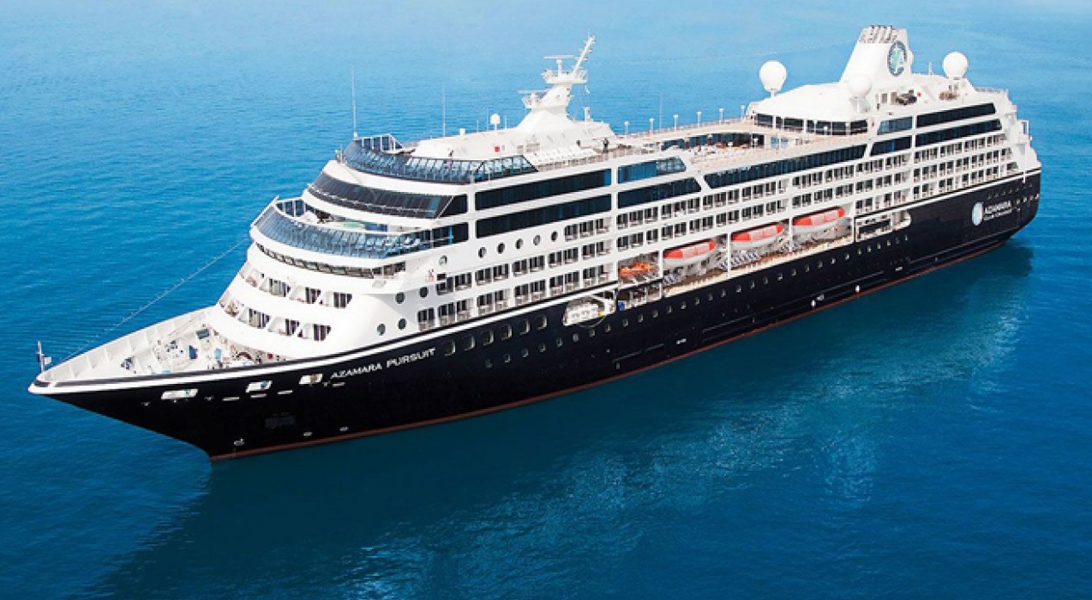
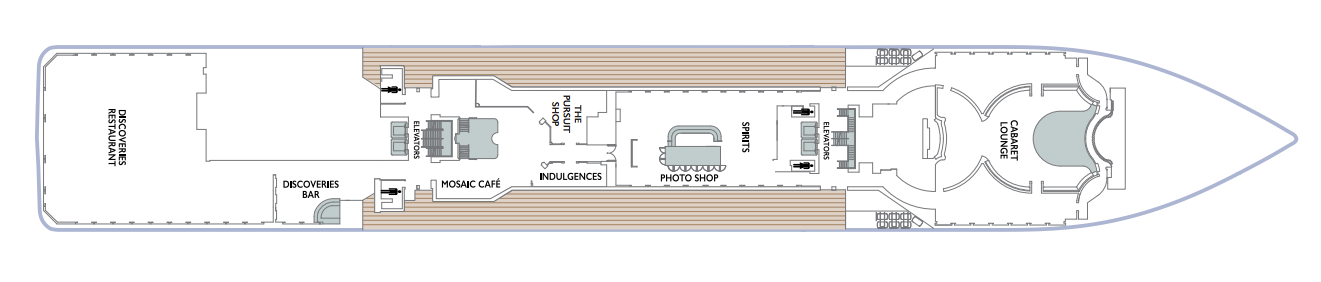

The images shown are for illustration purposes only and may not be an exact representation of what you find on the ship.
The images shown are for illustration purposes only and may not be an exact representation of what you find on the ship.
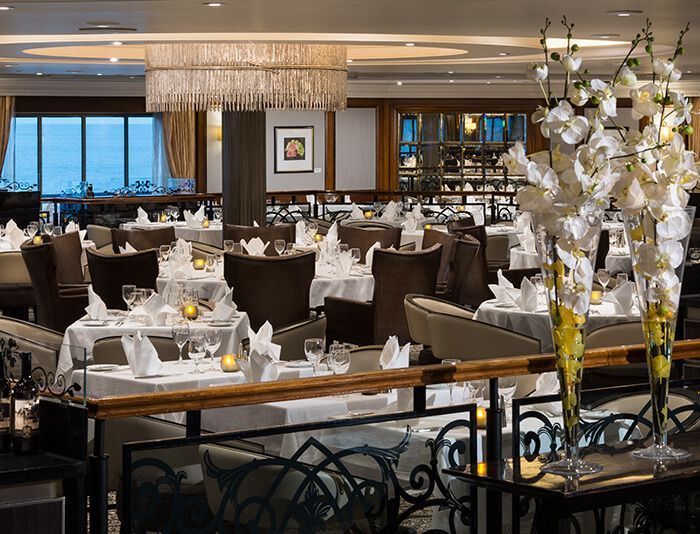
Discover the world through dishes and flavors from the places we visit. Of course, you’ll also enjoy a wide variety of nightly selections such as filet mignon with black truffle sauce. Choose being seated at a table for two or as part of a larger group of fellow guests.
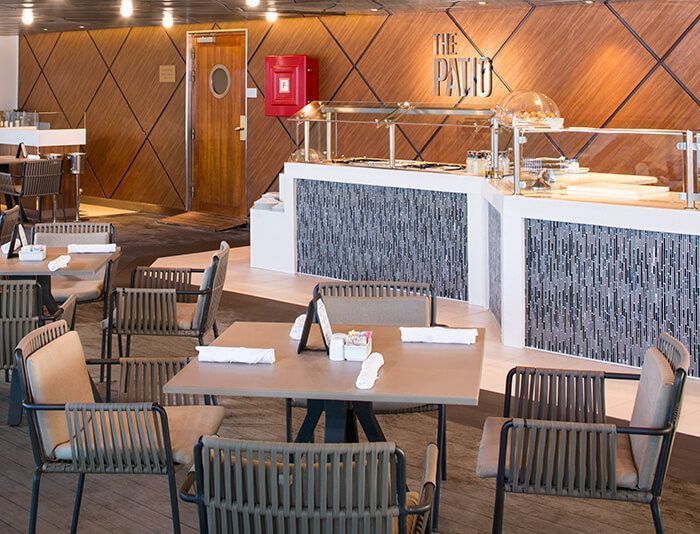
Casual “pool grill” by day. A sit-down al fresco dining experience by night. Taste your way around the world with exclusive personalized dishes using local flavors of the places we visit. Plus a self-serve frozen yogurt station—Swirl & Top. With a variety of flavors and your choice of toppings, it’s the perfect way to cool off.
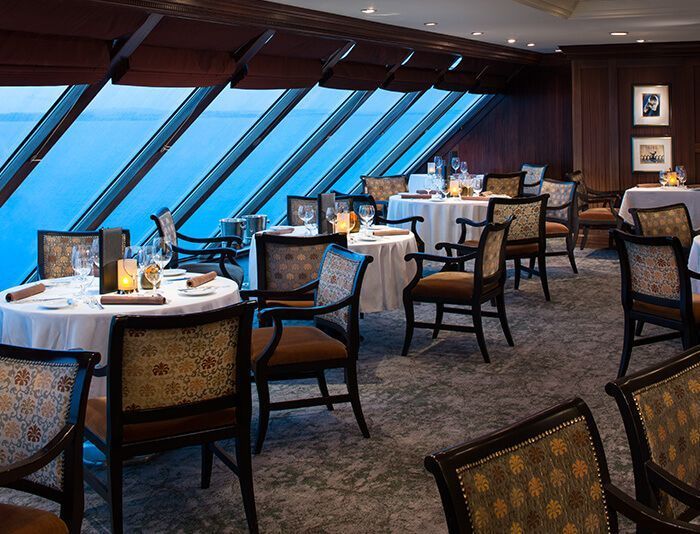
Our daily themed dinner often takes its inspiration from the region we’re visiting—Indian, Mexican, Spanish, Italian. We also create an extra live station made from local ingredients purchased in port: Greek salad made with local feta (Greece), pasta prepared with local mushrooms (Italy), fresh Mussels served with garlic bread (Netherlands).
The images shown are for illustration purposes only and may not be an exact representation of what you find on the ship.
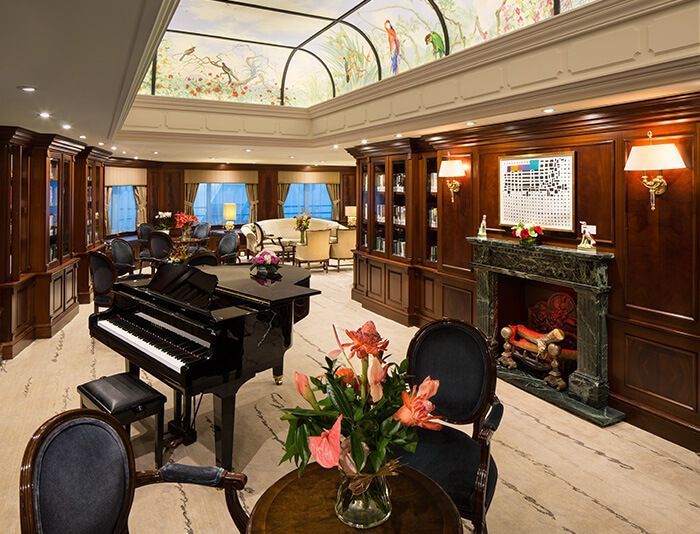
This library is one of the quiet jewels of Azamara, a peaceful and beautifully appointed space for reading or relaxing after dinner. Browse the collection and feel free to borrow the library books. Or simply relax in the tranquil atmosphere.
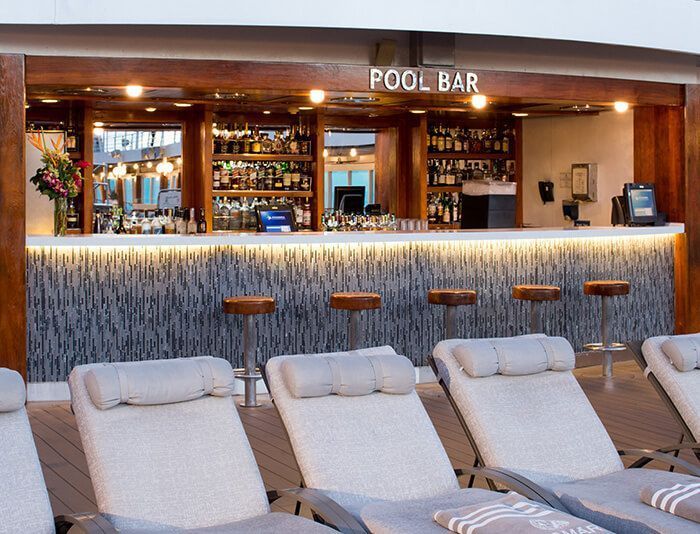
Our Pool Bar serves refreshments while enjoying the Pool during the day, and cocktails of your choice in the evening.
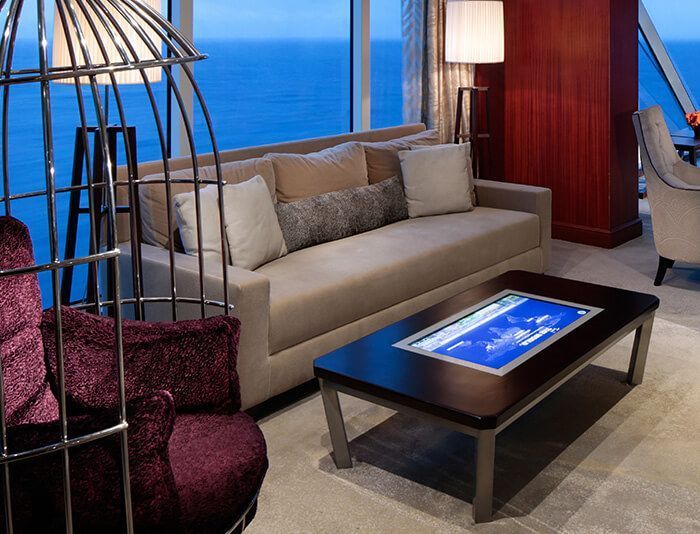
The idea of the Living Room is just that. To “live in” and to enjoy time with friends and fellow guests! Much of the room is furnished as a living room, with clusters of large comfortable chairs and sofas....
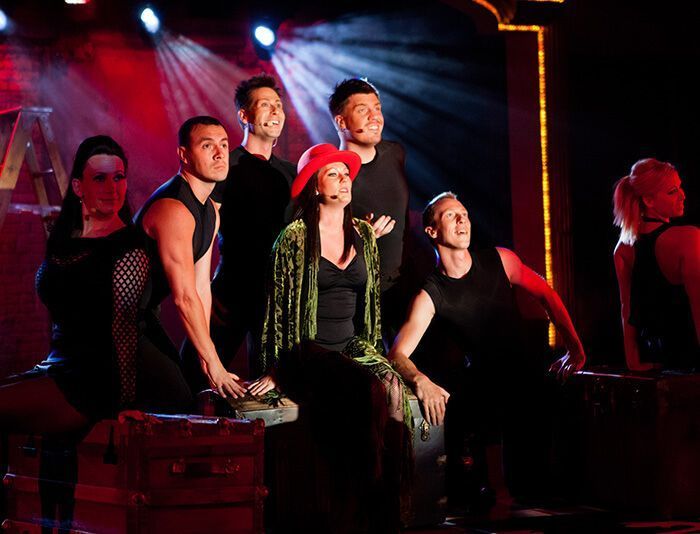
Enjoy live performances of professional full-stage musical revues, classical soloists, bands and other entertainment in a cabaret nightclub with a full bar and cozy tables.
The images shown are for illustration purposes only and may not be an exact representation of what you find on the ship.
The images shown are for illustration purposes only and may not be an exact representation of what you find on the ship.


Our Fusion packages are all ABTA & ATOL protected ensuring that your booking is safe with us
| 51 nights aboard the Azamara Pursuit | |||
| AzAmazing Evenings event on voyages over 7 nights | |||
| Pre-Paid Gratuities | |||
| Select standard spirits, international beers & wines | |||
| Free bottled water, soft drinks, specialty coffees & teas | |||
| Concierge services for personal guidance & reservations | |||
| Free self-service laundry | |||
| Shuttle service to & from port where available | |||
| English Butler Service for suite Guests | |||
| Port Taxes and Fees | |||
 | ABTA and ATOL Protection* | ||
Date 4th Feb 2029 |
Nts 51 |
Please Call for Availability |
Date 4th Feb 2029 |
Nts 51 |
Please Call for Availability |
Fusion Holidays when selling travel arrangements is a trading name of Co-op Travel Services Limited, registration 08903986. Fusion Cruises is an Accredited Body Member of Co-op Travel Services Limited ATOL 12904.
Book with Confidence. We are a Member of ABTA which means you have the benefit of ABTA’s assistance and Code of Conduct.
Some of the flights and flight-inclusive holidays on this website are financially protected by the ATOL scheme but ATOL protection does not apply to all holiday and travel services offered on this website. This website will provide you with information on the protection that applies in the case of each holiday and travel service offered before you make your booking. If you do not receive an ATOL Certificate then the booking will not be ATOL protected. If you do receive an ATOL Certificate but all parts of your trip are not listed on it, those parts will not be ATOL protected. Please see our booking conditions for information, or for more information about financial protection and the ATOL Certificate go to: www.caa.co.uk