This site uses cookies as defined in our Cookie Policy, by continuing to use this site you agree to their use.
Continue

| Arrive | Depart | ||||||
| 23rd23 | OctOct | 202828 | Singapore, Singapore, embark on the Azamara Pursuit | 17:00 | |||
The main island of Singapore is shaped like a flattened diamond, 42 km (26 miles) east to west and 23 km (14 miles) north to south. Near the northern peak is the causeway leading to West Malaysia—Kuala Lumpur is less than four hours away by car. It is at the southern foot where you will find most of the city-state’s action, with its gleaming office towers, working docks, and futuristic "supertrees," which are solar-powered and serve as vertical gardens. Offshore are Sentosa and over 60 smaller islands, most uninhabited, that serve as bases for oil refining or as playgrounds and beach escapes from the city. To the east is Changi International Airport, connected to the city by metro, bus, and a tree-lined parkway. Of the island's total land area, more than half is built up, with the balance made up of parkland, farmland, plantations, swamp areas, and rain forest. Well-paved roads connect all parts of the island, and Singapore city has an excellent, and constantly expanding, public transportation system. The heart of Singapore's history and its modern wealth are in and around the Central Business District. The area includes the skyscrapers in the Central Business District, the 19th-century Raffles Hotel, the convention centers of Marina Square, on up to the top of Ft. Canning. Although most of old Singapore has been knocked down to make way for the modern city, most colonial landmarks have been preserved in the CBD, including early-19th-century buildings designed by the Irish architect George Coleman. The site of the world's busiest port, Singapore offers everything from the Mustafa Centre (a 24-hour mall) and the nightlife on Mohamed Sultan Road to incredible food with Chinese, Malay and Indian influences. | |||||||
| 24th24 | OctOct | 202828 | Kuala Lumpur, Malaysia | 08:00 | 20:00 | ||
Kuala Lumpur is a rich mélange of cultures and cuisines, where the iconic 88-story Petronas Towers are the pride of the city, but architectural variety ranges from Moorish designs to early English Gothic. | |||||||
| 25th25 | OctOct | 202828 | Georgetown, Penang, Malaysia | 09:00 | 20:00 | ||
An island off the northwest coast of peninsular Malaysia, Penang is blessed with a multicultural history that's led to a fascinating fusion of East and West. Claimed by the British East India Company in 1786, the island's city center of Georgetown—listed as a UNESCO World Heritage Site—is filled with colonial architecture, temples, and museums. The island has also attracted many Chinese immigrants, who now make up the majority of the population. On Penang you'll find an exciting mix of jungle, coast, farmland, and fishing villages, along with the country's largest Buddhist temple. Renowned as both “the Pearl of the Orient” and “the Food Capital of Malaysia”, Penang has it all: venerable history, a potpourri of multicultural influences, pristine beaches and of course fantastic food. | |||||||
| 26th26 | OctOct | 202828 | At Sea | ||||
| 27th27 | OctOct | 202828 | At Sea | ||||
| 28th28 | OctOct | 202828 | Yangon, Myanmar | 08:00 | |||
The capital until 2006, Yangon (Rangoon) is Myanmar's largest city and its commercial center. It is truly developing, and full of juxtapositions: new high-rises abut traditional Southeast Asian shophouses while down the street from a frozen yogurt bar, a sidewalk dentist goes to work. Yangon's rich collection of colonial architecture is one of its biggest draws; The Strand and its surrounding side streets look today much as they did at the turn of the century, when Yangon—then Rangoon—was under British rule. Yangon’s most iconic sight is unquestionably the enormous gilded Shwedagon Pagoda, but what makes it worth visiting beyond that is the rich, vibrant life that spills out of people’s homes and onto the streets. Colorful and chaotic, Yangon is a feast for the senses. Grinning uniformed schoolchildren and preadolescent monks vie for sidewalk space as vendors hawk fried goods and longyi-wearing businessmen go off to work. On a street of Indian-run paint shops sits the country’s only synagogue, a 19th-century relic; blocks away rise the steeples of St. Mary’s Cathedral, another reminder of the city’s colonial past. | |||||||
| 29th29 | OctOct | 202828 | Yangon, Myanmar | ||||
The capital until 2006, Yangon (Rangoon) is Myanmar's largest city and its commercial center. It is truly developing, and full of juxtapositions: new high-rises abut traditional Southeast Asian shophouses while down the street from a frozen yogurt bar, a sidewalk dentist goes to work. Yangon's rich collection of colonial architecture is one of its biggest draws; The Strand and its surrounding side streets look today much as they did at the turn of the century, when Yangon—then Rangoon—was under British rule. Yangon’s most iconic sight is unquestionably the enormous gilded Shwedagon Pagoda, but what makes it worth visiting beyond that is the rich, vibrant life that spills out of people’s homes and onto the streets. Colorful and chaotic, Yangon is a feast for the senses. Grinning uniformed schoolchildren and preadolescent monks vie for sidewalk space as vendors hawk fried goods and longyi-wearing businessmen go off to work. On a street of Indian-run paint shops sits the country’s only synagogue, a 19th-century relic; blocks away rise the steeples of St. Mary’s Cathedral, another reminder of the city’s colonial past. | |||||||
| 30th30 | OctOct | 202828 | Yangon, Myanmar | 18:00 | |||
The capital until 2006, Yangon (Rangoon) is Myanmar's largest city and its commercial center. It is truly developing, and full of juxtapositions: new high-rises abut traditional Southeast Asian shophouses while down the street from a frozen yogurt bar, a sidewalk dentist goes to work. Yangon's rich collection of colonial architecture is one of its biggest draws; The Strand and its surrounding side streets look today much as they did at the turn of the century, when Yangon—then Rangoon—was under British rule. Yangon’s most iconic sight is unquestionably the enormous gilded Shwedagon Pagoda, but what makes it worth visiting beyond that is the rich, vibrant life that spills out of people’s homes and onto the streets. Colorful and chaotic, Yangon is a feast for the senses. Grinning uniformed schoolchildren and preadolescent monks vie for sidewalk space as vendors hawk fried goods and longyi-wearing businessmen go off to work. On a street of Indian-run paint shops sits the country’s only synagogue, a 19th-century relic; blocks away rise the steeples of St. Mary’s Cathedral, another reminder of the city’s colonial past. | |||||||
| 31st31 | OctOct | 202828 | At Sea | ||||
| 1st01 | NovNov | 202828 | Phuket, Thailand | 13:00 | 20:00 | ||
Though few tourists linger here, Phuket Town, the provincial capital, is one of the more culturally interesting places on the island to spend half a day. About one-third of the island's population lives here, and the town is an intriguing mix of old Sino-Portuguese architecture and the influences of the Chinese, Muslims, and Thais that inhabit it. The old Chinese quarter along Talang Street is especially good for a stroll, as its history has not yet been replaced by modern concrete and tile. And this same area has a variety of antiques shops, art studios, and trendy cafés. Besides Talang, the major thoroughfares are Ratsada, Phuket, and Ranong roads. Ratsada connects Phuket Road (where you'll find the Tourism Authority of Thailand office) to Ranong Road, where there's an aromatic local market filled with fruits, vegetables, spices, and meats. In a nutshell, Phuket is a dream destination. A haven for water sport enthusiasts, swim or snorkel beneath the waves in the accessible reefs off Patong, Karon, and Kata beaches. The more adventurous can try free diving, surfing, kite surfing, wakeboarding, or even deep-sea fishing. And while daytime is for fun in the sun, Phuket comes alive after dark with plenty to keep you entertained. | |||||||
| 2nd02 | NovNov | 202828 | Langkawi Island, Malaysia | 07:30 | 14:00 | ||
On Malaysia's west coast, Langkawi is an archipelago made up of 99 islands. The only real settlement is on the main island, Pulau Langkawi. This popular beach destination attracts divers from around the world to explore the sea life, and after being declared a duty-free zone back in the '80s, it has become a favorite shopping spot for visitors seeking cheap booze. You'll find sightseeing attractions—such as national parks, a cable car ride, and a large aquarium—throughout this island of lush rainforests. However, it's the long stretches of sandy beach that attract most visitors to this tropical paradise. | |||||||
| 3rd03 | NovNov | 202828 | Malacca, Malaysia | 13:00 | 19:00 | ||
| 4th04 | NovNov | 202828 | Singapore, Singapore, disembark the Azamara Pursuit | 07:00 | |||
The main island of Singapore is shaped like a flattened diamond, 42 km (26 miles) east to west and 23 km (14 miles) north to south. Near the northern peak is the causeway leading to West Malaysia—Kuala Lumpur is less than four hours away by car. It is at the southern foot where you will find most of the city-state’s action, with its gleaming office towers, working docks, and futuristic "supertrees," which are solar-powered and serve as vertical gardens. Offshore are Sentosa and over 60 smaller islands, most uninhabited, that serve as bases for oil refining or as playgrounds and beach escapes from the city. To the east is Changi International Airport, connected to the city by metro, bus, and a tree-lined parkway. Of the island's total land area, more than half is built up, with the balance made up of parkland, farmland, plantations, swamp areas, and rain forest. Well-paved roads connect all parts of the island, and Singapore city has an excellent, and constantly expanding, public transportation system. The heart of Singapore's history and its modern wealth are in and around the Central Business District. The area includes the skyscrapers in the Central Business District, the 19th-century Raffles Hotel, the convention centers of Marina Square, on up to the top of Ft. Canning. Although most of old Singapore has been knocked down to make way for the modern city, most colonial landmarks have been preserved in the CBD, including early-19th-century buildings designed by the Irish architect George Coleman. The site of the world's busiest port, Singapore offers everything from the Mustafa Centre (a 24-hour mall) and the nightlife on Mohamed Sultan Road to incredible food with Chinese, Malay and Indian influences. | |||||||
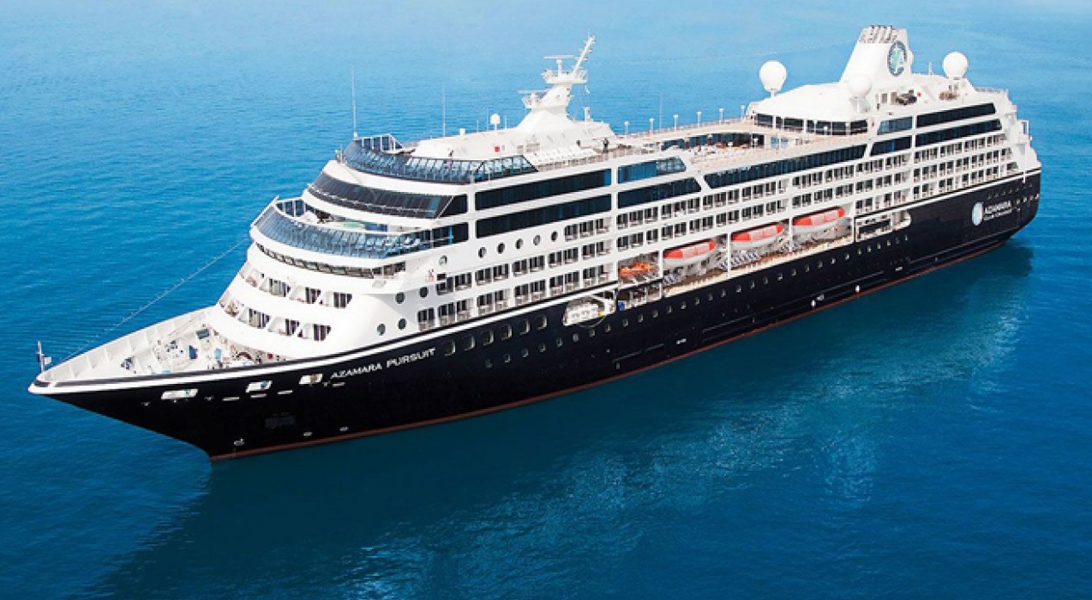

The images shown are for illustration purposes only and may not be an exact representation of what you find on the ship.
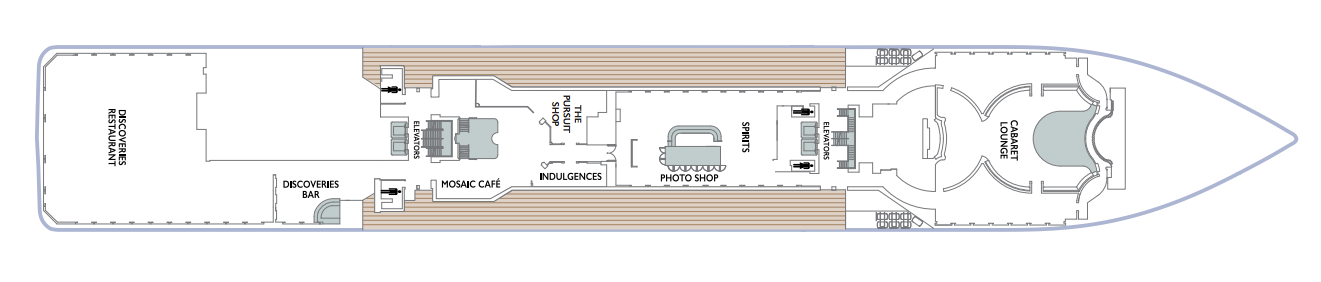
The images shown are for illustration purposes only and may not be an exact representation of what you find on the ship.
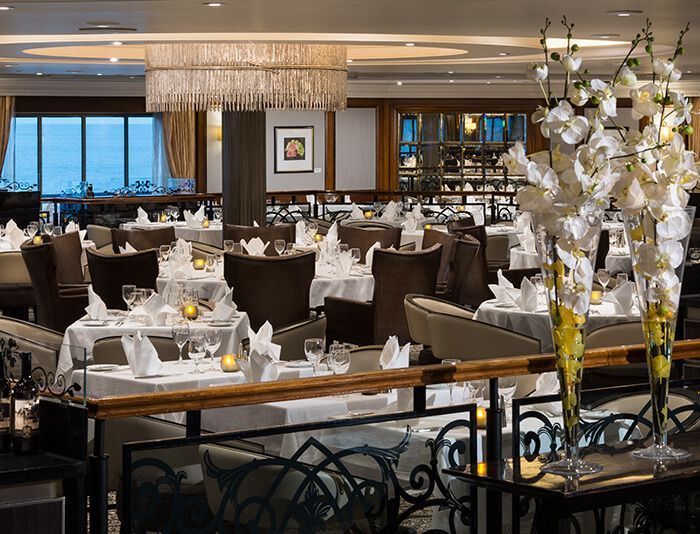
Discover the world through dishes and flavors from the places we visit. Of course, you’ll also enjoy a wide variety of nightly selections such as filet mignon with black truffle sauce. Choose being seated at a table for two or as part of a larger group of fellow guests.
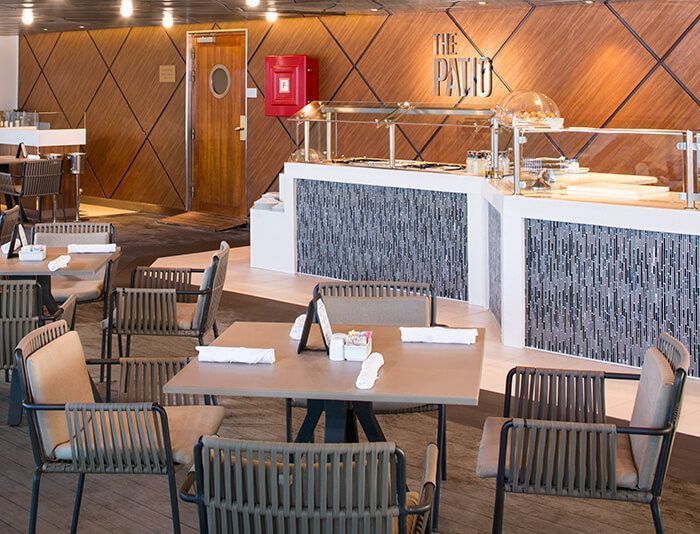
Casual “pool grill” by day. A sit-down al fresco dining experience by night. Taste your way around the world with exclusive personalized dishes using local flavors of the places we visit. Plus a self-serve frozen yogurt station—Swirl & Top. With a variety of flavors and your choice of toppings, it’s the perfect way to cool off.
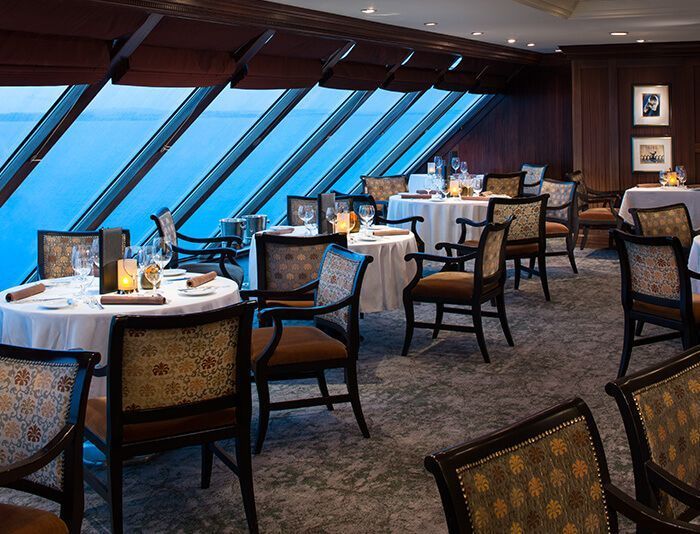
Our daily themed dinner often takes its inspiration from the region we’re visiting—Indian, Mexican, Spanish, Italian. We also create an extra live station made from local ingredients purchased in port: Greek salad made with local feta (Greece), pasta prepared with local mushrooms (Italy), fresh Mussels served with garlic bread (Netherlands).
The images shown are for illustration purposes only and may not be an exact representation of what you find on the ship.
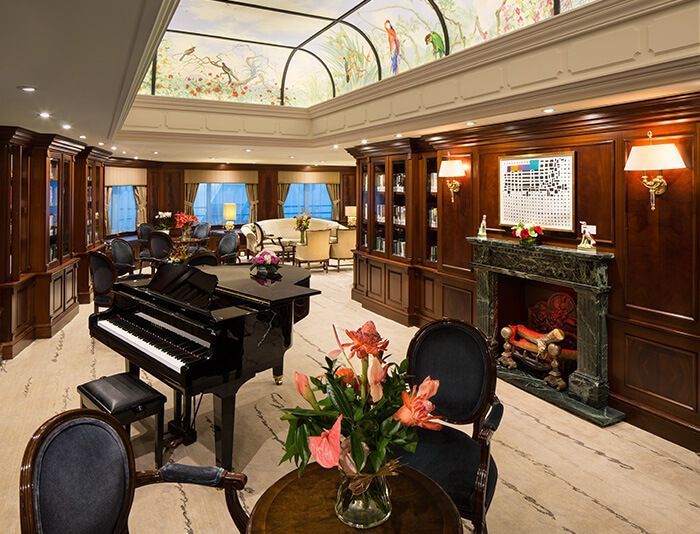
This library is one of the quiet jewels of Azamara, a peaceful and beautifully appointed space for reading or relaxing after dinner. Browse the collection and feel free to borrow the library books. Or simply relax in the tranquil atmosphere.
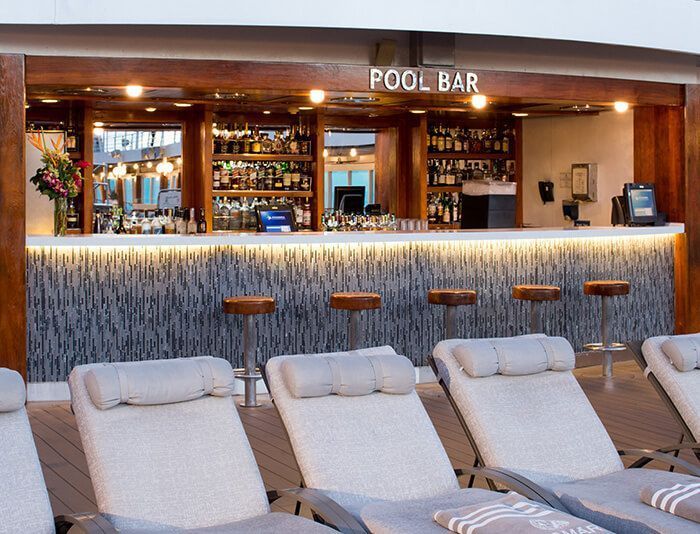
Our Pool Bar serves refreshments while enjoying the Pool during the day, and cocktails of your choice in the evening.
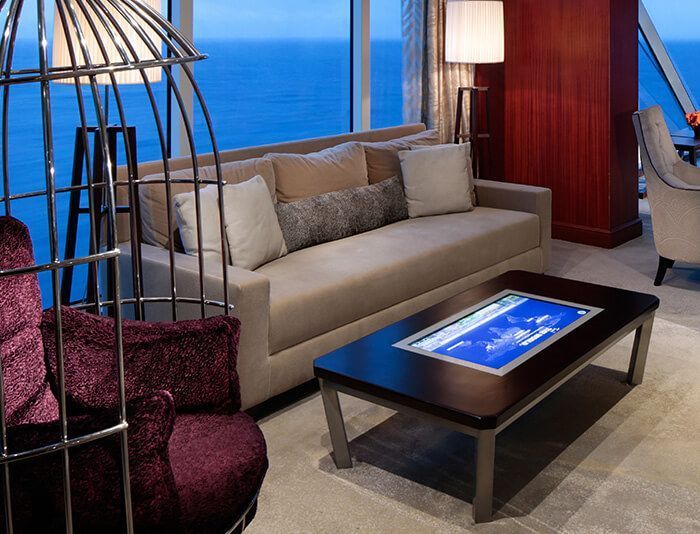
The idea of the Living Room is just that. To “live in” and to enjoy time with friends and fellow guests! Much of the room is furnished as a living room, with clusters of large comfortable chairs and sofas....
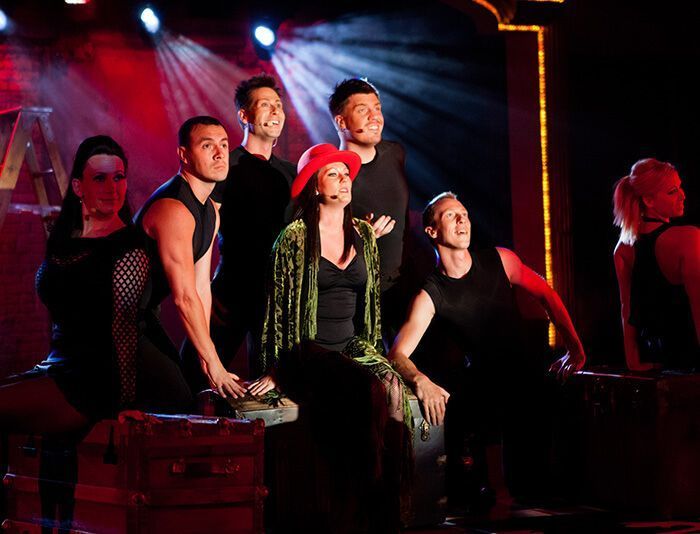
Enjoy live performances of professional full-stage musical revues, classical soloists, bands and other entertainment in a cabaret nightclub with a full bar and cozy tables.
The images shown are for illustration purposes only and may not be an exact representation of what you find on the ship.
The images shown are for illustration purposes only and may not be an exact representation of what you find on the ship.


Our Fusion packages are all ABTA & ATOL protected ensuring that your booking is safe with us
| 12 nights aboard the Azamara Pursuit | |||
| AzAmazing Evenings event on voyages over 7 nights | |||
| Pre-Paid Gratuities | |||
| Select standard spirits, international beers & wines | |||
| Free bottled water, soft drinks, specialty coffees & teas | |||
| Concierge services for personal guidance & reservations | |||
| Free self-service laundry | |||
| Shuttle service to & from port where available | |||
| English Butler Service for suite Guests | |||
| Port Taxes and Fees | |||
 | ABTA and ATOL Protection* | ||
Date 23rd Oct 2028 |
Nts 12 |
Interior £3,039pp |
Oceanview £2,959pp |
Balcony £3,779pp |
Suite £5,579pp |
Date 23rd Oct 2028 |
Nts 12 |
Interior £3,039pp |
Oceanview £2,959pp |
Balcony £3,779pp |
Suite £5,579pp |
| Interior staterooms from | £3,039pp | ||
| 9 | Club Interior Stateroom (Deck 8, Mid/Fwd) | £3,219pp | |
| 10 | Club Interior Stateroom (Deck 7, Mid) | £3,129pp | |
| 11 | Club Interior Stateroom (Deck 6,7, Fwd) | £3,039pp | |
| Oceanview staterooms from | £2,959pp | ||
| 5 | Club Oceanview Stateroom (Deck 4, Mid) | £3,459pp | |
| 6 | Club Oceanview Stateroom (Deck 4, Fwd) | £3,359pp | |
| 8 | Club Oceanview Stateroom (Deck 6, Obstructed) | £3,259pp | |
| Y | Oceanview Guarantee | £2,959pp | |
| Balcony staterooms from | £3,779pp | ||
| V1 | Club Veranda Stateroom (Deck 4) | £4,429pp | |
| V2 | Club Veranda Stateroom (Deck 7) | £4,309pp | |
| V3 | Club Veranda Stateroom (Deck 6) | £4,179pp | |
| X | Veranda Guarantee | £3,779pp | |
| P1 | Club Veranda Plus Stateroom (Decks 6,7,8, Aft/Fwd) | £5,279pp | |
| P2 | Club Veranda Plus Stateroom (Deck 8, Mid) | £5,129pp | |
| P3 | Club Veranda Plus Stateroom (Deck 8, Fwd) | £4,989pp | |
| XP | Club Veranda Plus Guarantee | £4,509pp | |
| Suite staterooms from | £5,579pp | ||
| N1 | Club Continent Suite (Deck 8, Mid) | £6,359pp | |
| N2 | Club Continent Suite (Deck 8, Aft) | £6,179pp | |
| W | Suite Guarantee | £5,579pp | |
Fusion Holidays when selling travel arrangements is a trading name of Co-op Travel Services Limited, registration 08903986. Fusion Cruises is an Accredited Body Member of Co-op Travel Services Limited ATOL 12904.
Book with Confidence. We are a Member of ABTA which means you have the benefit of ABTA’s assistance and Code of Conduct.
Some of the flights and flight-inclusive holidays on this website are financially protected by the ATOL scheme but ATOL protection does not apply to all holiday and travel services offered on this website. This website will provide you with information on the protection that applies in the case of each holiday and travel service offered before you make your booking. If you do not receive an ATOL Certificate then the booking will not be ATOL protected. If you do receive an ATOL Certificate but all parts of your trip are not listed on it, those parts will not be ATOL protected. Please see our booking conditions for information, or for more information about financial protection and the ATOL Certificate go to: www.caa.co.uk