This site uses cookies as defined in our Cookie Policy, by continuing to use this site you agree to their use.
Continue

Join us aboard this 11-night voyage that takes in some true gems of the Mediterranean. From Athens, we sail across to the Greek island of Naxos, with its sugar-cube houses and vast stretches of sand, before arriving in the medieval fortress town of Monemvasia. A day at sea brings us to La Goulette in Tunisia, close to the ruins of the ancient city of Carthage, before we enter Italian waters to discover Sardinia’s sandy beaches. Now to France: we visit Ajaccio in Corsica, Napoleon’s birthplace, followed by two days in glamorous Monte Carlo for a flutter of the dice in its iconic casino. ... Picturesque Toulon on the French Riviera is next, before a day at sea brings us to the spirited Spanish capital of Barcelona.
| Arrive | Depart | ||||||
| 21st21 | MayMay | 202828 | Piraeus, Greece, embark on the Crystal Serenity | 12:00 | 19:00 | ||
It's no wonder that all roads lead to the fascinating and maddening metropolis of Athens. Lift your eyes 200 feet above the city to the Parthenon, its honey-color marble columns rising from a massive limestone base, and you behold architectural perfection that has not been surpassed in 2,500 years. But, today, this shrine of classical form dominates a 21st-century boomtown. To experience Athens—Athína in Greek—fully is to understand the essence of Greece: ancient monuments surviving in a sea of cement, startling beauty amid the squalor, tradition juxtaposed with modernity. Locals depend on humor and flexibility to deal with the chaos; you should do the same. The rewards are immense. Although Athens covers a huge area, the major landmarks of the ancient Greek, Roman, and Byzantine periods are close to the modern city center. You can easily walk from the Acropolis to many other key sites, taking time to browse in shops and relax in cafés and tavernas along the way. From many quarters of the city you can glimpse "the glory that was Greece" in the form of the Acropolis looming above the horizon, but only by actually climbing that rocky precipice can you feel the impact of the ancient settlement. The Acropolis and Filopappou, two craggy hills sitting side by side; the ancient Agora (marketplace); and Kerameikos, the first cemetery, form the core of ancient and Roman Athens. Along the Unification of Archaeological Sites promenade, you can follow stone-paved, tree-lined walkways from site to site, undisturbed by traffic. Cars have also been banned or reduced in other streets in the historical center. In the National Archaeological Museum, vast numbers of artifacts illustrate the many millennia of Greek civilization; smaller museums such as the Goulandris Museum of Cycladic Art Museum and the Byzantine and Christian Museum illuminate the history of particular regions or periods. Athens may seem like one huge city, but it is really a conglomeration of neighborhoods with distinctive characters. The Eastern influences that prevailed during the 400-year rule of the Ottoman Empire are still evident in Monastiraki, the bazaar area near the foot of the Acropolis. On the northern slope of the Acropolis, stroll through Plaka (if possible by moonlight), an area of tranquil streets lined with renovated mansions, to get the flavor of the 19th-century's gracious lifestyle. The narrow lanes of Anafiotika, a section of Plaka, thread past tiny churches and small, color-washed houses with wooden upper stories, recalling a Cycladic island village. In this maze of winding streets, vestiges of the older city are everywhere: crumbling stairways lined with festive tavernas; dank cellars filled with wine vats; occasionally a court or diminutive garden, enclosed within high walls and filled with magnolia trees and the flaming trumpet-shaped flowers of hibiscus bushes. Formerly run-down old quarters, such as Thission, Gazi and Psirri, popular nightlife areas filled with bars and mezedopoleia (similar to tapas bars), are now in the process of gentrification, although they still retain much of their original charm, as does the colorful produce and meat market on Athinas. The area around Syntagma Square, the tourist hub, and Omonia Square, the commercial heart of the city about 1 km (½ mi) northwest, is distinctly European, having been designed by the court architects of King Otho, a Bavarian, in the 19th century. The chic shops and bistros of ritzy Kolonaki nestle at the foot of Mt. Lycabettus, Athens's highest hill (909 feet). Each of Athens's outlying suburbs has a distinctive character: in the north is wealthy, tree-lined Kifissia, once a summer resort for aristocratic Athenians, and in the south and southeast lie Glyfada, Voula, and Vouliagmeni, with their sandy beaches, seaside bars, and lively summer nightlife. Just beyond the city's southern fringes is Piraeus, a bustling port city of waterside fish tavernas and Saronic Gulf views. | |||||||
| 22nd22 | MayMay | 202828 | Naxos, Greece | 08:00 | 18:00 | ||
| 23rd23 | MayMay | 202828 | Monemvasía, Greece | 08:00 | 17:00 | ||
Monemvasia boasts a varied and colorful history that can be traced to the 8th-century when Greeks fleeing the Slav invasion of Lakonia found refuge here. In its heyday it controlled sea travel between the Levant and European shores. The wall-encircled Lower Town extends along the slopes of a 985-foot-high crag that projects into the sea on the east side of the Peloponnese. For centuries an impressive stronghold, population dwindled as the inhabitants moved to the mainland. But with the beginning of a restoration program aimed to preserve Monemvasia's heritage, the Lower Town experienced a new lease on life, and people have begun to return. The Upper Town is situated on top of the Rock of Monemvasia. It is reached via a zigzagging, paved lane. An almost impregnable bastion in earlier days, it has been uninhabited for centuries, but still manages to preserve its magnificent appearance. Visitors today can explore the remains of the ancient citadel-castle and visit the church of Hagia Sofia. From the summit there is also a fantastic view of the surrounding area. | |||||||
| 24th24 | MayMay | 202828 | At Sea | ||||
| 25th25 | MayMay | 202828 | Tunis, Tunisia | 08:00 | 20:00 | ||
South of the Tunisian capital Tunis, Sousse is an ancient city filled with culture and beauty that has become a lively resort for travellers. Take a walk down one of the expansive sandy beaches, explore the catacombs and shop at a traditional souq. The city mixes tradition with contemporary style to create a wonderful destination for visitors. | |||||||
| 26th26 | MayMay | 202828 | Cagliari, Italy | 08:00 | 17:00 | ||
Known in Sardinia as Casteddu, the island's capital has steep streets and impressive Italianate architecture, from modern to medieval. This city of nearly 160,000 people is characterized by a busy commercial center and waterfront with broad avenues and arched arcades, as well as by the typically narrow streets of the old hilltop citadel (called, simply, “Castello”). The Museo Archeologico makes a good starting point to a visit. The imposing Bastione di Saint Remy and Mercato di San Benedetto (one of the best fish markets in Italy) are both musts. | |||||||
| 27th27 | MayMay | 202828 | Ajaccio, Corsica, France | 09:00 | 18:00 | ||
Considered Corsica’s primary commercial and cultural hub, the largest city and regional capital of Ajaccio is situated on the west coast of the island, approximately 644 km (400 miles) southeast of Marseille, France. Founded in 1492, vestiges of ancient Corsica in this ville impériale revolve around the city’s most famous son, Napoléon Bonaparte, whose family home—now the national museum Maison Bonaparte—pays tribute to the emperor’s historical influence.Remnants from what was originally a 12th-century Genoese colony are still visible around the Old Town near the imposing citadel and watchtower. Perfect for exploring, the luminous seaside city surrounded by snowcapped mountains and pretty beaches offers numerous sites, eateries, side streets, and a popular harbor, where sailboats and fishing vessels moor in the picturesque Tino Rossi port lined with well-established restaurants and cafés serving fresh local fare. | |||||||
| 28th28 | MayMay | 202828 | Monte-Carlo, Monaco | 08:00 | |||
On one of the best stretches of the Mediterranean, this classic luxury destination is one of the most sought-after addresses in the world. With all the high-rise towers you have to look hard to find the Belle Époque grace of yesteryear. But if you head to the town's great 1864 landmark Hôtel de Paris—still a veritable crossroads of the buffed and befurred Euro-gentry—or enjoy a grand bouffe at its famous Louis XV restaurant, or attend the opera, or visit the ballrooms of the casino, you may still be able to conjure up Monaco's elegant past. Prince Albert II, a political science graduate from Amherst College, traces his ancestry to Otto Canella, who was born in 1070. The Grimaldi dynasty began with Otto's great-great-great-grandson, Francesco Grimaldi, also known as Frank the Rogue. Expelled from Genoa, Frank and his cronies disguised themselves as monks and in 1297 seized the fortified medieval town known today as Le Rocher (the Rock). Except for a short break under Napoléon, the Grimaldis have been here ever since, which makes them the oldest reigning family in Europe. In the 1850s a Grimaldi named Charles III made a decision that turned the Rock into a giant blue chip. Needing revenue but not wanting to impose additional taxes on his subjects, he contracted with a company to open a gambling facility. The first spin of the roulette wheel was on December 14, 1856. There was no easy way to reach Monaco then—no carriage roads or railroads—so no one came. Between March 15 and March 20, 1857, one person entered the casino—and won two francs. In 1868, however, the railroad reached Monaco, and it was filled with Englishmen who came to escape the London fog. The effects were immediate. Profits were so great that Charles eventually abolished all direct taxes. Almost overnight, a threadbare principality became an elegant watering hole for European society. Dukes (and their mistresses) and duchesses (and their gigolos) danced and dined their way through a world of spinning roulette wheels and bubbling champagne—preening themselves for nights at the opera, where such artists as Vaslav Nijinsky, Sarah Bernhardt, and Enrico Caruso came to perform. Along with the tax system, its sensational position on a broad, steep peninsula that bulges into the Mediterranean—its harbor sparkling with luxury cruisers, its posh mansions angling awnings toward the nearly perpetual sun—continues to draw the rich and famous. One of the latest French celebrities to declare himself "Monégasque," thus giving up his French passport, is superchef Alain Ducasse, who said that he made the choice out of affection for Monaco rather than tax reasons. Pleasure boats vie with luxury cruisers in their brash beauty and Titanic scale, and teams of handsome young men—themselves dyed blond and tanned to match—scour and polish every gleaming surface. As you might expect, all this glitz doesn't come cheap. Eating is expensive, and even the most modest hotels cost more here than in nearby Nice or Menton. As for taxis, they don't even have meters so you are completely at the driver's mercy (with prices skyrocketing during events such as the Grand Prix). For the frugal, Monaco is the ultimate day-trip, although parking is as coveted as a room with a view. At the very least you can afford a coffee at Starbucks. The harbor district, known as La Condamine, connects the new quarter, officially known as Monte Carlo with Monaco-Ville (or Le Rocher), a medieval town on the Rock, topped by the palace, the cathedral, and the Oceanography Museum. Have no fear that you'll need to climb countless steps to get to Monaco-Ville, as there are plenty of elevators and escalators climbing the steep cliffs. But shuttling between the lovely casino grounds of Monte Carlo and Old Monaco, separated by a vast port, is a daunting proposition for ordinary mortals without wings, so hop on the No. 1 bus from Saint Roman, or No. 2 from the Jardin Exotique - Both stop at Place du Casino and come up to Monaco Ville. | |||||||
| 29th29 | MayMay | 202828 | Monte-Carlo, Monaco | 21:00 | |||
On one of the best stretches of the Mediterranean, this classic luxury destination is one of the most sought-after addresses in the world. With all the high-rise towers you have to look hard to find the Belle Époque grace of yesteryear. But if you head to the town's great 1864 landmark Hôtel de Paris—still a veritable crossroads of the buffed and befurred Euro-gentry—or enjoy a grand bouffe at its famous Louis XV restaurant, or attend the opera, or visit the ballrooms of the casino, you may still be able to conjure up Monaco's elegant past. Prince Albert II, a political science graduate from Amherst College, traces his ancestry to Otto Canella, who was born in 1070. The Grimaldi dynasty began with Otto's great-great-great-grandson, Francesco Grimaldi, also known as Frank the Rogue. Expelled from Genoa, Frank and his cronies disguised themselves as monks and in 1297 seized the fortified medieval town known today as Le Rocher (the Rock). Except for a short break under Napoléon, the Grimaldis have been here ever since, which makes them the oldest reigning family in Europe. In the 1850s a Grimaldi named Charles III made a decision that turned the Rock into a giant blue chip. Needing revenue but not wanting to impose additional taxes on his subjects, he contracted with a company to open a gambling facility. The first spin of the roulette wheel was on December 14, 1856. There was no easy way to reach Monaco then—no carriage roads or railroads—so no one came. Between March 15 and March 20, 1857, one person entered the casino—and won two francs. In 1868, however, the railroad reached Monaco, and it was filled with Englishmen who came to escape the London fog. The effects were immediate. Profits were so great that Charles eventually abolished all direct taxes. Almost overnight, a threadbare principality became an elegant watering hole for European society. Dukes (and their mistresses) and duchesses (and their gigolos) danced and dined their way through a world of spinning roulette wheels and bubbling champagne—preening themselves for nights at the opera, where such artists as Vaslav Nijinsky, Sarah Bernhardt, and Enrico Caruso came to perform. Along with the tax system, its sensational position on a broad, steep peninsula that bulges into the Mediterranean—its harbor sparkling with luxury cruisers, its posh mansions angling awnings toward the nearly perpetual sun—continues to draw the rich and famous. One of the latest French celebrities to declare himself "Monégasque," thus giving up his French passport, is superchef Alain Ducasse, who said that he made the choice out of affection for Monaco rather than tax reasons. Pleasure boats vie with luxury cruisers in their brash beauty and Titanic scale, and teams of handsome young men—themselves dyed blond and tanned to match—scour and polish every gleaming surface. As you might expect, all this glitz doesn't come cheap. Eating is expensive, and even the most modest hotels cost more here than in nearby Nice or Menton. As for taxis, they don't even have meters so you are completely at the driver's mercy (with prices skyrocketing during events such as the Grand Prix). For the frugal, Monaco is the ultimate day-trip, although parking is as coveted as a room with a view. At the very least you can afford a coffee at Starbucks. The harbor district, known as La Condamine, connects the new quarter, officially known as Monte Carlo with Monaco-Ville (or Le Rocher), a medieval town on the Rock, topped by the palace, the cathedral, and the Oceanography Museum. Have no fear that you'll need to climb countless steps to get to Monaco-Ville, as there are plenty of elevators and escalators climbing the steep cliffs. But shuttling between the lovely casino grounds of Monte Carlo and Old Monaco, separated by a vast port, is a daunting proposition for ordinary mortals without wings, so hop on the No. 1 bus from Saint Roman, or No. 2 from the Jardin Exotique - Both stop at Place du Casino and come up to Monaco Ville. | |||||||
| 30th30 | MayMay | 202828 | Toulon, France | 08:00 | 18:00 | ||
| 31st31 | MayMay | 202828 | At Sea | ||||
| 1st01 | JunJun | 202828 | Barcelona, Spain, disembark the Crystal Serenity | 06:00 | |||
The infinite variety of street life, the nooks and crannies of the medieval Barri Gòtic, the ceramic tile and stained glass of Art Nouveau facades, the art and music, the throb of street life, the food (ah, the food!)—one way or another, Barcelona will find a way to get your full attention. The capital of Catalonia is a banquet for the senses, with its beguiling mix of ancient and modern architecture, tempting cafés and markets, and sun-drenched Mediterranean beaches. A stroll along La Rambla and through waterfront Barceloneta, as well as a tour of Gaudí's majestic Sagrada Famíliaand his other unique creations, are part of a visit to Spain's second-largest city. Modern art museums and chic shops call for attention, too. Barcelona's vibe stays lively well into the night, when you can linger over regional wine and cuisine at buzzing tapas bars. | |||||||
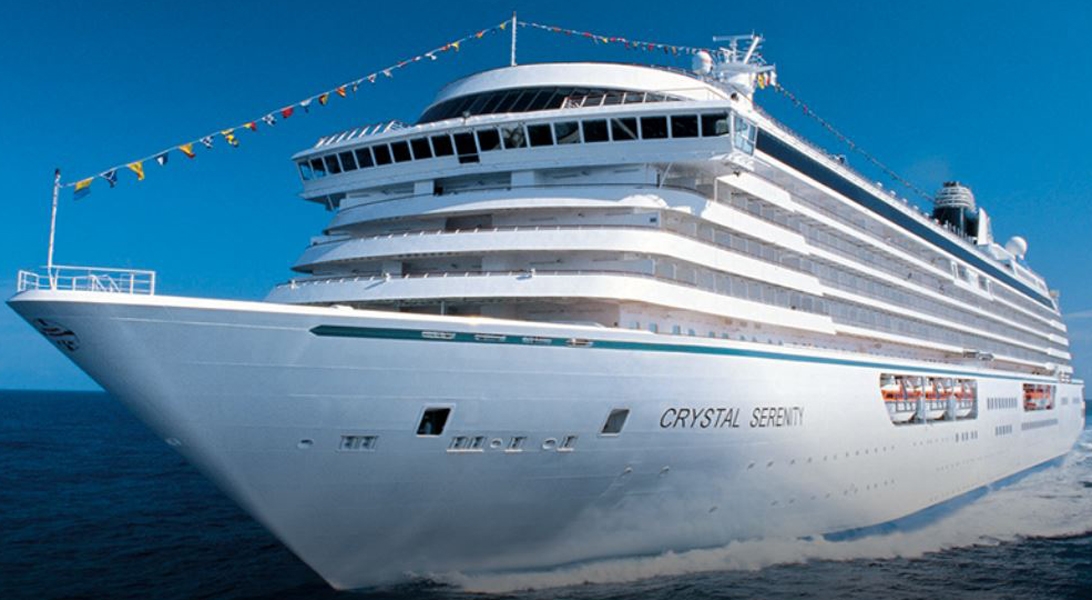
The images shown are for illustration purposes only and may not be an exact representation of what you find on the ship.
The images shown are for illustration purposes only and may not be an exact representation of what you find on the ship.

A nod to the mythic bars and bistros of Paris. Celebrate the classics in this spacious and airy café that serves light bites from dawn to dusk.
The Bistro is a delightful daytime relaxing cafe that offers delicious light meals, with panoramic views of the sparkling sea.
The images shown are for illustration purposes only and may not be an exact representation of what you find on the ship.

The ship's sleek cinema for recent-released movies, live sport events, guest lectures and religious services.

An ideal refreshment stop any time of the day, and the perfect place to meet friends for a pre-dinner cocktail. Enjoy a variety of musical styles as the day turns into night.

An elegant space to indulge in the finest cigars and cognacs.

Signature piano bar with an intimate ambience. The perfect setting for a cocktail before and after dinner.

Featuring large sky lights, floor-to-ceiling windows and a fabulous 270-degree forward view, this venue is perfect for afternoon tea, social gatherings and dancing.
The images shown are for illustration purposes only and may not be an exact representation of what you find on the ship.
The images shown are for illustration purposes only and may not be an exact representation of what you find on the ship.


Our Fusion packages are all ABTA & ATOL protected ensuring that your booking is safe with us
| 11 nights aboard the Crystal Serenity | |||
| Gratuities included | |||
| Complimentary drinks including wines, champagne, spirits throughout the ship | |||
| Award winning Broadway style entertainment | |||
| Complimentary speciality dining (one visit per restaurant) | |||
| Choice of shore excursions in every port | |||
| Butler Service | |||
| Enrichment programs & lectures | |||
| Complimentary shuttle buses in selected ports | |||
| Complimentary Wi-fi throughout the ship | |||
| Port Taxes and Fees | |||
 | ABTA and ATOL Protection* | ||
Date 21st May 2028 |
Nts 11 |
Oceanview £5,900pp |
Balcony £6,890pp |
Suite £7,160pp |
Date 21st May 2028 |
Nts 11 |
Oceanview £5,900pp |
Balcony £6,890pp |
Suite £7,160pp |
| Oceanview staterooms from | £5,900pp | ||
| GOW1 | Premium Ocean View | £5,900pp | |
| GOWS | Single Ocean View | £7,700pp | |
| Balcony staterooms from | £6,890pp | ||
| GVR2 | Deluxe Veranda | £6,890pp | |
| GVR1 | Premium Veranda | £7,250pp | |
| Suite staterooms from | £7,160pp | ||
| AVR3 | Aquamarine Suite | £7,160pp | |
| AVR2 | Aquamarine Deluxe Suite | £7,880pp | |
| SVR3 | Sapphire Suite | £8,960pp | |
| SVR2 | Sapphire Deluxe Suite | £9,230pp | |
| SVR1 | Sapphire Premium Suite | £9,590pp | |
| PJFW | Junior Penthouse Deluxe Suite | £16,970pp | |
| PJVS | Junior Penthouse Premium Suite | £19,310pp | |
| PHVS | Penthouse Suite | Call | |
| POWN | Crystal Owner's Suite | £29,030pp | |
Fusion Holidays when selling travel arrangements is a trading name of Co-op Travel Services Limited, registration 08903986. Fusion Cruises is an Accredited Body Member of Co-op Travel Services Limited ATOL 12904.
Book with Confidence. We are a Member of ABTA which means you have the benefit of ABTA’s assistance and Code of Conduct.
Some of the flights and flight-inclusive holidays on this website are financially protected by the ATOL scheme but ATOL protection does not apply to all holiday and travel services offered on this website. This website will provide you with information on the protection that applies in the case of each holiday and travel service offered before you make your booking. If you do not receive an ATOL Certificate then the booking will not be ATOL protected. If you do receive an ATOL Certificate but all parts of your trip are not listed on it, those parts will not be ATOL protected. Please see our booking conditions for information, or for more information about financial protection and the ATOL Certificate go to: www.caa.co.uk