This site uses cookies as defined in our Cookie Policy, by continuing to use this site you agree to their use.
Continue

| Arrive | Depart | ||||||
| 4th04 | SepSep | 202727 | Dubrovnik, Croatia, embark on the Emerald Azzurra | ||||
Nothing can prepare you for your first sight of Dubrovnik. Lying 216 km (135 miles) southeast of Split and commanding a jaw-dropping coastal location, it is one of the world's most beautiful fortified cities. Its massive stone ramparts and fortress towers curve around a tiny harbor, enclosing graduated ridges of sun-bleached orange-tiled roofs, copper domes, and elegant bell towers. Your imagination will run wild picturing what it looked like seven centuries ago when the walls were built, without any suburbs or highways around it, just this magnificent stone city rising out of the sea.In the 7th century AD, residents of the Roman city Epidaurum (now Cavtat) fled the Avars and Slavs of the north and founded a new settlement on a small rocky island, which they named Laus, and later Ragusa. On the mainland hillside opposite the island, the Slav settlement called Dubrovnik grew up. In the 12th century the narrow channel separating the two settlements was filled in (now the main street through the Old Town, called Stradun), and Ragusa and Dubrovnik became one. The city was surrounded by defensive walls during the 13th century, and these were reinforced with towers and bastions in the late 15th century.From 1358 to 1808 the city thrived as a powerful and remarkably sophisticated independent republic, reaching its golden age during the 16th century. In 1667 many of its splendid Gothic and Renaissance buildings were destroyed by an earthquake. The defensive walls survived the disaster, and the city was rebuilt in baroque style.Dubrovnik lost its independence to Napoléon in 1808, and in 1815 passed to Austria-Hungary. During the 20th century, as part of Yugoslavia, the city became a popular tourist destination, and in 1979 it was listed as a UNESCO World Heritage Site. During the war for independence, it came under heavy siege. Thanks to careful restoration, few traces of damage remain; however, there are maps inside the Pile and Ploče Gates illustrating the points around the city where damage was done. It’s only when you experience Dubrovnik yourself that you can understand what a treasure the world nearly lost Your Adriatic cruise begins in Croatia in the dazzling city of Dubrovnik. Here, you’ll be transferred to your Emerald luxury yacht to embark on a voyage to discover the hidden gems of the Croatian Riviera. Please book your flight to arrive into Dubrovnik prior to 06:00 PM. | |||||||
| 5th05 | SepSep | 202727 | Dubrovnik, Croatia | ||||
Nothing can prepare you for your first sight of Dubrovnik. Lying 216 km (135 miles) southeast of Split and commanding a jaw-dropping coastal location, it is one of the world's most beautiful fortified cities. Its massive stone ramparts and fortress towers curve around a tiny harbor, enclosing graduated ridges of sun-bleached orange-tiled roofs, copper domes, and elegant bell towers. Your imagination will run wild picturing what it looked like seven centuries ago when the walls were built, without any suburbs or highways around it, just this magnificent stone city rising out of the sea.In the 7th century AD, residents of the Roman city Epidaurum (now Cavtat) fled the Avars and Slavs of the north and founded a new settlement on a small rocky island, which they named Laus, and later Ragusa. On the mainland hillside opposite the island, the Slav settlement called Dubrovnik grew up. In the 12th century the narrow channel separating the two settlements was filled in (now the main street through the Old Town, called Stradun), and Ragusa and Dubrovnik became one. The city was surrounded by defensive walls during the 13th century, and these were reinforced with towers and bastions in the late 15th century.From 1358 to 1808 the city thrived as a powerful and remarkably sophisticated independent republic, reaching its golden age during the 16th century. In 1667 many of its splendid Gothic and Renaissance buildings were destroyed by an earthquake. The defensive walls survived the disaster, and the city was rebuilt in baroque style.Dubrovnik lost its independence to Napoléon in 1808, and in 1815 passed to Austria-Hungary. During the 20th century, as part of Yugoslavia, the city became a popular tourist destination, and in 1979 it was listed as a UNESCO World Heritage Site. During the war for independence, it came under heavy siege. Thanks to careful restoration, few traces of damage remain; however, there are maps inside the Pile and Ploče Gates illustrating the points around the city where damage was done. It’s only when you experience Dubrovnik yourself that you can understand what a treasure the world nearly lost Spend another fascinating day exploring the city of Dubrovnik. Be awed by the impressive Rector's Palace, a 15th-century Gothic Renaissance palace that was once the administrative centre of the city. Enjoy a drink on the Stradun, the main thoroughfare through the city, and take a walk along the ancient city walls for panoramic views over the rooftops and Adriatic Sea. | |||||||
| 6th06 | SepSep | 202727 | Trogir, Croatia | ||||
The tiny town of Trogir is a hidden gem, located on a small island between the Croatian mainland and Ciovo Island. For some of the most spectacular views of this photogenic town, climb the tower of the Cathedral of St Lawrence - the highest building in Trogir. | |||||||
| 7th07 | SepSep | 202727 | Zadar, Croatia | ||||
Dalmatia's capital for more than 1,000 years, Zadar is all too often passed over by travelers on their way to Split or Dubrovnik. What they miss out on is a city of more than 73,000 that is remarkably lovely and lively despite—and, in some measure, because of—its tumultuous history. The Old Town, separated from the rest of the city on a peninsula some 4 km (2½ miles) long and just 1,640 feet wide, is bustling and beautiful: the marble pedestrian streets are replete with Roman ruins, medieval churches, palaces, museums, archives, and libraries. Parts of the new town are comparatively dreary, a testament to what a world war followed by decades of communism, not to mention a civil war, can do to the architecture of a city that is 3,000 years old. A settlement had already existed on the site of the present-day city for some 2,000 years when Rome finally conquered Zadar in the 1st century BC; the foundations of the forum can be seen today. Before the Romans came the Liburnians had made it a key center for trade with the Greeks and Romans for 800 years. In the 3rd century BC the Romans began to seriously pester the Liburnians, but required two centuries to bring the area under their control. During the Byzantine era, Zadar became the capital of Dalmatia, and this period saw the construction of its most famous church, the 9th-century St. Donat's Basilica. It remained the region's foremost city through the ensuing centuries. The city then experienced successive onslaughts and occupations—both long and short—by the Osogoths, the Croatian-Hungarian kings, the Venetians, the Turks, the Habsburgs, the French, the Habsburgs again, and finally the Italians before becoming part of Yugoslavia and, in 1991, the independent republic of Croatia. Zadar was for centuries an Italian-speaking city, and Italian is still spoken widely, especially by older people. Indeed, it was ceded to Italy in 1921 under the Treaty of Rapallo (and reverted to its Italian name of Zara). Its occupation by the Germans from 1943 led to intense bombing by the Allies during World War II, which left most of the city in ruins. Zadar became part of Tito's Yugoslavia in 1947, prompting many Italian residents to leave. Zadar's most recent ravages occurred during a three-month siege by Serb forces and months more of bombardment during the Croatian-Serbian war between 1991 and 1995. But you'd be hard-pressed to find outward signs of this today in what is a city to behold. There are helpful interpretive signs in English all around the Old Town, so you certainly won't feel lost when trying to make sense of the wide variety of architectural sites you might otherwise pass by with only a cursory look. Zadar is something of a hidden Croatian gem, a captivating blend of ancient history and modern charm. As you stroll through its cobbled streets, encounter spectacular Roman ruins, including the well-preserved Roman Forum constructed between the first century BC and third century AD, and the majestic St. Donatus Church, a symbol of the city's rich heritage. You’ll be mesmerised by the Sea Organ, stone carvings along the promenade designed so the lapping waves create natural and hauntingly beautiful melodies. As the sun disappears, be captivated by Sun Salutation, a dazzling solar-powered installation that lights up at night. | |||||||
| 8th08 | SepSep | 202727 | Opatija, Croatia | ||||
Stroll along Opatija’s seaside promenade, and soak up the splendour, as you enjoy fresh sea air, the sight of waving yacht masts, and the presence of grand ocean-facing buildings. Historically a fashionable destination for European aristocracy, the city is just as in-demand today - with palatial structures watching out over an inviting blue sea, and a border of lush green mountains stretching around the city. Vibrant gardens, glorious weather and endless seafront combine to ensure that Croatia’s original tourist destination remains one of the country’s finest. On the western peninsula of Croatia, southwest of the large city of Rijeka, Opatija has alluring views across the Adriatic towards the Kvarner Islands and the distant Istrian Mountains. Known as the ‘Nice of Croatia’, Opatija was a seaside resort for the upper classes during the Austro-Hungarian Empire, and it retains its lovely seaside promenades, handsome villas and manicured parks and gardens. | |||||||
| 9th09 | SepSep | 202727 | Piran, Slovenia | ||||
Piran is a pretty town of red-tiled and whitewashed buildings clustered on the tip of Slovenia’s Piran Peninsula. Part of the Venetian Empire from the late 13th century to the end of the 18th century, Piran is known for its grand Gothic architecture. The town has a history of salt panning, and its landscape is dotted with olive groves and pebbly beaches. Restaurants line the waterfront and serve seafood direct from the Adriatic, as well as drawing inspiration from its Italian heritage with excellent gelaterias and pizzerias. | |||||||
| 10th10 | SepSep | 202727 | Venice, Italy | ||||
Venice is a city unlike any other. No matter how often you've seen it in photos and films, the real thing is more dreamlike than you could imagine. With canals where streets should be, water shimmers everywhere. The fabulous palaces and churches reflect centuries of history in what was a wealthy trading center between Europe and the Orient. Getting lost in the narrow alleyways is a quintessential part of exploring Venice, but at some point you'll almost surely end up in Piazza San Marco, where tourists and locals congregate for a coffee or an aperitif. Today, you will arrive in Venice, a 1,600-year-old city that is one of the world’s most iconic destinations. Built across 118 small islands in the Venetian Lagoon, it’s a place shaped by water, from its quiet canals to St Mark’s Basilica and the grand piazza in front. It’s a spectacular city to get lost in, with its maze-like alleyways and vibrant squares. With your luxury yacht docked here overnight, you can choose to linger over a drink at a tiny bar or glide along the canals by gondola as the city lights illuminate the water. | |||||||
| 11th11 | SepSep | 202727 | Venice, Italy | ||||
Venice is a city unlike any other. No matter how often you've seen it in photos and films, the real thing is more dreamlike than you could imagine. With canals where streets should be, water shimmers everywhere. The fabulous palaces and churches reflect centuries of history in what was a wealthy trading center between Europe and the Orient. Getting lost in the narrow alleyways is a quintessential part of exploring Venice, but at some point you'll almost surely end up in Piazza San Marco, where tourists and locals congregate for a coffee or an aperitif. The Italian ‘City of Canals,’ Venice, is an enchanting city that exudes an atmosphere not found elsewhere in the world. Established in the 5th century, the city stretches across 118 small islands in the marshy Venetian Lagoon along the Adriatic. Soak up the romance of the iconic canals and bridges and relish sailing out of Venice via the traditional passage past St. Mark's Basilica, a route exclusively reserved for a few cruise vessels. | |||||||
| 12th12 | SepSep | 202727 | Rovinj, Croatia | ||||
One of the true jewels of the Mediterranean, Rovinj is a jaw-droppingly beautiful town, which juts out into sparkling Mediterranean. Dominated by the pencil-like bell tower of the Venetian Saint Euphemia Cathedral, pine tree forests flow to the borders of the quaint Old Town - which evokes the romantic, tangled backstreets of the Venice. Rovinj - or Rovino in Italian - is a city of split personalities, with two official languages - having been owned by the Kingdom of Italy between 1919 and 1947. Located on Croatia’s Istrian Peninsula, the lovely town of Rovinj is interwoven with Italian influences. A rabbit warren of narrow, winding cobbled streets and small squares, Rovinj is a delight to explore on foot, strolling among the many colourful buildings and art galleries. On a hilltop, the belltower of the Baroque-style St Euphemia’s Church pierces the sky, while down below, the picturesque harbour is filled with fishing boats, a nod to the town’s seafaring and fishing traditions. | |||||||
| 13th13 | SepSep | 202727 | Sibenik, Croatia | ||||
Šibenik's main monument, its Gothic-Renaissance cathedral, built of pale-gray Dalmatian stone and designated a UNESCO World Heritage Site, stands on a raised piazza close to the seafront promenade. From here a network of narrow, cobbled streets leads through the medieval quarter of tightly packed, terra-cotta–roof houses, and up to the ruins of a 16th-century hilltop fortress. The city has never been a real tourist destination. Before the Croatian war for independence, it was a relatively prosperous industrial center, but when the factories closed, Šibenik sank into an economic depression. However, the cathedral more than warrants a look, and it makes a decent base for visiting the waterfalls of Krka National Park. First mentioned in written records in 1066, Šibenik is one of Croatia’s oldest towns. Nestled on the coast between Zadar and Split, it has been conquered by Venetians, Byzantines, Hungarians and Habsburgs, meaning there is a plethora of architectural styles to admire. This tiny city is home to two World Heritage-listed sites: the white-stone Saint James’ Cathedral, an architectural fusion of Gothic and Renaissance, and the 16th- and 17th-century fortress of St Nicholas. | |||||||
| 14th14 | SepSep | 202727 | Trogir, Croatia | ||||
Located on a small island between the Croatian mainland and Ciovo Island, World Heritage-listed Trogir is an ancient settlement with roots in the Hellenistic period, later shaped by Roman, Venetian and Croatian influences. It’s filled with Romanesque churches and Renaissance and Baroque buildings, with St Lawrence Cathedral dominating the old town square. Climb to the top of the bell tower for spectacular views over the town. Spend time people-watching on the wide seaside promenade, which is packed with bars and cafes. | |||||||
| 15th15 | SepSep | 202727 | Vis Island, Croatia | ||||
The island of Vis served as a Yugoslav military base from the 1950s until 1989, during which it was cut off to visitors and left vastly unpopulated. This has preserved the island’s authenticity and life here is laidback and unhurried, with a rocky coastline and azure waters. The town of Komiža, significantly developed during Venetian rule, is made up of narrow passageways and historic stone buildings. The island was used as a filming location for the sequel to the film Mamma Mia!, depicting the fictional Greek island of Kalokairi. | |||||||
| 16th16 | SepSep | 202727 | Hvar Island, Croatia | ||||
The Croatian island of Hvar bills itself as the "sunniest island in the Adriatic." Not only does it have the figures to back up this claim—an annual average of 2,724 hours of sunshine—but it also makes visitors a sporting proposition, offering them a money-back guarantee if there are seven consecutive days of snow (snow has been known to fall here; the last time being February 2012). Hvar is a photogenic jumble of whitewashed buildings topped with terracotta roofs, and beyond, picturesque rolling hills peppered with lavender fields, olive groves, and grapevines. The heart of Hvar is its Old Town, which reveals multiple layers of history and architectural wonders. These include the vast St Stephen’s Square, which is home to a cathedral built in the 16th and 17th centuries, and the restored Arsenal, which was used to repair and refit war galleons from the 17th century. Hvar is said to be the sunniest place in all of Croatia, so soak up the rays as you wander the yacht-lined harbour or make your way up to Fortica, the island’s medieval fortress that has sweeping views over Hvar and its neighbouring islands. | |||||||
| 17th17 | SepSep | 202727 | Korčula, Croatia | ||||
Off the coast of Croatia in the southern Adriatic Sea lie some thousand islands and the largest of them, Korçula, is considered the most beautiful. With an average of 3,000 hours of sunshine per annum, which guarantees a wide assortment of Mediterranean vegetation, it is not difficult to understand why seasoned travelers compare Korçula to a latter-day Eden. Separated from the mainland by a channel of only one mile, Korçula's main town, named the same as the island, ranks among the best preserved medieval towns in the Mediterranean. It is the island's main tourist, economic and cultural center. Thanks to its strategic location along the sea trade routes, Korçula has always attracted travelers and settlers. Korcula was founded by Greek colonists, who were followed by Illyrians, Romans and finally the Croats. The Korçula Statute of 1214 is one of the oldest legal documents to have been adopted in this part of Europe. The same century saw the birth of the famous world traveler, Marco Polo. The house said to be his birthplace can be seen in town. Korçulans have always been known as keen seafarers, excellent shipbuilders, stonemasons and artists. From their many voyages, sailors brought back new ideas, which eventually mixed with local customs. To this day, Korçula has maintained the tradition of performing knightly games such as the chivalrous Moreska dance, which has been in existence for more than 400 years. Visitors to Korçula enjoy its stunning location, natural beauty and medieval ambiance. And if that's not enough, the town offers numerous attractions that are within walking distance from the pier, including the City Museum and the Bishop's Treasury. A gem of the Adriatic, Korcula is among the most beloved islands in Croatia. It boasts a landscape of olive groves and vineyards, and a striking coast of white pebble beaches and azure waters. While there’s evidence the island has been inhabited since prehistoric times, the fortified old town is on UNESCO’s tentative list for its late medieval planning and has been referred to by the locals as ‘Little Dubrovnik’. It’s a delightful mix of medieval churches, elegant palaces and squares. See the impressive St Mark’s Cathedral, built in Gothic-Renaissance style, and the captivating Marco Polo Center, where you can understand the legacy of the explorer who is said to have been born here. The villages of Cara and Smokvica are renowned for producing the country’s signature dry white wine. | |||||||
| 18th18 | SepSep | 202727 | Dubrovnik, Croatia, disembark the Emerald Azzurra | ||||
Nothing can prepare you for your first sight of Dubrovnik. Lying 216 km (135 miles) southeast of Split and commanding a jaw-dropping coastal location, it is one of the world's most beautiful fortified cities. Its massive stone ramparts and fortress towers curve around a tiny harbor, enclosing graduated ridges of sun-bleached orange-tiled roofs, copper domes, and elegant bell towers. Your imagination will run wild picturing what it looked like seven centuries ago when the walls were built, without any suburbs or highways around it, just this magnificent stone city rising out of the sea.In the 7th century AD, residents of the Roman city Epidaurum (now Cavtat) fled the Avars and Slavs of the north and founded a new settlement on a small rocky island, which they named Laus, and later Ragusa. On the mainland hillside opposite the island, the Slav settlement called Dubrovnik grew up. In the 12th century the narrow channel separating the two settlements was filled in (now the main street through the Old Town, called Stradun), and Ragusa and Dubrovnik became one. The city was surrounded by defensive walls during the 13th century, and these were reinforced with towers and bastions in the late 15th century.From 1358 to 1808 the city thrived as a powerful and remarkably sophisticated independent republic, reaching its golden age during the 16th century. In 1667 many of its splendid Gothic and Renaissance buildings were destroyed by an earthquake. The defensive walls survived the disaster, and the city was rebuilt in baroque style.Dubrovnik lost its independence to Napoléon in 1808, and in 1815 passed to Austria-Hungary. During the 20th century, as part of Yugoslavia, the city became a popular tourist destination, and in 1979 it was listed as a UNESCO World Heritage Site. During the war for independence, it came under heavy siege. Thanks to careful restoration, few traces of damage remain; however, there are maps inside the Pile and Ploče Gates illustrating the points around the city where damage was done. It’s only when you experience Dubrovnik yourself that you can understand what a treasure the world nearly lost Your Emerald Cruises voyage concludes in the grand city of Dubrovnik, a World Heritage Site known as the Pearl of the Adriatic. The city is renowned for its breathtaking architecture of red terracotta-tiled roofs and white stone walls, striking against the turquoise waters that lap below. From your luxury yacht, you’ll be transferred to the airport for your journey home or to continue your holiday. Please book your flight to depart out of Dubrovnik after 12:00 PM. The itinerary is a guide only and may be amended for operational reasons. As such Emerald Cruises cannot guarantee the cruise will operated unaltered from the itinerary states above. Please refer to our terms and conditions for further information. | |||||||
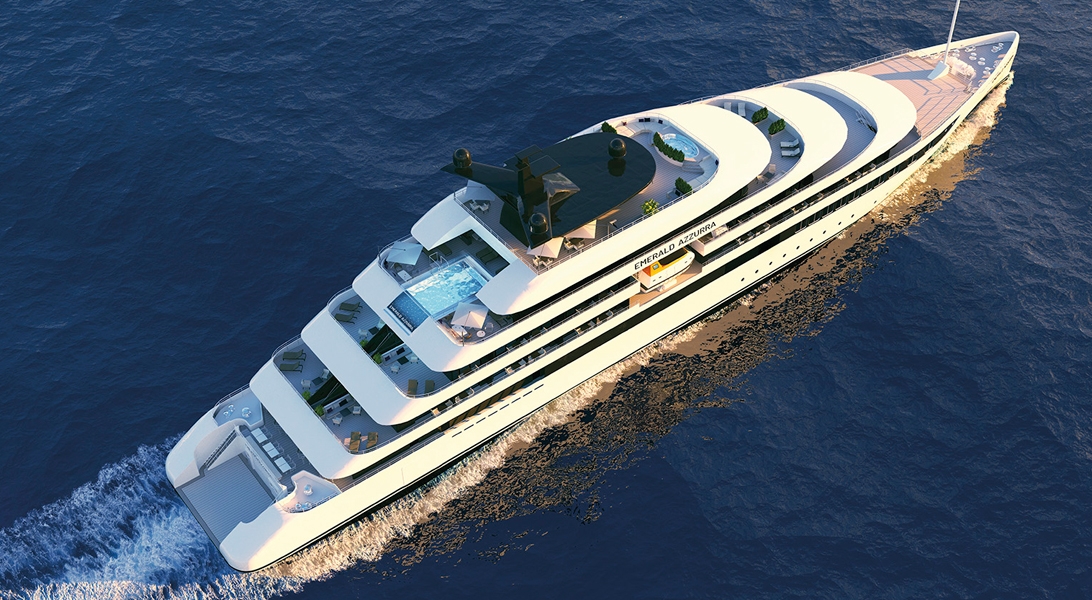
The images shown are for illustration purposes only and may not be an exact representation of what you find on the ship.

Situated on the Emerald Deck, towards the front of the yacht, our Oceanview Staterooms are bigger than the average standard, offering excellent value for money.
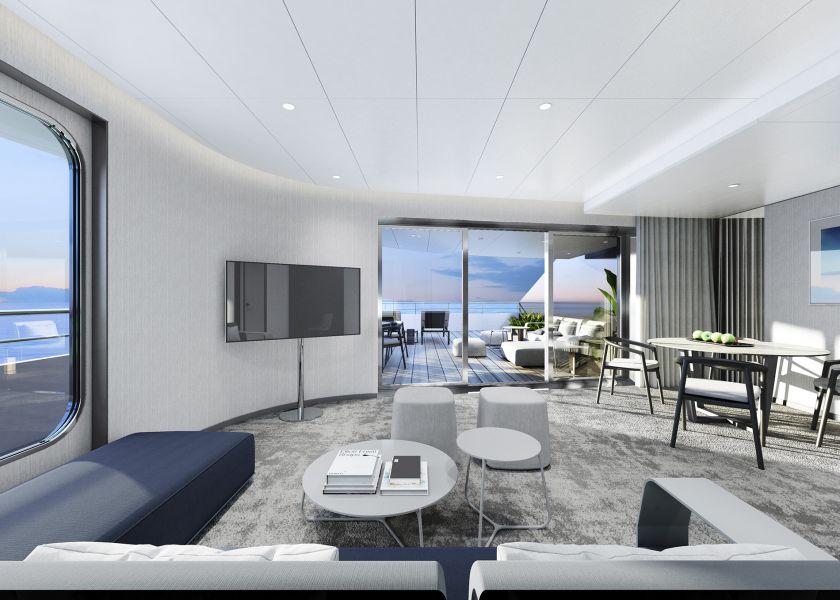
Our oversized Owner’s Suites are the largest and most opulent, located on the Pool Deck. Boasting a separate bedroom and lounge area, you’ll also enjoy your large private terrace, from which to admire the stunning views of each port you visit.
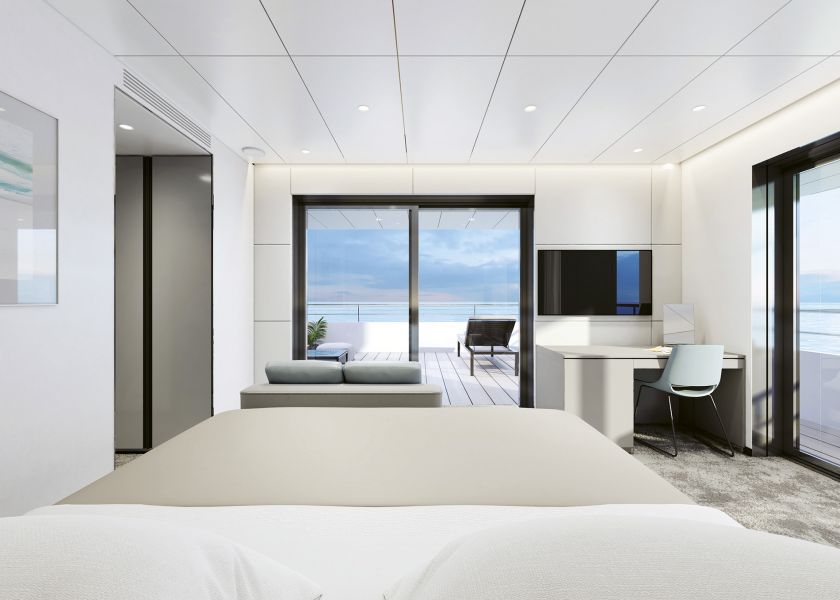
Our spacious Terrace Suites take pride of place at the back of the Panorama Deck and come complete with a large private terrace, pillow menu and the option to have two items laundered daily, perfect for preparing your wardrobe for a special occasion.
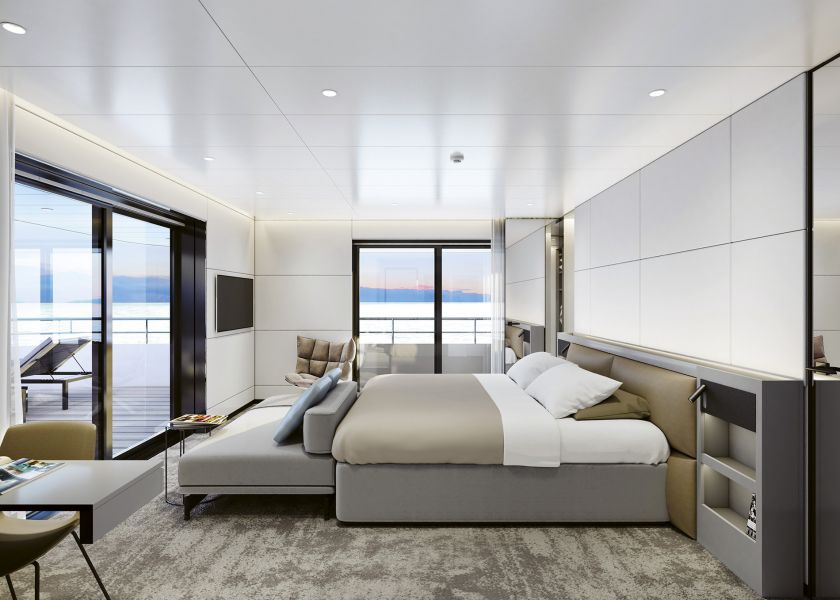
Positioned at the back of the Observation Deck, you’ll be treated to sensational ocean and coastal views from your own private terrace. You’ll also receive a number of luxury inclusions to help you make the most of your time in your Yacht Suite.
The images shown are for illustration purposes only and may not be an exact representation of what you find on the ship.
The images shown are for illustration purposes only and may not be an exact representation of what you find on the ship.
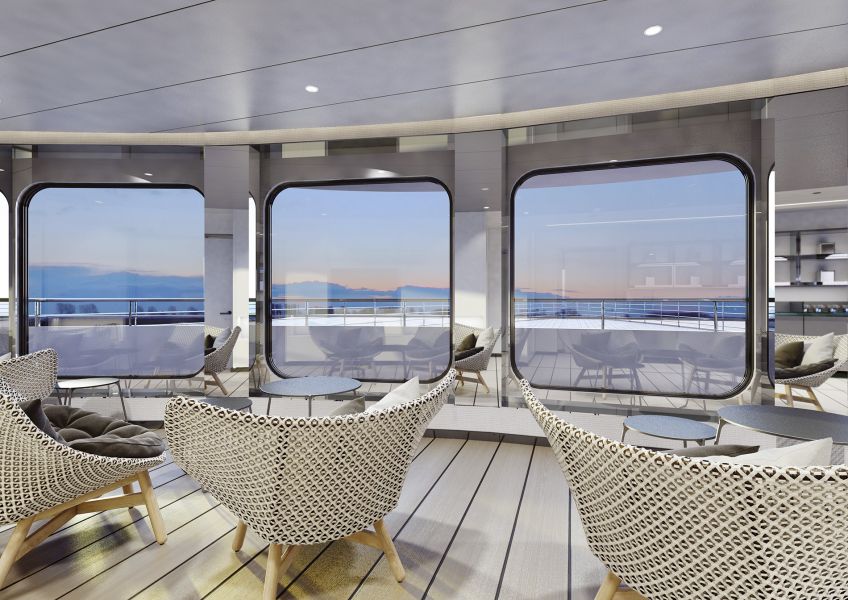
Head to the Observation Deck area for spectacular views or a morning yoga session. In the Observation Lounge, sit back and relax with a good book or play a game of chess.
The images shown are for illustration purposes only and may not be an exact representation of what you find on the ship.
The images shown are for illustration purposes only and may not be an exact representation of what you find on the ship.


Our Fusion packages are all ABTA & ATOL protected ensuring that your booking is safe with us
| 14 nights aboard the Emerald Azzurra | |||
| Return airport transfers | |||
| Wine, beer & soft drinks with lunch & dinner | |||
| Gratuities Included | |||
| One complimentary shore excursion in every port | |||
| Bikes for passenger use | |||
| Free Wi-Fi included | |||
| Port Taxes and Fees | |||
 | ABTA and ATOL Protection* | ||
Date 4th Sep 2027 |
Nts 14 |
Please Call for Availability |
Date 4th Sep 2027 |
Nts 14 |
Please Call for Availability |
Fusion Holidays when selling travel arrangements is a trading name of Co-op Travel Services Limited, registration 08903986. Fusion Cruises is an Accredited Body Member of Co-op Travel Services Limited ATOL 12904.
Book with Confidence. We are a Member of ABTA which means you have the benefit of ABTA’s assistance and Code of Conduct.
Some of the flights and flight-inclusive holidays on this website are financially protected by the ATOL scheme but ATOL protection does not apply to all holiday and travel services offered on this website. This website will provide you with information on the protection that applies in the case of each holiday and travel service offered before you make your booking. If you do not receive an ATOL Certificate then the booking will not be ATOL protected. If you do receive an ATOL Certificate but all parts of your trip are not listed on it, those parts will not be ATOL protected. Please see our booking conditions for information, or for more information about financial protection and the ATOL Certificate go to: www.caa.co.uk