This site uses cookies as defined in our Cookie Policy, by continuing to use this site you agree to their use.
Continue

| Arrive | Depart | ||||||
| 11th11 | OctOct | 202828 | Nice, France, embark on the Emerald Kaia | ||||
United with France only since 1860, Nice has its own history and atmosphere, which dates back 230,000 years. It was on Colline du Château (now château-less) and at the Plage des Ponchettes, in front of the Old Town, that the Greeks established a market-port in 350 BC and named it Nikaia, which would become Marseilles' chief coastal rival. The Romans established themselves a little later on the hills of Cimiez (Cemenelum), already previously occupied by Ligurians and Celts, and quickly overshadowed the waterfront port. After falling to the Saracen invasions, Nice regained power as an independent state, becoming an important port in the early Middle Ages.So cocksure did it become that in 1388, Nice, along with the hill towns behind, effectively seceded from the county of Provence, under Louis d'Anjou, and allied itself with Savoie. Thus began its liaison with the House of Savoy, and through it with Piedmont and Sardinia, it was the Comté de Nice (Nice County). This relationship lasted some 500 years, tinting the culture, architecture, and dialect in rich Italian hues.By the 19th century Nice was flourishing commercially, locked in rivalry with the neighboring shipping port of Genoa. Another source of income: the dawning of tourism, as first the English, then the Russian nobility, discovered its extraordinary climate and superb waterfront position. A parade of fine stone mansions and hotels closed into a nearly solid wall of masonry, separated from the smooth-round rocks of the beach by what was originally named Camin deis Anglés (the English Way), which of course is now the famous Promenade des Anglais. This magnificent crescent, which is seeking UNESCO recognition, is one of the noblest in France. Many of Nice's most delightful attractions—the Cours Saleya market, the Old Town streets, the Hotel Negresco, and the Palais Masséna—are on or close to this 10-km (6-mile) waterfront, making it the first stop for most visitors, while the redevelopment of Nice's port, around the other side of the Colline du Château, makes it easier for amblers who want to take in the Genoese architecture or peruse the antiques at the Puces de Nice, now part of the Promenade des 100 Antiquaires, along Quai Papacino. Nice also has the distinction of the "Family Plus" label, with free strollers, play areas, and restaurants with child-friendly activities. Your journey begins in the South of France, and the charming port city of Nice, on the chic French Riviera, or Côte d'Azur. From here, you’ll be transferred to your Emerald luxury yacht to begin a wondrous voyage through the alluring Western Mediterranean and its captivating rivieras. Please book your flight to arrive into Nice prior to 05:00 PM. | |||||||
| 12th12 | OctOct | 202828 | Saint-Tropez, France | ||||
At first glance, it really doesn't look all that impressive. There's a pretty port with cafés charging €5 for a coffee and a picturesque old town in sugared-almond hues, but there are many prettier in the hills nearby. There are sandy beaches, rare enough on the Riviera, and old-fashioned squares with plane trees and pétanque players, but these are a dime a dozen throughout Provence. So what made St-Tropez an internationally known locale? Two words: Brigitte Bardot. When this pulpeuse (voluptuous) teenager showed up in St-Tropez on the arm of Roger Vadim in 1956 to film And God Created Woman, the heads of the world snapped around. Neither the gentle descriptions of writer Guy de Maupassant (1850–93), nor the watercolor tones of Impressionist Paul Signac (1863–1935), nor the stream of painters who followed (including Matisse and Bonnard) could focus the world's attention on this seaside hamlet as did this one sensual woman in a scarf, Ray-Bans, and capris. Vanity Fair ran a big article, "Saint Tropez Babylon," detailing the over-the-top petrodollar parties, megayachts, and Beyoncé–d paparazzi. But don't be turned off: the next year, Stewart, Tabori & Chang released an elegant coffee-table book, Houses of St-Tropez, packed with photos of supremely tasteful and pretty residences, many occupied by fashion designers, artists, and writers. Once a hangout for Colette, Anaïs Nin, and Françoise Sagan, the town still earns its old moniker, the "Montparnasse of the Mediterranean." Yet you might be surprised to find that this byword for billionaires is so small and insulated. The lack of train service, casinos, and chain hotels keeps it that way. Yet fame, in a sense, came too fast for St-Trop. Unlike the chic resorts farther east, it didn't have the decades-old reputation of the sort that would attract visitors all year around. For a good reason: its location on the south side of the gulf puts it at the mercy of the terrible mistral winter winds. So, in summer the crowds descend and the prices rise into the stratosphere. In July and August, you must be carefree about the sordid matter of cash. After all, at the most Dionysian nightclub in town, a glass of tap water goes for $37 and when the mojo really gets going, billionaires think nothing of "champagne-spraying" the partying crowds—think World Series celebrations but with $1,000 bottles of Roederer Cristal instead of Gatorade. Complaining about summer crowds, overpricing, and lack of customer service has become a tourist sport and yet this is what makes St-Tropez—described by the French daily newspaper Le Figaro as the place you can see "the greatest number of faces per square meter"—as intriguing as it is seductive. The resort town of Saint-Tropez is one of the most famous holiday destinations in Europe and has been drawing celebrities, royals and the elite for more than 70 years. From the soft white sand edging blue water to the on-trend beach clubs, decadent dining and luxury boutiques, Saint-Tropez is the ultimate French Riviera experience. For history buffs, learn the story of Saint-Tropez at the Musée d'Histoire Maritime, or peruse the incredible modern art inside a former chapel of the Musée de l’Annonciade. | |||||||
| 13th13 | OctOct | 202828 | At Sea | ||||
| 14th14 | OctOct | 202828 | Barcelona, Spain | ||||
The infinite variety of street life, the nooks and crannies of the medieval Barri Gòtic, the ceramic tile and stained glass of Art Nouveau facades, the art and music, the throb of street life, the food (ah, the food!)—one way or another, Barcelona will find a way to get your full attention. The capital of Catalonia is a banquet for the senses, with its beguiling mix of ancient and modern architecture, tempting cafés and markets, and sun-drenched Mediterranean beaches. A stroll along La Rambla and through waterfront Barceloneta, as well as a tour of Gaudí's majestic Sagrada Famíliaand his other unique creations, are part of a visit to Spain's second-largest city. Modern art museums and chic shops call for attention, too. Barcelona's vibe stays lively well into the night, when you can linger over regional wine and cuisine at buzzing tapas bars. Barcelona is the capital of Catalonia and one of Spain’s largest and most dynamic cities. Its rich cultural heritage is reflected in its museums, music and culinary scene, and the city is home to several World Heritage sites, including the famous Sagrada Família basilica and other modernist landmarks designed by Antoni Gaudí. Barcelona’s Mediterranean climate, stunning architecture and bustling nightlife, make it one of Europe’s most popular destinations. | |||||||
| 15th15 | OctOct | 202828 | Palma de Mallorca, Spain | ||||
If you look north of the cathedral (La Seu, or the seat of the bishopric, to Mallorcans) on a map of the city of Palma, you can see around the Plaça Santa Eulàlia a jumble of tiny streets that made up the earliest settlement. Farther out, a ring of wide boulevards traces the fortifications built by the Moors to defend the larger city that emerged by the 12th century. The zigzags mark the bastions that jutted out at regular intervals. By the end of the 19th century, most of the walls had been demolished; the only place where you can still see the massive defenses is at Ses Voltes, along the seafront west of the cathedral.A torrent (streambed) used to run through the middle of the old city, dry for most of the year but often a raging flood in the rainy season. In the 17th century it was diverted to the east, along the moat that ran outside the city walls. Two of Palma's main arteries, La Rambla and the Passeig d'es Born, now follow the stream's natural course. The traditional evening paseo (promenade) takes place on the Born.If you come to Palma by car, park in the garage beneath the Parc de la Mar (the ramp is just off the highway from the airport, as you reach the cathedral) and stroll along the park. Beside it run the huge bastions guarding the Almudaina Palace; the cathedral, golden and massive, rises beyond. Where you exit the garage, there's a ceramic mural by the late Catalan artist and Mallorca resident Joan Miró, facing the cathedral across the pool that runs the length of the park.If you begin early enough, a walk along the ramparts at Ses Voltes from the mirador beside the cathedral is spectacular. The first rays of the sun turn the upper pinnacles of La Seu bright gold and then begin to work their way down the sandstone walls. From the Parc de la Mar, follow Avinguda Antoni Maura past the steps to the palace. Just below the Plaça de la Reina, where the Passeig d'es Born begins, turn left on Carrer de la Boteria into the Plaça de la Llotja (if the Llotja itself is open, don't miss a chance to visit—it's the Mediterranean's finest Gothic-style civic building). From there stroll through the Plaça Drassana to the Museu d'Es Baluard, at the end of Carrer Sant Pere. Retrace your steps to Avinguda Antoni Maura. Walk up the Passeig d'es Born to Plaça Joan Carles I, then right on Avenida de La Unió. Towering palm trees, golden stone buildings and glorious sunshine (with more than 300 sunny days a year) welcome you to Palma, the capital of the Balearic Islands on the island of Mallorca. This is a city steeped in history, founded by the Romans and adorned with remarkable architecture. One of Palma's most notable landmarks is the stunning Cathedral of Santa Maria, a masterpiece of Gothic architecture with one of the largest rose windows – a decorated circular window with stained glass – in the world. The island is also famous for its unspoilt beaches, where you can relax on quiet coves or feel the beat at one of the lively beach clubs. | |||||||
| 16th16 | OctOct | 202828 | Valencia, Spain | ||||
Valencia, Spain's third-largest municipality, is a proud city with a thriving nightlife and restaurant scene, quality museums, and spectacular contemporary architecture, juxtaposed with a thoroughly charming historic quarter, making it a popular destination year in year out. During the Civil War, it was the last seat of the Republican Loyalist government (1935–36), holding out against Franco’s National forces until the country fell to 40 years of dictatorship. Today it represents the essence of contemporary Spain—daring design and architecture along with experimental cuisine—but remains deeply conservative and proud of its traditions. Though it faces the Mediterranean, Valencia's history and geography have been defined most significantly by the River Turia and the fertile huerta that surrounds it.The city has been fiercely contested ever since it was founded by the Greeks. El Cid captured Valencia from the Moors in 1094 and won his strangest victory here in 1099: he died in the battle, but his corpse was strapped into his saddle and so frightened the besieging Moors that it caused their complete defeat. In 1102 his widow, Jimena, was forced to return the city to Moorish rule; Jaume I finally drove them out in 1238. Modern Valencia was best known for its frequent disastrous floods until the River Turia was diverted to the south in the late 1950s. Since then the city has been on a steady course of urban beautification. The lovely bridges that once spanned the Turia look equally graceful spanning a wandering municipal park, and the spectacularly futuristic Ciutat de les Arts i les Ciències (City of Arts and Sciences), most of it designed by Valencia-born architect Santiago Calatrava, has at last created an exciting architectural link between this river town and the Mediterranean. If you're in Valencia, an excursion to Albufera Nature Park is a worthwhile day trip. Celebrated for its juicy, sweet oranges, Valencia is also a hub of avant-garde architecture and design, particularly embodied by the futuristic City of Arts and Sciences. A symbol of the New Valencia, this complex is a striking example of modern architecture, with its fluid lines and reflective pools sitting in stark contrast to the traditional construction of the city's old town. Valencia is also the birthplace of paella, a flavourful mix of rice, seafood, vegetables and saffron that is regarded as Spain’s national dish. | |||||||
| 17th17 | OctOct | 202828 | Alicante, Spain | ||||
The provincial capital of the Valencian Community serves as a gateway to the huge influx of tourists that flock to the Costa Blanca resorts every year. Alicante is popular with holidaymakers who arrive for the warm, Mediterranean climate and seemingly endless golden beaches. However, there is much more to this city than sand and sun. With a picturesque waterfront, a hugely impressive castle, buzzing nightlife and a rich, complex history, Alicante is a fascinating destination all year round. Part of the Costa Blanca, Alicante has a lovely Mediterranean climate, with hot summers and mild winters, making it a popular holiday destination year-round. It’s known for beautiful beaches such as Playa de San Juan and Playa del Postiguet, which entice travellers from around the world. In the heart of Alicante stands the Castle of Santa Bárbara, dating back to the ninth century. | |||||||
| 18th18 | OctOct | 202828 | Cartagena, Spain | ||||
A Mediterranean city and naval station located in the Region of Murcia, southeastern Spain, Cartagena’s sheltered bay has attracted sailors for centuries. The Carthaginians founded the city in 223BC and named it Cartago Nova; it later became a prosperous Roman colony, and a Byzantine trading centre. The city has been the main Spanish Mediterranean naval base since the reign of King Philip II, and is still surrounded by walls built during this period. Cartagena’s importance grew with the arrival of the Spanish Bourbons in the 18th century, when the Navidad Fortress was constructed to protect the harbour. In recent years, traces of the city’s fascinating past have been brought to light: a well-preserved Roman Theatre was discovered in 1988, and this has now been restored and opened to the public. During your free time, you may like to take a mini-cruise around Cartagena's historic harbour: these operate several times a day, take approximately 40 minutes and do not need to be booked in advance. Full details will be available at the port. Cartagena, on the Mediterranean's Costa Cálida, was one of the most important naval ports in Spain until the 18th century. This port town on the southeastern corner of the Iberian Peninsula has been inhabited by several cultures that have left their mark on its heritage over more than 2,200 years. From its Roman Amphitheatre to the Torre Ciega, a monument to the ancient Roman necropolis, there is no shortage of sights to amaze you here. | |||||||
| 19th19 | OctOct | 202828 | Almería, Spain | ||||
The seaside city of Almería has an enticing mix of relaxation and energetic culture. The vast beaches are popular for sailing, swimming and sunbathing, and the palm-lined esplanade along the harbour is a lovely spot for a stroll. Almeria is renowned for its lively tapas culture – start your evening with tasty morsels and drinks at a local bar, then watch the dancefloors come alive as the night unfolds. | |||||||
| 20th20 | OctOct | 202828 | Málaga, Spain | ||||
As you sail into Malaga you will notice what an idyllic setting the city enjoys on the famous Costa del Sol. To the east of this provincial capital, the coast along the region of La Axarqua is scattered with villages, farmland and sleepy fishing hamlets - the epitome of traditional rural Spain. To the west stretches a continuous city where the razzmatazz and bustle creates a colourful contrast that is easily recognisable as the Costa del Sol. Surrounding the region, the Penibéetica Mountains provide an attractive backdrop overlooking the lower terraced slopes which yield olives and almonds. This spectacular mountain chain shelters the province from cold northerly winds, giving it a reputation as a therapeutic and exotic place in which to escape from cold northern climes. Malaga is also the gateway to many of Andalusia's enchanting historic villages, towns and cities. After breakfast, set off to explore Malaga on your own. In the afternoon, you’ll be welcomed back on board your luxury Emerald yacht for the second half of your journey, ready to explore more of the wonders of the West Mediterranean. | |||||||
| 21st21 | OctOct | 202828 | Almería, Spain | ||||
The Andalusian city of Almería has an enticing mix of relaxation and rich culture. The vast beaches are popular for swimming and sunbathing, and the palm-lined esplanade along the harbour is a lovely spot for a stroll. The surrounding landscape is striking and is recognised as the only desert in mainland Europe. Almeria is renowned for its lively tapas culture – start with tasty morsels and drinks at a local bar and watch flamenco bars come alive as evening unfolds. | |||||||
| 22nd22 | OctOct | 202828 | Melilla, Spain | ||||
The autonomous city of Melilla is a Spanish enclave located on the Mediterranean Rif coast of North Africa, bordering Morocco. Its chequered past embraced periods of Phoenician, Punic, Roman and Byzantine rule before it was conquered by Spain in 1497. The latter part of the 19th century and the first quarter of the 20th century saw hostilities between Rif berbers and the Spanish, with the latter finally reinstating their control in 1927. The city was used by General Franco as one of the staging points for the rebellion of 1936. As part of the Spanish protectorate, Melilla developed the architectural style of 'Modernisme', the Catalan version of Art Nouveau, and boasts the second most important concentration of Modernist works in Spain, after Barcelona. Spanish autonomous city on the North African coast, Melilla fuses Spanish plazas with Moroccan souks. Its population is a lively blend of Iberian and Berber, which can be seen in everything from the architecture to the cuisine. Explore the Modernist work of Gaudí disciple Francisco Hernández Robles, climb the fortress walls or taste Moroccan pastilla alongside tapas in duty-free harmony. | |||||||
| 23rd23 | OctOct | 202828 | Gibraltar, Gibraltar | ||||
Tagged on to the end of Iberia, the intriguing British outpost of Gibraltar is dominated by a sandy peninsula and the stunning 1,400-feet-high limestone Rock. Although small, Gibraltar has always been seen as having great strategic importance on account of its advantageous position where the Atlantic meets the Mediterranean, just 12 miles from the coast of Africa. Ever popular with British holidaymakers, Gibraltar is very much a home from home, boasting excellent duty-free shopping in many familiar British high street shops. Please note: Gibraltar’s small size and narrow winding roads mean that excursions are operated by 22-seater mini-buses, accompanied by a driver/guide. Local health and safety regulations prohibit the carriage of walking aids and collapsible wheelchairs on these vehicles. If you do wish to bring a mobility aid, we can arrange the Rock Tour by taxi, which has extra space. If this suits your requirements, please advise the Tours and Travel office when you join the ship, as numbers are limited. The British Overseas Territory of Gibraltar is set at the southern tip of the Iberian Peninsula and guards the Mediterranean's entrance. Since the 18th century, Gibraltar has been a symbol of British naval strength and still retains a unique British atmosphere, with pubs, English shops and even a few classic red phone booths. Discover this fortified base and admire the famous Rock of Gibraltar. Climb to O'Hara's Battery for panoramic views of Africa across the Strait, meet the Barbary macaques and explore the 18th-century Great Siege Tunnels. St. Michael's Cave offers stunning stalactite formations. | |||||||
| 24th24 | OctOct | 202828 | Tangier, Morocco | ||||
Tangier can trace its origins back to the Phoenicians and ancient Greeks. It was named after Tinge, the mother of Hercules’ son, and its beginnings are embedded in mythology. It was subsequently a Roman province, and after Vandal and Byzantine influences, was occupied by the Arabs with Spain, Portugal, France and England also playing a part in the city’s history. With such a diverse past it is perhaps not surprising that Tangier is such an individual city. Overlooking the Straits of Gibraltar, the city lies on a bay between two promontories. With its old Kasbah, panoramic views, elegant buildings, squares and places of interest, there is much to discover in both the new and old parts of the city. Cross the Strait of Gibraltar to the North African coast and the city of Tangier, Morocco. This ancient port seduces with its exotic medina labyrinth, fragrant spice souks, and kasbah palace overlooking the Strait. Where Africa meets Europe, this port city blends Moorish riads, French colonial villas, and bustling cafés serving mint tea and fresh tagine. | |||||||
| 25th25 | OctOct | 202828 | Cádiz, Spain | ||||
Believed to be the oldest town on the Iberian Peninsula, the Andalusian port of Cádiz enjoys a stunning location at the edge of a six-mile promontory. The town itself, with 3,000 years of history, is characterised by pretty white houses with balconies often adorned with colourful flowers. As you wander around be sure to take a stroll through the sizeable Plaza de Espãna, with its large monument dedicated to the first Spanish constitution, which was signed here in 1812. Cádiz has two pleasant seafront promenades which boast fine views of the Atlantic Ocean, and has a lovely park, the Parque Genoves, located close to the sea with an open-air theatre and attractive palm garden. Also notable is the neo-Classical cathedral, capped by a golden dome. One of Europe’s oldest cities, Cádiz is a jewel on Spain’s Atlantic coast, where history and seaside charm blend effortlessly. Surrounded almost entirely by water, this vibrant Andalusian city enchants visitors with its golden beaches, lively plazas, and winding old-town streets. Climb the 18th-century Torre Tavira for panoramic views, explore centuries-old fortresses and savour fresh seafood in bustling local taverns. With its rich maritime heritage, festive spirit and warm coastal atmosphere, Cádiz offers an authentic taste of southern Spain. | |||||||
| 26th26 | OctOct | 202828 | Seville, Spain | ||||
Whether you pronounce it Seville or Sevilla, this gorgeous Spanish town is most certainly the stuff of dreams. Over 2,200 years old, Seville has a mutli-layered personality; home to Flamenco, high temperatures and three UNESCO-World Heritage Sites, there is a noble ancestry to the southern Spanish town. Not forgetting that it is the birthplace of painter Diego Velazquez, the resting place of Christopher Columbus, the inspiration for Bizet’s Carmen and a location for Game of Thrones filming, Seville is truly more than just a sum of its parts. This city is a full on experience, a beguiling labyrinth of centuries old streets, tiny tapas restaurants serving possibly the best dishes you’ll taste south of Madrid and a paradise of Mudejar architecture and tranquil palm trees and fountain-filled gardens. Seville is the passionate heart of Andalusia, where flamenco rhythms, Moorish architecture, and vibrant street life create an unforgettable atmosphere. Wander through the enchanting Alcázar palace, admire the grandeur of the Gothic Seville Cathedral and its iconic Giralda tower, and lose yourself in the charming lanes of the Santa Cruz quarter. Orange-scented courtyards, lively tapas bars, and horse-drawn carriages add to the city’s timeless romance. Rich in history and brimming with culture, Seville captures the true spirit of southern Spain. Your yacht will remain docked in the heart of the city overnight, so you can go ashore to discover Seville’s vibrant nightlife. | |||||||
| 27th27 | OctOct | 202828 | Seville, Spain, disembark the Emerald Kaia | ||||
Whether you pronounce it Seville or Sevilla, this gorgeous Spanish town is most certainly the stuff of dreams. Over 2,200 years old, Seville has a mutli-layered personality; home to Flamenco, high temperatures and three UNESCO-World Heritage Sites, there is a noble ancestry to the southern Spanish town. Not forgetting that it is the birthplace of painter Diego Velazquez, the resting place of Christopher Columbus, the inspiration for Bizet’s Carmen and a location for Game of Thrones filming, Seville is truly more than just a sum of its parts. This city is a full on experience, a beguiling labyrinth of centuries old streets, tiny tapas restaurants serving possibly the best dishes you’ll taste south of Madrid and a paradise of Mudejar architecture and tranquil palm trees and fountain-filled gardens. Your luxurious yacht cruise concludes in Seville, where you’ll be transferred to the airport for your return flight home or to continue your holiday. Please book your flight to depart out of Seville after 11:00 AM. The itinerary is a guide only and may be amended for operational reasons. As such, Emerald Cruises cannot guarantee the cruise will be operated unaltered from the itinerary stated above. | |||||||
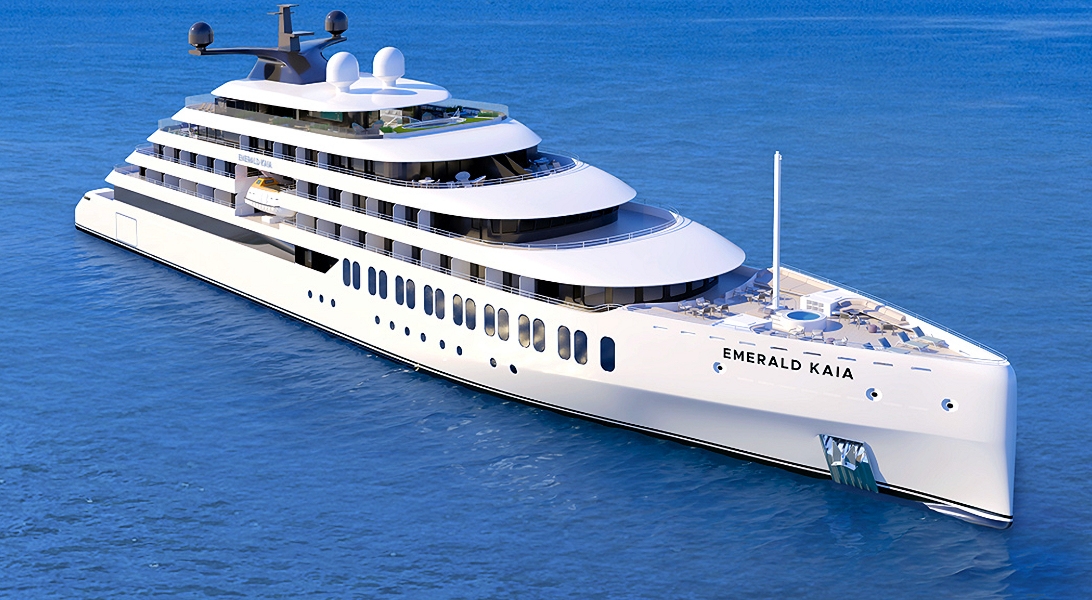
The images shown are for illustration purposes only and may not be an exact representation of what you find on the ship.
The images shown are for illustration purposes only and may not be an exact representation of what you find on the ship.
The images shown are for illustration purposes only and may not be an exact representation of what you find on the ship.
The images shown are for illustration purposes only and may not be an exact representation of what you find on the ship.
The images shown are for illustration purposes only and may not be an exact representation of what you find on the ship.


Our Fusion packages are all ABTA & ATOL protected ensuring that your booking is safe with us
| Return flights including luggage allowance | |||
| Overseas Transfers | |||
| 16 nights aboard the Emerald Kaia | |||
| Return airport transfers | |||
| Wine, beer & soft drinks with lunch & dinner | |||
| Gratuities Included | |||
| One complimentary shore excursion in every port | |||
| Bikes for passenger use | |||
| Free Wi-Fi included | |||
| Port Taxes and Fees | |||
 | ABTA and ATOL Protection* | ||
Fly/cruise package |
Date 11th Oct 2028 |
Nts 16 |
Interior  |
Oceanview £12,640pp |
Balcony |
Suite £16,668pp |
Interior |
Oceanview £25,280pp |
Balcony |
Suite £29,308pp |
Date 11th Oct 2028 |
Nts 16 |
Interior |
Oceanview £12,640pp |
Balcony |
Suite £16,668pp |
Interior |
Oceanview £25,280pp |
Balcony |
Suite £29,308pp |
Fusion Holidays when selling travel arrangements is a trading name of Co-op Travel Services Limited, registration 08903986. Fusion Cruises is an Accredited Body Member of Co-op Travel Services Limited ATOL 12904.
Book with Confidence. We are a Member of ABTA which means you have the benefit of ABTA’s assistance and Code of Conduct.
Some of the flights and flight-inclusive holidays on this website are financially protected by the ATOL scheme but ATOL protection does not apply to all holiday and travel services offered on this website. This website will provide you with information on the protection that applies in the case of each holiday and travel service offered before you make your booking. If you do not receive an ATOL Certificate then the booking will not be ATOL protected. If you do receive an ATOL Certificate but all parts of your trip are not listed on it, those parts will not be ATOL protected. Please see our booking conditions for information, or for more information about financial protection and the ATOL Certificate go to: www.caa.co.uk