This site uses cookies as defined in our Cookie Policy, by continuing to use this site you agree to their use.
Continue

| Arrive | Depart | ||||||
| 17th17 | MayMay | 202828 | Palma de Mallorca, Spain, embark on the Emerald Kaia | ||||
If you look north of the cathedral (La Seu, or the seat of the bishopric, to Mallorcans) on a map of the city of Palma, you can see around the Plaça Santa Eulàlia a jumble of tiny streets that made up the earliest settlement. Farther out, a ring of wide boulevards traces the fortifications built by the Moors to defend the larger city that emerged by the 12th century. The zigzags mark the bastions that jutted out at regular intervals. By the end of the 19th century, most of the walls had been demolished; the only place where you can still see the massive defenses is at Ses Voltes, along the seafront west of the cathedral.A torrent (streambed) used to run through the middle of the old city, dry for most of the year but often a raging flood in the rainy season. In the 17th century it was diverted to the east, along the moat that ran outside the city walls. Two of Palma's main arteries, La Rambla and the Passeig d'es Born, now follow the stream's natural course. The traditional evening paseo (promenade) takes place on the Born.If you come to Palma by car, park in the garage beneath the Parc de la Mar (the ramp is just off the highway from the airport, as you reach the cathedral) and stroll along the park. Beside it run the huge bastions guarding the Almudaina Palace; the cathedral, golden and massive, rises beyond. Where you exit the garage, there's a ceramic mural by the late Catalan artist and Mallorca resident Joan Miró, facing the cathedral across the pool that runs the length of the park.If you begin early enough, a walk along the ramparts at Ses Voltes from the mirador beside the cathedral is spectacular. The first rays of the sun turn the upper pinnacles of La Seu bright gold and then begin to work their way down the sandstone walls. From the Parc de la Mar, follow Avinguda Antoni Maura past the steps to the palace. Just below the Plaça de la Reina, where the Passeig d'es Born begins, turn left on Carrer de la Boteria into the Plaça de la Llotja (if the Llotja itself is open, don't miss a chance to visit—it's the Mediterranean's finest Gothic-style civic building). From there stroll through the Plaça Drassana to the Museu d'Es Baluard, at the end of Carrer Sant Pere. Retrace your steps to Avinguda Antoni Maura. Walk up the Passeig d'es Born to Plaça Joan Carles I, then right on Avenida de La Unió. Your journey begins in Palma de Mallorca, the heart of the Balearic Islands. Stroll the cobbled streets of the old town, visit the majestic La Seu Cathedral, and enjoy café-lined plazas that capture the island’s warm, cosmopolitan rhythm. For a serene escape, head to nearby Valldemossa or the unspoilt coves of the western coast before boarding your luxury yacht. Please book your flight to arrive into Palma Mallorca prior to 02:00 PM. | |||||||
| 18th18 | MayMay | 202828 | Ibiza, Spain | ||||
Hedonistic and historic, Eivissa (Ibiza, in Castilian) is a city jam-packed with cafés, nightspots, and trendy shops; looming over it are the massive stone walls of Dalt Vila —the medieval city declared a UNESCO World Heritage site in 1999—and its Gothic cathedral. Squeezed between the north walls of the old city and the harbor is Sa Penya, a long labyrinth of stone-paved streets that offer some of the city's best offbeat shopping, snacking, and exploring. The tourist information office on Vara de Rey has a useful map of walks through the old city. A blend of bohemian spirit and unspoilt beauty, Ibiza enchants far beyond its famed nightlife. Spend the day exploring the World Heritage-listed Dalt Vila fortress, perusing art galleries and boutiques, finding the alternative community at bustling markets, or relaxing on tranquil beaches such as Cala Conta and Talamanca. As the sun sets, savour tapas by the waterfront or watch the island’s legendary sunset over Es Vedrà. | |||||||
| 19th19 | MayMay | 202828 | At Sea | ||||
| 20th20 | MayMay | 202828 | Alghero, Italy | ||||
A tourist-friendly town of about 45,000 inhabitants with a distinctly Spanish flavor, Alghero is also known as "Barcelonetta" (little Barcelona). Rich wrought-iron scrollwork decorates balconies and screened windows; a Spanish motif appears in stone portals and bell towers. The town was built and inhabited in the 14th century by the Aragonese and Catalans, who constructed seaside ramparts and sturdy towers encompassing an inviting nucleus of narrow, winding streets with whitewashed palazzi. The native language spoken here is a version of Catalan, not Italian, although you probably have to attend one of the Masses conducted in Algherese (or listen in on stories swapped by older fishermen) to hear it. Besides its historic architectural gems such as the Alghero Cathedral and Palazzo d'Albis, the fortified city is well worth a visit to simply stroll and discover local culture on narrow cobblestone streets. The city also has a reputation to serve great food at reasonable prices. Nestled on Sardinia’s northwest coast, Alghero is a colourful fusion of Catalan and Italian culture. Within its medieval walls, wander old cobblestone lanes that lead to hidden piazzas and sea-facing bastions. Nearby beaches like Maria Pia offer soft sands and clear waters, while local trattorias tempt with fresh seafood and Vermentino wine. The region’s relatively mild climate combined with the delicate aromas of the local Mediterranean vegetation make this charming town one of the highlights of your journey. | |||||||
| 21st21 | MayMay | 202828 | Propriano, Corsica, France | ||||
Step ashore in peaceful Propriano, a Corsican harbour town framed by turquoise bays and mountain peaks. Soak in the relaxed coastal charm while exploring the old port or venture to nearby Campomoro for gentle hikes and hidden swimming coves. The scent of wild herbs and sea salt lingers in the air, perfectly capturing Corsica’s natural rhythm. | |||||||
| 22nd22 | MayMay | 202828 | Monte-Carlo, Monaco | ||||
On one of the best stretches of the Mediterranean, this classic luxury destination is one of the most sought-after addresses in the world. With all the high-rise towers you have to look hard to find the Belle Époque grace of yesteryear. But if you head to the town's great 1864 landmark Hôtel de Paris—still a veritable crossroads of the buffed and befurred Euro-gentry—or enjoy a grand bouffe at its famous Louis XV restaurant, or attend the opera, or visit the ballrooms of the casino, you may still be able to conjure up Monaco's elegant past. Prince Albert II, a political science graduate from Amherst College, traces his ancestry to Otto Canella, who was born in 1070. The Grimaldi dynasty began with Otto's great-great-great-grandson, Francesco Grimaldi, also known as Frank the Rogue. Expelled from Genoa, Frank and his cronies disguised themselves as monks and in 1297 seized the fortified medieval town known today as Le Rocher (the Rock). Except for a short break under Napoléon, the Grimaldis have been here ever since, which makes them the oldest reigning family in Europe. In the 1850s a Grimaldi named Charles III made a decision that turned the Rock into a giant blue chip. Needing revenue but not wanting to impose additional taxes on his subjects, he contracted with a company to open a gambling facility. The first spin of the roulette wheel was on December 14, 1856. There was no easy way to reach Monaco then—no carriage roads or railroads—so no one came. Between March 15 and March 20, 1857, one person entered the casino—and won two francs. In 1868, however, the railroad reached Monaco, and it was filled with Englishmen who came to escape the London fog. The effects were immediate. Profits were so great that Charles eventually abolished all direct taxes. Almost overnight, a threadbare principality became an elegant watering hole for European society. Dukes (and their mistresses) and duchesses (and their gigolos) danced and dined their way through a world of spinning roulette wheels and bubbling champagne—preening themselves for nights at the opera, where such artists as Vaslav Nijinsky, Sarah Bernhardt, and Enrico Caruso came to perform. Along with the tax system, its sensational position on a broad, steep peninsula that bulges into the Mediterranean—its harbor sparkling with luxury cruisers, its posh mansions angling awnings toward the nearly perpetual sun—continues to draw the rich and famous. One of the latest French celebrities to declare himself "Monégasque," thus giving up his French passport, is superchef Alain Ducasse, who said that he made the choice out of affection for Monaco rather than tax reasons. Pleasure boats vie with luxury cruisers in their brash beauty and Titanic scale, and teams of handsome young men—themselves dyed blond and tanned to match—scour and polish every gleaming surface. As you might expect, all this glitz doesn't come cheap. Eating is expensive, and even the most modest hotels cost more here than in nearby Nice or Menton. As for taxis, they don't even have meters so you are completely at the driver's mercy (with prices skyrocketing during events such as the Grand Prix). For the frugal, Monaco is the ultimate day-trip, although parking is as coveted as a room with a view. At the very least you can afford a coffee at Starbucks. The harbor district, known as La Condamine, connects the new quarter, officially known as Monte Carlo with Monaco-Ville (or Le Rocher), a medieval town on the Rock, topped by the palace, the cathedral, and the Oceanography Museum. Have no fear that you'll need to climb countless steps to get to Monaco-Ville, as there are plenty of elevators and escalators climbing the steep cliffs. But shuttling between the lovely casino grounds of Monte Carlo and Old Monaco, separated by a vast port, is a daunting proposition for ordinary mortals without wings, so hop on the No. 1 bus from Saint Roman, or No. 2 from the Jardin Exotique - Both stop at Place du Casino and come up to Monaco Ville. Officially known as the Principality of Monaco, the sovereign City-State of Monaco is renowned worldwide for its opulence and glamour, high-end casinos, glitzy yacht-lined harbour and the exclusive Monte Carlo district, where the prestigious Grand Prix motor racing event is held annually. This gem of the Côte d'Azur (French Riviera) is also home to Monaco’s royal household, several museums and numerous cultural events hosted throughout the year, celebrating anything from music and dance to theatre and the visual arts. | |||||||
| 23rd23 | MayMay | 202828 | Portofino, Italy | ||||
One of the most photographed villages along the coast, with a decidedly romantic and affluent aura, Portofino has long been a popular destination for the rich and famous. Once an ancient Roman colony and taken by the Republic of Genoa in 1229, it’s also been ruled by the French, English, Spanish, and Austrians, as well as by marauding bands of 16th-century pirates. Elite British tourists first flocked to the lush harbor in the mid-1800s. Some of Europe's wealthiest drop anchor in Portofino in summer, but they stay out of sight by day, appearing in the evening after buses and boats have carried off the day-trippers.There's not actually much to do in Portofino other than stroll around the wee harbor, see the castle, walk to Punta del Capo, browse at the pricey boutiques, and sip a coffee while people-watching. However, weaving through picture-perfect cliffside gardens and gazing at yachts framed by the sapphire Ligurian Sea and the cliffs of Santa Margherita can make for quite a relaxing afternoon. There are also several tame, photo-friendly hikes into the hills to nearby villages.Unless you're traveling on a deluxe budget, you may want to stay in Camogli or Santa Margherita Ligure rather than at one of Portofino's few very expensive hotels. Restaurants and cafés are good but also pricey (don't expect to have a beer here for much under €10). Chic yet unpretentious, Portofino embodies Italian seaside elegance. Stroll the Piazzetta, browse high-end boutiques, or sample Ligurian specialties overlooking the harbour. For panoramic views, hike to the lighthouse or visit Castello Brown perched above the bay, where pastel villas blend seamlessly with the rugged Riviera hills. | |||||||
| 24th24 | MayMay | 202828 | Saint-Florent, France | ||||
On the northern coast of Corsica near Cap Corse lies Saint-Florent, Corsica’s understated answer to Saint-Tropez. Its marina bustles with cafés and wine bars, while the 15th-century Genoese citadel watches over curving shores and vineyard-dotted hills. Enjoy a wine tasting at a local domaine or cruise to the white sands of Saleccia Beach, one of Corsica's most beautiful beaches. | |||||||
| 25th25 | MayMay | 202828 | Portoferraio, Italy | ||||
Elba is the Tuscan archipelago's largest island, but it resembles nearby verdant Corsica more than it does its rocky Italian sisters, thanks to a network of underground springs that keep it lush and green. It's this combination of semitropical vegetation and dramatic mountain scenery—unusual in the Mediterranean—that has made Elba so prized for so long, and the island's uniqueness continues to draw boatloads of visitors throughout the warm months. A car is very useful for getting around the island, but public buses stop at most towns several times a day; the tourist office has timetables. Portoferraio is the historic heart of Elba Island. Bronze-hued fortresses built by the Medicis overlook turquoise coves, while cobbled streets wind toward charm-filled cafés and artisan shops. History buffs can visit Napoleon’s former residence, where he lived while exiled in 1814, and beach lovers can enjoy soft sands lapped by translucent waters. | |||||||
| 26th26 | MayMay | 202828 | Porto Santo Stefano, Italy | ||||
On Tuscany’s Argentario peninsula, Porto Santo Stefano enchants with terraced pastel homes and a lively seafront promenade. Stroll along the marina, savour the day’s catch paired with crisp local wine, and visit the 16th-century Spanish Fortress for sweeping views over the Tyrrhenian Sea and the nearby islands of Giglio and Giannutri. | |||||||
| 27th27 | MayMay | 202828 | Rome, Italy, disembark the Emerald Kaia | ||||
Rome, Italy, the Eternal City, is a stunning blend of ancient history and vibrant modern life. Iconic landmarks like the Colosseum, Vatican City, and the Pantheon showcase its glorious past. Cobblestone streets lead to charming piazzas, bustling markets, and world-renowned museums. Rome's culinary scene delights with traditional Italian cuisine and lively cafes. The city's rich culture, impressive architecture, and warm, welcoming atmosphere make it an unforgettable destination for travellers. Your cruise concludes in Civitavecchia today. This historic seaport is the main gateway for the ancient capital of Italy, Rome – aptly known as the ‘Eternal City’. After bidding farewell to your crew and fellow guests, you’ll be transferred to the airport for your return flight home or to continue your travels. Please book your flight to depart out of Rome after 01:00 PM. The itinerary is a guide only and may be amended for operational reasons. As such, Emerald Cruises cannot guarantee the cruise will be operated unaltered from the itinerary stated abo | |||||||
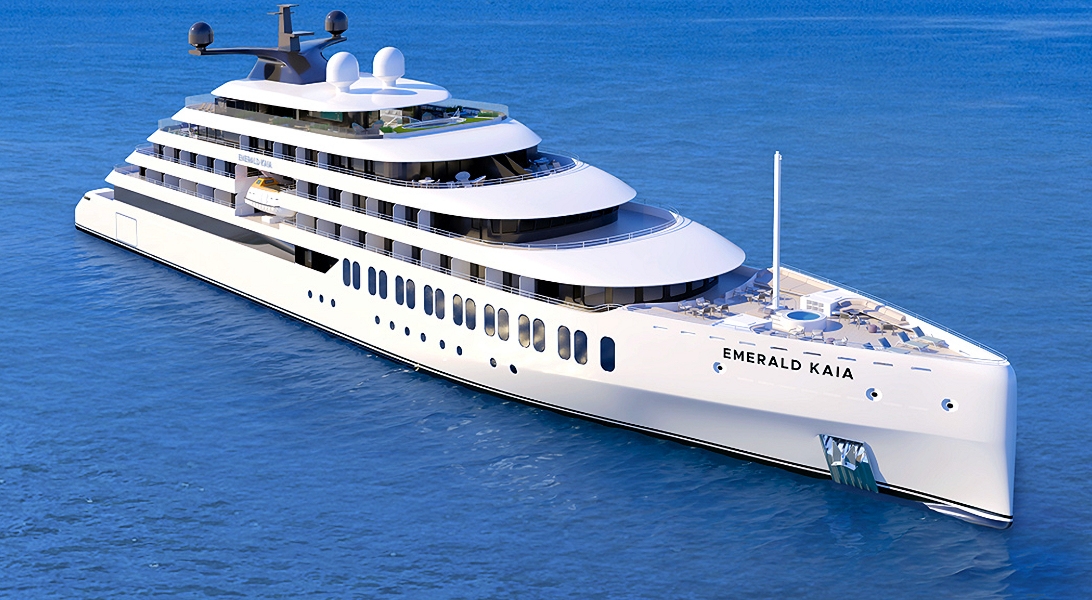
The images shown are for illustration purposes only and may not be an exact representation of what you find on the ship.
The images shown are for illustration purposes only and may not be an exact representation of what you find on the ship.
The images shown are for illustration purposes only and may not be an exact representation of what you find on the ship.
The images shown are for illustration purposes only and may not be an exact representation of what you find on the ship.
The images shown are for illustration purposes only and may not be an exact representation of what you find on the ship.

Our Fusion packages are all ABTA & ATOL protected ensuring that your booking is safe with us
| Return flights including luggage allowance | |||
| Overseas Transfers | |||
| 10 nights aboard the Emerald Kaia | |||
| Return airport transfers | |||
| Wine, beer & soft drinks with lunch & dinner | |||
| Gratuities Included | |||
| One complimentary shore excursion in every port | |||
| Bikes for passenger use | |||
| Free Wi-Fi included | |||
| Port Taxes and Fees | |||
 | ABTA and ATOL Protection* | ||
Fly/cruise package |
Date 17th May 2028 |
Nts 10 |
Interior  |
Oceanview £8,062pp |
Balcony |
Suite £10,579pp |
Interior |
Oceanview £16,124pp |
Balcony |
Suite £18,641pp |
Date 17th May 2028 |
Nts 10 |
Interior |
Oceanview £8,062pp |
Balcony |
Suite £10,579pp |
Interior |
Oceanview £16,124pp |
Balcony |
Suite £18,641pp |
Fusion Holidays when selling travel arrangements is a trading name of Co-op Travel Services Limited, registration 08903986. Fusion Cruises is an Accredited Body Member of Co-op Travel Services Limited ATOL 12904.
Book with Confidence. We are a Member of ABTA which means you have the benefit of ABTA’s assistance and Code of Conduct.
Some of the flights and flight-inclusive holidays on this website are financially protected by the ATOL scheme but ATOL protection does not apply to all holiday and travel services offered on this website. This website will provide you with information on the protection that applies in the case of each holiday and travel service offered before you make your booking. If you do not receive an ATOL Certificate then the booking will not be ATOL protected. If you do receive an ATOL Certificate but all parts of your trip are not listed on it, those parts will not be ATOL protected. Please see our booking conditions for information, or for more information about financial protection and the ATOL Certificate go to: www.caa.co.uk