This site uses cookies as defined in our Cookie Policy, by continuing to use this site you agree to their use.
Continue

| Arrive | Depart | ||||||
| 23rd23 | SepSep | 202828 | Venice, Italy, embark on the Emerald Kaia | ||||
Venice is a city unlike any other. No matter how often you've seen it in photos and films, the real thing is more dreamlike than you could imagine. With canals where streets should be, water shimmers everywhere. The fabulous palaces and churches reflect centuries of history in what was a wealthy trading center between Europe and the Orient. Getting lost in the narrow alleyways is a quintessential part of exploring Venice, but at some point you'll almost surely end up in Piazza San Marco, where tourists and locals congregate for a coffee or an aperitif. Your cruise begins in Italy and the romantic city of Venice. Founded in the fifth century, it stretches across 118 small islands of the marshy Venetian Lagoon. The grandeur of this city needs no introduction, from its legendary canals to magnificent St Mark’s Basilica. Here, you’ll be transferred to your Emerald luxury yacht to embark on a compelling journey of history, art and natural wonders. Please book your flight to arrive into Venice prior to 02:00 PM. | |||||||
| 24th24 | SepSep | 202828 | Zadar, Croatia | ||||
Dalmatia's capital for more than 1,000 years, Zadar is all too often passed over by travelers on their way to Split or Dubrovnik. What they miss out on is a city of more than 73,000 that is remarkably lovely and lively despite—and, in some measure, because of—its tumultuous history. The Old Town, separated from the rest of the city on a peninsula some 4 km (2½ miles) long and just 1,640 feet wide, is bustling and beautiful: the marble pedestrian streets are replete with Roman ruins, medieval churches, palaces, museums, archives, and libraries. Parts of the new town are comparatively dreary, a testament to what a world war followed by decades of communism, not to mention a civil war, can do to the architecture of a city that is 3,000 years old. A settlement had already existed on the site of the present-day city for some 2,000 years when Rome finally conquered Zadar in the 1st century BC; the foundations of the forum can be seen today. Before the Romans came the Liburnians had made it a key center for trade with the Greeks and Romans for 800 years. In the 3rd century BC the Romans began to seriously pester the Liburnians, but required two centuries to bring the area under their control. During the Byzantine era, Zadar became the capital of Dalmatia, and this period saw the construction of its most famous church, the 9th-century St. Donat's Basilica. It remained the region's foremost city through the ensuing centuries. The city then experienced successive onslaughts and occupations—both long and short—by the Osogoths, the Croatian-Hungarian kings, the Venetians, the Turks, the Habsburgs, the French, the Habsburgs again, and finally the Italians before becoming part of Yugoslavia and, in 1991, the independent republic of Croatia. Zadar was for centuries an Italian-speaking city, and Italian is still spoken widely, especially by older people. Indeed, it was ceded to Italy in 1921 under the Treaty of Rapallo (and reverted to its Italian name of Zara). Its occupation by the Germans from 1943 led to intense bombing by the Allies during World War II, which left most of the city in ruins. Zadar became part of Tito's Yugoslavia in 1947, prompting many Italian residents to leave. Zadar's most recent ravages occurred during a three-month siege by Serb forces and months more of bombardment during the Croatian-Serbian war between 1991 and 1995. But you'd be hard-pressed to find outward signs of this today in what is a city to behold. There are helpful interpretive signs in English all around the Old Town, so you certainly won't feel lost when trying to make sense of the wide variety of architectural sites you might otherwise pass by with only a cursory look. Zadar is something of a hidden Croatian gem, a captivating blend of ancient history and modern charm. As you stroll through its cobbled streets, you'll encounter spectacular Roman ruins, including the well-preserved Roman Forum constructed between the first century BC and third century AD, and the majestic St Donatus Church, a symbol of the city's rich heritage. You’ll be mesmerised by the Sea Organ, stone carvings along the promenade designed so that the lapping waves create natural and hauntingly beautiful melodies. As the sun disappears, you’ll be captivated by Sun Salutation, a dazzling solar-powered installation that lights up at night. | |||||||
| 25th25 | SepSep | 202828 | Hvar Island, Croatia | ||||
The Croatian island of Hvar bills itself as the "sunniest island in the Adriatic." Not only does it have the figures to back up this claim—an annual average of 2,724 hours of sunshine—but it also makes visitors a sporting proposition, offering them a money-back guarantee if there are seven consecutive days of snow (snow has been known to fall here; the last time being February 2012). The heart of the island paradise of Hvar, is the Old Town. While it’s become a modern-day hotspot, it’s layered in history and architectural wonder. Hvar is a photogenic jumble of whitewashed buildings with red roofs and beyond the town are rolling hills peppered with lavender fields, olive groves, and grapevines. | |||||||
| 26th26 | SepSep | 202828 | Dubrovnik, Croatia | ||||
Nothing can prepare you for your first sight of Dubrovnik. Lying 216 km (135 miles) southeast of Split and commanding a jaw-dropping coastal location, it is one of the world's most beautiful fortified cities. Its massive stone ramparts and fortress towers curve around a tiny harbor, enclosing graduated ridges of sun-bleached orange-tiled roofs, copper domes, and elegant bell towers. Your imagination will run wild picturing what it looked like seven centuries ago when the walls were built, without any suburbs or highways around it, just this magnificent stone city rising out of the sea.In the 7th century AD, residents of the Roman city Epidaurum (now Cavtat) fled the Avars and Slavs of the north and founded a new settlement on a small rocky island, which they named Laus, and later Ragusa. On the mainland hillside opposite the island, the Slav settlement called Dubrovnik grew up. In the 12th century the narrow channel separating the two settlements was filled in (now the main street through the Old Town, called Stradun), and Ragusa and Dubrovnik became one. The city was surrounded by defensive walls during the 13th century, and these were reinforced with towers and bastions in the late 15th century.From 1358 to 1808 the city thrived as a powerful and remarkably sophisticated independent republic, reaching its golden age during the 16th century. In 1667 many of its splendid Gothic and Renaissance buildings were destroyed by an earthquake. The defensive walls survived the disaster, and the city was rebuilt in baroque style.Dubrovnik lost its independence to Napoléon in 1808, and in 1815 passed to Austria-Hungary. During the 20th century, as part of Yugoslavia, the city became a popular tourist destination, and in 1979 it was listed as a UNESCO World Heritage Site. During the war for independence, it came under heavy siege. Thanks to careful restoration, few traces of damage remain; however, there are maps inside the Pile and Ploče Gates illustrating the points around the city where damage was done. It’s only when you experience Dubrovnik yourself that you can understand what a treasure the world nearly lost At the southernmost point of Croatia on the Dalmatian Coast, World Heritage-listed Dubrovnik is known as the ‘Pearl of the Adriatic’. The city is renowned for its breathtaking architecture, its red terracotta-tiled roofs and white stone walls making a striking contrast against the turquoise waters that lap below. Stroll through the iconic Old Town, where cobbled streets lead you past magnificent baroque buildings; enjoy a drink on the Stradun, the main thoroughfare through the city; and take a walk along the ancient city walls for panoramic views over the rooftops and Adriatic Sea. The impressive Rector's Palace, a 15th-century Gothic-Renaissance palace that was once Dubrovnik ‘s administrative centre, is also a must-visit. | |||||||
| 27th27 | SepSep | 202828 | Otranto, Italy | ||||
Located right in the heel of the Italian boot, Otranto’s scenic landscape often plays the protagonist in displaying the beauty of Puglia, Italy’s easternmost region. Facing the Adriatic sea, the seducing weather and pristine waters have made it a popular destination where on a clear day, wanderers can see the coast of Albania. Like much of Italy, the city boasts a rich and mixed history. Once a Greek and Roman port, it was later occupied by the Byzantines, the Normans and the Spanish before the Ottoman invaded in during their Jihad to conquer Europe. Remains of forts are still visible and are a living testimonial of the town’s rich history along with Otranto’s cathedral, which still encloses today the relics of martyrs who refused to convert to Islam. On the tip of Italy’s Puglia region, Otranto has a charming old town of narrow cobblestone streets, ancient stone walls and stunning medieval architecture. Don’t miss the Otranto Cathedral, built by the Normans in the 11th century and renowned for its frescoes and an intricate mosaic floor from the 12th century. The bones of 813 martyrs are displayed in a glass case behind the altar. Otranto's lovely waterfront affords breathtaking views of the turquoise Adriatic Sea. Spend time soaking up the sun on one of its sandy beaches that line the coast and indulge in delectable Apulian dishes at one of the many quaint trattorias, such as focaccia, burrata and fresh seafood. | |||||||
| 28th28 | SepSep | 202828 | Giardini Naxos, Italy | ||||
Nestled along the eastern shores of Sicily, Giardini Naxos was one of the earliest Greek settlements on the island, traditionally dated to 734 BC. Today, it’s a charming resort town known for its sandy beaches and vibrant waterfront promenade. It also commands views of the Ionian Sea and Mount Etna. Giardini Naxos serves as the launchpad for glamorous Taormina, which is called the ‘Pearl of the Ionian Sea’. Just a short journey away, you can immerse yourself in Taormina’s posh Corso Umberto (pedestrian-friendly centre) and see its ancient Greek theatre and enchanting medieval architecture. | |||||||
| 29th29 | SepSep | 202828 | Valletta, Malta | ||||
Malta's capital, the minicity of Valletta, has ornate palaces and museums protected by massive fortifications of honey-color limestone. Houses along the narrow streets have overhanging wooden balconies for people-watching from indoors. Generations ago they gave housebound women a window on the world of the street. The main entrance to town is through the City Gate (where all bus routes end), which leads onto Triq Repubblika (Republic Street), the spine of the grid-pattern city and the main shopping street. Triq Mercante (Merchant Street) parallels Repubblika to the east and is also good for strolling. From these two streets, cross streets descend toward the water; some are stepped. Valletta's compactness makes it ideal to explore on foot. City Gate and the upper part of Valletta are experiencing vast redevelopment that includes a new Parliament Building and open-air performance venue. The complex, completed mid-2013, has numerous pedestrian detours in place along with building noise and dust. Before setting out along Republic Street, stop at the tourist information office on Merchant Street for maps and brochures. Declared a World Heritage site in 1980, the fortified city of Valletta is one of the most concentrated historic areas in the world, with a staggering 320 monuments. Built on a narrow one-kilometre-long (0.62-mile-long) peninsula in the 16th century by the Knights of St John, the pocket-sized capital of Malta is, today, a blend of rich history, culture, and breathtaking architecture. Stroll through its narrow, cobblestone streets, where every corner reveals a treasure, such as the 16th-century Baroque chapels of St John’s Co-Cathedral. | |||||||
| 30th30 | SepSep | 202828 | Porto Empedocle, Italy | ||||
On Sicily’s southern coast in the province of Agrigento, the charming town of Porto Empedocle welcomes you with its golden beaches, laid-back atmosphere, and fascinating history. A major port for grain shipments in the 1400s, it later became known for its sulphur and rock salt mining, industries that helped shape the region. The town is named after the ancient philosopher Empedocles, who lived near here in the fifth century BC. Today, Porto Empedocle is the ideal gateway to explore southern Sicily, offering easy access to the remarkable Valley of the Temples while inviting guests to enjoy its vibrant harbour, local seafood and coastal charm. | |||||||
| 1st01 | OctOct | 202828 | Trapani, Sicily, Italy | ||||
Trapani, the most important town on Sicily’s west coast, lies below the headland of Mount Erice and offers stunning views of the Egadi Islands on a clear day. Trapani’s Old District occupies a scimitarshaped promontory between the open sea on the north and the salt marshes to the south. The ancient industry of extracting salt from the marshes has recently been revived, and it is documented in the Museo delle Saline. In addition to the salt marshes,Trapani’s other interesting environs include the beautiful little hill town of Erice, the promontory of Capo San Vito stretching north beyond the splendid headland of Monte Cofano, the lovely island of Motya and the town of Marsala. Trips farther afield will take you to the magnificent site of Segesta or the Egadi Islands, reached by boat or hydrofoil from Trapani Port. Set on the western tip of Sicily, Trapani is a historic port city with a dramatic coastline. The fortified town has been at the centre of the fishing and salt trade for thousands of years. The coastal salt pans make up part of a unique landscape that comprises windmills, flat-topped pastel-coloured buildings and domed churches. The narrow streets of the picturesque old town are lined with historic Baroque buildings in warm colours, vibrant markets, and eateries offering local delicacies such as fresh seafood and the famous Sicilian cannoli. You can reach the hilltop medieval village of Erice, located 751 metres (2,464 feet) above sea level, via a cable car ride. Wander the rabbit warren of cobblestoned laneways past crumbling castle ruins and enjoy breathtaking vistas over the town of Trapani below. | |||||||
| 2nd02 | OctOct | 202828 | Amalfi, Italy | ||||
At first glance, it's hard to imagine that this resort destination was one of the world's great naval powers, and a sturdy rival of Genoa and Pisa for control of the Mediterranean in the 11th and 12th centuries. Once the seat of the Amalfi Maritime Republic, the town is set in a verdant valley of the Lattari Mountains, with cream-colored and pastel-hued buildings tightly packing a gorge on the Bay of Salerno. The harbor, which once launched the greatest fleet in Italy, now bobs with ferries and blue-and-white fishing boats. The main street, lined with shops and pasticcerie, has replaced a raging mountain torrent, and terraced hills flaunt the green and gold of lemon groves. Bearing testimony to its great trade with Tunis, Tripoli, and Algiers, Amalfi remains honeycombed with Arab-Sicilian cloisters and covered passages. In a way Amalfi has become great again, showing off its medieval glory days with sea pageants, convents-turned-hotels, ancient paper mills, covered streets, and its glimmering cathedral. The stunning Amalfi Coast, designated a World Heritage site, has been a much-loved holiday destination since ancient times. Located in southern Italy’s Campania region, just south of Naples, the Amalfi Coast boasts idyllic beaches and seaside towns that are home to grand Italian villas and glitzy beach clubs hugging the craggy cliffs that rise from the sparkling sea. | |||||||
| 3rd03 | OctOct | 202828 | Ischia Island, Italy | ||||
Awaken to a serene morning and enjoy a lavish breakfast on deck as you cruise past the stunning Amalfi Coast and the glamorous isle of Capri, before reaching your next destination. Casamicciola Terme, nestled on the northern coast of the island of Ischia, is renowned for its wealth of natural thermal springs – so much so that the word ’thermal’ (terme) is part of its name. Known for its rejuvenating waters and wellness culture, it has long been a destination for those seeking relaxation, healing and a touch of luxury amid picturesque surroundings. The town’s thermal heritage is deeply woven into its identity, offering everything from historic spas to modern wellness retreats. | |||||||
| 4th04 | OctOct | 202828 | Civitavecchia, Italy | ||||
Italy's vibrant capital lives in the present, but no other city on earth evokes its past so powerfully. For over 2,500 years, emperors, popes, artists, and common citizens have left their mark here. Archaeological remains from ancient Rome, art-stuffed churches, and the treasures of Vatican City vie for your attention, but Rome is also a wonderful place to practice the Italian-perfected il dolce far niente, the sweet art of idleness. Your most memorable experiences may include sitting at a caffè in the Campo de' Fiori or strolling in a beguiling piazza. Welcome to the ancient port of Civitavecchia, the gateway to the Eternal City, Rome. Explore Rome and its world-renowned sites from the Colosseum and Roman Forum to the Vatican City before re-embarking to continue your voyage. | |||||||
| 5th05 | OctOct | 202828 | Calvi, Corsica, France | ||||
Calvi, Corsica's slice of the Riviera, has been described by author Dorothy Carrington as "an oasis of pleasure on an otherwise austere island." Calvi prospered by supplying products to Genoa; its citizens remained loyal supporters of Genoa long after the rest of the island declared independence. Calvi also claims to be the birthplace of Christopher Columbus. During the 18th century the town endured assaults from Corsican nationalists, including celebrated patriot Pasquale Paoli. Today Calvi sees a summertime invasion of tourists, drawn to the 6-km (4-mile) stretch of sandy white beach, impressive citadel overlooking the Old Town, lively restaurants, and buzzing nightlife. Your first port of call is Calvi, on the northwest shore of the French Island of Corsica. Local legend claims Calvi was the birthplace of Christopher Columbus, although historians generally believe he was born in Genoa. While the true origins of the famed explorer remain debated, the natural beauty and rich culture of Calvi are undisputed. Calvi's gorgeous beach presents a crescent-shaped bay of powdery white sand fringed by maritime pines. The town has evolved to become Corsica’s cultural capital, hosting several music festivals and art exhibitions during the idyllic summer months. | |||||||
| 6th06 | OctOct | 202828 | Livorno, Italy | ||||
Livorno is a gritty city with a long and interesting history. In the early Middle Ages it alternately belonged to Pisa and Genoa. In 1421 Florence, seeking access to the sea, bought it. Cosimo I (1519–74) started construction of the harbor in 1571, putting Livorno on the map. After Ferdinando I de' Medici (1549–1609) proclaimed Livorno a free city, it became a haven for people suffering from religious persecution; Roman Catholics from England and Jews and Moors from Spain and Portugal, among others, settled here. The Quattro Mori (Four Moors), also known as the Monument to Ferdinando I, commemorates this. (The statue of Ferdinando I dates from 1595, the bronze Moors by Pietro Tacca from the 1620s.)In the following centuries, and particularly in the 18th, Livorno boomed as a port. In the 19th century the town drew a host of famous Britons passing through on their grand tours. Its prominence continued up to World War II, when it was heavily bombed. Much of the town's architecture, therefore, postdates the war, and it's somewhat difficult to imagine what it might have looked like before. Livorno has recovered from the war, however, as it's become a huge point of departure for container ships, as well as the only spot in Tuscany for cruise ships to dock for the day.Most of Livorno's artistic treasures date from the 17th century and aren't all that interesting unless you dote on obscure baroque artists. Livorno's most famous native artist, Amedeo Modigliani (1884–1920), was of much more recent vintage. Sadly, there's no notable work by him in his hometown.There may not be much in the way of art, but it's still worth strolling around the city. The Mercato Nuovo, which has been around since 1894, sells all sorts of fruits, vegetables, grains, meat, and fish. Outdoor markets nearby are also chock-full of local color. The presence of Camp Darby, an American military base just outside town, accounts for the availability of many American products.If you have time, Livorno is worth a stop for lunch or dinner at the very least. Along the western coast of Italy’s beautiful Tuscany region, the bustling city of Livorno boasts a modern seaport, but is best known for its scenic beauty, picturesque views of the azure Mediterranean Sea and delicious fresh seafood. Not surprisingly, the city's renowned culinary scene is heavily influenced by its seaside location, tempting with signature dishes such as 'cacciucco' a traditional fish stew that is a must-try for anyone who visits here. Livorno is also the gateway to the city of Florence, cradle of the Renaissance, and famed for its art, architecture and history. | |||||||
| 7th07 | OctOct | 202828 | Carrara, Italy | ||||
Further along the Tuscan coast, arrive in Marina di Carrara. This lovely seaside town is famous for the pale and premium Italian marble that is mined and quarried from nearby mountains. The highly prized Carrara marble not only ranks as one of Italy’s most celebrated artisan products but has been used for centuries to create some of the world’s most important artistic wonders, including Michelangelo’s iconic Statue of David. These shimmering mountains of purest marble contrast beautifully with Marina di Carrara’s coastal scenery. Your yacht will remain docked here overnight, giving you time to explore the lively seafront promenade packed with bars and restaurants after the sun goes down. | |||||||
| 8th08 | OctOct | 202828 | Porto Venere, Italy | ||||
Arrive early this morning in Porto Venere on the Italian Ligurian coast. This ancient town dates back to Roman times and is now a World Heritage site. It harbours a romantic history, thanks to its penchant for attracting famous poets and artists over the centuries. Porto Venere’s wonderful swimming spots were beloved by, amongst others, the legendary English poet, Lord Byron, who regularly swam and meditated here in the early 1800s. One of Porto Venere's most striking features is its Gothic-style Church of St. Peter, dating back to the 12th century and resting atop a rocky headland overlooking the sparkling sea. | |||||||
| 9th09 | OctOct | 202828 | Santa Margherita Ligure, Italy | ||||
Welcome to Santa Margherita Ligure, a pretty Italian resort town with panoramic views that’s revered for its timeless elegance and style. For those seeking ‘la dolce vita`, you’re sure to find it in abundance here. Stroll the Santa Margherita promenade, or the pebbly beachfront, admiring the gleaming yachts and sailing boats. Marvel at an impressive Baroque-era church along the cobbled streets and savour succulent red shrimps, the local fishermen’s catch of the day. | |||||||
| 9th09 | OctOct | 202828 | Portofino, Italy | ||||
One of the most photographed villages along the coast, with a decidedly romantic and affluent aura, Portofino has long been a popular destination for the rich and famous. Once an ancient Roman colony and taken by the Republic of Genoa in 1229, it’s also been ruled by the French, English, Spanish, and Austrians, as well as by marauding bands of 16th-century pirates. Elite British tourists first flocked to the lush harbor in the mid-1800s. Some of Europe's wealthiest drop anchor in Portofino in summer, but they stay out of sight by day, appearing in the evening after buses and boats have carried off the day-trippers.There's not actually much to do in Portofino other than stroll around the wee harbor, see the castle, walk to Punta del Capo, browse at the pricey boutiques, and sip a coffee while people-watching. However, weaving through picture-perfect cliffside gardens and gazing at yachts framed by the sapphire Ligurian Sea and the cliffs of Santa Margherita can make for quite a relaxing afternoon. There are also several tame, photo-friendly hikes into the hills to nearby villages.Unless you're traveling on a deluxe budget, you may want to stay in Camogli or Santa Margherita Ligure rather than at one of Portofino's few very expensive hotels. Restaurants and cafés are good but also pricey (don't expect to have a beer here for much under €10). | |||||||
| 10th10 | OctOct | 202828 | Monte-Carlo, Monaco | ||||
On one of the best stretches of the Mediterranean, this classic luxury destination is one of the most sought-after addresses in the world. With all the high-rise towers you have to look hard to find the Belle Époque grace of yesteryear. But if you head to the town's great 1864 landmark Hôtel de Paris—still a veritable crossroads of the buffed and befurred Euro-gentry—or enjoy a grand bouffe at its famous Louis XV restaurant, or attend the opera, or visit the ballrooms of the casino, you may still be able to conjure up Monaco's elegant past. Prince Albert II, a political science graduate from Amherst College, traces his ancestry to Otto Canella, who was born in 1070. The Grimaldi dynasty began with Otto's great-great-great-grandson, Francesco Grimaldi, also known as Frank the Rogue. Expelled from Genoa, Frank and his cronies disguised themselves as monks and in 1297 seized the fortified medieval town known today as Le Rocher (the Rock). Except for a short break under Napoléon, the Grimaldis have been here ever since, which makes them the oldest reigning family in Europe. In the 1850s a Grimaldi named Charles III made a decision that turned the Rock into a giant blue chip. Needing revenue but not wanting to impose additional taxes on his subjects, he contracted with a company to open a gambling facility. The first spin of the roulette wheel was on December 14, 1856. There was no easy way to reach Monaco then—no carriage roads or railroads—so no one came. Between March 15 and March 20, 1857, one person entered the casino—and won two francs. In 1868, however, the railroad reached Monaco, and it was filled with Englishmen who came to escape the London fog. The effects were immediate. Profits were so great that Charles eventually abolished all direct taxes. Almost overnight, a threadbare principality became an elegant watering hole for European society. Dukes (and their mistresses) and duchesses (and their gigolos) danced and dined their way through a world of spinning roulette wheels and bubbling champagne—preening themselves for nights at the opera, where such artists as Vaslav Nijinsky, Sarah Bernhardt, and Enrico Caruso came to perform. Along with the tax system, its sensational position on a broad, steep peninsula that bulges into the Mediterranean—its harbor sparkling with luxury cruisers, its posh mansions angling awnings toward the nearly perpetual sun—continues to draw the rich and famous. One of the latest French celebrities to declare himself "Monégasque," thus giving up his French passport, is superchef Alain Ducasse, who said that he made the choice out of affection for Monaco rather than tax reasons. Pleasure boats vie with luxury cruisers in their brash beauty and Titanic scale, and teams of handsome young men—themselves dyed blond and tanned to match—scour and polish every gleaming surface. As you might expect, all this glitz doesn't come cheap. Eating is expensive, and even the most modest hotels cost more here than in nearby Nice or Menton. As for taxis, they don't even have meters so you are completely at the driver's mercy (with prices skyrocketing during events such as the Grand Prix). For the frugal, Monaco is the ultimate day-trip, although parking is as coveted as a room with a view. At the very least you can afford a coffee at Starbucks. The harbor district, known as La Condamine, connects the new quarter, officially known as Monte Carlo with Monaco-Ville (or Le Rocher), a medieval town on the Rock, topped by the palace, the cathedral, and the Oceanography Museum. Have no fear that you'll need to climb countless steps to get to Monaco-Ville, as there are plenty of elevators and escalators climbing the steep cliffs. But shuttling between the lovely casino grounds of Monte Carlo and Old Monaco, separated by a vast port, is a daunting proposition for ordinary mortals without wings, so hop on the No. 1 bus from Saint Roman, or No. 2 from the Jardin Exotique - Both stop at Place du Casino and come up to Monaco Ville. Officially known as the Principality of Monaco, this sovereign city-state is famous for its opulence and glamour, boasting high-end casinos, a glitzy harbour lined with superyachts and the exclusive Monte Carlo district, a jetsetter’s haven. This dazzling gem of the Côte d'Azur is the official residence of Monaco’s royal household – the palace has been home to the Grimaldi family since the late 13th century – and boasts several museums. Monaco is also the host of numerous cultural events throughout the year, celebrating everything from music to the visual arts, as well as the annual Monaco Grand Prix, a prestigious Formula One motor racing event. | |||||||
| 11th11 | OctOct | 202828 | Nice, France, disembark the Emerald Kaia | ||||
United with France only since 1860, Nice has its own history and atmosphere, which dates back 230,000 years. It was on Colline du Château (now château-less) and at the Plage des Ponchettes, in front of the Old Town, that the Greeks established a market-port in 350 BC and named it Nikaia, which would become Marseilles' chief coastal rival. The Romans established themselves a little later on the hills of Cimiez (Cemenelum), already previously occupied by Ligurians and Celts, and quickly overshadowed the waterfront port. After falling to the Saracen invasions, Nice regained power as an independent state, becoming an important port in the early Middle Ages.So cocksure did it become that in 1388, Nice, along with the hill towns behind, effectively seceded from the county of Provence, under Louis d'Anjou, and allied itself with Savoie. Thus began its liaison with the House of Savoy, and through it with Piedmont and Sardinia, it was the Comté de Nice (Nice County). This relationship lasted some 500 years, tinting the culture, architecture, and dialect in rich Italian hues.By the 19th century Nice was flourishing commercially, locked in rivalry with the neighboring shipping port of Genoa. Another source of income: the dawning of tourism, as first the English, then the Russian nobility, discovered its extraordinary climate and superb waterfront position. A parade of fine stone mansions and hotels closed into a nearly solid wall of masonry, separated from the smooth-round rocks of the beach by what was originally named Camin deis Anglés (the English Way), which of course is now the famous Promenade des Anglais. This magnificent crescent, which is seeking UNESCO recognition, is one of the noblest in France. Many of Nice's most delightful attractions—the Cours Saleya market, the Old Town streets, the Hotel Negresco, and the Palais Masséna—are on or close to this 10-km (6-mile) waterfront, making it the first stop for most visitors, while the redevelopment of Nice's port, around the other side of the Colline du Château, makes it easier for amblers who want to take in the Genoese architecture or peruse the antiques at the Puces de Nice, now part of the Promenade des 100 Antiquaires, along Quai Papacino. Nice also has the distinction of the "Family Plus" label, with free strollers, play areas, and restaurants with child-friendly activities. Your unforgettable yacht cruise concludes this morning on the French Riviera, in the alluring port city of Nice. After bidding farewell to your crew and fellow guests, you’ll be transferred to the airport for your return flight home or to continue your travels. Please book your flight to depart out of Nice after 01:00 PM. The itinerary is a guide only and may be amended for operational reasons. As such, Emerald Cruises cannot guarantee the cruise will be operated unaltered from the itinerary stated above. | |||||||
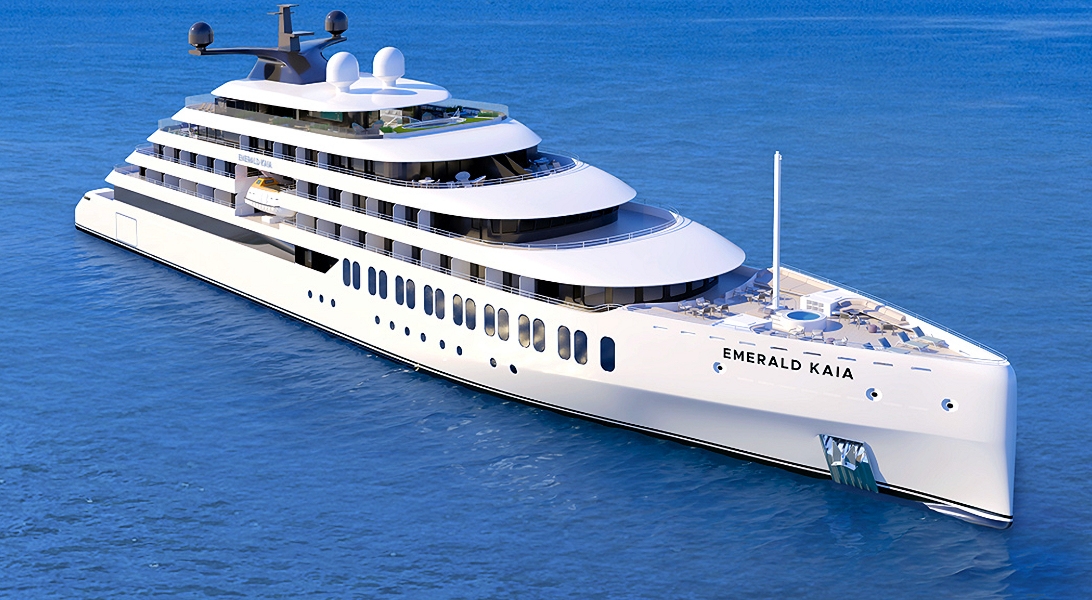
The images shown are for illustration purposes only and may not be an exact representation of what you find on the ship.
The images shown are for illustration purposes only and may not be an exact representation of what you find on the ship.
The images shown are for illustration purposes only and may not be an exact representation of what you find on the ship.
The images shown are for illustration purposes only and may not be an exact representation of what you find on the ship.
The images shown are for illustration purposes only and may not be an exact representation of what you find on the ship.

Our Fusion packages are all ABTA & ATOL protected ensuring that your booking is safe with us
| Return flights including luggage allowance | |||
| Overseas Transfers | |||
| 18 nights aboard the Emerald Kaia | |||
| Return airport transfers | |||
| Wine, beer & soft drinks with lunch & dinner | |||
| Gratuities Included | |||
| One complimentary shore excursion in every port | |||
| Bikes for passenger use | |||
| Free Wi-Fi included | |||
| Port Taxes and Fees | |||
 | ABTA and ATOL Protection* | ||
Fly/cruise package |
Date 23rd Sep 2028 |
Nts 18 |
Interior  |
Oceanview £14,645pp |
Balcony |
Suite £19,176pp |
Interior |
Oceanview £29,290pp |
Balcony |
Suite £33,821pp |
Date 23rd Sep 2028 |
Nts 18 |
Interior |
Oceanview £14,645pp |
Balcony |
Suite £19,176pp |
Interior |
Oceanview £29,290pp |
Balcony |
Suite £33,821pp |
Fusion Holidays when selling travel arrangements is a trading name of Co-op Travel Services Limited, registration 08903986. Fusion Cruises is an Accredited Body Member of Co-op Travel Services Limited ATOL 12904.
Book with Confidence. We are a Member of ABTA which means you have the benefit of ABTA’s assistance and Code of Conduct.
Some of the flights and flight-inclusive holidays on this website are financially protected by the ATOL scheme but ATOL protection does not apply to all holiday and travel services offered on this website. This website will provide you with information on the protection that applies in the case of each holiday and travel service offered before you make your booking. If you do not receive an ATOL Certificate then the booking will not be ATOL protected. If you do receive an ATOL Certificate but all parts of your trip are not listed on it, those parts will not be ATOL protected. Please see our booking conditions for information, or for more information about financial protection and the ATOL Certificate go to: www.caa.co.uk