This site uses cookies as defined in our Cookie Policy, by continuing to use this site you agree to their use.
Continue

| Arrive | Depart | ||||||
| 17th17 | JunJun | 202828 | Sitka, Alaska, United States, embark on the MS Roald Amundsen | 17:00 | |||
It's hard not to like Sitka, with its eclectic blend of Alaska Native, Russian, and American history and its dramatic and beautiful open-ocean setting. This is one of the best Inside Passage towns to explore on foot, with St. Michael's Cathedral, Sheldon Jackson Museum, Castle Hill, Sitka National Historical Park, and the Alaska Raptor Center topping the must-see list.Sitka was home to the Kiksádi clan of the Tlingit people for centuries prior to the 18th-century arrival of the Russians under the direction of territorial governor Alexander Baranof, who believed the region was ideal for the fur trade. The governor also coveted the Sitka site for its beauty, mild climate, and economic potential; in the island's massive timber forests he saw raw materials for shipbuilding. Its location offered trading routes as far west as Asia and as far south as California and Hawaii. In 1799 Baranof built St. Michael Archangel—a wooden fort and trading post 6 miles north of the present town.Strong disagreements arose shortly after the settlement. The Tlingits attacked the settlers and burned their buildings in 1802. Baranof, however, was away in Kodiak at the time. He returned in 1804 with a formidable force—including shipboard cannons—and attacked the Tlingits at their fort near Indian River, site of the present-day 105-acre Sitka National Historical Park, forcing many of them north to Chichagof Island.By 1821 the Tlingits had reached an accord with the Russians, who were happy to benefit from the tribe's hunting skills. Under Baranof and succeeding managers, the Russian-American Company and the town prospered, becoming known as the Paris of the Pacific. The community built a major shipbuilding and repair facility, sawmills, and forges, and even initiated an ice industry, shipping blocks of ice from nearby Swan Lake to the booming San Francisco market. The settlement that was the site of the 1802 conflict is now called Old Sitka. It is a state park and listed as a National Historic Landmark.The town declined after its 1867 transfer from Russia to the United States, but it became prosperous again during World War II, when it served as a base for the U.S. effort to drive the Japanese from the Aleutian Islands. Today its most important industries are fishing, government, and tourism. Embarking from Sitka After an early-morning flight into Sitka from Vancouver, you’ll arrive in a city set in the heart of Tongass National Forest. This has been the ancestral homeland of the Łingít people for 10,000 years. Russian explorers settled here at the turn of the 19th century, and Russia, weakened by the Crimean War, sold the territory to the United States in 1867. Today, those layers of history remain visible: at the Russian Orthodox Cathedral and Russian Bishop's House, and in the Łingít and Haida totem poles at Sitka National Historical Park. Your ship is waiting at the pier. It’s time to settle into your cabin, meet the Expedition Team, listen to the safety briefing, and take your seat for a welcome dinner. | |||||||
| 18th18 | JunJun | 202828 | Elfin Cove, Alaska, United States | 09:00 | 20:00 | ||
Elfin Cove sits snugly on the southern shore of Cross Sound, which leads in eastwards to the Inside Passage. Northwards and across the Sound from the small community lies Glacier Bay National Park and the Fairweather Mountain range. Elfin Cove is a quaint little harbor clustered with attractive timber houses built into the wooded hillsides on stilts. The population swells to about 200 during the summer months, from a rather meager 6 or so during the snowy and isolated winters. Its commercial hub consists of a Post Office, mini-Museum, a General Store, the Coho Bar and numerous sports fishing businesses. In the summer months Rufous-backed Hummingbirds visit feeders scattered around the community. Remote Islands of Alaska’s Wild Coast Today we’ll make the most of our Zodiacs to explore the rugged coastline where Alaska’s Inside Passage meets the Pacific Ocean. Keep your binoculars in hand: this is an area where you’re very likely to see sea lions and sea otters, along with whales and nesting seabirds. We may also step ashore in a small, remote fishing community, where boardwalks replace roads and daily life unfolds at a gentle pace, surrounded by wilderness. Take time to wander, visit a local museum, or simply watch the water—whales are sometimes known to venture close to shore. Watch for sea lions, sea otters, and orcas where the Inside Passage meets the open Pacific Ocean, and step ashore in a fishing village. | |||||||
| 19th19 | JunJun | 202828 | Haines, Alaska, United States | 08:00 | 18:00 | ||
Unlike most cities of Southeast Alaska, Haines can be reached by road. With a population of 2,200, Haines lies in the upper northern reaches of the Inside Passage and is an important access point to the Yukon Territory and Interior Alaska. While cruising into Haines, see the Lynn Canal, the longest and deepest fjord in North America. Once in town, mountains seem to surround you on all sides while the jagged cathedral peaks of the Chilkat Mountains loom over Fort Seward. Haines has two distinct personalities. On the north side of the Haines Highway is the section of Haines that developed around the Presbyterian mission. After its missionary beginnings, it served as the trailhead for the Jack Dalton Trail into the Yukon during the 1897 gold rush to the Klondike. South of the highway, the town resembles a military post, which is exactly what it was for nearly half a century. In 1903 the U.S. Army established Fort William Henry Seward at Portage Cove just south of town. The post (renamed Chilkoot Barracks in 1922) was the only military base in the territory until World War II. In 1939, the army built the Alaska Highway and the Haines Highway to connect Alaska with the other states. Today, the community of Haines is recognized for the Native American dance and culture center at Fort Seward as well as for its superb fishing, camping and outdoor recreation. Discover a flourishing artistic heritage Near the head of the Lynn Canal lies the frontier town of Haines, which was originally home to the Chilkat Łingít people. They are renowned for their weaving skills, with mountain goat fur and cedar bark woven into intricate designs, and here, you’ll see excellent examples of their work. Haines has a flourishing art scene, with galleries and workshops showcasing totem carvings, silverwork and sculptures. Taking home some Alaskan arts and crafts is a great way to support local creators. The beautiful landscapes here are also ideal for hiking and wildlife spotting. | |||||||
| 20th20 | JunJun | 202828 | Angoon, Alaska, United States | 08:00 | 17:00 | ||
Spend time with the local community We’ll spend the day exploring this deep, narrow section of the Chatham Strait, perhaps heading out on Zodiacs to explore the waters, where you should keep your eyes peeled for humpback whales. You may have the chance to see them work harmoniously to adopt a method of ‘bubble net feeding’, a rare sight that is often only seen in these parts of the world. We also hope to visit a remote community and pause for a storytelling session with a community elder, hearing about daily life in these quiet, rarely seen regions. We also might hike through Tongass National Forest, America’s largest temperate rainforest, with local guides, and you may take a self-guided stroll through the village, learning about the local history. | |||||||
| 21st21 | JunJun | 202828 | Kasaan, Alaska, United States | 10:00 | 22:00 | ||
Learn about Haida culture The coastline of Prince of Wales Island is best explored by Zodiac or kayak. If conditions allow, choose your favourite of the two, gliding alongside the forested coastline and gulping in the sea air. Black bears, Sitka black-tailed deer, sea otters, and humpback whales are just some of the wildlife that call America’s fourth-largest island home. During our time here, we’ll take the opportunity to meet one of the two remaining Haida communities in Alaska. Hear firsthand about their history and deep spiritual connection to the land and sea, and witness the art of totem pole carving, with historical legends skilfully depicted on the wood. | |||||||
| 22nd22 | JunJun | 202828 | Metlakatla, Alaska, United States | 07:00 | 12:00 | ||
Since the late 19th century, Metlakatla has been the major settlement of the Metlakatla Indian Community of the federally recognized Annette Islands Reserve, the only remaining reservation in Alaska. It is located on Annette Island, and in 2010 had 1,405 residents. Membership in the community is primarily by lineage and is comprised primarily of Tsimshian people. Metlakatla comes from a Tsimshian word meaning "Salt Water Passage." In 1886, William Duncan, an English tannery employee and lay member of the Church Missionary Society, along with a devoted group of Tsimshian followers, decided to leave his home village in British Colombia. Duncan went to Washington, D.C., asked the U.S. government to give his group land in Alaska. The U.S. gave them Annette Island after a Tsimshian search committee in seagoing canoes discovered its calm bay, accessible beaches and abundant fish. The group arrived in 1887 and built a settlement laid out in a grid pattern like a European town. They named the town New Metlakatla, after the town they had left behind, but later dropped the "New." Gain insight into Tsimshian culture Today, we’ll be heading on shore to learn about Metlakatla from the indigenous community that calls it home. Our Tsimshian hosts will tell us about their culture, seafaring traditions, and intricate art. Here, stories are often told by the medium of dance, and we’ll have a chance to witness a dance demonstration that will remain a highlight of your expedition. Explore more of the island with local guides, and try the traditional foods, such as salmon, berries, and seaweed. | |||||||
| 23rd23 | JunJun | 202828 | Queen Charlotte Sound, New Zealand | ||||
Marine wildlife along the Pacific coast This coastal route takes us through the great North American Pacific Fjordland, a protected stretch of water over 930 miles long. We’ll be sailing outside of the protected fjords into open waters, up Queen Charlotte Sound and Hecate Strait. This is a day at sea, and our passage is somewhat protected from the open ocean by the island of Haida Gwaii. As we sail, look out for wildlife including humpback whales, orcas, fin whales, minke whales, and Pacific white-sided dolphins. | |||||||
| 24th24 | JunJun | 202828 | Vancouver, British Columbia, Canada, disembark the MS Roald Amundsen | 08:00 | |||
Vancouver is a delicious juxtaposition of urban sophistication and on-your-doorstep wilderness adventure. The mountains and seascape make the city an outdoor playground for hiking, skiing, kayaking, cycling, and sailing—and so much more—while the cuisine and arts scenes are equally diverse, reflecting the makeup of Vancouver's ethnic (predominantly Asian) mosaic. Vancouver is consistently ranked as one of the world's most livable cities, and it's easy for visitors to see why. It's beautiful, it's outdoorsy, and there's a laidback West Coast vibe. On the one hand, there's easy access to a variety of outdoor activities, a fabulous variety of beaches, and amazing parks. At the same time, the city has a multicultural vitality and cosmopolitan flair. The attraction is as much in the range of food choices—the fresh seafood and local produce are some of North America's best—as it is in the museums, shopping, and nightlife.Vancouver's landscaping also adds to the city's walking appeal. In spring, flowerbeds spill over with tulips and daffodils while sea breezes scatter scented cherry blossoms throughout Downtown; in summer office workers take to the beaches, parks, and urban courtyards for picnic lunches and laptop meetings. More than 8 million visitors each year come to Vancouver, Canada's third-largest metropolitan area. Because of its peninsula location, traffic flow is a contentious issue. Thankfully, Vancouver is wonderfully walkable, especially in the downtown core. The North Shore is a scoot across the harbor, and the rapid-transit system to Richmond and the airport means that staying in the more affordable ’burbs doesn't have to be synonymous with sacrificing convenience. The mild climate, exquisite natural scenery, and relaxed outdoor lifestyle keep attracting residents, and the number of visitors is increasing for the same reasons. People often get their first glimpse of Vancouver when catching an Alaskan cruise, and many return at some point to spend more time here. Back where it all began Your expedition ends in the vibrant city of Vancouver, a Pacific seaport framed by steep mountains and dense coastal forest. Wander the Victorian streets of Gastown, or walk the seawall past the towering cedar groves of Stanley Park, a first taste of the wilderness ahead. The seafood and farm-to-table dining here is exceptional. Perhaps cross to Granville Island for the public market, hire a bike along the seawall, or head up Grouse Mountain for a panoramic farewell view of the city, ocean, and peaks you've explored on your voyage. | |||||||
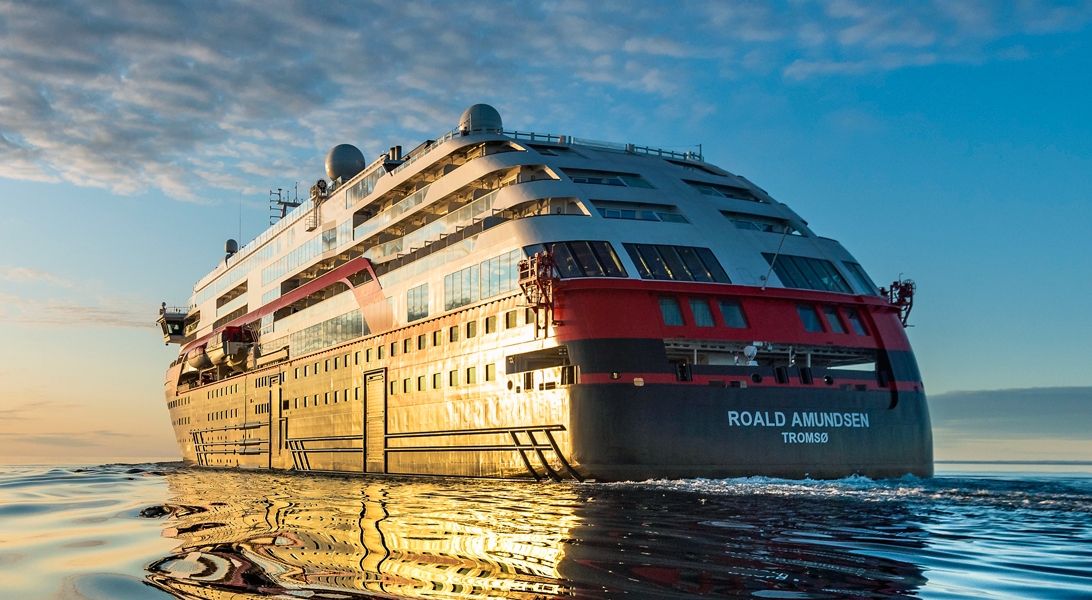
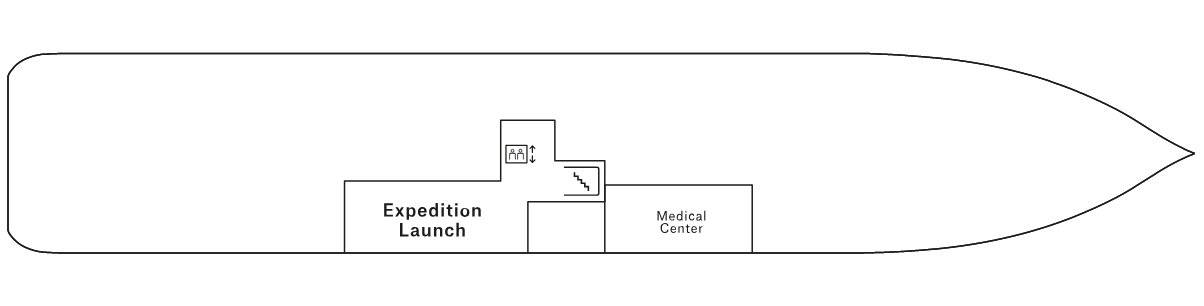

The images shown are for illustration purposes only and may not be an exact representation of what you find on the ship.
The images shown are for illustration purposes only and may not be an exact representation of what you find on the ship.
The images shown are for illustration purposes only and may not be an exact representation of what you find on the ship.
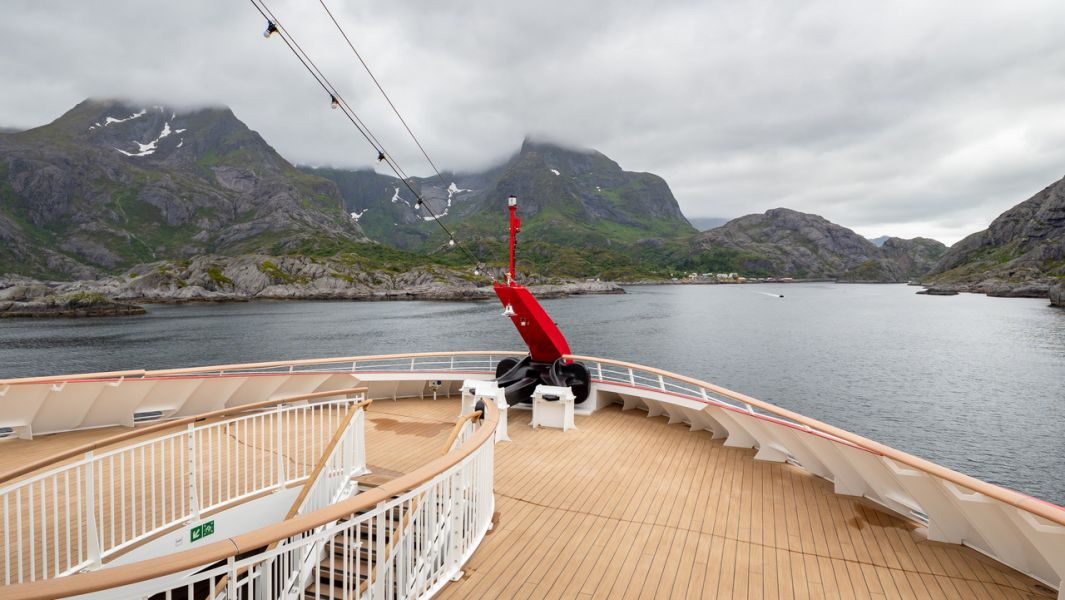
The ship has spacious outdoor areas. They are perfect vantage points to sit back, relax and watch the world go by. The observation deck is located on deck 11, where you will also find the outdoor gym and running track.
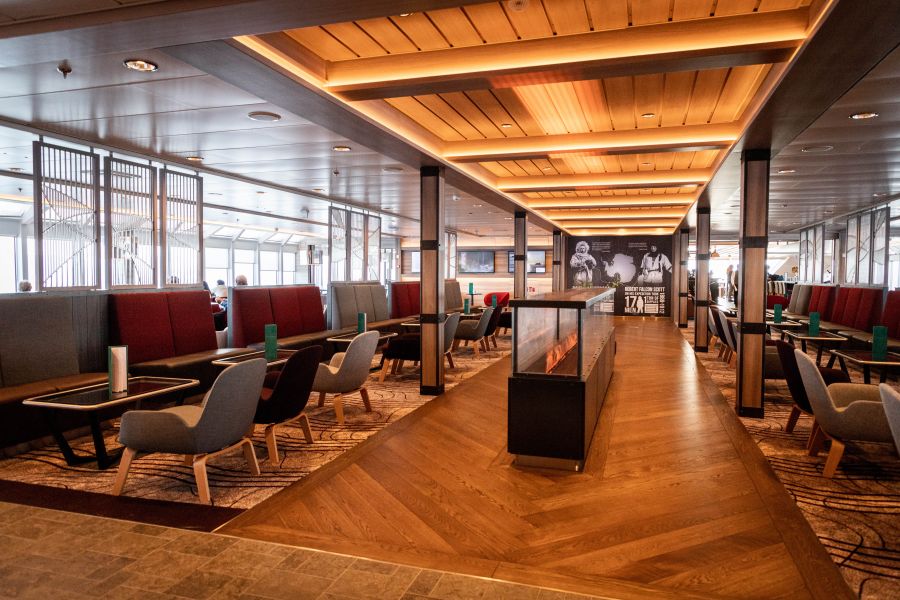
Relax and rejuvenate in the elegant Explorer lounge & bar. Sink into a comfortable armchair and gaze out at the magnificent views through the floor-to-ceiling windows.
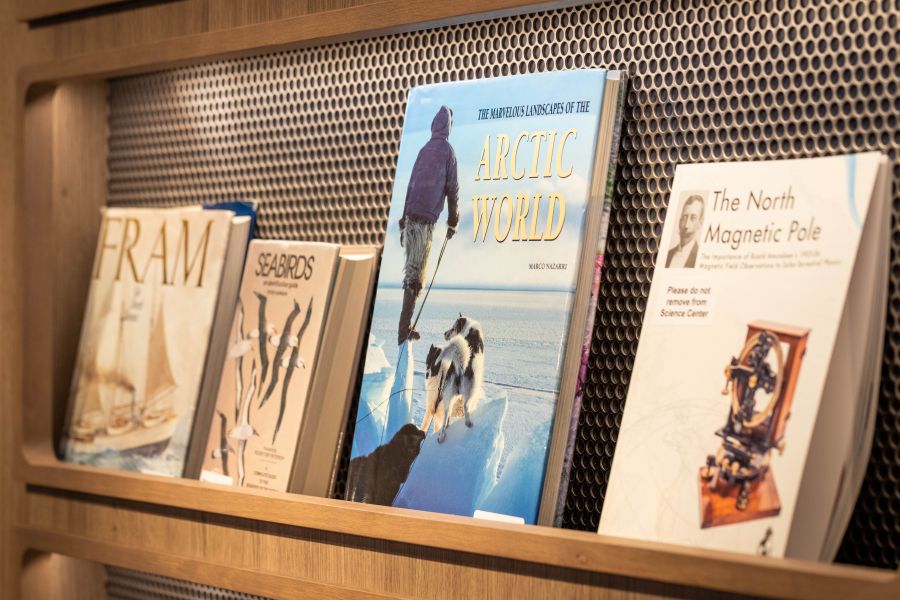
The ship has a small selection of books on different topics that is available to guests while on board. The library is located on deck 6.
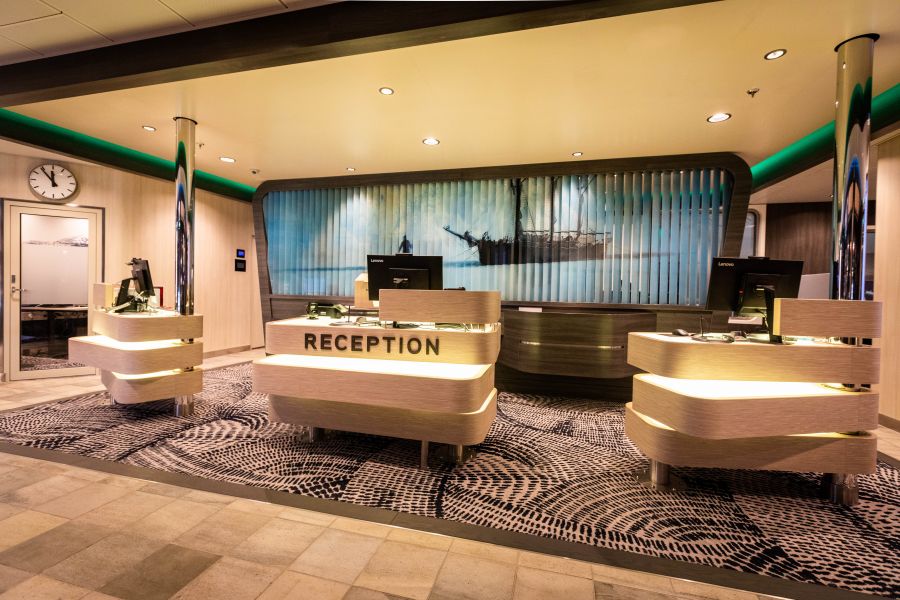
The reception is located on deck 6.
The images shown are for illustration purposes only and may not be an exact representation of what you find on the ship.
The images shown are for illustration purposes only and may not be an exact representation of what you find on the ship.

Our Fusion packages are all ABTA & ATOL protected ensuring that your booking is safe with us
| 7 nights aboard the MS Roald Amundsen | |||
| Full-board dining included | |||
| Wine, beer & soft drinks included with lunch & dinner | |||
| Complimentary tea and coffee | |||
| Range of included excursions | |||
| No gratuities | |||
| Complimentary Wi-Fi on board | |||
| Engaging onboard activities and lectures | |||
| Port Taxes and Fees | |||
 | ABTA and ATOL Protection* | ||
Date 17th Jun 2028 |
Nts 7 |
Oceanview £4,815pp |
Balcony £5,939pp |
Suite £6,959pp |
Date 17th Jun 2028 |
Nts 7 |
Oceanview £4,815pp |
Balcony £5,939pp |
Suite £6,959pp |
| Oceanview staterooms from | £4,815pp | ||
| RR | Polar Outside Cabin | £4,815pp | |
| TT | Large Arctic Superior Cabin | £5,273pp | |
| TY | Large Arctic Superior Cabin (wheelchair-accessible) | £5,273pp | |
| USPO | Unspecified Polar Outside |  | |
| USP | Unspecified Polar Outside | | |
| USPY | Unspecified Arctic Superior | | |
| Balcony staterooms from | £5,939pp | ||
| XT | Arctic Superior Cabin with Balcony (quad) | £6,273pp | |
| XTD | Arctic Superior Cabin with Balcony | £6,273pp | |
| XY | Arctic Superior Cabin with Balcony (wheelchair-accessible) | £6,273pp | |
| XTJ | Arctic Superior Cabin with Balcony (wheelchair-accessible, limited view, quad) | £5,939pp | |
| USPX | Unspecified Arctic Superior | | |
| USXY | Unspecified Arctic Superior | | |
| Suite staterooms from | £6,959pp | ||
| MA | XL Expedition Corner Suite with Balcony (Upper Deck) | £12,721pp | |
| MB | XL Expedition Corner Suite with Balcony (Lower Deck) | £9,327pp | |
| MC | Expedition Suite | £9,919pp | |
| MD | Large Expedition Suite with Balcony | £8,183pp | |
| ME | Expedition Suite with Balcony | £7,275pp | |
| MF | Expedition Corner Suite | £6,959pp | |
| USPS | Unspecified Expedition Suite | | |
| USSY | Unspecified Expedition Suite | | |
| Oceanview | Balcony | Suite | |
| (All prices are £GBP per person) | |||
| Sat 20th May 202820 May 28 | 4,567 | 5,624 | 6,583 |
| Sat 3rd Jun 202803 Jun 28 | 4,567 | 5,624 | 6,583 |
| Sat 1st Jul 202801 Jul 28 | 4,815 | 5,939 | 6,959 |
Fusion Holidays when selling travel arrangements is a trading name of Co-op Travel Services Limited, registration 08903986. Fusion Cruises is an Accredited Body Member of Co-op Travel Services Limited ATOL 12904.
Book with Confidence. We are a Member of ABTA which means you have the benefit of ABTA’s assistance and Code of Conduct.
Some of the flights and flight-inclusive holidays on this website are financially protected by the ATOL scheme but ATOL protection does not apply to all holiday and travel services offered on this website. This website will provide you with information on the protection that applies in the case of each holiday and travel service offered before you make your booking. If you do not receive an ATOL Certificate then the booking will not be ATOL protected. If you do receive an ATOL Certificate but all parts of your trip are not listed on it, those parts will not be ATOL protected. Please see our booking conditions for information, or for more information about financial protection and the ATOL Certificate go to: www.caa.co.uk