This site uses cookies as defined in our Cookie Policy, by continuing to use this site you agree to their use.
Continue

| Arrive | Depart | ||||||
| 12th12 | MarMar | 202727 | Oslo, Norway, embark on the MS Trollfjord | 20:00 | |||
Oslo is the capital of Norway and is also its largest city, situated at the head of Oslo Fjord and surrounded by hills and forests. Home to some 50 museums and full of galleries, cafés, a sculpture park and the Royal Palace, this vibrant city with its handsome 19th-century buildings and wide streets has much to offer. Its history dates back 1,000 years, and includes a rich seafaring heritage that ranges from the Viking era to Thor Heyerdahl’s Kon Tiki expedition. Discover more about this exciting city on our varied selection of excursions. | |||||||
| 13th13 | MarMar | 202727 | At Sea | ||||
| 14th14 | MarMar | 202727 | Lysefjord, Norway | 07:00 | 09:00 | ||
| 14th14 | MarMar | 202727 | Stavanger, Norway | 11:00 | 16:00 | ||
Overlooking the Atlantic Ocean, Stavanger flourished in the 19th century as a fishing port. While other towns in Norway have suffered with the decline of this industry, Stavanger has kept its economy booming by diversifying, first into shipbuilding and now into oil. These two contrasting industries have created a city of two halves – a modern area of high-rise buildings and a historic centre with cobbled streets and old wooden houses. The city centre was the birthplace of Alexander Kielland, one of the great 19th-century Norwegian novelists. Stavanger Cathedral, dating from 1125, is an impressive building and the only medieval cathedral in Norway that has not been substantially altered since it was first built. From Stavanger you can explore the attractive blue waters of Lysefjord, surrounded by cliffs and striking rock formations, and also visit Hafrsfjord where the Viking King Harald won an important battle that started the Unification of Norway. Those preferring to explore on their own may wish to visit the interesting Petroleum Museum. | |||||||
| 15th15 | MarMar | 202727 | Ålesund, Norway | 11:00 | 15:00 | ||
The coastal town of Ålesund is the commercial capital of the Møre og Romsdal district. But more important, it is noted for its characteristic Jugendstil (Art Nouveau) buildings, which some claim make Ålesund one of the most beautiful towns in Norway. This Art Nouveau style emerged when the town was completely rebuilt after a devastating fire in 1904 destroyed nearly 800 buildings and left 10,000 residents homeless. It is said that the fire started by a tipped oil lamp. Rebuilding was carried out with the help of many young, foreign architects who added their own flourishes to the architectural blend of German Jugendstil and Viking roots. Today, narrow streets are crammed with buildings topped with turrets, spires and gables that bear decorations of dragonheads and curlicues. As one of the few remaining Art Nouveau towns in the world, in 1998 Ålesund was awarded the coveted Houens National Memorial Prize for the preservation of its unique architecture. | |||||||
| 16th16 | MarMar | 202727 | Rørvik, Norway | 08:00 | 12:00 | ||
| 17th17 | MarMar | 202727 | Svolvær, Norway | 08:00 | 13:00 | ||
| 17th17 | MarMar | 202727 | Stokmarknes, Norway | 17:00 | 20:00 | ||
| 18th18 | MarMar | 202727 | Tromsø, Norway | 10:00 | |||
With its centre located on the island of Tromsø, the municipality of Tromsø is more than five times the size of Norway’s capital, Oslo, and is the world’s northernmost university city. Lying 200 miles inside the Arctic Circle, it is known as the 'Gateway to the Arctic' because it was used as a starting point for hunters looking for Arctic foxes, polar bears and seals. In the 19th century it was a base for explorers on Arctic expeditions – a history that is remembered in the city’s Polar Museum, which you can visit on an excursion. Also commemorated in the area is the history of Norway’s indigenous people, the Sami. Visitors can learn about the traditions, heritage and modern preservation of the Sami culture at the Tromsø Museum. Nowadays, Tromsø is a charming mix of old and new, with wooden buildings sitting alongside contemporary architecture such as the impressive glacier-like Arctic Cathedral, which features one of the largest stained glass windows in Europe. Looking down on the city is Mount Storsteinen, and a cable car runs to the top, giving wonderful views over the surrounding countryside of forested peaks and reindeer pastures. | |||||||
| 19th19 | MarMar | 202727 | At Sea | ||||
| 20th20 | MarMar | 202727 | At Sea | ||||
| 21st21 | MarMar | 202727 | At Sea | ||||
| 22nd22 | MarMar | 202727 | At Sea | ||||
| 23rd23 | MarMar | 202727 | Helsinki, Finland | ||||
A city of the sea, Helsinki was built along a series of oddly shaped peninsulas and islands jutting into the Baltic coast along the Gulf of Finland. Streets and avenues curve around bays, bridges reach to nearby islands, and ferries ply among offshore islands.Having grown dramatically since World War II, Helsinki now absorbs more than one-tenth of the Finnish population. The metro area covers 764 square km (474 square miles) and 315 islands. Most sights, hotels, and restaurants cluster on one peninsula, forming a compact central hub. The greater Helsinki metropolitan area, which includes Espoo and Vantaa, has a total population of more than a million people.Helsinki is a relatively young city compared with other European capitals. In the 16th century, King Gustav Vasa of Sweden decided to woo trade from the Estonian city of Tallinn and thus challenge the Hanseatic League's monopoly on Baltic trade. Accordingly, he commanded the people of four Finnish towns to pack up their belongings and relocate to the rapids on the River Vantaa. The new town, founded on June 12, 1550, was named Helsinki.For three centuries, Helsinki (Helsingfors in Swedish) had its ups and downs as a trading town. Turku, to the west, remained Finland's capital and intellectual center. However, Helsinki's fortunes improved when Finland fell under Russian rule as an autonomous grand duchy. Czar Alexander I wanted Finland's political center closer to Russia and, in 1812, selected Helsinki as the new capital. Shortly afterward, Turku suffered a disastrous fire, forcing the university to move to Helsinki. The town's future was secure.Just before the czar's proclamation, a fire destroyed many of Helsinki's traditional wooden structures, precipitating the construction of new buildings suitable for a nation's capital. The German-born architect Carl Ludvig Engel was commissioned to rebuild the city, and as a result, Helsinki has some of the purest neoclassical architecture in the world. Add to this foundation the influence of Stockholm and St. Petersburg with the local inspiration of 20th-century Finnish design, and the result is a European capital city that is as architecturally eye-catching as it is distinct from other Scandinavian capitals. You are bound to discover endless engaging details—a grimacing gargoyle; a foursome of males supporting a balcony's weight on their shoulders; a building painted in striking colors with contrasting flowers in the windows. The city's 400 or so parks make it particularly inviting in summer.Today, Helsinki is still a meeting point of eastern and western Europe, which is reflected in its cosmopolitan image, the influx of Russians and Estonians, and generally multilingual population. Outdoor summer bars ("terrassit" as the locals call them) and cafés in the city center are perfect for people watching on a summer afternoon. | |||||||
| 24th24 | MarMar | 202727 | Helsinki, Finland | ||||
A city of the sea, Helsinki was built along a series of oddly shaped peninsulas and islands jutting into the Baltic coast along the Gulf of Finland. Streets and avenues curve around bays, bridges reach to nearby islands, and ferries ply among offshore islands.Having grown dramatically since World War II, Helsinki now absorbs more than one-tenth of the Finnish population. The metro area covers 764 square km (474 square miles) and 315 islands. Most sights, hotels, and restaurants cluster on one peninsula, forming a compact central hub. The greater Helsinki metropolitan area, which includes Espoo and Vantaa, has a total population of more than a million people.Helsinki is a relatively young city compared with other European capitals. In the 16th century, King Gustav Vasa of Sweden decided to woo trade from the Estonian city of Tallinn and thus challenge the Hanseatic League's monopoly on Baltic trade. Accordingly, he commanded the people of four Finnish towns to pack up their belongings and relocate to the rapids on the River Vantaa. The new town, founded on June 12, 1550, was named Helsinki.For three centuries, Helsinki (Helsingfors in Swedish) had its ups and downs as a trading town. Turku, to the west, remained Finland's capital and intellectual center. However, Helsinki's fortunes improved when Finland fell under Russian rule as an autonomous grand duchy. Czar Alexander I wanted Finland's political center closer to Russia and, in 1812, selected Helsinki as the new capital. Shortly afterward, Turku suffered a disastrous fire, forcing the university to move to Helsinki. The town's future was secure.Just before the czar's proclamation, a fire destroyed many of Helsinki's traditional wooden structures, precipitating the construction of new buildings suitable for a nation's capital. The German-born architect Carl Ludvig Engel was commissioned to rebuild the city, and as a result, Helsinki has some of the purest neoclassical architecture in the world. Add to this foundation the influence of Stockholm and St. Petersburg with the local inspiration of 20th-century Finnish design, and the result is a European capital city that is as architecturally eye-catching as it is distinct from other Scandinavian capitals. You are bound to discover endless engaging details—a grimacing gargoyle; a foursome of males supporting a balcony's weight on their shoulders; a building painted in striking colors with contrasting flowers in the windows. The city's 400 or so parks make it particularly inviting in summer.Today, Helsinki is still a meeting point of eastern and western Europe, which is reflected in its cosmopolitan image, the influx of Russians and Estonians, and generally multilingual population. Outdoor summer bars ("terrassit" as the locals call them) and cafés in the city center are perfect for people watching on a summer afternoon. | |||||||
| 25th25 | MarMar | 202727 | Helsinki, Finland, disembark the MS Trollfjord | ||||
A city of the sea, Helsinki was built along a series of oddly shaped peninsulas and islands jutting into the Baltic coast along the Gulf of Finland. Streets and avenues curve around bays, bridges reach to nearby islands, and ferries ply among offshore islands.Having grown dramatically since World War II, Helsinki now absorbs more than one-tenth of the Finnish population. The metro area covers 764 square km (474 square miles) and 315 islands. Most sights, hotels, and restaurants cluster on one peninsula, forming a compact central hub. The greater Helsinki metropolitan area, which includes Espoo and Vantaa, has a total population of more than a million people.Helsinki is a relatively young city compared with other European capitals. In the 16th century, King Gustav Vasa of Sweden decided to woo trade from the Estonian city of Tallinn and thus challenge the Hanseatic League's monopoly on Baltic trade. Accordingly, he commanded the people of four Finnish towns to pack up their belongings and relocate to the rapids on the River Vantaa. The new town, founded on June 12, 1550, was named Helsinki.For three centuries, Helsinki (Helsingfors in Swedish) had its ups and downs as a trading town. Turku, to the west, remained Finland's capital and intellectual center. However, Helsinki's fortunes improved when Finland fell under Russian rule as an autonomous grand duchy. Czar Alexander I wanted Finland's political center closer to Russia and, in 1812, selected Helsinki as the new capital. Shortly afterward, Turku suffered a disastrous fire, forcing the university to move to Helsinki. The town's future was secure.Just before the czar's proclamation, a fire destroyed many of Helsinki's traditional wooden structures, precipitating the construction of new buildings suitable for a nation's capital. The German-born architect Carl Ludvig Engel was commissioned to rebuild the city, and as a result, Helsinki has some of the purest neoclassical architecture in the world. Add to this foundation the influence of Stockholm and St. Petersburg with the local inspiration of 20th-century Finnish design, and the result is a European capital city that is as architecturally eye-catching as it is distinct from other Scandinavian capitals. You are bound to discover endless engaging details—a grimacing gargoyle; a foursome of males supporting a balcony's weight on their shoulders; a building painted in striking colors with contrasting flowers in the windows. The city's 400 or so parks make it particularly inviting in summer.Today, Helsinki is still a meeting point of eastern and western Europe, which is reflected in its cosmopolitan image, the influx of Russians and Estonians, and generally multilingual population. Outdoor summer bars ("terrassit" as the locals call them) and cafés in the city center are perfect for people watching on a summer afternoon. | |||||||
| 25th25 | MarMar | 202727 | 7 nights accommodation following your cruise, staying in Helsinki | ||||
| 1st01 | AprApr | 202727 | Check out of accommodation | ||||
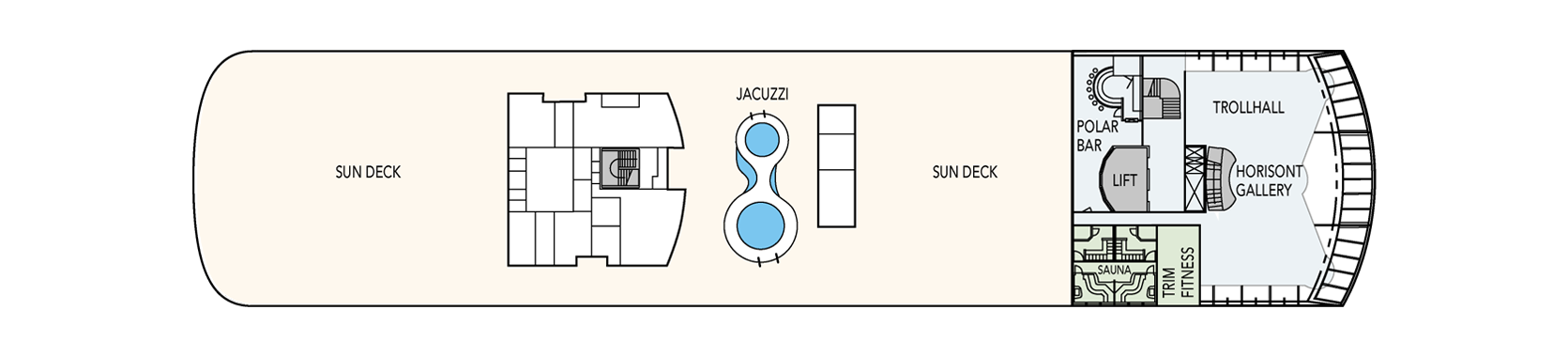
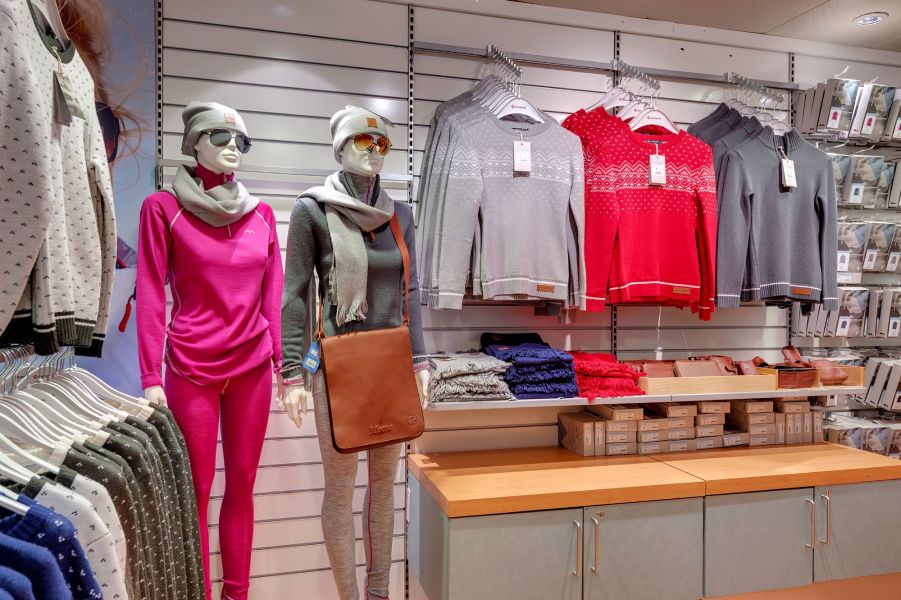
The images shown are for illustration purposes only and may not be an exact representation of what you find on the ship.
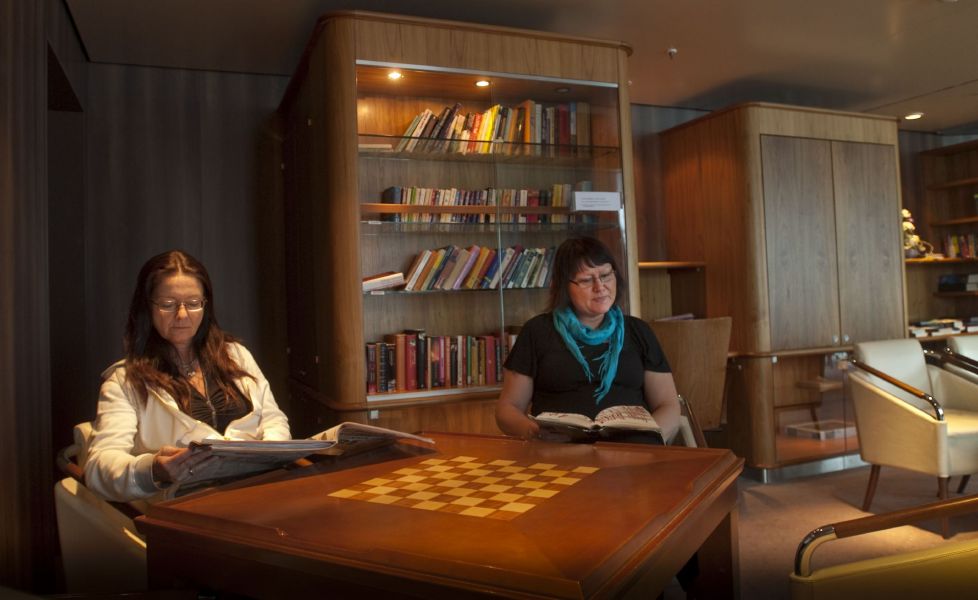
The ship has a small selection of books on different topics that is available to guests while on board.
In our on-board shop you can buy modern clothing suitable for your voyage. Our Coastal Team will be happy to give you expert advice on how to dress properly.
We offer a great range of both warm and practical clothing, and we focus on fabrics with natural fibres. We also offer souvenirs, handicrafts, and postcards. In addition, we also stock a small selection of soap, toothpaste and other personal effects.
The images shown are for illustration purposes only and may not be an exact representation of what you find on the ship.
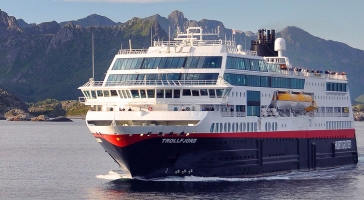
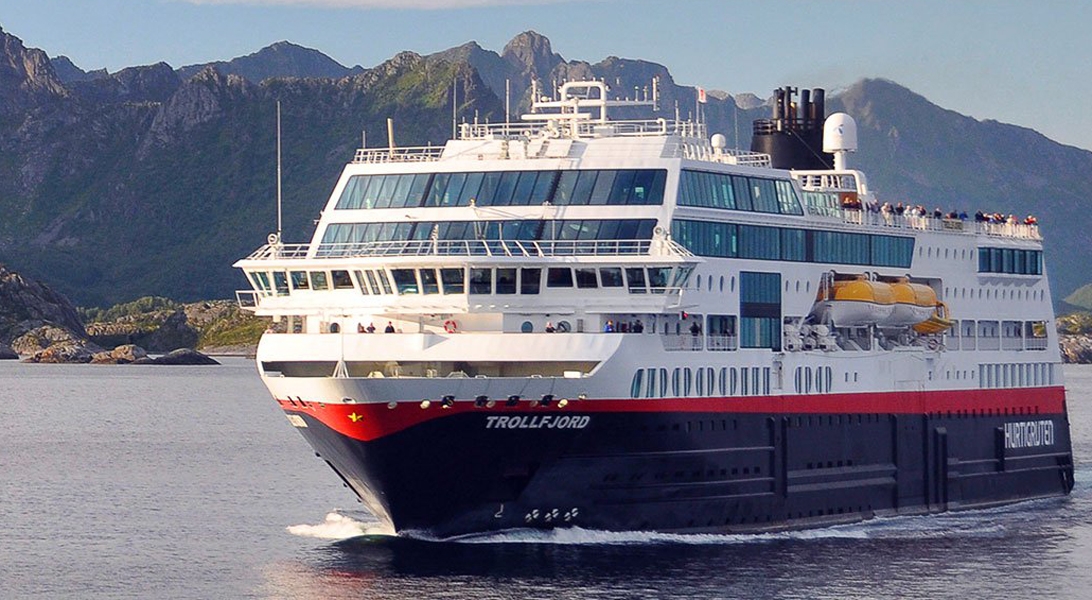
| 6 nights aboard the MS Trollfjord | |||
| Full-board dining included | |||
| No gratuities | |||
| Engaging onboard activities and lectures | |||
| Port Taxes and Fees | |||
![]() | ABTA and ATOL Protection* | ||
Date 12th Mar 2027 |
Nts 13 |
Interior £6,031pp |
Oceanview £6,295pp |
Suite £8,670pp |
Date 12th Mar 2027 |
Nts 13 |
Interior £6,031pp |
Oceanview £6,295pp |
Suite £8,670pp |
| Interior staterooms from | £6,031pp | ||
| I2 | Polar Inside Cabin (Middle deck) | £6,031pp | |
| K2 | Polar Inside Cabin | £6,083pp | |
| Oceanview staterooms from | £6,295pp | ||
| N2 | Middle deck for 2 travellers | £6,647pp | |
| O2 | Polar Outside (Middle deck) | £6,735pp | |
| L2 | Polar Outside (Lower deck) | £6,295pp | |
| QJ | Arctic Superior (Middle/upper deck) | £7,262pp | |
| U2 | Arctic Superior | £7,438pp | |
| J3 | Polar Outside Cabin (Triple) | £6,383pp | |
| YA3 | Arctic Superior (Triple, Accessible cabin) | £7,262pp | |
| P2D | Arctic Superior Cabin (Double) | £7,262pp | |
| U2D | Arctic Superior (Upper deck) | £7,438pp | |
| Suite staterooms from | £8,670pp | ||
| MG | Expedition Suites: Grand Suite (Upper deck) | £11,239pp | |
| Q2 | Expedition Suite: Mini-Suite | £8,670pp | |
Fusion Cruises when selling travel arrangements is a trading name of Co-op Travel Services Ltd. Fusion Cruises is an Accredited Body Member of Co-operative Travel Consortium. (ABTA:P6652, ATOL:12904).
Book with Confidence. We are a Member of ABTA which means you have the benefit of ABTA’s assistance and Code of Conduct.
Some of the flights and flight-inclusive holidays on this website are financially protected by the ATOL scheme but ATOL protection does not apply to all holiday and travel services offered on this website. This website will provide you with information on the protection that applies in the case of each holiday and travel service offered before you make your booking. If you do not receive an ATOL Certificate then the booking will not be ATOL protected. If you do receive an ATOL Certificate but all parts of your trip are not listed on it, those parts will not be ATOL protected. Please see our booking conditions for information, or for more information about financial protection and the ATOL Certificate go to: www.caa.co.uk