| | | | | Arrive | Depart |
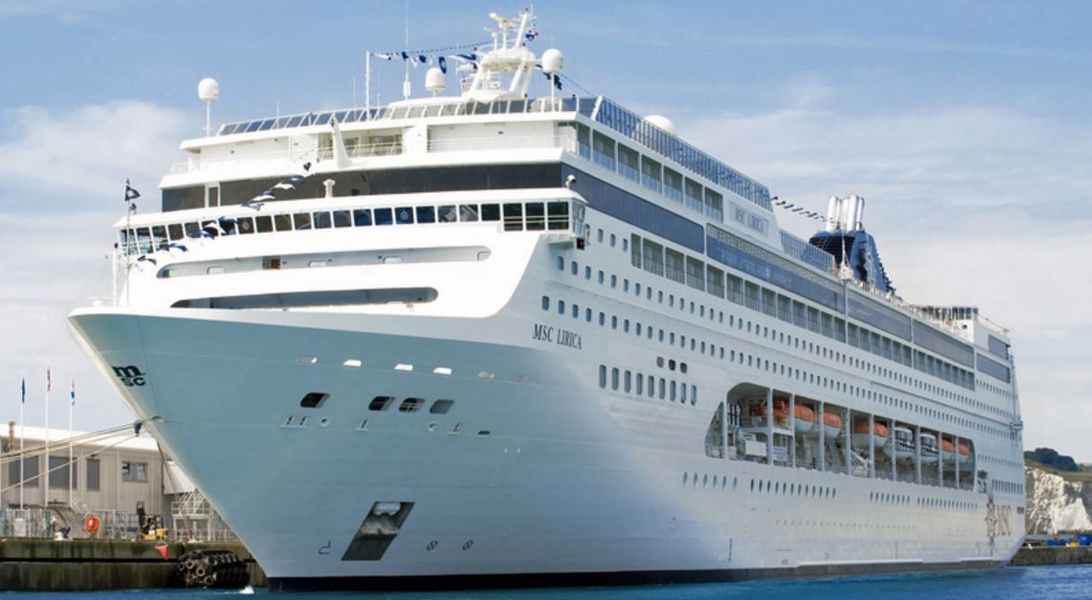
| 20th20 | NovNov | 202626 | Barcelona, Spain, embark on the MSC Lirica | | 19:00 |
The infinite variety of street life, the nooks and crannies of the medieval Barri Gòtic, the ceramic tile and stained glass of Art Nouveau facades, the art and music, the throb of street life, the food (ah, the food!)—one way or another, Barcelona will find a way to get your full attention. The capital of Catalonia is a banquet for the senses, with its beguiling mix of ancient and modern architecture, tempting cafés and markets, and sun-drenched Mediterranean beaches. A stroll along La Rambla and through waterfront Barceloneta, as well as a tour of Gaudí's majestic Sagrada Famíliaand his other unique creations, are part of a visit to Spain's second-largest city. Modern art museums and chic shops call for attention, too. Barcelona's vibe stays lively well into the night, when you can linger over regional wine and cuisine at buzzing tapas bars. |
| 21st21 | NovNov | 202626 | At Sea | | |
| 22nd22 | NovNov | 202626 | Málaga, Spain | 08:00 | 18:00 |
As you sail into Malaga you will notice what an idyllic setting the city enjoys on the famous Costa del Sol. To the east of this provincial capital, the coast along the region of La Axarqua is scattered with villages, farmland and sleepy fishing hamlets - the epitome of traditional rural Spain. To the west stretches a continuous city where the razzmatazz and bustle creates a colourful contrast that is easily recognisable as the Costa del Sol. Surrounding the region, the Penibéetica Mountains provide an attractive backdrop overlooking the lower terraced slopes which yield olives and almonds. This spectacular mountain chain shelters the province from cold northerly winds, giving it a reputation as a therapeutic and exotic place in which to escape from cold northern climes. Malaga is also the gateway to many of Andalusia's enchanting historic villages, towns and cities. |
| 23rd23 | NovNov | 202626 | Tangier, Morocco | 07:00 | 18:00 |
Tangier can trace its origins back to the Phoenicians and ancient Greeks. It was named after Tinge, the mother of Hercules’ son, and its beginnings are embedded in mythology. It was subsequently a Roman province, and after Vandal and Byzantine influences, was occupied by the Arabs with Spain, Portugal, France and England also playing a part in the city’s history. With such a diverse past it is perhaps not surprising that Tangier is such an individual city. Overlooking the Straits of Gibraltar, the city lies on a bay between two promontories. With its old Kasbah, panoramic views, elegant buildings, squares and places of interest, there is much to discover in both the new and old parts of the city. |
| 24th24 | NovNov | 202626 | At Sea | | |
| 25th25 | NovNov | 202626 | Santa Cruz de Tenerife, Spain | 10:00 | 20:00 |
The largest of the Canary Islands, Tenerife is a beautiful and scenic island which enjoys year-round sunshine and is dominated by Mount Teide. The mountain range runs through the centre of the island, with fertile valleys on the northern side. In the central part of the range is the gigantic natural crater of the Cañadas del Teide, about 14 miles in diameter. Santa Cruz, the island’s pretty capital, was originally a small fishing village but has now grown into a modern city, and also contains 16th-century civic buildings and ornate private mansions. Near the pier is the Santa Cruz Palmetum, a Botanical Garden covering an area of 29 acres, specialising in palms. |
| 26th26 | NovNov | 202626 | At Sea | | |
| 27th27 | NovNov | 202626 | At Sea | | |
| 28th28 | NovNov | 202626 | At Sea | | |
| 29th29 | NovNov | 202626 | At Sea | | |
| 30th30 | NovNov | 202626 | At Sea | | |
| 1st01 | DecDec | 202626 | At Sea | | |
| 2nd02 | DecDec | 202626 | Salvador de Bahia, Brazil | 10:00 | 18:00 |
According to Salvador's adopted son Jorge Amado, "In Salvador, magic becomes part of the every-day." From the shimmering golden light of sunset over the Baía do Todos os Santos, to the rhythmic beats that race along the streets, Salvador, while no longer Brazil's capital, remains one of its most captivating cities. A large dose of its exoticism comes down to its African heritage—at least 70% of its 2,675,000 population is classified as Afro-Brazilian—and how it has blended into Brazil's different strands, from the native Indians to the Christian colonizers. Salvadorans may tell you that you can visit a different church every day of the year, which is almost true—the city has about 300. Churches whose interiors are covered with gold leaf were financed by the riches of the Portuguese colonial era, when slaves masked their traditional religious beliefs under a thin Catholic veneer. And partly thanks to modern-day acceptance of those beliefs, Salvador has become the fount of Candomblé, a religion based on personal dialogue with the orixás, a family of African deities closely linked to nature and the Catholic saints. The influence of Salvador's African heritage on Brazilian music has also turned the city into one of the musical capitals of Brazil, resulting in a myriad of venues to enjoy live music across the city, along with international acclaim for exponents like Gilberto Gil, Caetano Veloso, and Daniela Mercury. Salvador's economy today is focused on telecommunications and tourism. The still-prevalent African culture draws many tourists—this is the best place in Brazil to hear African music, learn or watch African dance, and see capoeira, a martial art developed by slaves. In the district of Pelourinho, many colorful 18th- and 19th-century houses remain, part of the reason why this is the center of the tourist trade. Salvador sprawls across a peninsula surrounded by the Baía de Todos os Santos on one side and the Atlantic Ocean on the other. The city has about 50 km (31 miles) of coastline. The original city, referred to as the Centro Histórica (Historical Center), is divided into the Cidade Alta (Upper City), also called Pelourinho, and Cidade Baixa (Lower City). The Cidade Baixa is a commercial area—known as Comércio—that runs along the port and is the site of Salvador's indoor market, Mercado Modelo. You can move between the upper and lower cities on foot, via the landmark Elevador Lacerda, behind the market, or on the Plano Inclinado, a funicular lift, which connects Rua Guindaste dos Padres on Comércio with the alley behind Cathedral Basílica. From the Cidade Histórica you can travel north along the bay to the hilltop Igreja de Nosso Senhor do Bonfim. You can also head south to the point, guarded by the Forte Santo Antônio da Barra, where the bay waters meet those of the Atlantic. This area on Salvador's southern tip is home to the trendy neighborhoods of Barra, Ondina, and Rio Vermelho, with many museums, theaters, shops, and restaurants. Beaches along the Atlantic coast and north of Forte Santo Antônio da Barra are among the city's cleanest. Many are illuminated at night and have bars and restaurants that stay open late. |
| 3rd03 | DecDec | 202626 | Ilheus, Brazil | 08:00 | 18:00 |
| 4th04 | DecDec | 202626 | At Sea | | |
| 5th05 | DecDec | 202626 | Rio de Janeiro, Brazil | 08:00 | 18:00 |
Welcome to the Cidade Maravilhosa, or the Marvelous City, as Rio is known in Brazil. Synonymous with the girl from Ipanema, the dramatic views from Christ the Redeemer atop Corcovado mountain, and fabulously flamboyant Carnival celebrations, Rio is a city of stunning architecture, abundant museums, and marvelous food. Rio is also home to 23 beaches, an almost continuous 73-km (45-mile) ribbon of sand.As you leave the airport and head to Rio's beautiful Zona Sul (the touristic South Zone), you'll drive for about 40 minutes on a highway from where you'll begin to get a sense of the dramatic contrast between beautiful landscape and devastating poverty. In this teeming metropolis of 12 million people (6.2 million of whom live in Rio proper), the very rich and the very poor live in uneasy proximity. You'll drive past seemingly endless cinder-block favela, but by the time you reach Copacabana's breezy, sunny Avenida Atlântica—flanked on one side by white beach and azure sea and on the other by condominiums and hotels—your heart will leap with expectation as you begin to recognize the postcard-famous sights. Now you're truly in Rio, where cariocas (Rio residents) and tourists live life to its fullest.Enthusiasm is contagious in Rio. Prepare to have your senses engaged and your inhibitions untied. Rio seduces with a host of images: the joyous bustle of vendors at Sunday's Feira Hippie (Hippie Fair); the tipsy babble at sidewalk cafés as patrons sip their last glass of icy beer under the stars; the blanket of lights beneath the Pão de Açúcar (Sugarloaf Mountain); the bikers, joggers, strollers, and power walkers who parade along the beach each morning. Borrow the carioca spirit for your stay; you may find yourself reluctant to give it back. |
| 6th06 | DecDec | 202626 | Santos, Brazil | 08:00 | 18:00 |
| 7th07 | DecDec | 202626 | Itajai, Brazil, disembark the MSC Lirica | 09:00 | |
Though founded in the early 18th century, Itajai only started to develop during the mid-19th century when surrounding parts in the Brazilian southern state of Santa Catarina began to see an arrival of European immigrants who generated business for the port. Toward the close of that century, the town itself received a considerable influx of Italian, German and Polish immigrants, whose descendants now make up the bulk of the population. Out in the countryside, neat farms and distinct European architecture are still evidence of these early immigrant settlers. Despite its early beginnings, Itajai looks fairly new, with few buildings dating from before 1950. And while it may be short on “must sees,” the town benefits from nice beaches and its close proximity to Camboriú, one of the most popular tourist destinations in Santa Catarina state. In addition to white sand beaches, Camboriú boasts a busy commercial centre and the only cable car in the world to link two beaches. A day trip away is Blumenau, settled by German and Italian immigrants. Evidence of their heritage can still be seen in the town’s traditional style architecture and memorials. Pier Information The ship will be docked at the Itajai commercial pier, within walking distance to the town center. Taxis are generally available by the pier entrance, but you are advised to establish the fare before setting out. There are few English-speaking drivers. Shopping A variety of shops line the downtown pedestrian street. Most of them carry items of interest to the local population rather than tourists. The currency is the real. Cuisine As a busy port with freighters and tankers calling from around the world, Itajai offers a number of good but basic eateries, offering regional dishes as well as international fare. A bar and eatery, located just across from the pier entrance, is a popular attraction due to its seafaring clientele who have decorated the walls of the establishment over the years with interesting slogans and drawings. Other Sites There are few “must-see” sites in Itajai, but taking a stroll along the pedestrian street or having a look inside the cathedral may offer an interesting look at local lifestyle and activities. Beaches About a 10-15 minute drive away one can find Itajai’s beaches of Atalaia and Geremias, or still a bit farther the Praia Cabecudas. Beaches do not offer any tourist facilities, but are popular with locals. More upscale beach facilities can be found at Camboriú, a 6-mile (10 km) drive from Itajai. Private arrangements for independent sightseeing are limited in this port and subject to the availability of English-speaking guides. |