This site uses cookies as defined in our Cookie Policy, by continuing to use this site you agree to their use.
Continue

| Arrive | Depart | ||||||
| 5th05 | JanJan | 202828 | Genoa, Italy, embark on the MSC Magnifica | 18:00 | |||
Genoa is a port city in the Northwest of Italy. Home to the Genoa Aquarium, famous for having the largest exposition of biodiversity in Europe, the city is also a great place to visit for anyone interested in architecture. | |||||||
| 6th06 | JanJan | 202828 | Marseille, France | 08:00 | 18:00 | ||
Since being designated a European Capital of Culture for 2013, with an estimated €660 million of funding in the bargain, Marseille has been in the throes of an extraordinary transformation, with no fewer than five major new arts centers, a beautifully refurbished port, revitalized neighborhoods, and a slew of new shops and restaurants. Once the underdog, this time-burnished city is now welcoming an influx of weekend tourists who have colonized entire neighborhoods and transformed them into elegant pieds-à-terre (or should we say, mer). The second-largest city in France, Marseille is one of Europe's most vibrant destinations. Feisty and fond of broad gestures, it is also as complicated and as cosmopolitan now as it was when a band of Phoenician Greeks first sailed into the harbor that is today's Vieux Port in 600 BC. Legend has it that on that same day a local chieftain's daughter, Gyptis, needed to choose a husband, and her wandering eyes settled on the Greeks' handsome commander Protis. Her dowry brought land near the mouth of the Rhône, where the Greeks founded Massalia, the most important Continental shipping port in antiquity. The port flourished for some 500 years as a typical Greek city, enjoying the full flush of classical culture, its gods, its democratic political system, its sports and theater, and its naval prowess. Caesar changed all that, besieging the city in 49 BC and seizing most of its colonies. In 1214 Marseille was seized again, this time by Charles d'Anjou, and was later annexed to France by Henri IV in 1481, but it was not until Louis XIV took the throne that the biggest transformations of the port began; he pulled down the city walls in 1666 and expanded the port to the Rive Neuve (New Riverbank). The city was devastated by plague in 1720, losing more than half its population. By the time of the Revolution, Marseille was on the rebound once again, with industries of soap manufacturing and oil processing flourishing, encouraging a wave of immigration from Provence and Italy. With the opening of the Suez Canal in 1869, Marseille became the greatest boomtown in 19th-century Europe. With a large influx of immigrants from areas as exotic as Tangiers, the city quickly acquired the multicultural population it maintains to this day. | |||||||
| 7th07 | JanJan | 202828 | Barcelona, Spain | 08:00 | 16:00 | ||
The infinite variety of street life, the nooks and crannies of the medieval Barri Gòtic, the ceramic tile and stained glass of Art Nouveau facades, the art and music, the throb of street life, the food (ah, the food!)—one way or another, Barcelona will find a way to get your full attention. The capital of Catalonia is a banquet for the senses, with its beguiling mix of ancient and modern architecture, tempting cafés and markets, and sun-drenched Mediterranean beaches. A stroll along La Rambla and through waterfront Barceloneta, as well as a tour of Gaudí's majestic Sagrada Famíliaand his other unique creations, are part of a visit to Spain's second-largest city. Modern art museums and chic shops call for attention, too. Barcelona's vibe stays lively well into the night, when you can linger over regional wine and cuisine at buzzing tapas bars. | |||||||
| 8th08 | JanJan | 202828 | At Sea | ||||
| 9th09 | JanJan | 202828 | At Sea | ||||
| 10th10 | JanJan | 202828 | Santa Cruz de Tenerife, Spain | 08:00 | 18:00 | ||
The largest of the Canary Islands, Tenerife is a beautiful and scenic island which enjoys year-round sunshine and is dominated by Mount Teide. The mountain range runs through the centre of the island, with fertile valleys on the northern side. In the central part of the range is the gigantic natural crater of the Cañadas del Teide, about 14 miles in diameter. Santa Cruz, the island’s pretty capital, was originally a small fishing village but has now grown into a modern city, and also contains 16th-century civic buildings and ornate private mansions. Near the pier is the Santa Cruz Palmetum, a Botanical Garden covering an area of 29 acres, specialising in palms. | |||||||
| 11th11 | JanJan | 202828 | At Sea | ||||
| 12th12 | JanJan | 202828 | At Sea | ||||
| 13th13 | JanJan | 202828 | At Sea | ||||
| 14th14 | JanJan | 202828 | At Sea | ||||
| 15th15 | JanJan | 202828 | At Sea | ||||
| 16th16 | JanJan | 202828 | At Sea | ||||
| 17th17 | JanJan | 202828 | Grand Turk Island, Turks and Caicos Islands | 09:00 | 19:00 | ||
Just 7 miles (11 km) long and a little more than 1 mile (1½ km) wide, this island, the capital and seat of the Turks and Caicos government, has been a longtime favorite destination for divers eager to explore the 7,000-foot-deep pristine coral walls that drop down only 300 yards out to sea. On shore, the tiny, quiet island is home to white-sand beaches, the National Museum, and a small population of wild horses and donkeys, which leisurely meander past the white-walled courtyards, pretty churches, and bougainvillea-covered colonial inns on their daily commute into town. But things aren't entirely sleepy: a cruise-ship complex at the southern end of the island brings about 600,000 visitors per year. That said, the dock is self-contained and is about 3 miles (5 km) from the tranquil, small hotels of Cockburn Town, Pillory Beach, and the Ridge and far from most of the western-shore dive sites. Pristine beaches with vistas of turquoise waters, small local settlements, historic ruins, and native flora and fauna are among the sights on Grand Turk. Fewer than 4,000 people live on this 7½-square-mile (19-square-km) island, and it's hard to get lost, as there aren't many roads. | |||||||
| 18th18 | JanJan | 202828 | At Sea | ||||
| 19th19 | JanJan | 202828 | Ocean Cay, MSC Marine Reserve, Bahamas | 08:00 | 21:00 | ||
| 20th20 | JanJan | 202828 | At Sea | ||||
| 21st21 | JanJan | 202828 | At Sea | ||||
| 22nd22 | JanJan | 202828 | At Sea | ||||
| 23rd23 | JanJan | 202828 | At Sea | 06:00 | 06:01 | ||
| 24th24 | JanJan | 202828 | Balboa (Panama City), Panama | 06:00 | 20:00 | ||
| 25th25 | JanJan | 202828 | At Sea | ||||
| 26th26 | JanJan | 202828 | Manta, Ecuador | 08:00 | 17:00 | ||
| 27th27 | JanJan | 202828 | At Sea | ||||
| 28th28 | JanJan | 202828 | Callao, Peru | 14:00 | 23:59 | ||
When people discuss great South American cities, Lima is often overlooked. But Peru's capital can hold its own against its neighbors. It has an oceanfront setting, colonial-era splendor, sophisticated dining, and nonstop nightlife.It's true that the city—clogged with traffic and choked with fumes—doesn't make a good first impression, especially since the airport is in an industrial neighborhood. But wander around the regal edifices surrounding the Plaza de Armas, among the gnarled olive trees of San Isidro's Parque El Olivar, or along the winding lanes in the coastal community of Barranco, and you'll find yourself charmed.In 1535 Francisco Pizarro found the perfect place for the capital of Spain's colonial empire. On a natural port, the so-called Ciudad de los Reyes (City of Kings) allowed Spain to ship home all the gold the conquistador plundered from the Inca. Lima served as the capital of Spain's South American empire for 300 years, and it's safe to say that no other colonial city enjoyed such power and prestige during this period.When Peru declared its independence from Spain in 1821, the declaration was read in the square that Pizarro had so carefully designed. Many of the colonial-era buildings around the Plaza de Armas are standing today. Walk a few blocks in any direction for churches and elegant houses that reveal just how wealthy this city once was. But the poor state of most buildings attests to the fact that the country's wealthy families have moved to neighborhoods to the south over the past century.The walls that surrounded the city were demolished in 1870, making way for unprecedented growth. A former hacienda became the graceful residential neighborhood of San Isidro. In the early 1920s the construction of tree-lined Avenida Arequipa heralded the development of neighborhoods such as bustling Miraflores and bohemian Barranco.Almost a third of the country's population of 29 million lives in the metropolitan area, many of them in relatively poor conos: newer neighborhoods on the outskirts of the city. Most residents of those neighborhoods moved there from mountain villages during the political violence and poverty that marked the 1980s and ’90s, when crime increased dramatically. During the past decade the country has enjoyed peace and steady economic growth, which have been accompanied by many improvements and refurbishment in the city. Residents who used to steer clear of the historic center now stroll along its streets. And many travelers who once would have avoided the city altogether now plan to spend a day here and end up staying two or three. | |||||||
| 29th29 | JanJan | 202828 | Callao, Peru | 18:00 | |||
When people discuss great South American cities, Lima is often overlooked. But Peru's capital can hold its own against its neighbors. It has an oceanfront setting, colonial-era splendor, sophisticated dining, and nonstop nightlife.It's true that the city—clogged with traffic and choked with fumes—doesn't make a good first impression, especially since the airport is in an industrial neighborhood. But wander around the regal edifices surrounding the Plaza de Armas, among the gnarled olive trees of San Isidro's Parque El Olivar, or along the winding lanes in the coastal community of Barranco, and you'll find yourself charmed.In 1535 Francisco Pizarro found the perfect place for the capital of Spain's colonial empire. On a natural port, the so-called Ciudad de los Reyes (City of Kings) allowed Spain to ship home all the gold the conquistador plundered from the Inca. Lima served as the capital of Spain's South American empire for 300 years, and it's safe to say that no other colonial city enjoyed such power and prestige during this period.When Peru declared its independence from Spain in 1821, the declaration was read in the square that Pizarro had so carefully designed. Many of the colonial-era buildings around the Plaza de Armas are standing today. Walk a few blocks in any direction for churches and elegant houses that reveal just how wealthy this city once was. But the poor state of most buildings attests to the fact that the country's wealthy families have moved to neighborhoods to the south over the past century.The walls that surrounded the city were demolished in 1870, making way for unprecedented growth. A former hacienda became the graceful residential neighborhood of San Isidro. In the early 1920s the construction of tree-lined Avenida Arequipa heralded the development of neighborhoods such as bustling Miraflores and bohemian Barranco.Almost a third of the country's population of 29 million lives in the metropolitan area, many of them in relatively poor conos: newer neighborhoods on the outskirts of the city. Most residents of those neighborhoods moved there from mountain villages during the political violence and poverty that marked the 1980s and ’90s, when crime increased dramatically. During the past decade the country has enjoyed peace and steady economic growth, which have been accompanied by many improvements and refurbishment in the city. Residents who used to steer clear of the historic center now stroll along its streets. And many travelers who once would have avoided the city altogether now plan to spend a day here and end up staying two or three. | |||||||
| 30th30 | JanJan | 202828 | At Sea | ||||
| 31st31 | JanJan | 202828 | Arica, Chile | 08:00 | 18:00 | ||
Arica boasts that it is "the land of the eternal spring," but its temperate climate and beaches are not the only reason to visit this small city. Relax for an hour or two on the Plaza 21 de Mayo. Walk to the pier and watch the pelicans and sea lions trail the fishing boats as the afternoon's catch comes in. Walk to the top of the Morro and imagine battles of days gone by, or wonder at the magnitude of modern shipping as Chilean goods leave the port below by container ship.Arica is gaining notice for its great surfing conditions, and in 2009 hosted the Rusty Arica Pro Surf Challenge, a qualifying event to the world series of surf. | |||||||
| 1st01 | FebFeb | 202828 | At Sea | ||||
| 2nd02 | FebFeb | 202828 | At Sea | ||||
| 3rd03 | FebFeb | 202828 | At Sea | ||||
| 4th04 | FebFeb | 202828 | At Sea | ||||
| 5th05 | FebFeb | 202828 | At Sea | ||||
| 6th06 | FebFeb | 202828 | Hangaroa, Easter Island, Chile | 08:00 | 18:00 | ||
Discovered (by the Western world) on Easter Sunday, 1722, Easter Island is a UNESCO World Heritage Site and one of the most isolated places on the face of the Earth, some 2,300 miles from the Chilean mainland. Although more Polynesian than South American in character, the 64-square mile island was annexed by Chile in 1888, and is now famous as the world’s largest ‘open air museum’ on account of the Moai, or human-like stone statues, that can be found on the island. The Moai remain very much a mystery, which archaeologists are still trying to unlock by interpreting an ancient language of the Rapa Nui, which is the key to understanding this culture, and is written on the so called ‘rongo rongo tablets’. The island owes its origin to three volcanoes which erupted some three million years ago: Poike, Rano Kau and Maunga Terevaka. It is not known when or how the island was first populated, but the most credible theory suggests that the Rapa Nui people came from other Pacific islands in the 4th century AD. In addition to the cultural and archaeological interest, there are the beautiful beaches, transparent waters, and coral reefs that might be expected of a Pacific Island. | |||||||
| 7th07 | FebFeb | 202828 | At Sea | ||||
| 8th08 | FebFeb | 202828 | At Sea | ||||
| 9th09 | FebFeb | 202828 | Pitcairn Island, Pitcairn | 11:00 | 11:10 | ||
With a total of 56 residents on the island, Adamstown is the capital of the Pitcairn Islands and the only populated settlement, as all of the other Pitcairn Islands are uninhabited (although were populated by Polynesians in the 11th through 15th centuries). Halfway between Peru and New Zealand, Pitcairn was the perfect hiding spot for the famed HMS Bounty mutineers and their Tahitian wives. Not only had the island been misplaced on early maps of the region, but it can also be very difficult to come ashore as large breakers tend to build up just in front of the small harbour of Bounty Bay. On shore visit the local museum that houses the HMS Bounty Bible, the historic Adamstown Church, view Fletcher Christian’s cave, or keep an eye out for the Pitcairn Reed Warbler. | |||||||
| 10th10 | FebFeb | 202828 | At Sea | ||||
| 11th11 | FebFeb | 202828 | At Sea | ||||
| 12th12 | FebFeb | 202828 | Papeete, Tahiti, French Polynesia | 09:00 | 23:59 | ||
Papeete will be your gateway to the tropical paradise of French Polynesia, where islands fringed with gorgeous beaches and turquoise ocean await to soothe the soul. This spirited city is the capital of French Polynesia, and serves as a superb base for onward exploration of Tahiti – an island of breathtaking landscapes and oceanic vistas. Wonderful lagoons of crisp, clear water beg to be snorkelled, stunning black beaches and blowholes pay tribute to the island's volcanic heritage, and lush green mountains beckon you inland on adventures, as you explore extraordinary Tahiti. Visit to relax inside picturesque stilted huts, which stand out over shimmering water, as you settle into the intoxicating rhythm of life, in this Polynesian paradise. | |||||||
| 13th13 | FebFeb | 202828 | Papeete, Tahiti, French Polynesia | 18:00 | |||
Papeete will be your gateway to the tropical paradise of French Polynesia, where islands fringed with gorgeous beaches and turquoise ocean await to soothe the soul. This spirited city is the capital of French Polynesia, and serves as a superb base for onward exploration of Tahiti – an island of breathtaking landscapes and oceanic vistas. Wonderful lagoons of crisp, clear water beg to be snorkelled, stunning black beaches and blowholes pay tribute to the island's volcanic heritage, and lush green mountains beckon you inland on adventures, as you explore extraordinary Tahiti. Visit to relax inside picturesque stilted huts, which stand out over shimmering water, as you settle into the intoxicating rhythm of life, in this Polynesian paradise. | |||||||
| 14th14 | FebFeb | 202828 | At Sea | ||||
| 15th15 | FebFeb | 202828 | At Sea | ||||
| 16th16 | FebFeb | 202828 | At Sea | ||||
| 17th17 | FebFeb | 202828 | At Sea | ||||
| 18th18 | FebFeb | 202828 | Nuku'alofa, Tonga | 08:00 | 18:00 | ||
Nukualofa is the capital city of the Kingdom of Tonga, a group of islands in the South Pacific. The islands of Tonga are lined with coral reefs and white sand beaches, and are protected by picturesque lagoons and limestone cliffs. Tonga is also one of the very few places in the world where visitors have the opportunity to swim with whales in the tropical ocean waters. | |||||||
| 19th19 | FebFeb | 202828 | At Sea | ||||
| 20th20 | FebFeb | 202828 | At Sea | ||||
| 21st21 | FebFeb | 202828 | Nouméa, New Caledonia | 07:00 | 18:00 | ||
With its elegant urban infrastructure in a stunning natural setting, Noumea is a truly unique island and part of the New Caledonia archipelago. Noumea started as a penal colony, but has since evolved to a lovely metropolis and today has almost two thirds of New Caledonia’s population. While much of the archipelago of New Caledonia has a large percentage of Kanak people – the indigenous inhabitants who live in tribal areas across the country – Noumea is predominantly European with a strong French influence. The city’s center and Place de Cocotiers, the main park, are located close to the harbor and several churches date back to the late 19th century. Other attractions include a world-class aquarium at Anse Vata, several long beaches to the south, and a noteworthy collection of Kanak and South Pacific objects at the Museum of New Caledonia. The architectural gem of the city is the Tjibaou Cultural Center, the structure of which resembles sails, or the roofs of Kanak houses hidden behind mangroves. | |||||||
| 22nd22 | FebFeb | 202828 | At Sea | ||||
| 23rd23 | FebFeb | 202828 | At Sea | ||||
| 24th24 | FebFeb | 202828 | Auckland, New Zealand, disembark the MSC Magnifica | 07:00 | |||
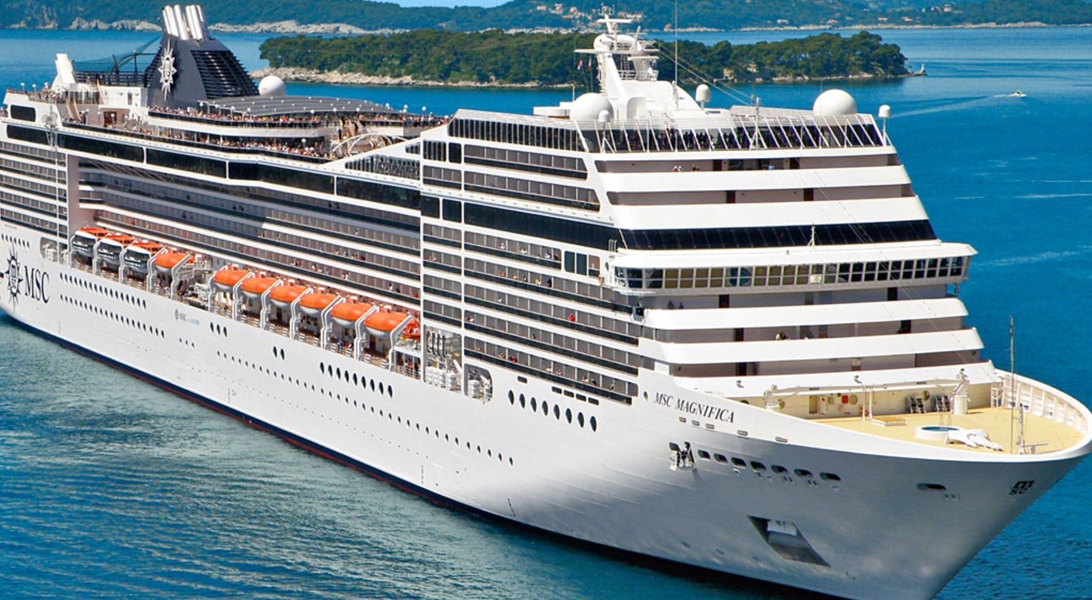


The images shown are for illustration purposes only and may not be an exact representation of what you find on the ship.
The images shown are for illustration purposes only and may not be an exact representation of what you find on the ship.
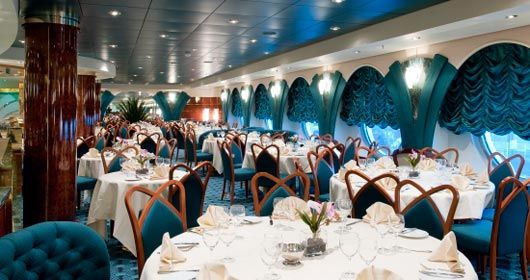
Located on deck 5, serving a wide variety of dishes, prepared by hand with the freshest ingredients, there's a great variety of choice to be had in the restaurants . One of two main dining rooms onboard, guests will find everything from freshly baked bread, to Italian and Mediterranean styled food here.
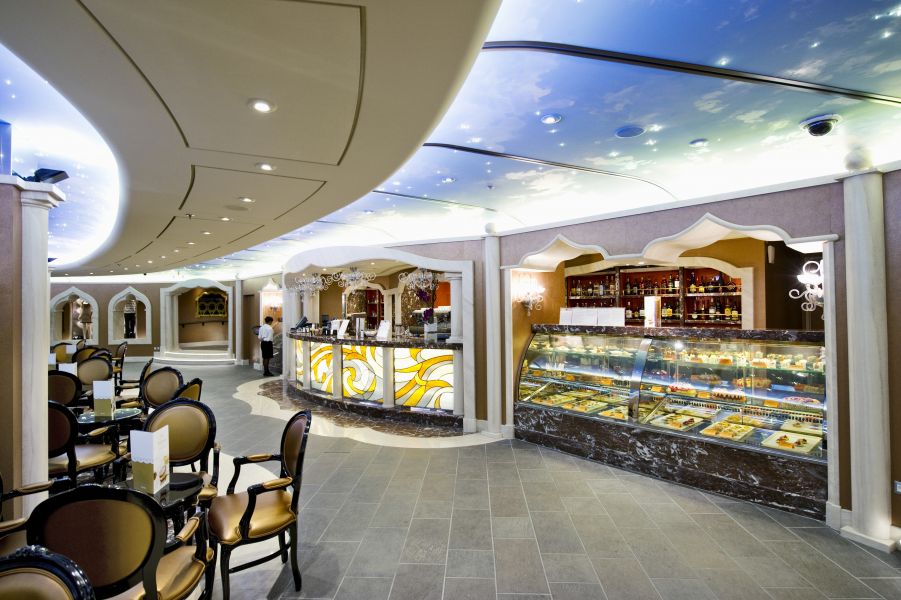
Situated on deck 13, The gelato comes in a wide variety of around 16 different flavours from vanilla, chocolate, strawberry, pineapple and coffee to pistachio, kiwi and lemon.
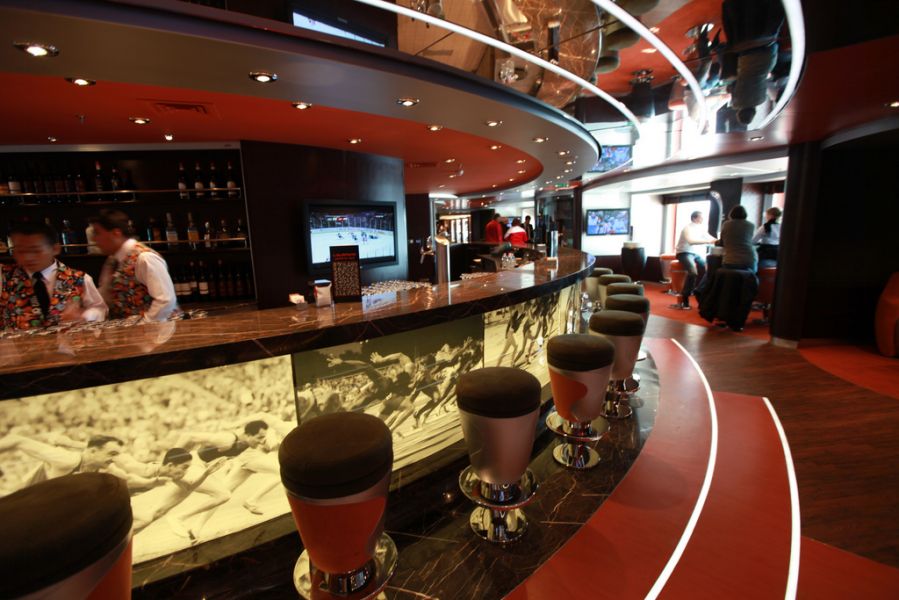
The ship's Sports Bar, L’Olimpiade, is located on deck 7 and seats 120. It serves an à la carte menu between 10.00am to 1.00am, featuring Steamed shrimp cocktail, Fish & Chips, Buffalo Chicken Wings, and Salad.
Other items range from Italian flat bread with Parma ham and mozzarella, Italian Gragnano bread filled with sausage, mushrooms and cheese and prawn curry to French baguette with ham, cheese, egg and salad, mini hamburgers, Spanish, German, Turkish and Chinese dishes.
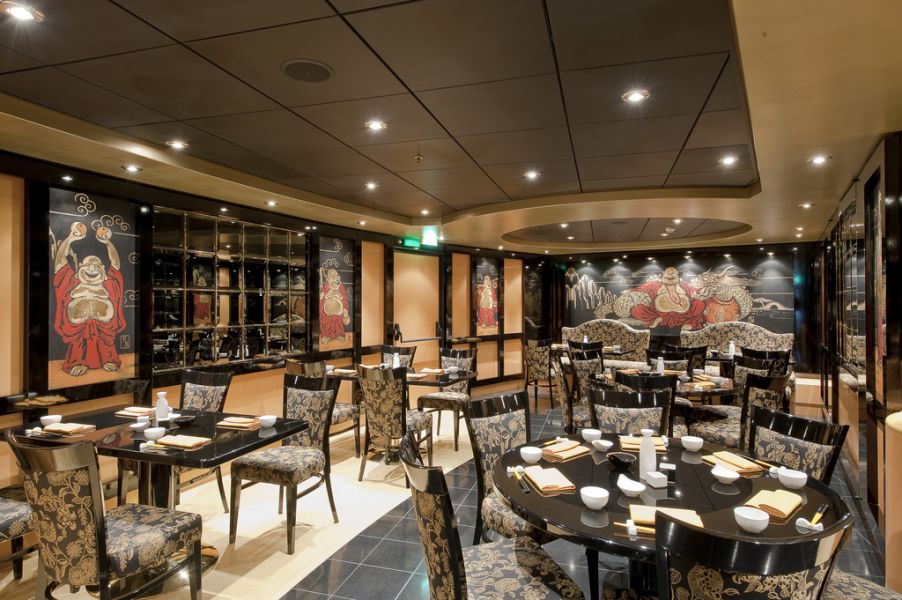
Our Asian restaurant offers authentic Japanese, Chinese and Thai dishes in an informal atmosphere. A tempting range of oriental cuisine including nigiri, sashimi, maki, temaki, dim sum, dumplings, rolls, wonton, noodles, shrimps and chicken satay, pad thai and much more.
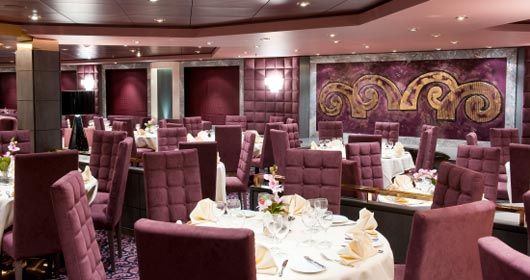
Quattro Venti, located on Deck 6, boasts a top gastronomic selection thanks to the variety of dishes and the high quality of the foods, from choice Italian meats, scrupulously controlled, to fresh fruit. Every product is fresh and carefully handled, such as bread baked on board with the passion and knowledge of the most distinctive boulangerie. Dishes range from traditional and tasty Mediterranean fare, to the most refined international recipes.
The images shown are for illustration purposes only and may not be an exact representation of what you find on the ship.
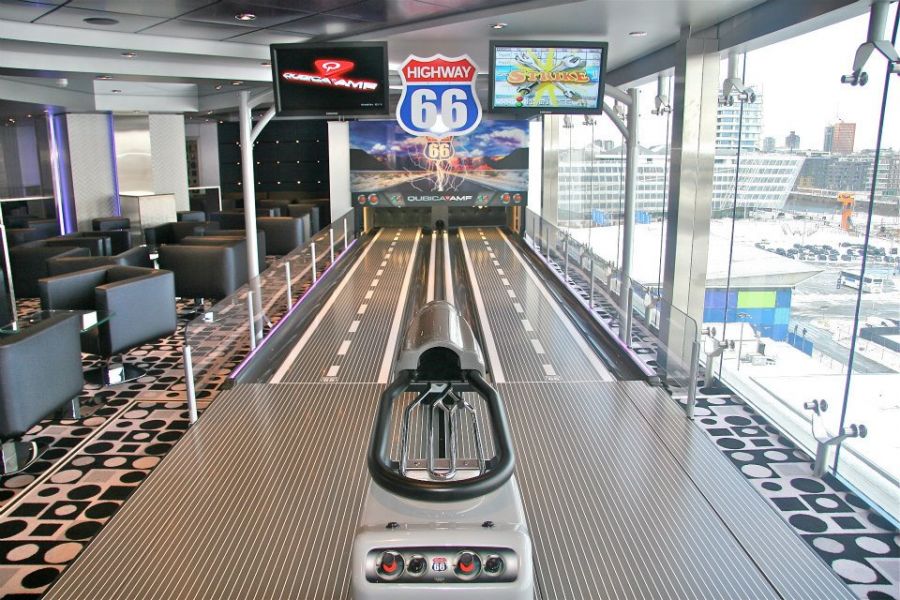
Ten pin bowling is available in T32 aft of deck 14.
The bowling alley is designed for maximum entertainment and impact, including a traditional-looking bowling surface made of a tough phenol compound which allows guests to enjoy a game without changing shoes. The alleys are scaled down to work within the area and the bowls themselves are smaller than usual, making them more manageable for youngsters.
The alley also incorporates two large LCD electronic screens featuring interactive videogame animations with a choice of Ten Pin Tour and Turkey Shoot.
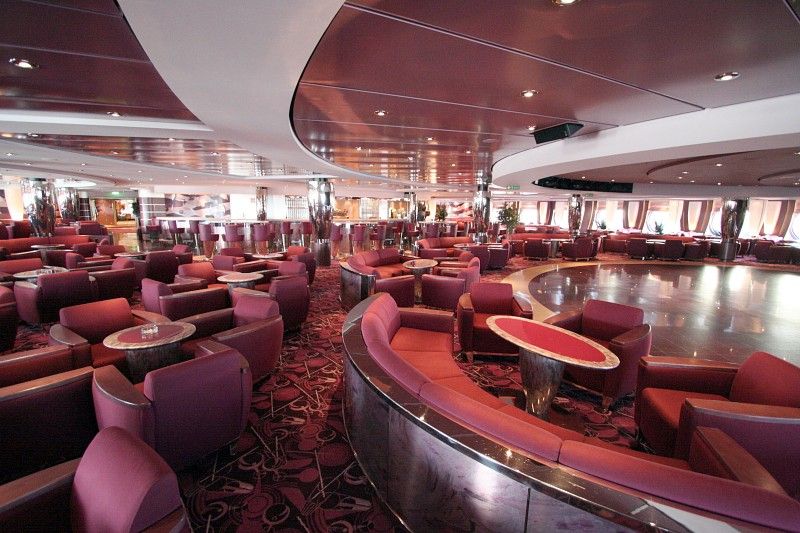
L'Ametista Lounge is located on deck 7 of the Magnifica and has its own bar and dance floor along with seating for 330 guests.
It is a large cabaret style lounge with live shows and bands for guests' entertainment.
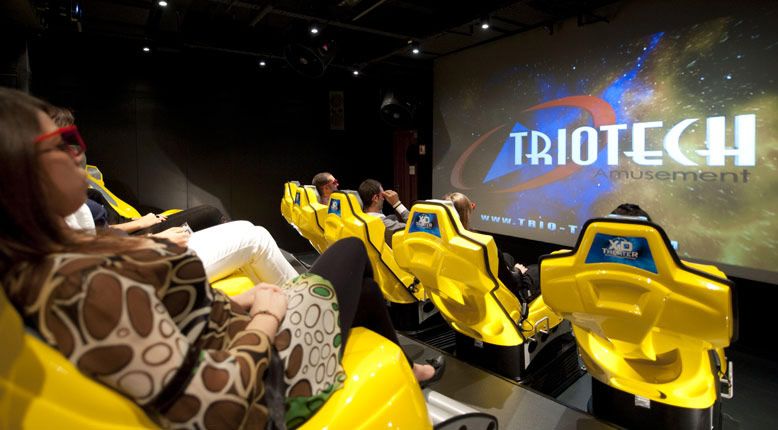
Visit our on-board 4D Cinema* for a chance to enter a world of adventure without having to leave the comfort of your seat. Enjoy a unique cinematic experience, full of surprising features and visual effects.
The Tiger Bar is the ship's second show lounge served by its own bar and dance floor.
It is situated on deck 6 with seating for 477 guests.
Entertainment and activities range from bingo, seminars, Italian lessons and salsa dance classes to audience participation game shows, karaoke and international dance music.
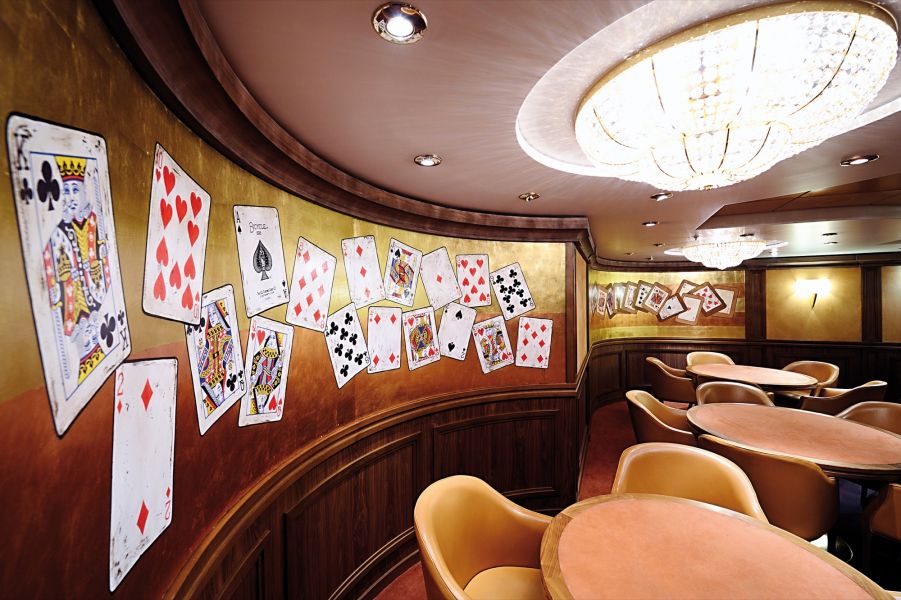
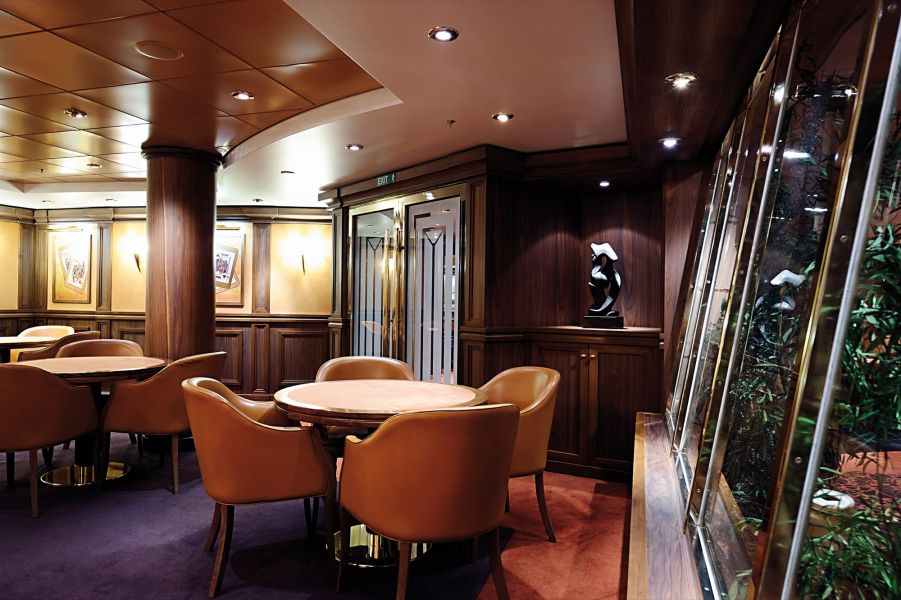
The ship's card room is located on deck 7.
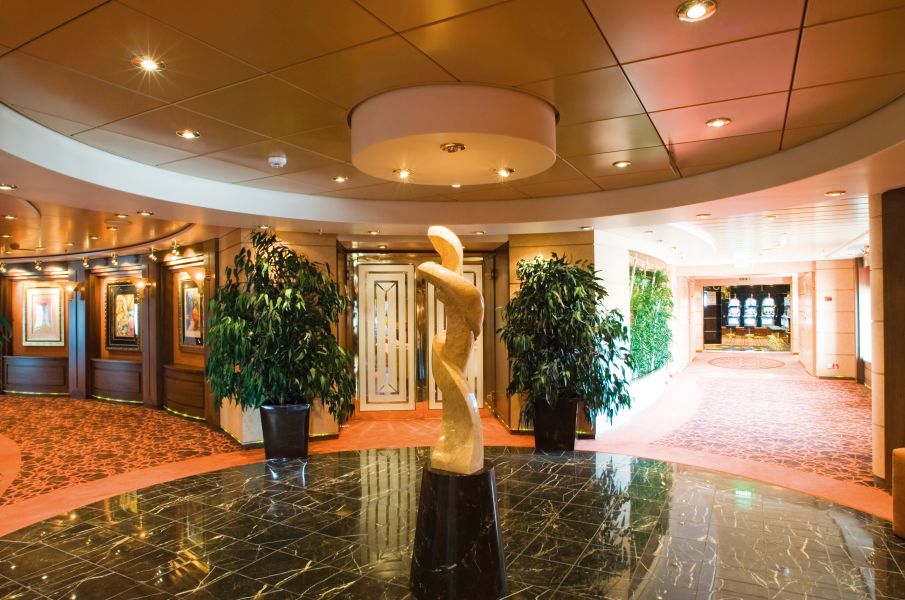
The Art Gallery can be found on deck 7 of the ship. Guests can view a range of artwork from fine prints, lithographs, water colours and oils which can be purchased during the ship's champagne art auctions.
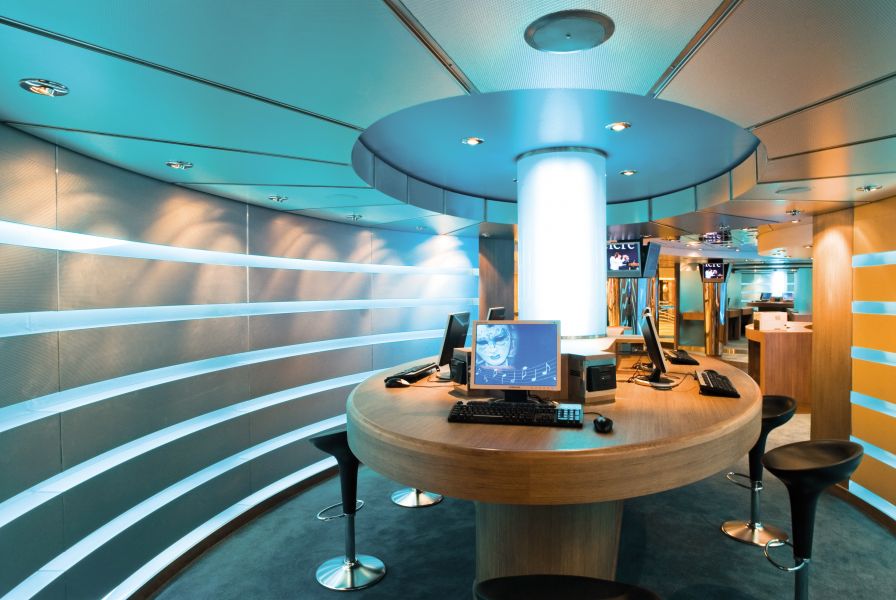
The Cyber Cafe located on deck 7.
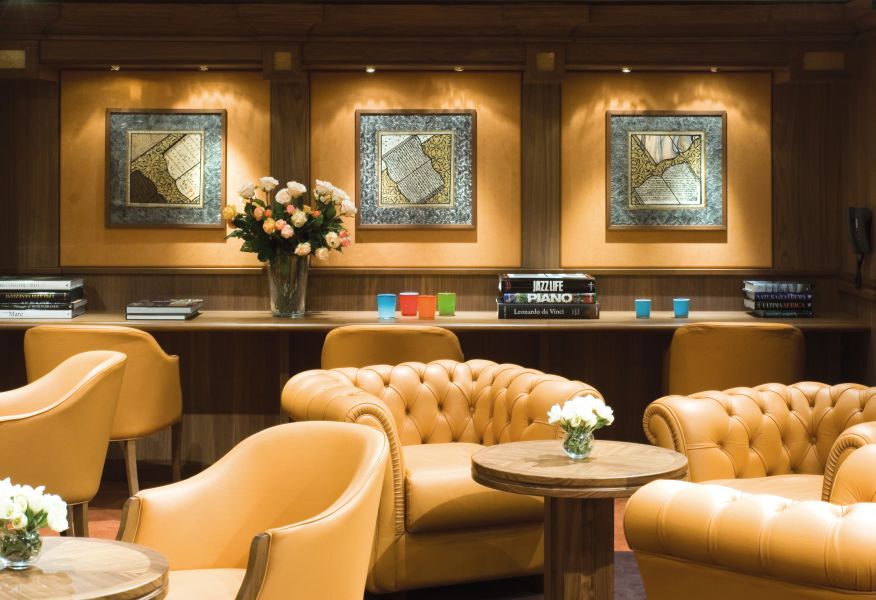
The ship's small library and reading room are located on deck 7, with seats for 15 guests. It has a small selection of books in a variety of languages for guests to borrow. It also contains a number of board games for guests' use.
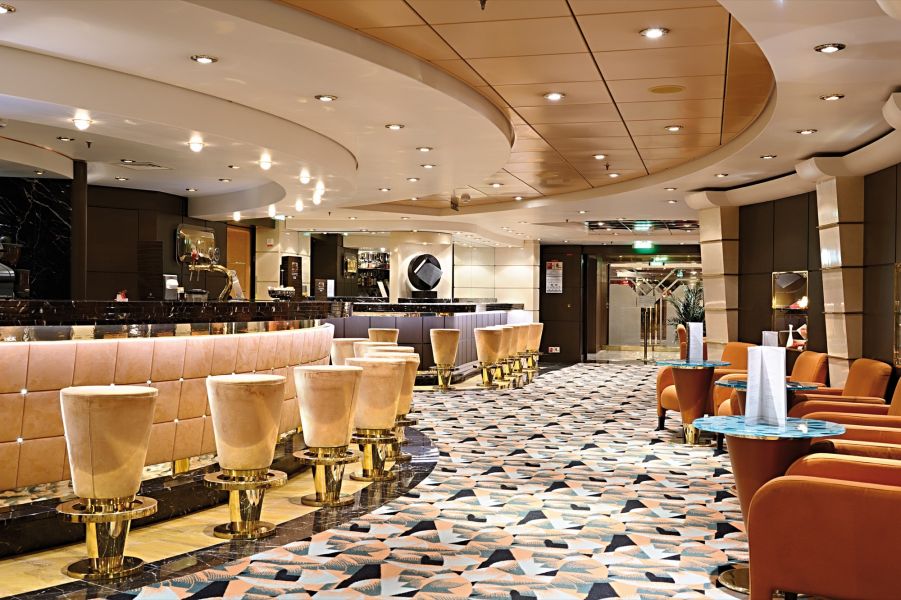
The Ships cocktail bars are the ideal location for guests to enjoy a pre-dinner cocktail with live musical entertainment.
They are located on deck 6 with seating for up to 45 guests in each bar.
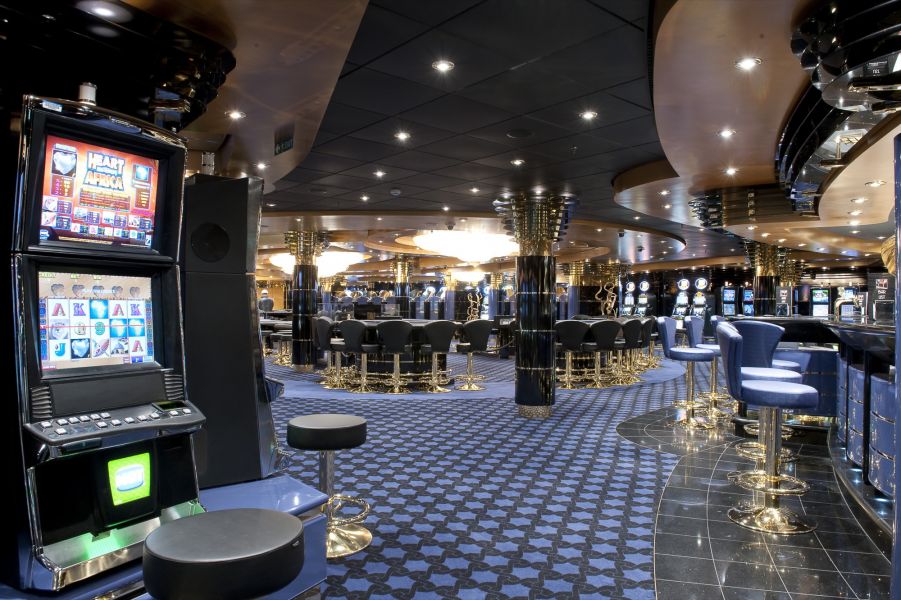
Our casinos are elegantly designed, featuring games for all types of players. You’ll be able to try your hand at Roulette or Blackjack, challenge yourself at one of our Poker tables, or choose among a variety of slot machines.
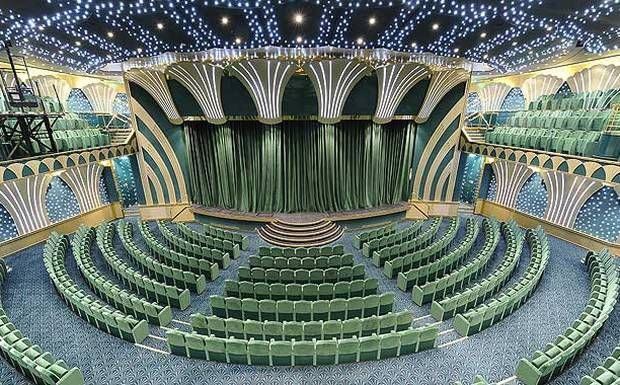
You’d normally have to travel to New York to see top-end shows, but thanks to our Broadway-style theatres you can enjoy superlative entertainment with an international line-up of artists without having to leave the ship. Take your pick from a fabulous programme, there’s sure to be a show you love.
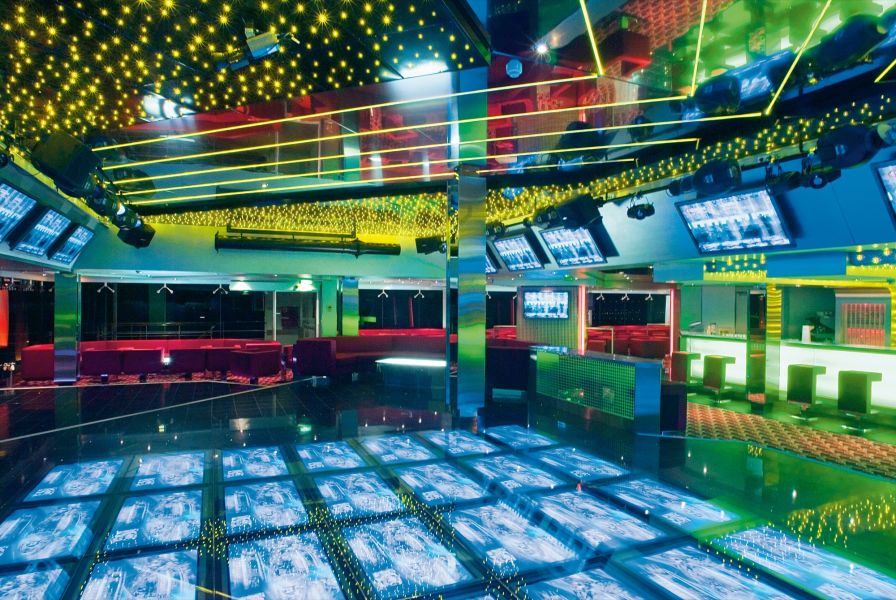
With a live DJ and open from 11.00pm until late, the ship's disco located on deck 14 and served by its own bar. It has seating for 172 guests.
The images shown are for illustration purposes only and may not be an exact representation of what you find on the ship.
The images shown are for illustration purposes only and may not be an exact representation of what you find on the ship.

Our Fusion packages are all ABTA & ATOL protected ensuring that your booking is safe with us
| 50 nights aboard the MSC Magnifica | |||
| Drinks packages available. | |||
| Evening entertainment & Broadway style shows | |||
| Speciality Restaurants (charges may apply) | |||
| Award winning MSC Aurea Spa (charges apply) | |||
| Gratuities Included | |||
| Port Taxes and Fees | |||
 | ABTA and ATOL Protection* | ||
Date 5th Jan 2028 |
Nts 50 |
Please Call for Availability |
Date 5th Jan 2028 |
Nts 50 |
Please Call for Availability |
| Interior staterooms |  | ||
| IB | Interior (Bella experience) | | |
| IM1 | Junior Interior (low deck) | | |
| IM2 | Junior Interior (medium deck) | | |
| Oceanview staterooms | | ||
| OB | Ocean View (Bella experience) | | |
| OR1 | Deluxe Ocean View (low deck) | | |
| OO | Deluxe Ocean View with obstructed view | | |
| Balcony staterooms | | ||
| BB | Balcony (Bella experience) | | |
| BM1 | Junior Balcony (low deck) | | |
| BM2 | Junior Balcony (medium deck) | | |
| BR1 | Deluxe Balcony (low deck) | | |
| BR2 | Deluxe Balcony (medium deck) | | |
| BP | Deluxe Balcony with Partial View | | |
| BL1 | Premium Balcony (low deck) | | |
| BA | Balcony Aurea | | |
| Suite staterooms | | ||
| SR1 | Deluxe Suite Aurea (low deck) | | |
| YIN | Yacht Club Interior Suite | | |
| YC1 | MSC Yacht Club Deluxe suite | | |
| YC3 | MSC Yacht Club Royal suite with whirlpool bath | | |
| YCT | MSC Yacht Club Executive and Family suite with balcony | | |
| YCL | MSC Yacht Club Two-Room Grand Suite | | |
Fusion Holidays when selling travel arrangements is a trading name of Co-op Travel Services Limited, registration 08903986. Fusion Cruises is an Accredited Body Member of Co-op Travel Services Limited ATOL 12904.
Book with Confidence. We are a Member of ABTA which means you have the benefit of ABTA’s assistance and Code of Conduct.
Some of the flights and flight-inclusive holidays on this website are financially protected by the ATOL scheme but ATOL protection does not apply to all holiday and travel services offered on this website. This website will provide you with information on the protection that applies in the case of each holiday and travel service offered before you make your booking. If you do not receive an ATOL Certificate then the booking will not be ATOL protected. If you do receive an ATOL Certificate but all parts of your trip are not listed on it, those parts will not be ATOL protected. Please see our booking conditions for information, or for more information about financial protection and the ATOL Certificate go to: www.caa.co.uk