This site uses cookies as defined in our Cookie Policy, by continuing to use this site you agree to their use.
Continue

| Arrive | Depart | ||||||
| 25th25 | FebFeb | 202727 | Buenos Aires, Argentina, embark on the Scenic Eclipse II | ||||
Glamorous and gritty, Buenos Aires is two cities in one. What makes Argentina's capital so fascinating is its dual heritage—part European, part Latin American. Plaza de Mayo resembles a grand square in Madrid, and the ornate Teatro Colón would not be out of place in Vienna. But you’ll know you’re in South America by the leather shoes for sale on cobbled streets and impromptu parades of triumphant soccer fans. Limited-production wines, juicy steaks, and ice cream in countless flavors are among the old-world imports the city has perfected. Welcome to Buenos Aires, where you'll have an overnight hotel stay. Perhaps plan to spend some time in the city, nicknamed the 'Paris of South America'. Resplendent with Belle Epoque buildings, sidewalk cafes and green spaces, there's the fiery passion of Latin America - a collective love for football, flame-cooked meats (asado) and the tango. Some of the highlights are La Boca, a colourful, creative mecca with a must-do art walk, and San Telmo, a former aristocratic neighbourhood that was abandoned during a 19th-century epidemic. Mansions were turned into conventillos (shared housing), boutique hotels, antique shops, and tango clubs, exuding a captivating bohemian vibe. | |||||||
| 26th26 | FebFeb | 202727 | Buenos Aires, Argentina | ||||
Glamorous and gritty, Buenos Aires is two cities in one. What makes Argentina's capital so fascinating is its dual heritage—part European, part Latin American. Plaza de Mayo resembles a grand square in Madrid, and the ornate Teatro Colón would not be out of place in Vienna. But you’ll know you’re in South America by the leather shoes for sale on cobbled streets and impromptu parades of triumphant soccer fans. Limited-production wines, juicy steaks, and ice cream in countless flavors are among the old-world imports the city has perfected. Fly from Buenos Aires to Ushuaia, the main island of Tierra del Fuego and the southernmost city in the world. The Captain and crew will warmly greet you as you board your ultra-luxury Discovery Yacht, Scenic Eclipse. Toast the start of your once-in-a-lifetime expedition as you depart South America and cruise through the calm and scenic Beagle Channel, named so for the ship that carried Charles Darwin on his five-year discovery journey. Admire the dramatic views of the Andean mountains from the comfort of your private verandah or from the Observation Deck with its commanding view of the bow. | |||||||
| 26th26 | FebFeb | 202727 | Ushuaia, Argentina | ||||
At 55 degrees latitude south, Ushuaia (pronounced oo-swy-ah) is closer to the South Pole than to Argentina's northern border with Bolivia. It is the capital and tourism base for Tierra del Fuego, the island at the southernmost tip of Argentina.Although its stark physical beauty is striking, Tierra del Fuego's historical allure is based more on its mythical past than on rugged reality. The island was inhabited for 6,000 years by Yámana, Haush, Selk'nam, and Alakaluf Indians. But in 1902 Argentina, eager to populate Patagonia to bolster its territorial claims, moved to initiate an Ushuaian penal colony, establishing the permanent settlement of its most southern territories and, by implication, everything in between.When the prison closed in 1947, Ushuaia had a population of about 3,000, made up mainly of former inmates and prison staff. Today the Indians of Darwin's "missing link" theory are long gone—wiped out by diseases brought by settlers and by indifference to their plight—and the 60,000 residents of Ushuaia are hitching their star to tourism.The city rightly (if perhaps too loudly) promotes itself as the southernmost city in the world (Puerto Williams, a few miles south on the Chilean side of the Beagle Channel, is a small town). You can make your way to the tourism office to get your clichéd, but oh-so-necessary, "Southernmost City in the World" passport stamp. Ushuaia feels like a frontier boomtown, at heart still a rugged, weather-beaten fishing village, but exhibiting the frayed edges of a city that quadrupled in size in the '70s and '80s and just keeps growing. Unpaved portions of Ruta 3, the last stretch of the Pan-American Highway, which connects Alaska to Tierra del Fuego, are finally being paved. The summer months (December through March) draw more than 120,000 visitors, and dozens of cruise ships. The city is trying to extend those visits with events like March's Marathon at the End of the World and by increasing the gamut of winter activities buoyed by the excellent snow conditions.A terrific trail winds through the town up to the Martial Glacier, where a ski lift can help cut down a steep kilometer of your journey. The chaotic and contradictory urban landscape includes a handful of luxury hotels amid the concrete of public housing projects. Scores of "sled houses" (wooden shacks) sit precariously on upright piers, ready for speedy displacement to a different site. But there are also many small, picturesque homes with tiny, carefully tended gardens. Many of the newer homes are built in a Swiss-chalet style, reinforcing the idea that this is a town into which tourism has breathed new life. At the same time, the weather-worn pastel colors that dominate the town's landscape remind you that Ushuaia was once just a tiny fishing village, snuggled at the end of the Earth.As you stand on the banks of the Canal Beagle (Beagle Channel) near Ushuaia, the spirit of the farthest corner of the world takes hold. What stands out is the light: at sundown the landscape is cast in a subdued, sensual tone; everything feels closer, softer, and more human in dimension despite the vastness of the setting. The snowcapped mountains reflect the setting sun back onto a stream rolling into the channel, as nearby peaks echo their image—on a windless day—in the still waters.Above the city rise the last mountains of the Andean Cordillera, and just south and west of Ushuaia they finally vanish into the often-stormy sea. Snow whitens the peaks well into summer. Nature is the principal attraction here, with trekking, fishing, horseback riding, wildlife spotting, and sailing among the most rewarding activities, especially in the Parque Nacional Tierra del Fuego (Tierra del Fuego National Park). | |||||||
| 27th27 | FebFeb | 202727 | At Sea | ||||
| 28th28 | FebFeb | 202727 | At Sea | ||||
| 1st01 | MarMar | 202727 | Antarctic Peninsula, Antarctica | ||||
Remote and otherworldly, Antarctic is irresistible for its spectacular iceberg sculptures and calving glaciers, and for the possibility of up-close encounters with marine mammals and the iconic penguins. The Antarctic Peninsula – the main peninsula closest to South America – has a human history of almost 200 years, with explorers, sealers, whalers, and scientists who have come to work, and eventually intrepid visitors coming to enjoy this pristine and remote wilderness. It is a region of protected bays, unscaled snow-capped mountains, vast glaciers and a few places where whalers or scientists have worked. Just as irresistible are the many Gentoo and Chinstrap Penguin colonies, the seals basking on ice floes, the whales and orcas. Slide open the floor-to-ceiling doors of your verandah suite to see icebergs sculpted by nature and glacial mountains rising thousands of metres from the ocean. Antarctica is a birdwatcher's paradise, with more than 40 different species, so keep your eyes peeled for wandering albatrosses, which have the largest wingspan of any flying bird, as well as shearwaters, giant petrels and more. Due to the extraordinary nature of the region, excursions throughout your Expedition Voyage are dependent on the ice and weather conditions. Your experienced Captain and specialist Discovery Team, who have made countless journeys to Antarctica, will use their expertise to design your voyage from day to day, making the most of 18–20 hours of daylight. Scenic Discovery: Daily experiences may include cruising on Zodiacs, stepping ashore to view vast penguin rookeries or historic huts, and kayaking or paddle boarding around icebergs. Wherever your voyage takes you, you will have countless “pinch me" moments. | |||||||
| 2nd02 | MarMar | 202727 | Antarctic Peninsula, Antarctica | ||||
Remote and otherworldly, Antarctic is irresistible for its spectacular iceberg sculptures and calving glaciers, and for the possibility of up-close encounters with marine mammals and the iconic penguins. The Antarctic Peninsula – the main peninsula closest to South America – has a human history of almost 200 years, with explorers, sealers, whalers, and scientists who have come to work, and eventually intrepid visitors coming to enjoy this pristine and remote wilderness. It is a region of protected bays, unscaled snow-capped mountains, vast glaciers and a few places where whalers or scientists have worked. Just as irresistible are the many Gentoo and Chinstrap Penguin colonies, the seals basking on ice floes, the whales and orcas. Portal Point^^ – a former British refuge hut – may be a potential landing site during your voyage. Or you may visit Deception Island^^ as part of your itinerary. Nestled in the South Shetland Islands archipelago, it is one of the only places in the world that ships can sail directly into the centre of a submerged caldera of an active volcano. With her world-class design and state-of-the-art technology, Scenic Eclipse can sail through a rocky gap into the horseshoe-shaped harbour. The island is also home to a few small scientific outposts and hundreds of thousands of chinstrap penguins. Tonight could be the night you enjoy Sushi^ @ Koko's with your new friends. Stay up late in the bar or retire to the library for a moment of blissful solitude before bed. | |||||||
| 3rd03 | MarMar | 202727 | Antarctic Peninsula, Antarctica | ||||
Remote and otherworldly, Antarctic is irresistible for its spectacular iceberg sculptures and calving glaciers, and for the possibility of up-close encounters with marine mammals and the iconic penguins. The Antarctic Peninsula – the main peninsula closest to South America – has a human history of almost 200 years, with explorers, sealers, whalers, and scientists who have come to work, and eventually intrepid visitors coming to enjoy this pristine and remote wilderness. It is a region of protected bays, unscaled snow-capped mountains, vast glaciers and a few places where whalers or scientists have worked. Just as irresistible are the many Gentoo and Chinstrap Penguin colonies, the seals basking on ice floes, the whales and orcas. Various species of penguins can be found in Antarctic and the sub-Antarctic region, with around 12 million penguins living on the Peninsula, including Adélie, Chinstrap, Gentoo, and the very rare Emperor penguins. Guided by the expert Polar Discovery Team, you'll witness colonies up close; hear their mighty calls and watch as they clumsily waddle along and interact with each other. Whales are another majestic creature you may encounter, whether a minke, a humpback or an Orca. Watch them from the comfort of your ultra-luxury Discovery Yacht, in a Zodiac with an experienced Polar Discovery Team member, or from their level in a kayak or stand-up paddleboard – a breathtaking experience. Scenic Discovery: When enjoying daily Scenic Discovery excursions, ask for your expert Discovery Leader for photography tips and guidance on how to spot the wildlife around you. They will help you immortalise these incredible moments while cruising on the Zodiacs, kayaking and stand-up paddleboarding around impressive ice formations. | |||||||
| 4th04 | MarMar | 202727 | Antarctic Peninsula, Antarctica | ||||
Remote and otherworldly, Antarctic is irresistible for its spectacular iceberg sculptures and calving glaciers, and for the possibility of up-close encounters with marine mammals and the iconic penguins. The Antarctic Peninsula – the main peninsula closest to South America – has a human history of almost 200 years, with explorers, sealers, whalers, and scientists who have come to work, and eventually intrepid visitors coming to enjoy this pristine and remote wilderness. It is a region of protected bays, unscaled snow-capped mountains, vast glaciers and a few places where whalers or scientists have worked. Just as irresistible are the many Gentoo and Chinstrap Penguin colonies, the seals basking on ice floes, the whales and orcas. Lemaire Channel^^, renowned for its picturesque views and often referred to as 'Kodak Alley', could be our next exciting destination. If during your voyage the Scenic Eclipse weaves through this channel, make sure you set your alarm and embrace the cool air from the Observation Terrace. Pass through the 11-kilometre-long channel, just 700 metres wide at its narrowest point, and be amazed at the dramatic rocky mountains and glowing blue icebergs so close to the ship. In between Scenic Discovery experiences, enjoy a specialty tea or coffee in the Observation Lounge and watch the world float by through Swarovski telescopes. | |||||||
| 5th05 | MarMar | 202727 | Antarctic Peninsula, Antarctica | ||||
Remote and otherworldly, Antarctic is irresistible for its spectacular iceberg sculptures and calving glaciers, and for the possibility of up-close encounters with marine mammals and the iconic penguins. The Antarctic Peninsula – the main peninsula closest to South America – has a human history of almost 200 years, with explorers, sealers, whalers, and scientists who have come to work, and eventually intrepid visitors coming to enjoy this pristine and remote wilderness. It is a region of protected bays, unscaled snow-capped mountains, vast glaciers and a few places where whalers or scientists have worked. Just as irresistible are the many Gentoo and Chinstrap Penguin colonies, the seals basking on ice floes, the whales and orcas. In the distance on a clear day you can see Mount Francis^^ standing tall as Anvers Island's highest peak, showcasing the rugged beauty of Antarctica. Every day is unique, you might get the chance to hike or spend time on the pebbled beach, enjoying the view surrounded by curious penguins. Back on board, explore some of Scenic Eclipse's indulgent spaces, from the welcoming Observation Lounge to the expansive Senses Spa#. Soothe your muscles in the sauna or heated therapy lounge, join a yoga or Pilates class. Choose one of up to 10 world-class dining experiences on board tonight. | |||||||
| 6th06 | MarMar | 202727 | Antarctic Peninsula, Antarctica | ||||
Remote and otherworldly, Antarctic is irresistible for its spectacular iceberg sculptures and calving glaciers, and for the possibility of up-close encounters with marine mammals and the iconic penguins. The Antarctic Peninsula – the main peninsula closest to South America – has a human history of almost 200 years, with explorers, sealers, whalers, and scientists who have come to work, and eventually intrepid visitors coming to enjoy this pristine and remote wilderness. It is a region of protected bays, unscaled snow-capped mountains, vast glaciers and a few places where whalers or scientists have worked. Just as irresistible are the many Gentoo and Chinstrap Penguin colonies, the seals basking on ice floes, the whales and orcas. Be sure to pack your swimming suit because you could be going for a swim today. For many, the polar plunge is a once-in-a-lifetime opportunity and a rite of passage on an expedition to Antarctica. Once throughout your voyage, Scenic Eclipse will stop, and the team will set up the marina ready for the brave people who want to jump into the freezing Antarctic waters. Excitement will spread through the Discovery Yacht, and you will start hearing the contagious nervous laughter. As you stand on the edge, ready to jump, you will feel the adrenaline rush while you second-guess whether this is a good idea. When you jump, the moment before you hit the water will feel like it goes forever, but soon, an invigorating, exciting, and surprisingly refreshing sensation will take over. If you choose to skip the polar plunge, make sure you find a good viewing location as you feel the chills of everyone coming out of the water. Join them for a cup of hot chocolate or toast with a glass of whiskey. | |||||||
| 7th07 | MarMar | 202727 | At Sea | ||||
| 8th08 | MarMar | 202727 | Ushuaia, Argentina | ||||
At 55 degrees latitude south, Ushuaia (pronounced oo-swy-ah) is closer to the South Pole than to Argentina's northern border with Bolivia. It is the capital and tourism base for Tierra del Fuego, the island at the southernmost tip of Argentina.Although its stark physical beauty is striking, Tierra del Fuego's historical allure is based more on its mythical past than on rugged reality. The island was inhabited for 6,000 years by Yámana, Haush, Selk'nam, and Alakaluf Indians. But in 1902 Argentina, eager to populate Patagonia to bolster its territorial claims, moved to initiate an Ushuaian penal colony, establishing the permanent settlement of its most southern territories and, by implication, everything in between.When the prison closed in 1947, Ushuaia had a population of about 3,000, made up mainly of former inmates and prison staff. Today the Indians of Darwin's "missing link" theory are long gone—wiped out by diseases brought by settlers and by indifference to their plight—and the 60,000 residents of Ushuaia are hitching their star to tourism.The city rightly (if perhaps too loudly) promotes itself as the southernmost city in the world (Puerto Williams, a few miles south on the Chilean side of the Beagle Channel, is a small town). You can make your way to the tourism office to get your clichéd, but oh-so-necessary, "Southernmost City in the World" passport stamp. Ushuaia feels like a frontier boomtown, at heart still a rugged, weather-beaten fishing village, but exhibiting the frayed edges of a city that quadrupled in size in the '70s and '80s and just keeps growing. Unpaved portions of Ruta 3, the last stretch of the Pan-American Highway, which connects Alaska to Tierra del Fuego, are finally being paved. The summer months (December through March) draw more than 120,000 visitors, and dozens of cruise ships. The city is trying to extend those visits with events like March's Marathon at the End of the World and by increasing the gamut of winter activities buoyed by the excellent snow conditions.A terrific trail winds through the town up to the Martial Glacier, where a ski lift can help cut down a steep kilometer of your journey. The chaotic and contradictory urban landscape includes a handful of luxury hotels amid the concrete of public housing projects. Scores of "sled houses" (wooden shacks) sit precariously on upright piers, ready for speedy displacement to a different site. But there are also many small, picturesque homes with tiny, carefully tended gardens. Many of the newer homes are built in a Swiss-chalet style, reinforcing the idea that this is a town into which tourism has breathed new life. At the same time, the weather-worn pastel colors that dominate the town's landscape remind you that Ushuaia was once just a tiny fishing village, snuggled at the end of the Earth.As you stand on the banks of the Canal Beagle (Beagle Channel) near Ushuaia, the spirit of the farthest corner of the world takes hold. What stands out is the light: at sundown the landscape is cast in a subdued, sensual tone; everything feels closer, softer, and more human in dimension despite the vastness of the setting. The snowcapped mountains reflect the setting sun back onto a stream rolling into the channel, as nearby peaks echo their image—on a windless day—in the still waters.Above the city rise the last mountains of the Andean Cordillera, and just south and west of Ushuaia they finally vanish into the often-stormy sea. Snow whitens the peaks well into summer. Nature is the principal attraction here, with trekking, fishing, horseback riding, wildlife spotting, and sailing among the most rewarding activities, especially in the Parque Nacional Tierra del Fuego (Tierra del Fuego National Park). | |||||||
| 9th09 | MarMar | 202727 | Ushuaia, Argentina | ||||
At 55 degrees latitude south, Ushuaia (pronounced oo-swy-ah) is closer to the South Pole than to Argentina's northern border with Bolivia. It is the capital and tourism base for Tierra del Fuego, the island at the southernmost tip of Argentina.Although its stark physical beauty is striking, Tierra del Fuego's historical allure is based more on its mythical past than on rugged reality. The island was inhabited for 6,000 years by Yámana, Haush, Selk'nam, and Alakaluf Indians. But in 1902 Argentina, eager to populate Patagonia to bolster its territorial claims, moved to initiate an Ushuaian penal colony, establishing the permanent settlement of its most southern territories and, by implication, everything in between.When the prison closed in 1947, Ushuaia had a population of about 3,000, made up mainly of former inmates and prison staff. Today the Indians of Darwin's "missing link" theory are long gone—wiped out by diseases brought by settlers and by indifference to their plight—and the 60,000 residents of Ushuaia are hitching their star to tourism.The city rightly (if perhaps too loudly) promotes itself as the southernmost city in the world (Puerto Williams, a few miles south on the Chilean side of the Beagle Channel, is a small town). You can make your way to the tourism office to get your clichéd, but oh-so-necessary, "Southernmost City in the World" passport stamp. Ushuaia feels like a frontier boomtown, at heart still a rugged, weather-beaten fishing village, but exhibiting the frayed edges of a city that quadrupled in size in the '70s and '80s and just keeps growing. Unpaved portions of Ruta 3, the last stretch of the Pan-American Highway, which connects Alaska to Tierra del Fuego, are finally being paved. The summer months (December through March) draw more than 120,000 visitors, and dozens of cruise ships. The city is trying to extend those visits with events like March's Marathon at the End of the World and by increasing the gamut of winter activities buoyed by the excellent snow conditions.A terrific trail winds through the town up to the Martial Glacier, where a ski lift can help cut down a steep kilometer of your journey. The chaotic and contradictory urban landscape includes a handful of luxury hotels amid the concrete of public housing projects. Scores of "sled houses" (wooden shacks) sit precariously on upright piers, ready for speedy displacement to a different site. But there are also many small, picturesque homes with tiny, carefully tended gardens. Many of the newer homes are built in a Swiss-chalet style, reinforcing the idea that this is a town into which tourism has breathed new life. At the same time, the weather-worn pastel colors that dominate the town's landscape remind you that Ushuaia was once just a tiny fishing village, snuggled at the end of the Earth.As you stand on the banks of the Canal Beagle (Beagle Channel) near Ushuaia, the spirit of the farthest corner of the world takes hold. What stands out is the light: at sundown the landscape is cast in a subdued, sensual tone; everything feels closer, softer, and more human in dimension despite the vastness of the setting. The snowcapped mountains reflect the setting sun back onto a stream rolling into the channel, as nearby peaks echo their image—on a windless day—in the still waters.Above the city rise the last mountains of the Andean Cordillera, and just south and west of Ushuaia they finally vanish into the often-stormy sea. Snow whitens the peaks well into summer. Nature is the principal attraction here, with trekking, fishing, horseback riding, wildlife spotting, and sailing among the most rewarding activities, especially in the Parque Nacional Tierra del Fuego (Tierra del Fuego National Park). Discover Ushuaia, the enchanting "end of the world". The city is nestled along the picturesque Beagle Channel against a backdrop of snow-dusted peaks, with the towering Monte Olivia commanding attention. As your gateway to the spellbinding Antarctic Peninsula, Ushuaia is a place of natural wonders, ancient cultures and the captivating spirit of exploration. | |||||||
| 10th10 | MarMar | 202727 | Cape Horn, Chile | ||||
Cruise through the iconic waters of Cape Horn, where the Atlantic and Pacific Oceans meet at the southernmost point of South America. The collision of these two oceans is a spectacular display of nature’s force and a great place to spot sea lions, penguins and whales. You will also cruise through the scenic Beagle Channel, named after the ship that carried Charles Darwin on his five-year discovery journey. Admire the dramatic views of the Andean mountains from the comfort of your ultra-luxury Discovery Yacht. Today, join an introductory presentation about your expedition voyage by the Discovery Team in the state-of-the-art theatre. Feel the excitement as they explain how your Zodiac and other Discovery Excursions will work in the coming days. The theatre is where you can watch talks, lectures, movies and documentaries during the day. At night, enjoy world-class productions from musical theatre and cabaret to pop music, dance and fun interactive game shows. Tonight could be the night you enjoy Sushi @ Koko’s (available by on board reservation) with your new friends. Retire to the library for a moment of blissful solitude before bed. | |||||||
| 11th11 | MarMar | 202727 | Chilean Fjords, Chile | ||||
Strewn through the coast of Chile, these beautiful fjords are world renowned for being one of the most awe-inspiring places on earth. Snow-capped volcanoes nestle majestically alongside rolling valleys of ice and frosty glaciers. Rugged beauty, breathtaking scenery not to mention diverse and profuse wildlife abounds – expect to watch whales from the deck, see playful Magellan Penguins and perhaps even spot the rare Andean Condor. Affectionately named “The End of the World” by the Spaniards who discovered the region in eighteenth century in a quest to Christianise South America, these extraordinary waterways not only encompass a medley of jagged mountains and iceberg strewn bays, but feature a kaleidoscopic spectrum of unexpected colour that offers photographic opportunities like no other destination. While cruising this magnificent region, you will witness Seno Garibaldi, one of a handful of advancing glaciers in the world. You will also cruise to Seno Pia Glacier, where you’ll explore its ice crevasses and rivers. This area is a World Heritage-listed Biosphere Reserve, and its rich waters are home to seals, sea lions and seabirds, including the impressive Andean condor. Watch the spectacular scenery slip by as you relax in a cabana on Deck 10 this afternoon. Scenic Discovery: | |||||||
| 12th12 | MarMar | 202727 | Chilean Fjords, Chile | ||||
Strewn through the coast of Chile, these beautiful fjords are world renowned for being one of the most awe-inspiring places on earth. Snow-capped volcanoes nestle majestically alongside rolling valleys of ice and frosty glaciers. Rugged beauty, breathtaking scenery not to mention diverse and profuse wildlife abounds – expect to watch whales from the deck, see playful Magellan Penguins and perhaps even spot the rare Andean Condor. Affectionately named “The End of the World” by the Spaniards who discovered the region in eighteenth century in a quest to Christianise South America, these extraordinary waterways not only encompass a medley of jagged mountains and iceberg strewn bays, but feature a kaleidoscopic spectrum of unexpected colour that offers photographic opportunities like no other destination. Venture deep into the heart of Chilean Fjords as your Discovery Yacht navigates the untouched Agostini Fjord, a sanctuary of raw, natural beauty. Towering peaks rise dramatically above glacial-blue waters, leading to the awe-inspiring Agostini Glacier — a shimmering cascade of ice spilling from the rugged Darwin Mountain Range. As you glide through this remote wonderland, keep your eyes peeled for playful seals, soaring seabirds, and majestic humpback whales in their pristine habitat. Scenic Discovery: | |||||||
| 13th13 | MarMar | 202727 | Punta Arenas, Chile | ||||
Impenetrable forests, impassable mountains, and endless fields of ice define Chilean Patagonia, and meant that the region went largely unexplored until the beginning of the 20th century. Located in the southernmost part of the country, this area is still sparsely inhabited, though you will find a few populated places—like the colorful provincial city of Punta Arenas, which looks like it's about to be swept into the Strait of Magellan. Some unique wildlife, particularly colonies of elephant seals and penguins, call this breathtaking topography home. To the north is Parque Nacional Torres del Paine, the country's most magnificent natural wonder, and whose snow-covered peaks seem to rise vertically from the plains below. The vistas, such as the fantastic Avenue of the Glaciers, are breathtaking; along this stretch of the Beagle Channel, you can pass six tremendous glaciers all within a stone's throw of each other.Cruise SightsPunta Arenas. Founded a little more than 150 years ago, Punta Arenas (Sandy Point) was Chile's first permanent settlement in Patagonia. Plaza Muñoz Gamero, the central square, is surrounded by evidence of that early prosperity: buildings whose then-opulent brick exteriors recall a time when this was one of Chile's wealthiest cities. The newer houses here have colorful tin roofs, best appreciated when seen from a high vantage point such as the Mirador Cerro la Cruz. Although the city as a whole may not be particularly attractive, look for details: the pink-and-white house on a corner, the bay window full of potted plants, parking attendants wearing the regional blue and yellow colors, and schoolchildren in identical naval pea coats that remind you that the city's fate is tied to the sea.The Museo Naval y Marítimo extols Chile's high-seas prowess, particularly concerning Antarctica. Its exhibits are worth a visit for anyone with an interest in ships and sailing, merchant and military alike. Part of the second floor is designed like the interior of a ship, including a map and radio room. Pedro Montt 989. Admission charged.Housed in what was once the mansion of the powerful Braun-Menéndez family, the Museo Regional de Magallanes is an intriguing glimpse into the daily life of a wealthy provincial family at the beginning of the 20th century. Lavish Carrara marble hearths, English bath fixtures, and cordovan leather walls are among the original accoutrements. The museum also has an excellent group of displays depicting Punta Arenas's past, from the first European contact to the town's decline after the opening of the Panama Canal. The museum is half a block north of the main square. Magallanes 949. Admission charged.The resplendent 1895 Palacio Sara Braun is a national landmark and an architectural showpiece of southern Patagonia. Designed by a French architect, the house was built from materials and by craftsmen imported from Europe during the four years of construction. The city's central plaza and surrounding buildings soon followed, ushering in the region's golden era. Noteworthy are the lavish bedrooms, magnificent parquet floors, marble fireplaces, and hand-painted ceilings. Don't miss the portraits of Braun and her husband José Nogueira in the music room. Afterwards, head to the cellar for a drink or snack in the warm public tavern (a good portion of the mansion is leased to a hotel). Plaza Muñoz Gamero 716. Admission charged.Commonly referred to simply as "El Salesiano," the Museo Salesiano de Maggiorino Borgatello is operated by Italian missionaries whose order arrived in Punta Arenas in the 19th century. The Salesians, most of whom spoke no Spanish, proved to be daring explorers. Traveling throughout the region, they collected the artifacts made by indigenous tribes that are currently on display. Av. Bulnes 398. Admission charged.Isla Magdalena. Punta Arenas is the launching point for a boat trip to the Isla Magdalena to see the more than 100,000 Magellanic penguins at the Monumento Natural Los Pingúinos. A single trail, marked off by rope, is accessible to humans. The boat trip to the island, in the middle of the Estrecho de Magallanes, takes about two hours. Make sure to bring along warm clothing, even in summer; the island can be chilly, particularly if a breeze is blowing across the water.Parque Nacional Torres del Paine. Some 12 million years ago, lava flows pushed up through the thick sedimentary crust that covered the southwestern coast of South America, cooling to form a granite mass. Glaciers then swept through the region, grinding away all but the ash-gray spires that rise over the landscape of one of the world's most beautiful natural phenomena, now the Parque Nacional Torres del Paine (established in 1959). Snow formations dazzle along every turn of road, and the sunset views are spectacular.Among the 2,420-square-km (934-square-mi) park's most beautiful attractions are its lakes of turquoise, aquamarine, and emerald green waters. Another draw is its unusual wildlife. Creatures like the guanaco (a woollier version of the llama) and the ñandú (resembling a small ostrich) abound. They are used to visitors and don't seem to be bothered by the proximity of automobile traffic and the snapping of cameras. Predators, like the gray fox, make less frequent appearances. You may also spot the dramatic aerobatics of a falcon and the graceful soaring of the endangered condor. The beautiful puma is especially elusive, but sightings have become more common. Admission charged.Pingúinera de Seno Otway. The road to this penguin sanctuary begins 30 km (18 mi) north of Punta Arenas. Magellanic penguins, which live up to 20 years in the wild, return to their birthplace here every year to mate with the same partner. For about 2,000 penguin couples—no single penguins make the trip—home is this desolate and windswept land off the Otway Sound. In late September, the penguins begin to arrive from the southern coast of Brazil and the Falkland Islands. They mate and lay their eggs in early October, and brood their eggs in November. Offspring hatch between mid-November and early December. If you're lucky, you may catch sight of one of the downy gray chicks that stick their heads out of the burrows when their parents return to feed them. Otherwise you might see scores of the ungainly adult penguins waddling to the ocean from their nesting burrows. They swim for food every eight hours and dive up to 100 feet deep. The penguins depart from the sound in late March. Note that the sanctuary is a 1-km (1/2-mi) walk from the parking lot. It gets chilly, so bring a windbreaker. Admission charged.Reserva Nacional Laguna Parillar. This 47,000-acre reserve lies west of Puerto Hambre, a tranquil fishing village, and is centered around a shimmering lake in a valley flanked by hills. It's a great place for a picnic, and there are a number of well-marked paths that offer sweeping vistas over the Estrecho de Magallanes. About 2 km (1 mi) west of Puerto Hambre is a small white monolith that marks the geographical center of Chile, the midway point between Chile's northern port Arica and the South Pole.Cruise ShoppingWool may no longer be king of the economy, but vast flocks of sheep still yield a high-quality product that is woven into the clothing here. Leather products are also common, but the prices are not necessarily low. About 3 km (2 mi) north of Punta Arenas is the Zona Franca (Av. Bulnes). This duty-free zone is where people from all around the region come for low-priced electronics and other consumer items. Punta Arenas is located at the southern extreme of Chile and serves as the gateway into Antarctica as well as Torres del Paine National Park. Overlooking the Strait of Magellan, the city flourished during the California Gold Rush – its prime position served as a haven for ships. The city will captivate you with its clean air, sophisticated European architecture and wildlife; nearby Magdalena Island is the breeding ground of Magellanic penguins. When back on board, you may wish to book a treatment# at the tranquil Senses Spa. Perhaps indulge with an ESPA facial or an alternative therapy including Ayurvedic massages. Late in the evening, cruise the legendary Strait of Magellan, once the main passage between the Atlantic and Pacific Oceans before the Panama Canal. Follow the historic routes of explorers Ferdinand Magellan and Sir Francis Drake. | |||||||
| 14th14 | MarMar | 202727 | At Sea | ||||
| 15th15 | MarMar | 202727 | PIO X Glacier, Chile | ||||
Cruise through the Inner Fjords and the English Narrows, which is home to remote Puerto Eden. This is the only settlement inside the Chilean Inside Passage, a region with a mountainous terrain and a thriving Magellanic sub-polar forest. You will be able to learn about the ancient Mapuche culture, navigate the town’s intricate wooden boardwalks and see its native wildlife. View the stunning Pio XI Glacier, which is nestled within the Bernardo O’Higgins National Park and spans the size of Santiago. Also known as Bruggen Glacier, this exceptional wonder is the sole glacier on Earth that is expanding daily. Scenic Discovery: | |||||||
| 15th15 | MarMar | 202727 | Puerto Edén, Chile | ||||
| 16th16 | MarMar | 202727 | At Sea | ||||
| 17th17 | MarMar | 202727 | Castro, Chile | ||||
Bright, wooden huts teeter on stilts over Castro's estuary waterfront, inviting you into a patchwork of colour that’s sure to brighten any day. These traditional palafitos give the warmest of welcomes, as you prepare to experience Chile at its most vibrant. Castro has faced something of a tumultuous past, having been hit by a by a succession of earthquakes and fires - the most recent a devastating earthquake in 1960. But this city is incredibly resilient, and today the capital of Chiloe Island makes for a fantastic base for exploring the archipelago that surrounds it. Visit Castro, located on the island of Chiloé. This is a place of exquisite natural beauty, flanked by a fjord on the east and home to Chiloé National Park, where an abundance of wildlife species thrives on the west coast. Catch a glimpse of the local penguin colony, comprising Magellanic and Humboldt penguins which migrate to the region. Stroll through the city streets and sample local delicacies, such as the Chiloé potato, and view the city’s many World Heritage-listed churches, known for their ecclesiastical wooden architecture. | |||||||
| 18th18 | MarMar | 202727 | Puerto Montt, Chile | ||||
For most of its history, windy Puerto Montt was the end of the line for just about everyone traveling in the Lake District. Now the Carretera Austral carries on southward, but for all intents and purposes Puerto Montt remains the region's last significant outpost, a provincial city that is the hub of local fishing, textile, and tourist activity.Today the city center is full of malls, condos, and office towers—it's the fastest-growing city in Chile—but away from downtown, Puerto Montt consists mainly of low clapboard houses perched above its bay, the Seno de Reloncaví. If it's a sunny day, head east to Playa Pelluco or one of the city's other beaches. If you're more interested in exploring the countryside, drive along the shore for a good view of the surrounding hills. A busy town in the Chilean Lake District, Puerto Montt sits near the end of the Pan-American Highway – this epic stretch of road begins in Alaska and continues to Ushuaia in Argentina. Framed by snow-capped volcanoes and lush green landscapes, it serves as a gateway to the stunning Andean Alps. Stroll along its bustling waterfront, explore colourful markets brimming with artisan crafts and fresh seafood. During downtime on the ship, you may wish to visit the gym for an invigorating workout or the studio for a Pilates class, some guided stretching or aerial yoga. | |||||||
| 19th19 | MarMar | 202727 | Niebla, Chile | ||||
Niebla is a small village on the banks of the Rio Valdivia where Chile's Corral Bay meets the Pacific Ocean. Today Niebla is a beach resort, but in 1671 it was a defensive fortress built by the order of the Viceroy of Peru to prevent attacks against the town of Valdivia by pirates and corsairs. Niebla is well-known for its lively markets, the remains of the colonial fortress declared a National Monument in 1950 and restored in 1992, and a museum dedicated to its history. Nearby is the charming river port city of Valdivia, where cultural influences from the native Mapuche, Spanish settlers, and German immigrants have blended. Enjoy a sleep-in today lulled by the rhythm of the ocean. Wake up in your own time and perhaps request your butler to deliver breakfast to your spacious suite or meet fellow guests in the alfresco Yacht Club. Later, arrive in Niebla, home to the 17th century Niebla Fortress. Nearby Valdivia is known as one of Chile's most beautiful cities, a vibrant and tenacious university town that has endured various challenges including the catastrophic earthquake of 1960—the strongest ever recorded—which nearly submerged the city. | |||||||
| 20th20 | MarMar | 202727 | At Sea | ||||
| 21st21 | MarMar | 202727 | Valparaiso, Chile | ||||
Valparaíso's dramatic topography—45 cerros, or hills, overlooking the ocean—requires the use of winding pathways and wooden ascensores (funiculars) to get up many of the grades. The slopes are covered by candy-color houses—there are almost no apartments in the city—most of which have exteriors of corrugated metal peeled from shipping containers decades ago. Valparaíso has served as Santiago's port for centuries. Before the Panama Canal opened, Valparaíso was the busiest port in South America. Harsh realities—changing trade routes, industrial decline—have diminished its importance, but it remains Chile's principal port. Most shops, banks, restaurants, bars, and other businesses cluster along the handful of streets called El Plan (the flat area) that are closest to the shoreline. Porteños (which means "the residents of the port") live in the surrounding hills in an undulating array of colorful abodes. At the top of any of the dozens of stairways, the paseos (promenades) have spectacular views; many are named after prominent Yugoslavian, Basque, and German immigrants. Neighborhoods are named for the hills they cover. With the jumble of power lines overhead and the hundreds of buses that slow down—but never completely stop—to pick up agile riders, it's hard to forget you're in a city. Still, walking is the best way to experience Valparaíso. Be careful where you step, though—locals aren't very conscientious about curbing their dogs. A city of colour, culture and coastal charm, Valparaiso invites you to explore its vibrant hillside streets, ride historic funiculars and immerse yourself in a world of stunning street art. Discover its rich maritime history, browse lively markets and indulge in the flavours of Chilean seafood with breathtaking ocean views at every turn. | |||||||
| 22nd22 | MarMar | 202727 | Pingüino de Humboldt National Reserve, Chile | ||||
Start your day with a steaming barista-made coffee or tea delivered to your suite by your butler. As Scenic Eclipse II sails toward the Pingüino de Humboldt National Reserve, be sure to attend the Discovery Team's Zodiac briefing. Scenic Discovery: Explore this exceptional reserve today through the exciting activities organised by the Discovery Team. In the previous evening’s recap, the Discovery Leader will go over the planned activities. | |||||||
| 23rd23 | MarMar | 202727 | At Sea | ||||
| 24th24 | MarMar | 202727 | At Sea | ||||
| 25th25 | MarMar | 202727 | Paracas, Peru | ||||
The port city of Paracas is blessed with magnificent natural beauty and rich historical importance, offerings inviting beaches, ideal weather and pleasant scenery — a combination that draws visitors throughout the year. The shores of the Paracas Peninsula and waters of the bay teem with wildlife and have been declared a national reserve. Condors frequently can be seen gliding on the sea winds or perched on the cliffs; pink flamingos often rest here on their migratory flights. The complex interaction between wind and ocean, sun and land has transformed this region into a kind of lunarscape under an equatorial sun. Another reason for travellers to come to this area is its proximity to the famous and mysterious Nazca Lines. Visible from the air, these strange markings stretch for miles on a large barren plain and have bewildered archaeologists, historians and mathematicians since their discovery over a century ago. The earliest Andean people found shelter here. The Paracas culture was known for fine weavings in geometrical designs and vibrant colours, which have been preserved for thousands of years by the dry climate. Some of the finest examples are in museums in Lima. The town of Ica is Peru’s finest wine centre, as well as home to the fiery brandy-derived beverage known as Pisco. The surrounding area features oases with springs considered to have medicinal cures. Pier Information The ship is scheduled to dock at Port of Paracas, about a 45-minute drive from Ica. There are no passenger facilities at the pier. Shopping Shopping opportunities are limited; some souvenirs can be found at the museum in Ica. A bottle of Peruvian Pisco (grape brandy) makes a nice memento. The local currency is the nuevo sol. Cuisine Seafood is highly recommended, however, we recommend you dine only in the hotel restaurants in Peru’s southern region. Be sure to sample the national drink pisco sour and the area’s excellent wines. Always drink bottled water and avoid ice cubes. Other Sites The Bay of Paracas is sheltered by the Paracas peninsula, noted as one of the best marine reserves in the world. This is also a popular resort area thanks to its beautiful bay, beaches and dependable warm weather. Facilities include swimming pools, tennis courts, miniature golf and a good restaurant. For those who are looking for a little adventure dune buggies are available. Local boat trips can be booked to the Ballestas Islands but be aware that commentary is given in Spanish. Private arrangements for independent sightseeing are limited in this port as cars have to come from Lima. Please submit your request to the Tour Office early in the cruise. | |||||||
| 26th26 | MarMar | 202727 | Paracas, Peru | ||||
The port city of Paracas is blessed with magnificent natural beauty and rich historical importance, offerings inviting beaches, ideal weather and pleasant scenery — a combination that draws visitors throughout the year. The shores of the Paracas Peninsula and waters of the bay teem with wildlife and have been declared a national reserve. Condors frequently can be seen gliding on the sea winds or perched on the cliffs; pink flamingos often rest here on their migratory flights. The complex interaction between wind and ocean, sun and land has transformed this region into a kind of lunarscape under an equatorial sun. Another reason for travellers to come to this area is its proximity to the famous and mysterious Nazca Lines. Visible from the air, these strange markings stretch for miles on a large barren plain and have bewildered archaeologists, historians and mathematicians since their discovery over a century ago. The earliest Andean people found shelter here. The Paracas culture was known for fine weavings in geometrical designs and vibrant colours, which have been preserved for thousands of years by the dry climate. Some of the finest examples are in museums in Lima. The town of Ica is Peru’s finest wine centre, as well as home to the fiery brandy-derived beverage known as Pisco. The surrounding area features oases with springs considered to have medicinal cures. Pier Information The ship is scheduled to dock at Port of Paracas, about a 45-minute drive from Ica. There are no passenger facilities at the pier. Shopping Shopping opportunities are limited; some souvenirs can be found at the museum in Ica. A bottle of Peruvian Pisco (grape brandy) makes a nice memento. The local currency is the nuevo sol. Cuisine Seafood is highly recommended, however, we recommend you dine only in the hotel restaurants in Peru’s southern region. Be sure to sample the national drink pisco sour and the area’s excellent wines. Always drink bottled water and avoid ice cubes. Other Sites The Bay of Paracas is sheltered by the Paracas peninsula, noted as one of the best marine reserves in the world. This is also a popular resort area thanks to its beautiful bay, beaches and dependable warm weather. Facilities include swimming pools, tennis courts, miniature golf and a good restaurant. For those who are looking for a little adventure dune buggies are available. Local boat trips can be booked to the Ballestas Islands but be aware that commentary is given in Spanish. Private arrangements for independent sightseeing are limited in this port as cars have to come from Lima. Please submit your request to the Tour Office early in the cruise. Paracas is a town on Peru’s west coast. It’s known for its idyllic beaches, rich heritage, and an abundance of wildlife, so much so that Paracas Peninsula has been declared a national reserve spanning desert, ocean, and islands. This town is a launch point for the uninhabited Ballestas Islands, home to sea lions, pelicans and Humboldt penguins. | |||||||
| 27th27 | MarMar | 202727 | At Sea | ||||
| 28th28 | MarMar | 202727 | Salaverry, Peru | ||||
Located about nine hours north of Lima, Trujillo was founded in 1534 by the Spanish conquistador Pizarro. The attractive, colonial city retains much of its original charm with elegant casonas, or mansions, lining the streets. Nearby is Chan Chan, the ancient capital of the Chimú, a local Indian tribe who came under the rule of the Incas. The area has several other Chimú sites, some dating back about 1500 years. The region is also famous as the home of the Peruvian Paso horses, as well as excellent beaches offering world-class surfing and other water sports. Salaverry is a cultural treasure of Peru, home to the ancient wonders of the Chimú and Mochica civilisations. Step back in time at Chan Chan, the largest adobe citadel in pre-Columbian America and a World Heritage-listed Site. | |||||||
| 29th29 | MarMar | 202727 | At Sea | ||||
| 30th30 | MarMar | 202727 | Manta, Ecuador | ||||
The dynamic coastal city of Manta greets you with its iconic tuna statue, a nod to its status as the tuna capital of the world and one of Ecuador’s most important fishing hubs. Ju Manta has a rich history dating back to pre-Columbian times, once home to the indigenous Manteño civilization, known for their advanced seafaring skills. | |||||||
| 31st31 | MarMar | 202727 | At Sea | ||||
| 1st01 | AprApr | 202727 | Utría National Park, Colombia | ||||
The Utria National Park, located on Colombia’s Pacific Coast, is set in one of the most beautiful and unique natural settings of the country. It is a natural landmark of Colombia with striking thick rainforest, endless beaches, lush mangroves and steep mountains. During the breeding season, humpback whales raise their new-borns in the coastal waters. The park is a biodiversity “hot spot”, with a huge diversity of wildlife including monkeys, frogs, and more than 400 species of birds. Utría National Natural Park, nestled along Colombia's Pacific coast, is a true hidden gem. This lush, mountainous rainforest, one of the wettest places on Earth, boasts an incredible four distinct ecosystems. Dominated by dense rainforest, the park also features expansive mangroves lining its coastline. It teems with biodiversity, sheltering a vast array of flora and fauna, including more than 500 bird species. Scenic Discovery: | |||||||
| 1st01 | AprApr | 202727 | Ensenada de Utria, Colombia | ||||
| 2nd02 | AprApr | 202727 | Darién National Park, Panama | ||||
"The remote Darien Jungle has one of the most biodiverse ecosystems in the world. It is also one of the world’s top ten birding sites, with the colourful Crimson-collared Tanager, Chestnut-fronted Macaws, and Snow-bellied Hummingbirds found here. Mammals include tapirs and Black-headed Spider Monkeys. In this roadless stretch of forest, rivers provide the best access. Visitors to the Darien Jungle are rare with fewer than 1,000 tourists visiting each year. The Embera are one of several indigenous groups that live here in relative isolation offering ornate handcrafted baskets and carvings for sale in their traditional villages." Uncover World Heritage-listed Darién National Park, one of the most important heritage sites in central America. A natural bridge spanning the two Americas, it houses a myriad of habitats, ranging from rocky coastlines to sandy beaches and mangroves. A plethora of wildlife awaits as even endangered species of Night Monkey, Spotted Paca and Guatemalan Black Howler call these tropical forests home. Darien National Park remains one of the few examples of protected areas co-inhabited by humans in the world. Scenic Discovery: | |||||||
| 2nd02 | AprApr | 202727 | Playa del Muerto, Panama | ||||
| 3rd03 | AprApr | 202727 | Panama City, Panama | ||||
Expect incredible morning views as you arrive into the port for Panama City. Tinged with a silver pre-dawn light, the city will metamorphosise into a golden glow as the sun rises above it. And from then on expect one stunning view after another. Very interesting in its own right, Fuerte Amador is obviously overshadowed by its proximity to Panama City. So should the Miraflores museum of the Canal, which offers a comprehensive and immersive tour of the Canal including a 3-D experience, four exhibition halls, an observation deck, and a surprisingly good restaurant not interest you then there is always the option of lovely Casco Viejo – literally the old quartier of Panama. The grand old colonial houses, cobbled streets, independent boutiques and buzzing street scene make this a must stop on your itinerary. And if you like seafood, you will not want miss the many restaurants and market stalls serving different variations of so-fresh-it’s-still-practically-swimming ceviche. Best eaten like the Panamanians do, with salty crackers and a cold beer on the beach. And if money is no object, a cup of geisha coffee – supposedly the world’s best and definitely the world’s most expensive at $7 a shot is definitely a pick me up! Cool cosmopolitan capital aside, Panama has a skyscraper filled skyline that is worthy of some of its North American counterparts. But if urban utopia is not your scene then fear not, the sandy beaches and lush rainforests are never more than a short cab ride away. Wake up in Panama City, the starting point of the iconic Panama Canal, a marvel of engineering. The city comprises a juxtaposing skyline of skyscrapers, 17th century churches and colonial-style buildings, along with a happening culinary scene.? Later, you will return to your ultra-luxury Discovery Yacht to set sail for the Caribbean.? | |||||||
| 4th04 | AprApr | 202727 | Panama City, Panama | ||||
Expect incredible morning views as you arrive into the port for Panama City. Tinged with a silver pre-dawn light, the city will metamorphosise into a golden glow as the sun rises above it. And from then on expect one stunning view after another. Very interesting in its own right, Fuerte Amador is obviously overshadowed by its proximity to Panama City. So should the Miraflores museum of the Canal, which offers a comprehensive and immersive tour of the Canal including a 3-D experience, four exhibition halls, an observation deck, and a surprisingly good restaurant not interest you then there is always the option of lovely Casco Viejo – literally the old quartier of Panama. The grand old colonial houses, cobbled streets, independent boutiques and buzzing street scene make this a must stop on your itinerary. And if you like seafood, you will not want miss the many restaurants and market stalls serving different variations of so-fresh-it’s-still-practically-swimming ceviche. Best eaten like the Panamanians do, with salty crackers and a cold beer on the beach. And if money is no object, a cup of geisha coffee – supposedly the world’s best and definitely the world’s most expensive at $7 a shot is definitely a pick me up! Cool cosmopolitan capital aside, Panama has a skyscraper filled skyline that is worthy of some of its North American counterparts. But if urban utopia is not your scene then fear not, the sandy beaches and lush rainforests are never more than a short cab ride away. Today, pass through the Panama Canal, the most famous attraction in Panama. Considered one of the ‘Seven Wonders of the Modern World’, this canal is seen by many as an engineering miracle which was at first considered impossible to build. Later, you may choose to rejuvenate in the expansive Senses Spa. Attain a Zen-like state after a yoga or Pilates class or choose to indulge in a range of treatments# and wellness experiences, including massages and facials, body wraps and scrubs, manicures, and pedicures. | |||||||
| 5th05 | AprApr | 202727 | San Blas Islands, Panama | ||||
The San Blas archipelago is located off the Caribbean coast, east of Colon, and is made up of 365 islands that range in size from tiny ones with a few coconut palms to islands on which hundreds of Kuna Indians live. Only about fifty are inhabited. The Kuna rule the San Blas Territory with internal autonomy, and have tightly preserved their language and cultural traditions over the centuries despite influences from European colonies. In addition to their own language, Spanish is widely spoken and many men work on the mainland, but live on the islands. Women wear costumes with unique designs based on local themes, geometric patterns, and stylised fauna and flora. The island of El Porvenir is one of the main seats of government for the Kuna Indians. Many Kunas from the other islands came to settle on El Porvenir, bringing with them their traditional arts and crafts, including the famous molas. These intricately hand-sewn designs are made by the women of the tribes as part of their blouses and dresses. With the increased tourism, molas are now a favoured souvenir and craft item for visitors. Guna Yala, also known as the San Blas Islands, is governed by Panama’s Guna Indigenous people, who work tirelessly to ensure this pocket of paradise is preserved and protected for future generations. The narrow territory is made up of 365 islands, of which only 50 are inhabited by Guna people – the rest are blissfully unpeopled and untouched. Look out for stalls selling molas, a traditional textile made from layers of coloured fabric crafted to form patterns and pictures inspired by their cosmogenic beliefs – these one-of-a-kind souvenirs are as eye-catching as they are intricate. Scenic Discovery: | |||||||
| 6th06 | AprApr | 202727 | Cartagena, Colombia | ||||
Cartagena's magnificent city walls and fortresses, now a UNESCO World Heritage Site, enclose a well-restored historic center (the Cuidad Amurallada, or walled city) with plazas, churches, museums, and shops that have made it a lively coastal vacation spot for South Americans and others. New hotels and restaurants make the walled city a desirable place to stay, and the formerly down-at-the-heels Getsemaní neighborhood attracts those seeking a bohemian buzz. The historic center is a small section of Cartagena; many hotels are in the Bocagrande district, an elongated peninsula where high-rise hotels overlook a long, gray-sand beach.When it was founded in 1533 by Spanish conquistador Pedro de Heredia, Cartagena was the only port on the South American mainland. Gold and silver looted from indigenous peoples passed through here en route to Spain and attracted pirates, including Sir Francis Drake, who in 1586 torched 200 buildings. Cartagena's walls protected the city's riches as well as the New World's most important African slave market. The World Heritage-listed city of Cartagena is a beautifully preserved walled city full of churches, monasteries, bustling plazas and colourful terraces with balconies draped in bougainvillea. Renowned for vibrant festivals and exquisite cuisine, Cartagena is a treasure trove of Latin American culture and history. Wander its Old Town, with cobblestone streets that are frequented by artisans and food vendors touting tropical fruits. The surrounding landscape of pristine beaches, tropical forests and a 17th century fortress adds to its allure. | |||||||
| 7th07 | AprApr | 202727 | Cartagena, Colombia | ||||
Cartagena's magnificent city walls and fortresses, now a UNESCO World Heritage Site, enclose a well-restored historic center (the Cuidad Amurallada, or walled city) with plazas, churches, museums, and shops that have made it a lively coastal vacation spot for South Americans and others. New hotels and restaurants make the walled city a desirable place to stay, and the formerly down-at-the-heels Getsemaní neighborhood attracts those seeking a bohemian buzz. The historic center is a small section of Cartagena; many hotels are in the Bocagrande district, an elongated peninsula where high-rise hotels overlook a long, gray-sand beach.When it was founded in 1533 by Spanish conquistador Pedro de Heredia, Cartagena was the only port on the South American mainland. Gold and silver looted from indigenous peoples passed through here en route to Spain and attracted pirates, including Sir Francis Drake, who in 1586 torched 200 buildings. Cartagena's walls protected the city's riches as well as the New World's most important African slave market. On your second day in Cartagena, the city unveils fresh highlights to enjoy. The vibrant Getsemaní district captivates with its bold street art and dynamic energy, a lively contrast to the Old Town’s charm. The serene Plaza de San Diego offers historical elegance and a quiet beauty, perfect for a brief pause. The bustling Bazurto Market brims with local colour, from tropical fruits to artisan crafts. These treasures complement the city’s churches, plazas, and fortress, enriching your experience of its vibrant heritage. | |||||||
| 8th08 | AprApr | 202727 | Cabo de la Vela, Colombia | ||||
Embark on a cultural odyssey at Cabo de La Vela, where the indigenous Wayuu people welcome you to their ancestral lands. Learn about their rich traditions, from vibrant handicrafts to ancient rituals. Engage with locals and share stories during a visit to the local school. Cabo de La Vela is a place of striking beauty where the rugged desert landscape is adorned with windswept dunes and lapped by crystalline waters. Scenic Discovery: | |||||||
| 9th09 | AprApr | 202727 | Willemstad, Curaçao | ||||
Dutch settlers came here in the 1630s, about the same time they sailed through the Verazzano Narrows to Manhattan, bringing with them original red-tile roofs, first used on the trade ships as ballast and later incorporated into the architecture of Willemstad. Much of the original colonial structures remain, but this historic city is constantly reinventing itself and the government monument foundation is always busy restoring buildings in one urban neighborhood or another. The salty air causes what is called "wall cancer" which causes the ancient abodes to continually crumble over time. The city is cut in two by Santa Anna Bay. On one side is Punda (the point)—crammed with shops, restaurants, monuments, and markets and a new museum retracing its colorful history. And on the other side is Otrobanda (literally meaning the "other side"), with lots of narrow, winding streets and alleyways (called "steekjes" in Dutch), full of private homes notable for their picturesque gables and Dutch-influenced designs. In recent years the ongoing regeneration of Otrobanda has been apparent, marked by a surge in development of new hotels, restaurants, and shops; the rebirth, concentrated near the waterfront, was spearheaded by the creation of the elaborate Kura Hulanda complex.There are three ways to cross the bay: by car over the Juliana Bridge; by foot over the Queen Emma pontoon bridge (locally called "The Swinging Old Lady"); or by free ferry, which runs when the pontoon bridge is swung open for passing ships. All the major hotels outside town offer free shuttle service to town once or twice daily. Shuttles coming from the Otrobanda side leave you at Riffort. From here it's a short walk north to the foot of the pontoon bridge. Shuttles coming from the Punda side leave you near the main entrance to Ft. Amsterdam. Step into the captivating charm of this picturesque harbour town, where colourful Dutch architecture blends seamlessly with Caribbean warmth. Indulge in unique shopping experiences, then relax on a historic 17th-century veranda with a refreshing drink made from the legendary Curaçao liqueur. Stroll through Willemstad’s World Heritage-listed Old Town and harbour and savour a delicious fusion of Dutch and Afro-Caribbean culinary delights. | |||||||
| 10th10 | AprApr | 202727 | At Sea | ||||
| 11th11 | AprApr | 202727 | Tobago Cays, Saint Vincent and the Grenadines | ||||
| The Tobago Cays are an archipelago located in the Southern Grenadines of Saint Vincent and the Grenadines comprising five small islands and extensive coral reefs. The cays – Petit Rameau, Petit Bateau, Baradal, Petit Tabac and Jamesby – are a popular tourism destination. A picture-perfect paradise, the Tobago Cays are a pristine collection of five uninhabited islands in the heart of the Grenadines. Protected as a marine park, these breathtaking isles are surrounded by crystalline turquoise lagoons, vibrant coral reefs, and an abundance of marine life. Scenic Discovery: | |||||||
| 12th12 | AprApr | 202727 | Mayreau Island, Saint Vincent and the Grenadines | ||||
The small island of Mayreau, just one and 1/2 square miles in area (3.9 square kilometres) is the smallest inhabited island of The Grenadines, and is part of the independent state of St.Vincent in the eastern Caribbean Sea. Two of the best known islands in The Grenadines are Mustique and Bequia, the second largest island in this group. The Grenadine Islands are strung out in a gentle sweep between St.Vincent and Grenada. Most visitors to Mayreau arrive from cruise ships, on the regular ferry, or by yacht. There are no proper roads on the island, only a few vehicles, no airport and only a single unnamed village. Mayreau and the neighboring Tobago Cays are very popular for divers and snorkellers. Saline Bay, on the west coast of the island, has a wonderful broad beach and a few local vendors selling T-shirts and local craft. A climb up the road to the hilltop village on the island provides breathtaking views across Mayreau, Canouan, the Tobago Cays and Carriacou. A true hidden gem of the Caribbean, Mayreau is the smallest inhabited island in the Grenadines, spanning just four-square kilometres (1.5 square miles) and home to a community of around 250 residents. With no airport and limited access, this secluded paradise remains blissfully untouched. From the hilltop church, take in breathtaking panoramic views of the sparkling Caribbean Sea. Unwind with a signature cocktail at the Sky Bar, then indulge in an all-inclusive culinary experience, from contemporary French fine dining at Lumière to the finest steak and seafood at Elements or bold Asian fusion flavours at Koko’s. Scenic Discovery: | |||||||
| 13th13 | AprApr | 202727 | Soufrière, Saint Lucia | ||||
The oldest town in St. Lucia and the island’s former French colonial capital, Soufrière was founded by the French in 1746 and named for its proximity to the volcano of the same name. The wharf is the center of activity in this sleepy town (population, 9,000), particularly when a cruise ship anchors in pretty Soufrière Bay. French colonial influences are evident in the second-story verandahs, gingerbread trim, and other appointments of the wooden buildings that surround the market square. The market building itself is decorated with colorful murals. Soufrière, the site of much of St. Lucia’s renowned natural beauty, is the destination of most sightseeing trips. This is where you can get up close to the iconic Pitons and visit colonial capital of St. Lucia, with its "drive-in" volcano, botanical gardens, working plantations, waterfalls, and countless other examples of the natural beauty for which St. Lucia is deservedly famous. Tucked beneath the majestic World Heritage-listed Pitons, Soufrière captures the essence of St. Lucia's charm. This quaint town buzzes with street vendors, local shops, hidden waterfalls and vibrant pools. Once the original capital of Saint Lucia, Soufrière lies within the Qualibou Depression, the crater of a dormant volcano. Visitors can unwind in mud baths, explore sulphur springs and marvel at the iconic lava domes, Gros Piton and Petit Piton. Savor the island's flavourful cuisine, from green figs and salt fish to hearty callaloo soup, traditionally made with crab or shrimp. Scenic Discovery: | |||||||
| 14th14 | AprApr | 202727 | Bridgetown, Barbados, disembark the Scenic Eclipse II | ||||
Located beside the island’s only natural harbour, the capital of Barbados combines modern and colonial architecture with glorious palm tree-lined beaches and a number of historical attractions. Experience the relaxed culture of the city renowned for its British-style parliament buildings and vibrant beach life, and seek out the Anglican church and the 19th-century Barbados Garrison. The distance between the ship and your tour vehicle may vary. This distance is not included in the excursion grades. Your unforgettable voyage comes to an end in the lively capital of Barbados, where British colonial heritage blends seamlessly with the island’s laid-back Caribbean charm. Savour one final indulgent breakfast aboard your 6-star Discovery Yacht, reflecting on the extraordinary moments and new friendships made along the way. As you disembark, take with you memories of an unforgettable voyage through some of the Caribbean and Latin America's most breathtaking destinations. Please book your flight to depart out of Bridgetown after 12:00 PM. #Spa treatments at additional cost. +All drinks on board, including those stocked in your mini bar, are included, except for a very small number of rare, fine and vintage wines, Champagnes and spirits. Specialty restaurants require a reservation, enquire on board. ~Kayak and stand-up paddleboard not available in all locations. ^Flights on board our two helicopters and submersible experiences are at additional cost, subject to regulatory approval, availability, weight restrictions, medical approval and weather conditions. Helicopter not operational in Colombia and Panama. The itinerary is a guide only and may be amended for operational reasons. As such Scenic cannot guarantee the voyage will operate unaltered from the itinerary stated above. Please refer to our terms and conditions for further information. | |||||||
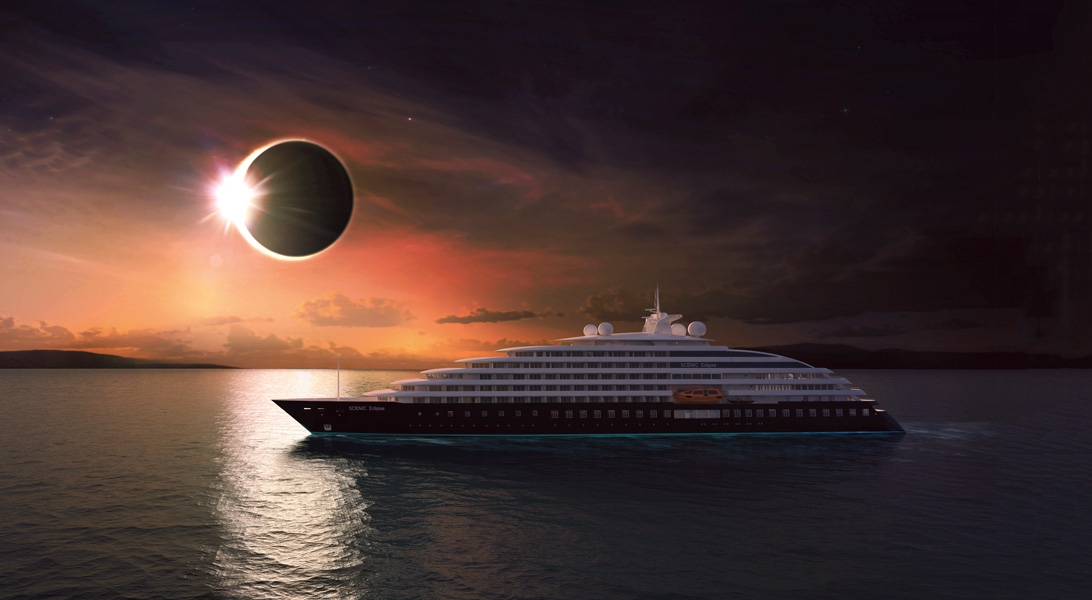
The images shown are for illustration purposes only and may not be an exact representation of what you find on the ship.
The images shown are for illustration purposes only and may not be an exact representation of what you find on the ship.
The images shown are for illustration purposes only and may not be an exact representation of what you find on the ship.
The images shown are for illustration purposes only and may not be an exact representation of what you find on the ship.
The images shown are for illustration purposes only and may not be an exact representation of what you find on the ship.


Our Fusion packages are all ABTA & ATOL protected ensuring that your booking is safe with us
| 48 nights aboard the Scenic Eclipse II | |||
| Return Flights (including regional) | |||
| All Verandah Suites | |||
| Butler service for every guest | |||
| Nine Dining Venues | |||
| Gratuities Included | |||
| Complimentary drinks on-board | |||
| Free use of electric bikes | |||
| Comprehensive choice of shore excursions | |||
| Complimentary Wi-Fi | |||
| Explore under the sea in our submarine (additional charge) | |||
| Soar above and beyond by helicopter (additional charge) | |||
| Port Taxes and Fees | |||
 | ABTA and ATOL Protection* | ||
Date 25th Feb 2027 |
Nts 48 |
Please Call for Availability |
Date 25th Feb 2027 |
Nts 48 |
Please Call for Availability |
Fusion Holidays when selling travel arrangements is a trading name of Co-op Travel Services Limited, registration 08903986. Fusion Cruises is an Accredited Body Member of Co-op Travel Services Limited ATOL 12904.
Book with Confidence. We are a Member of ABTA which means you have the benefit of ABTA’s assistance and Code of Conduct.
Some of the flights and flight-inclusive holidays on this website are financially protected by the ATOL scheme but ATOL protection does not apply to all holiday and travel services offered on this website. This website will provide you with information on the protection that applies in the case of each holiday and travel service offered before you make your booking. If you do not receive an ATOL Certificate then the booking will not be ATOL protected. If you do receive an ATOL Certificate but all parts of your trip are not listed on it, those parts will not be ATOL protected. Please see our booking conditions for information, or for more information about financial protection and the ATOL Certificate go to: www.caa.co.uk