This site uses cookies as defined in our Cookie Policy, by continuing to use this site you agree to their use.
Continue
| Arrive | Depart | ||||||
| 5th05 | MayMay | 202828 | Nice, France, embark on the Scenic Eclipse | ||||
United with France only since 1860, Nice has its own history and atmosphere, which dates back 230,000 years. It was on Colline du Château (now château-less) and at the Plage des Ponchettes, in front of the Old Town, that the Greeks established a market-port in 350 BC and named it Nikaia, which would become Marseilles' chief coastal rival. The Romans established themselves a little later on the hills of Cimiez (Cemenelum), already previously occupied by Ligurians and Celts, and quickly overshadowed the waterfront port. After falling to the Saracen invasions, Nice regained power as an independent state, becoming an important port in the early Middle Ages.So cocksure did it become that in 1388, Nice, along with the hill towns behind, effectively seceded from the county of Provence, under Louis d'Anjou, and allied itself with Savoie. Thus began its liaison with the House of Savoy, and through it with Piedmont and Sardinia, it was the Comté de Nice (Nice County). This relationship lasted some 500 years, tinting the culture, architecture, and dialect in rich Italian hues.By the 19th century Nice was flourishing commercially, locked in rivalry with the neighboring shipping port of Genoa. Another source of income: the dawning of tourism, as first the English, then the Russian nobility, discovered its extraordinary climate and superb waterfront position. A parade of fine stone mansions and hotels closed into a nearly solid wall of masonry, separated from the smooth-round rocks of the beach by what was originally named Camin deis Anglés (the English Way), which of course is now the famous Promenade des Anglais. This magnificent crescent, which is seeking UNESCO recognition, is one of the noblest in France. Many of Nice's most delightful attractions—the Cours Saleya market, the Old Town streets, the Hotel Negresco, and the Palais Masséna—are on or close to this 10-km (6-mile) waterfront, making it the first stop for most visitors, while the redevelopment of Nice's port, around the other side of the Colline du Château, makes it easier for amblers who want to take in the Genoese architecture or peruse the antiques at the Puces de Nice, now part of the Promenade des 100 Antiquaires, along Quai Papacino. Nice also has the distinction of the "Family Plus" label, with free strollers, play areas, and restaurants with child-friendly activities. Welcome to Nice, one of the most celebrated ports on the Côte d'Azur in France. A popular tourist destination since the 1700s, this vibrant city offers an intriguing blend of French and Italian cultures, thanks to its proximity to Italy. Please book your flight to arrive into Nice prior to 02:00 PM. | |||||||
| 5th05 | MayMay | 202828 | Monte-Carlo, Monaco | ||||
On one of the best stretches of the Mediterranean, this classic luxury destination is one of the most sought-after addresses in the world. With all the high-rise towers you have to look hard to find the Belle Époque grace of yesteryear. But if you head to the town's great 1864 landmark Hôtel de Paris—still a veritable crossroads of the buffed and befurred Euro-gentry—or enjoy a grand bouffe at its famous Louis XV restaurant, or attend the opera, or visit the ballrooms of the casino, you may still be able to conjure up Monaco's elegant past. Prince Albert II, a political science graduate from Amherst College, traces his ancestry to Otto Canella, who was born in 1070. The Grimaldi dynasty began with Otto's great-great-great-grandson, Francesco Grimaldi, also known as Frank the Rogue. Expelled from Genoa, Frank and his cronies disguised themselves as monks and in 1297 seized the fortified medieval town known today as Le Rocher (the Rock). Except for a short break under Napoléon, the Grimaldis have been here ever since, which makes them the oldest reigning family in Europe. In the 1850s a Grimaldi named Charles III made a decision that turned the Rock into a giant blue chip. Needing revenue but not wanting to impose additional taxes on his subjects, he contracted with a company to open a gambling facility. The first spin of the roulette wheel was on December 14, 1856. There was no easy way to reach Monaco then—no carriage roads or railroads—so no one came. Between March 15 and March 20, 1857, one person entered the casino—and won two francs. In 1868, however, the railroad reached Monaco, and it was filled with Englishmen who came to escape the London fog. The effects were immediate. Profits were so great that Charles eventually abolished all direct taxes. Almost overnight, a threadbare principality became an elegant watering hole for European society. Dukes (and their mistresses) and duchesses (and their gigolos) danced and dined their way through a world of spinning roulette wheels and bubbling champagne—preening themselves for nights at the opera, where such artists as Vaslav Nijinsky, Sarah Bernhardt, and Enrico Caruso came to perform. Along with the tax system, its sensational position on a broad, steep peninsula that bulges into the Mediterranean—its harbor sparkling with luxury cruisers, its posh mansions angling awnings toward the nearly perpetual sun—continues to draw the rich and famous. One of the latest French celebrities to declare himself "Monégasque," thus giving up his French passport, is superchef Alain Ducasse, who said that he made the choice out of affection for Monaco rather than tax reasons. Pleasure boats vie with luxury cruisers in their brash beauty and Titanic scale, and teams of handsome young men—themselves dyed blond and tanned to match—scour and polish every gleaming surface. As you might expect, all this glitz doesn't come cheap. Eating is expensive, and even the most modest hotels cost more here than in nearby Nice or Menton. As for taxis, they don't even have meters so you are completely at the driver's mercy (with prices skyrocketing during events such as the Grand Prix). For the frugal, Monaco is the ultimate day-trip, although parking is as coveted as a room with a view. At the very least you can afford a coffee at Starbucks. The harbor district, known as La Condamine, connects the new quarter, officially known as Monte Carlo with Monaco-Ville (or Le Rocher), a medieval town on the Rock, topped by the palace, the cathedral, and the Oceanography Museum. Have no fear that you'll need to climb countless steps to get to Monaco-Ville, as there are plenty of elevators and escalators climbing the steep cliffs. But shuttling between the lovely casino grounds of Monte Carlo and Old Monaco, separated by a vast port, is a daunting proposition for ordinary mortals without wings, so hop on the No. 1 bus from Saint Roman, or No. 2 from the Jardin Exotique - Both stop at Place du Casino and come up to Monaco Ville. | |||||||
| 6th06 | MayMay | 202828 | Monte-Carlo, Monaco | ||||
On one of the best stretches of the Mediterranean, this classic luxury destination is one of the most sought-after addresses in the world. With all the high-rise towers you have to look hard to find the Belle Époque grace of yesteryear. But if you head to the town's great 1864 landmark Hôtel de Paris—still a veritable crossroads of the buffed and befurred Euro-gentry—or enjoy a grand bouffe at its famous Louis XV restaurant, or attend the opera, or visit the ballrooms of the casino, you may still be able to conjure up Monaco's elegant past. Prince Albert II, a political science graduate from Amherst College, traces his ancestry to Otto Canella, who was born in 1070. The Grimaldi dynasty began with Otto's great-great-great-grandson, Francesco Grimaldi, also known as Frank the Rogue. Expelled from Genoa, Frank and his cronies disguised themselves as monks and in 1297 seized the fortified medieval town known today as Le Rocher (the Rock). Except for a short break under Napoléon, the Grimaldis have been here ever since, which makes them the oldest reigning family in Europe. In the 1850s a Grimaldi named Charles III made a decision that turned the Rock into a giant blue chip. Needing revenue but not wanting to impose additional taxes on his subjects, he contracted with a company to open a gambling facility. The first spin of the roulette wheel was on December 14, 1856. There was no easy way to reach Monaco then—no carriage roads or railroads—so no one came. Between March 15 and March 20, 1857, one person entered the casino—and won two francs. In 1868, however, the railroad reached Monaco, and it was filled with Englishmen who came to escape the London fog. The effects were immediate. Profits were so great that Charles eventually abolished all direct taxes. Almost overnight, a threadbare principality became an elegant watering hole for European society. Dukes (and their mistresses) and duchesses (and their gigolos) danced and dined their way through a world of spinning roulette wheels and bubbling champagne—preening themselves for nights at the opera, where such artists as Vaslav Nijinsky, Sarah Bernhardt, and Enrico Caruso came to perform. Along with the tax system, its sensational position on a broad, steep peninsula that bulges into the Mediterranean—its harbor sparkling with luxury cruisers, its posh mansions angling awnings toward the nearly perpetual sun—continues to draw the rich and famous. One of the latest French celebrities to declare himself "Monégasque," thus giving up his French passport, is superchef Alain Ducasse, who said that he made the choice out of affection for Monaco rather than tax reasons. Pleasure boats vie with luxury cruisers in their brash beauty and Titanic scale, and teams of handsome young men—themselves dyed blond and tanned to match—scour and polish every gleaming surface. As you might expect, all this glitz doesn't come cheap. Eating is expensive, and even the most modest hotels cost more here than in nearby Nice or Menton. As for taxis, they don't even have meters so you are completely at the driver's mercy (with prices skyrocketing during events such as the Grand Prix). For the frugal, Monaco is the ultimate day-trip, although parking is as coveted as a room with a view. At the very least you can afford a coffee at Starbucks. The harbor district, known as La Condamine, connects the new quarter, officially known as Monte Carlo with Monaco-Ville (or Le Rocher), a medieval town on the Rock, topped by the palace, the cathedral, and the Oceanography Museum. Have no fear that you'll need to climb countless steps to get to Monaco-Ville, as there are plenty of elevators and escalators climbing the steep cliffs. But shuttling between the lovely casino grounds of Monte Carlo and Old Monaco, separated by a vast port, is a daunting proposition for ordinary mortals without wings, so hop on the No. 1 bus from Saint Roman, or No. 2 from the Jardin Exotique - Both stop at Place du Casino and come up to Monaco Ville. Monte Carlo is the epitome of luxury and elegance, nestled within the principality of Monaco. Renowned for its iconic Casino de Monte-Carlo, this glamorous enclave offers a wealth of indulgent experiences. Explore opulent streets lined with designer boutiques and stroll along the picturesque coastline. From world-class entertainment and exclusive clubs to prestigious events like the Monaco Grand Prix, Monte Carlo captivates visitors with its timeless allure and sophistication. Whether you're seeking excitement at the casino or refined relaxation, Monte Carlo promises an unforgettable day. | |||||||
| 7th07 | MayMay | 202828 | Saint-Florent, France | ||||
Arrival in Saint-Florent reveals a picturesque harbour framed by pastel façades, an elegant marina, and a centuries-old citadel overlooking the sea. Set along Corsica’s northern coast, the town combines refined simplicity with untamed natural beauty, offering leisurely waterfront walks, boutique shopping, and a distinctly authentic Corsican atmosphere. | |||||||
| 8th08 | MayMay | 202828 | Livorno, Italy | ||||
Livorno is a gritty city with a long and interesting history. In the early Middle Ages it alternately belonged to Pisa and Genoa. In 1421 Florence, seeking access to the sea, bought it. Cosimo I (1519–74) started construction of the harbor in 1571, putting Livorno on the map. After Ferdinando I de' Medici (1549–1609) proclaimed Livorno a free city, it became a haven for people suffering from religious persecution; Roman Catholics from England and Jews and Moors from Spain and Portugal, among others, settled here. The Quattro Mori (Four Moors), also known as the Monument to Ferdinando I, commemorates this. (The statue of Ferdinando I dates from 1595, the bronze Moors by Pietro Tacca from the 1620s.)In the following centuries, and particularly in the 18th, Livorno boomed as a port. In the 19th century the town drew a host of famous Britons passing through on their grand tours. Its prominence continued up to World War II, when it was heavily bombed. Much of the town's architecture, therefore, postdates the war, and it's somewhat difficult to imagine what it might have looked like before. Livorno has recovered from the war, however, as it's become a huge point of departure for container ships, as well as the only spot in Tuscany for cruise ships to dock for the day.Most of Livorno's artistic treasures date from the 17th century and aren't all that interesting unless you dote on obscure baroque artists. Livorno's most famous native artist, Amedeo Modigliani (1884–1920), was of much more recent vintage. Sadly, there's no notable work by him in his hometown.There may not be much in the way of art, but it's still worth strolling around the city. The Mercato Nuovo, which has been around since 1894, sells all sorts of fruits, vegetables, grains, meat, and fish. Outdoor markets nearby are also chock-full of local color. The presence of Camp Darby, an American military base just outside town, accounts for the availability of many American products.If you have time, Livorno is worth a stop for lunch or dinner at the very least. Livorno is a vibrant port city shaped by centuries of maritime trade, offering a distinctly cosmopolitan character. Explore the 17th-century canals of the Venezia Nuova district, browse the lively Central Market, or stroll along the Terrazza Mascagni, where checkerboard paving frames sweeping sea views. Beyond the city, Livorno serves as a gateway to Tuscany’s celebrated landscapes and culinary traditions, with convenient access to the artistic treasures of Florence and the iconic Leaning Tower of Pisa. | |||||||
| 9th09 | MayMay | 202828 | Porto Santo Stefano, Italy | ||||
Discover Porto Santo Stefano, a coastal paradise on the Tuscan Riviera where history meets Mediterranean beauty. Wander through its charming streets, uncover the 16th-century Spanish Fortress, and soak in the vibrant harbour views. Delight in exquisite fresh seafood, paired with local wines and olive oils, at seaside eateries. | |||||||
| 10th10 | MayMay | 202828 | Gaeta, Italy | ||||
Set on a peninsula along the Tyrrhenian Sea, Gaeta is an understated coastal town known for its natural beauty and historic charm. Its picturesque old town cascades towards the water, revealing narrow medieval streets, golden sandy beaches, and clear blue seas. Long favoured by Italians as a seaside retreat, Gaeta remains refreshingly low-key. The town is also celebrated for its cuisine, with inviting trattorias and restaurants tucked throughout the atmospheric historic centre. | |||||||
| 11th11 | MayMay | 202828 | Sorrento, Italy | ||||
Sorrento may have become a jumping-off point for visitors to Pompeii, Capri, and Amalfi, but you can find countless reasons to love it for itself. The Sorrentine people are fair-minded and hardworking, bubbling with life and warmth. The tuff cliff on which the town rests is spread over the bay, absorbing sunlight, while orange and lemon trees waft their perfume in spring. Winding along a cliff above a small beach and two harbors, the town is split in two by a narrow ravine formed by a former mountain stream. To the east, dozens of hotels line busy Via Correale along the cliff—many have "grand" included in their names, and some indeed still are. To the west, however, is the historic sector, which still enchants. It's a relatively flat area, with winding, stone-paved lanes bordered by balconied buildings, some joined by medieval stone arches. The central piazza is named after the poet Torquato Tasso, born here in 1544. This part of town is a delightful place to walk through. Craftspeople are often at work in their stalls and shops and are happy to let you watch; in fact, that's the point. Music spots and bars cluster in the side streets near Piazza Tasso. Perched on cliffs overlooking the Bay of Naples, Sorrento is a town of natural beauty and relaxed elegance. Surrounded by lemon and orange groves and known as the birthplace of limoncello liqueur, it offers a distinctly local character. Wander peaceful alleyways lined with pastel buildings, grand villas, and inviting cafés. Sorrento also serves as a gateway to the Amalfi Coast, as well as the ancient sites of Pompeii and Herculaneum, and the island of Capri. | |||||||
| 12th12 | MayMay | 202828 | Lipari, Italy | ||||
The largest and most developed of the Aeolians, Lipari welcomes you with distinctive pastel-color houses. Fields of spiky agaves dot the northernmost tip of the island, Acquacalda, indented with pumice and obsidian quarries. In the west is San Calogero, where you can explore hot springs and mud baths. From the red-lava base of the island rises a plateau crowned with a 16th-century castle and a 17th-century cathedral. The World Heritage-listed Aeolian Islands are seven volcanic outcrops set off the north coast of Sicily with a rich history dating back to 5000BC. As you sail into the islands, look out for the dramatic rock formations that rise majestically from the water. Lipari is the largest and most populated of the islands, known for its pebbled beaches, hiking trails and historic harbour. From its panoramic position, a castle overlooks the seafront of pastel-coloured townhouses, with windswept highlands and steep cliffs in the distance. | |||||||
| 13th13 | MayMay | 202828 | Giardini Naxos, Italy | ||||
Taormina has captivated visitors since the 18th-century as one of Sicily's most beloved destinations. Dominated by Mount Etna, Europe's largest active volcano, this elegant town perches above the Ionian Sea with a rich artistic, historical, and cultural heritage. Discover its stunning ancient theatre, charming piazzas, and local specialities including arancini — Sicily's famous rice balls. With Scenic Eclipse remaining in port until late this evening, you'll have ample time to explore at your leisure. | |||||||
| 14th14 | MayMay | 202828 | Valletta, Malta | ||||
Malta's capital, the minicity of Valletta, has ornate palaces and museums protected by massive fortifications of honey-color limestone. Houses along the narrow streets have overhanging wooden balconies for people-watching from indoors. Generations ago they gave housebound women a window on the world of the street. The main entrance to town is through the City Gate (where all bus routes end), which leads onto Triq Repubblika (Republic Street), the spine of the grid-pattern city and the main shopping street. Triq Mercante (Merchant Street) parallels Repubblika to the east and is also good for strolling. From these two streets, cross streets descend toward the water; some are stepped. Valletta's compactness makes it ideal to explore on foot. City Gate and the upper part of Valletta are experiencing vast redevelopment that includes a new Parliament Building and open-air performance venue. The complex, completed mid-2013, has numerous pedestrian detours in place along with building noise and dust. Before setting out along Republic Street, stop at the tourist information office on Merchant Street for maps and brochures. This morning, sail into the spectacular harbour of Valletta for an overnight call, the fortified capital of Malta and one of the most impressive natural harbours in the world. Founded by the Knights of St. John in the 1500s, this World Heritage–listed city is a masterpiece of Baroque architecture, grand bastions, and golden limestone buildings that glow in the sunlight.Valletta may be small, but it’s rich in treasures — ornate churches, grand palaces, charming piazzas, and narrow streets opening to sweeping sea views. Highlights include St. John’s Co-Cathedral with its famed Caravaggio works, the panoramic Upper Barrakka Gardens, and the historic auberges of the Knights. | |||||||
| 15th15 | MayMay | 202828 | Valletta, Malta, disembark the Scenic Eclipse | ||||
Malta's capital, the minicity of Valletta, has ornate palaces and museums protected by massive fortifications of honey-color limestone. Houses along the narrow streets have overhanging wooden balconies for people-watching from indoors. Generations ago they gave housebound women a window on the world of the street. The main entrance to town is through the City Gate (where all bus routes end), which leads onto Triq Repubblika (Republic Street), the spine of the grid-pattern city and the main shopping street. Triq Mercante (Merchant Street) parallels Repubblika to the east and is also good for strolling. From these two streets, cross streets descend toward the water; some are stepped. Valletta's compactness makes it ideal to explore on foot. City Gate and the upper part of Valletta are experiencing vast redevelopment that includes a new Parliament Building and open-air performance venue. The complex, completed mid-2013, has numerous pedestrian detours in place along with building noise and dust. Before setting out along Republic Street, stop at the tourist information office on Merchant Street for maps and brochures. As your Scenic Eclipse voyage comes to an end in historic Valletta, savour these final moments on board. Enjoy a final breakfast before farewelling the crew and fellow guests. Please book your flight to depart out of Valletta after 12:00 PM. #Spa treatments and services at additional cost. Daily activities may be subject to change; please consult your Daily Wonder for updates. Submersible not operational on this voyage. The itinerary is a guide only and may be amended for operational reasons. As such, Scenic cannot guarantee the voyage will operate unaltered from the itinerary stated above. Please refer to our terms and conditions for further information. | |||||||
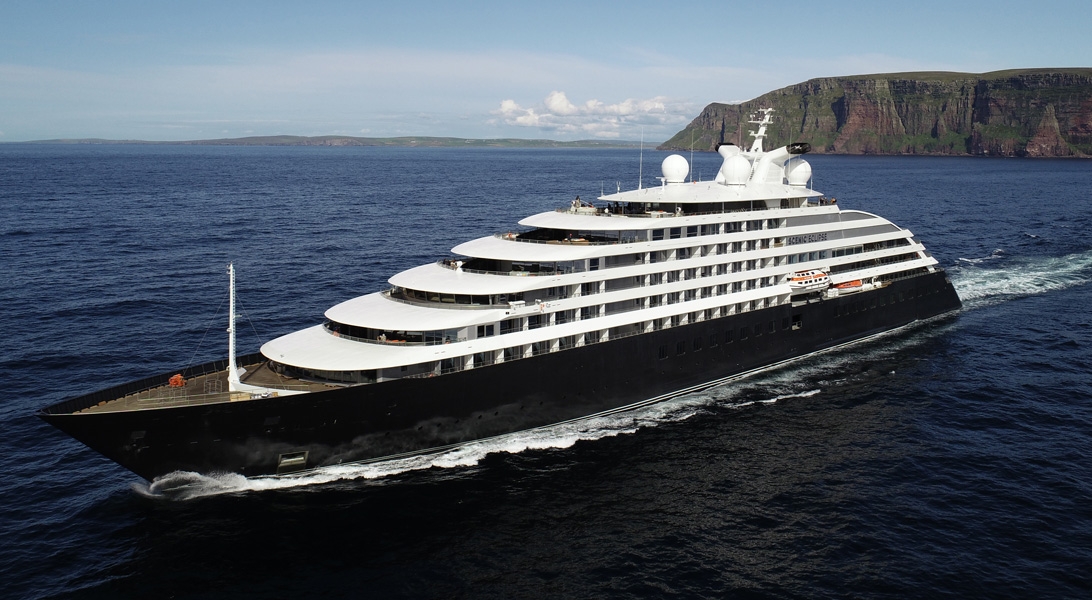

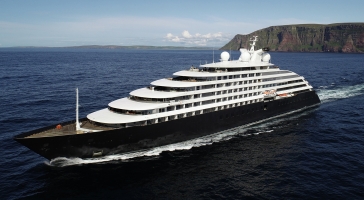
The images shown are for illustration purposes only and may not be an exact representation of what you find on the ship.
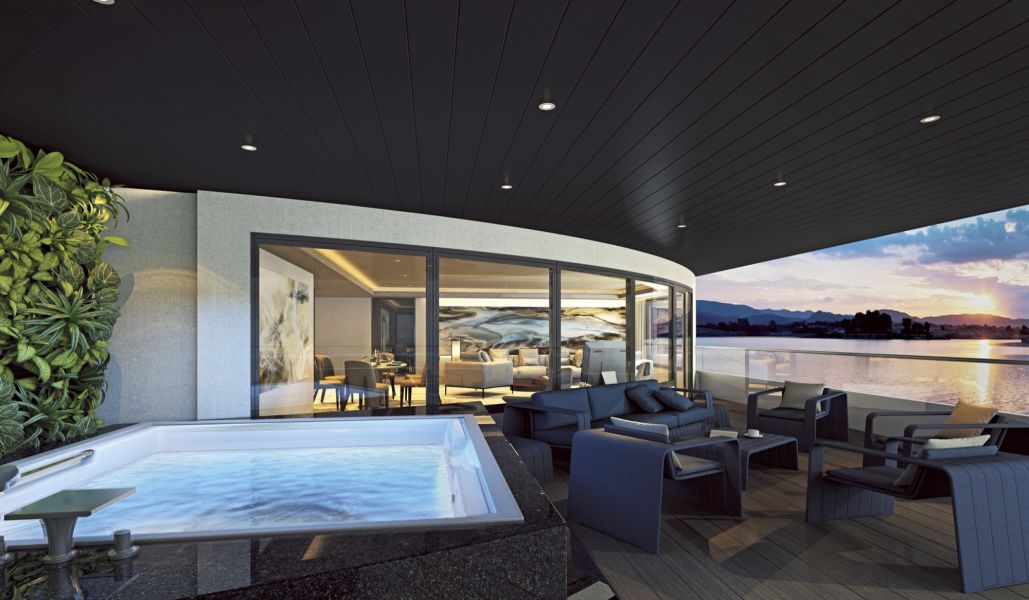
Handcrafted and extraordinary in every way, our Owner’s Penthouse Suites are the ultimate indulgence. Boasting the best views on board, a private spa pool on the spacious terrace, dedicated lounge and dining area, a super-sized bathroom with dual vitality mist showers, and a personalised butler service, it’s a once-in-a-lifetime experience.
Suite Features
At an enormous 195m² in size, the Owner’s Penthouse Suites are located on Deck 9. Suite names and amenities are the same across both Scenic Eclipse and Scenic Eclipse II, however, both have been thoughtfully curated to suit the cruising experience of these ships.
Separate Lounge & Bedrooom
Staying in one of only two Owner’s Penthouse Suites is the ultimate indulgence. Your home away from home is located at the bow of the yacht, on Deck 9, boasting the best views on board. With a private dining area that can comfortably seat up to eight guests, you'll never want to leave.
For a once-in-a-lifetime cruising experience, combine the Owner’s Penthouse Suites with a Spa Suite to create a lavish Two-Bedroom Penthouse Suite – an incredible 245m² of unsurpassed ultra-luxury and opulence.
Spacious Terrace & Pool
Your curved terrace, complete with a personal private spa pool and sun loungers, is the perfect place to indulge in ultra-luxury relaxation.
Super-sized Bathroom
Featuring a super-sized bathroom, your relaxation and comfort are enhanced with a dual steam shower, therapeutic spa bath and guest powder room with dual vanity.
Priority Reservations & Embarkation
Guests in our Owner’s Penthouse Suite will enjoy the privilege of priority dining in the specialty restaurants as well as priority choice of Scenic Freechoice, Scenic Discovery, helicopter^ and submersible^ excursions. VIP embarkation and disembarkation are standard inclusions at the start and finish of your cruise.
Amenities & Features
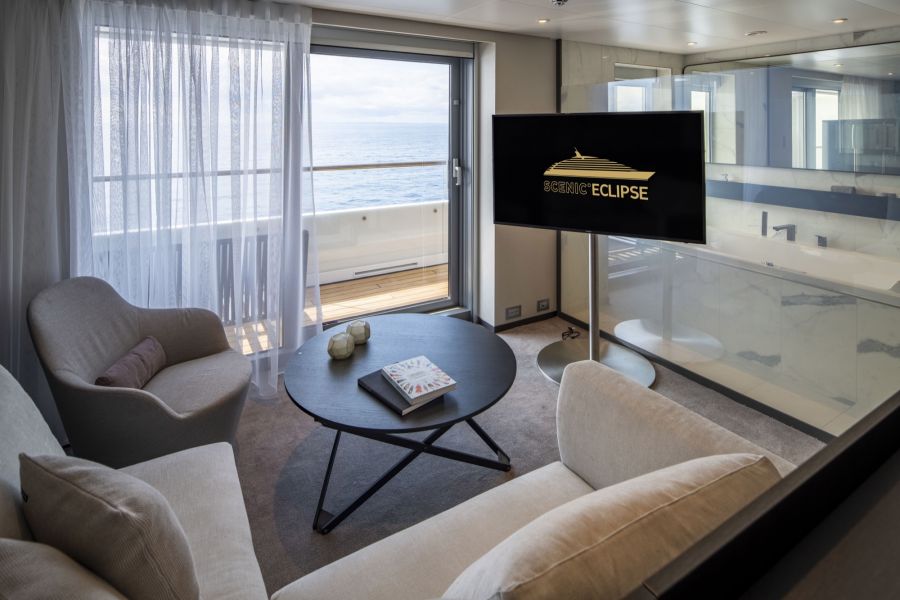
Imagine returning from an exhilarating day of all-inclusive excursions to your private hideaway and relaxing in your luxurious spa bath. Our indulgent Spa Suites will provide the ultimate rejuvenation.
Suite Features
Ranging in size from 46-50m², our Spa Suites are located on Deck 8 and 9.
Suite names and amenities are the same across both Scenic Eclipse and Scenic Eclipse II, however, both have been thoughtfully curated to suit the cruising experience of these ships.
Lounge and Sleeping Area
With a premier location on the higher Decks 8 and 9 and an impressive 46-50m2 in size, our opulent Spa Suites provide the most inviting of ultra-luxury retreats. Featuring a separate sleep zone with a four-poster king-size Scenic Slumber Bed, a lounge area as well as a private verandah, they are the perfect retreat after a day of discovery.
Luxurious Spa
Step into the private sanctuary of your Spa Suite and soak in a steaming bath drawn by your butler. Gaze out over your verandah to the vistas beyond and sip on a glass of Champagne – heaven.
Scenic Eclipse I features the signature double-sized Philippe Starck-designed spa bath, while Scenic Eclipse II offers a luxurious circular spa bath overlooking your verandah. Exclusive to these suites, the baths provide the perfect way to rejuvenate after your day of activities.
There are variations between the Spa Suite configurations on Scenic Eclipse I and II, and these distinctions are subject to the respective ship's specifications and design.
Private Verandah
Your private verandah is the perfect place to unwind. Be immersed in the tranquillity of the sea or be the first to catch sight of wildlife and breathtaking landscapes.
Amenities & Features
The images shown are for illustration purposes only and may not be an exact representation of what you find on the ship.
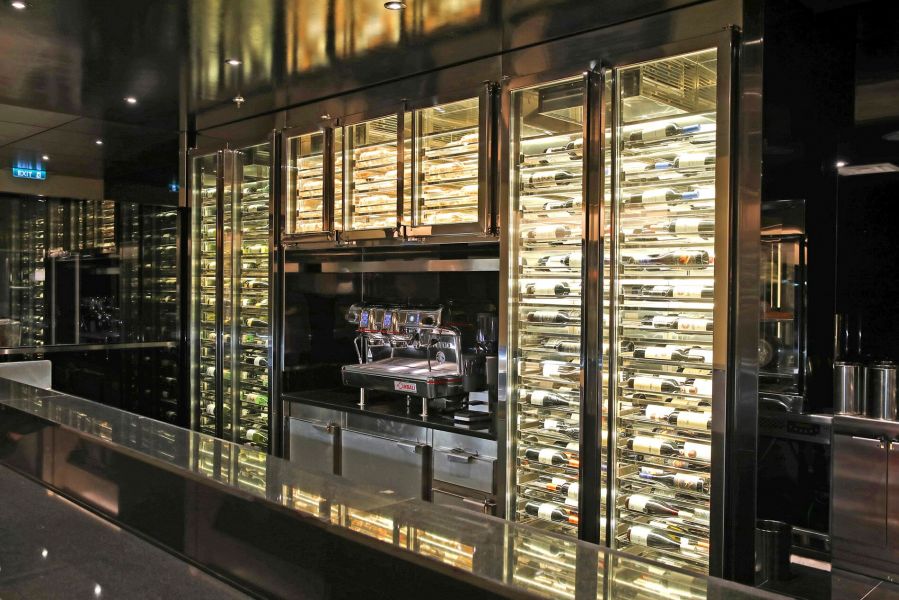
Elements is the main restaurant featuring Italian, steak and seafood from an à la carte menu. Located on Deck 4, it’s a relaxed dining option for dinner. Dine solo, with your travel partner or join friends on larger tables. Enjoy premium beverages from Elements Bar, hosting with fine wines matched to the daily menu and broad selection of international cheeses.
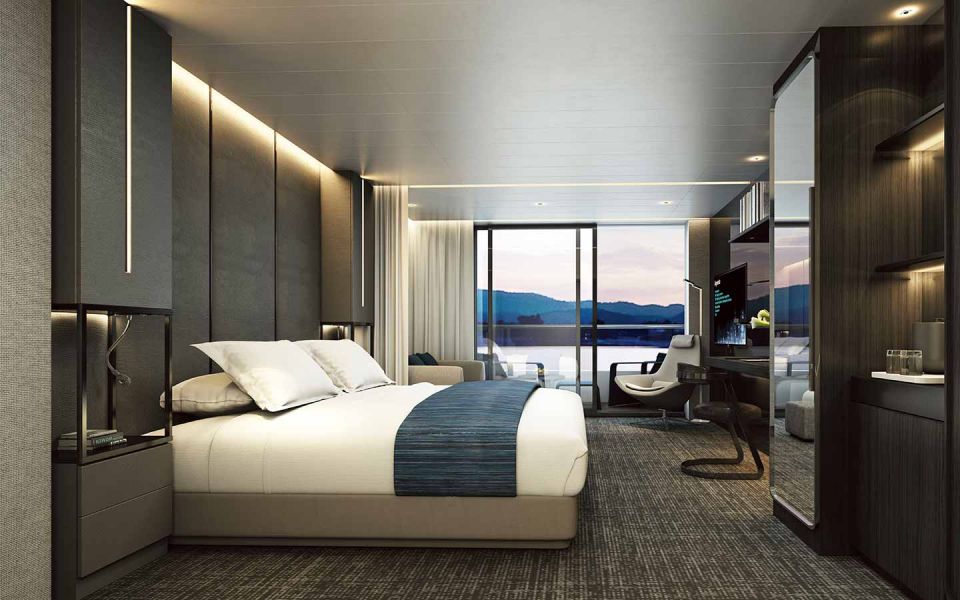
When the mood strikes to dine in the privacy of your suite, your personal butler can arrange everything. Choose from the 24-hour in-suite dining and beverage menus. Your butler will also ensure your in-suite mini-bar is re-stocked daily to your liking. With an in-suite espresso machine, savour your morning coffee in the solitude of your suite or soak up the sunlight on your verandah or terrace.
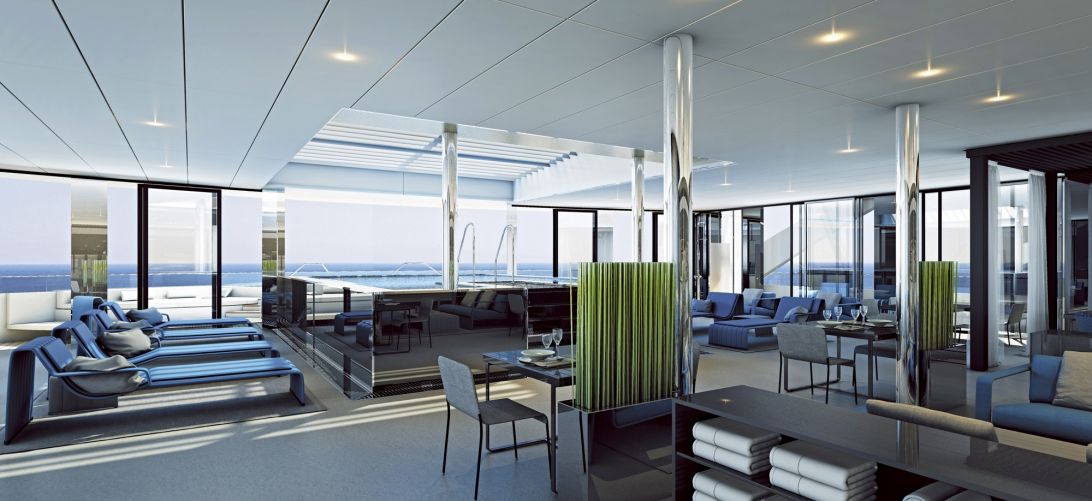
Relax in the Yacht Club grill restaurant and bar for breakfast, lunch and special themed dinners. This casual dining experience is fitted with food islands, outdoor and lounge seating. Come to dine, mingle, relax in swing chairs overlooking the view, or taste our freshly-made gelato.
The images shown are for illustration purposes only and may not be an exact representation of what you find on the ship.
The images shown are for illustration purposes only and may not be an exact representation of what you find on the ship.
The images shown are for illustration purposes only and may not be an exact representation of what you find on the ship.

Our Fusion packages are all ABTA & ATOL protected ensuring that your booking is safe with us
| Return flights including luggage allowance | |||
| Overseas Transfers | |||
| 10 nights aboard the Scenic Eclipse | |||
| Return Flights (including regional) | |||
| All Verandah Suites | |||
| Butler service for every guest | |||
| Nine Dining Venues | |||
| Gratuities Included | |||
| Complimentary drinks on-board | |||
| Free use of electric bikes | |||
| Comprehensive choice of shore excursions | |||
| Complimentary Wi-Fi | |||
| Explore under the sea in our submarine (additional charge) | |||
| Soar above and beyond by helicopter (additional charge) | |||
| Port Taxes and Fees | |||
 | ABTA and ATOL Protection* | ||
Fly/cruise package |
Date 5th May 2028 |
Nts 10 |
Interior  |
Oceanview |
Balcony |
Suite £9,625pp |
Interior |
Oceanview |
Balcony |
Suite £19,250pp |
Date 5th May 2028 |
Nts 10 |
Interior |
Oceanview |
Balcony |
Suite £9,625pp |
Interior |
Oceanview |
Balcony |
Suite £19,250pp |
Fusion Holidays when selling travel arrangements is a trading name of Co-op Travel Services Limited, registration 08903986. Fusion Cruises is an Accredited Body Member of Co-op Travel Services Limited ATOL 12904.
Book with Confidence. We are a Member of ABTA which means you have the benefit of ABTA’s assistance and Code of Conduct.
Some of the flights and flight-inclusive holidays on this website are financially protected by the ATOL scheme but ATOL protection does not apply to all holiday and travel services offered on this website. This website will provide you with information on the protection that applies in the case of each holiday and travel service offered before you make your booking. If you do not receive an ATOL Certificate then the booking will not be ATOL protected. If you do receive an ATOL Certificate but all parts of your trip are not listed on it, those parts will not be ATOL protected. Please see our booking conditions for information, or for more information about financial protection and the ATOL Certificate go to: www.caa.co.uk