This site uses cookies as defined in our Cookie Policy, by continuing to use this site you agree to their use.
Continue

| Arrive | Depart | ||||||
| 16th16 | JunJun | 202828 | Venice, Italy, embark on the Scenic Ikon | ||||
Venice is a city unlike any other. No matter how often you've seen it in photos and films, the real thing is more dreamlike than you could imagine. With canals where streets should be, water shimmers everywhere. The fabulous palaces and churches reflect centuries of history in what was a wealthy trading center between Europe and the Orient. Getting lost in the narrow alleyways is a quintessential part of exploring Venice, but at some point you'll almost surely end up in Piazza San Marco, where tourists and locals congregate for a coffee or an aperitif. Welcome to Venice, the enchanting ‘City of Canals’ known for its elegant beauty and tranquil waterways. As you board your next-generation Discovery Yacht, Scenic Ikon, prepare to begin an unforgettable journey through some of the Mediterranean’s most captivating destinations. Meet your butler and settle into your spacious suite with a glass of champagne. Then join your fellow guests at the bar to toast the start of an unforgettable voyage. Please book your flight to arrive into Venice prior to 02:00 PM. | |||||||
| 17th17 | JunJun | 202828 | Rovinj, Croatia | ||||
One of the true jewels of the Mediterranean, Rovinj is a jaw-droppingly beautiful town, which juts out into sparkling Mediterranean. Dominated by the pencil-like bell tower of the Venetian Saint Euphemia Cathedral, pine tree forests flow to the borders of the quaint Old Town - which evokes the romantic, tangled backstreets of the Venice. Rovinj - or Rovino in Italian - is a city of split personalities, with two official languages - having been owned by the Kingdom of Italy between 1919 and 1947. Today, explore Rovinj, a picturesque coastal town on Croatia’s Istrian Peninsula. Known for its charming old town with cobblestone streets, colourful buildings and a bustling harbour, Rovinj offers a perfect blend of history, culture, and seaside beauty. Wander through quaint alleys, visit the hilltop Church of St. Euphemia, and enjoy a coffee at one of the vibrant cafés along the waterfront. | |||||||
| 18th18 | JunJun | 202828 | Zadar, Croatia | ||||
Dalmatia's capital for more than 1,000 years, Zadar is all too often passed over by travelers on their way to Split or Dubrovnik. What they miss out on is a city of more than 73,000 that is remarkably lovely and lively despite—and, in some measure, because of—its tumultuous history. The Old Town, separated from the rest of the city on a peninsula some 4 km (2½ miles) long and just 1,640 feet wide, is bustling and beautiful: the marble pedestrian streets are replete with Roman ruins, medieval churches, palaces, museums, archives, and libraries. Parts of the new town are comparatively dreary, a testament to what a world war followed by decades of communism, not to mention a civil war, can do to the architecture of a city that is 3,000 years old. A settlement had already existed on the site of the present-day city for some 2,000 years when Rome finally conquered Zadar in the 1st century BC; the foundations of the forum can be seen today. Before the Romans came the Liburnians had made it a key center for trade with the Greeks and Romans for 800 years. In the 3rd century BC the Romans began to seriously pester the Liburnians, but required two centuries to bring the area under their control. During the Byzantine era, Zadar became the capital of Dalmatia, and this period saw the construction of its most famous church, the 9th-century St. Donat's Basilica. It remained the region's foremost city through the ensuing centuries. The city then experienced successive onslaughts and occupations—both long and short—by the Osogoths, the Croatian-Hungarian kings, the Venetians, the Turks, the Habsburgs, the French, the Habsburgs again, and finally the Italians before becoming part of Yugoslavia and, in 1991, the independent republic of Croatia. Zadar was for centuries an Italian-speaking city, and Italian is still spoken widely, especially by older people. Indeed, it was ceded to Italy in 1921 under the Treaty of Rapallo (and reverted to its Italian name of Zara). Its occupation by the Germans from 1943 led to intense bombing by the Allies during World War II, which left most of the city in ruins. Zadar became part of Tito's Yugoslavia in 1947, prompting many Italian residents to leave. Zadar's most recent ravages occurred during a three-month siege by Serb forces and months more of bombardment during the Croatian-Serbian war between 1991 and 1995. But you'd be hard-pressed to find outward signs of this today in what is a city to behold. There are helpful interpretive signs in English all around the Old Town, so you certainly won't feel lost when trying to make sense of the wide variety of architectural sites you might otherwise pass by with only a cursory look. Discover Zadar, a vibrant city on the Dalmatian Coast where history meets the sea. Enjoy a walk along the waterfront to hear the sounds of the Sea Organ, a unique wave-powered creation; explore the charming old town filled with ancient Roman ruins and lively streets, and take in the beautiful views that make this a truly special destination. | |||||||
| 19th19 | JunJun | 202828 | Hvar Island, Croatia | ||||
The Croatian island of Hvar bills itself as the "sunniest island in the Adriatic." Not only does it have the figures to back up this claim—an annual average of 2,724 hours of sunshine—but it also makes visitors a sporting proposition, offering them a money-back guarantee if there are seven consecutive days of snow (snow has been known to fall here; the last time being February 2012). Explore Hvar, Dalmatia’s gem, founded as Pharos in the fourth century BC. Admire its vibrant Pjaca (main town square) and ornate Venetian architecture, and inhale the scent of the nearby fragrant lavender fields. The sunniest spot in Croatia and consistently ranked among the world’s most popular islands, Hvar captivates with stunning beauty surrounded by the deep blues of the Adriatic Sea. | |||||||
| 20th20 | JunJun | 202828 | At Sea | ||||
| 21st21 | JunJun | 202828 | Siracuse, Sicily, Italy | ||||
Siracusa, known to English speakers as Syracuse, is a wonder to behold. One of the great ancient capitals of Western civilization, the city was founded in 734 BC by Greek colonists from Corinth and soon grew to rival, and even surpass, Athens in splendor and power. It became the largest, wealthiest city-state in the West and a bulwark of Greek civilization. Although Siracusa lived under tyranny, rulers such as Dionysius filled their courts with Greeks of the highest cultural stature—among them the playwrights Aeschylus and Euripides, and the philosopher Plato. The Athenians, who didn't welcome Siracusa's rise, set out to conquer Sicily, but the natives outsmarted them in what was one of the greatest military campaigns in ancient history (413 BC). The city continued to prosper until it was conquered two centuries later by the Romans.Present-day Siracusa still has some of the finest examples of Baroque art and architecture; dramatic Greek and Roman ruins; and a Duomo that's the stuff of legend—a microcosm of the city's entire history in one building. The modern city also has a wonderful, lively, Baroque old town worthy of extensive exploration, as well as pleasant piazzas, outdoor cafés and bars, and a wide assortment of excellent seafood. There are essentially two areas to explore in Siracusa: the Parco Archeologico (Archaeological Zone), on the mainland; and the island of Ortygia, the ancient city first inhabited by the Greeks, which juts out into the Ionian Sea and is connected to the mainland by two small bridges. Ortygia is becoming increasingly popular with tourists, and is starting to lose its old-fashioned charm in favor of modern boutiques.Siracusa's old nucleus of Ortygia, a compact area, is a pleasure to amble around without getting unduly tired. In contrast, mainland Siracusa is a grid of wider avenues. At the northern end of Corso Gelone, above Viale Paolo Orsi, the orderly grid gives way to the ancient quarter of Neapolis, where the sprawling Parco Archeologico is accessible from Viale Teracati (an extension of Corso Gelone). East of Viale Teracati, about a 10-minute walk from the Parco Archeologico, the district of Tyche holds the archaeological museum and the church and catacombs of San Giovanni, both off Viale Teocrito (drive or take a taxi or city bus from Ortygia). Coming from the train station, it's a 15-minute trudge to Ortygia along Via Francesco Crispi and Corso Umberto. If you're not up for that, take one of the free electric buses leaving every 10 minutes from the bus station around the corner. Spend the day in the city of Syracuse on the Ionian coast of the island of Sicily, a tapestry of lush citrus orchards, golden stone buildings and sparkling blue seas. Explore the remnants of ancient civilisations in the Archaeological Park of Neapolis, where the Greek Theatre and Roman Amphitheatre stand as testaments to the city's rich history. Stroll through the charming streets of Ortigia, the historic heart of Syracuse, with its baroque architecture and bustling markets. Indulge in authentic Sicilian cuisine at traditional waterfront trattorias, savouring local delicacies like arancini and cannoli. | |||||||
| 22nd22 | JunJun | 202828 | Giardini Naxos, Italy | ||||
Known as the ‘Jewel of Sicily’, Taormina is one of Sicily’s most popular resort towns. Once a stop on the famed Grand Tour of the 19th century, today it is synonymous with luxury hotels, exceptional restaurants and designer boutiques. It’s also the gateway to World Heritage-listed Mount Etna, the largest active volcano in Europe, which dominates the picturesque backdrop. This charming small town set high above the Ionian Sea is known for its ancient Greco-Roman theatre, beautifully restored medieval buildings, astonishing vistas and exclusive atmosphere. | |||||||
| 23rd23 | JunJun | 202828 | Palermo, Italy | ||||
Once the intellectual capital of southern Europe, Palermo has always been at the crossroads of civilization. Favorably situated on a crescent-shaped bay at the foot of Monte Pellegrino, it has attracted almost every culture touching the Mediterranean world. To Palermo's credit, it has absorbed these diverse cultures into a unique personality that is at once Arab and Christian, Byzantine and Roman, Norman and Italian. The city's heritage encompasses all of Sicily's varied ages, but its distinctive aspect is its Arab-Norman identity, an improbable marriage that, mixed in with Byzantine and Jewish elements, created some resplendent works of art. No less noteworthy than the architecture is Palermo's chaotic vitality, on display at some of Italy's most vibrant outdoor markets, public squares, street bazaars, and food vendors, and above all in its grand climax of Italy's most spectacular passeggiata (the leisurely social stroll along the principal thoroughfare). Welcome to Palermo, a vibrant and historic city located on the northern coast of Sicily. The island’s capital reveals a mix of cultures, including Italian, Arabic, and Norman influences, which is evident in its diverse architectural styles and cuisine. Palermo's historic centre is a World Heritage-listed site, brimming with beautiful churches, royal palaces, and bustling squares. Palermo is also known for its street food scene, with markets like Mercato Ballarò and Mercato Vucciria serving up a wide range of local specialties, such as arancini, panelle, and sfincione. | |||||||
| 24th24 | JunJun | 202828 | Lipari, Italy | ||||
The largest and most developed of the Aeolians, Lipari welcomes you with distinctive pastel-color houses. Fields of spiky agaves dot the northernmost tip of the island, Acquacalda, indented with pumice and obsidian quarries. In the west is San Calogero, where you can explore hot springs and mud baths. From the red-lava base of the island rises a plateau crowned with a 16th-century castle and a 17th-century cathedral. The World Heritage-listed Aeolian Islands are seven volcanic outcrops set off the north coast of Sicily with a rich history dating back to 5000 BC. As you sail into the islands this morning, look out for the huge rock formations that rise dramatically from the water. Lipari is the largest and most popular of the islands, known for its pebbled beaches, hiking trails and historic harbour. From its panoramic position, a castle overlooks the seafront of pastel-coloured townhouses, with windswept highlands and steep cliffs in the distance. | |||||||
| 25th25 | JunJun | 202828 | Amalfi, Italy | ||||
At first glance, it's hard to imagine that this resort destination was one of the world's great naval powers, and a sturdy rival of Genoa and Pisa for control of the Mediterranean in the 11th and 12th centuries. Once the seat of the Amalfi Maritime Republic, the town is set in a verdant valley of the Lattari Mountains, with cream-colored and pastel-hued buildings tightly packing a gorge on the Bay of Salerno. The harbor, which once launched the greatest fleet in Italy, now bobs with ferries and blue-and-white fishing boats. The main street, lined with shops and pasticcerie, has replaced a raging mountain torrent, and terraced hills flaunt the green and gold of lemon groves. Bearing testimony to its great trade with Tunis, Tripoli, and Algiers, Amalfi remains honeycombed with Arab-Sicilian cloisters and covered passages. In a way Amalfi has become great again, showing off its medieval glory days with sea pageants, convents-turned-hotels, ancient paper mills, covered streets, and its glimmering cathedral. This morning you’ll arrive in the historic town of Amalfi, which gave this region its name. Nestled between mountains and the sea, Amalfi was one of the four Maritime Republics of Italy in the Middle Ages, bringing great wealth and power. Wander along its meandering alleyways to admire historic buildings, grand churches and ornate fountains, or just relax at one of the many cafes that spill out onto the street. The nearby village of Ravello offers spectacular views of the Bay of Salerno and peaceful gardens surrounding medieval ruins. | |||||||
| 26th26 | JunJun | 202828 | Capri, Italy | ||||
Tour description Capri, Italy Popular since Roman times when the emperors built their villas on Capri, this island is surely one of the world's most famous and beautiful spots. Visiting Capri, it is easy to see why the ancient Romans fell in love with this place 2,000 years ago - the craggy mountains, the sea caves and grottos and the brilliantly colored flowers cast a magic spell then and still capture the admiration of today's travelers. There are sleek yachts moored in the deep blue waters of the bays, and beautiful villas and tiny villages cling to steep slopes. An excellent year-round climate and a breathtaking landscape complete the picture of a storybook island. There are two main villages - Capri Town, site of the popular meeting point "Piazzetta," and Anacapri, the upper town, dominated by 1,750-foot-high Monte Solaro, the highest point on the island. Both remain the "in" scene for international travelers. By spending millions on comfort and style, the island has ensured its continuing success. After a trip to upper-level Anacapri, visitors enjoy strolling the narrow, cobbled streets of Capri Town, browsing in chic boutiques and spending time in the Piazzetta with a drink in one of the outdoor cafés. There is a funicular from the main port of Marina Grande to Capri Town; from Anacapri, a chair lift whisks visitors to the top of Monte Solaro for a spellbinding view. The magical Blue Grotto can be reached by boat from Marina Grande, but entrance into the grotto depends for the most part on sea conditions. Please Note: For your convenience, the shore excursions offered for this port of call are available to reserve in advance at www.silversea.com until August 8 , as well as offered for purchase on board, unless otherwise noted in the description. Going Ashore in Capri Pier Information The ship is scheduled to anchor off Capri's main port, Marina Grande. Guests will be taken ashore via local tenders, arriving at the pier just a short distance from the funicular to Capri Town. Taxis and minibuses are also available near the pier area. Be sure to agree on the fare before starting out. Shopping Capri is a shopping mecca, though by no means inexpensive. Upscale shops and boutiques offer an array of jewelry, designer fashions, resort wear, straw articles and souvenir items. Start from the Piazzetta and the streets fanning out from the square. Some shops may be closed between 12:30/1:00 p.m. and 4:00/4:30 p.m. The local currency is the euro. Cuisine Capri features plenty of open-air eateries in addition to top rated restaurants. Fresh seafood and delicious pasta dishes make for a nice lunch; for a quick meal there are tempting sandwiches and pizza. You might enjoy a hearty Italian table wine with lunch. Other Sights Capri Town La Piazzetta is the main square of Capri Town located just opposite the upper funicular station. The square is an ideal place from where to start exploring or shopping. Sidewalk cafés around the square provide residents and visitors with a popular pastime - people-watching while sipping a drink or enjoying a coffee. Anacapri Reaching Capri's second town is via local minibus. In addition to numerous souvenir shops and designer boutiques, attractions include Axel Munthe's Villa San Michele and the chair lift to Monte Solaro. Blue Grotto Boat excursions to the Blue Grotto can be booked locally at Marina Grande. Be aware that it is necessary to transfer into smaller boats in front of the grotto. Also, entrance to the grotto is subject to weather and sea conditions. For this reason, tours to the Blue Grotto are frequently cancelled. Private arrangements are not available in this port. Capri’s mythic charm has captured hearts for more than 2,000 years. Roman Emperor Caesar Augustus fell in love with the island in 29 BC, building villas, temples and gardens for his own private paradise. Today, its jaw-dropping beauty still draws royalty, celebrities and fashionable travellers from all over the world. | |||||||
| 27th27 | JunJun | 202828 | Civitavecchia, Italy, disembark the Scenic Ikon | ||||
Italy's vibrant capital lives in the present, but no other city on earth evokes its past so powerfully. For over 2,500 years, emperors, popes, artists, and common citizens have left their mark here. Archaeological remains from ancient Rome, art-stuffed churches, and the treasures of Vatican City vie for your attention, but Rome is also a wonderful place to practice the Italian-perfected il dolce far niente, the sweet art of idleness. Your most memorable experiences may include sitting at a caffè in the Campo de' Fiori or strolling in a beguiling piazza. Your Signature Yacht Cruise concludes this morning in Civitavecchia, an ancient port dating back to the second century and the gateway to Rome. Explore the timeless beauty of Rome, the Eternal City, where historic monuments and ornate churches sit alongside busy cafes and famous designer boutiques, and every corner tells a story of empires past. Please book your flight to depart out of Rome after 12:00 PM. #Spa treatments and services at additional cost. Daily activities may be subject to change; please consult your Daily Wonder for updates. +All drinks on board, including those stocked in your mini bar, are included, except for a very small number of rare, fine and vintage wines, Champagnes and spirits. Specialty restaurants require a reservation, enquire on board. Submersible not operational in Europe. The itinerary is a guide only and may be amended for operational reasons. As such Scenic cannot guarantee the voyage will operate unaltered from the itinerary stated above. Please refer to our terms and conditions for further information. | |||||||
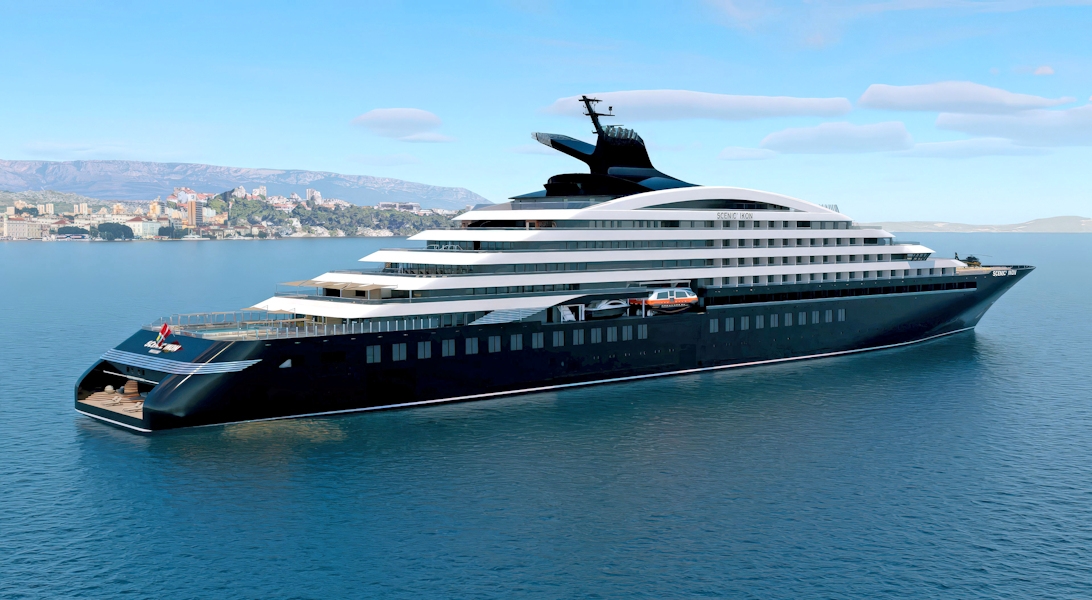
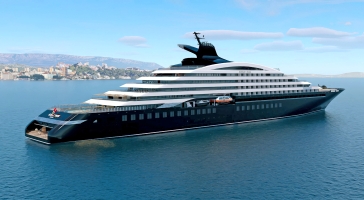
The images shown are for illustration purposes only and may not be an exact representation of what you find on the ship.
The images shown are for illustration purposes only and may not be an exact representation of what you find on the ship.
The images shown are for illustration purposes only and may not be an exact representation of what you find on the ship.
The images shown are for illustration purposes only and may not be an exact representation of what you find on the ship.
The images shown are for illustration purposes only and may not be an exact representation of what you find on the ship.

Our Fusion packages are all ABTA & ATOL protected ensuring that your booking is safe with us
| Return flights including luggage allowance | |||
| Overseas Transfers | |||
| 11 nights aboard the Scenic Ikon | |||
| Return Flights (including regional) | |||
| All Verandah Suites | |||
| Butler service for every guest | |||
| Nine Dining Venues | |||
| Gratuities Included | |||
| Complimentary drinks on-board | |||
| Free use of electric bikes | |||
| Comprehensive choice of shore excursions | |||
| Complimentary Wi-Fi | |||
| Explore under the sea in our submarine (additional charge) | |||
| Soar above and beyond by helicopter (additional charge) | |||
| Port Taxes and Fees | |||
 | ABTA and ATOL Protection* | ||
Fly/cruise package |
Date 16th Jun 2028 |
Nts 11 |
Interior  |
Oceanview |
Balcony |
Suite £13,967pp |
Interior |
Oceanview |
Balcony |
Suite £27,934pp |
Date 16th Jun 2028 |
Nts 11 |
Interior |
Oceanview |
Balcony |
Suite £13,967pp |
Interior |
Oceanview |
Balcony |
Suite £27,934pp |
| Suite | |
| (All prices are £GBP per person) | |
| Sat 2nd Sep 202802 Sep 28 | 13,967 |
| Sat 2nd Sep 202802 Sep 28 | 27,934 |
Fusion Holidays when selling travel arrangements is a trading name of Co-op Travel Services Limited, registration 08903986. Fusion Cruises is an Accredited Body Member of Co-op Travel Services Limited ATOL 12904.
Book with Confidence. We are a Member of ABTA which means you have the benefit of ABTA’s assistance and Code of Conduct.
Some of the flights and flight-inclusive holidays on this website are financially protected by the ATOL scheme but ATOL protection does not apply to all holiday and travel services offered on this website. This website will provide you with information on the protection that applies in the case of each holiday and travel service offered before you make your booking. If you do not receive an ATOL Certificate then the booking will not be ATOL protected. If you do receive an ATOL Certificate but all parts of your trip are not listed on it, those parts will not be ATOL protected. Please see our booking conditions for information, or for more information about financial protection and the ATOL Certificate go to: www.caa.co.uk